Could Apple’s latest camera innovation finally deliver a true pocket-sized cinema camera? Apple has just unveiled another bold move in its mission to revolutionize mobile imaging. A newly published patent reveals a soft, flexible membrane-based aperture system that could replace traditional mechanical iris designs in future iPhone cameras. This could mark a major step toward turning the iPhone into a truly pro-level filmmaking tool. And yes—it’s as ambitious as it sounds.

A Breakthrough Imaging Innovation
In a patent published just yesterday, Apple quietly revealed a breakthrough imaging innovation that could redefine smartphone cinematography. Y.M.Cinema Magazine is the first to report on this development as part of an ongoing investigation into Apple’s pursuit of high-end professional imaging technologies. The patent—titled “Camera Module With Variable Lens Aperture With Soft Membrane”—introduces a bold new approach to aperture control in compact devices, moving beyond the mechanical systems of the past. This exclusive report dives deep into what could become a foundational technology for the next generation of iPhone cameras, tailored for cinematographers and mobile filmmakers demanding more control, better optics, and true professional performance in their pocket.

A New Kind of Iris
The patent, titled “Camera Module With Variable Lens Aperture With Soft Membrane,” outlines a variable aperture system that ditches traditional overlapping mechanical blades. Instead, it uses a thin, stretchable membrane that can change the size of the aperture through an internal actuator system.
This design:
-
Reduces the weight and complexity of the module
-
Takes up less space (ideal for thin phones)
-
Allows for fully circular, aesthetically pleasing apertures
-
Can fully close the aperture, unlike mechanical systems
-
Enhances optical performance in tight spaces
It’s an engineering feat aimed at dramatically improving control over light intake and depth of field in small form factor devices—something mechanical blades struggle with at smartphone scale. Here are some highlights stated from the application, plus selected schemes:
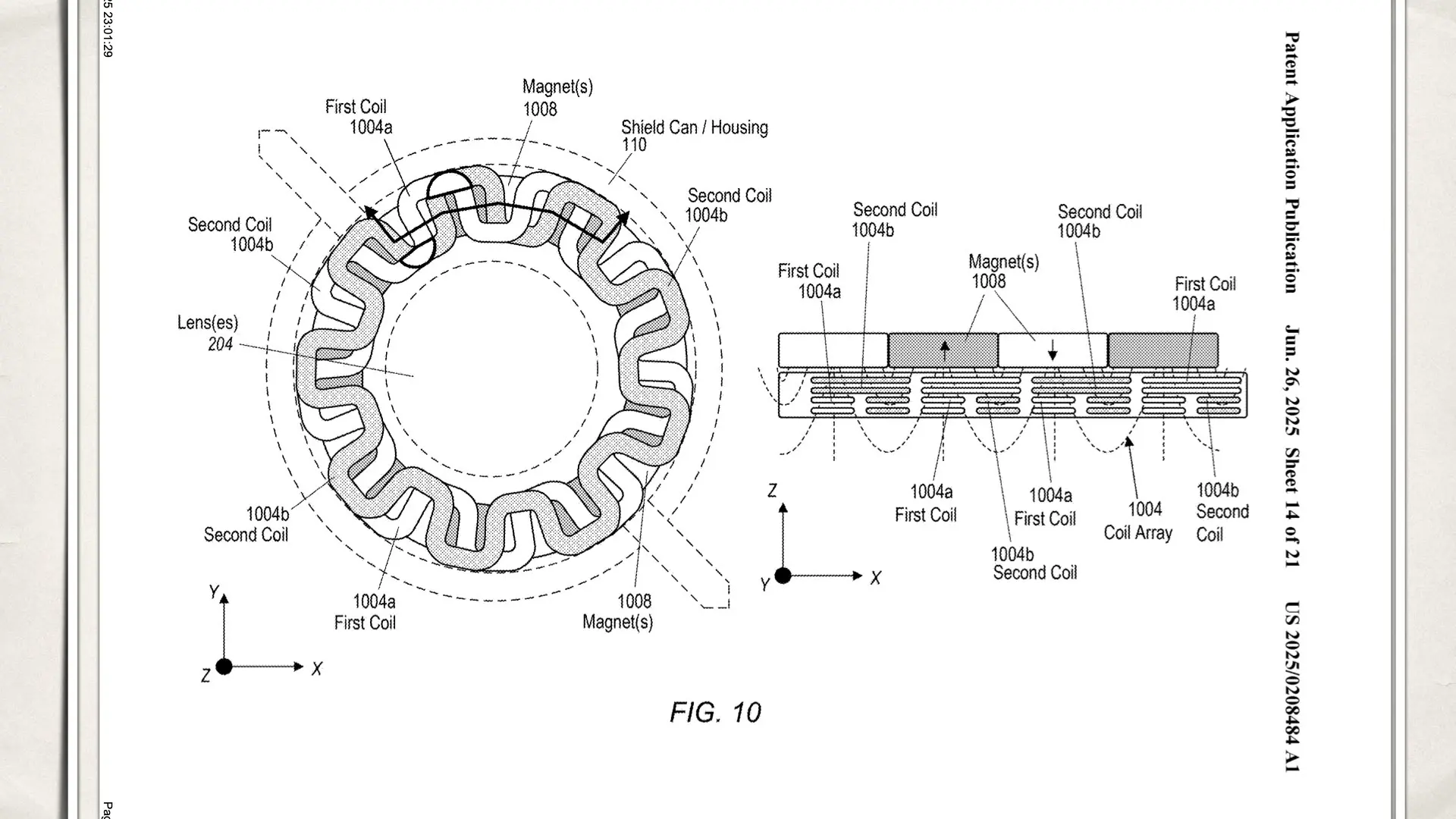
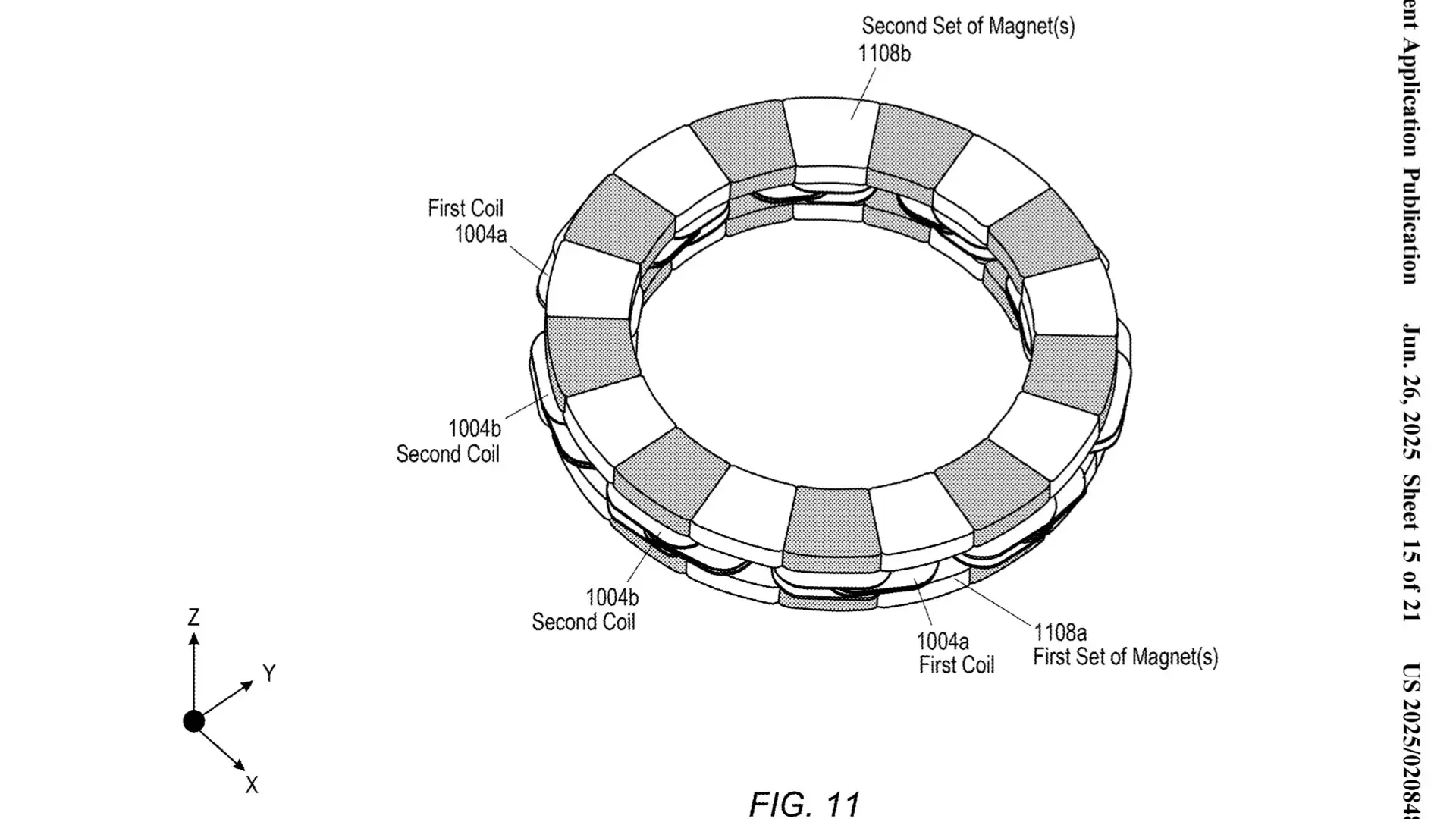
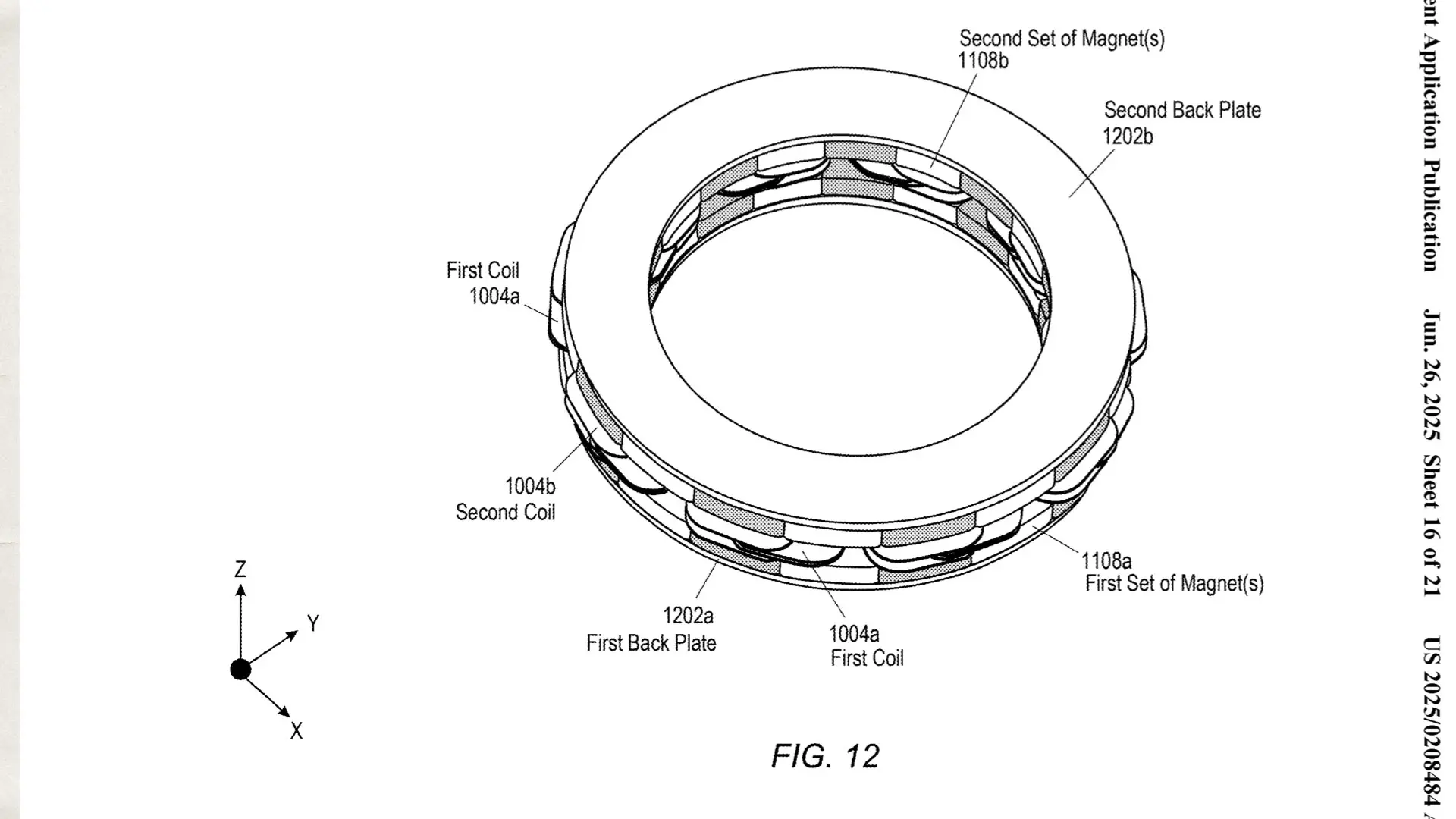
A camera includes an optical assembly having one or more lenses. The camera also includes an image sensor. The camera further includes a variable aperture assembly positioned along a light path extending from an object side of the one or more lenses of the optical assembly and to the image sensor. The variable aperture assembly includes a rotor, a stator, an actuator configured to rotate the rotor relative to the stator, and a flexible membrane attached to both the rotor and the stator. The flexible membrane is configured to vary a diameter of an aperture formed by the flexible membrane on the light path when the rotor rotates relative to the stator.
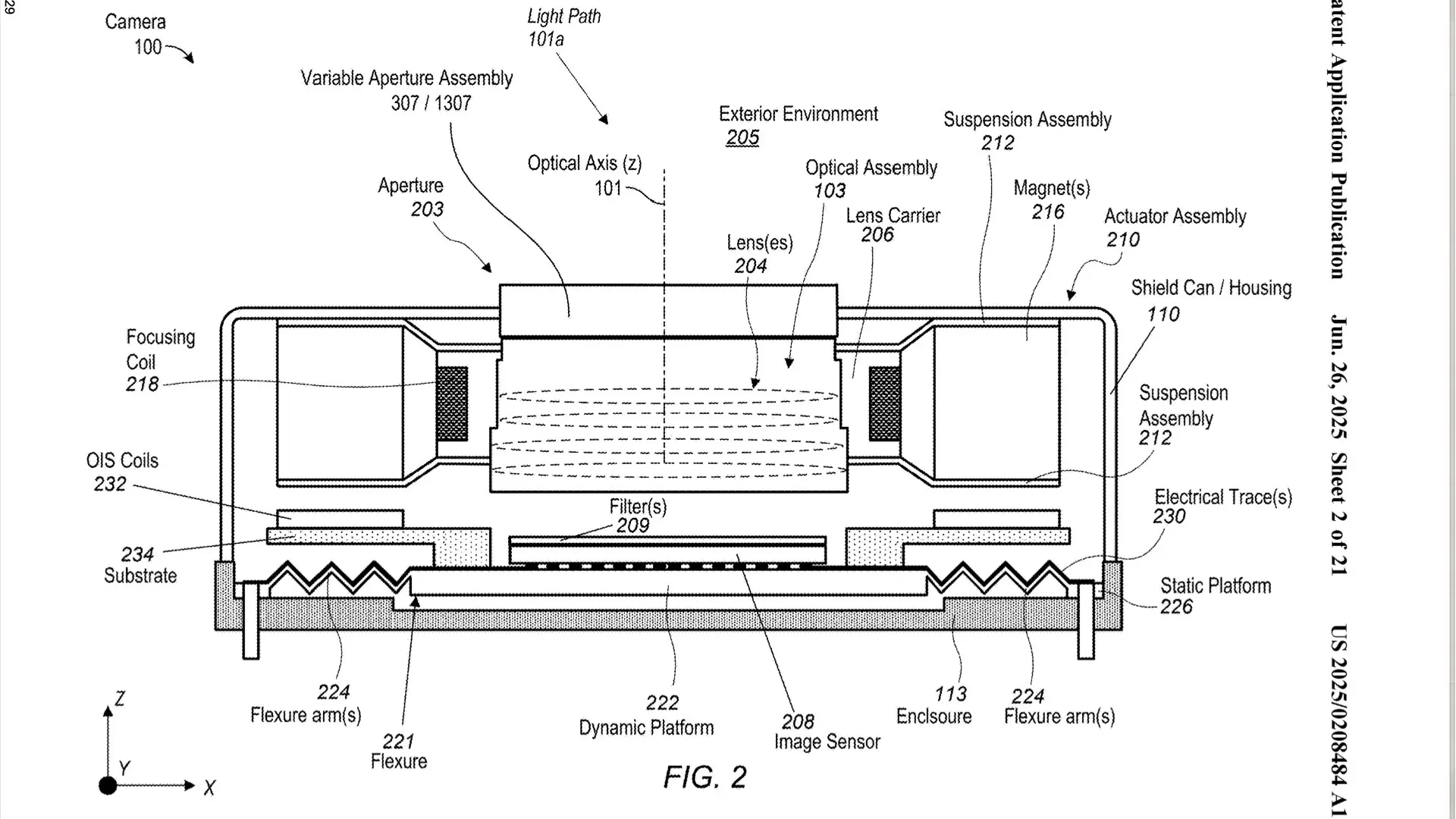
Apple patent: “Camera Module With Variable Lens Aperture With Soft Membrane”
The advent of small, mobile multipurpose devices such as smartphones and tablet or pad devices has resulted in a need for high-resolution, small form factor cameras for integration in the devices. Some cameras may incorporate optical image stabilization (OIS) mechanisms that may sense and react to external excitation/disturbance by adjusting location of the optical lens on the X and/or Y axis in an attempt to compensate for unwanted motion of the lens. Furthermore, some cameras may incorporate an autofocus (AF) mechanism whereby the object focal distance can be adjusted to focus an object plane in front of the camera at an image plane to be captured by the image sensor. Additionally, some cameras may incorporate a variable lens aperture for modulating the amount of light received by the lens(es) and/or the image sensor. In some such variable lens aperture mechanisms, the variable lens aperture is actuated using a plurality of overlapping blades that pivot to open and close the aperture.
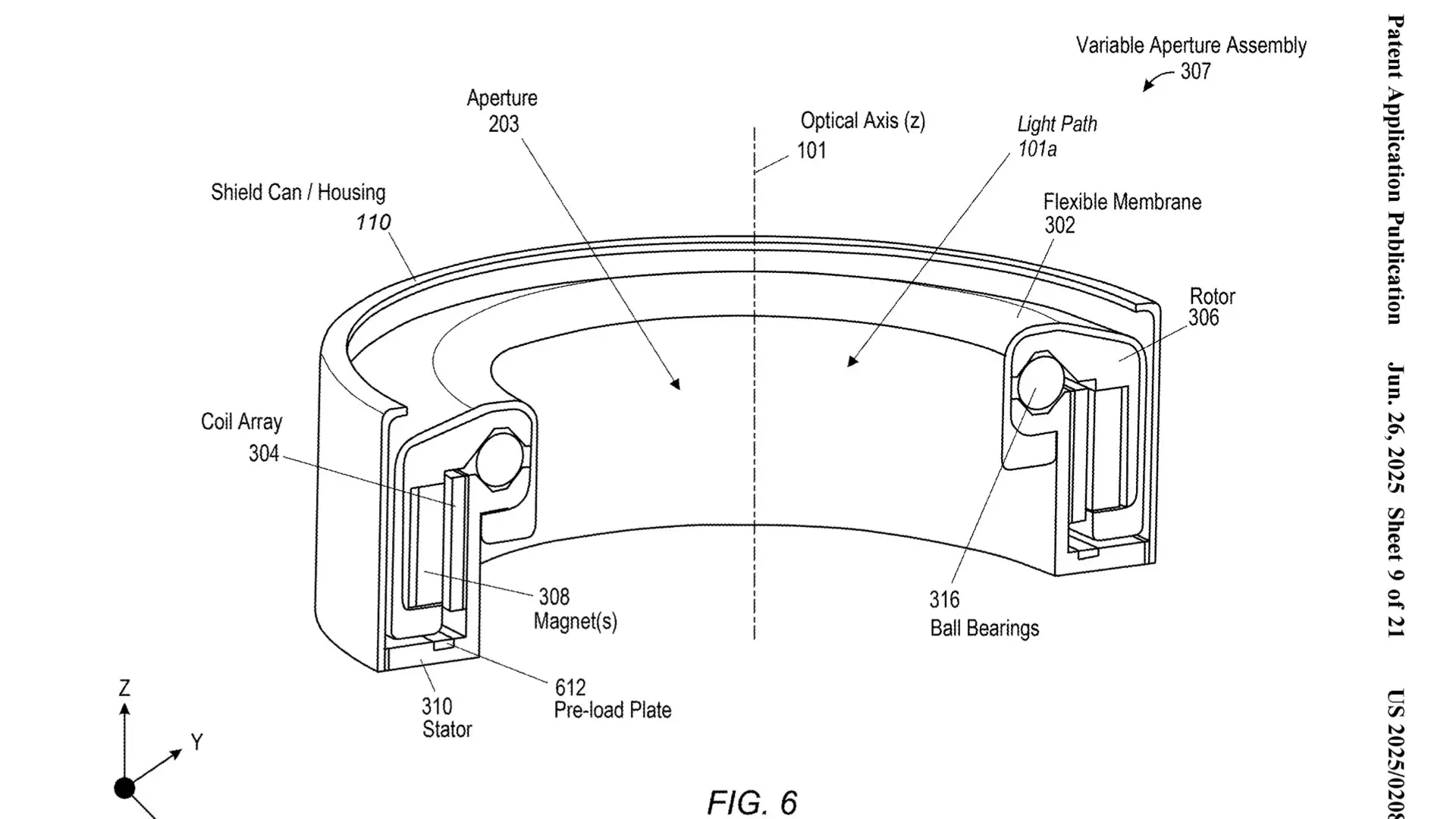
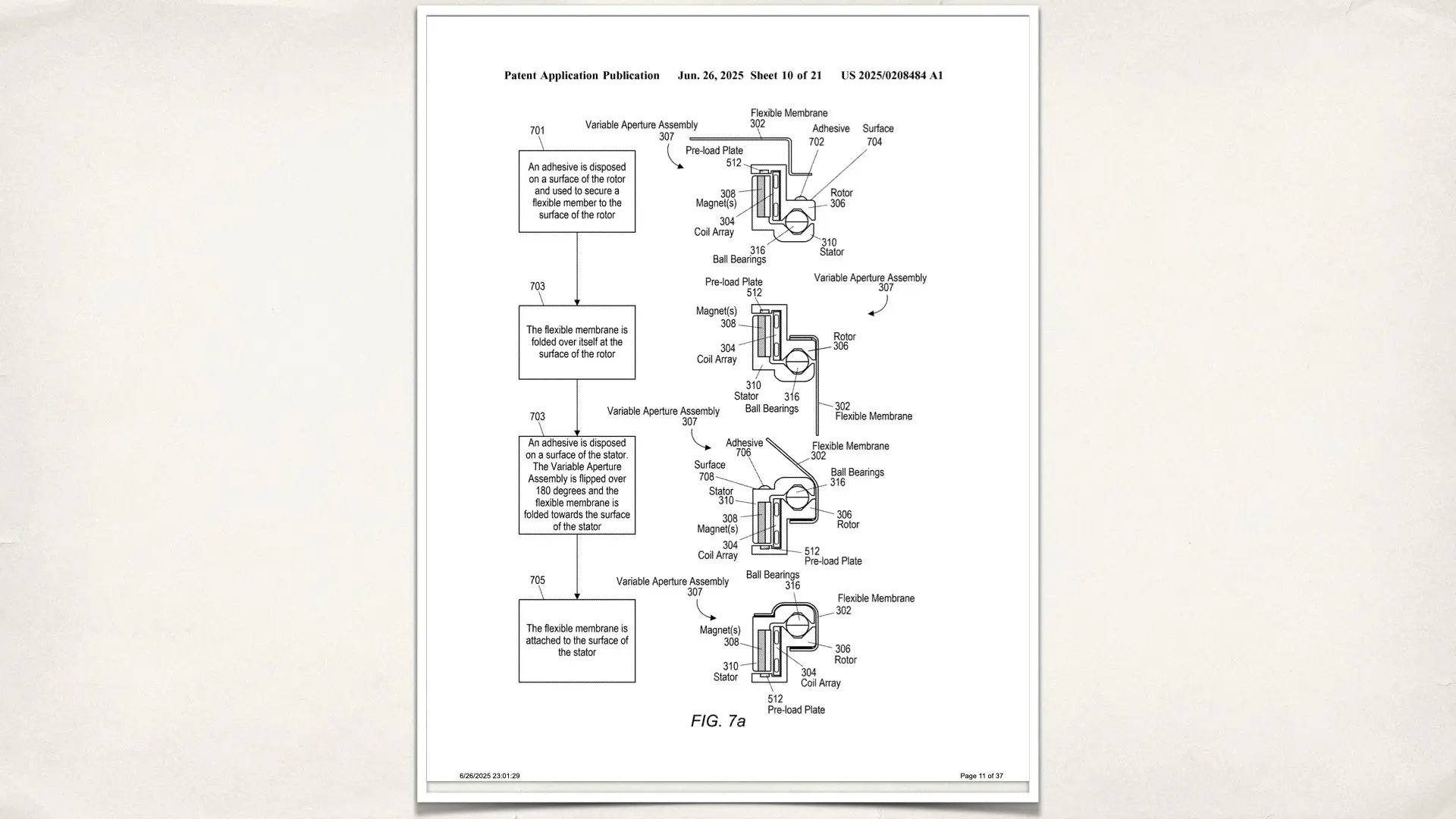
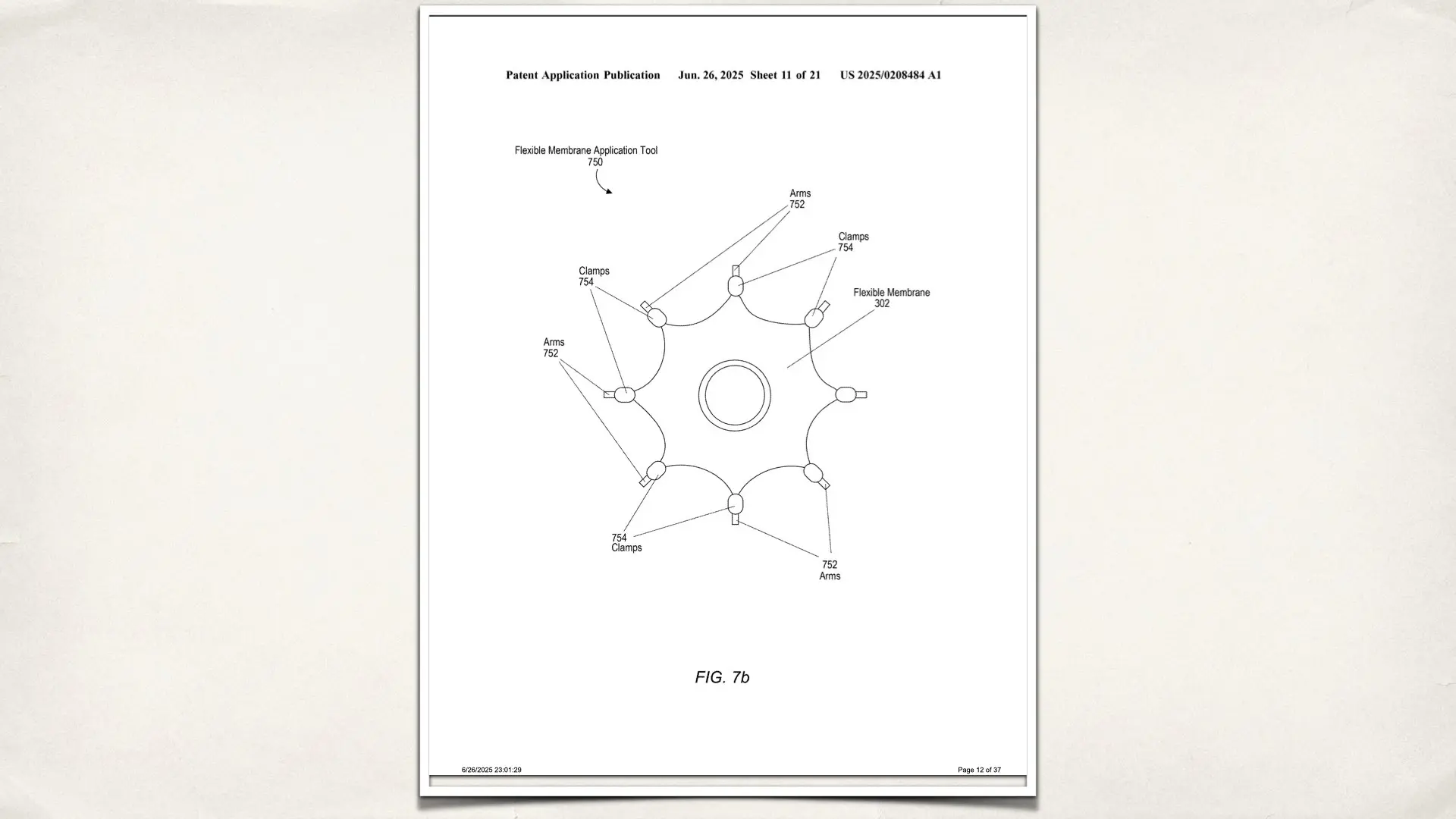
Various embodiments described herein relate to a variable aperture assembly (e.g., a variable door assembly), for a camera module (e.g., a small form factor camera module) that may be positioned over an aperture. The aperture may allow/permit light from an external environment (e.g., external to the camera module) to pass therethrough to one or more lenses of the camera module and/or an image sensor of the camera module. The variable aperture assembly may change or vary (e.g., modulate) a diameter of the aperture to change an amount of light from the external environment that reaches the lenses and/or the image sensor of the camera module. Conventional variable door assemblies generally include overlapping mechanical blades that are positioned such that they produce an adjustable aperture mounted above a lens and/or an image sensor of a camera module. When actuated, the blades move towards an open or towards a closed position to adjust the aperture’s diameter to dynamically change the focal length of the camera module giving more control over the depth of field.
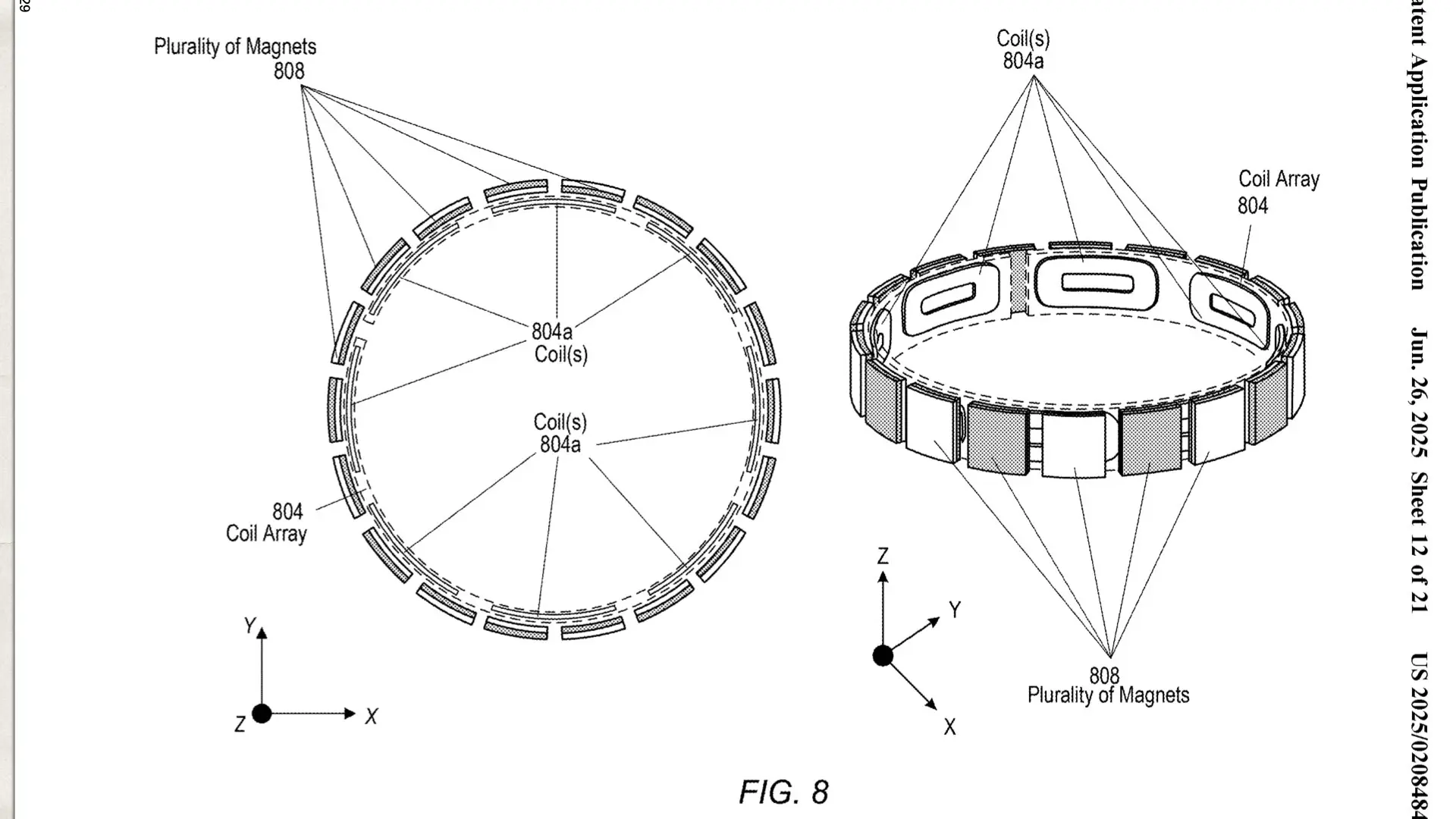
However, some variable aperture assemblies with overlapping mechanical blades have several drawbacks. For example, the variable aperture assembly with overlapping mechanical blades have many moving parts creating a high risk of failure and produce a high amount of weight on the camera module. Also, the overlapping mechanical blades occupy a significant amount of x, y, and z space in the camera module, for example, when the blades are partially or fully retracted. As a result, small form factor cameras are limited with regards to how small in size those camera can be and/or the aperture providing light from the external environment and to the lenses and/or image sensor of the camera module may be limited in size. Further, cosmetically, the overlapping mechanical blades produce a hexagonal opening when in the fully actuated position and therefore produce a lack of aesthetic symmetry when viewing the camera module. In addition, because the overlapping mechanical blades produce a hexagonal opening when in the fully actuated position, the overlapping mechanical blades are not able to fully close the aperture.
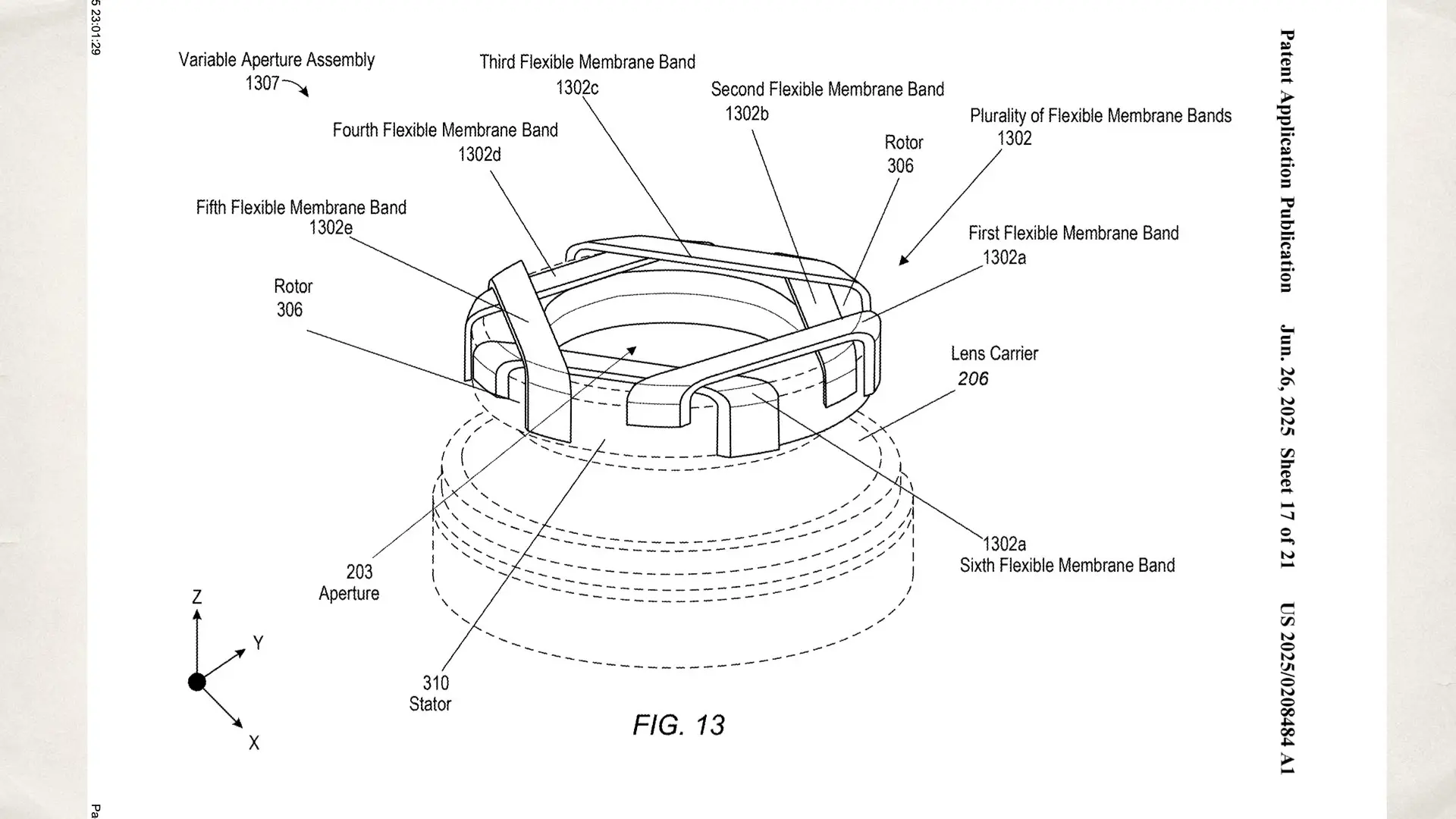
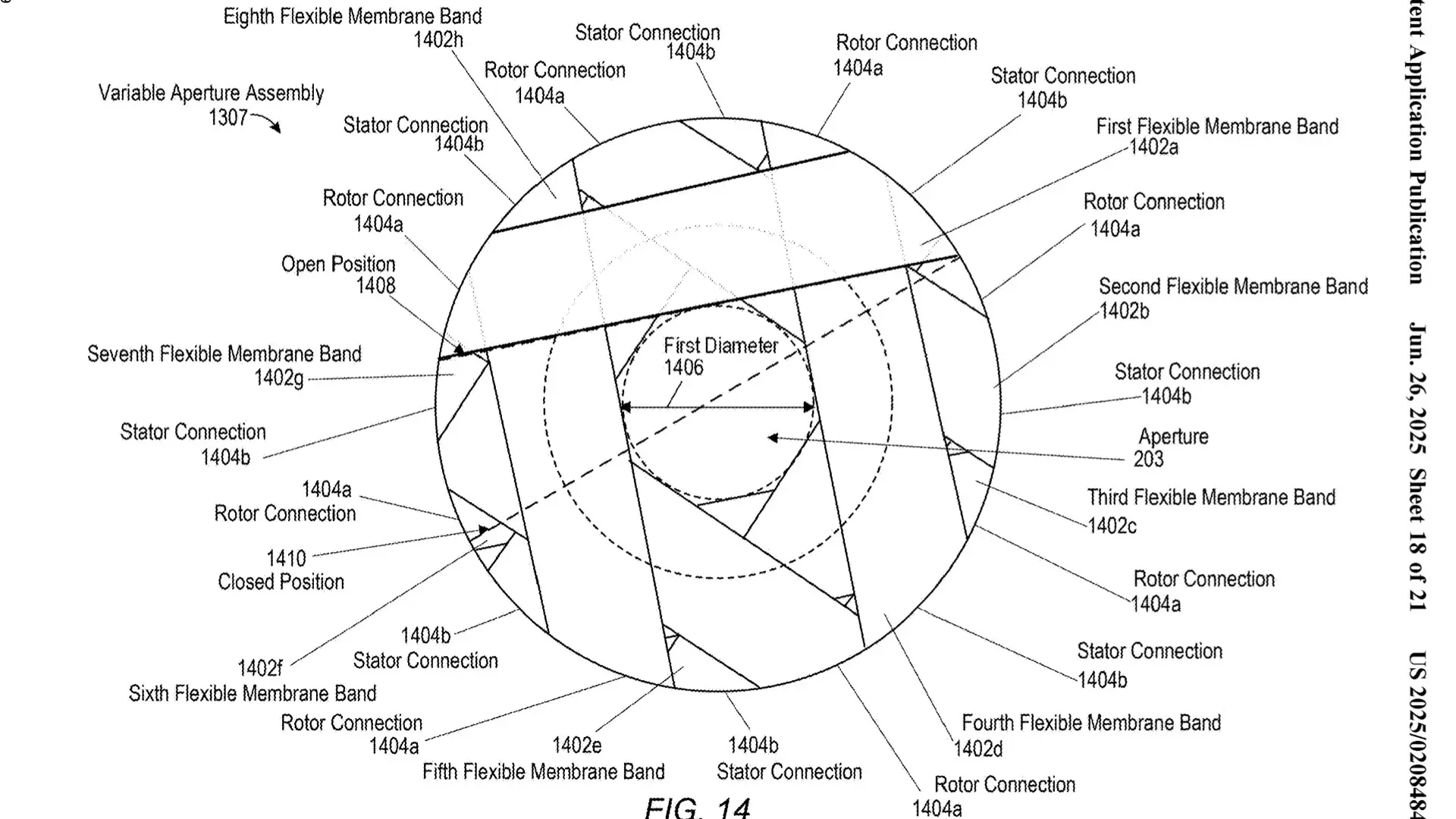
Using the flexible membrane(s) rather than the overlapping mechanical blades mitigates problems with the overlapping mechanical blades. For example, the variable aperture assemblies using flexible membrane(s) may be made with fewer moving parts than those variable door assemblies with overlapping mechanical blades thereby reducing the risk of failure and producing a lower amount of weight on the camera module. Also, compared to variable door assemblies with overlapping mechanical blades, the variable aperture assemblies using flexible membrane(s) occupy much less space in the camera in the x, y, and z directions, for example, when the flexible membrane(s) are partially or fully retracted. As a result, small form factor cameras that use a variable aperture assembly using the flexible membrane(s) instead of overlapping mechanical blades can be smaller in size and/or can have larger apertures for providing light from the external environment (e.g., an object side of the optical assembly and/or the one or more lenses of the optical assembly) and to the lenses and/or image sensor of the camera module. Further, compared to variable door assemblies with the overlapping mechanical blades that produce a hexagonal opening when in the closed position, variable door assemblies with flexible membrane(s) may move towards a closed position while maintaining a circular opening therethrough and therefore attain aesthetic symmetry when viewing the camera module. In addition, compared to the variable aperture assemblies with overlapping mechanical blades that produce a hexagonal opening when in the fully closed position, the variable aperture assemblies with the flexible membrane(s) may be able to fully close the aperture and prevent light from reaching the lenses and/or image sensor of the camera module from the external environment and through the aperture.
The iPhone’s Cinematic Ambitions
Apple’s imaging roadmap is becoming clearer. Between this flexible membrane iris, a patent for 20 stops of dynamic range in a new image sensor (Apple Just Patented an Image Sensor With 20 Stops of Dynamic Range), and a radical approach to thermal management using active cooling (Apple’s Active Cooling Patent May Unlock the Future of Mobile Cinematography), Apple is unmistakably laying the foundation for cinema-grade performance in future iPhones. The company isn’t just chasing content creators or social media influencers anymore. It’s going after filmmakers, cinematographers, and visual storytellers—people who demand full creative control, especially when it comes to light and optics.

How It Works — A Technical Marvel
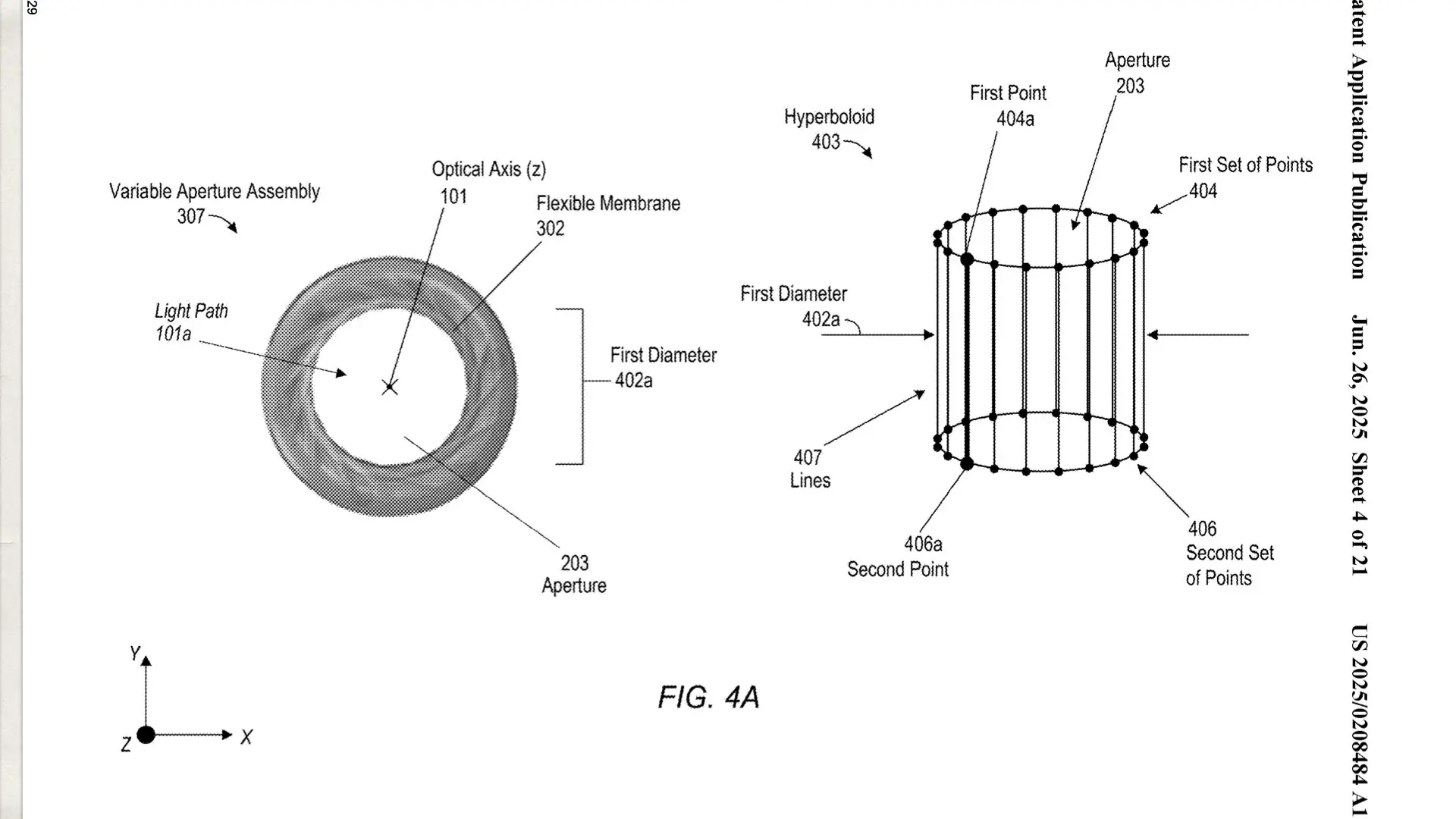
At the heart of this invention is a rotor-stator system with voice coil motors (VCMs) and hyper-elastic membranes. Instead of pivoting blades, the rotor rotates, deforming the membrane into a hyperboloid shape that narrows or widens the aperture.
This new method:
-
Minimizes mechanical failure due to fewer moving parts
-
Saves space in all dimensions (x, y, and z)
-
Enables more symmetric image capture, avoiding the hexagonal distortions of traditional blades
-
Allows for precise, multi-stage aperture control from fully open to fully closed
It’s a camera design that prioritizes both performance and elegance—exactly what you’d expect from Apple.

What It Means for Mobile Filmmakers
For cinematographers who shoot on iPhone or integrate smartphones into professional workflows, this could be a game-changer. The ability to dynamically control aperture, especially in combination with deep dynamic range and heat control, points to longer, higher-quality video recording, in varying lighting conditions, with genuine cinematic feel.
We may be looking at an iPhone in the near future with:
-
A pro-level image sensor
-
Active heat dissipation
-
Variable aperture control
-
Rich computational and optical fusion
In short: the first true hybrid of cinema and smartphone.
This new soft-membrane aperture could signal the death of the mechanical iris in compact devices and the birth of a new class of iPhone.