

Smartphone cinema is about to take a massive leap. OmniVision’s new OV50X — a 50-megapixel, 1-inch sensor boasting 8K recording and 18 stops of dynamic range- has officially entered mass production, setting the stage for the next generation of flagship phone cameras.
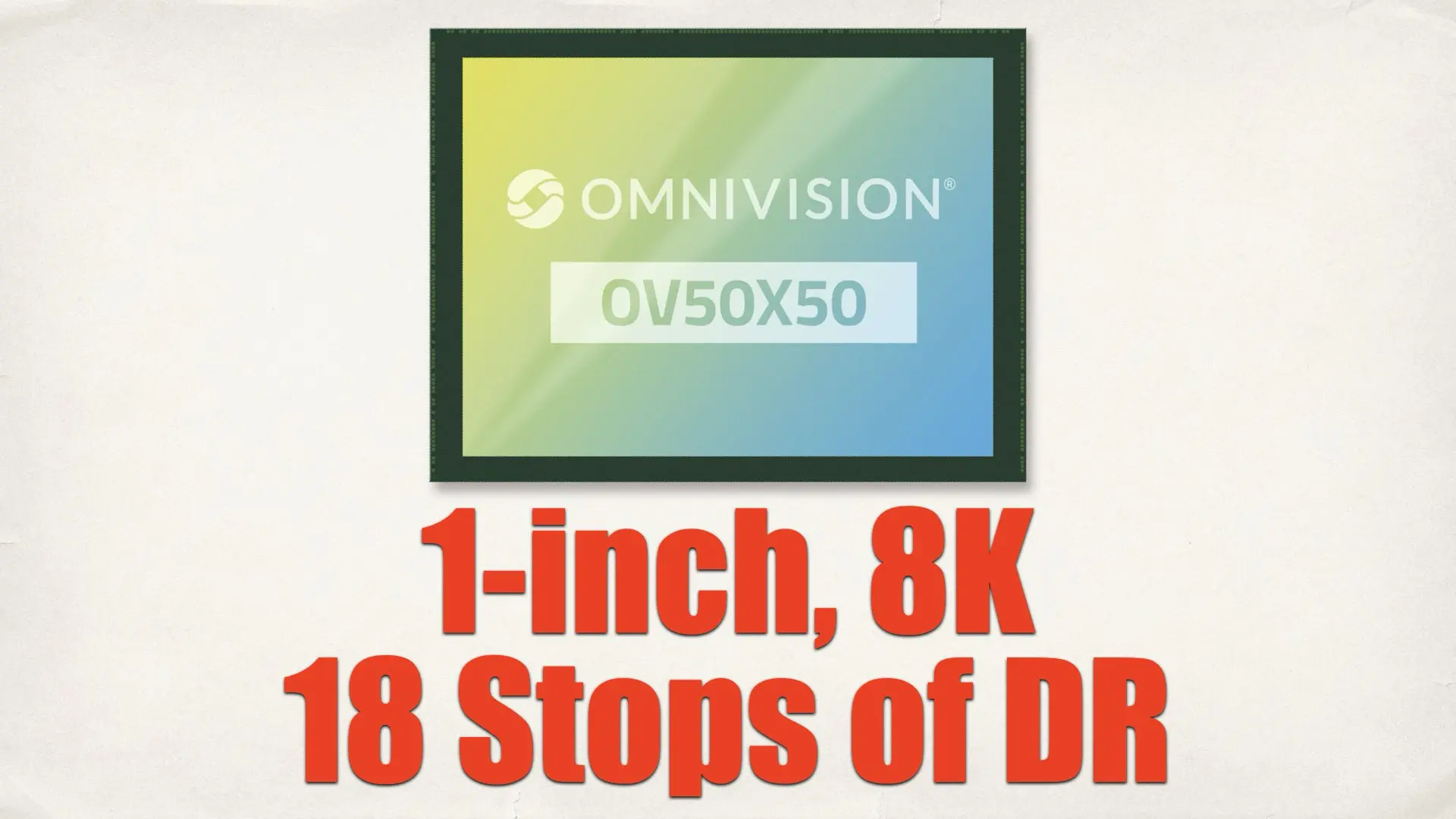 OMNIVISION Unleashes a Game-Changing 1‑Inch 8K, 18 Stops of DR Sensor for Smartphones
Why This Sensor Matters
Earlier this year, we covered the announcement in OmniVision Unleashes a Game-Changing 1-Inch 8K 18 Stops of DR Sensor for Smartphones. Now, with production ramping up for Q3 2025, this technology is moving from press releases to actual devices. The OV50X combines 1.6-micron pixels with TheiaCel HDR technology, pushing single-exposure dynamic range close to 110 dB, a record for smartphones. For filmmakers, this means richer shadows, preserved highlights, and true cinematic latitude.
A Deep Dive into the Specs
-
Resolution: 50MP (8192 x 6144) with full 8K video capture.
-
Frame Rates: Up to 180 fps at 12.5MP, or 8K at 30 fps.
-
Dynamic Range: ~18 stops with dual analog gain HDR.
-
Autofocus: Quad Phase Detection (QPD) for industry-leading accuracy.
-
Video Features: On-sensor crop zoom, three-channel HDR, and high-speed binning modes.
It’s built on OmniVision’s PureCel Plus-S stacked-die technology, delivering high resolution without compromising light sensitivity, a critical factor for low-light shoots.
 OMNIVISION OV50X CMOS image sensor: Dynamic Range
How It Stacks Up Against the Competition
This release comes just months after Sony introduced the LYT-828 sensor with 17 stops of dynamic range. While Sony’s solution impressed, OmniVision has gone a step further in HDR capabilities. Combined with powerful chipsets like the Snapdragon 8 Elite 2, we’re looking at smartphones capable of rivaling compact cinema cameras. Samsung, too, has been strengthening sub-camera sensors for enhanced video shooting, signaling a broader industry race to bring professional-grade imaging to mobile devices.
 OMNIVISION OV50X CMOS image sensor
What This Means for Smartphone Filmmaking
The arrival of a mass-produced, 1-inch, 8K, 18-stop HDR sensor in consumer smartphones is a turning point. Filmmakers can expect:
-
Greater creative freedom in challenging lighting conditions.
-
Improved depth of field control thanks to the larger sensor size.
-
Cinema-grade color and contrast straight out of the phone.
As flagship devices equipped with the OV50X start hitting the market later this year, the gap between smartphones and dedicated cinema cameras will shrink further than ever before. Hence, we’re entering an era where your next award-winning short film could be shot entirely on a smartphone, with no excuses left about the hardware. What do you think: will a 1-inch, 8K, 18-stop HDR smartphone finally replace your dedicated camera?







as usually nonsenses from YMCinema .This sensor have high noise ,hdr function is artifical and color rendition is not godw.Its a PHONE sensor ,not camera .I propose you to stop with amateur ckains if you want to be considered so so professional .
They actually are getting pretty decent these days. I’m using a Xiaomi 13 Ultra with IMX 989 sensor and it delivers quite good results particularly in the “Ultra” RAW mode without any HDRI mode engaged. I use it for real estate photography among other things and it has surprisingly good dynamic range with some visible noise in the shadows when they’re pushed more than like +2 stops. That new sensor claims to address just that aspect of photography.