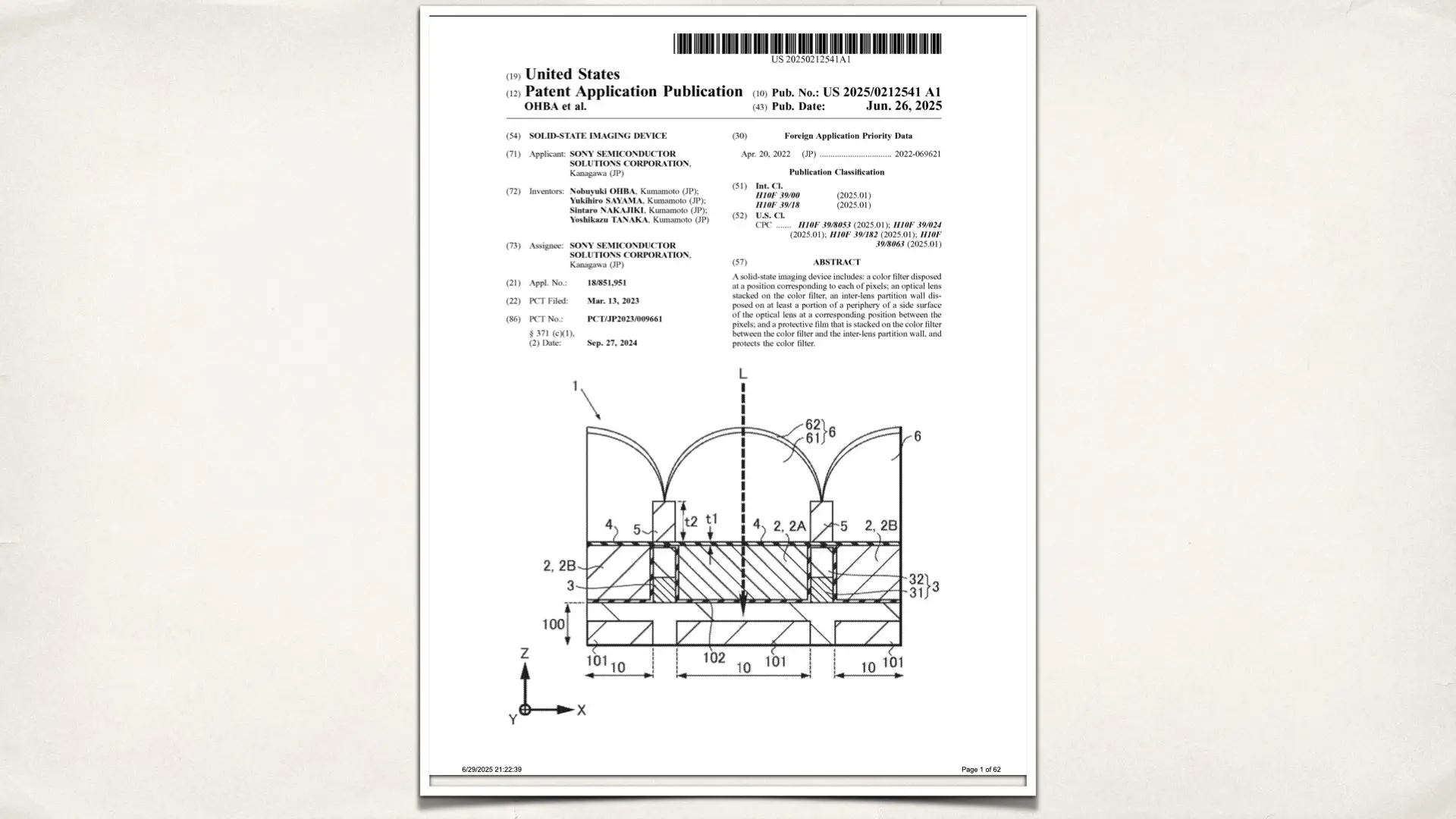
A brand new Sony patent (published a few days ago) titled “SOLID-STATE IMAGING DEVICE” reveals a clever way to boost phase detection autofocus by redesigning the pixel structure itself. Here’s a friendly recap below:
Autofocus Is Getting a Pixel-Level Upgrade
Sony has filed a new patent that could quietly change how autofocus works in future cameras. Beyond just the sensor size or resolution, this patent focuses on improving the tiny structures inside each pixel to make phase detection autofocus (PDAF) faster, more accurate, and more reliable. In other words, this is a behind-the-scenes improvement that might lead to smoother, quicker focusing in everything from cinema cameras to smartphones.
What’s the Problem with Today’s PDAF?
Modern cameras use phase detection autofocus (PDAF) to track focus quickly. It works by comparing light entering different parts of the lens and figuring out if the subject is in front or behind the focus plane. To do this, some pixels on the sensor are built differently; they’re designed to detect tiny shifts in light phase. But in high-resolution sensors, this gets tricky:
-
Light from nearby pixels can interfere
-
Tiny lens elements above each pixel must be precisely shaped
-
Manufacturing errors can ruin the accuracy of PDAF pixels
This is where Sony steps in with a new solution.
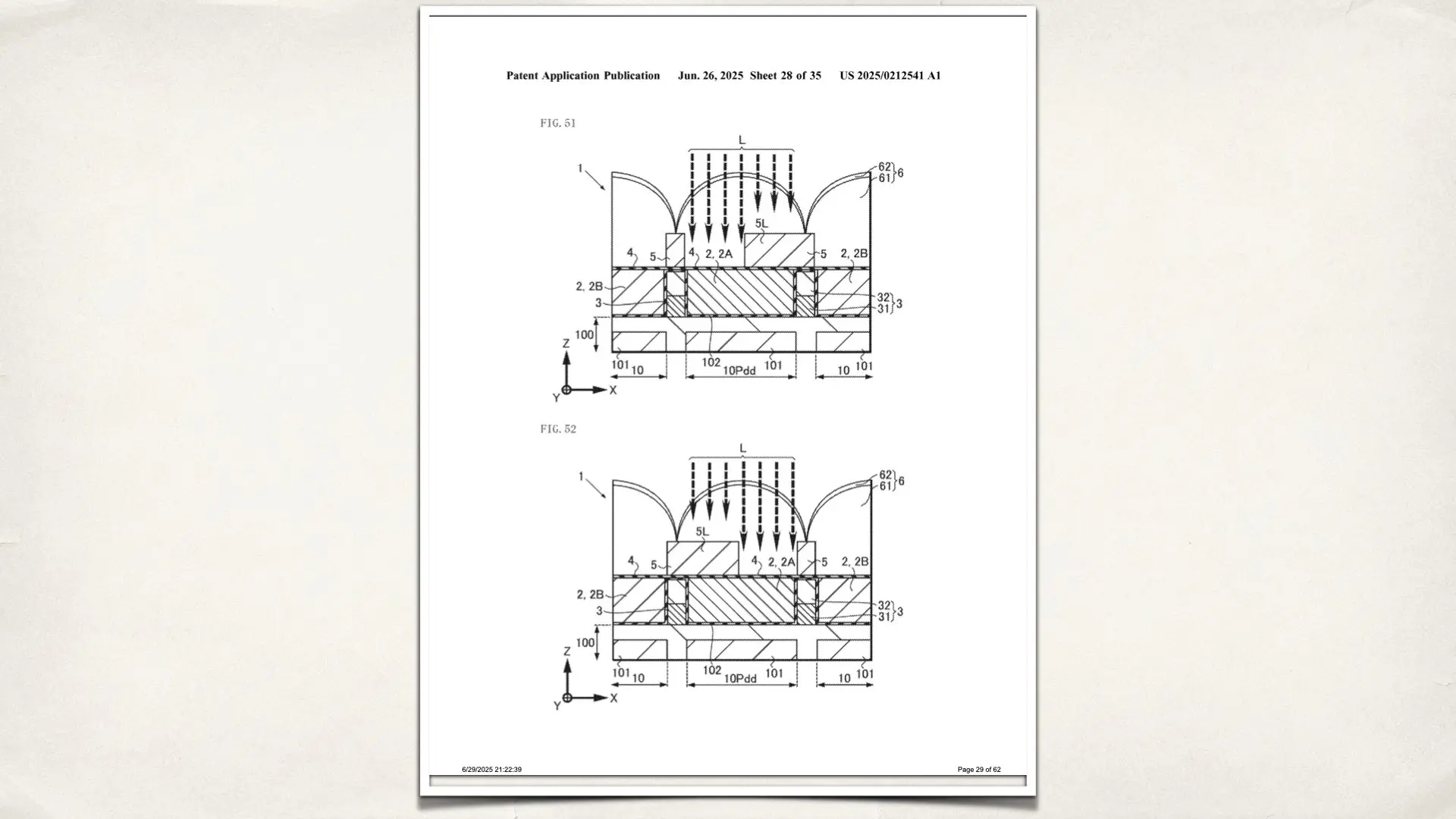
Sony’s Idea: Smarter Pixel Design
The patent describes a new sensor design where:
-
Each microlens covers two pixels instead of one
-
The lenses are longer in one direction, helping detect the angle of incoming light more effectively
-
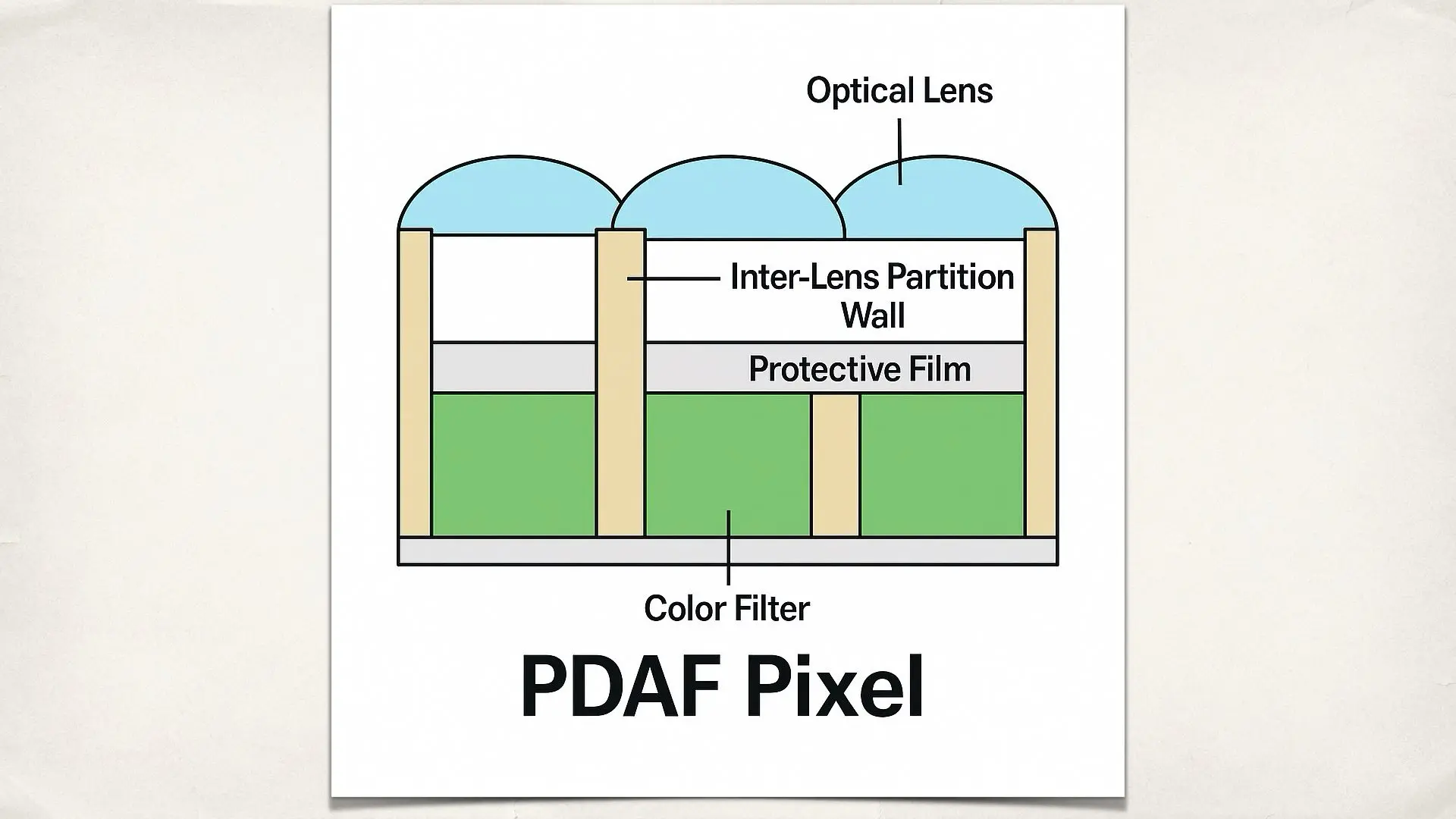
A protective layer is added between the color filter and the lens to prevent damage during manufacturing
-
Partition walls are carefully placed to stop light from bleeding into neighboring pixels
This layout supports better phase detection without making the sensor larger or more expensive. In simple terms, Sony is helping each autofocus pixel “see” more clearly, without interference from neighbors. This means:
-
Faster autofocus
-
More accurate focus tracking
-
Better low-light and high-speed performance
For filmmakers, it could mean fewer missed shots, especially when shooting wide open or tracking fast-moving subjects.
A Peek Into the Pixel: PDAF Gets a Boost
Sony’s patent shows that the autofocus improvements happen at the micro level:
-
The microlenses are shaped to direct light more effectively onto PDAF pixels
-
The protective film keeps the color filter safe when walls and lenses are added
-
The walls around each lens help block unwanted light, which is key for clean PDAF signals
In one variation, Sony even shows how visible light and infrared light can be separated at the pixel level — possibly opening the door to hybrid autofocus systems that work in low-light or special conditions. Sony’s patent doesn’t name a specific product, but based on the design, it’s easy to imagine it showing up in:
-
Sony Alpha and FX cameras for faster on-sensor autofocus
-
Smartphone cameras that need lightning-fast focus in tight spaces
-
Autonomous vehicle cameras or surveillance sensors that must focus in challenging lighting conditions
The figures in the patent even include diagrams of vehicle-mounted camera systems — a clue that Sony might be thinking far beyond photography.

Final Thoughts: A Quiet but Powerful Innovation
This isn’t the kind of flashy innovation that headlines sensor launches. However, it’s exactly the kind of subtle engineering Sony is known for, which is fixing real problems at the smallest level, with a big impact on performance. If implemented, this pixel structure could be one of the keys to making next-gen autofocus systems feel faster, more confident, and more intelligent than ever before.