Apple has just patented a groundbreaking method for pre-lithiating ultra-small lithium-ion battery cells—a behind-the-scenes innovation that might power the next wave of wearable camera tech. The patent is titled “LITHIUM METAL INTERCALATION IN A BATTERY CELL”, and while it may not sound flashy at first glance, this battery breakthrough signals something big: Apple is preparing its tiniest devices to do much heavier lifting. And that includes imaging tools.

What’s in the Patent: Smarter Batteries for Smaller Devices
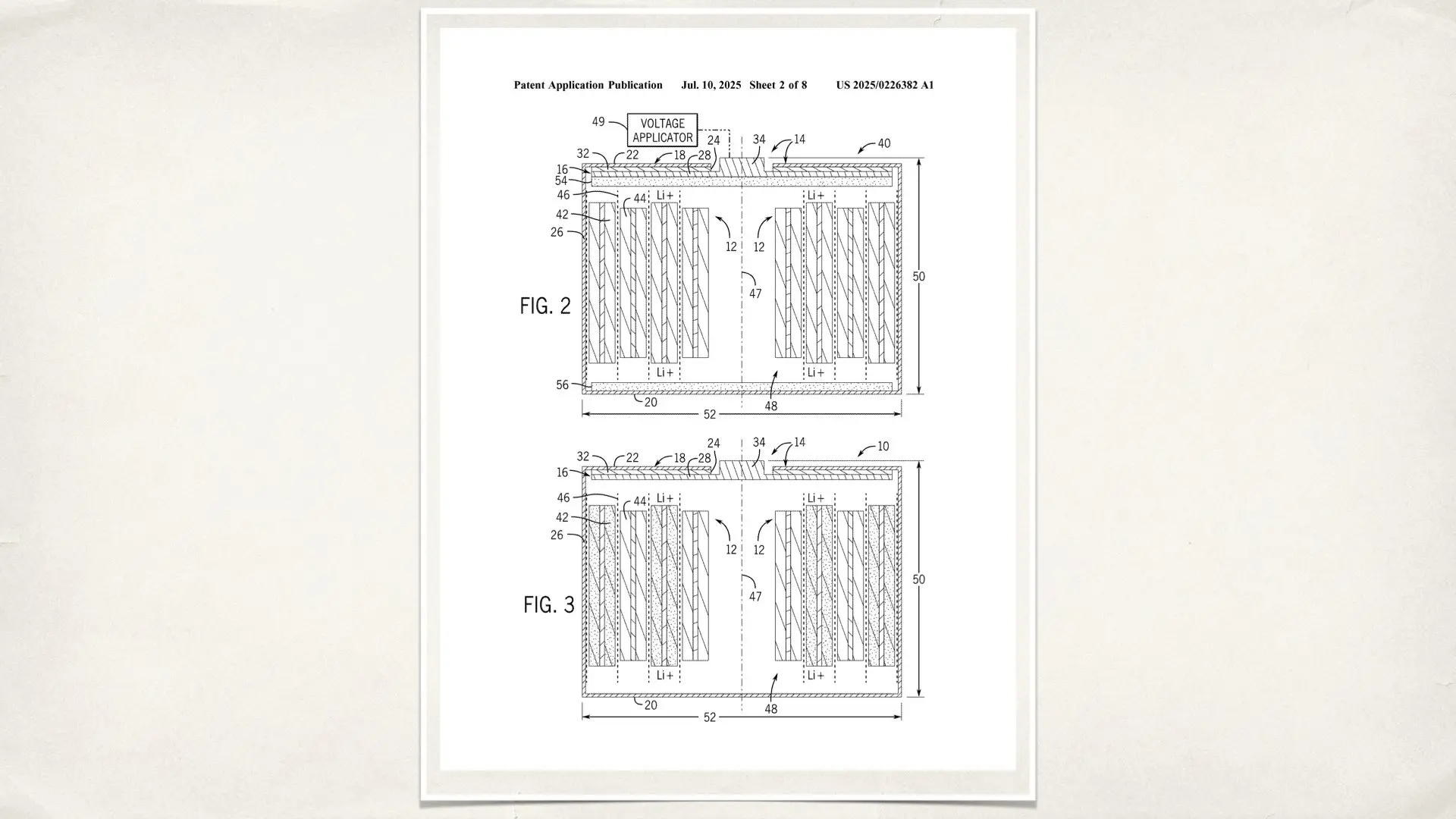
Filed under the name “Lithium Metal Intercalation in a Battery Cell”, Apple’s latest patent dives into a technical improvement that affects how small batteries, like those in smartwatches, AirPods , or future wearables, manage lithium loss during early charge cycles. The concept revolves around pre-lithiation, a process that stabilizes lithium-ion batteries before they ever power up a device. By embedding ultra-thin lithium metal foils into the enclosure, and applying a precise voltage, Apple transfers lithium directly into the battery’s anode, enhancing voltage consistency and reducing early degradation. In simpler terms: these batteries last longer, perform better, and charge more reliably. And all this is packed into formats as small as 2 to 7 millimeters tall, ideal for compact and wearable hardware.

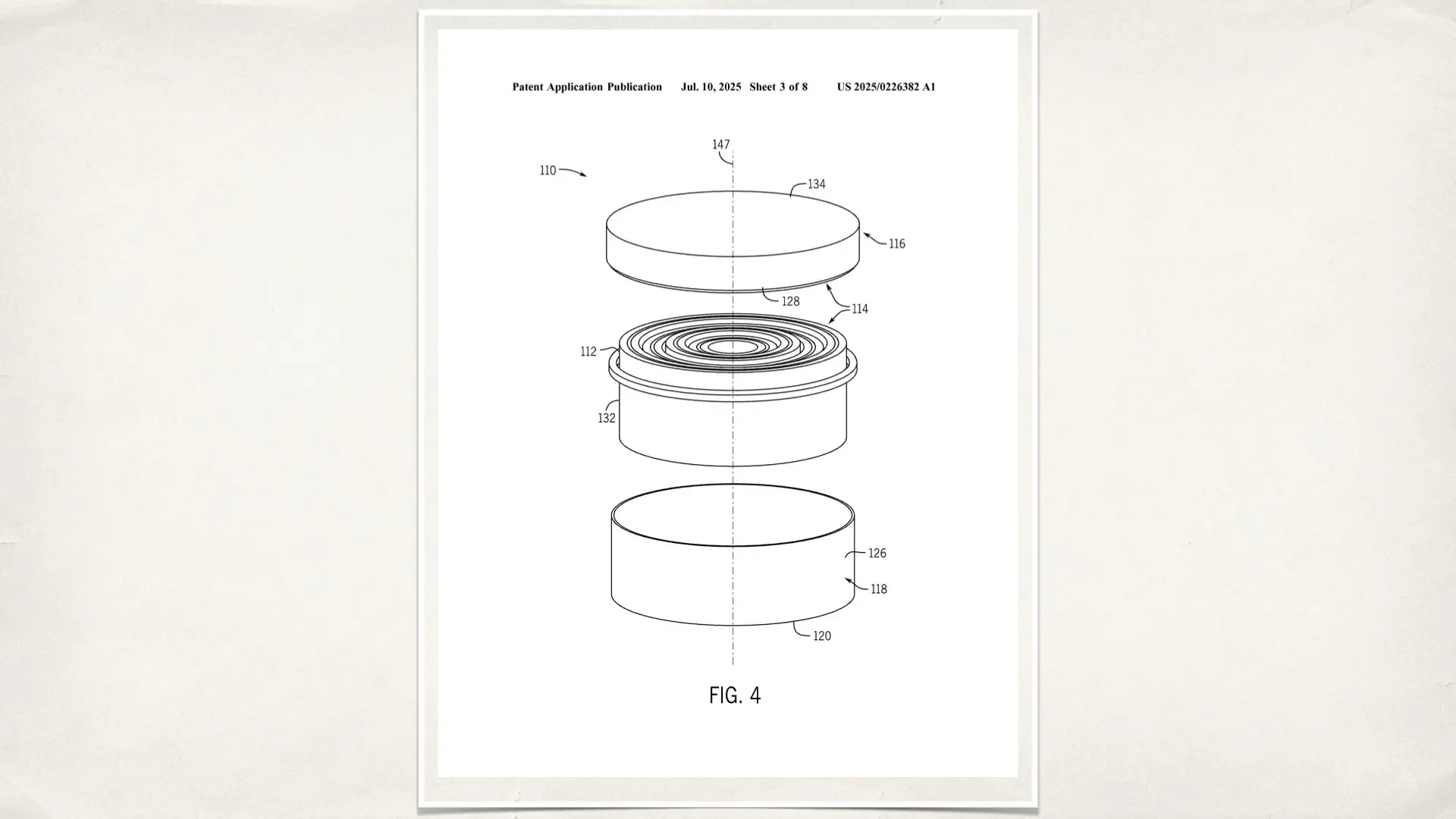
A small format lithium-ion battery cell pre-lithiation assembly includes an enclosure having a first portion corresponding to a first battery cell terminal and a second portion corresponding to a second battery cell terminal. The assembly also includes an electrical insulator contacting the first portion and the second portion, a first lithium metal foil disposed in the enclosure and abutting the first portion, and a second lithium metal foil disposed in the enclosure and abutting the second portion. The assembly also includes an electrode assembly disposed in the enclosure between the first lithium metal foil and the second lithium metal foil.
-From the Apple patent “LITHIUM METAL INTERCALATION IN A BATTERY CELL”
Why It Matters to Cinematography and Tech Creators
Here’s the real story: this isn’t just a battery patent but an infrastructure for imaging hardware. Apple has been increasingly active in the imaging space:
-
Building cinematic video tools into iPhones
-
Experimenting with sensor tech and aperture systems
-
And pushing toward more immersive and portable creator platforms like Vision Pro
But none of these experiences are possible without dependable power sources. With this new system, Apple appears to be solving a long-standing bottleneck: how to power professional-grade hardware inside ultra-compact formats, without compromise. Think:
-
Camera-enabled smart rings or glasses
-
Mic-level recording gear with active noise reduction
-
Vision Pro accessories with built-in optics
-
Even AirPods with onboard spatial cameras
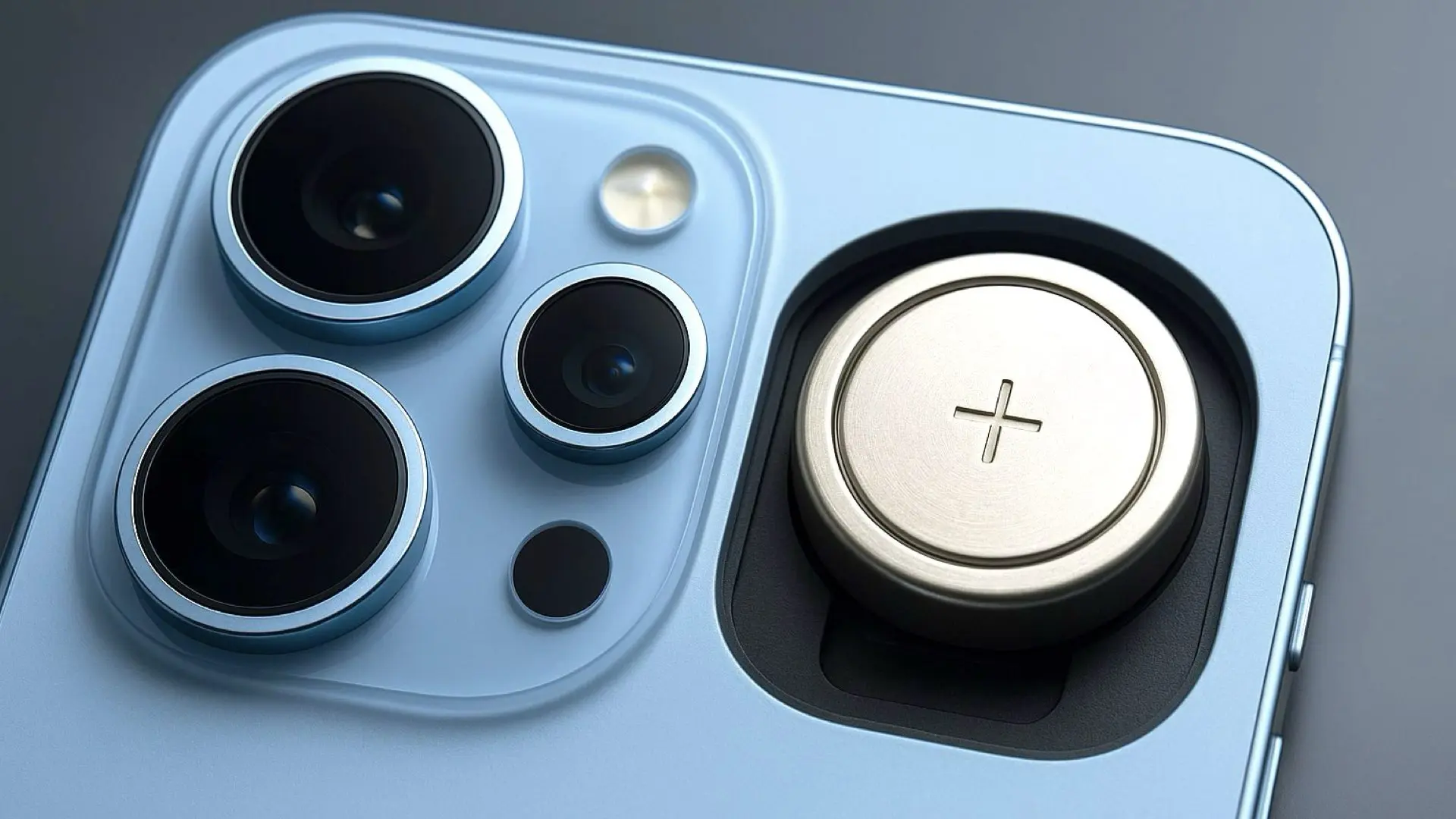
- A dedicated small button battery powers the main camera in the Pro models of the iPhones.
This patent is a sign that Apple wants its smallest devices to do far more than they do today, and it’s laying the groundwork for professional-grade imaging to move into wearables.
How It Works: Apple’s Three-Tiered Approach
The patent outlines three designs for these pre-lithiated battery cells, all with the same mission:
-
Embed lithium foils inside the battery housing
-
Administer a controlled electrochemical reaction to “pre-load” the battery with active lithium
-
Ensure that the result is higher voltage stability, longer battery life, and better consistency in extreme use cases (like high-speed image capture or real-time spatial processing)
Apple also considered multiple manufacturing configurations, offering flexibility for future form factors. Basically, it’s about engineering around the physical limitations of micro-cinema and sensing devices.
Certain batteries, such as those described above, may undergo a pre-lithiation process causing lithium ions (Li+) to react with an anode of the battery cell during formation of the battery cell (e.g., prior to using the battery cell for powering a load). Pre-lithiation processes may employ this oxidation-reduction (redox) reaction to reduce or mitigate initial active lithium loss that occurs during cycling stages (e.g., early cycling stages) of the battery cell, improve local voltage uniformity, and/or maintain cell stability and performance. Unfortunately, traditional pre-lithiation processes may be cumbersome, expensive, inadequate, and/or ineffective. Accordingly, it is now recognized that improved systems and methods are desired.
-From the Apple patent “LITHIUM METAL INTERCALATION IN A BATTERY CELL”
Strategic Timing: Apple’s Broader Vision
This patent isn’t a standalone play—it fits into a broader, intentional shift:
-
Recent patents on variable apertures, stacked sensors, and cooling systems
-
Vision Pro’s development as a platform for 3D video capture
-
Apple’s deepening investment in micro-electronics with high computational load
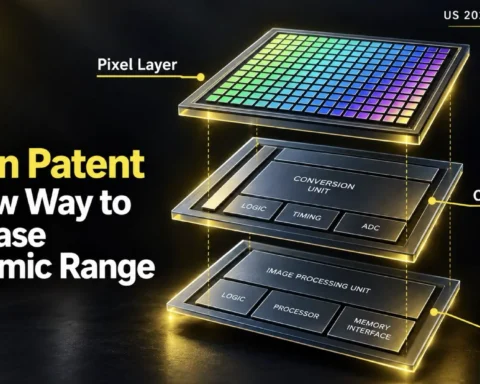
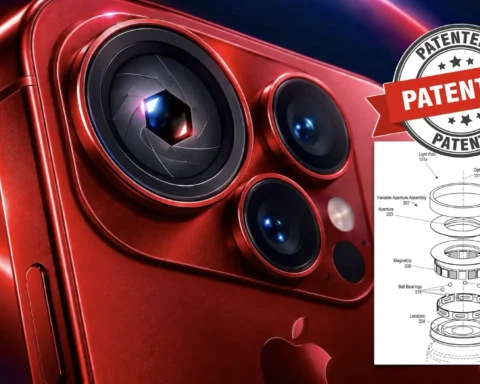
Battery technology is often the unsung hero in innovation. But here, it may be the linchpin that lets Apple unlock cinema-grade capabilities in devices as small as a coin. Hence, this battery innovation doesn’t stand alone. It joins a growing collection of Apple patents that suggest a serious commitment to next-generation mobile cinematography. Earlier this year, Apple filed a patent for a 20-stop image sensor, detailed in Apple Just Patented an Image Sensor with 20 Stops of Dynamic Range, hinting at capabilities once exclusive to high-end cinema cameras. Pair that with Apple’s Active Cooling Patent May Unlock the Future of Mobile Cinematography, which outlines how Apple plans to manage thermal loads from image processing hardware, and you begin to see a serious pipeline for pro-level tools. Then there’s Apple Reinvents the Iris: New Patent Reveals Soft-Membrane Aperture for Future iPhone Cameras, which introduces a flexible mechanical aperture design—yet another fundamental component for capturing cinematic visuals in mobile form. Taken together, these filings reveal more than isolated ideas. Apple appears to be constructing an integrated imaging ecosystem, one where power, optics, and thermal control work in unison inside devices small enough to wear or pocket.

The Takeaway
While the world focuses on Apple’s sleek UI and polished product reveals, this patent reminds us that real innovation often starts deep inside the hardware stack. By solving battery degradation at the microscopic level, Apple is preparing for a future where power-hungry sensors, lenses, and processors live comfortably inside wearables. For filmmakers and creators, that could mean one thing: Professional tools are about to get invisible.

Gear mentioned in this article
Available on Amazon
| Product | New | Renewed | Used |
|---|---|---|---|
| Apple AirPods | — | — | From $84.55 |
| Apple iPhone Pro | $753.60 | — | — |
Prices checked: Oct 2, 2026, 1:30 PM GMT+0000
As an Amazon Associate, Y.M.Cinema earns from qualifying purchases. If you buy through our links, we may earn a small commission at no extra cost to you.
Product prices and availability are accurate as of the date/time indicated and are subject to change. Any price and availability information displayed on Amazon.com at the time of purchase will apply to the purchase of this product.
CERTAIN CONTENT THAT APPEARS ON THIS SITE COMES FROM AMAZON. THIS CONTENT IS PROVIDED “AS IS” AND IS SUBJECT TO CHANGE OR REMOVAL AT ANY TIME.