Samsung is bringing nanotech to your smartphone, and it could change mobile filmmaking as we know it. The company’s new Nanoprism technology is designed to dramatically improve low-light image quality by guiding more light into each pixel. In a world where smartphone cameras are getting smaller, Samsung has just found a way to make them smarter.

What Is Nanoprism?
Nanoprism is a nano-scale optical layer built into the pixel’s microlens. It acts like a tiny funnel that bends and directs light more efficiently into the photodiode below. The result? Around 25% better light absorption, without increasing sensor or pixel size. It’s part of the new ISOCELL JNP sensor, and it’s already in production. In simple terms: more light per pixel = better image quality, especially in challenging lighting. That’s a major win for mobile filmmakers trying to shoot cinematic content on the go.

Nanoprism is a new technology first proposed in 2017 based on Meta-Photonics source technology that Samsung Advanced Institute of Technology (SAIT) has accumulated for many years. Unlike meta-lens research, which was active in Meta-Photonics research at the time and minimized light dispersion, it used the reverse idea of maximizing dispersion to separate colors. The Nanoprism is a meta-surface-based prism structure that can perform color separation. So, what has changed from the existing pixel structure? In the existing microlens-based optics, the microlens and the color filter of the pixel are matched 1:1, so only the light of the color corresponding to the color filter of each pixel can be accepted by the pixel. In other words, there was a physical limit that light could only be received as much as the size of the defined pixel.
-Samsung
Why This Matters for Filmmakers
For creators who shoot with smartphones, light is everything. And with ultra-small pixels (as seen in Samsung’s 200MP sensors), image quality can suffer, especially at night. Nanoprism solves that by making small pixels act like big ones, at least in how they gather light. This makes it easier to shoot video in natural light, avoid noisy shadows, and retain dynamic range without post-production hacks. This isn’t theory. It’s already happening. Samsung says this tech is already shipping in current image sensors, meaning filmmakers may already have this upgrade in their pocket.
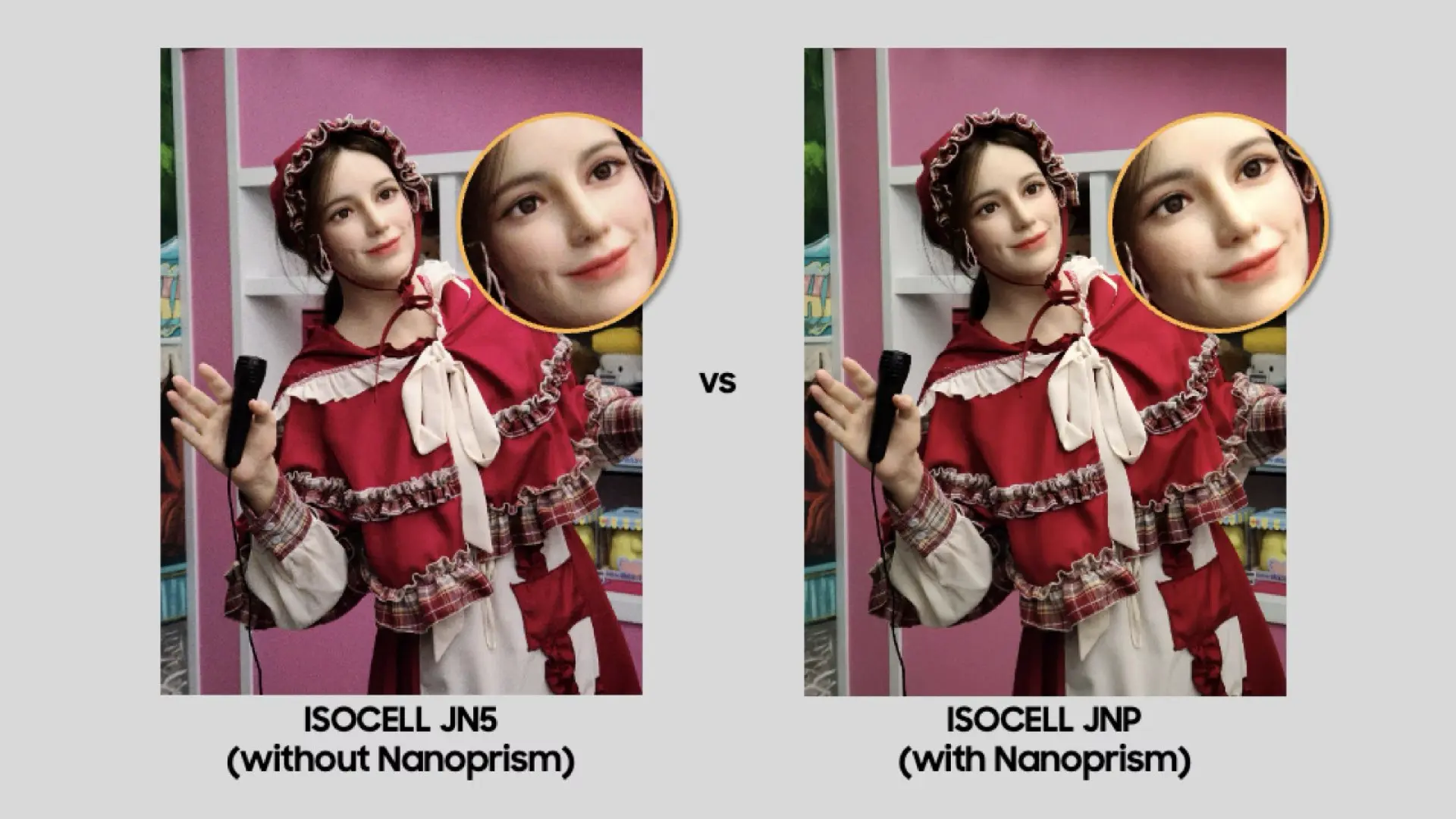
ISOCELL JNP with Nanoprism has been in mass production this year, and is incorporated in recent smartphones, contributing to an enhanced user experience. Because more light can be received without loss, it is possible to take bright and clear pictures, especially in challenging light conditions. In fact, the ISOCELL JNP with Nanoprism has 25% improved sensitivity compared to the previous ISOCELL JN5 with the same specifications.
-Samsung
Part of a Bigger Imaging Strategy and Sensors’ Race
Samsung’s new tech isn’t a one-off. As we covered in Samsung Develops Compact Magnetic Aperture for Smartphone Cameras, they’re also working on adding real mechanical control to smartphone lenses, another feature that appeals directly to filmmakers who want depth-of-field control. And for those looking for high-end mobile gear, This Is the Best High-End Smartphone Deal on Amazon Prime Day showed that pro-level camera phones are more accessible than ever. BTW, Apple and Canon are also raising the bar. Apple Just Patented an Image Sensor With 20 Stops of Dynamic Range, potentially bringing Hollywood-level color grading to mobile footage. Meanwhile, Canon’s 24K Full-Frame Monster Sensor Is Ready for high-end cinema production. But unlike Apple’s patent or Canon’s cinema sensors, Nanoprism is real and already deployed in the sensors powering flagship smartphones today. In fact, Samsung’s Nanoprism is a practical, production-ready innovation that makes smartphone cameras better for serious video work. If you’re a filmmaker using your phone as a tool, this is the kind of upgrade that actually matters: better low-light, better colors, and sharper detail, all without needing a bigger camera.