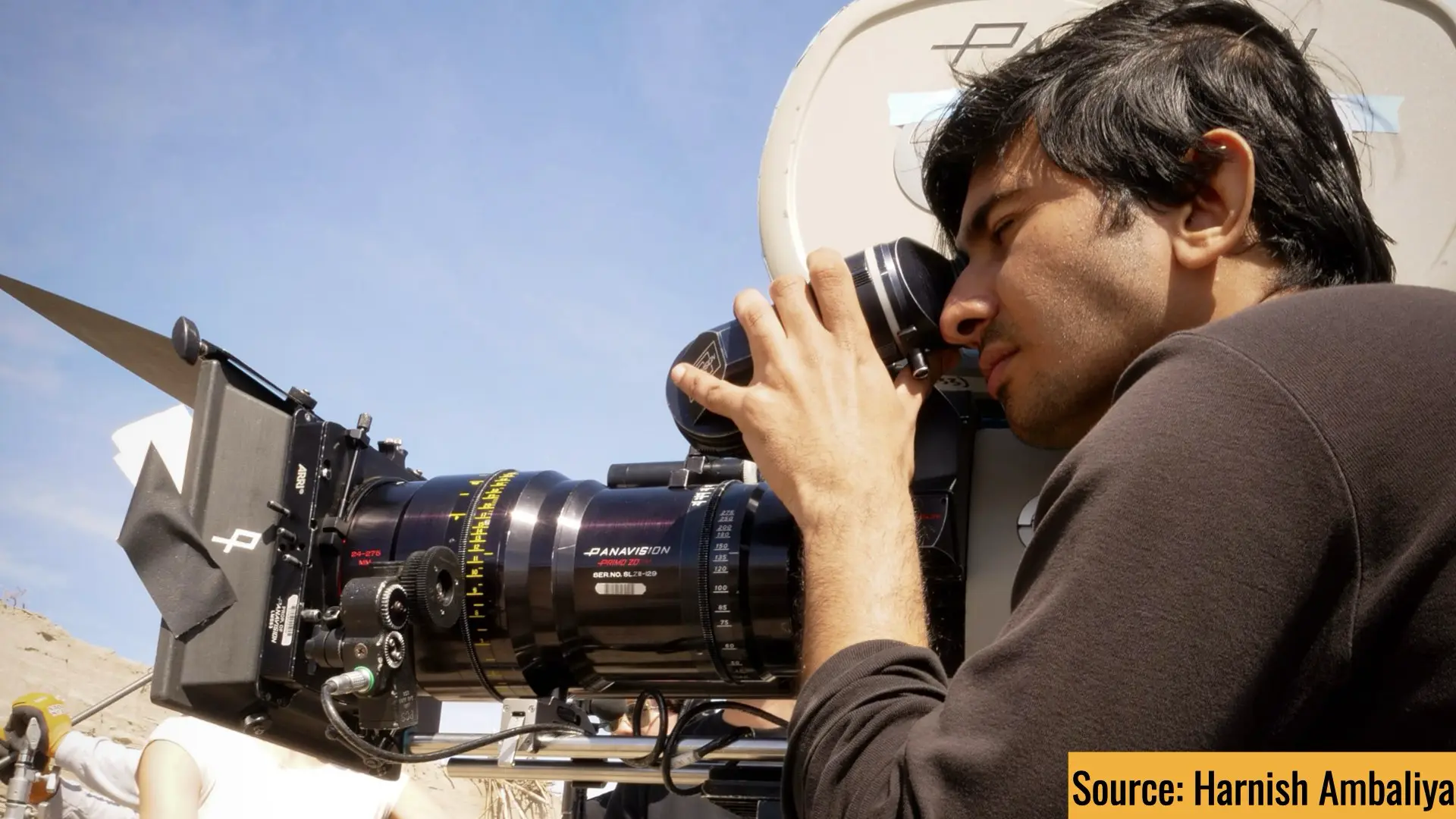
At YMCinema, we believe in the enduring power of cinema and the filmmakers who dedicate their lives to creating exceptional stories, images, and emotions. In an era where technology continues to evolve at a rapid pace, we want to celebrate those who remain grounded in the fundamental principles of filmmaking, those who embrace the craftsmanship that defines true artistry. This is the first of many articles in our new series, focusing on filmmakers who are forging their path through hard work, passion, and dedication to the art. Our first feature is about Harnish Ambaliya, a cinematographer who has poured his heart and soul into his craft. His work on the short film Dead Pet Shark exemplifies technical expertise, as well as a deep, emotional commitment to filmmaking that we at YMCinema admire. Harnish’s story is one of perseverance, coming from humble beginnings in the slums of Mumbai to working his way up the ranks in the competitive world of cinema. His journey is a testament to the power of ambition, humility, and the pursuit of artistic excellence.

Growing up in the slums of Mumbai, India, I never imagined a life in filmmaking. My sole focus was to build a better life for my family and myself. I took on countless odd jobs from a young age – working in cyber cafes, fixing electronics, making jewelry – relentlessly hustling to make ends meet. My life took an unexpected turn at 18 when, through a PR agency I was working for, I connected with acclaimed musician Kailash Kher. The next day, I was flying across the country with him, embarking on a four-year journey that exposed me to a world I never knew existed: luxury hotels, influential people, contrasting sharply with the 10×10 chawl home I returned to.
– Cinematographer Harnish Ambaliya
The Story Behind Dead Pet Shark
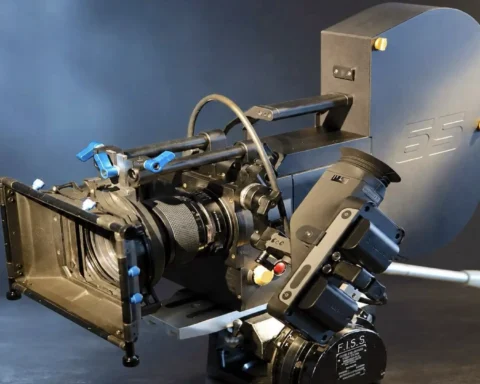
Dead Pet Shark is a testament to Harnish’s commitment to the traditions of filmmaking. Shot entirely on 35mm Kodak film, the film’s fable-like aesthetic was carefully crafted, choosing film as the medium to capture the soul of the story. This decision wasn’t taken lightly, but when director Misha approached Harnish with the idea, the story and its visual world immediately demanded it. It was about the unique look and texture that only film can provide. The choice of 35mm film led Harnish and his team to seek a Panavision New Filmmaker Program Grant, which gave them access to professional 35mm cameras and lenses, providing an invaluable resource for the project. With mentorship from Robert Yeoman ASC, Wes Anderson’s long-time cinematographer, Harnish was able to elevate the visual narrative of the film.

For the next eight years in India, I built a successful career producing and directing music videos and commercials. Yet, deep down, I knew my heart truly belonged behind the camera, shaping light and shadow. This realization led me to a pivotal decision: to move to the U.S. and reinvent myself as a cinematographer. Despite my achievements in India, self-doubt has always lingered. Was I truly a filmmaker, or was this just a fortunate happenstance? I decided if I could get accepted into the prestigious USC film school, often considered the best, perhaps then I could truly believe I was a filmmaker.
– Cinematographer Harnish Ambaliya
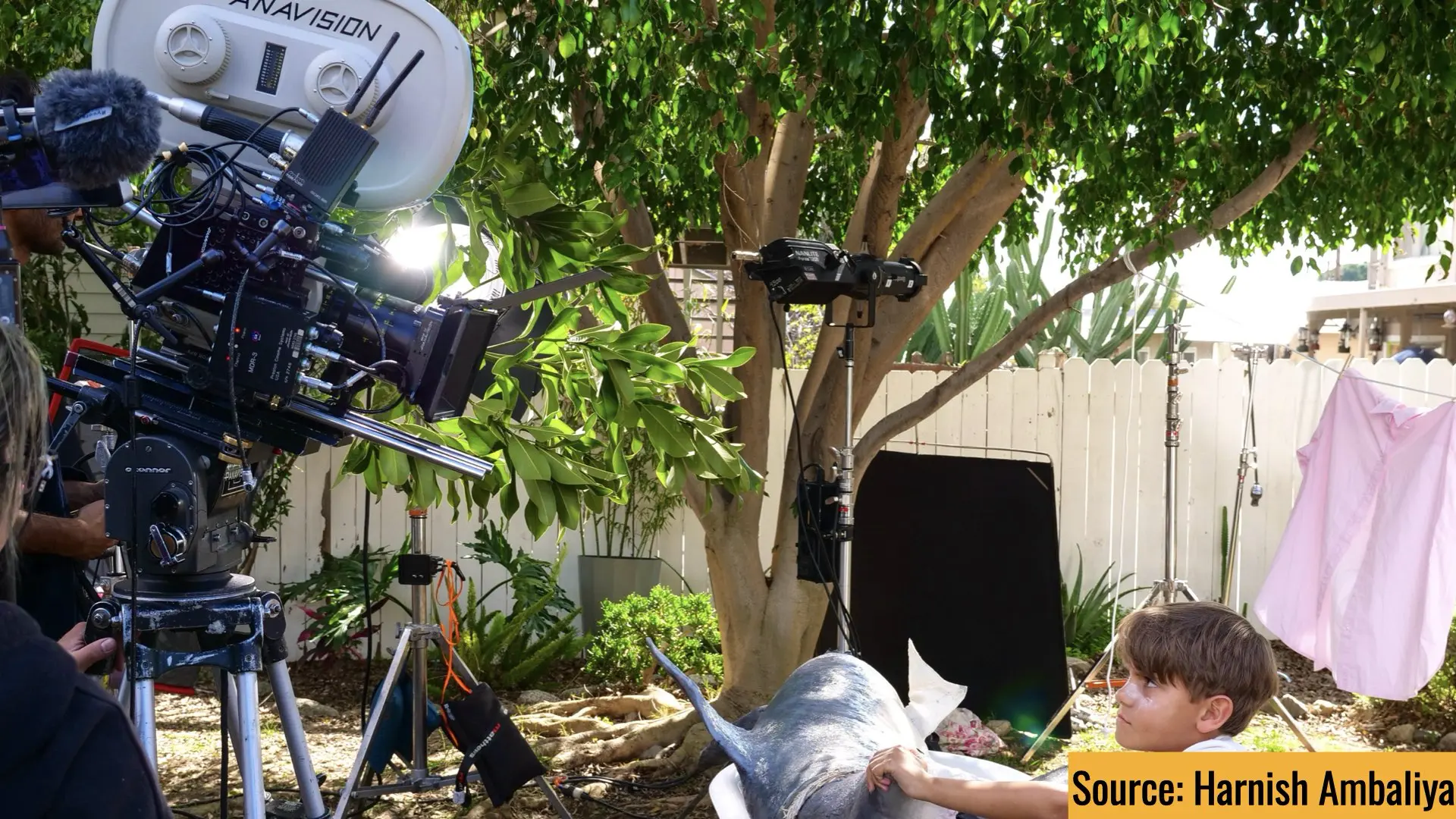
Robert’s guidance wasn’t only technical, but also about imparting wisdom from decades of experience in cinema. For Dead Pet Shark, the focus was on creating something that felt tangible and real, with light and shadow shaping the characters’ emotional journey. The film’s story follows a young boy named Arthur, who finds a dead shark on the beach and attempts to resurrect it. The narrative’s emotional depth was matched by the visual strategy, where every shot, every exposure choice, carried meaning.

Having not grown up watching films – my parents viewed it as a distraction – I find it challenging to draw cinematic references. Instead, my inspirations come from the world I’ve lived in, the people I’ve met. My peers often categorize my work as “stylized,” and I frequently question where this comes from?. Perhaps it’s the stark contrast of my life – one day flying to a new city, the next returning to my tiny chawl home. This intense juxtaposition, where the colorful world outside blurred with the harsh reality of the slums I still inhabited, often makes my work feel, as you say, “unrealistic.” This distinct perspective heavily influenced my approach when I was brought on board for “Dead Pet Shark.”
– Cinematographer Harnish Ambaliya
The Challenges and Triumphs of Shooting on Film
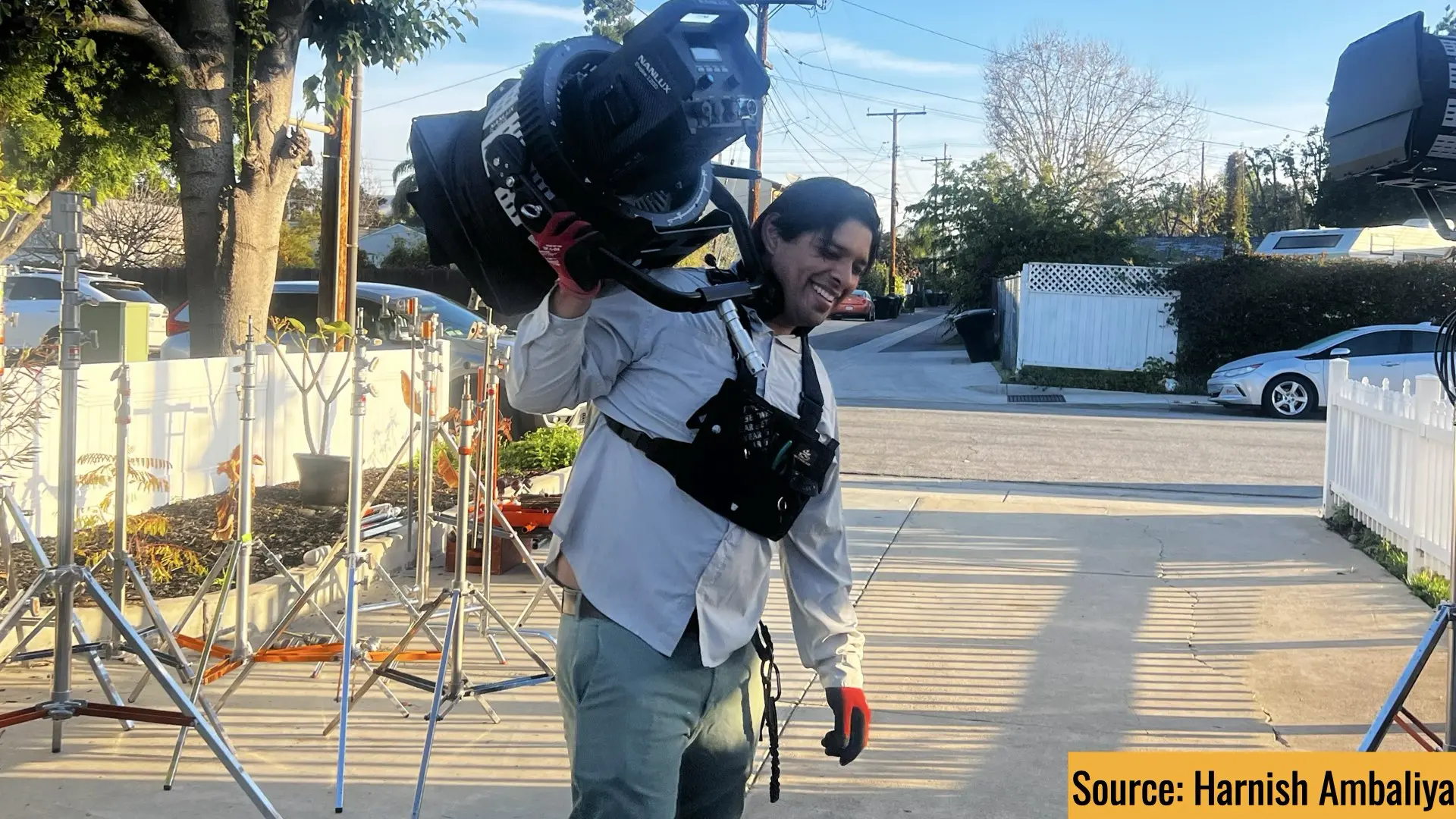
Choosing to shoot on 35mm brought its own set of challenges. Shooting on the beach with kids, knowing that any grain of sand could ruin the film, was a constant source of anxiety. Harnish’s commitment to the craft meant taking extra steps, like loading the film himself every night, ensuring every frame would capture the story’s essence.

“Dead Pet Shark” tells the poignant story of a young boy named Arthur, who, after finding a dead shark on the beach, attempts to resurrect it, only to learn a difficult lesson about life and loss. When director Misha reached out, proposing we shoot on 35mm film, I was initially unsure. However, after reading the script, I was convinced that only film could truly do justice to this unique fable. Misha’s visual references, primarily Wes Anderson films, immediately pointed me in the right direction. Knowing that Robert Yeoman ASC, Wes Anderson’s long-time cinematographer, would be an invaluable mentor for my first 35mm project, I reached out to him.
– Cinematographer Harnish Ambaliya
Shooting on film also required a level of discipline that’s sometimes lost in the world of digital cinema. The team had to be present in the moment, aware that every frame came at a cost. There were no “do-overs,” and the pressure was palpable, making every decision feel monumental. This intense focus not only brought out the best in the team but also created a profound connection between Harnish and the film. As he put it, “For the first time as a DP, I felt truly connected to my craft.”
Robert became an incredible mentor from day one. He even penned a letter of recommendation for the Panavision New Filmmaker Program Grant, which provided us with essential 35mm camera and lens packages. His dedication went beyond that; he spent time with me during color grading, offering invaluable insights. His comment on the film, “What you have created is a very unique world, like a fable, which we don’t see in real life,” perfectly captured our ambition. Robert’s support was unwavering; during our prep day at Panavision, he showed up not to instruct, but simply to be present, absorbing every step of the process.
– Cinematographer Harnish Ambaliya
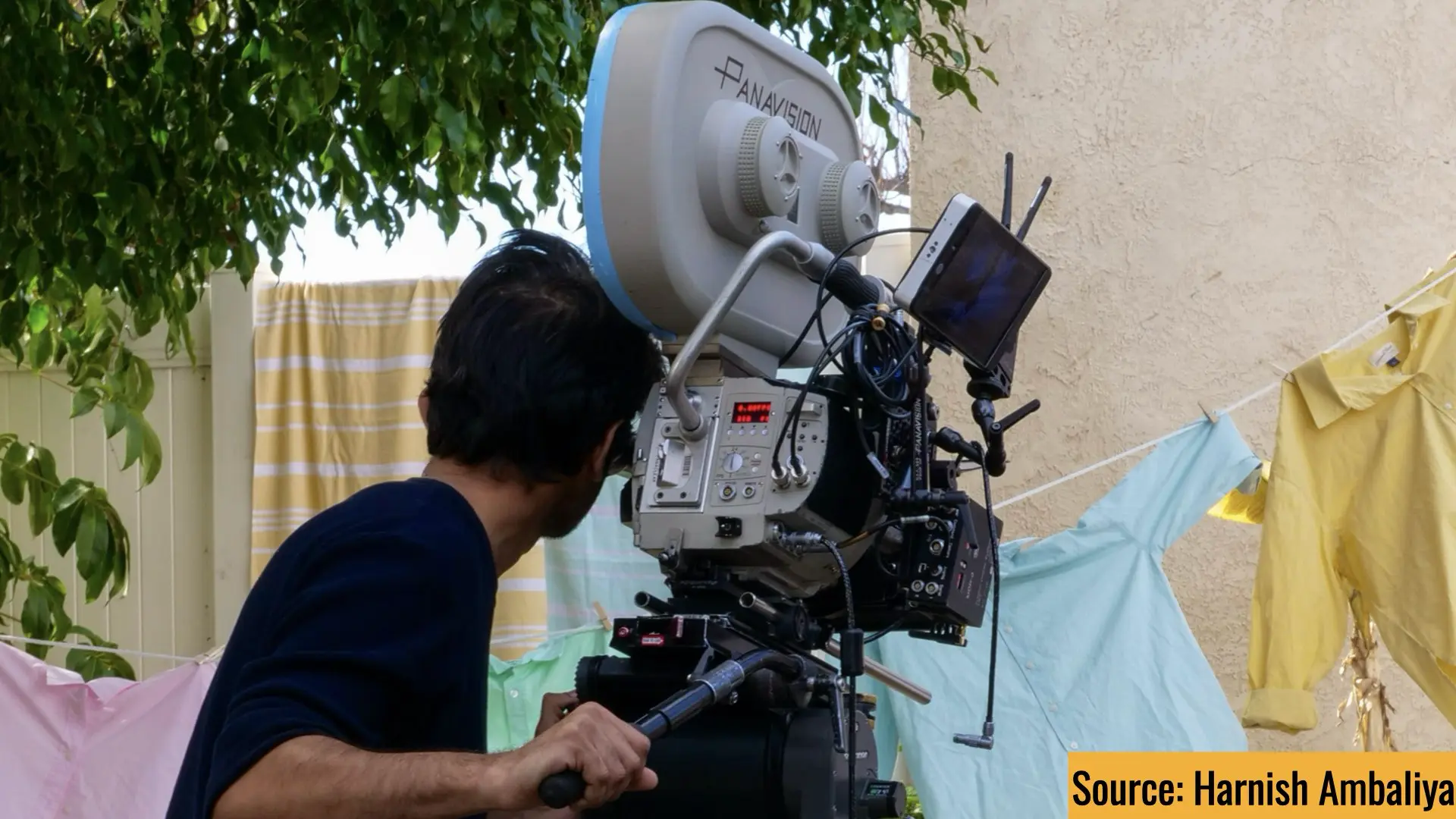
As cinematographers, we all have biases – mine, stemming from my dark, grunge upbringing, naturally leans towards high contrast. For “Dead Pet Shark,” my gaffer and I faced the challenge of not letting this bias affect our approach, as the film called for a softer, more subtle contrast palette. This required deliberate choices in lighting and exposure to achieve the delicate aesthetic Misha envisioned.
– Cinematographer Harnish Ambaliya
But perhaps the most rewarding part of shooting on film was the unique texture it provided. Despite initial fears about underexposing the film, the final result exceeded expectations. The film’s latitude allowed for incredible detail to emerge in post-production, and the scans brought out a quality of image that digital cameras simply can’t replicate.
The Rewards of Authentic Filmmaking
Harnish’s journey through Dead Pet Shark focuses on finding a deeper connection to the work. It’s a reflection of the discipline and responsibility a cinematographer bears in every shot. His decision to use film, in a world where digital has become the norm, speaks volumes about his commitment to preserving the art of filmmaking.
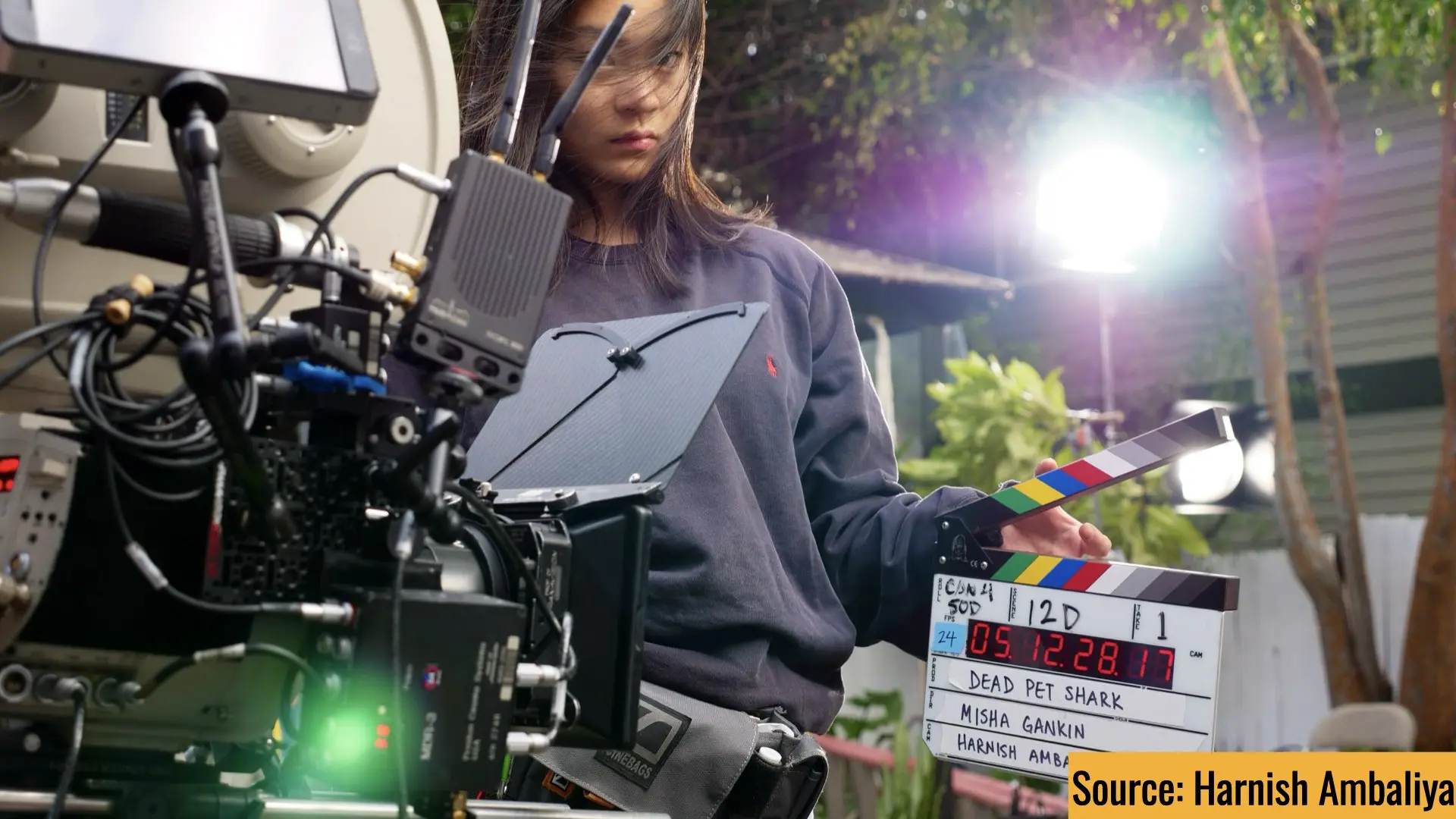
Shooting on 35mm for the first time was an immense learning experience, especially regarding discipline. Before every setup, my gaffer would confirm all light meter ($29.98 on Amazon) readings, and before every roll, I’d take readings myself. The entire set adopted a new level of focus. The moment the camera started rolling, a pin-drop silence fell; no one was on their phones, everyone was keenly attentive, acutely aware that every second the camera rolled, money rolled with it. This forced a precision and presence that’s often absent in digital workflows.
– Cinematographer Harnish Ambaliya
Dead Pet Shark has since garnered significant recognition, premiering at Dances With Films Festival in New York, a screening at the LA Shorts International Film Festival, and a spot at the Chattanooga Film Fest. Harnish’s journey has only just begun, and the success of this project shows the power of hard work and dedication to the craft.
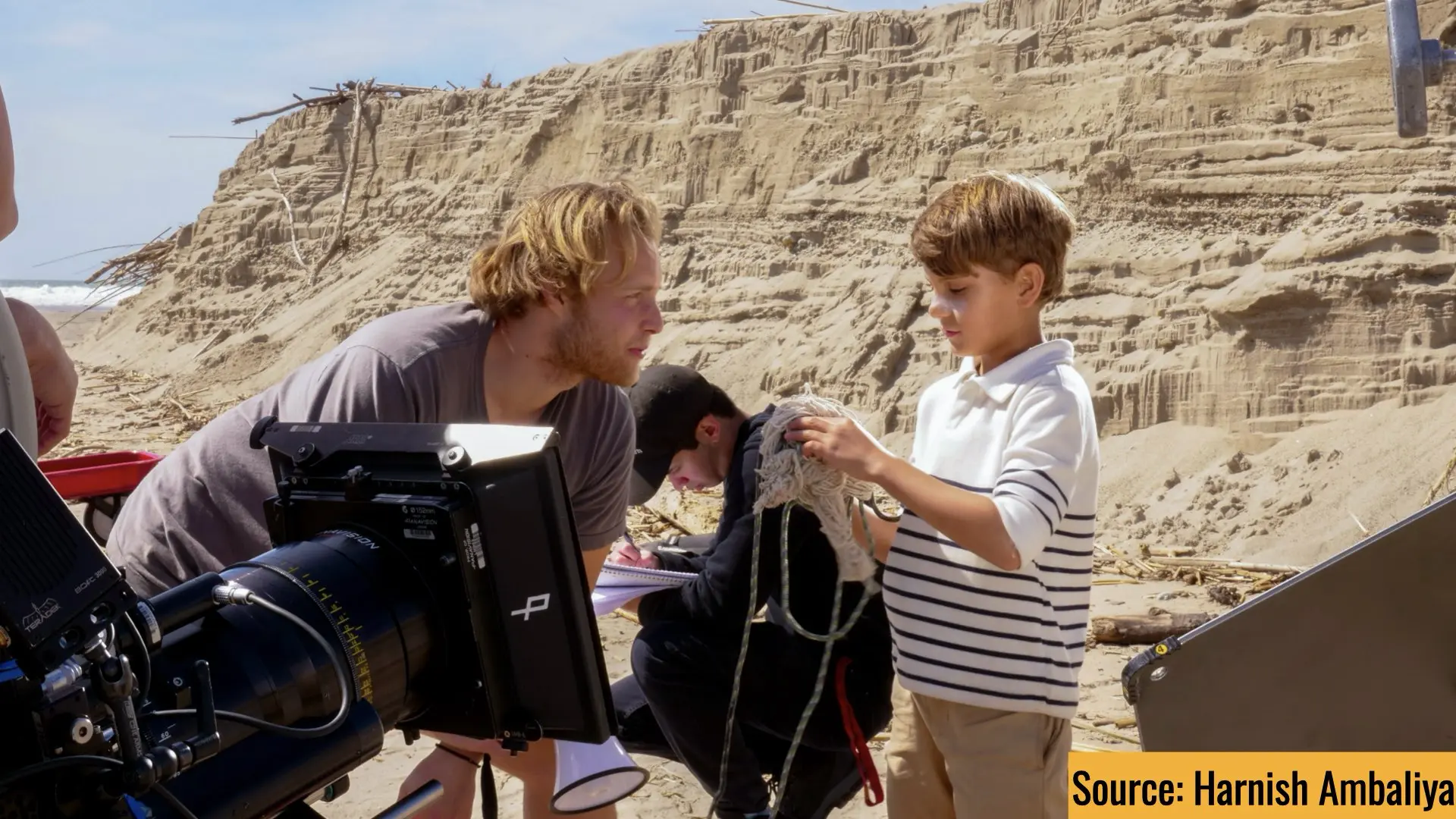
No AI generated. Just pure Kodak 5203
As stated by Harnish: “Creatively, we shot on Kodak 5203, known for its fine grain. Many advised me to overexpose the film to retain shadow detail, assuring me I wouldn’t lose highlights. However, fearful of blowing out the sky, which was a crucial element of the film’s aesthetic, I ended up exposing for the highlights on most shots. This resulted in many shots being underexposed. Yet, I was astonished by the latitude film provided during the coloring process. Fotokem, our processing house, delivered high-quality 4K .DPX log scans. When I lifted the shadows in post, it revealed an incredible amount of detail and a unique texture that genuinely amazed me. While some underexposed shots made me question my initial decision, the latitude of film truly surpasses any digital camera. Would I expose similarly again? Probably not, but it was an invaluable lesson”.

While this connection to the craft is deeply rewarding, it also comes with a level of anxiety. I found myself struggling to sleep at night, or I’d exhaust myself trying not to dwell on whether everything would turn out okay. Until you get the scans back, you genuinely don’t know – what if there was sand in the magazine? What if the film comes out completely black? But luckily, all the precautions we took paid off. When I finally saw the scans, I was absolutely blown away by the quality film holds; it’s genuinely hard to put into words.
– Cinematographer Harnish Ambaliya
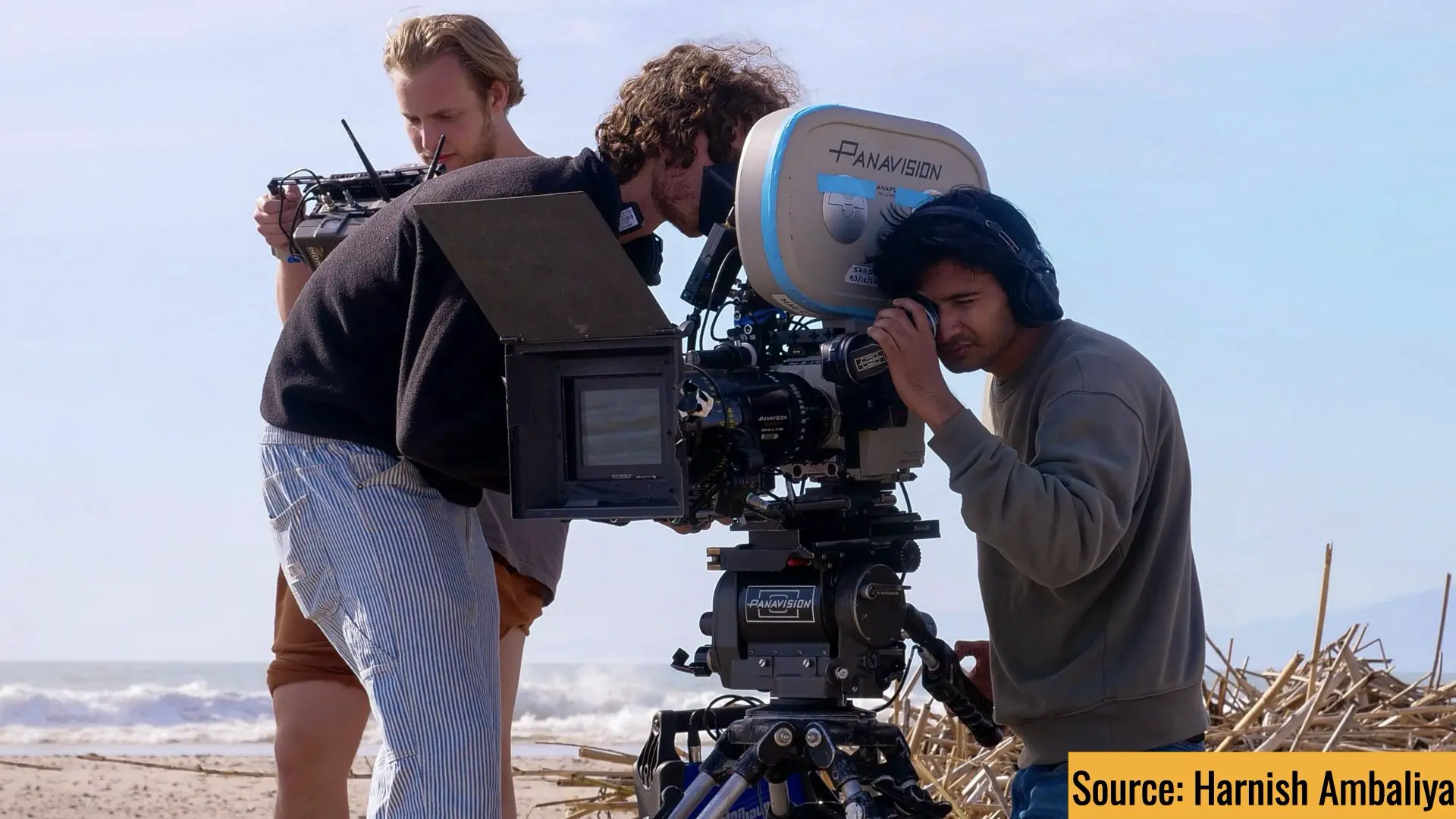
“Ultimately, choosing 35mm film for “Dead Pet Shark” was unequivocally worth it. It not only fulfilled our artistic vision for a unique, fable-like aesthetic but also pushed me to grow immensely as a cinematographer. The challenges were significant, but the rewards – the unparalleled image quality, the profound discipline instilled on set, and the deep connection to the filmmaking process – were far greater. The film’s continued success, including its premiere at the prestigious Dances With Films Festival in New York, its upcoming screening at the LA Shorts International Film Festival (an Oscar and BAFTA-qualifying event), and its showing at the Chattanooga Film Fest, further validates this choice. It was an experience that profoundly shaped my artistic journey, reminding me that the path of a storyteller is one of continuous learning and exploration.” Harnish ends.
Follow Harnish Ambaliya
Instagram: @harnishambaliya
IMDb: Harnish Ambaliya IMDb
Calling All Cinematographers and Filmmakers
At YMCinema, we want to continue to support and amplify the voices of filmmakers who are committed to true, hard-earned artistry. If you are a cinematographer, director, or filmmaker with a passion for creating genuine, breathtaking work, we invite you to share your story with us. Please send us an email and let us know how your journey in filmmaking has shaped your perspective, craft, and passion for the art. We are eager to feature you and your work in our ongoing series dedicated to promoting filmmakers who are pushing boundaries, staying true to the art, and preserving the traditions of filmmaking.
Gear mentioned in this article
Available on Amazon
| Product | New | Renewed | Used |
|---|---|---|---|
| light meter | $29.98 | — | — |
Prices checked: Oct 2, 2026, 1:30 PM GMT+0000
As an Amazon Associate, Y.M.Cinema earns from qualifying purchases. If you buy through our links, we may earn a small commission at no extra cost to you.
Product prices and availability are accurate as of the date/time indicated and are subject to change. Any price and availability information displayed on Amazon.com at the time of purchase will apply to the purchase of this product.
CERTAIN CONTENT THAT APPEARS ON THIS SITE COMES FROM AMAZON. THIS CONTENT IS PROVIDED “AS IS” AND IS SUBJECT TO CHANGE OR REMOVAL AT ANY TIME.