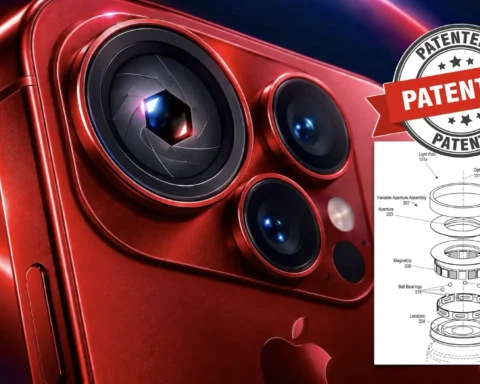
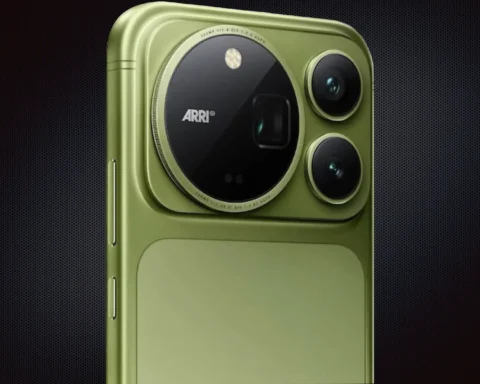
A small prism slides. Focus locks. Heat drops. Recording keeps rolling. Apple’s new patent called Camera Module With Moving Prism describes a simple motion that can change the way we shoot video on a phone. Let’s check it out!
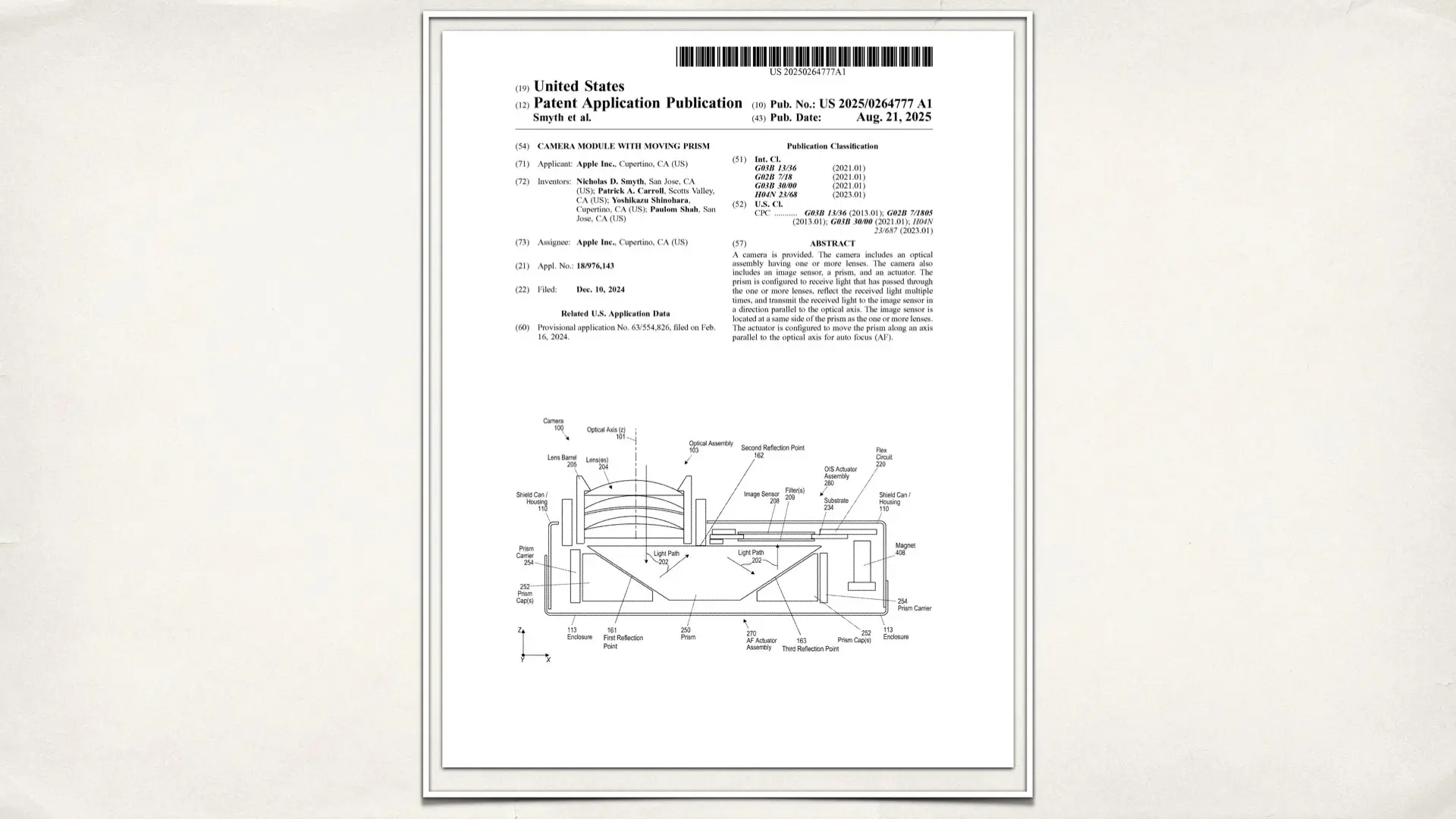
The idea in one minute
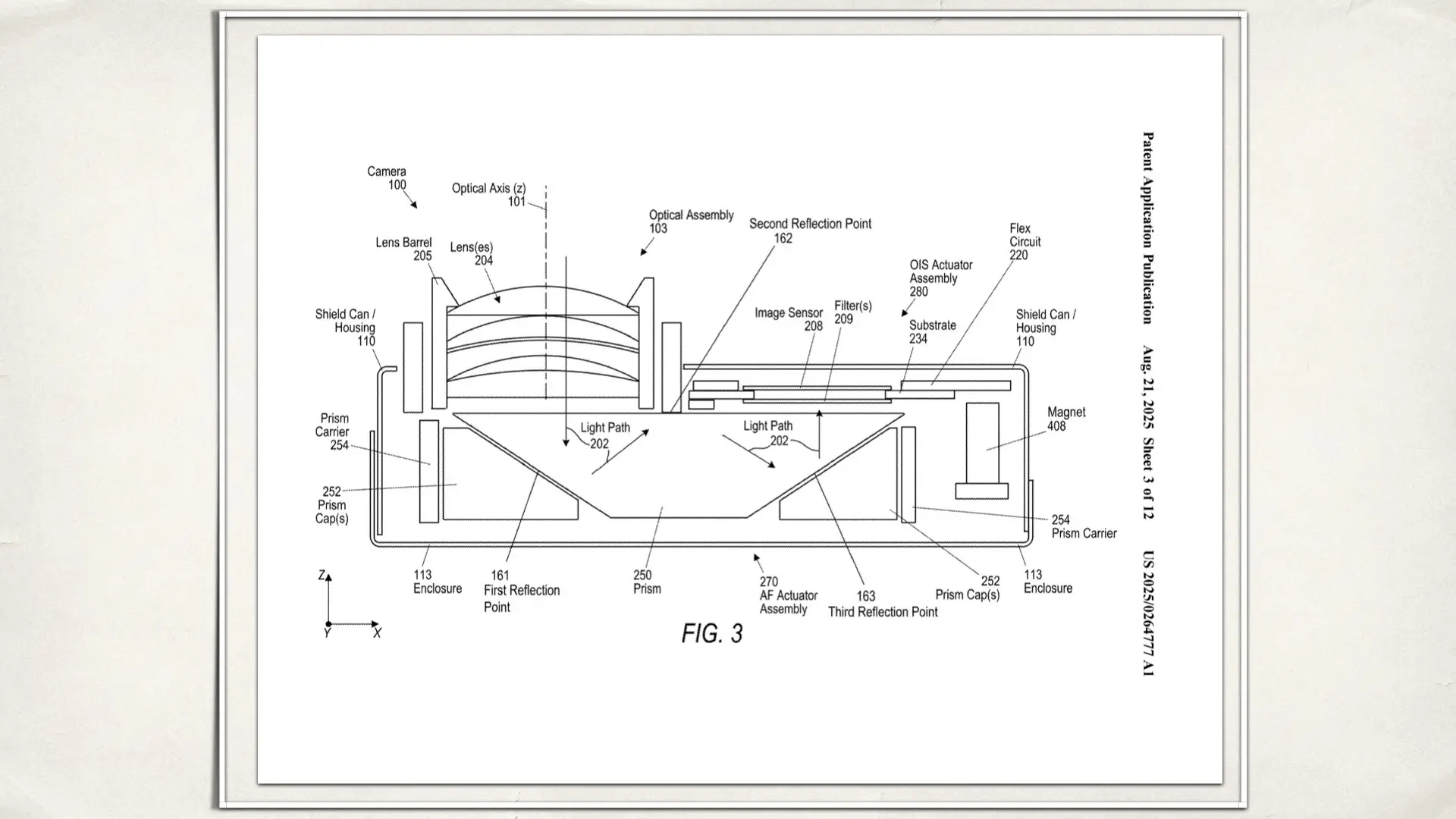
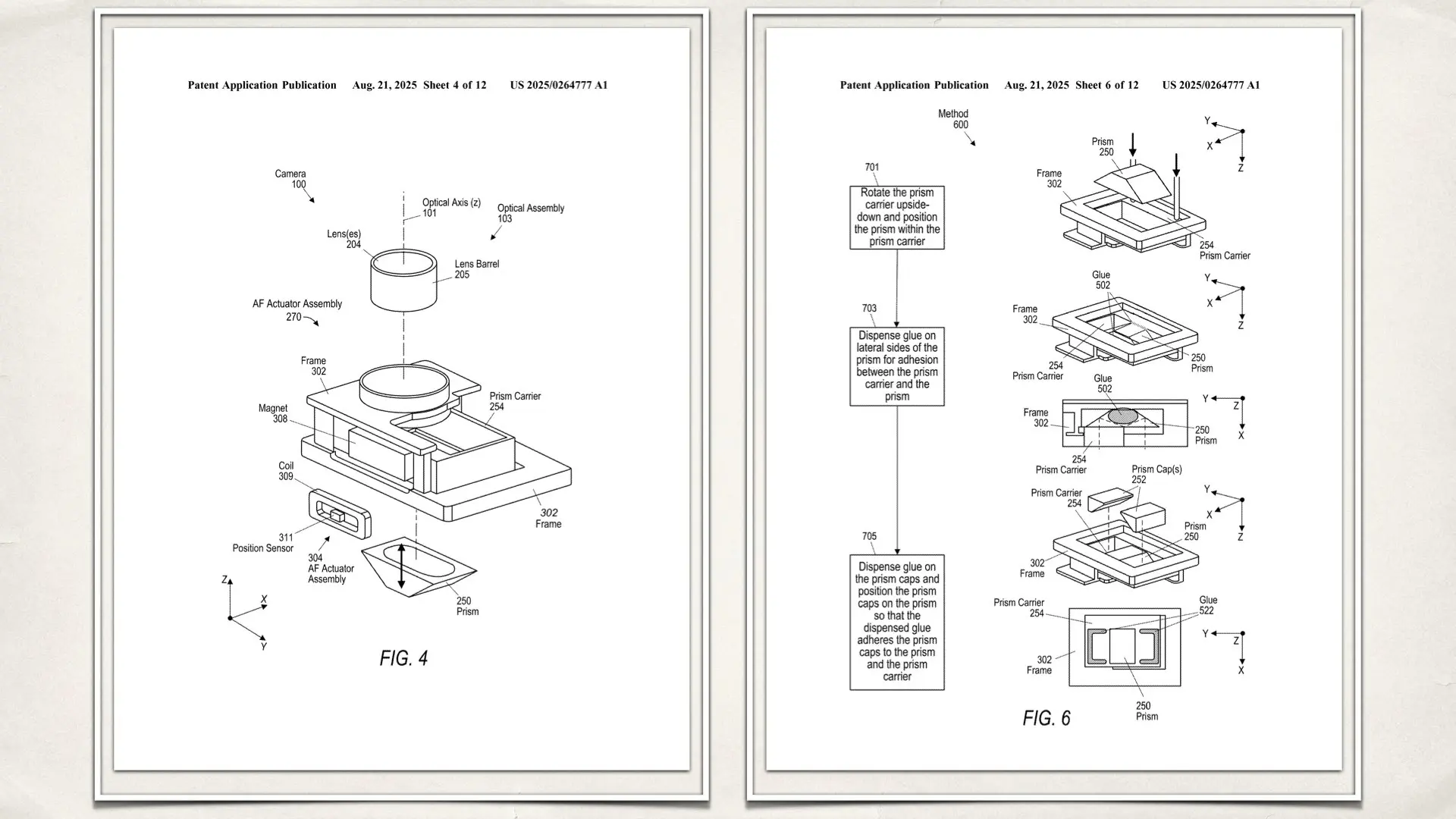
Apple places a prism below the lens and routes light so it exits toward an image sensor that sits on the same side as the lens. An actuator then moves that prism along the optical axis. When the prism travels a little, the optical path changes a lot. Focus snaps without shifting heavy glass groups. The image sensor keeps stabilizing in x and y. Because the sensor does not travel forward and back for autofocus, the camera stack gets thinner and heat escapes faster. Result. quicker focus, cleaner stabilization, longer takes.

Why this matters to filmmakers
Closer focus on tele cameras
Moving the prism can extend the effective autofocus stroke. That can pull minimum focus closer on tele modules. Think tight detail shots with real separation and less focus breathing during racks.
Longer 4K sessions
A slimmer vertical stack and a sensor that hugs the chassis improve heat flow. Throttling and thermal cutoffs are the silent enemy of mobile filmmaking. Better heat paths mean more stable frame rates over time.
Smoother stabilization
With autofocus handled by the prism, the sensor dedicates its motion budget to stabilization. Expect steadier micro movement in handheld shots and fewer corrections that look jumpy.
Packaging freedom
Saving height gives Apple options. Space can shift to a larger sensor, a larger battery, or more robust actuator hardware. All three help filmmakers.
How it fits Apple’s broader imaging roadmap
This patent is another piece in a system that our readers have followed closely. The suspension and actuator work you saw earlier sets the stage for a prism that focuses while the sensor stabilizes. Within this context, see Apple’s Triple Patent Play. Building the Most Advanced iPhone Sensor Shift System which explains the multi patent strategy for sensor shift. Pair it with The iPhone 20 Could Be a True Cinema Camera. Here’s What the Patents Reveal for the bigger picture. For the actuator side, Apple’s Latest Camera Patent. The Secret to Smoother Sharper iPhone Filmmaking dives into moving coils and dynamic flex circuits. Stabilization quality connects directly to Apple’s New Suspension System Could Redefine iPhone’s Image Stabilization and sustained capture links nicely to Apple’s New Battery Patent Hints at Small Cameras with Professional Potential. And there you go! Apple is definitely cooking something big regarding the iPhone’s filmmaking capabilities.

Teacher’s chalkboard
Imagine a hallway for light. The prism is that hallway. Slide the hallway a little and the trip length changes a lot. Focus shifts without moving big lens groups. The sensor stays put to keep things cool and stable. Fewer heavy parts move. Efficiency goes up.
What to watch for in a shipping product
-
Focus speed on the tele module during video
-
Macro utility on tele for product shots and inserts
-
Reduced focus breathing in racks
-
Longer continuous recording before temperature warnings
-
Stability in fine handheld motion
Engineering tradeoffs to keep in mind
Extra reflective surfaces demand excellent coatings and tight angles to avoid flare and contrast loss. A moving prism must ride on precise guides with accurate position sensing. The actuator needs to be fast and quiet with modest power draw. Each choice affects thermal headroom and runtime.
Bottom line
A moving prism looks simple, yet it reshapes responsibilities. Focus here. Stabilize there. Cool everything better. If Apple brings this design to market, it will not turn an iPhone into a cinema camera overnight. It will remove more reasons to leave the phone in your pocket when the shot matters.