
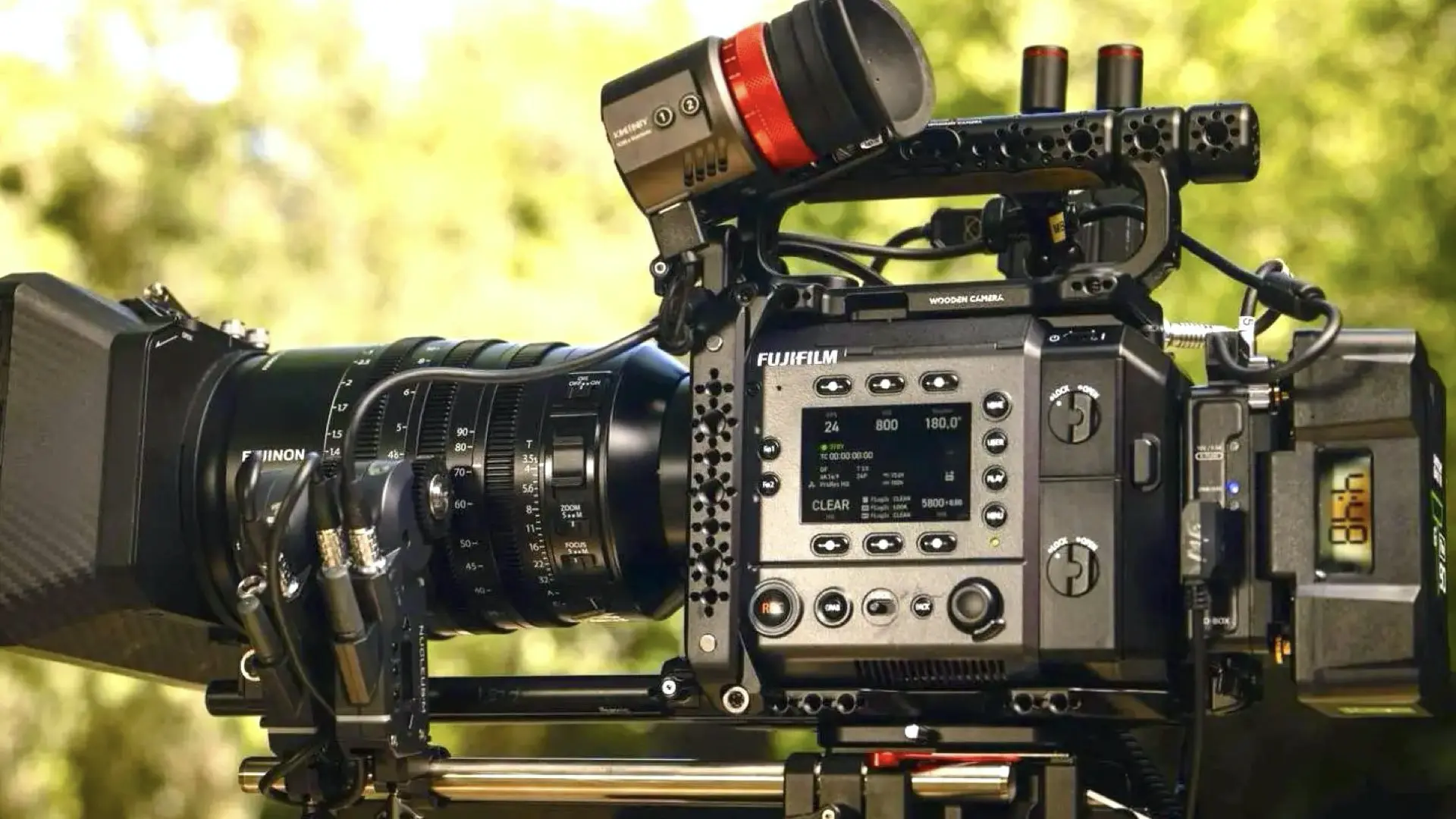
Fujifilm’s entry into the cinema camera world has drawn plenty of attention, and for good reason. The GFX ETERNA 55 offers a combination of Fujifilm’s proven color science and a large-format sensor that opens new creative options. But before you place an order, it’s worth examining what this camera actually offers in real-world use, where it excels, and where potential buyers need to pause and think.
 Fujifilm GFX ETERNA 55
Understanding what it is
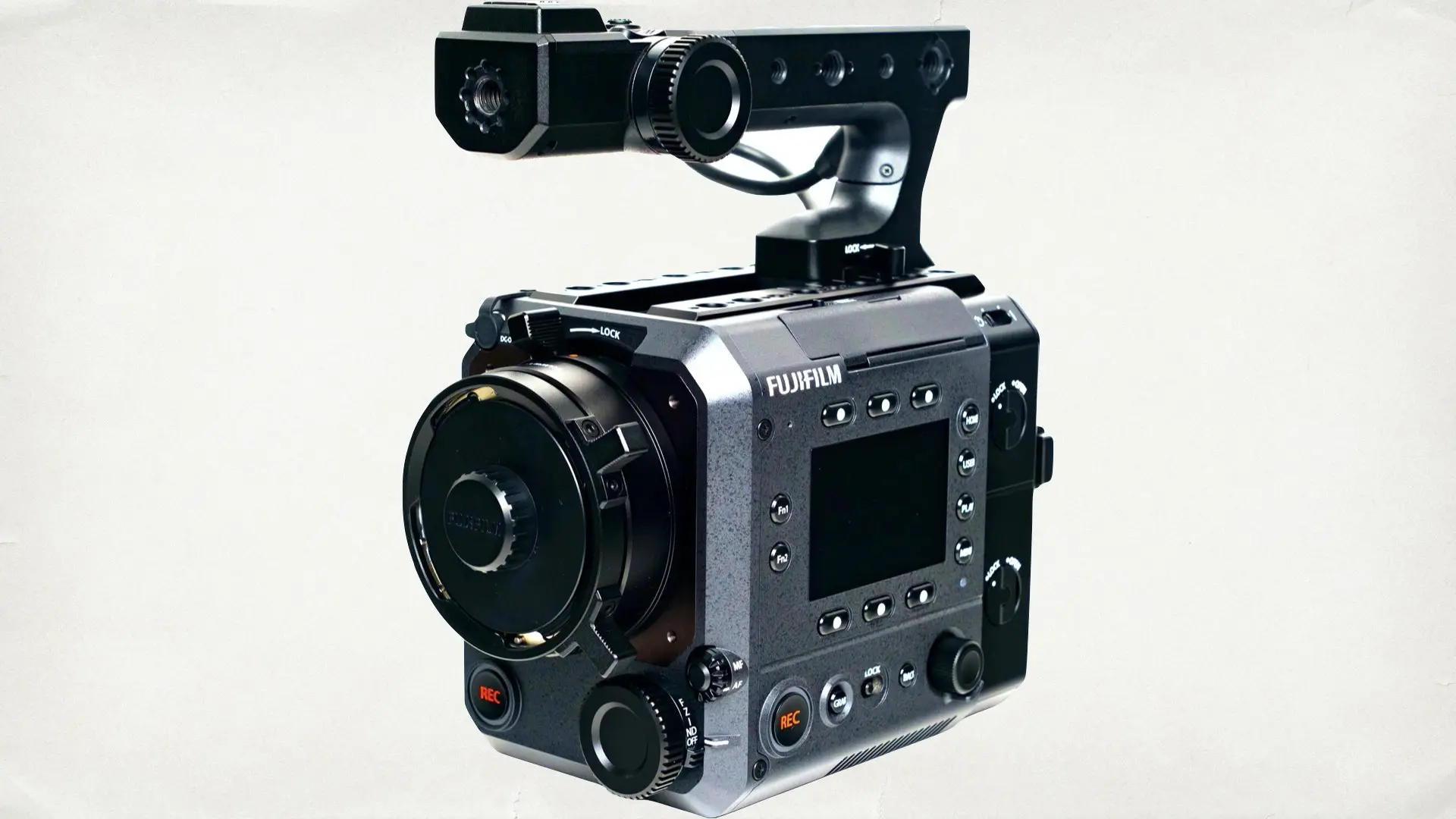
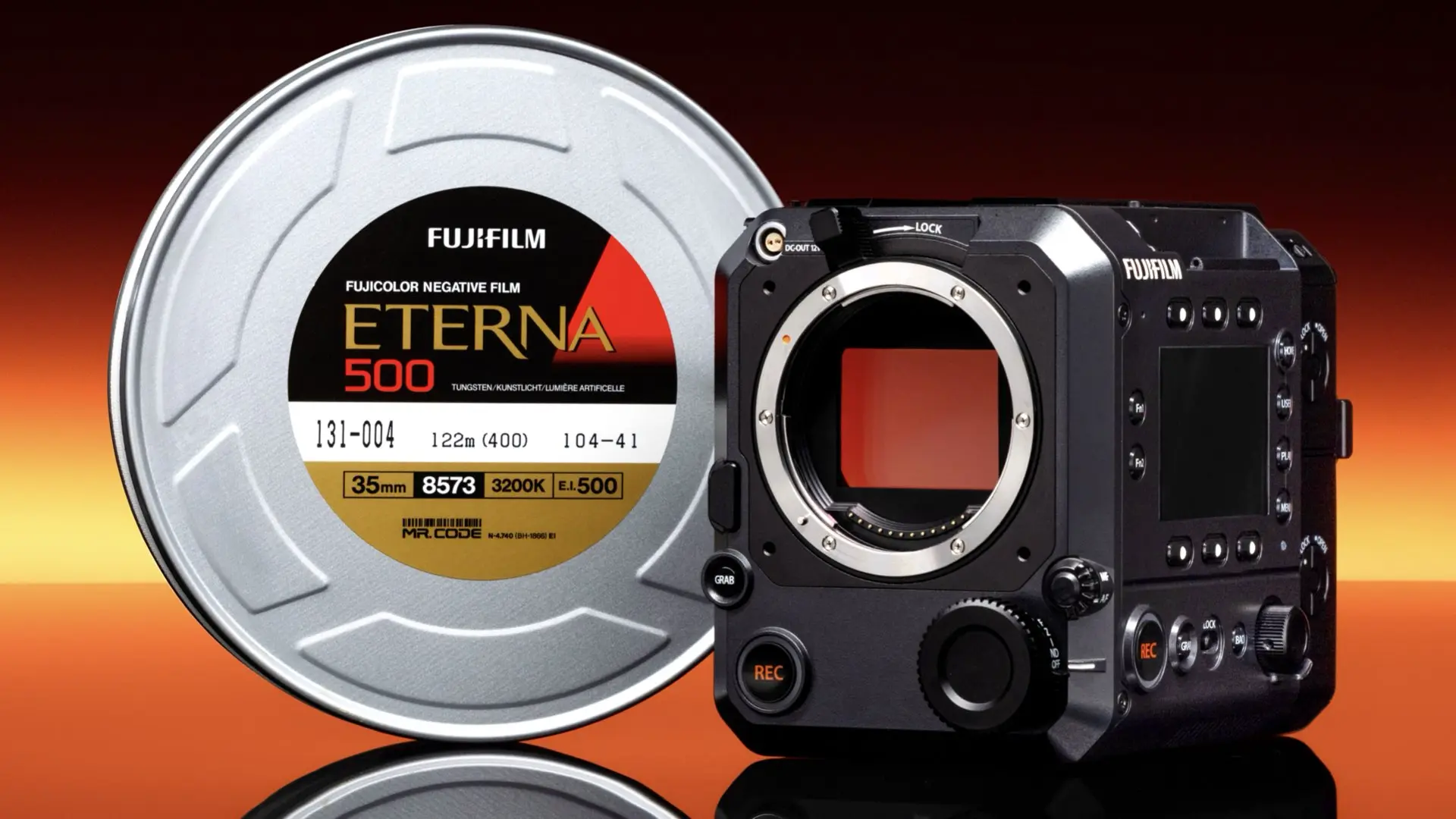
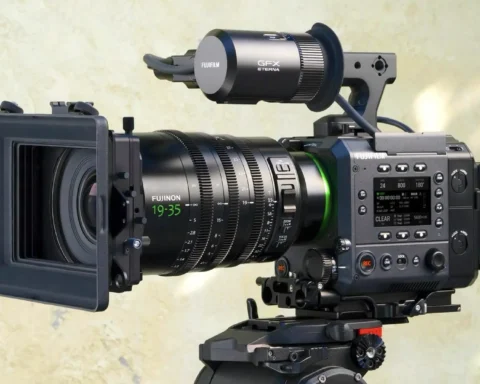
The ETERNA 55 is not a stills camera with video bolted on. It’s a purpose-built cinema body derived from Fujifilm’s GFX 102-megapixel large-format sensor platform. The company trimmed its photographic features and optimized the sensor readout, color profiles, and codecs specifically for filmmaking. The result is a 44×33 mm imaging area, taller than the usual 36×24 mm “full-frame” standard, branded as a “55 mm format.” This taller sensor delivers a unique look. It offers extra vertical room for open-gate recording and allows for clean anamorphic or 4:3 crops without compromising resolution. That flexibility is the key technical distinction between the ETERNA 55 and typical large-format cameras.
 Fujifilm GFX ETERNA 55
Image and color: The main selling point
If you care most about the image, Fujifilm’s color science remains the primary reason to consider the ETERNA 55. The camera inherits decades of experience from Fujifilm’s film stocks and digital simulations. Its ETERN A, F-Log2 C, and F-Gamut C profiles were tuned for motion rather than still photography. Early tests show skin tones that require minimal grading and a filmic roll-off that feels closer to celluloid than many digital sensors in this price class. Dynamic range is rated at around 14+ stops, but the more important detail is how the tonal transitions behave in midtones and highlights. Cinematographers who have tested the camera note that it holds texture in bright areas more gracefully than other 100-megapixel sensors. For those familiar with Fujifilm’s still cameras, the ETERNA simulation now works as a genuine log-to-Rec.709 option rather than a baked-in look, making it viable for controlled post pipelines.
 Fujifilm GFX ETERNA 55
Form factor and usability
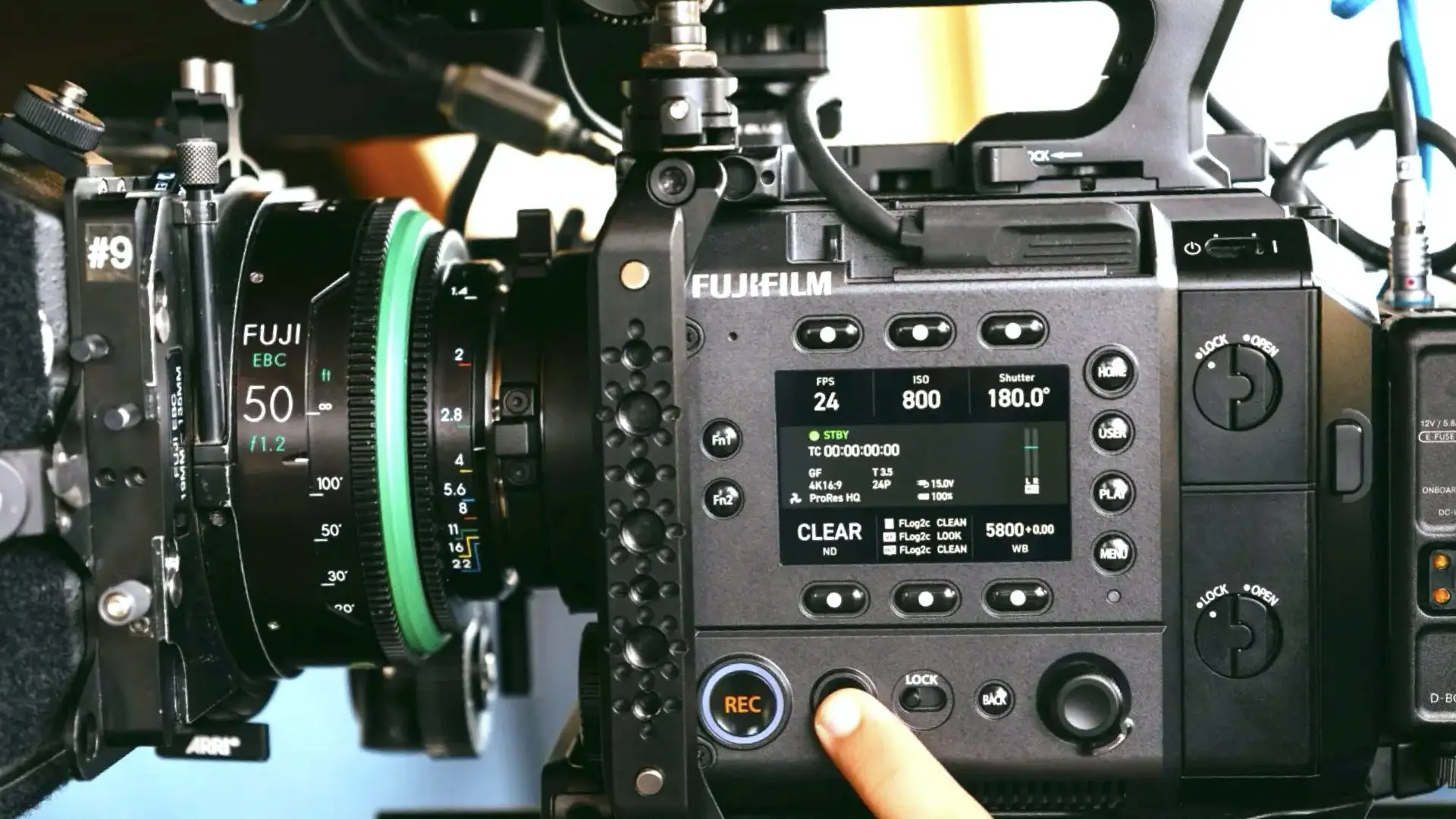
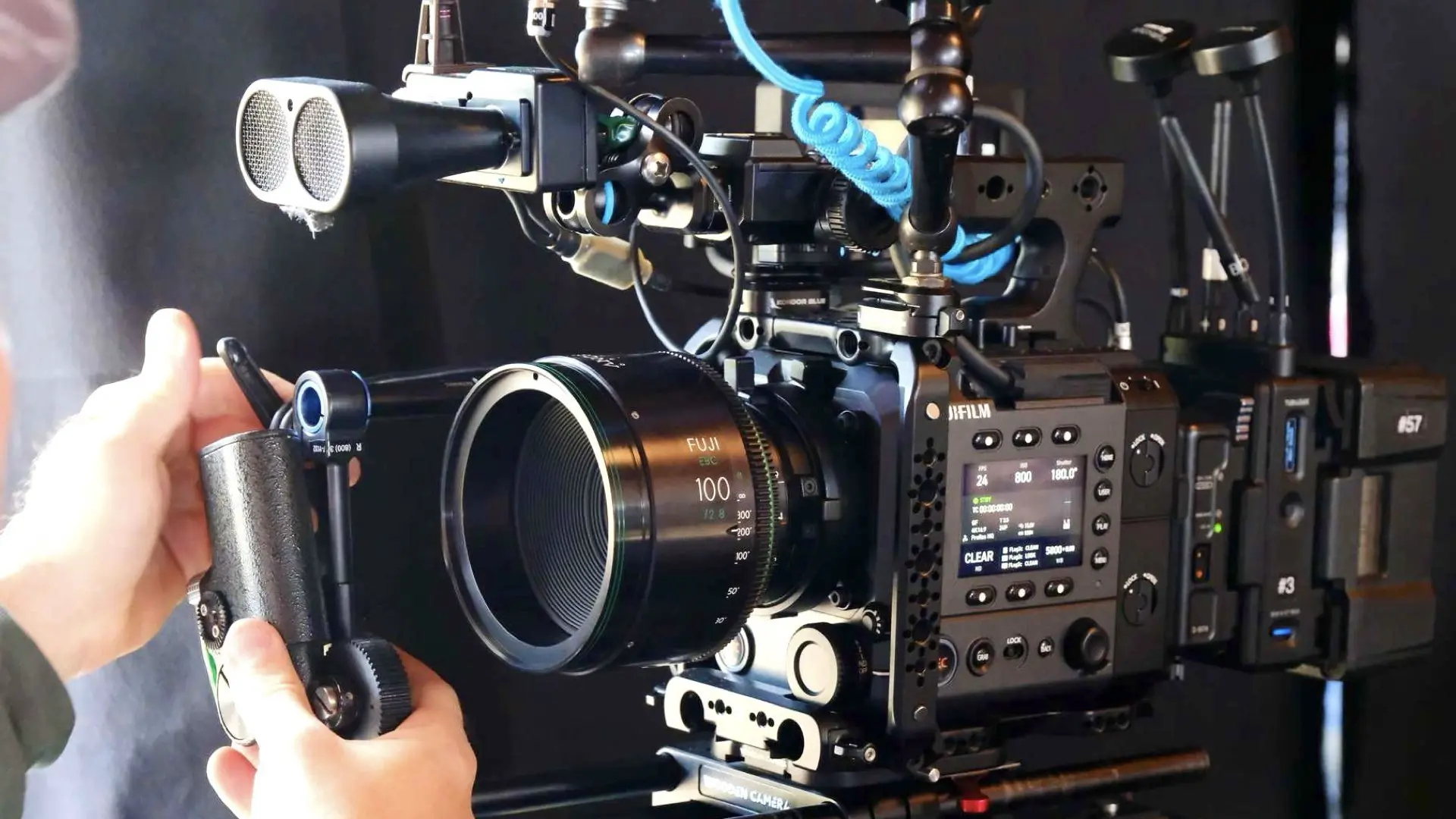
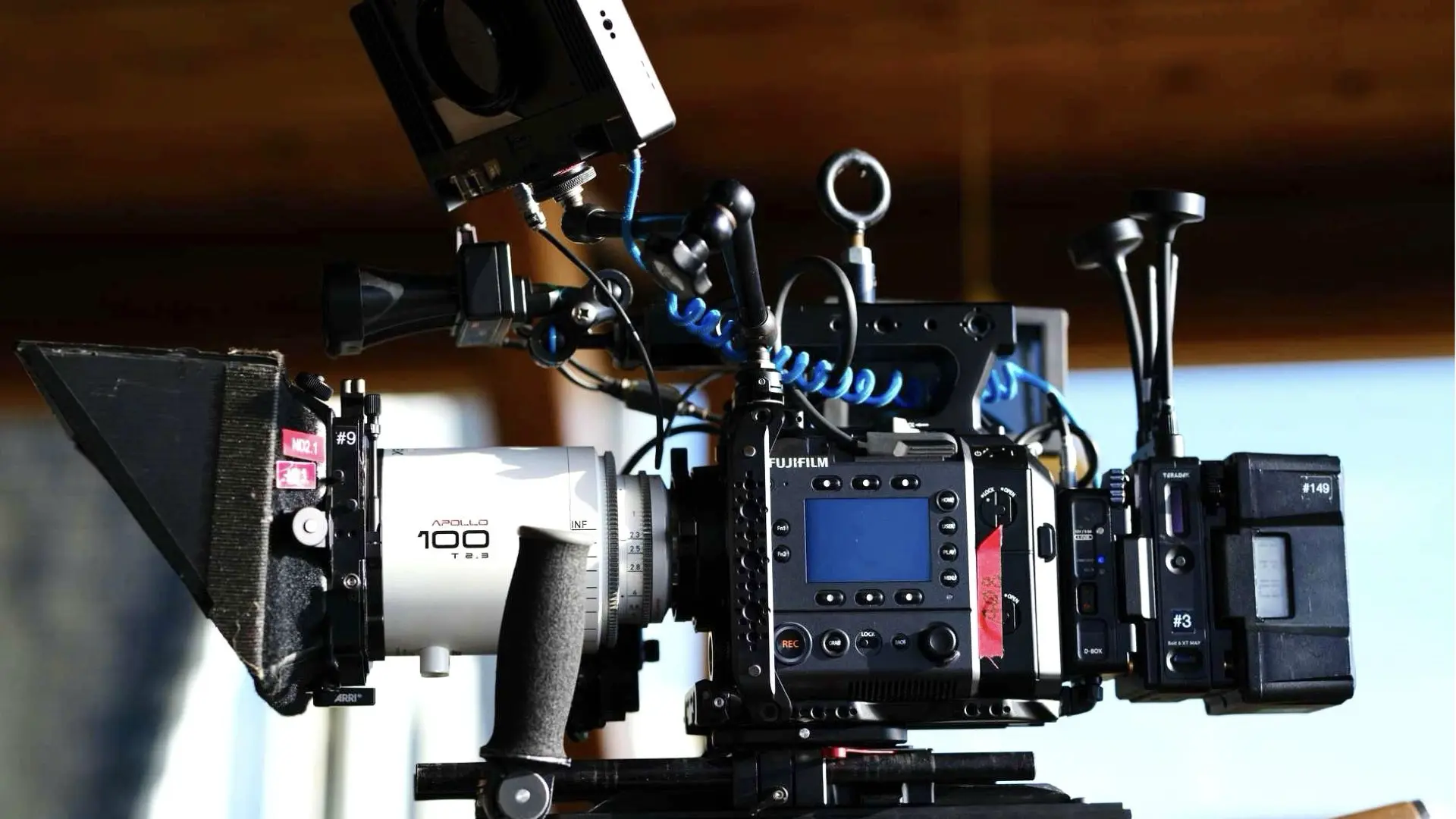
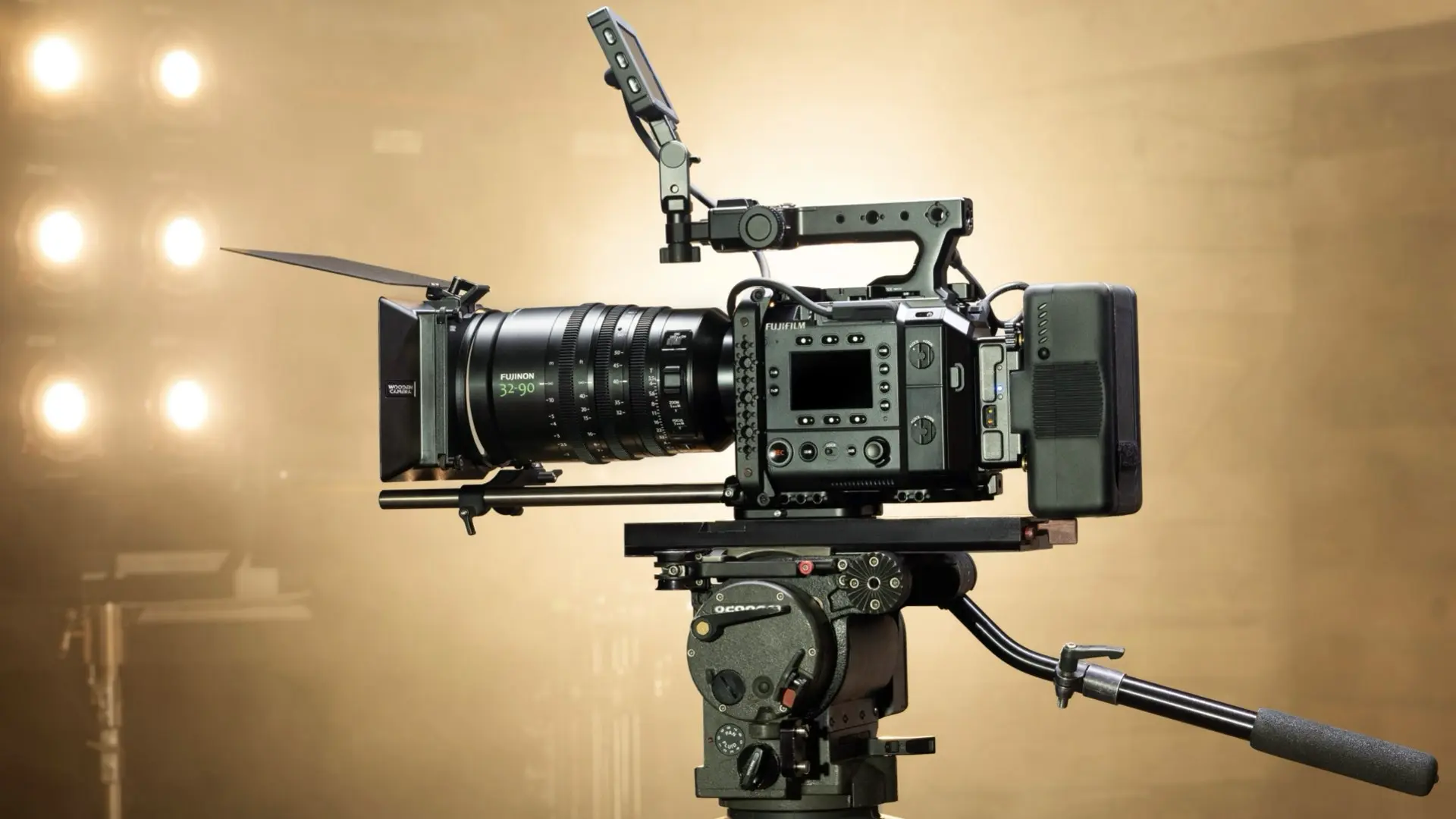
Physically, the body is compact for its class, closer in footprint to a RED V-RAPTOR XE than to an ARRI ALEXA LF. Despite the small body, Fujifilm included many professional touches: a built-in electronic variable ND (from ND 0.6 to ND 2.1 in 0.015 ND increments), dual SDI and HDMI outputs ( it’s 1 SDI and 1 HDMI), and both PL and G-mount options. The ND filter deserves special mention. It operates electronically, not mechanically, so transitions are seamless during shooting, allowing exposure changes without affecting color balance. Power draw sits around 21 watts, modest for a large-format cinema body. The internal NP-W235 “safety battery” keeps the camera alive during swaps, preventing recording interruptions. Ergonomically, the control layout is straightforward, and the dual screens, one main monitor and one side status display, make on-set operation easier for assistants.
 Fujifilm GFX ETERNA 55
Recording formats and workflow
The camera records ProRes 422 HQ, ProRes 422, and H.265 internally to CFexpress Type B media. External 12-bit RAW is available via HDMI. For most productions, internal ProRes is sufficient, especially for online content, commercials, or indie features. The omission of internal RAW is not a deal-breaker, but it’s something professionals should plan around. Dual-base ISO (800 and 3200) gives flexibility for mixed lighting conditions. Noise levels are impressively low even at higher ISOs, though the texture of grain changes slightly at the second base. Most reviewers report a natural film-grain character rather than electronic noise. However, with 102 megapixels being read at cinema frame rates, data handling becomes significant (note: (Once the file is recorded. the file sizes are comparable to other cameras on the market. Starting with a higher-quality sensor ensures a better source image to generate the footage from. So it really doesn’t impact data handling.) Expect large file sizes and heavy post workloads. Productions should budget for high-speed storage and ensure editors can handle ProRes 422 HQ in 6K or open-gate pipelines. Fujifilm’s post tools integrate with Resolve, Premiere, and Final Cut easily, but hardware acceleration is important for smooth playback.
 Fujifilm GFX ETERNA 55
Lens compatibility
Lens choice is where buyers must think practically. The tall 4:3 sensor demands lenses with generous image circles. Standard full-frame PL glass may vignette in open-gate mode. Fujifilm’s own GF lenses work, but their mechanical focus throw and gearing are not ideal for cinema rigs. Adapting large-format options such as ARRI Signature Prime, Cooke S7, or a future Atlas Orion 65 (here’s a hint for Atlas 🙂) will cover the full height, but the costs escalate quickly. This makes the ETERNA 55 better suited to productions that already own or rent LF lenses. Independent creators using mirrorless photo lenses may be limited to cropped formats like Super 35. Those crops still deliver outstanding detail, but the full advantage of the tall sensor comes only with proper LF glass.
 Fujifilm GFX ETERNA 55
Rolling shutter and motion performance
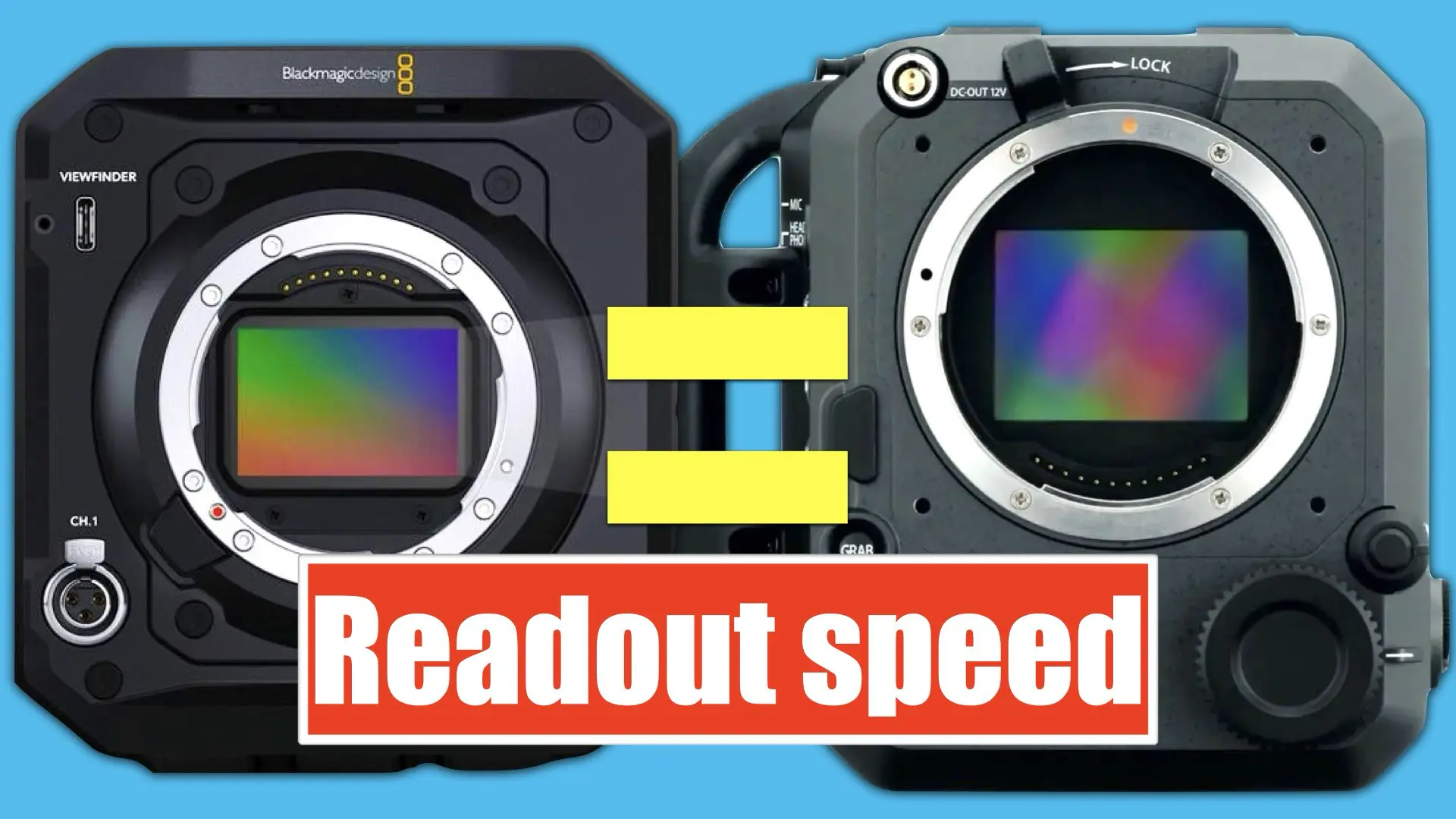
Rolling shutter remains a common concern for high-resolution sensors. Cinematographer Oren Soffer, who shot Fujifilm’s official launch film Okay, reported no visible issues in handheld or moderate motion shots. However, the manufacturer hasn’t disclosed exact readout speeds. For fast action or heavy camera movement, testing is advisable before committing to a project. Sensor readout time also affects high-frame-rate options. The ETERNA 55 maxes out at 120fps, depending on the crop, which is respectable but below specialized high-speed cameras. Most users targeting narrative or commercial work will find it adequate.
 Fujifilm GFX ETERNA
How It Compares to Competitors
Against RED V-RAPTOR XE
RED’s 8K VV global-shutter system remains the gold standard for high-end digital RAW. The V-RAPTOR XE offers internal R3D RAW, global shutter, and higher frame rates. Fujifilm counters with a taller 4:3 image area, an integrated electronic ND, and distinctive color science. In short, the RED excels in workflow maturity and raw flexibility; the Fujifilm focuses on color and simplicity. If your pipeline depends on REDCODE RAW and global-shutter capture, the ETERNA 55 will feel limited. But if you’re grading in ProRes and want a large-format aesthetic without managing terabytes of RAW, Fujifilm’s approach is more efficient.
Against Blackmagic URSA Cine 17K 65
Blackmagic’s URSA 17K 65 is a different beast: a 65 mm-wide sensor with internal BRAW and built-in high-speed storage. It dominates in resolution and raw throughput but at the cost of heavier files and larger form factor. The ETERNA 55’s advantage lies in size, lower power consumption, and Fujifilm’s tonal character. Y.M.Cinema previously compared both cameras and concluded that the URSA wins on pure specification, but the ETERNA wins on practicality. For indie filmmakers seeking a manageable large-format workflow rather than sheer resolution, Fujifilm’s solution is more approachable.
 Fujifilm GFX ETERNA
Post-production considerations
Because Fujifilm leans on ProRes and H.265 instead of proprietary RAW, its footage integrates cleanly into standard editorial environments. Color management using F-Log2 C and Fujifilm’s official LUTs yields predictable results. However, the files are heavy. Expect roughly 1 GB for every 8 seconds of 6K ProRes 422 HQ footage. Fast cards and robust storage are essential. This is not a run-and-gun mirrorless camera; it is designed for controlled production workflows with DIT or dedicated media management. Fujifilm’s internal 10-bit encoding handles strong grades well, though pushing extreme exposure shifts or heavy VFX work will highlight the difference between ProRes and RAW. For most mid-budget projects, the trade-off is acceptable.
 The FUJIFILM GFX ETERNA’s Readout Speed Matches the PYXIS 6K
Market position and longevity
At roughly $16,500, the ETERNA 55 sits between high-end mirrorless hybrids and true cinema systems. It’s priced for small studios and production companies that want cinematic imagery without stepping into ARRI or RED rental territory. One challenge will be ecosystem adoption. Fujifilm is new to the cinema rental market, meaning accessories, cages, and support infrastructure are still catching up. Availability of spare parts and firmware evolution will determine whether the system gains long-term traction. Yet there’s a clear niche: productions seeking the look of large-format cinema with manageable budgets and familiar workflows. For that audience, the ETERNA 55 is uniquely positioned.
Practical Advice Before Buying
-
Evaluate your lens coverage. If your lenses don’t fully cover the 44×33 mm sensor, factor in cropping or new glass purchases.
-
Plan your media and storage. ProRes 422 HQ at 6K eats space quickly. Invest in high-capacity CFexpress cards and redundant backups.
-
Check your grading pipeline. Make sure your colorist or post house understands Fujifilm’s F-Log2 C curve and LUT options.
-
Test for motion. If you shoot handheld or with fast pans, confirm that rolling-shutter behavior suits your style.
-
Compare total cost. Include lenses, media, rigging, and power solutions. The body alone is competitive, but a functional system may approach $25,000–$30,000.
-
Match to your projects. For narrative, commercial, and music video work emphasizing tone and texture, the ETERNA 55 is excellent. For sports, high-speed, or extensive VFX pipelines, you may prefer a RAW-based or global-shutter camera.
 Fujifilm Officially Launches the GFX ETERNA 55: A $16,500 Medium Format Filmmaking Camera
Final thoughts
The Fujifilm GFX ETERNA 55 is not a camera for everyone, and that’s its strength. It targets cinematographers who want Fujifilm’s visual signature with a modern digital workflow, offering a clean, efficient path to large-format aesthetics without the overhead of massive RAW pipelines. In use, it feels less like an experimental first step and more like a thoughtful response to what independent filmmakers actually need: robust codecs, internal ND, reliable color, and a manageable form factor. There are trade-offs. Internal RAW is missing, rolling-shutter speed remains to be fully quantified, and lens coverage adds cost. But for many professionals, these are reasonable compromises for what the camera delivers: a tall, cinematic image with genuine Fujifilm color science. For filmmakers who want that look without inheriting the complexities of larger cinema ecosystems, the GFX ETERNA 55 may be the most practical large-format option on the market right now.



Yossy — thanks for all the articles. I few notes for you about the GFX 55 — I have shot with one an internal demo, but I was not paid like Oren.
– the file size far exceed r3ds or XOCN and in fact the new arri raw is smaller. ProRes 422hq @ 8k is close to 40GB a minute.
– what atlas lens are you referring to with atlas 65? I tested my Mercurys and then didn’t cover the sensor very well.
– rolling shutter was significant to me when I tested.
The mention of Atlas Orion 65 mm coverage wasn’t based on a verified field test but more of a projection drawn from discussions about future LF options that might fit the ETERNA 55’s tall sensor. You’re right that the Mercury series doesn’t fully cover, and your note confirms what others have seen in early trials. And yes, rolling shutter seems to vary by use case that it can be significant in handheld or fast motion.
Great feedback and THX!
Lovely paid advertising from
Fujifilm….
Those who know, know.
Just buy a KINEFINITY Mavo Edge 6k or Mavo LF Mark III….