

Apple’s strategy for professional desktop computing is quietly changing. The machine that once symbolized ultimate power for filmmakers and creators, the Mac Pro, is losing momentum inside the company. At the same time, the Mac Studio ($2,299.99 on Amazon) is becoming the real flagship for creative professionals. This is a structural shift in how Apple defines performance, value, and the future of pro workflows. This transition did not happen overnight. It has been building across several product cycles, silicon generations, and clear signals from Apple. Today, with the latest reporting and the current product lineup, the picture is much sharper. The Mac Studio is rising. The Mac Pro is slowing down. And for filmmakers, editors, and post professionals, that shift has direct implications.
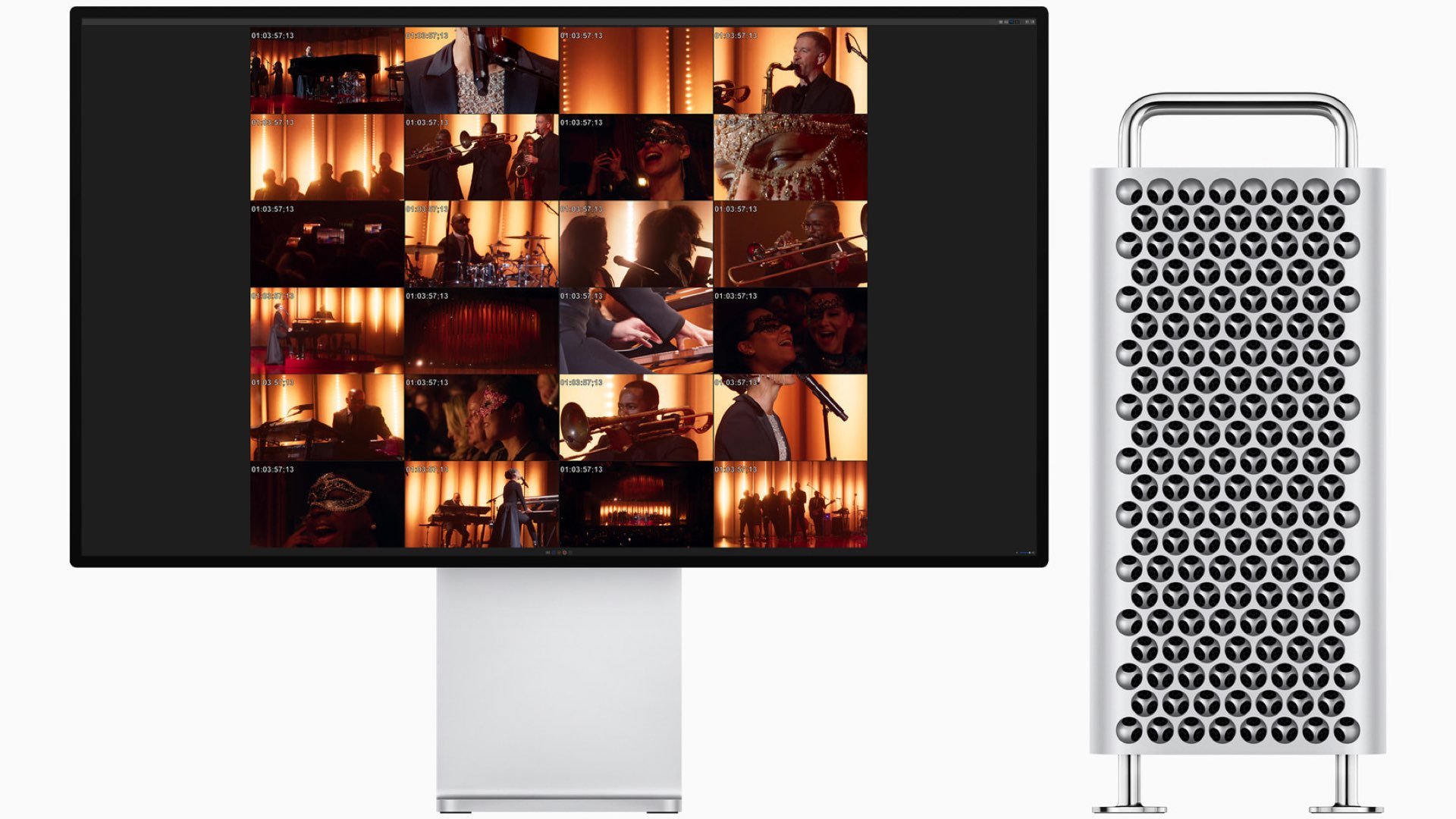
The Mac Pro continues to exist, but each year it feels more like a legacy obligation than the center of the roadmap.
The strategy behind Apple’s pivot
For many years, the Mac Pro tower was the ultimate creative workstation. Large enclosure. Expansion options. Serious thermal headroom. It was the machine that felt almost limitless for post houses and studios. Everything changed with Apple Silicon. Apple’s architecture no longer leans on replaceable internal parts for performance. CPU, GPU, and memory are fused in a unified design, and performance scales by growing the chip, not by swapping boards. That simple fact makes a huge tower less essential. When Apple introduced the Mac Studio, the message was already visible. We have captured this early in Apple’s new Mac Studio is more powerful than Mac Pro and with a fraction of the price. That article highlighted a key turning point. A compact desktop system could outperform the Mac Pro while costing dramatically less. The obvious question followed. If the smaller machine is faster and cheaper, what is the long term role of the Mac Pro. Over time the answer emerged. Apple’s engineering focus moved toward the Studio form factor. Recent reporting from Bloomberg now says clearly that the Mac Pro is on the back burner. The major silicon roadmap is anchored around future Mac Studio models, not the tower.
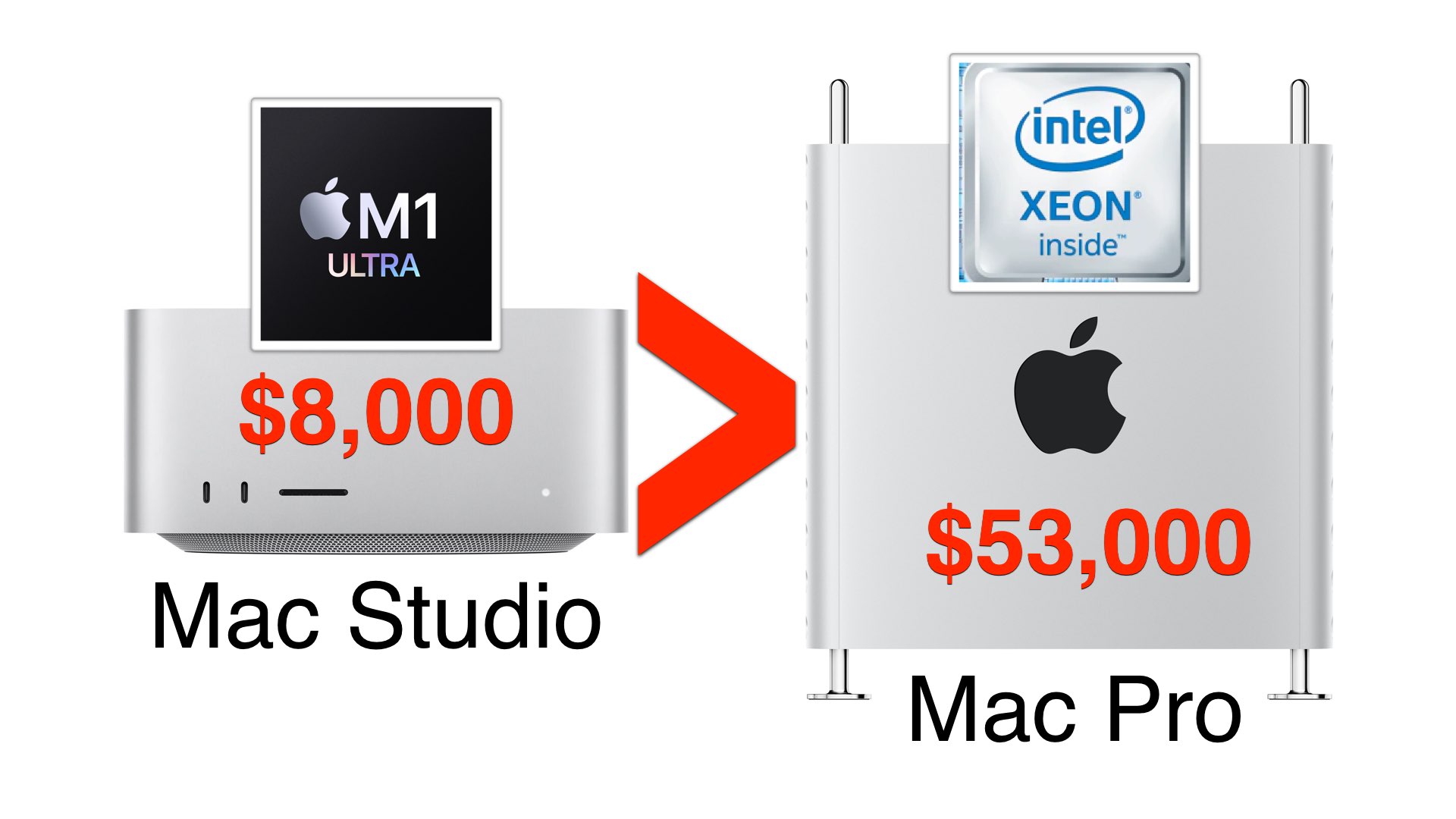
Fully loaded Mac Pro versus fully loaded Mac Studio
One of the clearest ways to understand Apple’s priorities is to look at what a filmmaker can buy today. A fully equipped Mac Pro with M2 Ultra includes a 24 core CPU, 76 core GPU, 32 core Neural Engine, 192GB unified memory, 8TB SSD, stainless steel frame with wheels, Magic Mouse ($59.99 on Amazon) , Magic Trackpad ($116.99 on Amazon) , and Magic Keyboard with Touch ID ($149 on Amazon) . The configuration costs around 12,000 USD. A fully equipped Mac Studio with M3 Ultra includes a 32 core CPU, 80 core GPU, 32 core Neural Engine, up to 512GB unified memory, 16TB SSD, Thunderbolt 5 ports on the front and back, SDXC slot, 10Gb Ethernet, USB A, HDMI, and an accessory kit. This configuration reaches around 15,000 USD. On paper, the more expensive machine is also the more modern and powerful machine. The Mac Studio offers newer silicon, more memory ceiling, larger internal storage, and better I O. The Mac Pro offers a larger enclosure that no longer allows meaningful internal expansion on the Apple Silicon architecture, and it runs an older generation chip. In other words, the Mac Studio has become the true top-of-the-line system, while the Mac Pro looks more like a legacy form factor with a premium price but limited strategic future.
How we got here. From Afterburner to Apple Silicon
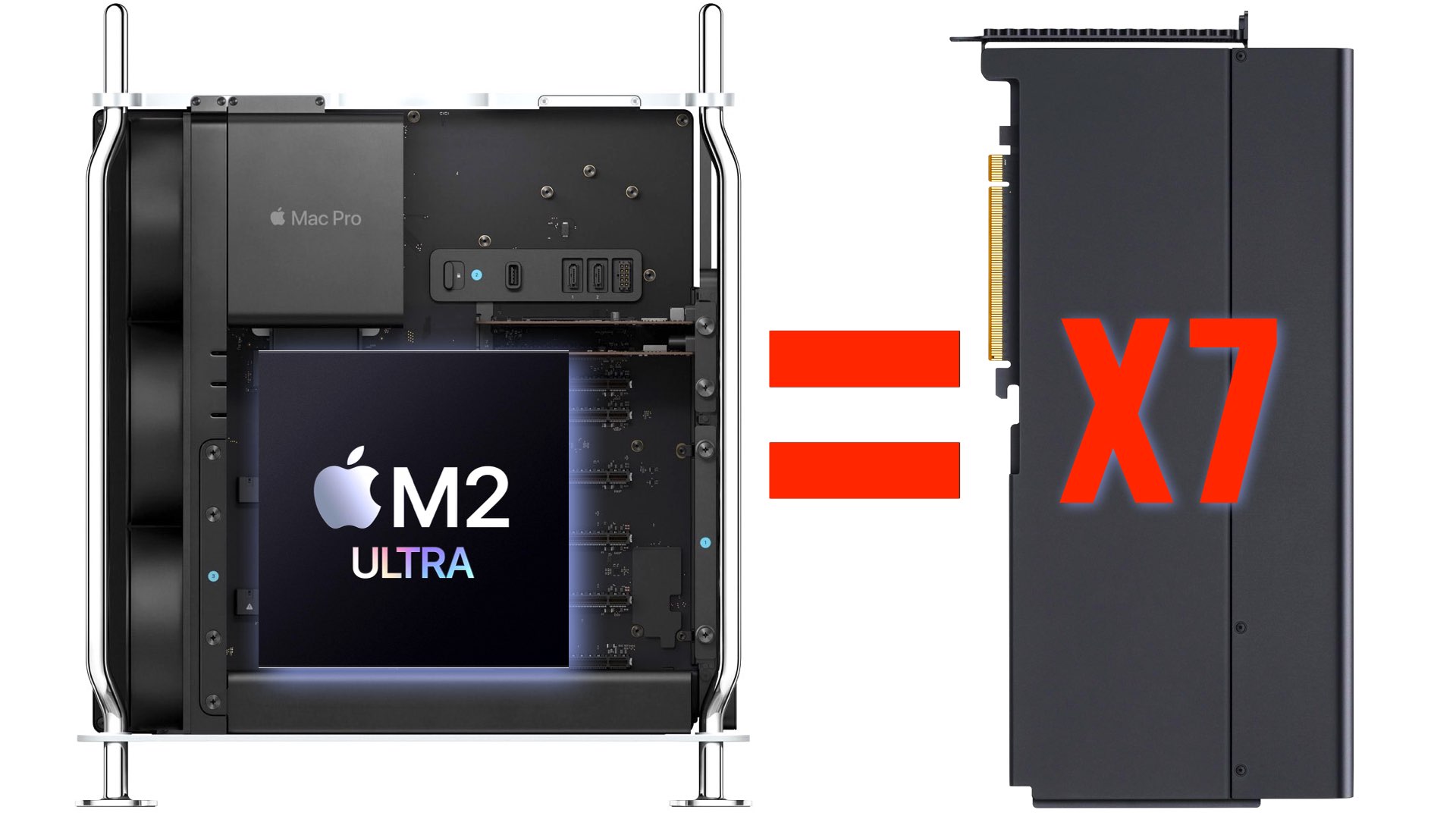
The road to this moment is well documented. When Apple launched the 2019 Intel Mac Pro with the Afterburner card, it framed the tower as a modular, expandable monster for high-end video workflows. That message aged quickly. We captured the flip side of that story in Apple your 52000 Mac Pro is now worths 1000. That piece showed how a once premium tower could lose most of its value within a few product cycles, especially once Apple Silicon systems arrived and made the old architecture feel outdated. When Apple introduced the Apple Silicon Mac Pro, it made a different kind of claim. The new machine, Apple said, had the equivalent performance of multiple Afterburner cards directly in the chip. We have examined that message in Apple the new Mac Pro has the performance of seven Afterburner cards built in. Dedicated accelerator cards were no longer a path forward. The acceleration was absorbed into the silicon. That logic favors compact systems like the Mac Studio. If expansion cards are no longer part of the story, a massive tower is far less compelling. The main value now lives inside the chip and its thermal envelope, not in a forest of PCIe slots.

Real-world workflows for filmmakers and editors
For filmmakers, the question is simple. Which machine actually serves you better in daily production and post. The Mac Studio is already strong enough to handle heavy ProRes, H.265, and high bit rate RAW workflows with ease. Multicam timelines, complex color grading, and VFX heavy edits all benefit from the raw throughput and unified memory of M-series chips. With M3 Ultra and future generations, that gap will grow. For many users in our audience, the Mac Pro offers very few advantages today. There is no support for user installed graphics cards, no classic internal storage arrays to manage, and no path to modular upgrades. You buy the configuration you need on day one and live with it for the life of the machine. That is the same basic story as the Mac Studio, just in a bigger box. As a result, the Mac Pro becomes a niche product. It is still powerful, but most of its historical reasons to exist have vanished. The Mac Studio delivers almost everything professionals actually need. It is easier to place on a desk, easier to cool in a typical studio environment, and more aligned with the way Apple designs its silicon.
Apple’s internal focus and what it signals
Bloomberg’s reporting that Apple has put the Mac Pro on the back burner and is prioritizing future Mac Studio models with next generation chips is consistent with this entire history. The company is directing its engineering resources toward the platform that shows the most promise and the most demand. From a business standpoint, the Mac Studio is likely easier to manufacture, simpler to position, and more attractive to a broader segment of creators. It sits above the Mac mini ($779.99 on Amazon) and below any future extreme workstations that Apple might consider. For now, it is the clear flagship for serious video and film work. The Mac Pro continues to exist, but each year it feels more like a legacy obligation than the center of the roadmap. Without modular graphics, without meaningful internal upgrades, and without the newest chips, it risks becoming a symbol of the old world that Apple itself has already moved beyond.
What this means for our audience
For cinematographers, editors, colorists, and post professionals, the lesson is straightforward. If you are investing in a new Apple desktop for serious work, the Mac Studio is where Apple wants you to be. It gets the latest silicon first. It offers the highest performance for the money. It aligns with Apple’s long-term design philosophy. And it already has a proven track record in heavy professional use. The Mac Pro may still look impressive in a machine room, but power today lives in the chip, not in the enclosure. The display on your timeline, the smoothness of your playback, the speed of your exports, and the stability of your sessions do not depend on tower aesthetics. They depend on how quickly the hardware can move and process data.
Final thought
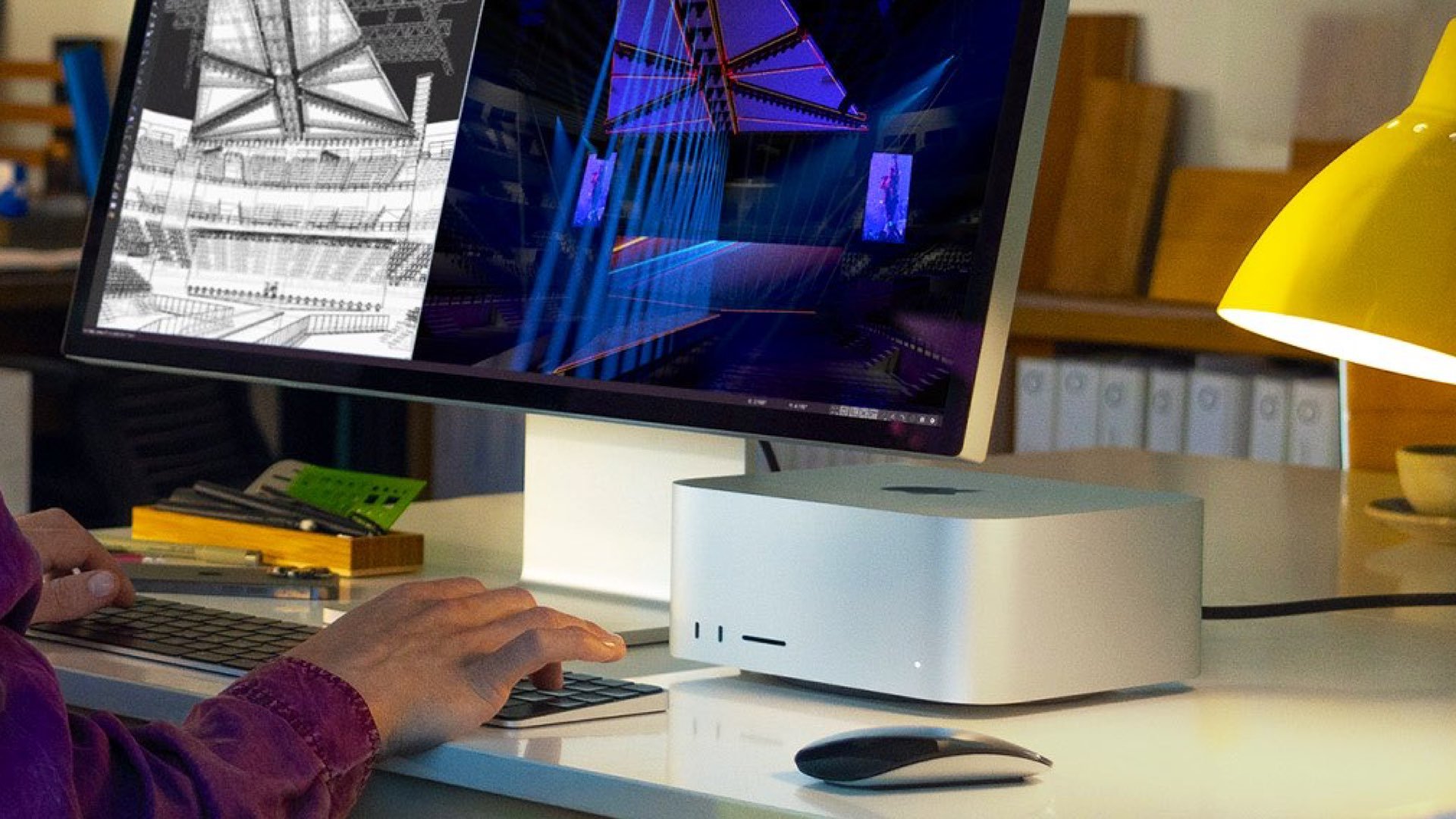
There was a time when Mac Pro meant the absolute peak of Apple performance. Today, that crown has effectively moved to the Mac Studio. The tower has slowed down. Apple’s attention, energy, and future plans are clearly tied to a smaller, denser, and more efficient form factor. For filmmakers and creators who follow YMCinema, this is the key takeaway. The real professional future of Apple desktops is no longer defined by how large the computer is. It is defined by the silicon inside, and right now that path leads through the Mac Studio. Agree/disagree?
Gear mentioned in this article
Available on Amazon
| Product | New | Renewed | Used |
|---|---|---|---|
| Mac Studio | $2,299.99 | — | — |
| Apple Magic Mouse | $59.99 | — | From $54.59 |
| Apple Magic Trackpad | $116.99 | — | From $111.14 |
| Apple Magic Keyboard with Touch ID | $149 | — | — |
| Apple Mac mini | $779.99 | — | — |
Prices checked: Oct 7, 2026, 1:30 PM GMT+0000
As an Amazon Associate, Y.M.Cinema earns from qualifying purchases. If you buy through our links, we may earn a small commission at no extra cost to you.
Product prices and availability are accurate as of the date/time indicated and are subject to change. Any price and availability information displayed on Amazon.com at the time of purchase will apply to the purchase of this product.
CERTAIN CONTENT THAT APPEARS ON THIS SITE COMES FROM AMAZON. THIS CONTENT IS PROVIDED “AS IS” AND IS SUBJECT TO CHANGE OR REMOVAL AT ANY TIME.









This is BS.
Mac Studio’s chip is only as good as RTX 4070~4070TI and yet, Apple cant even make a powerful chip for a workstation and now justifying their actions. Since Mac sucks for 3D and GPU intensive software field, it will only limit the market that Mac can be used. Moreover, Final Cut Pro lost a lot of users, especially not being pro anymore so it’s Apple’s fault for shrinking their own market.
You’re raising a valid point for 3D and GPU-heavy fields, no doubt. RTX cards are on another level for CUDA and the software ecosystem there is still centered around NVIDIA. If someone works mainly in Blender Cycles, Unreal, Octane, Redshift CUDA or AI workloads, a Windows workstation is the right tool. But Apple’s shift is about where their silicon actually excels. For video pipelines, ProRes acceleration, multicam, color work, and high efficiency editing, the Mac Studio outperforms the Mac Pro tower at a fraction of the size and power draw. Apple is doubling down on the segment where they already lead. Cheers
Apple doesn’t want to make anything that can be upgraded. You configure when you purchase and if you outgrow that you simply buy a new device. The Mac Pro dimensions really was a waste now, can’t add in a graphics card, and not much is available to build in any upgrades per say. The argument is that you can do as much with a properly configured Mac Studio as a Mac Pro with a much smaller foot print. I was actually surprised that Apple kept the Mac Pro around as long as it has.
Exactly. You nailed it. Apple clearly doesn’t want users upgrading hardware anymore. The company’s business model and silicon architecture both point toward sealed, pre-configured systems. The Mac Pro’s size became symbolic, not functional, no GPU upgrades, no internal expansion, no modular path forward. That’s why the Mac Studio makes more sense for Apple’s current direction. It delivers the same performance ceiling in a smaller footprint and fits perfectly with their all-in-one silicon philosophy. The Pro’s legacy design just doesn’t align with Apple’s future anymore. Cheers.