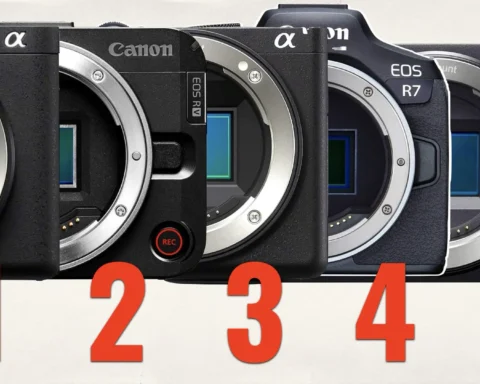
Canon has filed a new patent that focuses on one very specific but very important part of digital image sensors. How fast the sensor can read image data out of its pixels. While this may sound abstract, it directly affects things filmmakers care about every day, such as rolling shutter, maximum frame rates, motion distortion, and overall sensor responsiveness. This article explains what Canon is trying to achieve, how the method works in simple terms, and why it matters in real-world filmmaking.

The basic problem Canon is trying to solve
Every digital camera sensor reads image data line by line. Each horizontal row of pixels is selected, read, reset, and then the sensor moves on to the next row. This process repeats thousands of times for a single frame. The issue is not just reading the pixel values. The sensor must also reset internal signal lines between rows so the next row can be read accurately. That reset step takes time. When the sensor is very high resolution or running at high frame rates, that reset time becomes a bottleneck. In simple terms, the sensor spends too much time cleaning itself up between rows. Canon’s patent is about reducing that wasted time.
What “sensor readout speed” actually means
Sensor readout speed is how quickly the sensor can move through all its pixel rows and extract their image data. Faster readout leads to several benefits:
-
Less rolling shutter distortion.
-
Higher maximum frames per second.
-
Shorter delay between exposure and image processing.
-
Better performance for electronic shutter video.
Slow readout causes visible problems like skewed vertical lines, wobble during handheld shots, and motion distortion when panning quickly. Canon is not changing how pixels capture light. Instead, they are optimizing how the sensor moves data after the light is captured.
Canon’s core idea in plain English
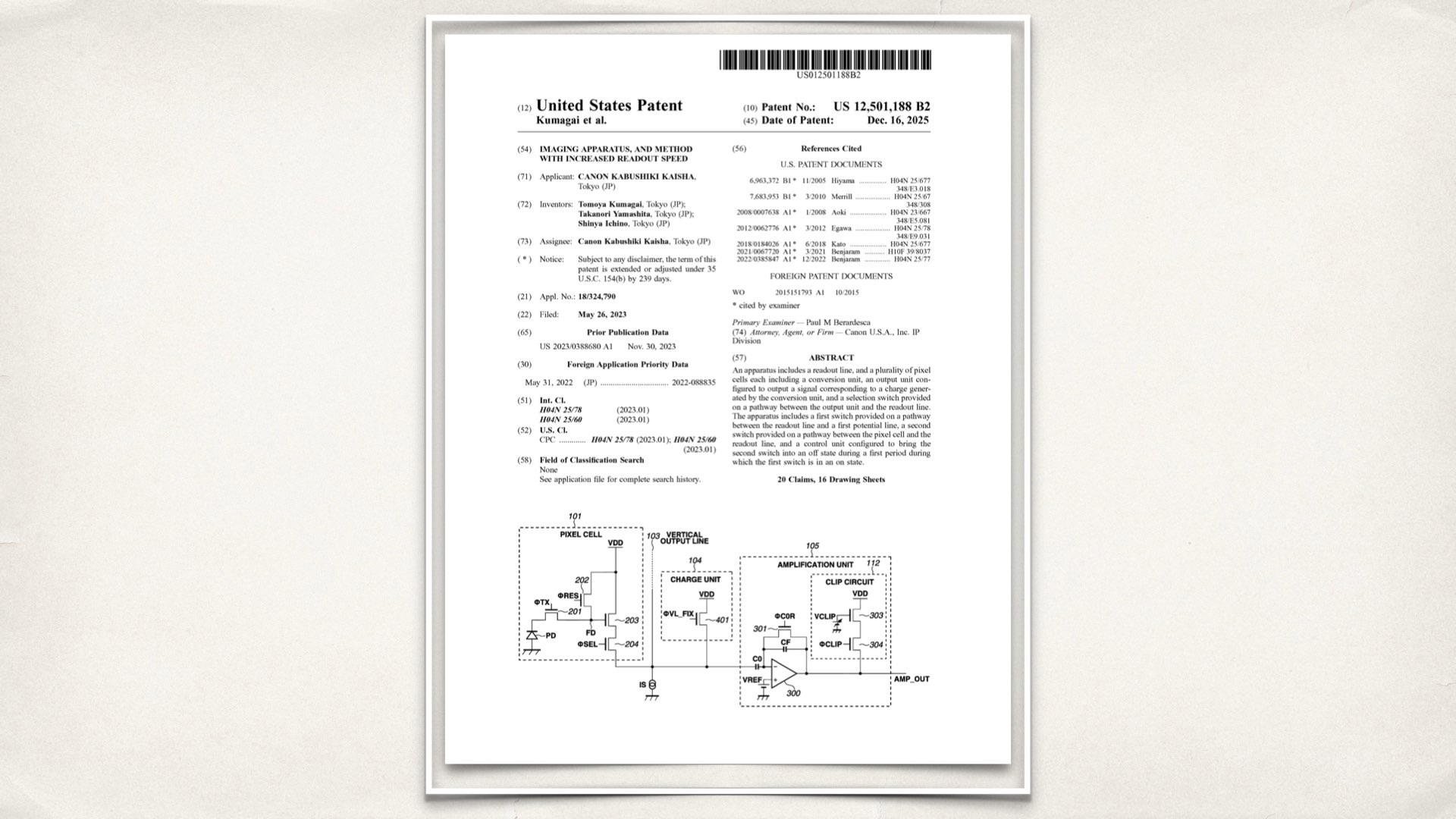
Canon introduces a way to reset part of the sensor’s internal wiring very quickly while temporarily isolating or protecting the sensitive electronics that follow it. Imagine pouring water through a pipe system. After each use, you need to flush one section of pipe before the next use. Canon’s idea is to flush that section faster, without flooding the rest of the system. They do this using switches.
The key parts involved
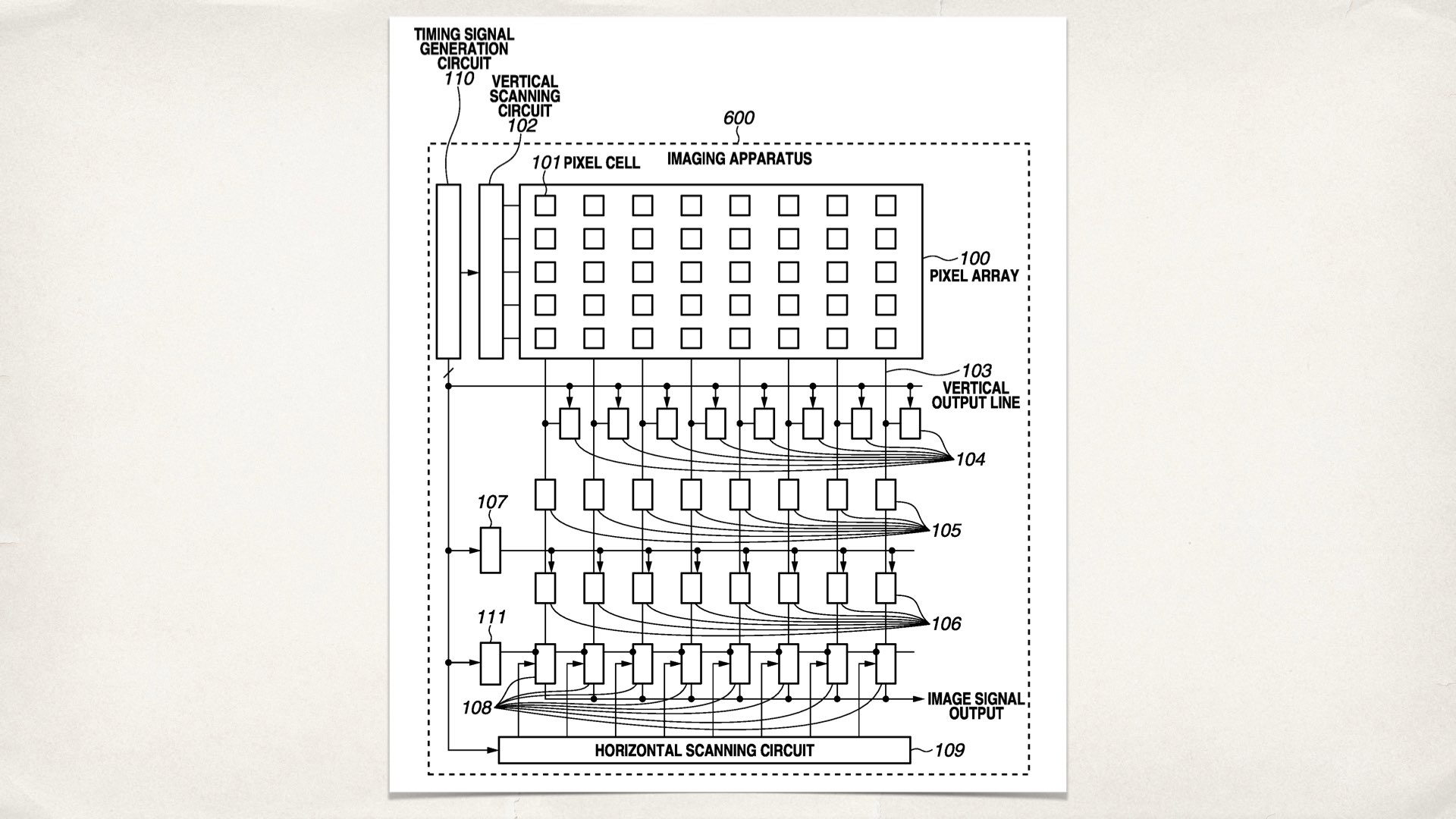
The patent describes 4 main components working together:
-
Pixel cells: These are the individual pixels that capture light and convert it into an electrical signal.
-
A vertical readout line: This is a shared signal path that carries pixel data from each row down to the processing electronics.
-
A fast reset switch: This switch can quickly force the readout line to a known electrical state. This allows the line to reset much faster than normal.
-
Isolation or protection switches: These temporarily disconnect or stabilize the downstream electronics so they are not disturbed during the fast reset.
Why resetting faster is difficult
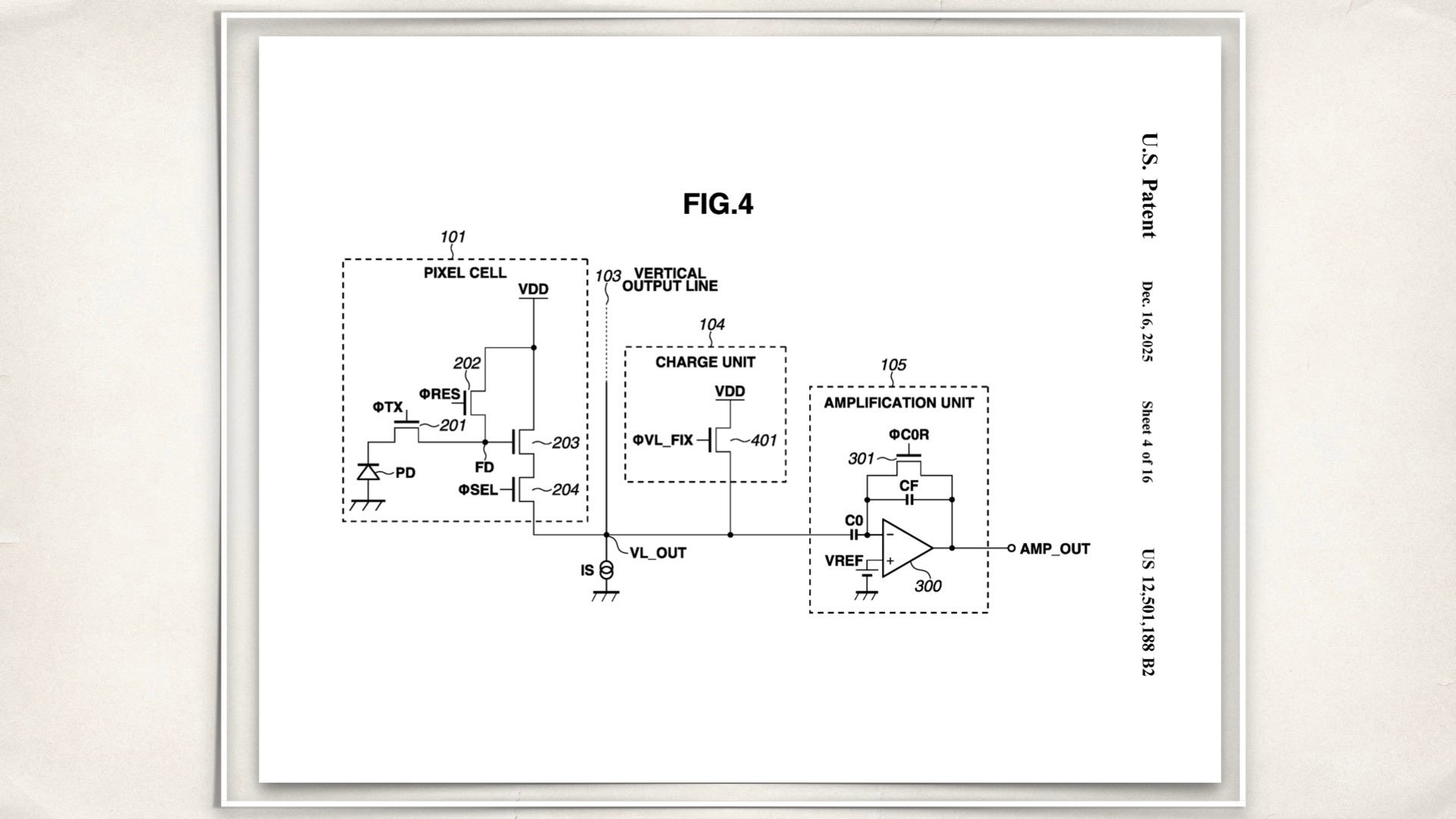
Resetting the readout line aggressively causes electrical spikes. Those spikes can confuse or destabilize the amplification and conversion circuits that sit after the sensor. If those circuits are disturbed, image quality suffers. You get column noise, offset errors, or inconsistent brightness from one column to another. Canon’s solution is not just speed. It is speed without damage. The patent describes several approaches. Canon likely uses one or a combination of these, depending on the sensor design:
- Method 1. Temporary isolation: Canon disconnects the readout line from the rest of the circuit while the fast reset happens. This reduces electrical load and prevents noise from spreading. Once the reset is complete, the connection is restored and normal readout continues.
- Method 2. Locking the amplifier state: Canon temporarily forces the amplification circuit into a stable mode where its input and output are locked together. This keeps the output voltage steady even if the input line is changing rapidly. In simple terms, the amplifier ignores the reset event.
- Method 3. Output clamping: Canon uses a clipping circuit to prevent the amplifier output from swinging too far during the reset. This protects the electronics from extreme voltage changes. All of these methods share the same goal. Reset quickly, but keep the signal chain calm.
Overlapping operations is the real breakthrough
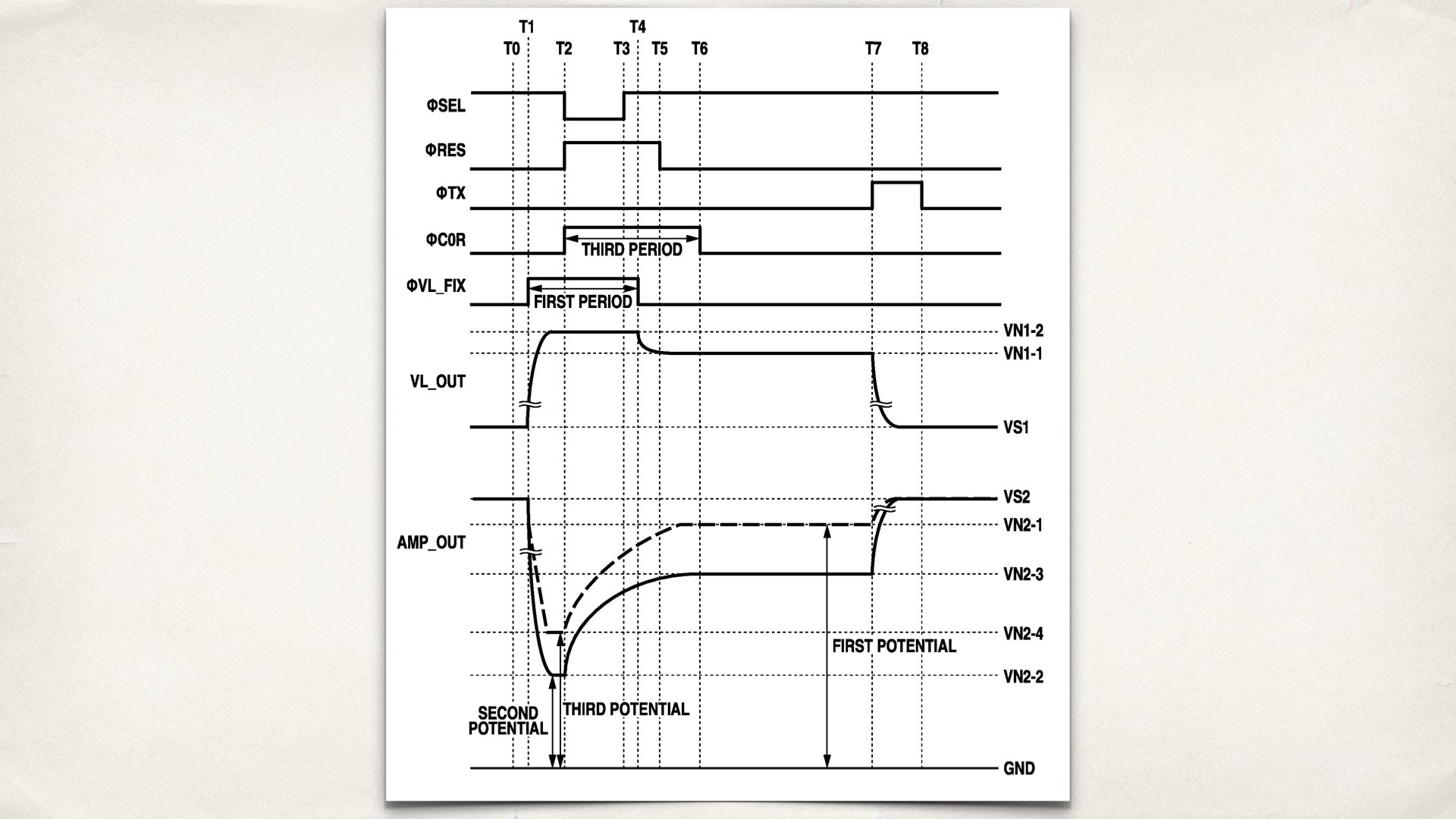
The most important idea in this patent is overlap. Normally, sensors do things one after another. Read a row. Process it. Reset the line. Then move on. Canon changes the timing so that the sensor resets part of the circuit while another part is still working on the previous row. That overlap reduces idle time. This is how readout speed increases without increasing power or clock rates.
What this does not mean
It is important to be precise:
- This is not a global shutter design. Pixels are still read row by row.
- This does not guarantee a specific frame rate increase. No numbers are given.
- This does not point to a specific camera or sensor size.
- What it does mean is that Canon is pushing rolling shutter performance closer to its physical limits.
Why this matters to filmmakers
From a filmmaker’s perspective, faster sensor readout translates into very real benefits:
-
Cleaner handheld motion with less wobble.
-
More stable vertical lines during pans.
-
Higher usable frame rates without severe rolling shutter.
-
Better electronic shutter video.
-
Improved reliability for high resolution sensors.
For cinema cameras, this can mean smoother motion at 6K or 8K. For mirrorless cameras, it can mean fewer compromises when shooting fast action or handheld video.
Why Canon is focusing here instead of global shutter
True global shutter sensors have drawbacks. They often reduce dynamic range, full well capacity, or image quality. Canon appears to be investing in making rolling shutter sensors as fast and clean as possible, rather than switching to a global shutter architecture with tradeoffs. This patent fits that strategy perfectly.
How this fits into the bigger sensor readout story
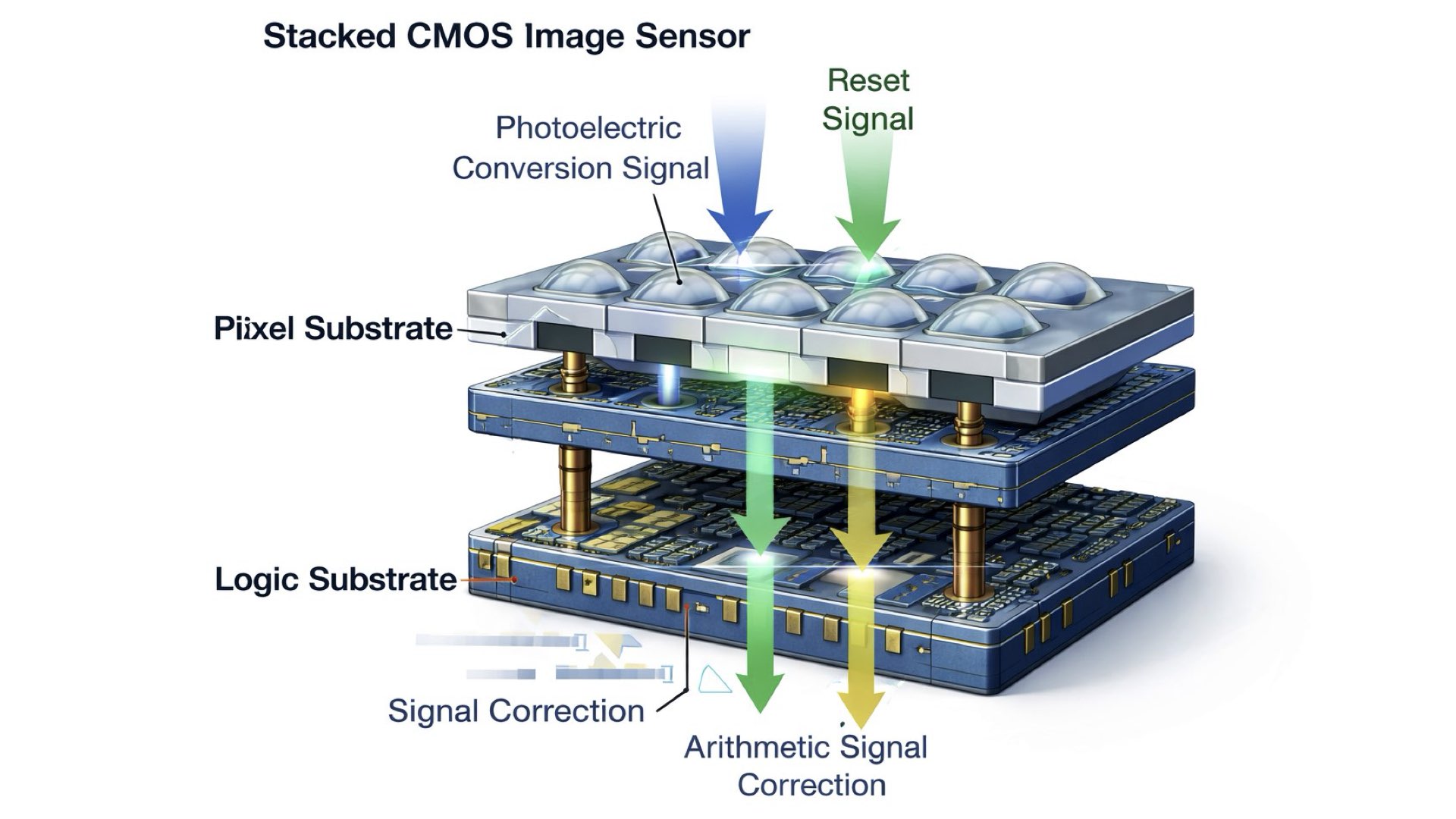
Canon’s new patent does not appear in isolation. Over the past year, sensor manufacturers have been clearly focusing on one shared goal. Making sensors faster to read without sacrificing image quality. YMCinema has already covered several important developments in this area, which help explain why Canon’s approach matters.
- Nikon Sensor Design Focuses on High Dynamic Range and Fast Readout
This article explains how Nikon is tackling the same core challenge Canon is addressing here. Modern sensors must balance dynamic range and readout speed. Faster readout usually creates more noise or reduces image quality. Nikon’s sensor design work shows how manufacturers are carefully reengineering internal signal paths to preserve image quality while accelerating readout. Canon’s patent fits into this same technical direction. - Nikon ZR, Canon C50, Sony FX3 and FX2 Readout Speed Compared
This comparison article connects sensor readout speed directly to what filmmakers actually see on screen. Rolling shutter skew, motion wobble, and vertical line distortion are all consequences of slow readout. Canon’s patent targets exactly the type of bottleneck discussed in this comparison. Faster column reset and smarter timing directly translate into better real world motion performance. - Nikon’s New Sensor Aims for Faster Readout at High Resolution
As resolution increases, sensors take longer to scan. This article explains why high resolution sensors often suffer the worst rolling shutter artifacts. Canon’s patent is highly relevant here because it focuses on reducing wasted time between rows. That approach becomes more valuable as sensors move toward higher megapixel counts and higher video resolutions.

Why these developments matter together
When viewed together, these articles show a clear industry trend. Camera makers are no longer chasing only resolution or dynamic range. They are now heavily investing in readout efficiency. Canon’s patent shows a circuit-level solution to the same problem Nikon and others are addressing through sensor architecture and system-level design. For filmmakers, this trend means future cameras can deliver higher frame rates, cleaner motion, and less rolling shutter without needing global shutter sensors or heavy compromises in image quality. Canon’s patent is another clear signal that sensor readout speed is becoming one of the most important battlegrounds in modern camera development. Canon is working on a smarter way to move image data off the sensor faster. By resetting internal signal lines more aggressively while protecting the rest of the circuit, Canon can reduce wasted time between rows.
Gear mentioned in this article
Available on Amazon
| Product | New | Renewed | Used |
|---|---|---|---|
| Sony FX3 | $4,298 | — | — |
Prices checked: Oct 2, 2026, 1:31 PM GMT+0000
As an Amazon Associate, Y.M.Cinema earns from qualifying purchases. If you buy through our links, we may earn a small commission at no extra cost to you.
Product prices and availability are accurate as of the date/time indicated and are subject to change. Any price and availability information displayed on Amazon.com at the time of purchase will apply to the purchase of this product.
CERTAIN CONTENT THAT APPEARS ON THIS SITE COMES FROM AMAZON. THIS CONTENT IS PROVIDED “AS IS” AND IS SUBJECT TO CHANGE OR REMOVAL AT ANY TIME.