Canon has officially confirmed that the EOS C50 ($3,699 on Amazon) is now approved for Netflix Original productions, placing it on the same compliance path as established Cinema EOS cameras. The announcement is backed by a detailed Netflix Camera Production Guide that outlines precise capture formats, sensor modes, gamma settings, and operational procedures required for Netflix 4K Originals. Let’s check it out.
Canon EOS C50 Is Now Netflix Approved
Canon C50: Netflix Production Guide
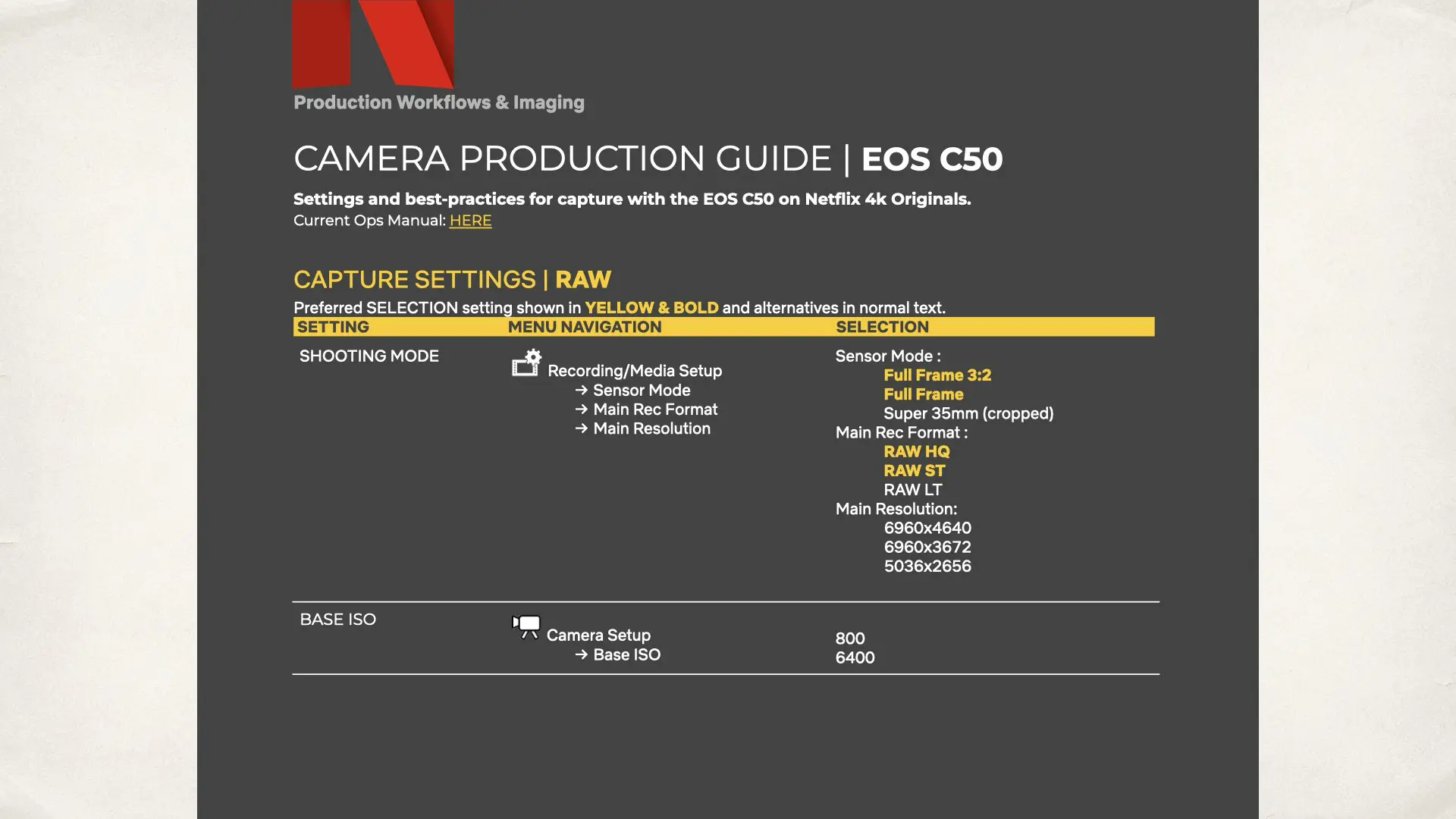
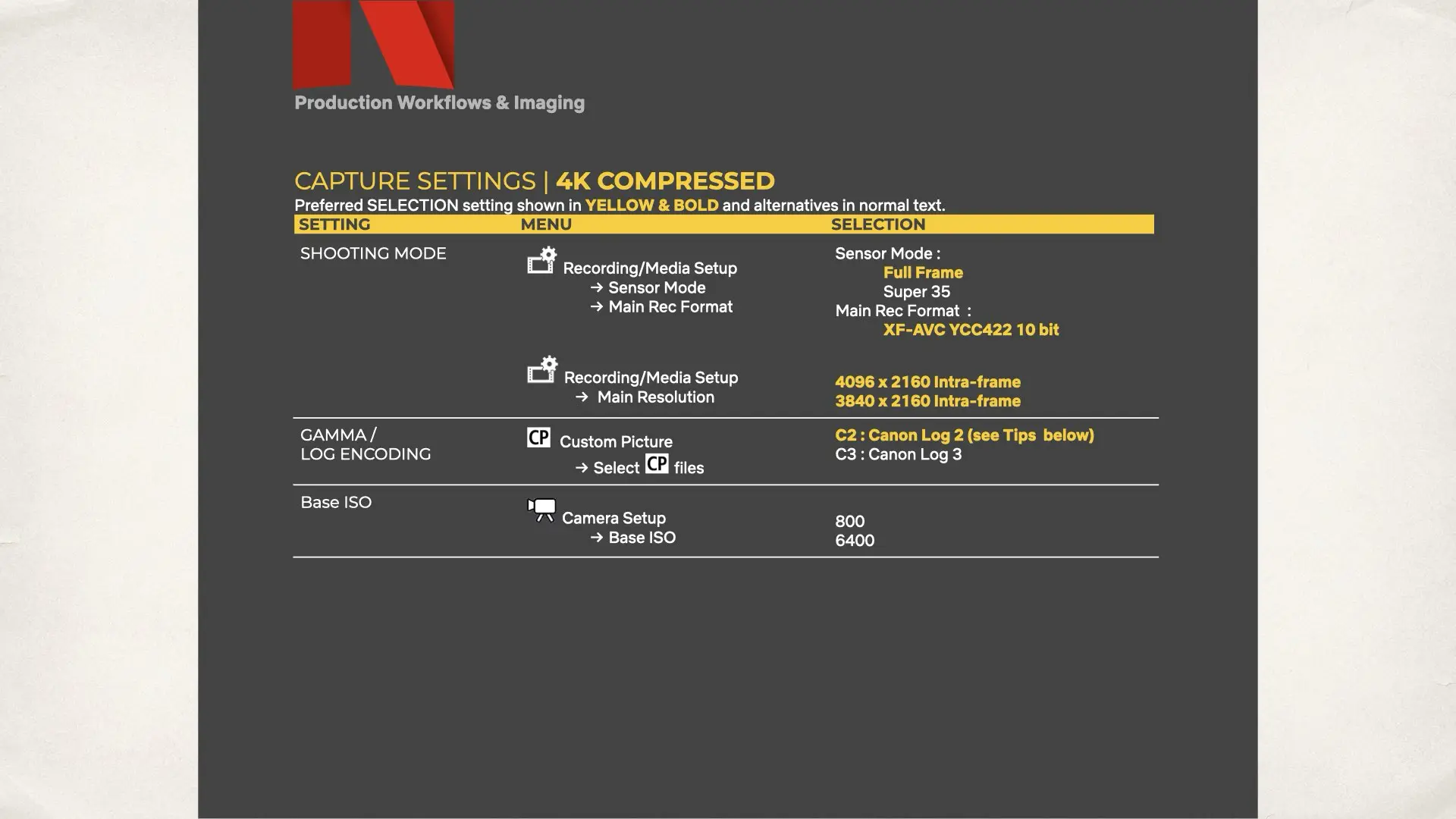
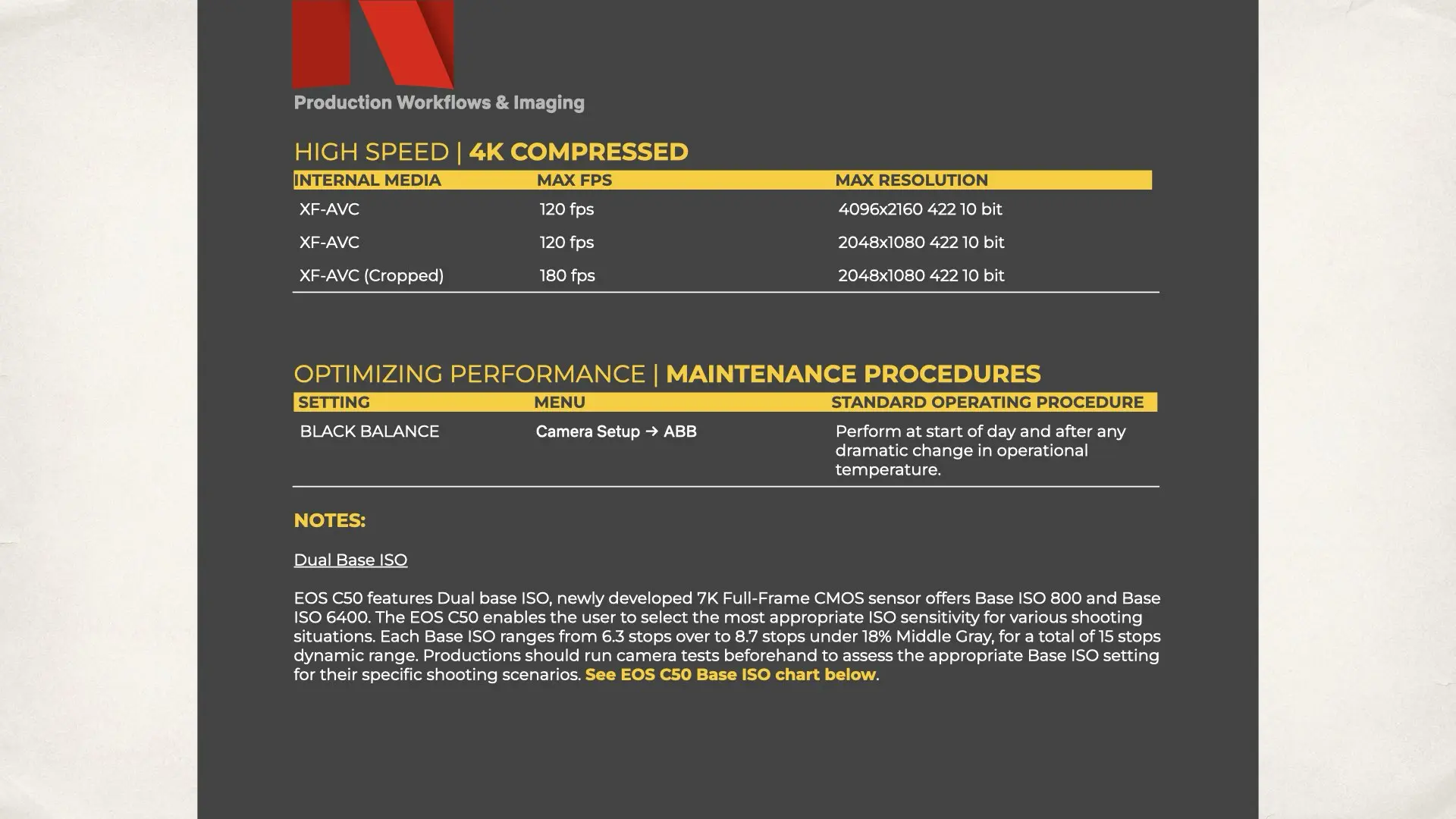
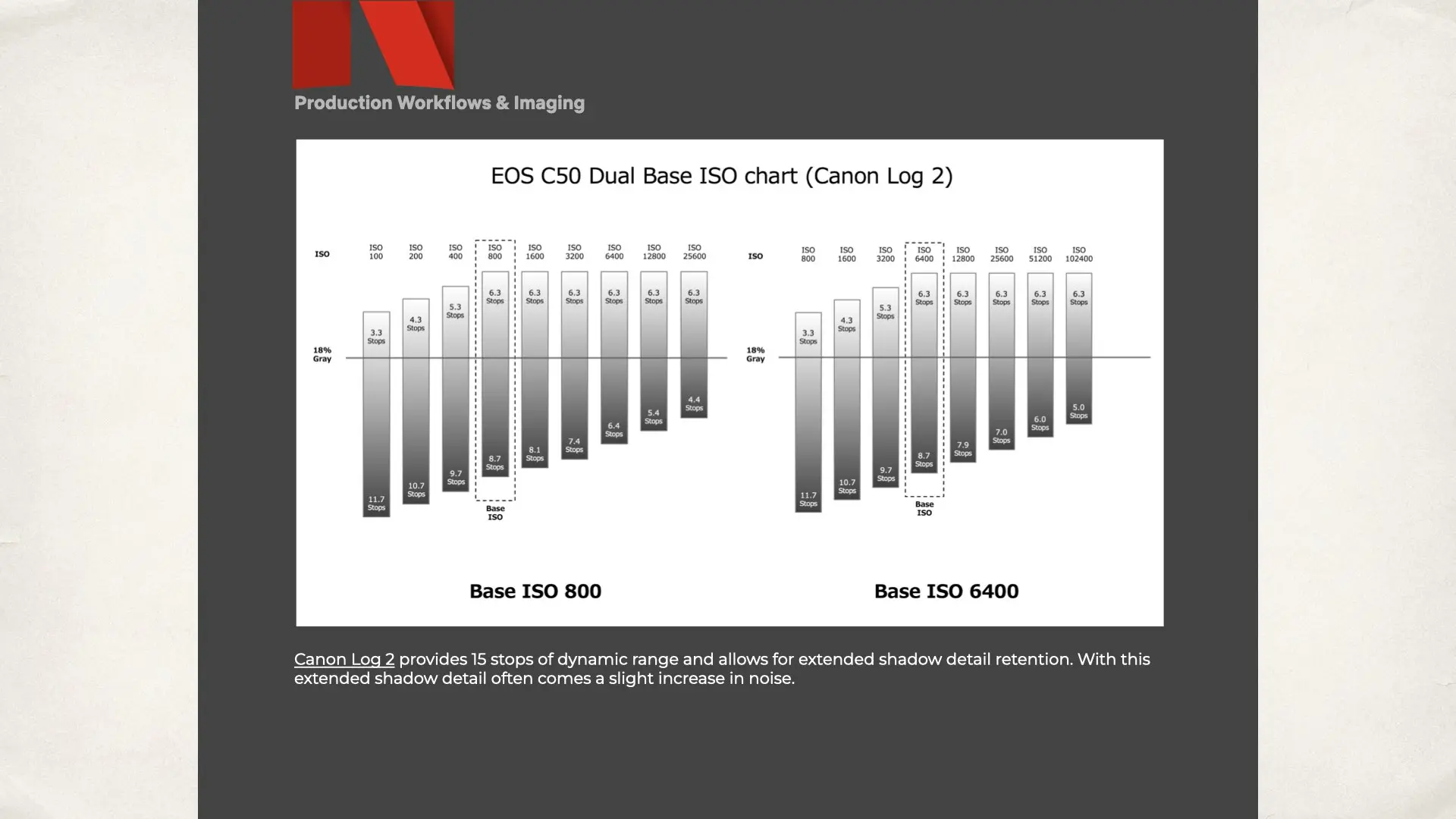
The Netflix approval centers on how the EOS C50 is used, not simply on the hardware itself. According to the guide, Netflix mandates RAW or high-quality XF-AVC acquisition with strict control over sensor modes, base ISO selection, and log encoding. The EOS C50 meets these requirements through its newly developed 7K full frame CMOS sensor, dual base ISO architecture at 800 and 6400, and Canon Log 2 and Canon Log 3 workflows, which are explicitly documented as compliant for Netflix Originals This development naturally reopens the broader industry debate addressed in Do Netflix Approved Cameras Really Matter?, which explored whether Netflix certification is a creative necessity or primarily a production insurance mechanism. The EOS C50 reinforces the conclusion that approval is less about image potential and more about predictable, standardized workflows that scale cleanly across large productions. Netflix wants consistency, known noise behavior, predictable dynamic range, and manageable post pipelines, all of which are now formally documented for the EOS C50. What makes the EOS C50 notable is how compact this compliance package is. Canon’s guide specifies full frame 3:2 and Super 35 capture options, internal RAW HQ, RAW ST, and RAW LT recording modes, and 10 bit XF-AVC 4:2:2 at true DCI 4K resolutions. High-speed recording is also validated, including 120 fps at 4K and up to 180 fps in cropped modes, all within Netflix accepted compression and bit depth parameters.
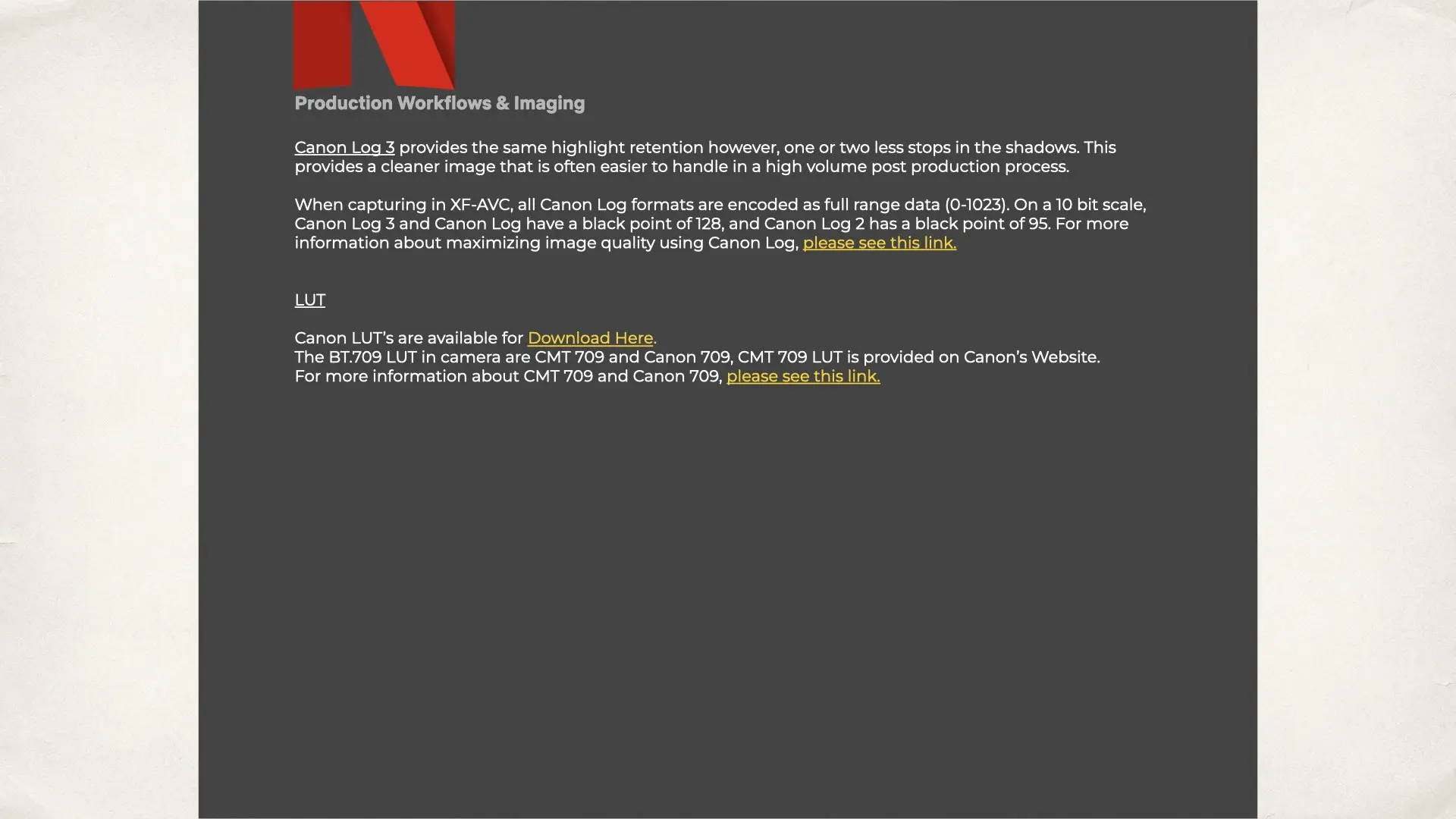
Netflix CAMERA PRODUCTION GUIDE | EOS C50Netflix CAMERA PRODUCTION GUIDE | EOS C50Netflix CAMERA PRODUCTION GUIDE | EOS C50Netflix CAMERA PRODUCTION GUIDE | EOS C50Netflix CAMERA PRODUCTION GUIDE | EOS C50
From a market perspective, this announcement strengthens the EOS C50’s position against emerging rivals, particularly Nikon’s cinema ambitions. That comparison was already unfolding in Canon C50 vs Nikon ZR on Amazon, where the EOS C50 was framed as a compact cinema tool designed to bridge indie production and broadcast-level workflows. Netflix approval removes any remaining ambiguity about where Canon sees this camera living. The guide also sheds light on Canon’s color science strategy. Netflix explicitly references Canon Log 2 as the preferred gamma curve when maximum dynamic range is required, delivering up to 15 stops with extended shadow retention. Canon Log 3 is positioned as a cleaner alternative for high-volume productions where post efficiency outweighs absolute shadow latitude. These distinctions matter in real productions and underline why Netflix requires not just cameras, but tested color pipelines and LUT behavior.
Canon Cinema EOS C50
The C50 is a professional tool
This aligns closely with the philosophy explored in Canon Cinema EOS C50 as a Compact Indie Cinema Tool, which argued that the EOS C50 was designed from the ground up for professional environments despite its size. Netflix approval validates that thesis. The camera’s compact form factor does not compromise its role in disciplined, standards-driven production environments. The real takeaway is not that filmmakers suddenly need an EOS C50 to work with Netflix. Rather, Canon has removed a structural barrier. For productions that already favor Canon color, RF mount flexibility, and compact rigs, the EOS C50 can now enter Netflix pipelines without special exemptions, secondary camera limitations, or post-production complications.
Final thoughts
In practical terms, this announcement confirms that Netflix continues to expand its approved camera ecosystem beyond traditional flagship bodies. Canon, in turn, is proving that compact cinema cameras can meet the same operational rigor as their larger counterparts, provided the workflow is clearly defined and repeatable.
As an Amazon Associate, Y.M.Cinema earns from qualifying purchases. If you buy through our links, we may earn a small commission at no extra cost to you.
Product prices and availability are accurate as of the date/time indicated and are subject to change. Any price and availability information displayed on Amazon.com at the time of purchase will apply to the purchase of this product.
CERTAIN CONTENT THAT APPEARS ON THIS SITE COMES FROM AMAZON. THIS CONTENT IS PROVIDED “AS IS” AND IS SUBJECT TO CHANGE OR REMOVAL AT ANY TIME.
YMCinema is a premier online publication dedicated to the intersection of cinema and cutting-edge technology. As a trusted voice in the industry, YMCinema delivers in-depth reporting, expert analysis, and breaking news on professional camera systems, post-production tools, filmmaking innovations, and the evolving landscape of visual storytelling. Recognized by industry professionals, filmmakers, and tech enthusiasts alike, YMCinema stands at the forefront of cinema-tech journalism.
Nikon is exploring a new image sensor architecture that could improve camera dynamic range by changing the way different parts of the sensor are exposed. The idea appears in a Nikon patent…
Nikon has secured a new U.S. design patent for a device identified only as a “Camera Accessory.” The drawings, however, clearly depict an elongated ergonomic control grip with physical buttons, a large open…
Z CAM has unveiled the E1N, an extremely compact network camera built around a 1-inch CMOS sensor, capable of 4K at up to 60 frames per second with 10-bit color. The camera…
Sony has announced two new professional monitors that also function as dedicated camera controllers for its Cinema Line cameras. The new RM-DP7 and RM-DP5 combine monitoring, camera control, focus operation, and physical…
Blackmagic Design has released DaVinci Resolve 21.1, and the most significant addition is not another isolated AI tool. The update introduces integration with external AI assistants including ChatGPT Codex, Claude, and Claude…
Amazon’s current full-frame camera ranking reveals a particularly competitive point in the mirrorless market. The three best-selling bodies are the Canon EOS R6…