
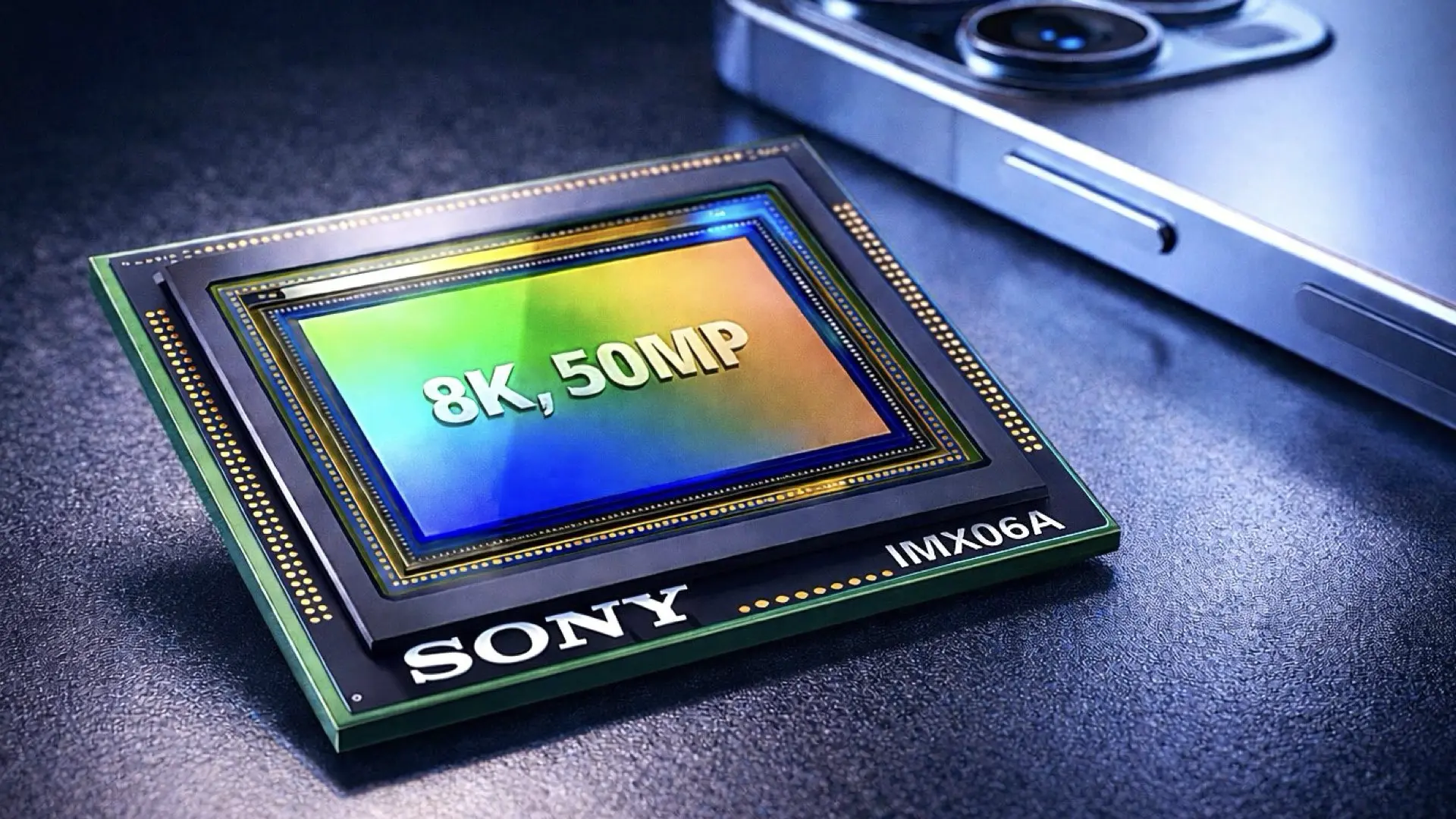
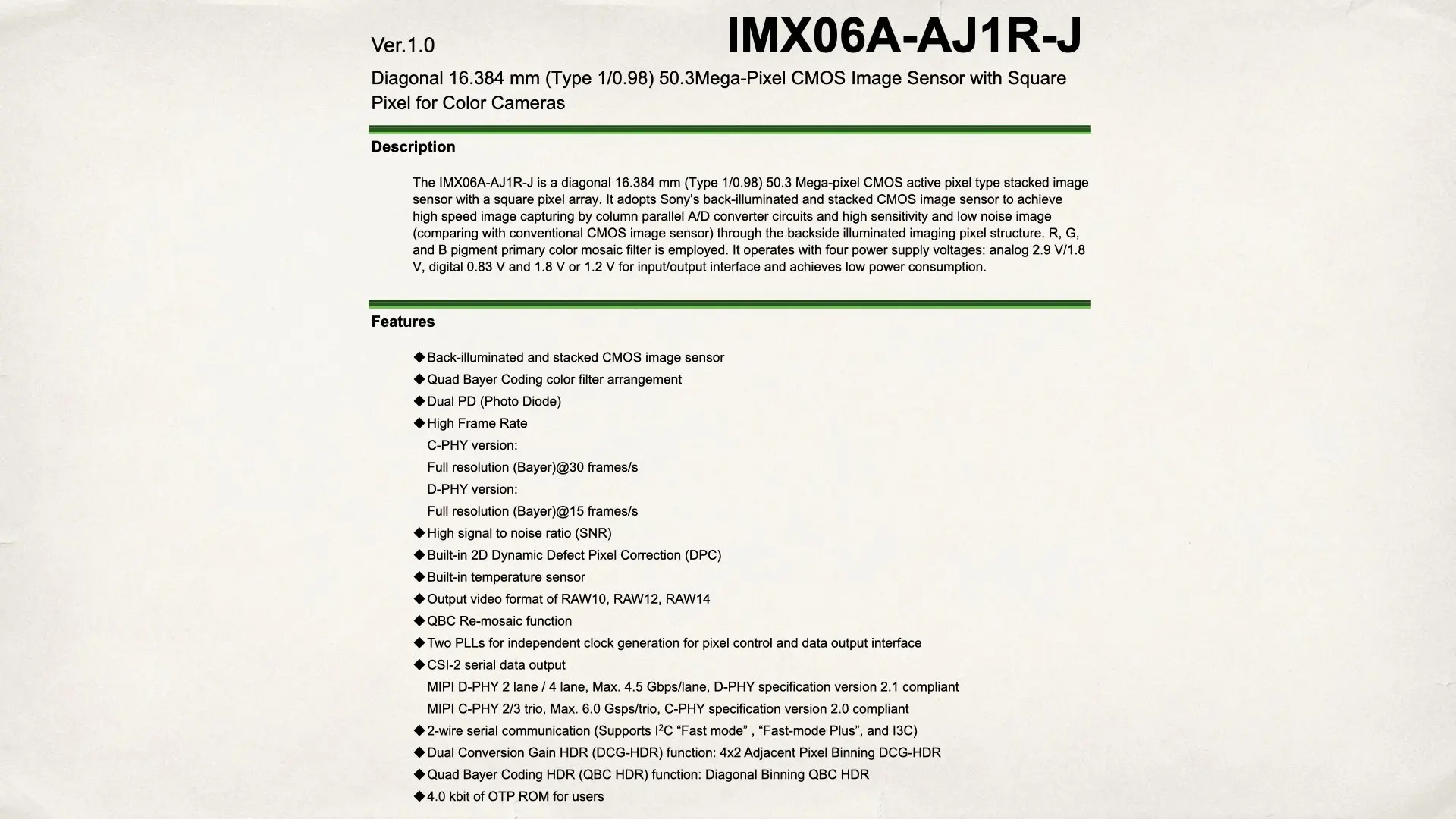
The IMX06A uses a Type 1/0.98 optical format with a 16.384 mm diagonal, placing it very close to the 1-inch class already familiar from premium smartphone main cameras. It delivers a native resolution of 8192 × 6144 pixels, totaling approximately 50.33 megapixels, with a 1.60 μm square pixel pitch. Sony employs a back-illuminated stacked CMOS architecture, combining high sensitivity with fast readout while maintaining low noise characteristics. Column-parallel ADCs enable high-speed image capture without excessive power draw, which is critical in mobile devices where thermal and battery limits are non-negotiable. At full resolution, the sensor supports up to 30 frames per second using MIPI C-PHY and 15 frames per second via MIPI D-PHY, figures that strongly indicate smartphone and embedded imaging pipelines rather than traditional camera architectures.
Quad Bayer flexibility and high-speed binning
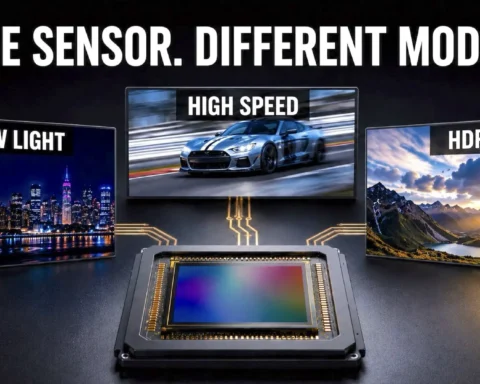
The sensor is built around a Quad Bayer color filter array, giving it significant flexibility across different shooting conditions. Sony includes a QBC remosaic function that allows full-resolution output in bright scenes, while advanced binning modes dramatically improve light-gathering efficiency in low light. In 4 × 2 adjacent pixel binning, the IMX06A outputs a 4096 × 3072 image at approximately 12.6 megapixels and can reach up to 120 fps via C-PHY or 60 fps via D-PHY. This operating mode is particularly well-suited for smartphone video, enabling smoother motion, reduced noise, and improved low-light performance without relying purely on aggressive software processing. Autofocus is handled via Dual PD technology, which has become standard in flagship smartphones, providing fast and reliable phase detection across a wide portion of the sensor.
Sensor-level HDR instead of multi-frame tricks
HDR is a central design focus of the IMX06A. The sensor supports Dual Conversion Gain HDR using 4 × 2 adjacent pixel binning, as well as Quad Bayer Coding HDR through diagonal binning. Both approaches operate directly at the sensor level, reducing reliance on multi-frame HDR stacking and helping preserve image integrity in scenes with motion. This design philosophy aligns with Sony’s broader push to move HDR intelligence closer to the silicon itself, improving consistency, efficiency, and video performance in real-world shooting conditions.
Smartphone-native interfaces and power design
One of the clearest indicators of the IMX06A’s intended use is its interface and power architecture. The sensor outputs via MIPI CSI-2, supporting D-PHY with two or four lanes at up to 4.5 Gbps per lane, as well as C-PHY with two or three trios at up to 6.0 Gsps per trio. These interfaces are native to smartphone SoCs and embedded imaging systems, not interchangeable-lens cameras. Power efficiency is reinforced through multiple voltage rails, including 0.83 V digital operation, making the sensor well-suited for battery-powered devices. Sony also integrates system-level features such as a built-in temperature sensor, 2D dynamic defect pixel correction, support for RAW10, RAW12, and RAW14 output, and onboard OTP memory for calibration data.

How this sensor fits Sony’s recent smartphone sensor pattern
The IMX06A does not appear in isolation. It fits neatly into the broader pattern YMCinema has been tracking over the past year. In early December, Sony revealed a mobile sensor designed around high-end video capture and HDR ambition, including 8K output and up to 17 stops of dynamic range. That earlier coverage provides a strong reference point for how Sony has been approaching mobile imaging as something increasingly cinematic in philosophy, even when the hardware is smartphone-sized. Only a few days later, Sony disclosed another mobile-sized sensor concept that pushed HDR even further, reaching up to 25 stops of dynamic range. While that technology was presented through an automotive context, it still showed how aggressively Sony is exploring extreme HDR pipelines that can eventually inform mobile imaging architecture and computational capture. The new 50MP IMX06A sits between these developments. It does not chase record-breaking dynamic range numbers, but instead focuses on a balanced, production-ready platform that combines stacked BSI design, advanced HDR modes, and extremely flexible readout options. In other words, it looks like a sensor designed to ship in real devices rather than remain a technology demo.

Not a cinema sensor, still strategically important
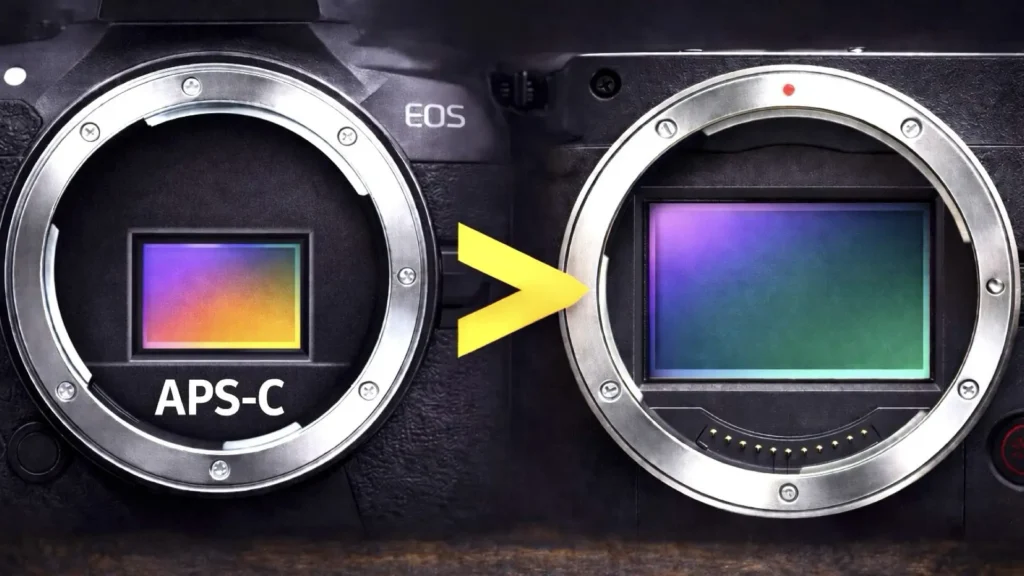
It is important to be precise. The IMX06A is not intended for cinema cameras, mirrorless systems, or Sony’s VENICE or FX lines. The pixel pitch, interface choice, and processing assumptions make that clear. However, it remains strategically important because many technologies refined in smartphone-class sensors eventually scale upward. Stacked architectures, column-parallel ADC efficiency, and sensor-level HDR logic are often proven first in mobile sensors before influencing higher-end imaging systems. Increasingly, smartphone sensors are where Sony experiments with the future of imaging. The IMX06A-AJ1R-J signals that Sony sees the next generation of flagship smartphones as larger-sensor devices that rely heavily on computational imaging, prioritize HDR consistency and video performance, and move beyond simple megapixel marketing. Rather than chasing extreme specifications in isolation, Sony appears focused on refining sensor platforms that perform reliably under real-world mobile constraints. If this sensor appears in upcoming flagship smartphones, it will not be because it is a 50MP chip alone, but because it fits seamlessly into the modern smartphone camera philosophy.





Excellent review. Very helpful in my decision
Great article, hoping this sensor will find its way to sonys upcoming Xperia 1 viii, its about time they update the main camera and tele camera.