In its quest to redefine mobile imaging, Apple may have just hinted at a revolutionary combination: a cinema-grade image sensor and a powerful new active cooling system. With YMCinema being the first to uncover Apple’s 20-stop dynamic range sensor patent, the pieces of the puzzle are starting to fall into place—and they point toward an iPhone built for serious filmmakers.

A Cinematic Sensor Like No Other
On June 25, 2025, YMCinema exclusively reported on Apple’s patent for a stacked image sensor boasting a stunning 20 stops of dynamic range — a spec unheard of in consumer mobile devices. This breakthrough sensor design uses LOFIC (Lateral Overflow Integration Capacitor) technology, enabling true high-fidelity HDR capture and pixel-level processing. This means the sensor doesn’t just record light—it actively computes it, frame by frame, in real time. But that raises an obvious challenge: heat.
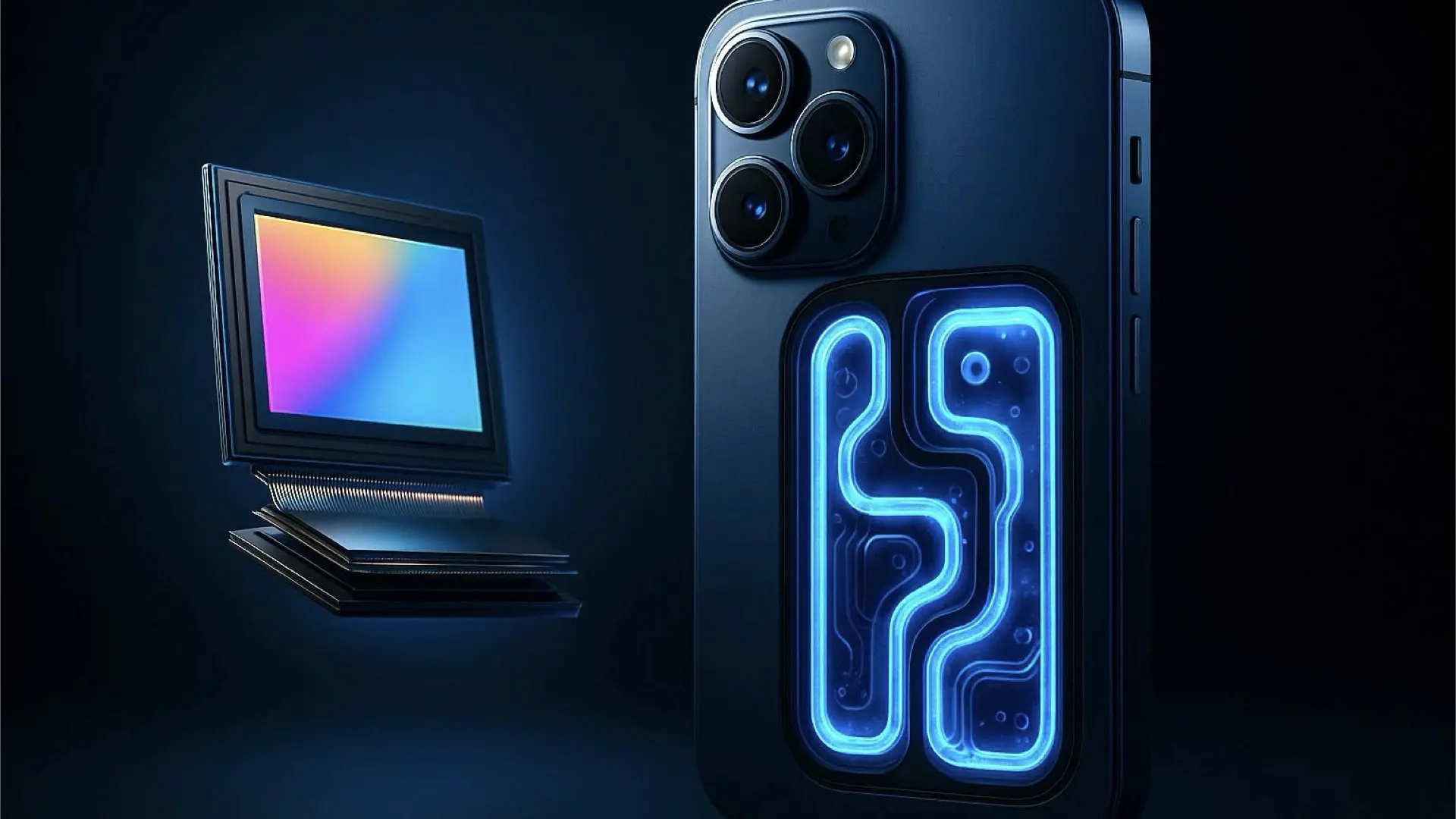
More Processing = More Heat
Modern smartphone cameras already run hot under pressure. Shooting in ProRAW, 4K60, or ProRes demands advanced thermal handling. Now imagine the thermal output of an on-sensor processing unit doing real-time HDR across millions of pixels—continuously. That’s where Apple’s second, less-publicized patent becomes a game changer.
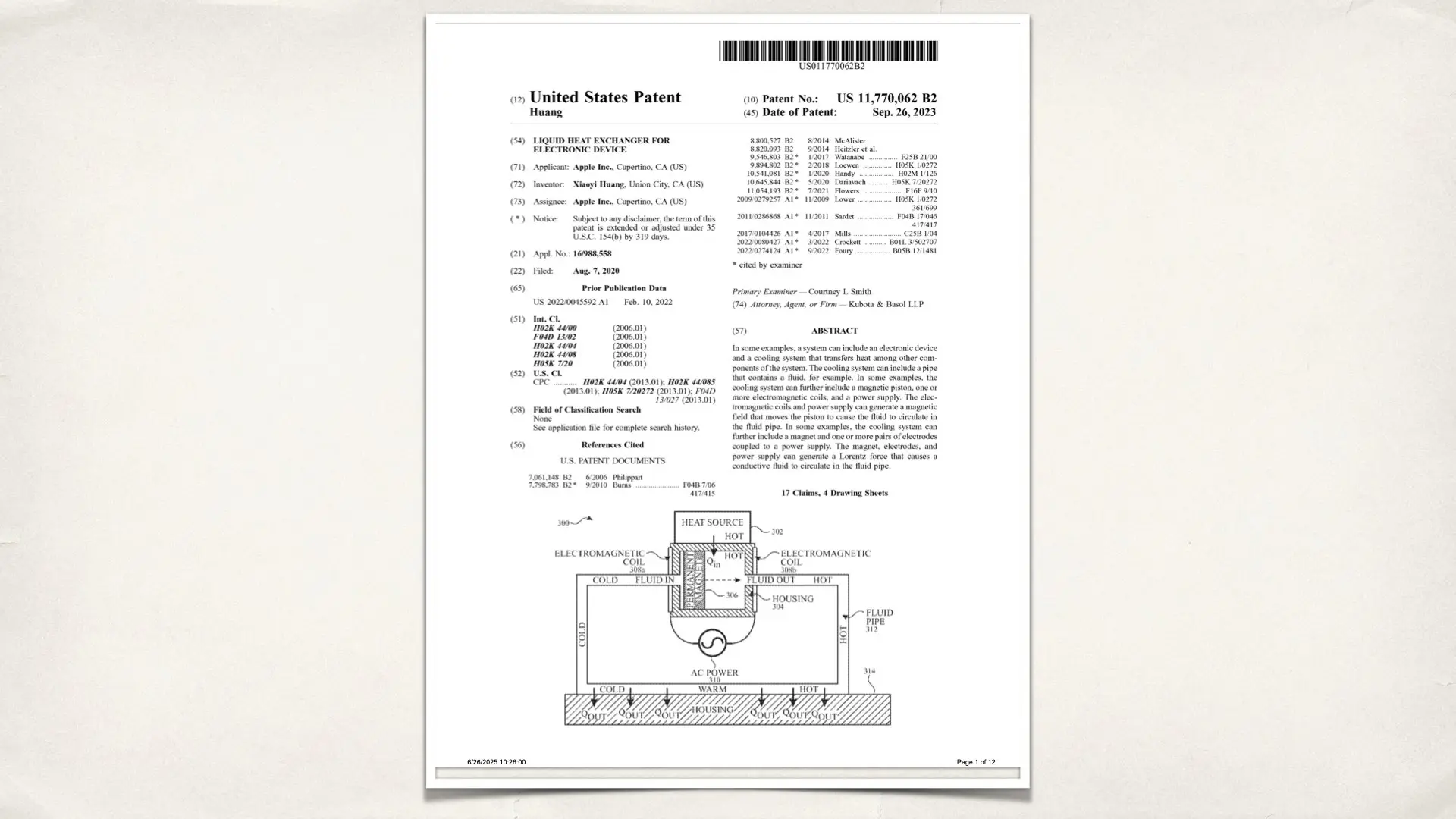
The Patent You Might Have Missed: Apple’s Liquid Heat Exchanger
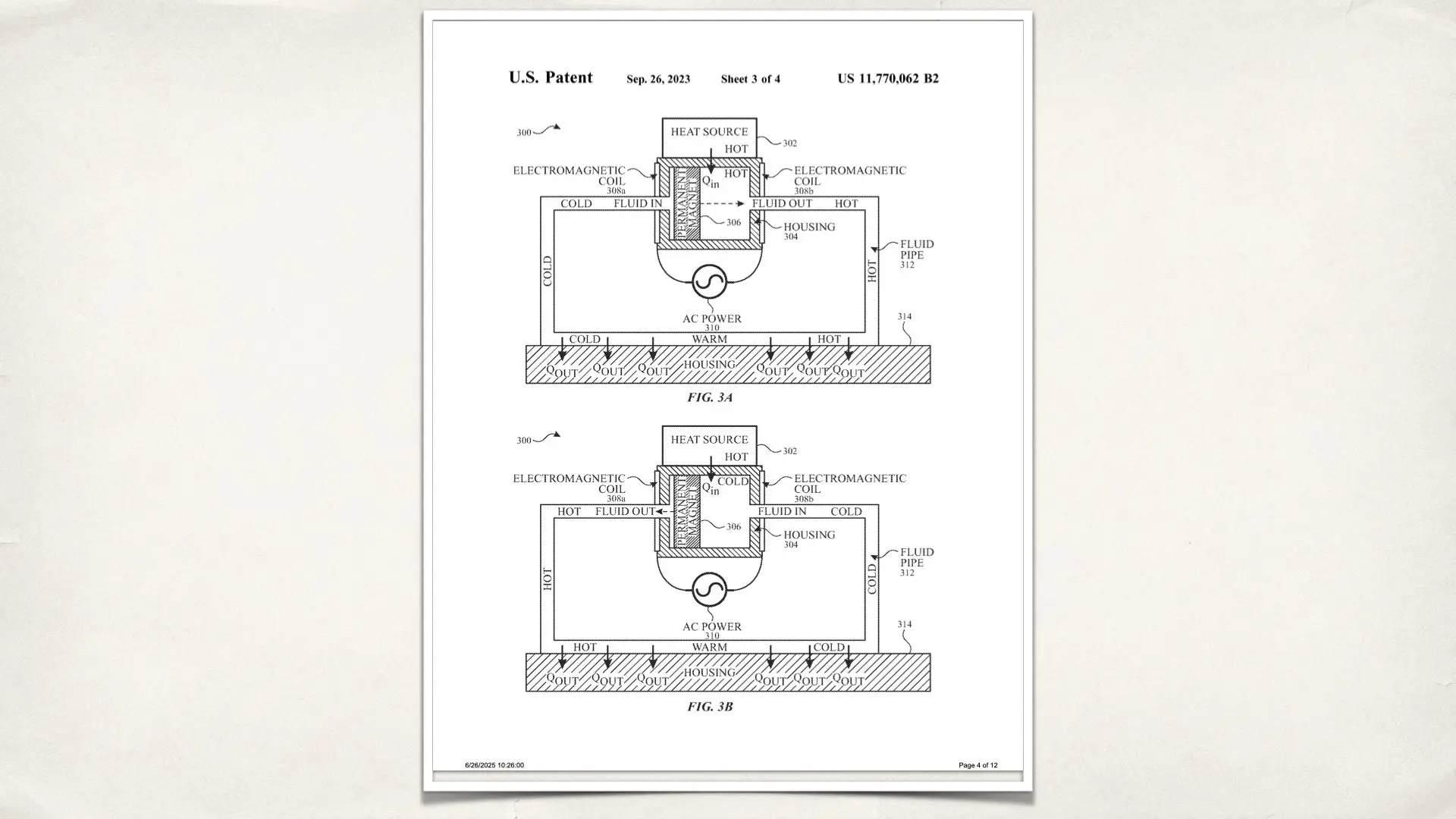
Filed in 2023, this patent—“Liquid Heat Exchanger for Electronic Device”—describes a micro-scale active cooling system for mobile devices. It features:
-
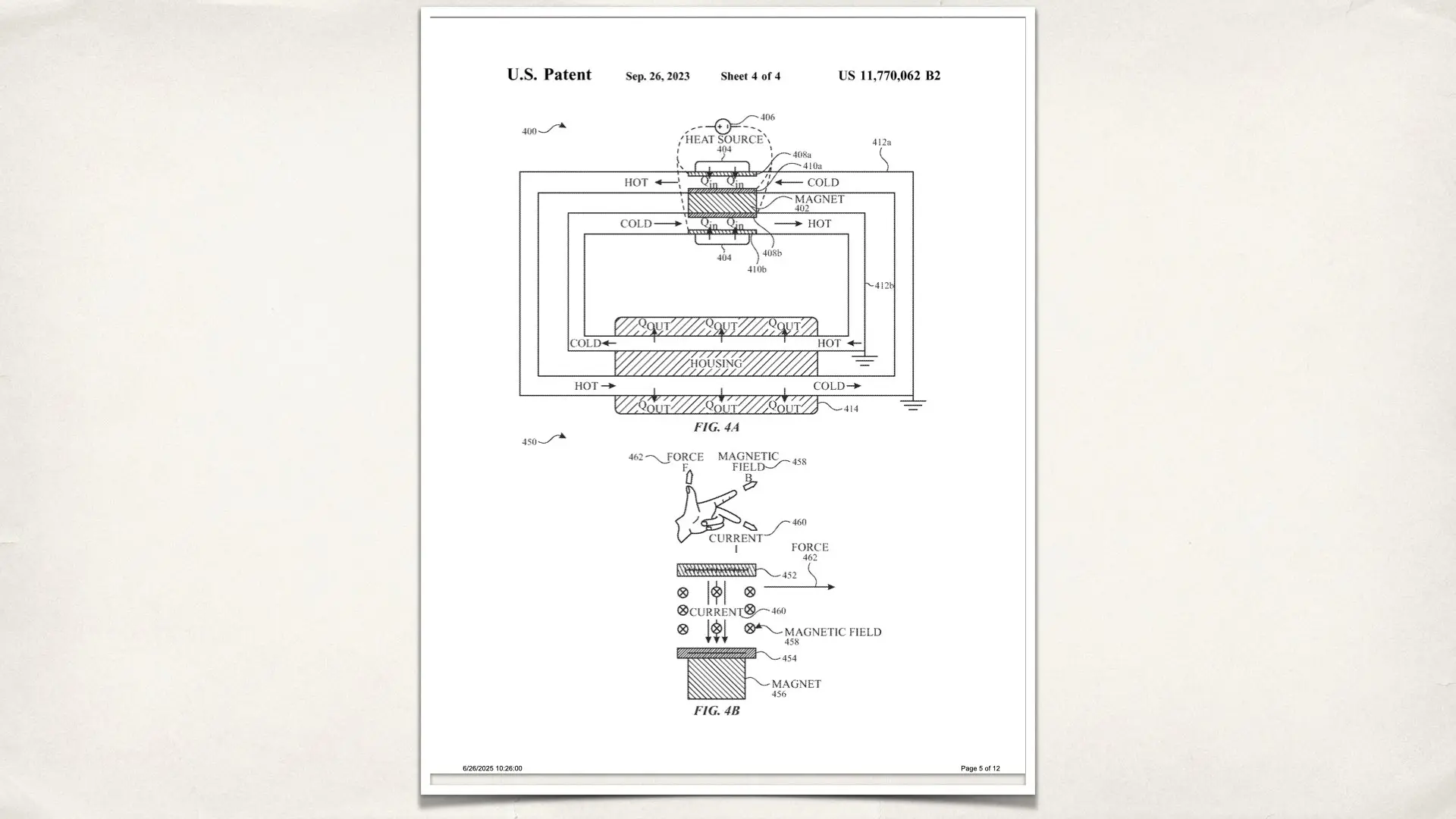
A magnetic piston or Lorentz-force fluid movement system
-
Electromagnetic coils to pump cooling liquid through tiny channels
-
Targeted heat transfer from key components (like a camera sensor) directly to the chassis
In essence: it’s liquid cooling, but designed without fans, without noise, and without bulk. It’s silent. It’s smart. And it’s tailor-made for next-gen mobile hardware.
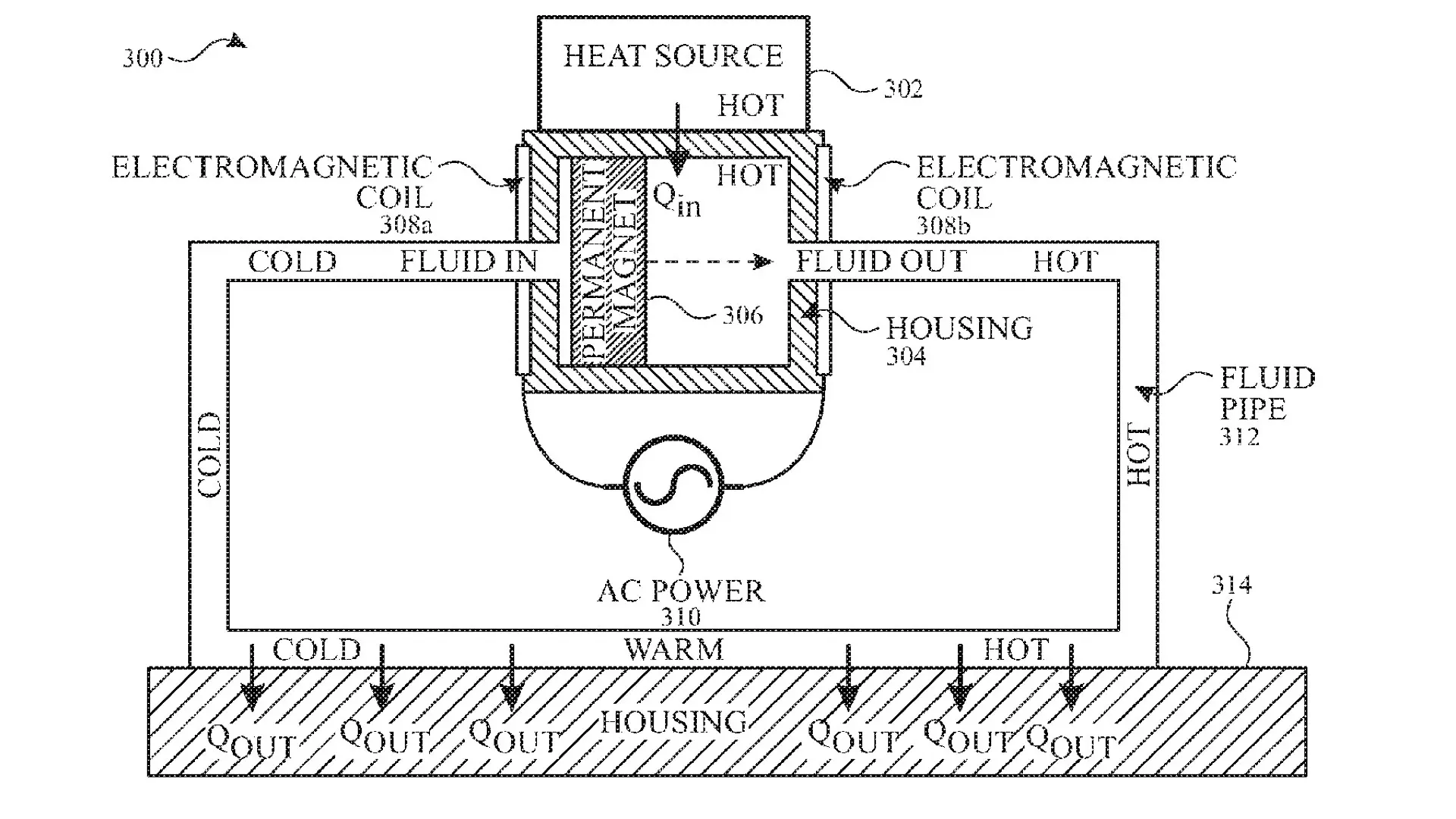
In some examples, a system can include an electronic device and a cooling system that transfers heat among other components of the system. The cooling system can include a pipe that contains a fluid, for example. In some examples, the cooling system can further include a magnetic piston, one or more electromagnetic coils, and a power supply. The electromagnetic coils and power supply can generate a magnetic field that moves the piston to cause the fluid to circulate in the fluid pipe. In some examples, the cooling system can further include a magnet and one or more pairs of electrodes coupled to a power supply. The magnet, electrodes, and power supply can generate a Lorentz force that causes a conductive fluid to circulate in the fluid pipe.
-Apple’s patent: “Liquid Heat Exchanger For Electronic Device”
Vapor Chamber vs. Active Liquid Cooling
The upcoming iPhone 17 Pro is expected to debut with a vapor chamber cooling system—a major first for Apple. This passive solution spreads heat away from the A19 Pro chip and camera block. But as advanced as this system is, it may already be approaching its limit.
| Cooling Type | How it Works | Pros | Cons |
|---|---|---|---|
| Vapor Chamber | Evaporation & condensation of liquid in sealed chamber | Silent, compact | Passive only, not scalable for AI or sensor heat |
| Liquid Heat Exchanger | Active electromagnetic fluid pumping | Precision cooling, scalable, sensor-targeted | More complex, needs power |
For standard flagship tasks—gaming, photography, AI prompts—the vapor chamber is enough. But for a mobile sensor designed to rival cinema cameras, Apple will need more. And this liquid cooling system is the only scalable answer in their patent arsenal.
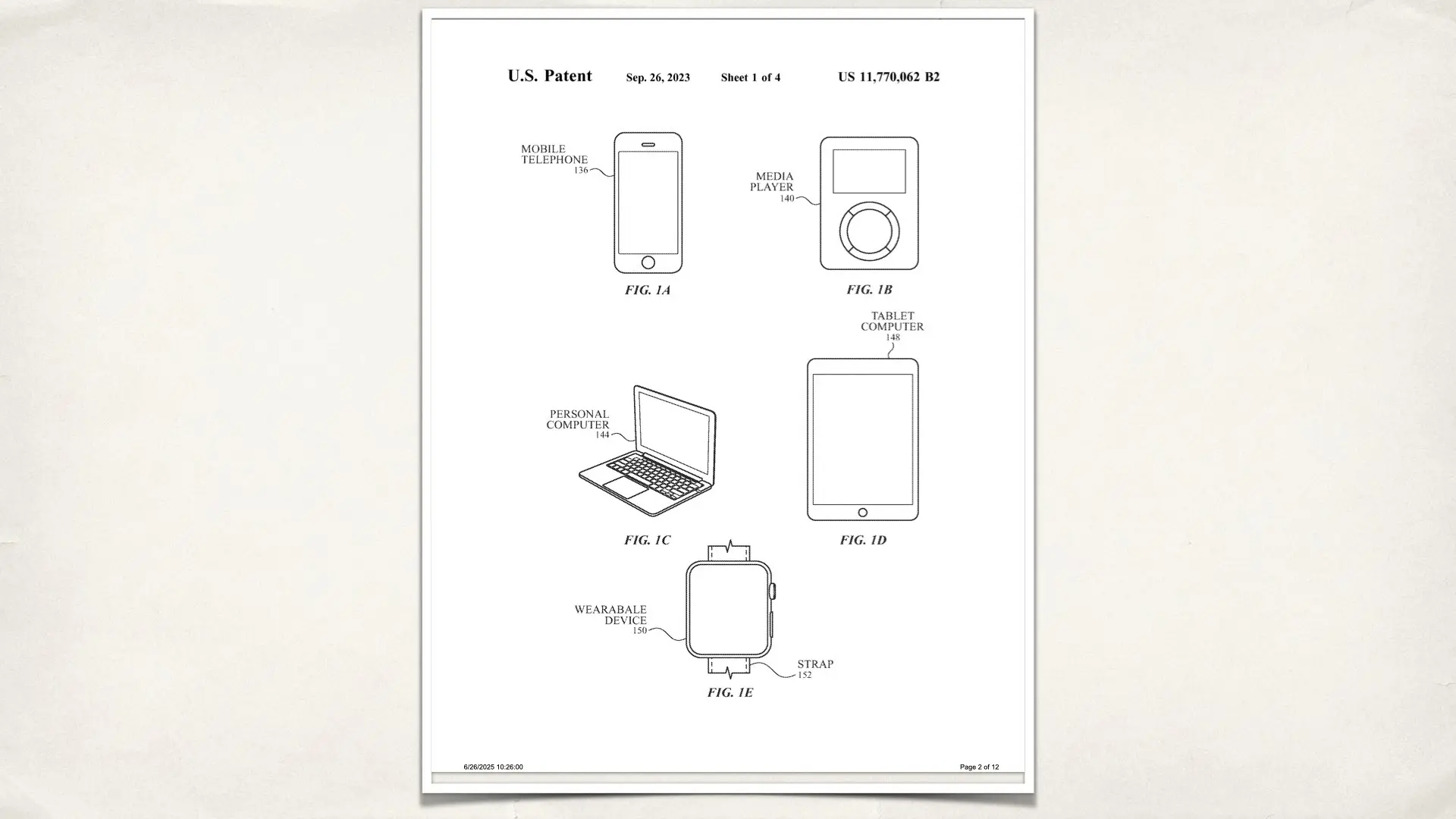
This disclosure relates generally to a heat exchanger and, more particularly, to a heat exchanger that uses a magnet to circulate cooling fluid. In some examples, a system can include an electronic device and a cooling system configured to transfer heat from one component of the electronic device that can generate heat to a housing of the system (e.g., a housing of the electronic device). In some examples, the cooling system can include a magnetic piston within a piston housing of the cooling system. The piston housing can be fluidly coupled to a pipe containing a fluid, such as water, for example. In some examples, the cooling system can further include one or more electromagnetic coils coupled to a power supply (e.g., an AC power supply) that are configured to generate a magnetic field. The magnetic piston can move back and forth within the piston housing to cause the liquid to circulate in the fluid pipe, for examples. In some examples, the moving fluid can transfer heat between components of the system.
-Apple’s patent: “Liquid Heat Exchanger For Electronic Device”
Apple’s End Game: A Motion Picture–Ready iPhone?
The connection is impossible to ignore. A cutting-edge sensor with unmatched dynamic range. A patent for a completely silent, power-efficient active cooling system. A phone with growing emphasis on ProRes, Log recording, and even Spatial Video. Apple isn’t just building phones. They’re building a cinema camera in your pocket—and engineering the heat management to power it. With the combination of these two patents, Apple is clearly positioning itself not just for computational photography, but for the future of mobile filmmakingat a professional level.
Final Thought
If this sensor ends up inside a future iPhone—or perhaps a dedicated Apple camera—the only way to maintain its full dynamic range and frame rate is through precise thermal control. The vapor chamber is a solid step. But the liquid heat exchanger could be the tech that finally makes iPhones a true threat to mirrorless cameras in the motion picture world.