Apple is laying the groundwork for a major leap in stabilization. Over the last few weeks, three distinct patents have surfaced, each solving a different challenge. Together, they point to a unified plan: a next-generation sensor-shift system that’s compact, precise, and durable enough to rival professional cinema gear. And today’s newly revealed filing might be the missing link that ties it all together.
Patent #1 – Precision Motion Control
Apple’s Latest Camera Patent: The Secret to Smoother, Sharper iPhone Filmmaking introduced a redesign of the actuator and flex circuit arrangement. By integrating moving coils with flexible printed circuits, the sensor can respond more quickly and precisely to movement. For filmmakers, this means sharper handheld shots, smoother focus pulls, and less reliance on post-stabilization. It’s active precision at the heart of the camera module.

Patent #2 – Suspension for Shock Absorption
Apple’s New Suspension System Could Redefine iPhone’s Image Stabilization takes a different approach. Instead of focusing on electronics, it adds a mechanical layer — a suspension system of wires or springs to physically absorb shocks before they reach the image sensor. This is passive stability. It reduces vibrations from walking or moving the phone, delivering smoother footage even before the digital processing begins.

Patent #3 – Today’s Breakthrough: Image Sensor Package for Camera With Sensor Shift Actuation
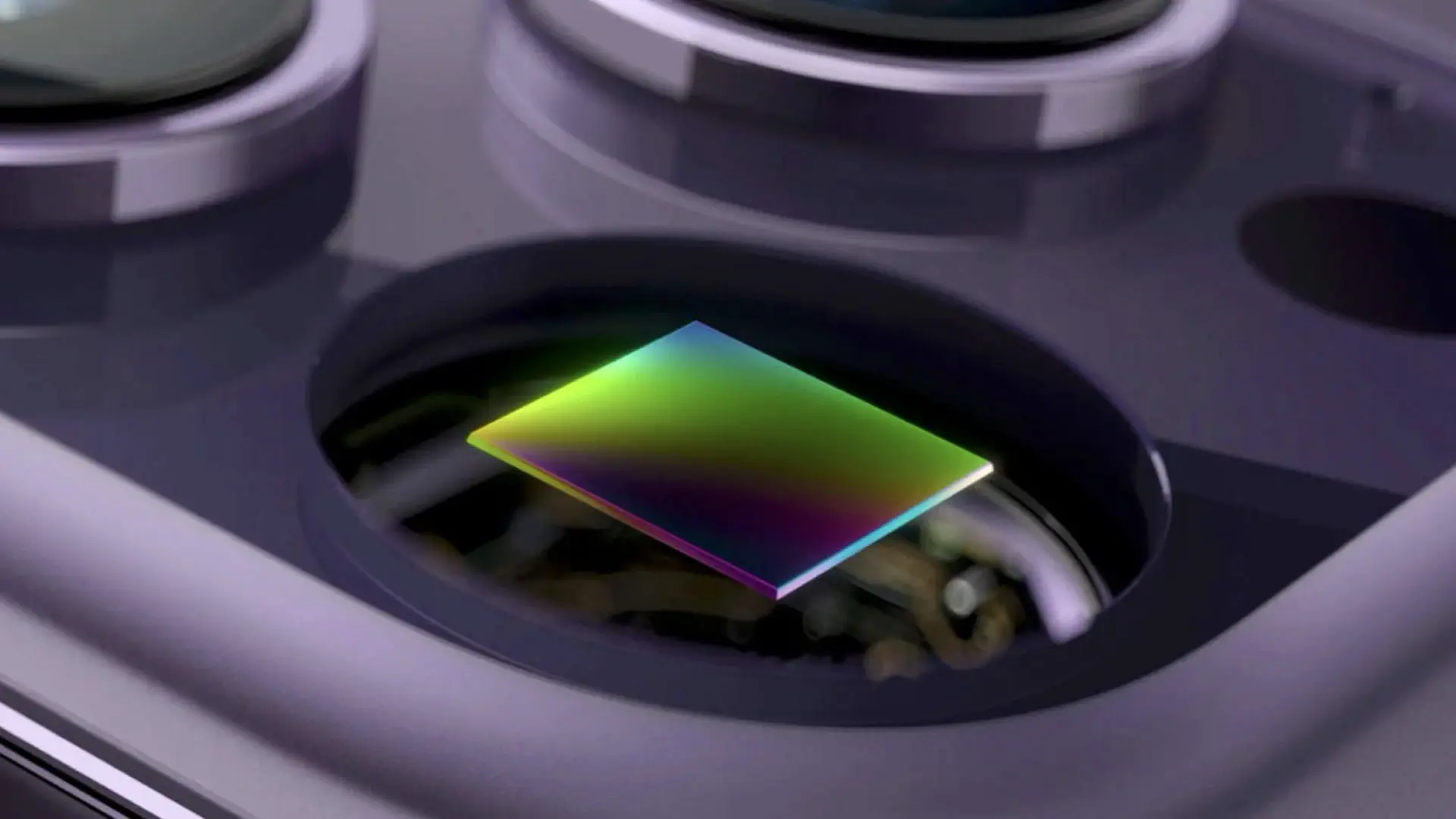
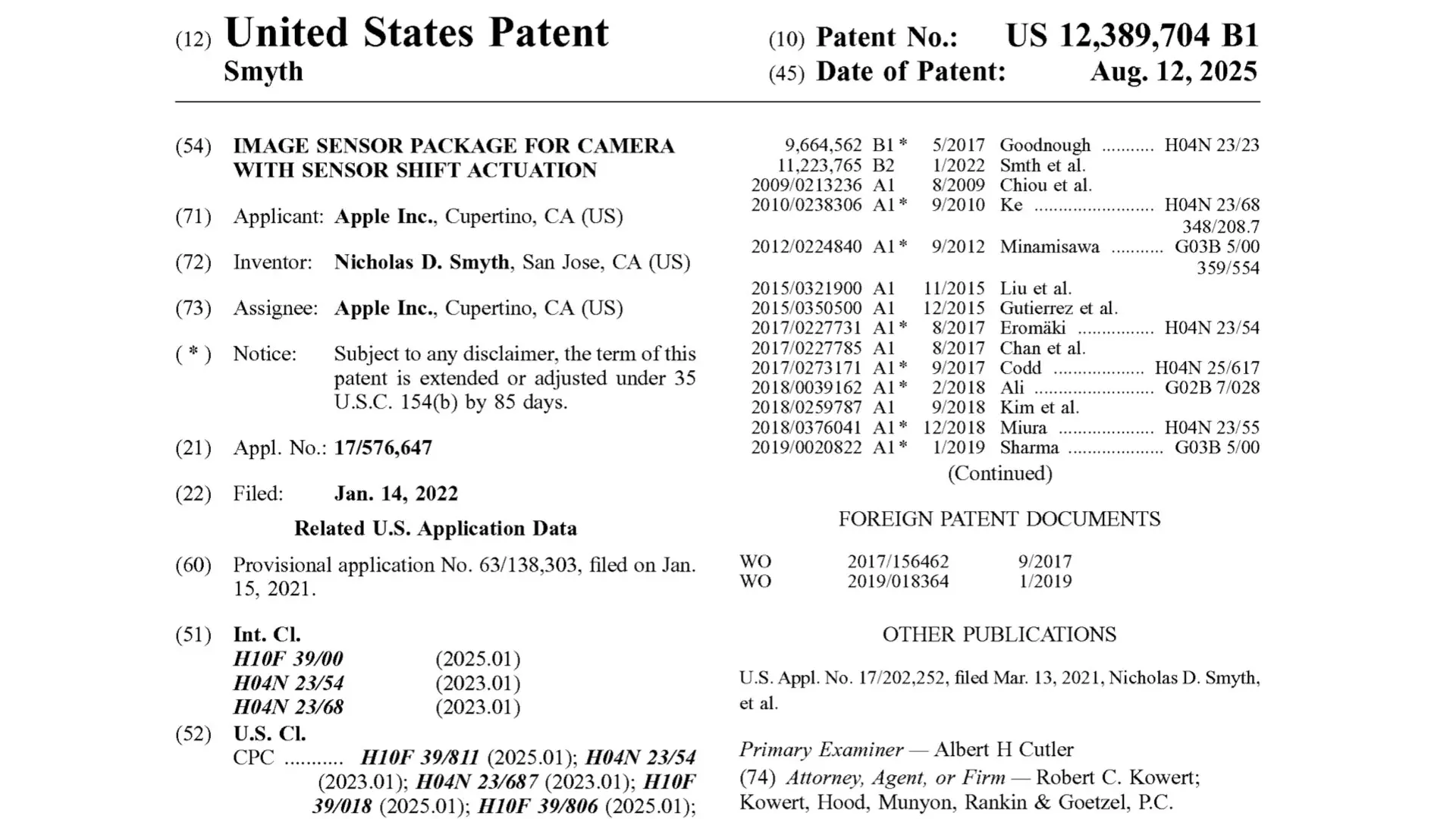
The patent “Image Sensor Package For Camera With Sensor Shift Actuation” was published today, and it’s all about making the previous two patents practical for real-world manufacturing. The patent introduces wire-bond electrical interconnects instead of traditional flip-chip connections. This avoids high-temperature assembly processes that could demagnetize the voice coil motor magnets — a serious risk to long-term performance. It also brings a ledge-based substrate design and flex circuit cut-outs, which reduce bulk while keeping the sensor fully mobile for autofocus and optical image stabilization. The design is heat-safe, space-efficient, and robust. It ensures Apple can fit advanced stabilization into a slim device without compromising reliability.
Connecting the Dots
Patent #1 gives the system agility, Patent #2 gives it stability, and Patent #3 ensures it can be manufactured reliably and compactly. This is a full-stack approach to stabilization — combining active control, passive damping, and packaging durability. Individually, each is impressive. Together, they form a platform that could bring gimbal-level steadiness to a device small enough to slip into your pocket.

What This Means for iPhone Filmmaking
If these designs make it into production, the next iPhone could deliver:
-
Smoother footage without external stabilizers
-
Better handheld performance in low light
-
Long-term reliability under heavy use
It’s a shift from chasing smartphone rivals to pursuing the stability and precision of dedicated cinema cameras (=maybe for iPhone 20 ? 😉).

Final Take
Apple’s triple-patent sequence shows meticulous planning. Each solves a different problem: motion control, vibration damping, and structural resilience. Today’s newly revealed patent connects the dots, making advanced stabilization a realistic and durable feature for future iPhones. For filmmakers, that could mean an iPhone that’s not just “good for a phone”, but capable of delivering genuinely cinematic results straight from the pocket. Do you think these patents will push the iPhone into true cinema-camera territory, or will physical limitations still hold it back?