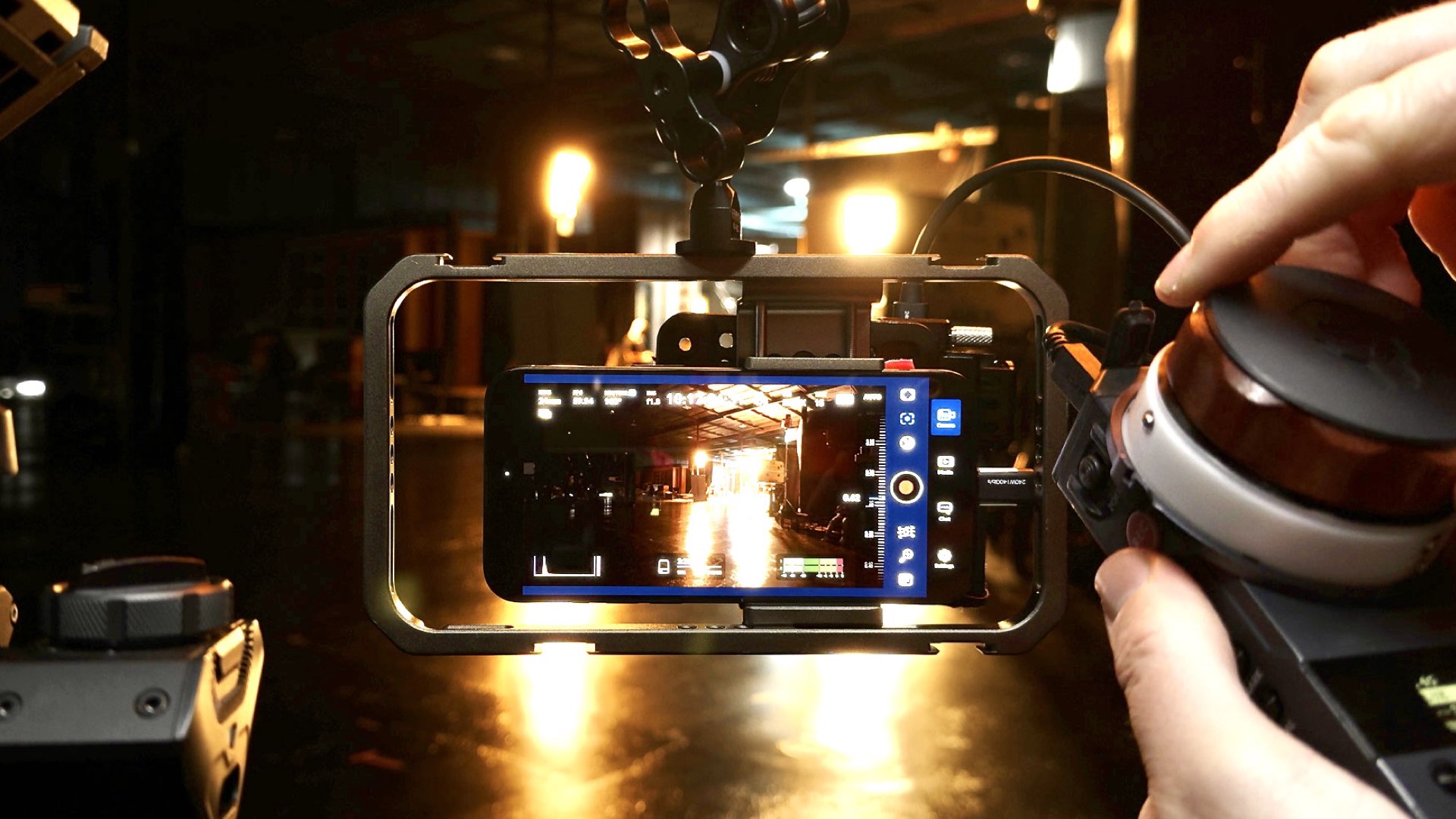
For filmmakers, the biggest weakness of smartphone video has never been resolution. It has been motion. More specifically, how stabilization, autofocus, and handheld movement interact during a real shot. Walking, reframing, pulling focus, or simply holding a shot for several seconds often exposes small instabilities that break the cinematic illusion. A newly granted patent, US 12,498,537 B1, shows that Apple is deeply aware of this problem. More importantly, it shows Apple redesigning the internal camera mechanics of the iPhone in a way that directly targets the issues filmmakers notice most. Let’s dive in.
Why handheld video still struggles on phones
When you shoot handheld video, two things must happen continuously. The camera must stay stable, and it must stay in focus. On paper, modern smartphones already do both. In practice, these systems often interfere with each other. Autofocus moves lens elements forward and backward. Stabilization moves either lens groups or the image sensor sideways. In compact phone modules, these movements happen in extremely close proximity. Even tiny mechanical interactions can cause visible micro jitter, focus instability, or subtle wobble that software struggles to hide. Video exposes these flaws because it unfolds over time. A still photo can hide instability. A moving image cannot.
What this patent is really about
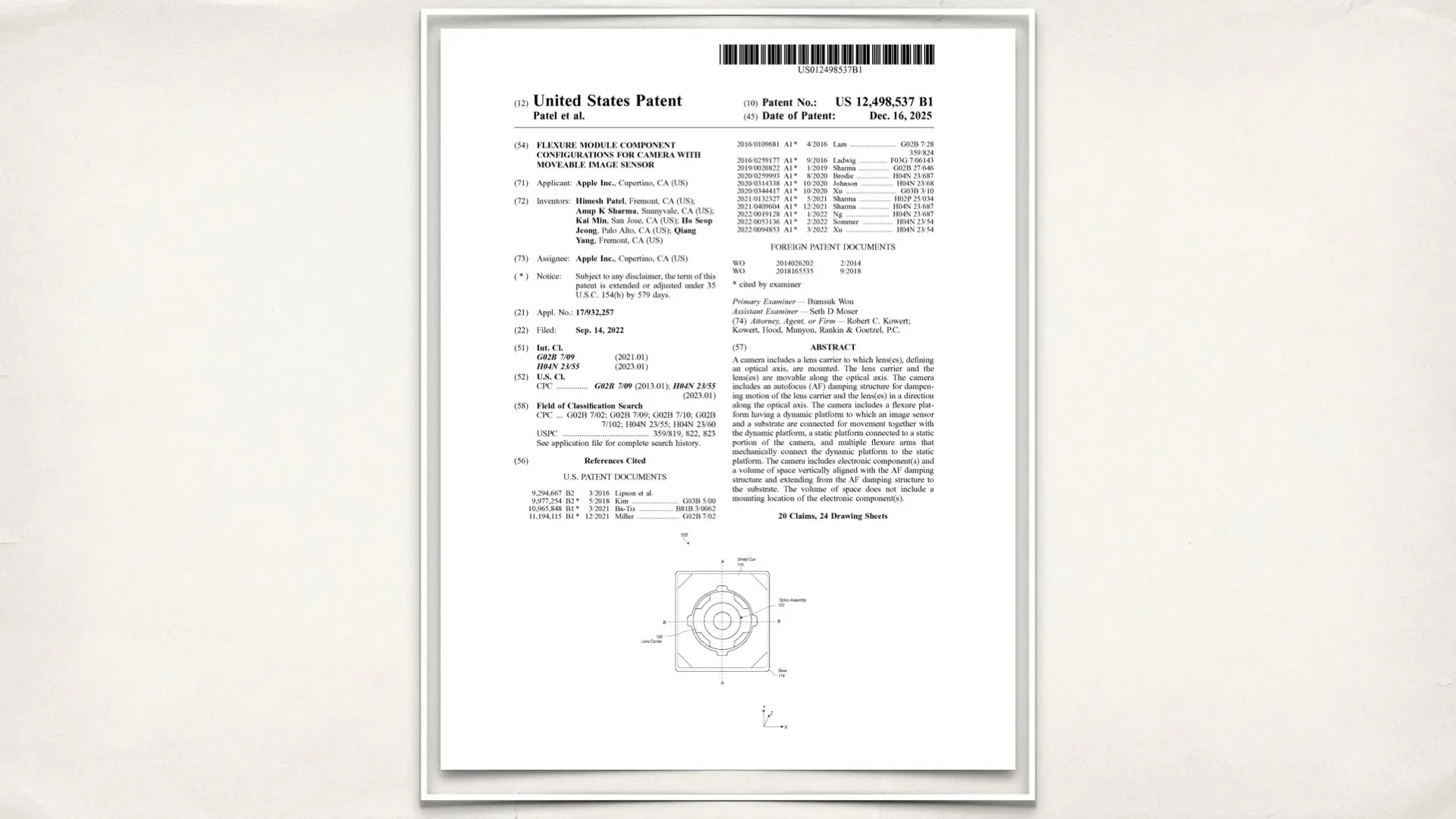
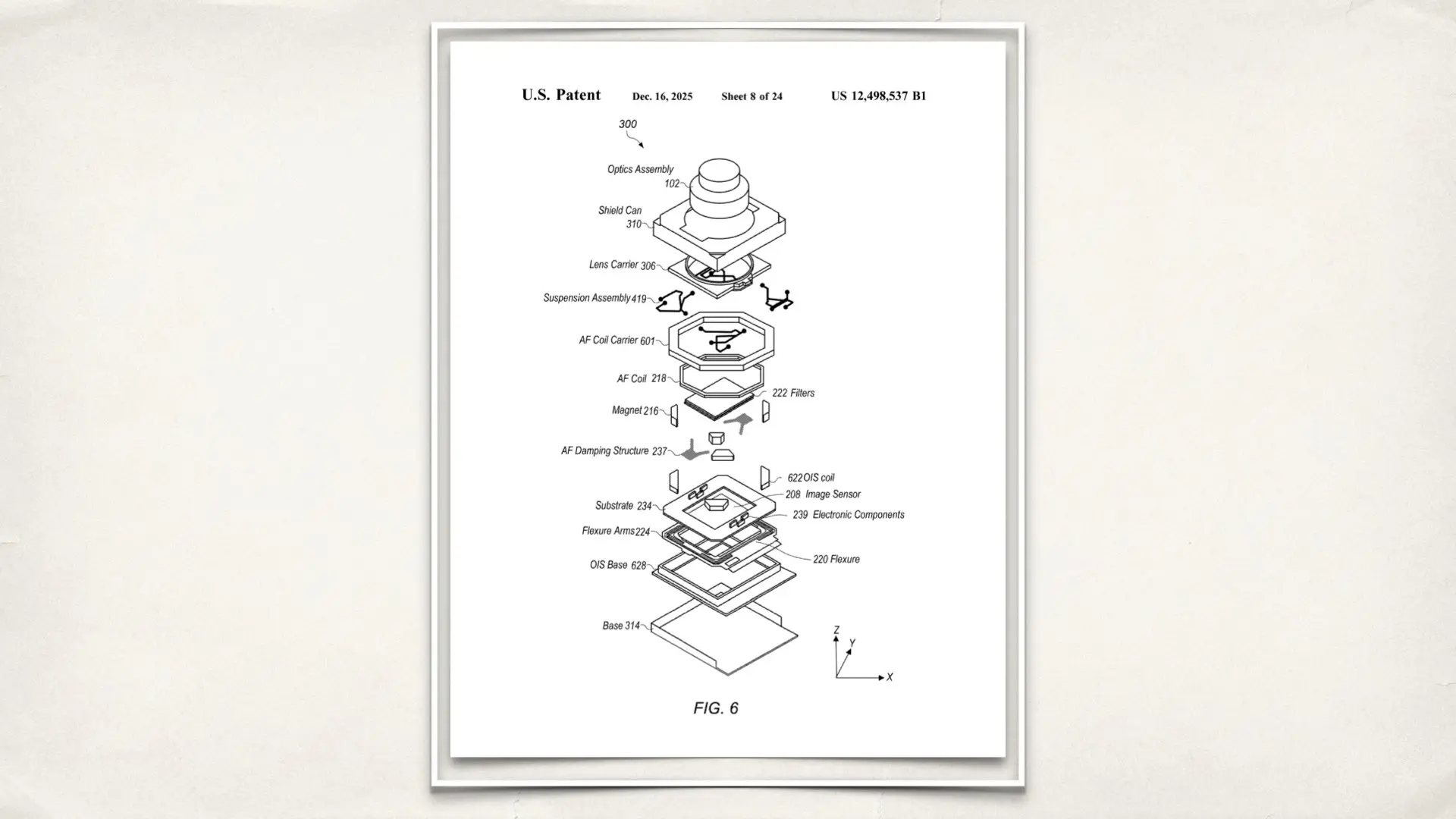
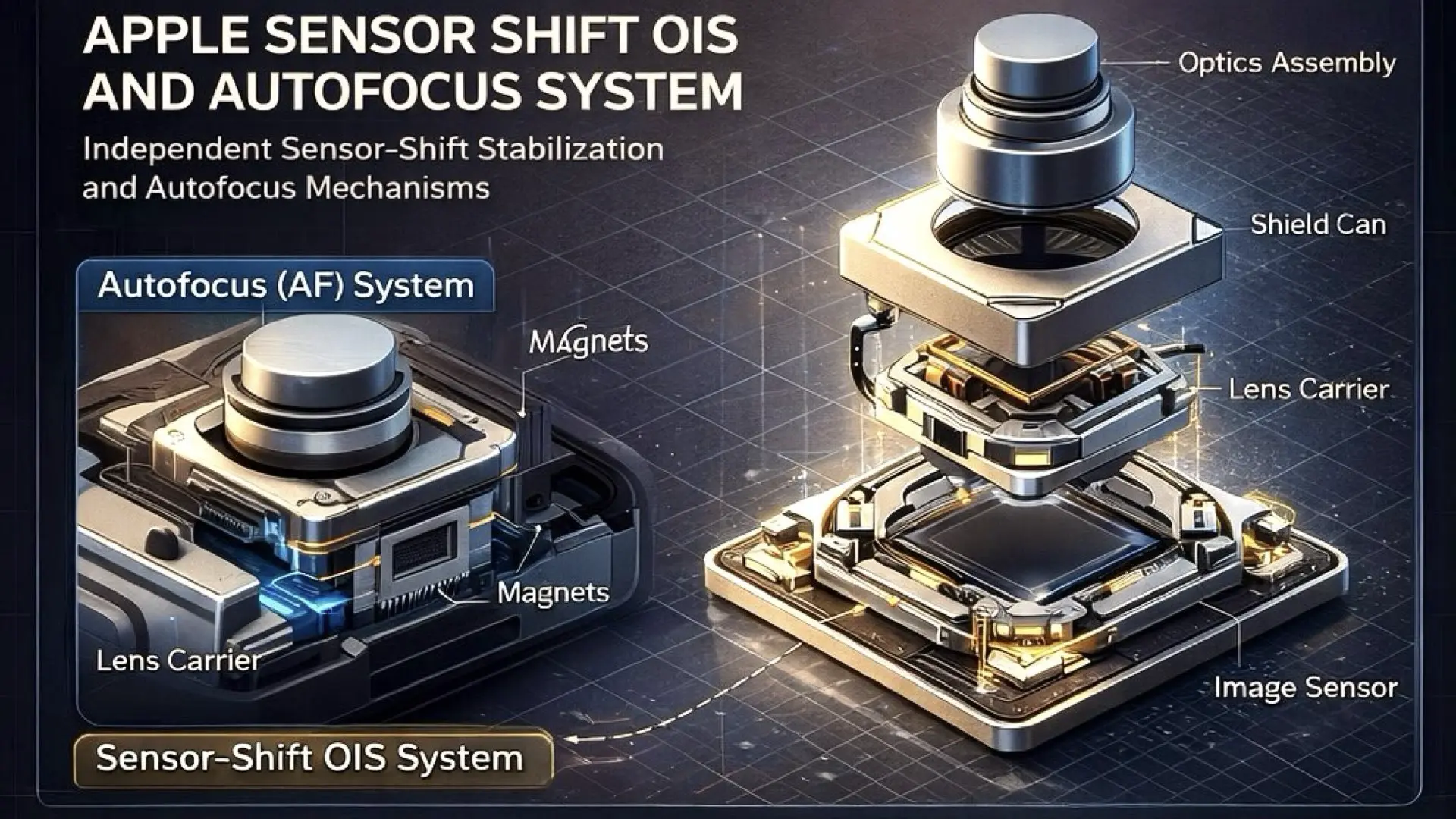
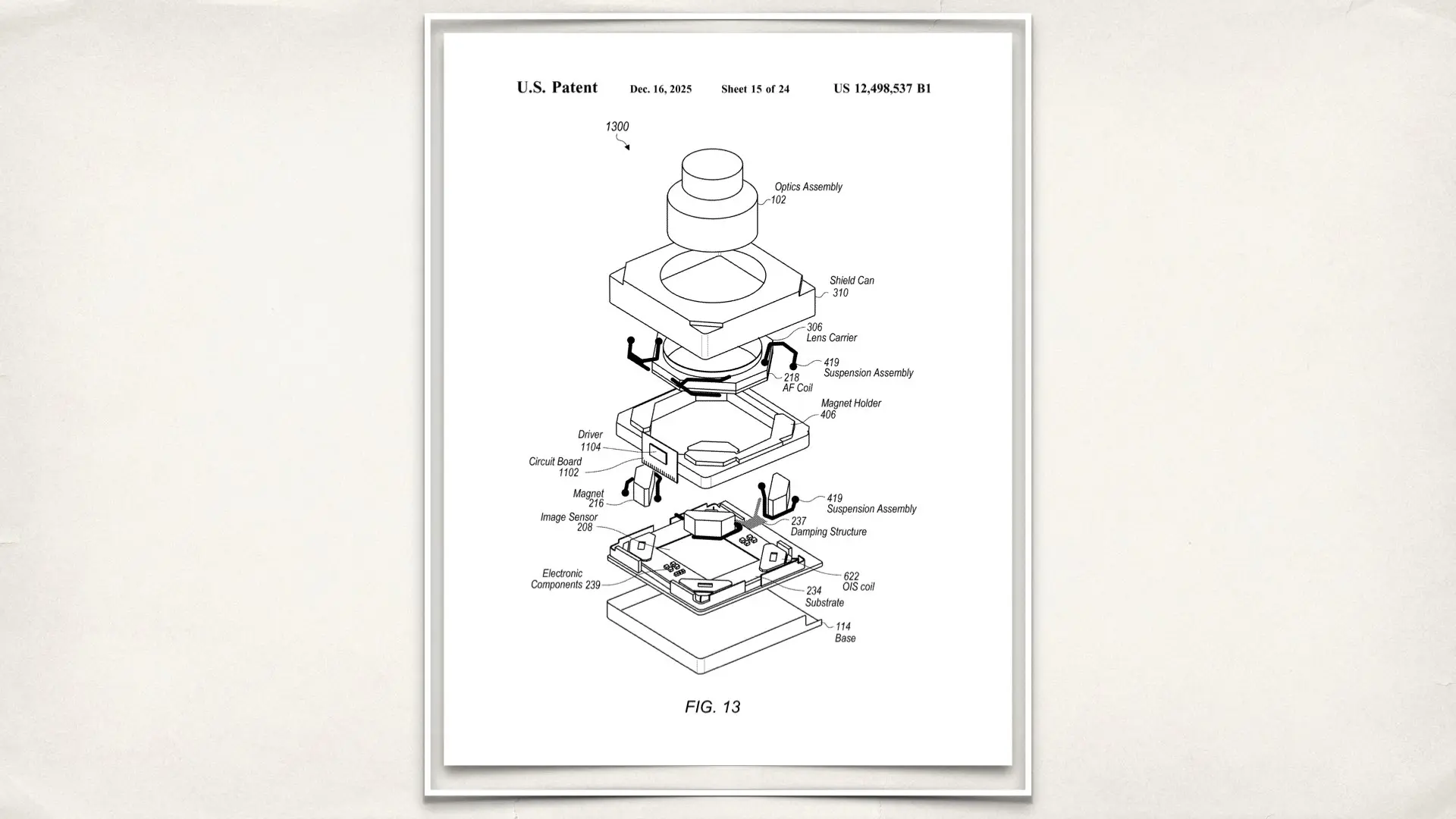
US 12,498,537 B1 focuses on how the camera module is physically constructed. The key idea is separation. Apple is clearly dividing autofocus and stabilization into two distinct mechanical systems that are designed not to interfere with each other. Autofocus is handled by a lens carrier that moves along the optical axis. Sensor shift stabilization is handled by a separate platform that moves the image sensor itself. These systems are no longer sharing motion paths or structural compromises. This is not about adding more movement but controlling movement more precisely.
The role of the flexure-based sensor platform
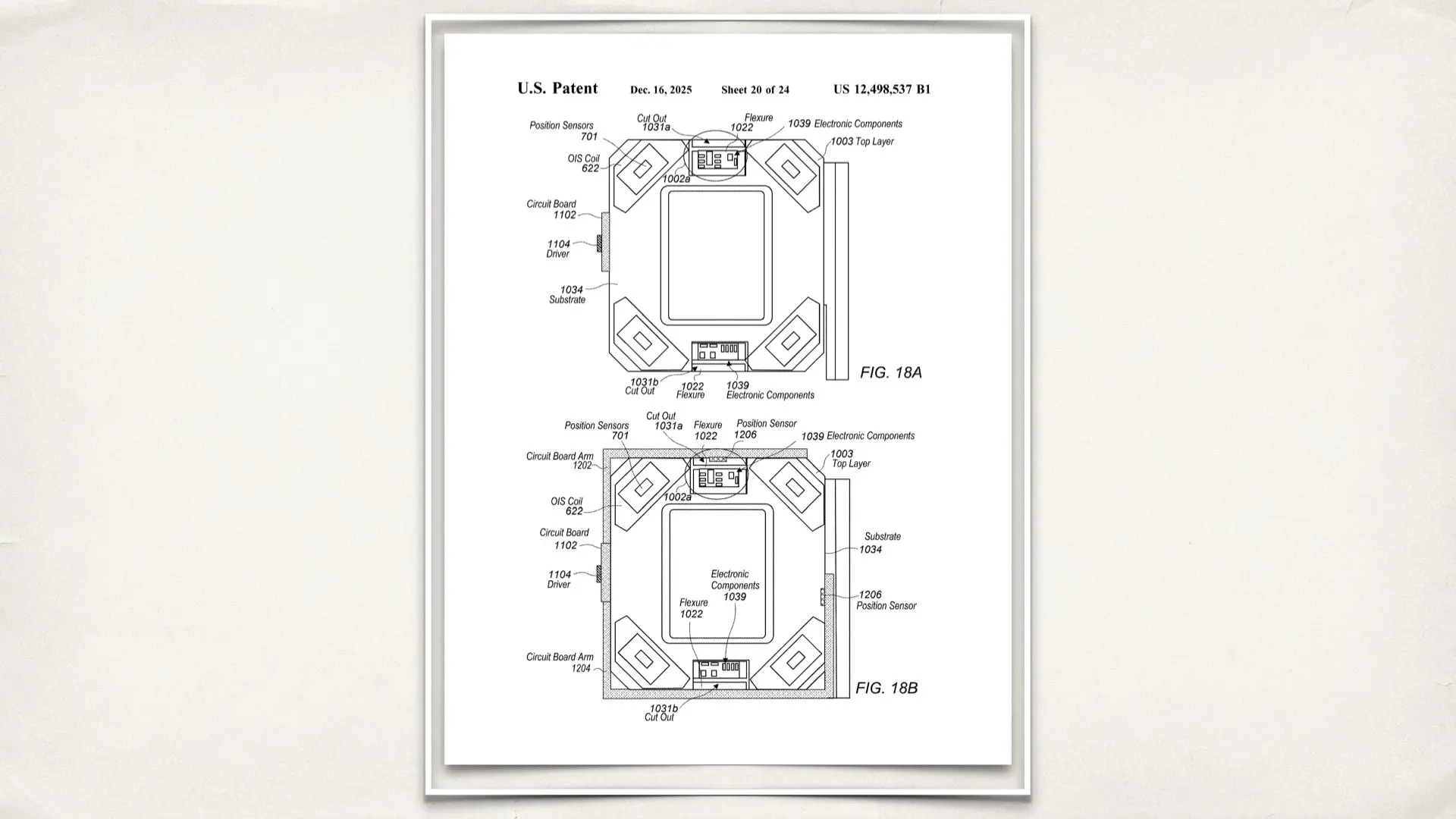
One of the most important elements visible in the patent figures is the use of flexures. A flexure is a compliant structure that allows movement in very specific directions while resisting motion in others. For filmmakers, this matters more than it sounds. Traditional miniature camera modules can suffer from mechanical play. Even microscopic looseness can translate into frame to frame instability, especially when the system is correcting motion hundreds of times per second. A flexure based platform eliminates play. The sensor moves exactly as commanded and returns to its neutral position predictably. This kind of controlled motion is common in precision instruments and high-end optics. Seeing it applied so explicitly in a phone camera signals a serious push toward stability that feels intentional rather than algorithmic.
Why damping is critical for video
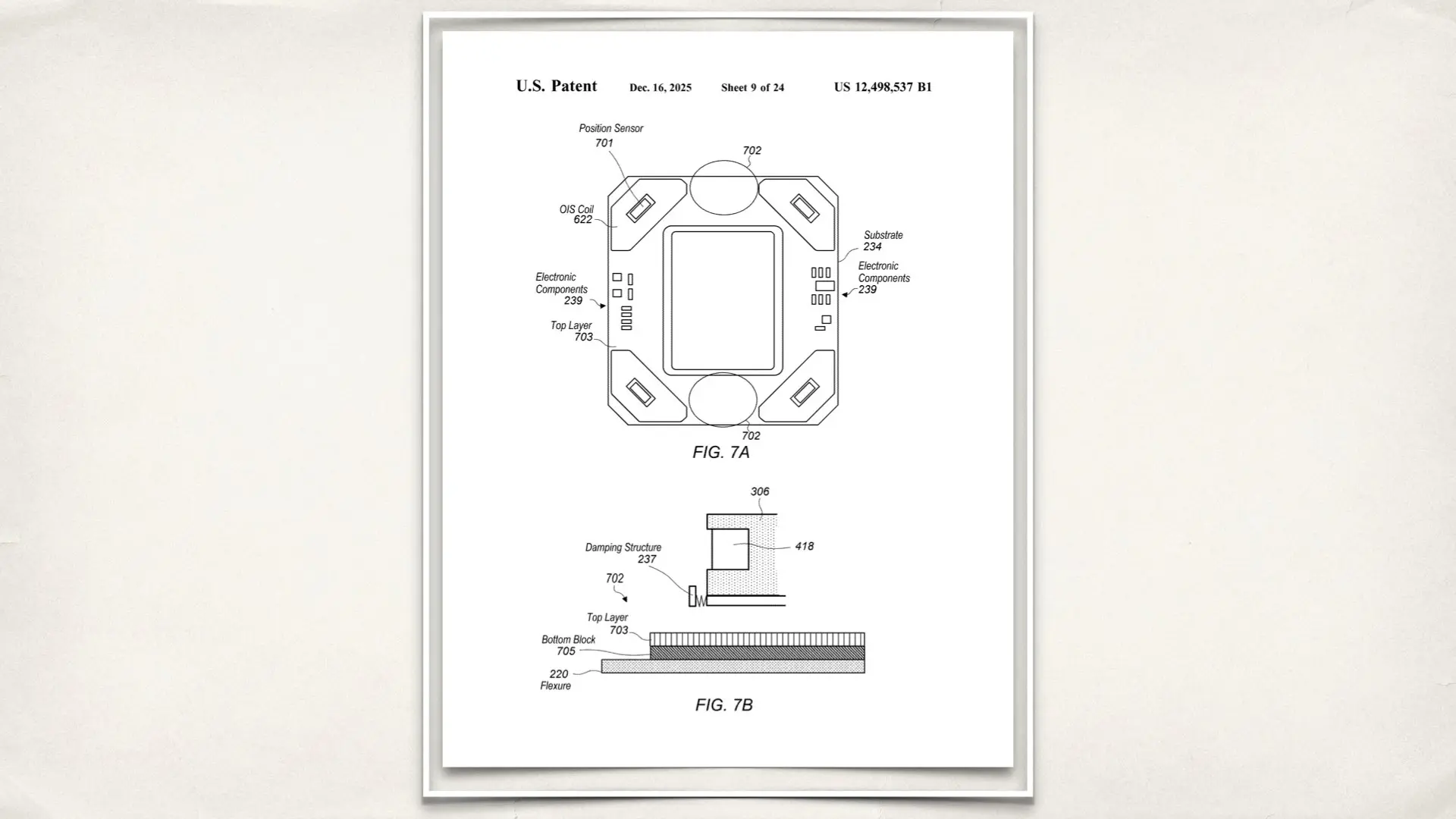
Another striking aspect of the patent is the inclusion of dedicated damping structures. These are not software filters. They are physical components designed to absorb energy and kill unwanted vibration. When a camera experiences a sudden movement, such as a footstep or a quick pan, the stabilization system reacts. Without damping, that reaction can overshoot or oscillate briefly before settling. This is when video starts to look nervous. By adding damping directly into the moving assemblies, Apple is trying to ensure that stabilization settles quickly and cleanly. For filmmakers, this translates into footage that feels calmer. The camera stops moving when you stop moving. It does not bounce or shimmer as it catches up.
Closed loop control instead of guesswork
The patent also shows position sensors placed on extended circuit board arms. This suggests that Apple is not relying solely on gyroscope data to estimate motion. The system is measuring where the sensor platform actually is, in real time. This is known as closed loop control. It allows the camera to correct based on reality, not prediction alone. For video, the benefit is consistency. Long handheld shots drift less. Pans feel smoother. The system does not suddenly snap or re lock because it lost track of its own movement. This kind of feedback driven control is another hallmark of professional stabilization systems, scaled down to phone size.
Why this matters more for filmmakers than casual users
Most casual users judge stabilization by how sharp a clip looks when viewed quickly. Filmmakers judge it by how motion feels. Does the camera fight your movement or follow it. Does focus stay locked when you reframe. Does the image breathe or wobble during a slow push. This patent addresses those questions at a mechanical level. It is not trying to fix motion in post. It is trying to prevent unwanted motion from happening in the first place. That is a fundamentally cinematic approach. Nothing in this patent is optimized for single-frame capture. Everything is optimized for stability over time: It suggest that Apple is treating the iPhone camera less like a point and shoot sensor and more like a tiny motion picture system where consistency, predictability, and controlled movement matter.
The bigger picture
Apple has been positioning the iPhone as a filmmaking tool for years. Most of that effort has been visible on the software side. ProRes, Log, manual controls. This patent shows the other half of the story. Hardware. Mechanics. Physics. By re-engineering how autofocus and stabilization physically coexist, Apple is addressing a problem that cannot be solved with code alone. This patent aligns closely with a series of earlier YMCinema investigations that, when viewed together, reveal a clear direction. In Apple’s New Suspension System Could Redefine iPhone Image Stabilization, we already saw Apple focusing on mechanically controlled motion rather than software heavy correction, a theme that reappears here through flexures and damping. That direction became even clearer in Apple’s Latest Camera Patent Explains the Push for Smoother and Sharper iPhone Filmmaking, where Apple explicitly targeted micro jitter and instability that only video reveals. Shortly after, Apple iPhone Patents Reveal Cinema Camera Technology showed how Apple is borrowing principles from professional camera engineering rather than consumer imaging shortcuts. The architectural logic expanded further with Apple’s Triple Patent Reveals a Modular Sensor Shift Architecture, which framed sensor shift as a system, not a feature. Finally, Apple’s Moving Prism Patent Signals a Cinematic Shift in iPhone Filmmaking suggested that Apple is now stacking optical and sensor level stabilization together. Seen in this context, US 12,498,537 B1 feels less like an experiment and more like a missing mechanical link in a long term plan to make handheld iPhone video behave like a controlled camera system rather than a stabilized phone clip. If this architecture makes it into shipping hardware, filmmakers could see real improvements without changing how they shoot. Handheld footage may feel calmer without heavy digital smoothing. Focus pulls may feel more deliberate and less jittery. Walking shots may require less post-stabilization. Motion may preserve character instead of being flattened by algorithms. This would not replace gimbals or dedicated cameras. But it would narrow the gap in the one area where phones still struggle most with serious video.