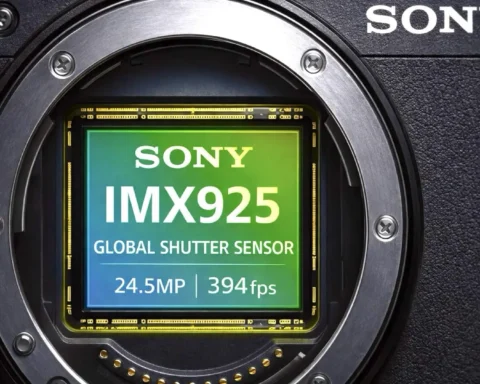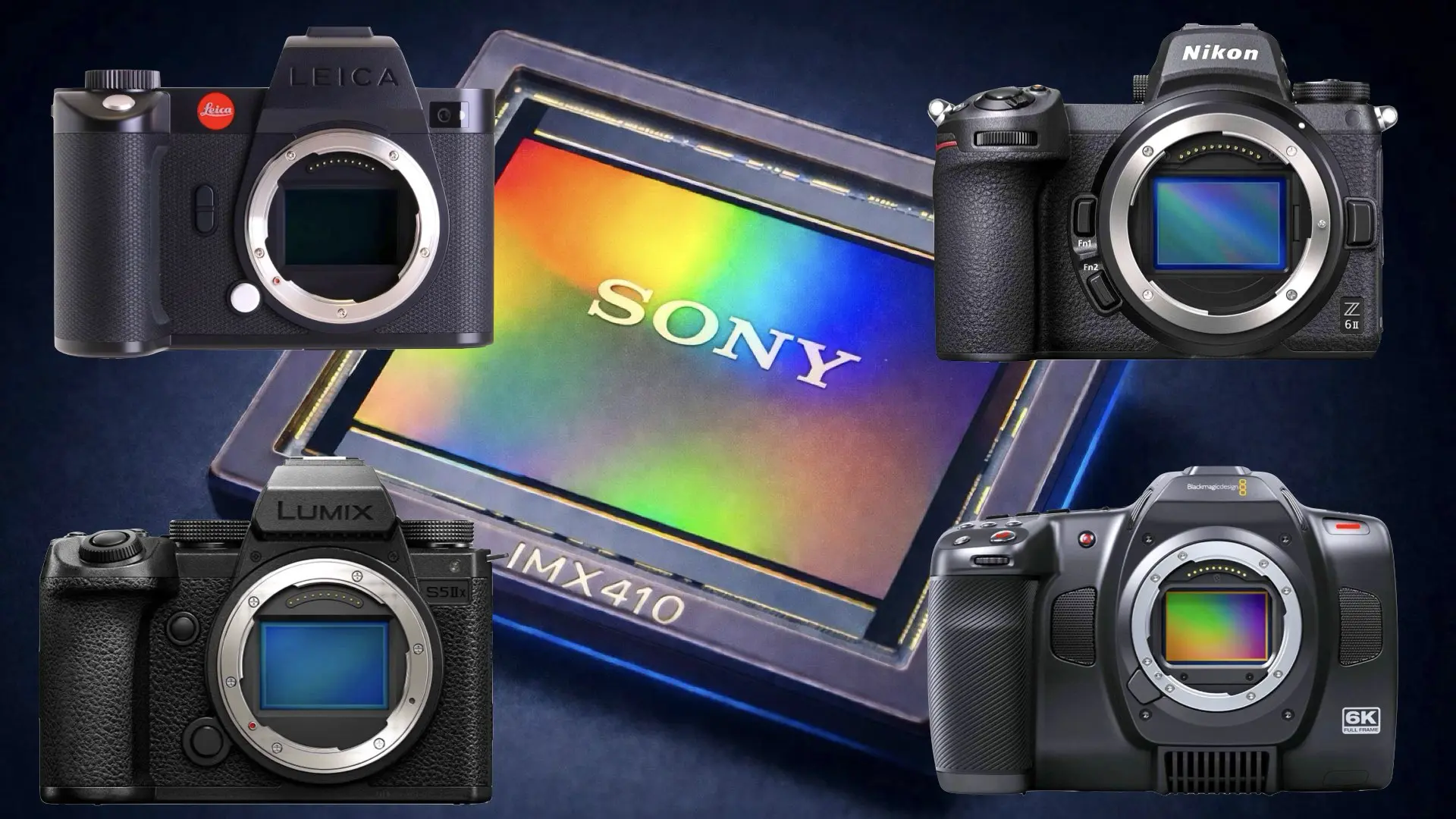
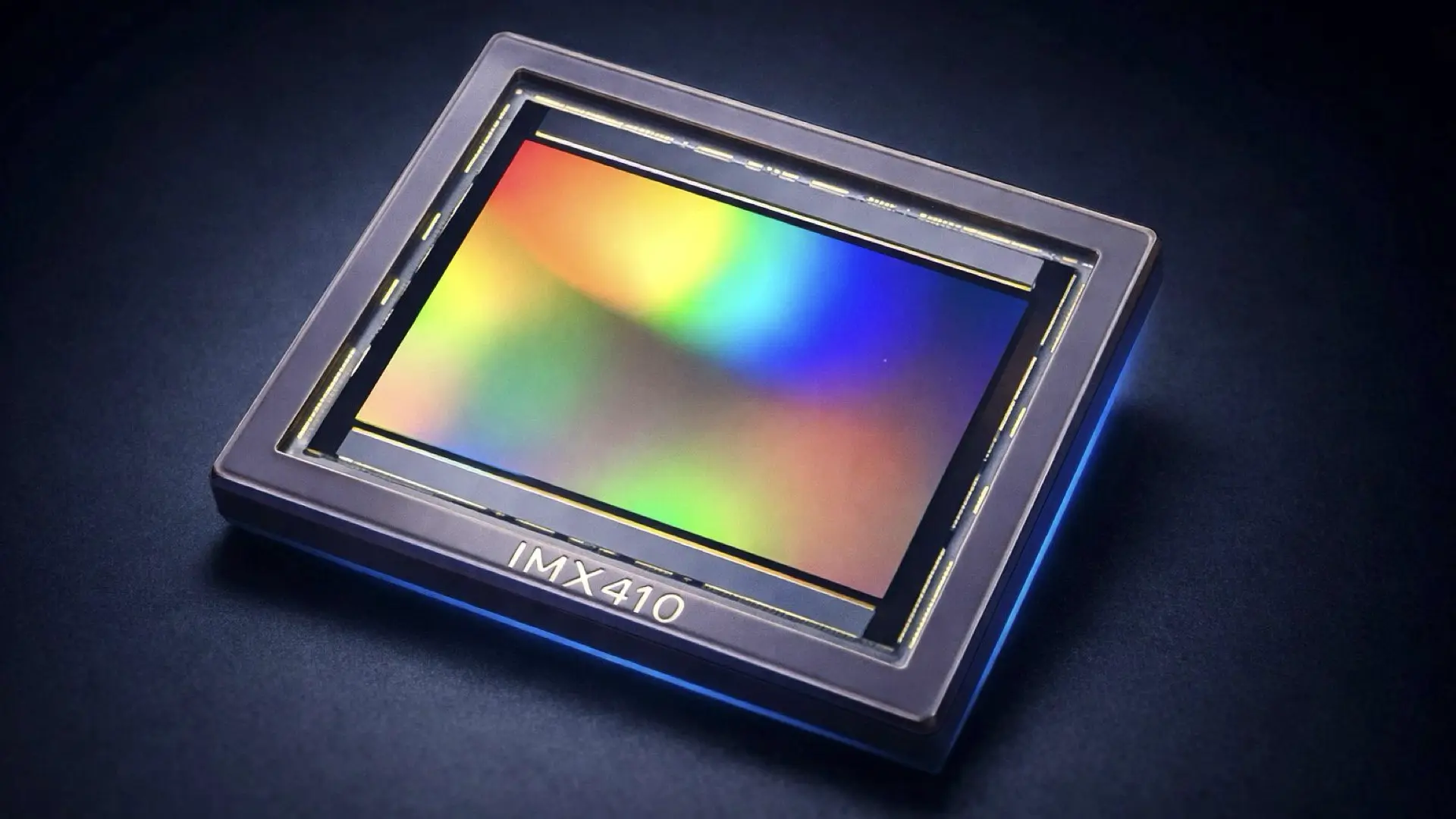
Inside many of today’s most respected cameras sits the same piece of silicon. Different brands. Different color science. Different ergonomics. Yet under the hood, a surprising number of them rely on one sensor designed by Sony Semiconductor. The sensor is the Sony IMX410. Introduced around 2018, this 24.6 megapixel full-frame backside illuminated CMOS sensor quickly became one of the most widely adopted imaging chips in the modern camera industry. Over time, it found its way into cameras produced by Sony, Nikon, Panasonic, Leica, Blackmagic Design, and DJI. Cameras that appear completely unrelated in design and philosophy often begin with the exact same piece of hardware.
A sensor built for the hybrid era
The timing of the IMX410 was perfect. Around the late 2010s, the camera industry was undergoing a major transition. Mirrorless cameras were replacing DSLRs. Video capabilities were becoming central to camera design. Filmmakers and photographers increasingly expected one device to perform both roles at a professional level. Manufacturers therefore, needed sensors that could deliver strong still photography performance while remaining capable of advanced video recording. The IMX410 was engineered around that balance. It offers 24.6 megapixels of resolution on a full-frame 36 by 24 millimeter sensor. The backside-illuminated architecture improves light-gathering efficiency. Pixel pitch is approximately 5.94 microns, large enough to maintain excellent low-light performance and dynamic range. At the same time, the resolution remains manageable for video processing, allowing oversampled 4K recording and high-quality full-frame readout modes. This technical balance turned out to be extremely attractive to camera manufacturers. It gave them a reliable sensor platform capable of serving both photographers and filmmakers without requiring extreme processing power or excessive heat management.

Sony’s own cameras
Sony itself was the first manufacturer to deploy the IMX410 in a major commercial camera. The most famous example is the Sony α7 III. This camera quickly became one of the most successful mirrorless cameras ever produced. It gained recognition for its strong dynamic range, excellent low-light capability, and reliable hybrid performance for both still photography and video production. Sony later reused the same sensor platform in other cameras, including the Sony α7C and the Sony FX9 cinema camera. The FX9 demonstrates how flexible this sensor architecture can be. While the α7 III is a compact hybrid camera aimed at photographers and content creators, the FX9 is a professional cinema camera used in documentary production, broadcast environments, and narrative filmmaking. Despite the difference in form factor and workflow, both cameras begin with the same fundamental sensor technology.

Nikon’s adoption of the sensor
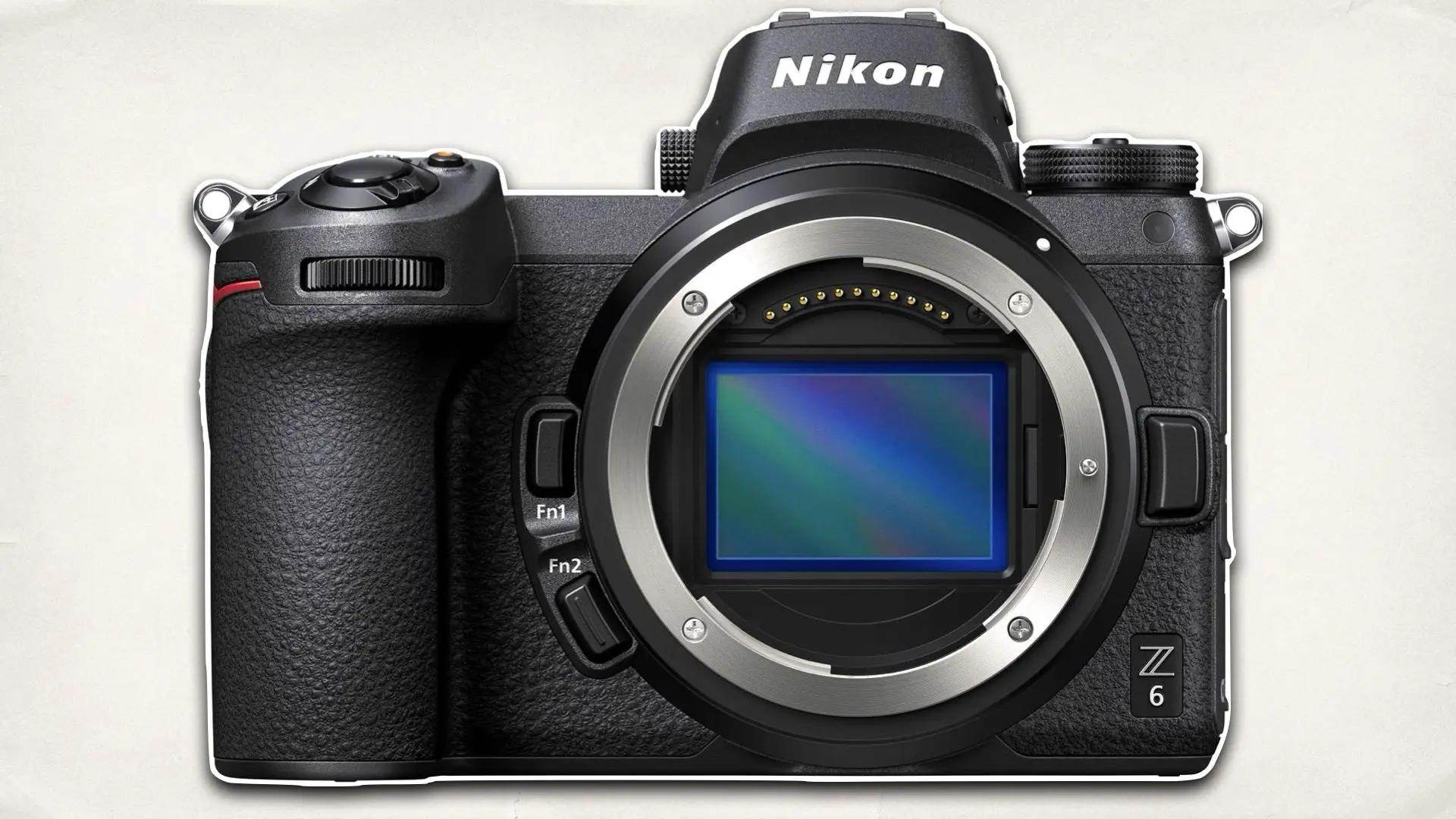
Nikon was one of the first companies outside Sony to adopt the IMX410 generation. Several Nikon mirrorless cameras rely on this sensor platform, including the Nikon Z6, the Nikon Z6 II, and the Nikon Zf. These cameras helped establish Nikon’s full-frame mirrorless lineup and demonstrated how manufacturers can build unique imaging systems on top of shared hardware. Although the silicon originates from Sony Semiconductor, Nikon integrates the sensor with its own analog circuitry, firmware, and image processing engine. Nikon’s EXPEED processors and color science produce a visual signature that many photographers associate specifically with the Nikon brand. As a result, images captured with a Nikon Z6 look very different from those produced by a Sony α7 III, even though both cameras rely on closely related sensor technology.
Panasonic and the L mount ecosystem
Panasonic also embraced this sensor generation when it launched its full-frame L-mount system. Cameras such as the Panasonic Lumix S1, Lumix S1H, Lumix S5, Lumix S5 II, and Lumix S5 IIX all rely on sensors closely related to the IMX410 architecture. The S1H in particular became a landmark camera for filmmakers. It was the first mirrorless camera approved by Netflix for original productions, a certification that highlighted its reliability for professional video workflows. Panasonic paired the sensor with advanced thermal management, powerful video processing, and robust recording formats, demonstrating again that the sensor itself is only one component within a much larger imaging system.
Leica’s interpretation
Even Leica adopted this sensor platform. The Leica SL2 S uses a 24 megapixel full frame backside illuminated CMOS sensor widely believed to be derived from the IMX410 family. Leica then integrates the sensor with its own Maestro processor and proprietary color science. Leica cameras have long been known for their distinctive visual rendering, and the SL2 S continues that tradition. The fact that it shares sensor lineage with cameras from Sony, Nikon, and Panasonic illustrates how much the final image depends on processing pipelines, lens design, and firmware tuning rather than the sensor alone.

Blackmagic and cinema production
The sensor also appears in cinema-oriented systems. The Blackmagic Cinema Camera 6K Full Frame uses a 24.6 megapixel full frame sensor closely matching the IMX410 architecture. Blackmagic pairs this hardware with its own analog front end, Blackmagic RAW recording system, and Gen 5 color science. This combination allows the camera to capture 6K open gate images with impressive dynamic range while maintaining manageable file sizes and efficient post-production workflows. The example shows how a sensor originally developed for hybrid mirrorless cameras can become the foundation of a dedicated cinema platform.

DJI and stabilized cinema systems
Another interesting implementation appears in the DJI Ronin 4D 6K. DJI rarely discloses exact sensor part numbers, but the specifications of the Ronin 4D 6K strongly align with the IMX410 family. The camera integrates this sensor within a fully stabilized cinema platform that combines a gimbal system, LiDAR focusing technology, and modular recording solutions. Again the same silicon appears in a completely different camera category, proving how versatile the sensor design is.

The hidden influence of Sony Semiconductor
The widespread adoption of the IMX410 reveals something deeper about the structure of the modern camera industry. Sony is not only a camera manufacturer. Through Sony Semiconductor Solutions, it is also the world’s dominant supplier of imaging sensors. Many camera companies that compete fiercely in the marketplace depend on Sony sensors as the foundation of their products. Each brand then differentiates itself through processing pipelines, autofocus algorithms, lens ecosystems, ergonomics, and firmware development. The sensor therefore, becomes the common hardware layer beneath a diverse ecosystem of cameras. Furthermore, several factors explain the success of the IMX410. The 24 megapixel resolution offers an ideal compromise between detail and low light performance. The pixel size supports strong dynamic range. The readout speed remains fast enough for advanced video features without introducing excessive rolling shutter. Processing requirements remain manageable, allowing manufacturers to build reliable hybrid cameras without extreme cooling solutions. In short, the sensor sits in a technical sweet spot that few designs manage to achieve. When photographers and filmmakers compare cameras from different brands, they often focus on visible differences such as ergonomics, menu systems, autofocus performance, and color rendering. What many people do not realize is that a surprising number of those cameras share the same technological starting point. The Sony IMX410 quietly became one of the most influential sensors in modern camera history. From compact mirrorless bodies to professional cinema cameras, its architecture helped shape an entire generation of imaging tools. It is a reminder that sometimes the most important innovations in the camera industry remain hidden beneath the surface.
As an Amazon Associate, Y.M.Cinema earns from qualifying purchases. If you purchase through the Amazon links above, Y.M.Cinema may earn a small commission at no additional cost to you. This helps support our work.