
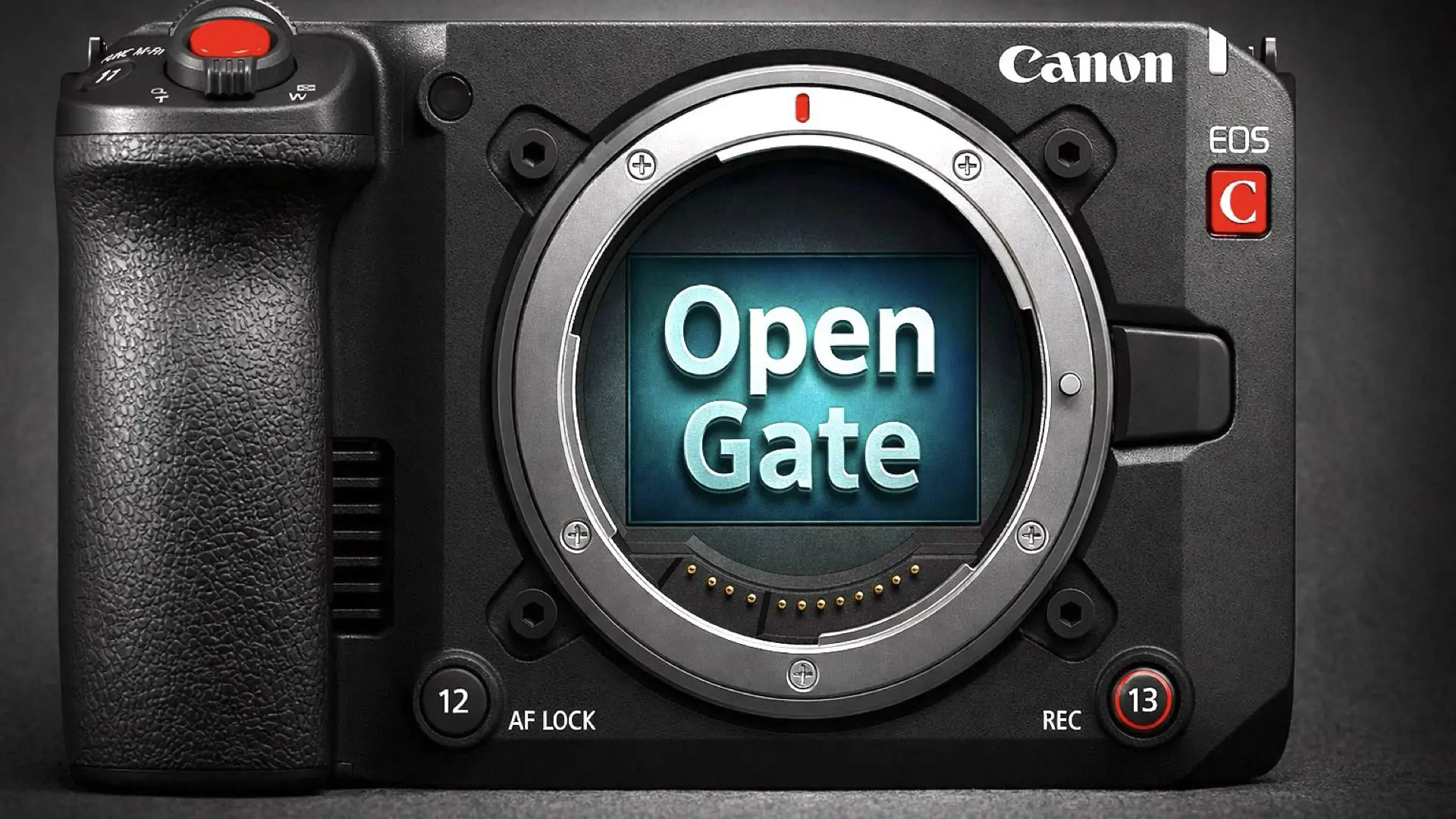
At the Canon Creative Studio during Sundance 2026, Canon hosted a technical presentation explaining a topic that has recently gained strong momentum in cinematography. Open Gate recording. While the concept itself has existed for years, Canon’s presentation clarified why the feature is suddenly becoming important again, especially for modern filmmaking workflows that now include multiple delivery formats such as cinematic widescreen and vertical social media video. The discussion also revealed how several Canon cameras are adopting Open Gate and why using the entire image sensor can significantly expand creative flexibility.
What Open Gate means
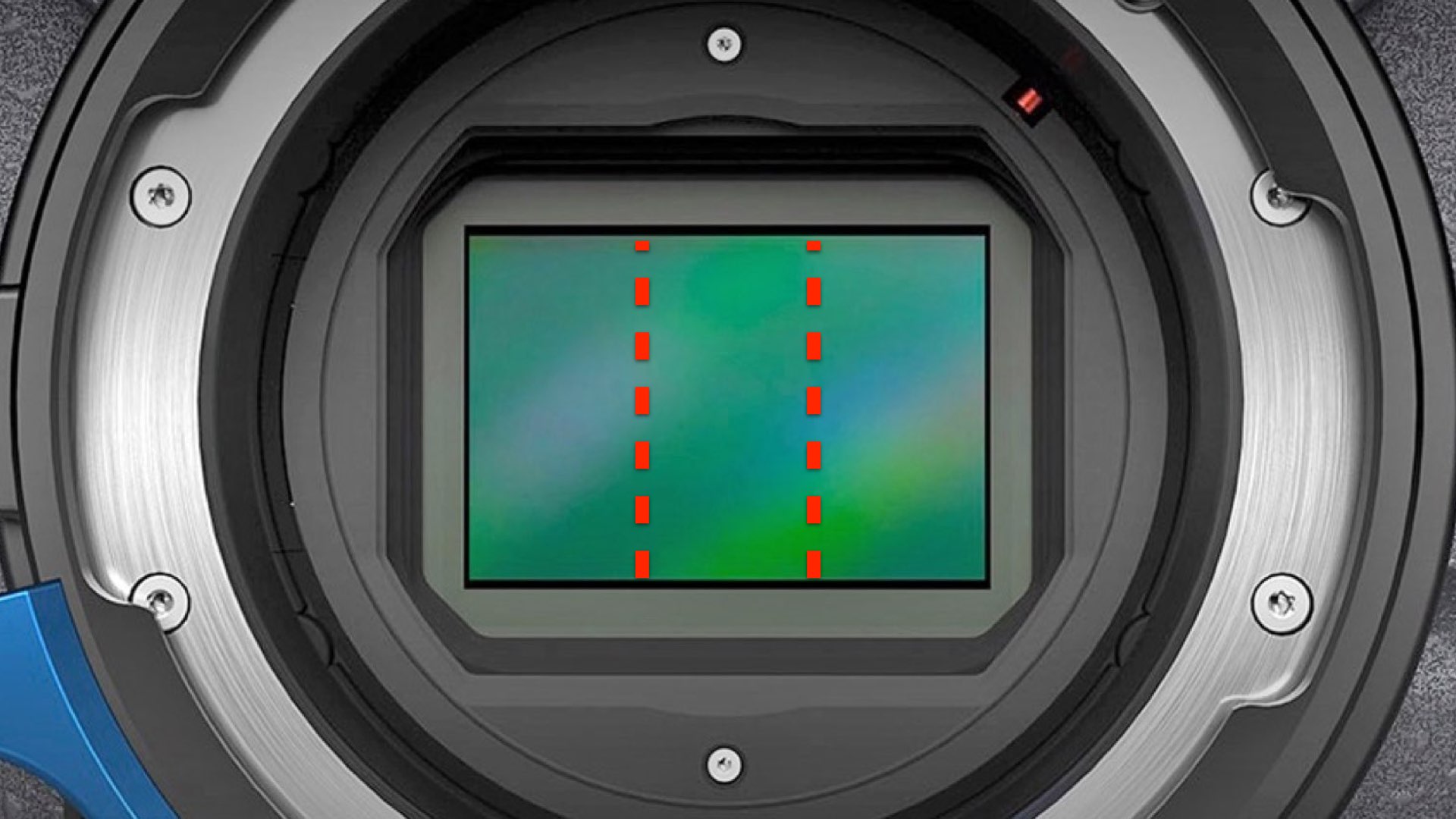
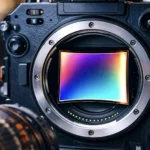
Open Gate recording refers to capturing video using the entire width and height of the image sensor instead of cropping the sensor to a narrower video format. In most modern cameras, even those equipped with full-frame sensors, video recording typically uses a cropped portion of the sensor that matches a standard video aspect ratio. For example, a typical full-frame sensor measures 36 mm by 24 mm, which corresponds to a 3:2 aspect ratio used for still photography. However, most video recording formats use a 17:9 or 16:9 aspect ratio, meaning the camera records the full width of the sensor but only part of its height. Open Gate changes this approach. Instead of limiting the recording area, the camera captures the entire sensor readout, preserving the full frame image area. This results in a taller frame with additional vertical resolution and more overall image information. The result is simple. More image area means more creative flexibility during post-production.
The Canon cameras that support Open Gate
Canon highlighted three cameras that currently support Open Gate recording. Each model offers slightly different implementations depending on sensor design and codec support.
Canon EOS C50
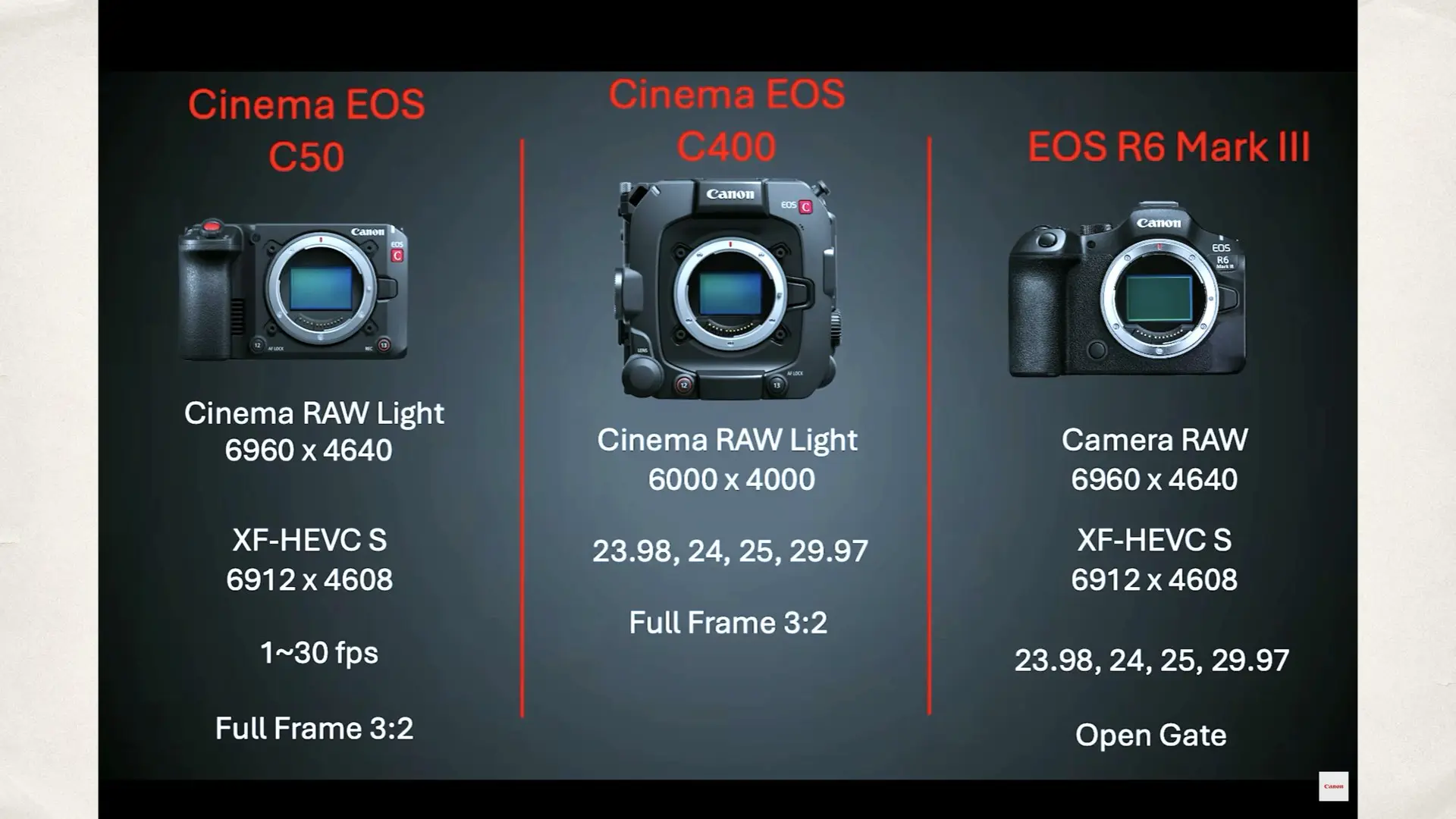
The Canon EOS C50 was introduced with Open Gate recording as a core feature. The camera supports the format in two recording options. Cinema RAW Light and XF AVC. In Cinema RAW Light, the camera records at a resolution of 6960 by 4640 pixels, capturing the full height of the sensor. Frame rates are available from 1 to 30 frames per second, providing significant flexibility for cinematic production. The XF AVC option records at 6912 by 4608 pixels, slightly lower but still very close to the full sensor readout. Inside the camera menu, Canon refers to this mode as Full Frame 3:2, rather than explicitly labeling it Open Gate.
Canon EOS C400
The Canon EOS C400 gained Open Gate support through a firmware update released in December. The feature was not available at launch, but Canon later enabled full sensor recording. The camera records Open Gate only in Cinema RAW Light with a resolution of 6000 by 4000 pixels. Frame rates include 23.98, 24, 25, and 29.97 fps. Unlike the C50, the C400 does not currently support higher off-speed recording in Open Gate.
Canon EOS R6 Mark III
Canon also added Open Gate recording to the EOS R6 Mark III, a hybrid mirrorless camera designed for both photography and video. Interestingly, the camera appears to share the same sensor resolution as the C50, allowing it to record 6960 by 4640 video in RAW format. Frame rates again include 23.98, 24, 25, and 29.97 fps. In this model, Canon actually labels the feature directly as Open Gate in the camera menu.
Why most cameras do not use the entire sensor
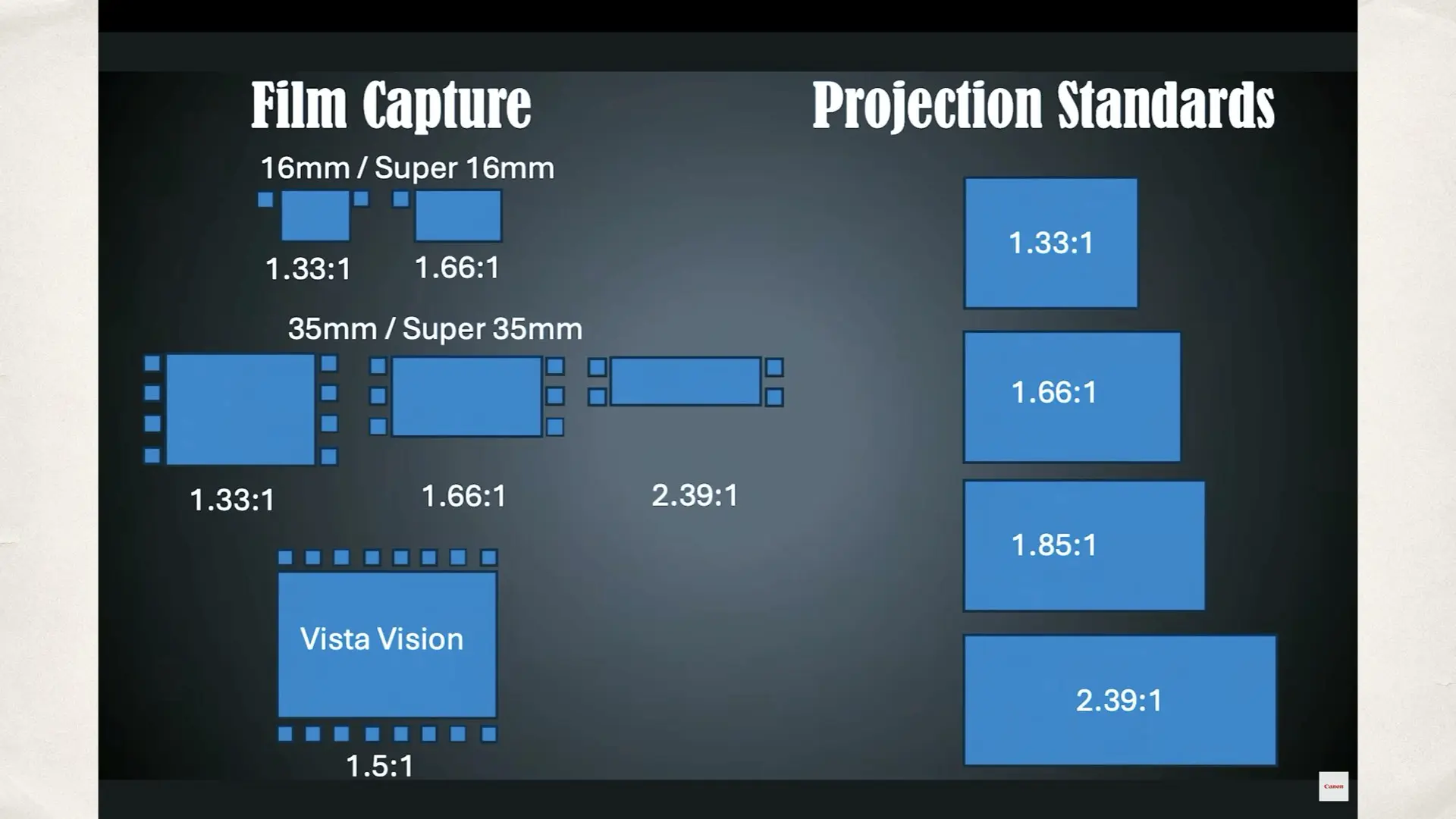
One of the most interesting explanations during Canon’s talk addressed a question many filmmakers ask. If cameras have large sensors, why do they not always record the entire area? The answer lies in the history of film and video aspect ratios. Traditional film formats such as 16 mm and 35 mm commonly used aspect ratios close to 1.33:1 or 1.66:1. When films were projected in theaters, standardized projection ratios eventually became dominant. These included 1.85:1 for standard widescreen cinema and 2.39:1 for anamorphic productions. Television later adopted 4:3, and eventually transitioned to the modern 16:9 format for HD broadcasting. Digital cinema projection introduced yet another standard. The Digital Cinema Initiative defined 17:9 as the digital projection format, corresponding to an aspect ratio of 1.89:1. Camera manufacturers therefore designed video recording modes that match these industry standards rather than the native shape of the image sensor. As a result, most full frame cameras capture video using a cropped 17:9 region of the sensor instead of the entire 3:2 area. Open Gate removes this limitation.
The origins of Open Gate in digital cinema
Canon also acknowledged that the concept is not new. In 2014, ARRI introduced Open Gate recording on one of its digital cinema cameras through a firmware update. The feature allowed cinematographers to capture the entire sensor area and then choose the final framing during post-production. At the time, the feature remained primarily within the high-end cinema camera market. However, the rise of hybrid mirrorless cameras and multi-format distribution has pushed manufacturers to revisit the idea. Today, Open Gate is appearing across many modern cameras.
The benefits of using the entire sensor
Capturing the entire sensor provides several practical advantages for filmmakers:
Expanded Framing Options
Because Open Gate records a taller frame, editors can adjust the final crop during post production. Cinematographers can capture the full frame image and later decide whether the final delivery should be widescreen, vertical, or somewhere in between. This provides significant flexibility when composing shots.
Increased Field of View
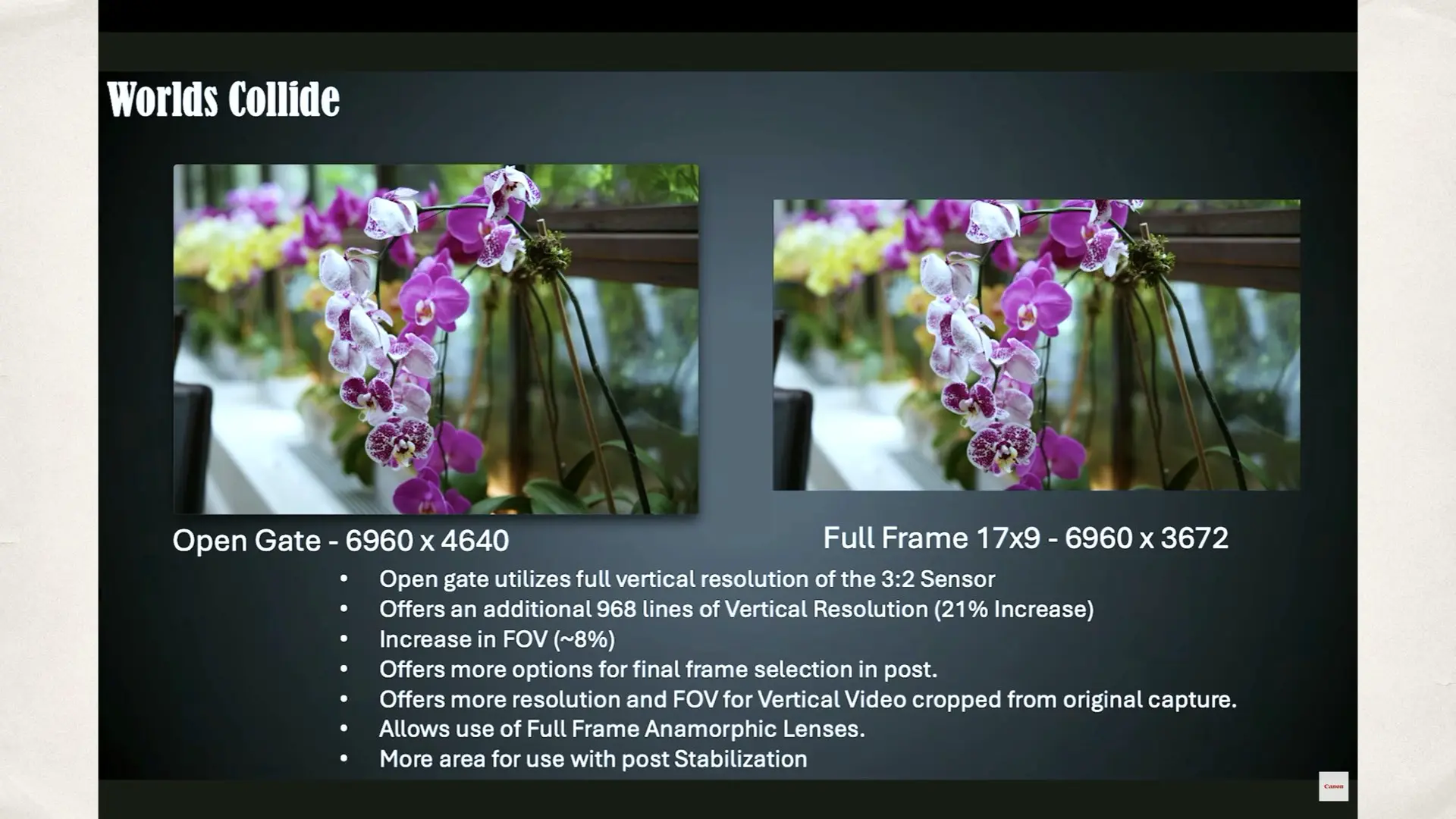
Canon notes that Open Gate increases the effective field of view by roughly 8 percent vertically. This may sound modest, but in practical cinematography it can meaningfully change framing options. Wide lenses feel slightly wider and compositions gain more breathing room.
High Resolution Vertical Video
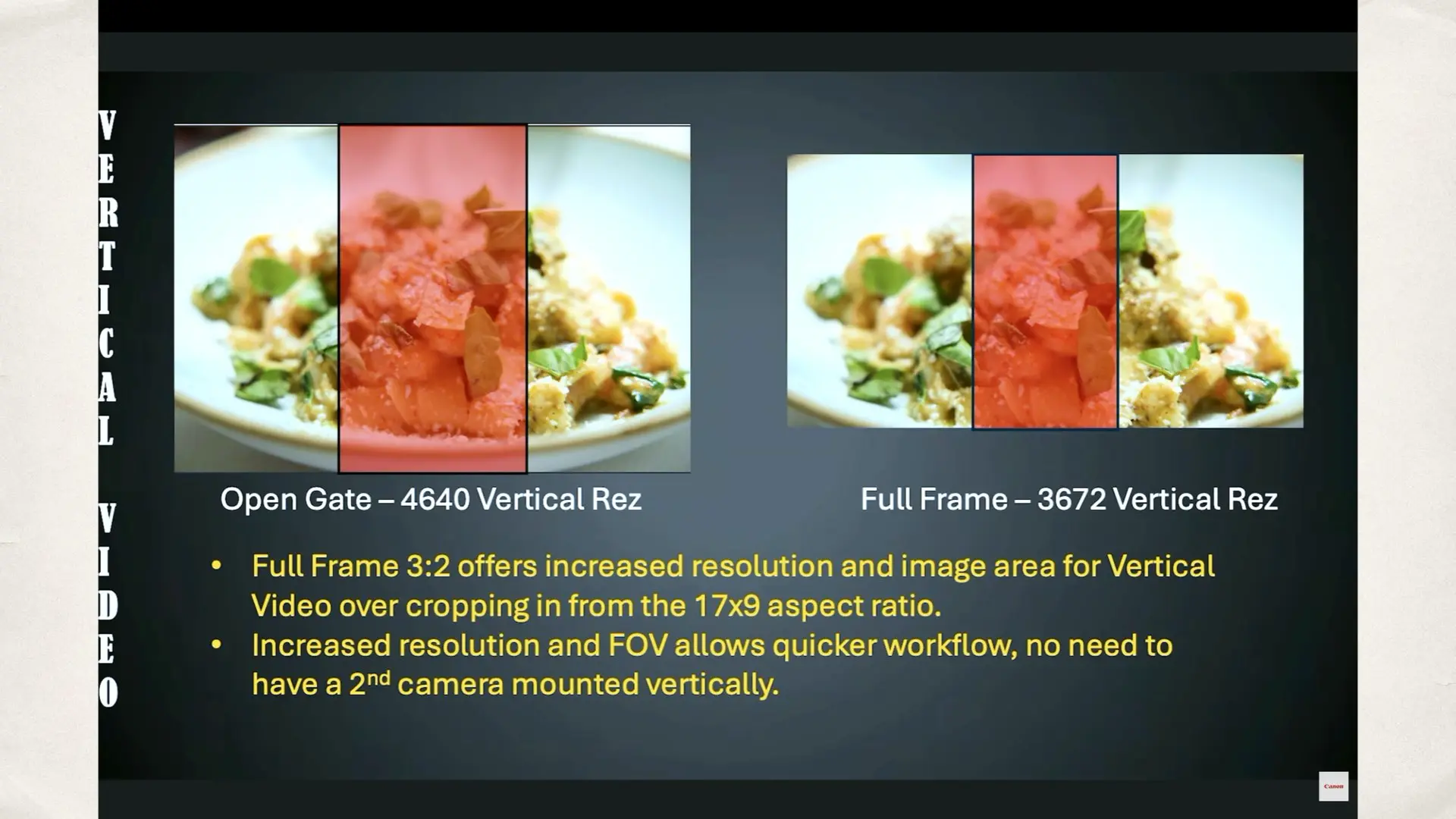
One of the most practical advantages relates to vertical content production. Many productions now require both horizontal and vertical deliverables. Traditionally, capturing vertical video required rotating the camera or shooting with multiple cameras simultaneously. Open Gate allows editors to extract a vertical frame directly from the captured image. For example, on the C50 the Open Gate resolution provides 4640 vertical pixels, which exceeds the 4K vertical resolution required by many displays. If the camera recorded standard 17:9 video, vertical resolution would drop to 3672 pixels, which is significantly lower. Open Gate therefore enables high resolution vertical video without rotating the camera.
Improved Stabilization
Image stabilization performed in post production typically relies on cropping and repositioning the frame. When recording Open Gate, the editor has more pixels available around the image. This allows stabilization adjustments without sacrificing as much resolution. The larger frame effectively acts as a buffer around the final image.
Better Support for Anamorphic Lenses
Open Gate recording also benefits anamorphic cinematography. Many modern full frame anamorphic lenses use a 1.5× squeeze factor. When combined with a 3:2 Open Gate sensor, this produces a final image close to a 2.25:1 aspect ratio, which resembles traditional cinematic widescreen. Recording the entire sensor ensures that anamorphic lenses capture their full optical coverage.

A feature that reflects changing production workflows
Canon’s presentation ultimately highlighted a broader trend. Cameras today are no longer designed only for theatrical cinema or broadcast television. Content may be delivered to theaters, streaming platforms, social media feeds, or vertical displays in retail environments. Each platform uses different aspect ratios and framing requirements. Open Gate recording provides a practical solution. By capturing the entire sensor area, filmmakers can adapt a single master image to multiple delivery formats. As production workflows continue to evolve, this flexibility is becoming increasingly valuable.
A growing standard across the industry
While Canon demonstrated the feature using the C50, C400, and R6 Mark III, Open Gate is now appearing across a growing number of cameras. Cinema manufacturers such as ARRI and RED have supported full sensor recording for years. More recently, mirrorless systems from several brands have begun adopting similar capabilities. The trend suggests that full sensor video capture is gradually becoming a standard feature rather than a niche tool. For filmmakers, the concept is simple. The camera captures everything the sensor sees. The final frame can then be shaped later. In a production environment where flexibility has become essential, Open Gate recording is proving to be one of the most practical tools available.
As an Amazon Associate, Y.M.Cinema earns from qualifying purchases. If you purchase through the Amazon links above, Y.M.Cinema may earn a small commission at no additional cost to you. This helps support our work.
Here are the products mentioned in this article and the buttons to buy them on Amazon.





How can I get the camera in kenya