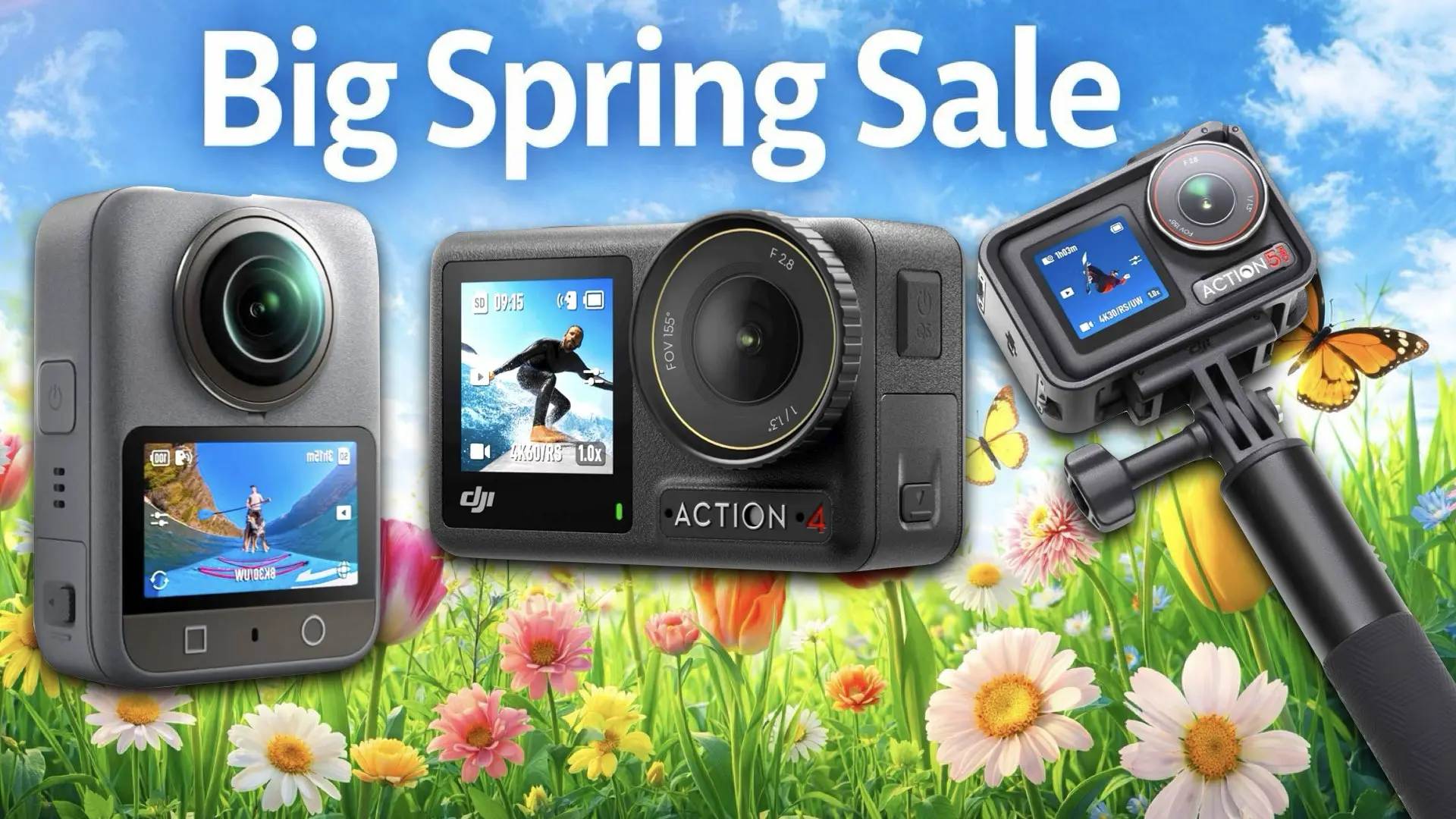
Amazon’s Big Spring Sale is currently doing more than pushing discounts on DJI cameras. It is exposing a shift in how these products are positioned, priced, and ultimately used by creators. When you look closely at the price history shown in the screenshots, the pattern becomes clear. Each model is moving in a controlled way, and that movement reflects a broader transition in the action camera market. For creators, this is where things become interesting. Pricing is often the clearest signal of where a product sits in its lifecycle. And right now, DJI is redefining three distinct categories at once. Entry-level action capture, creator-level endurance systems, and immersive 360 storytelling.
Action 4 becomes the new baseline for serious action shooting
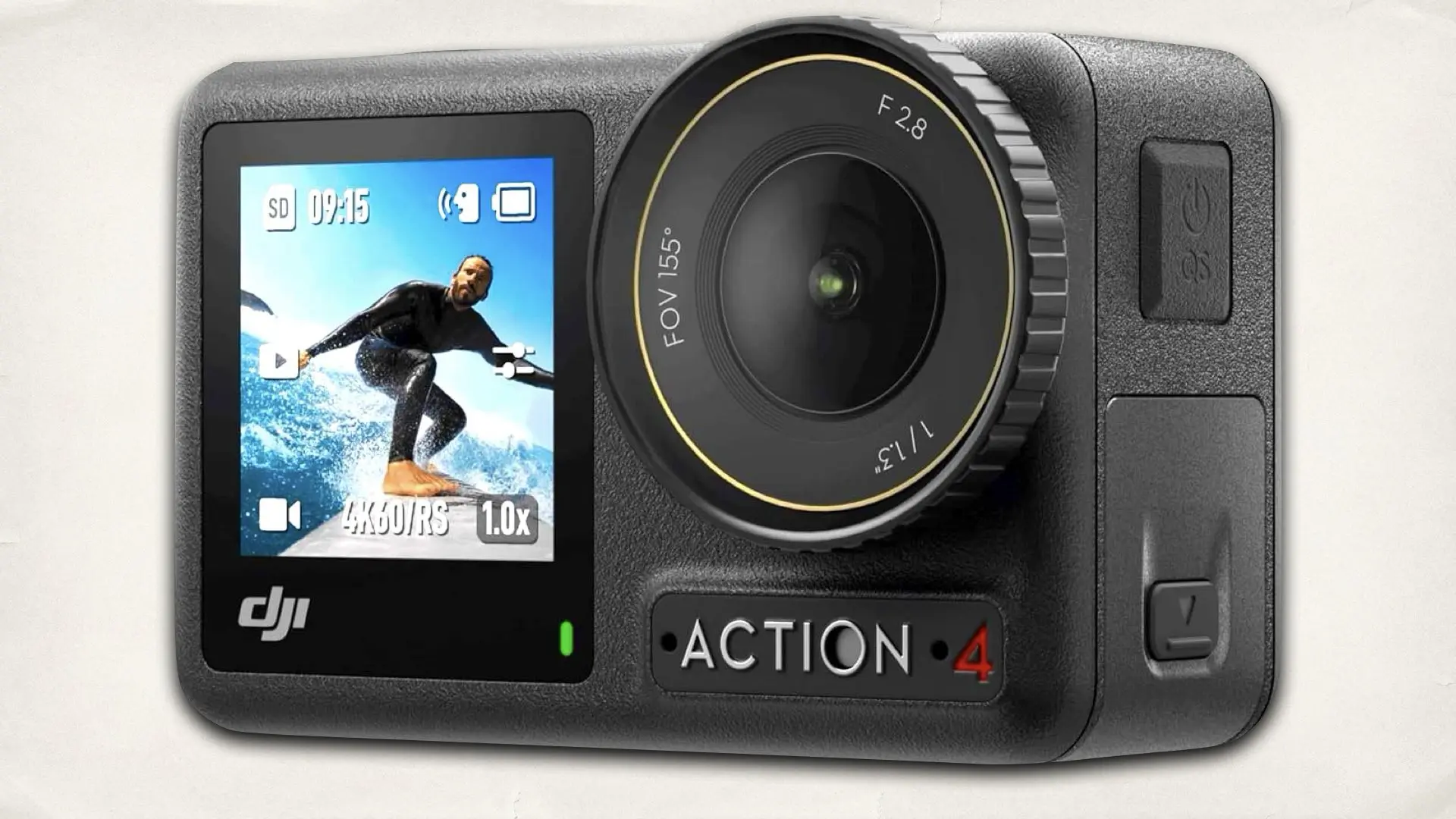
The DJI Osmo Action 4 Essential Combo dropping to $199 marks a critical threshold. According to the price history, it recently hovered around $229, with a much higher list price anchoring its perceived value. This current level establishes a new baseline. From a technical standpoint, the Action 4 still carries one of the most important advantages in this segment. A relatively large 1 over 1.3-inch sensor. In practical terms, this affects dynamic range and low-light performance more than resolution ever will. For users shooting early mornings, late evenings, or indoor sequences, this difference is immediately visible. Add D Log M, and the camera moves into a different category entirely. This is where many users underestimate it. Log capture allows proper color grading, meaning the footage can match other cameras in a multi-camera workflow. That is a feature traditionally associated with higher-end systems. However, the limitations are also important to understand. The battery ecosystem is more limited, long recording sessions are less optimized, and overall usability reflects an earlier generation design. This is a camera that prioritizes image and simplicity, not extended production workflows. At $199, that tradeoff becomes extremely compelling, and relevant not just for action users, but for filmmakers looking for a compact crash cam, a gimbal alternative, or a secondary angle that can actually hold up in post.
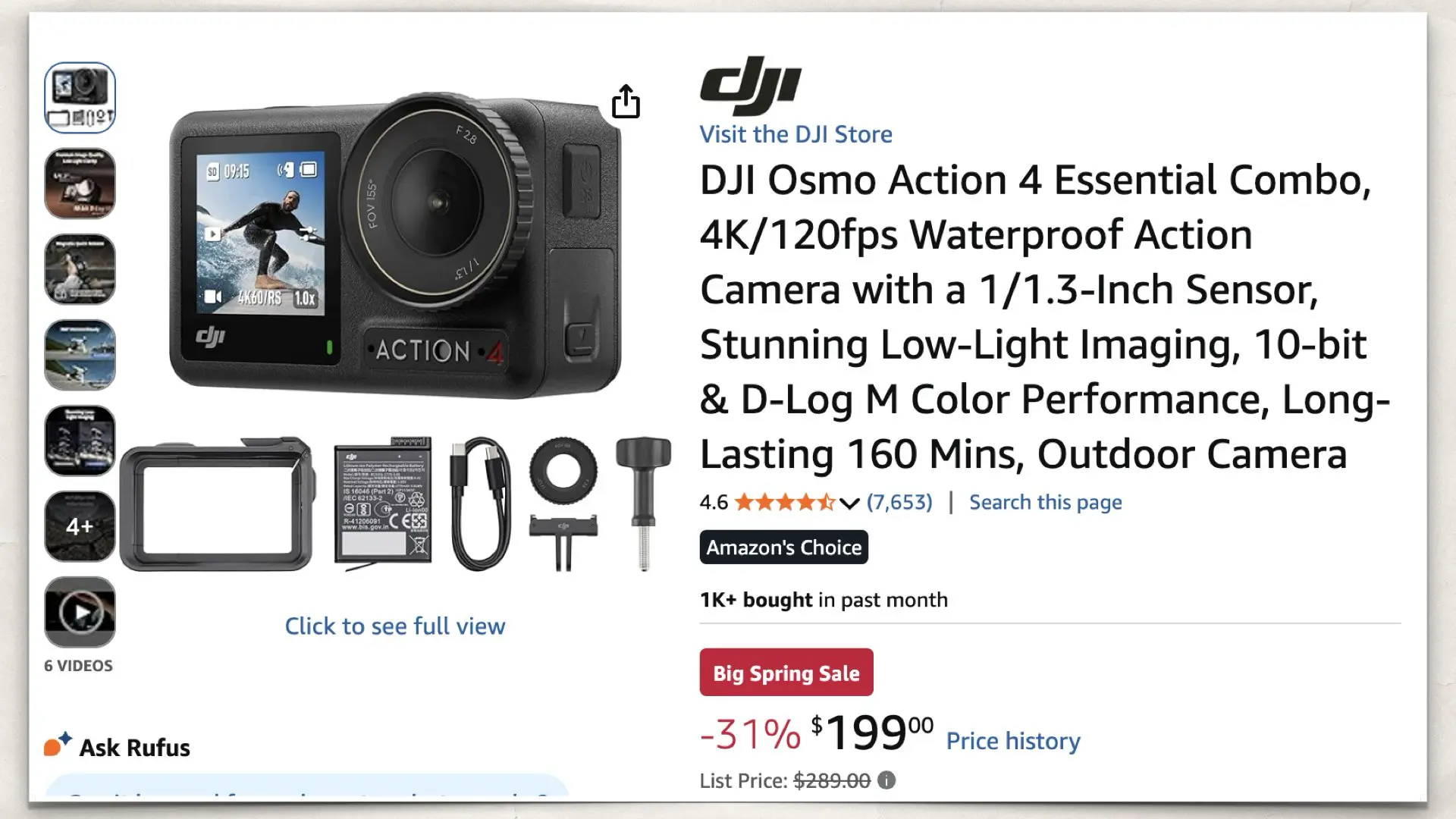
📦 See the DJI Osmo Action 4 Essential Combo on Amazon
Action 5 Pro signals a shift toward creator workflows
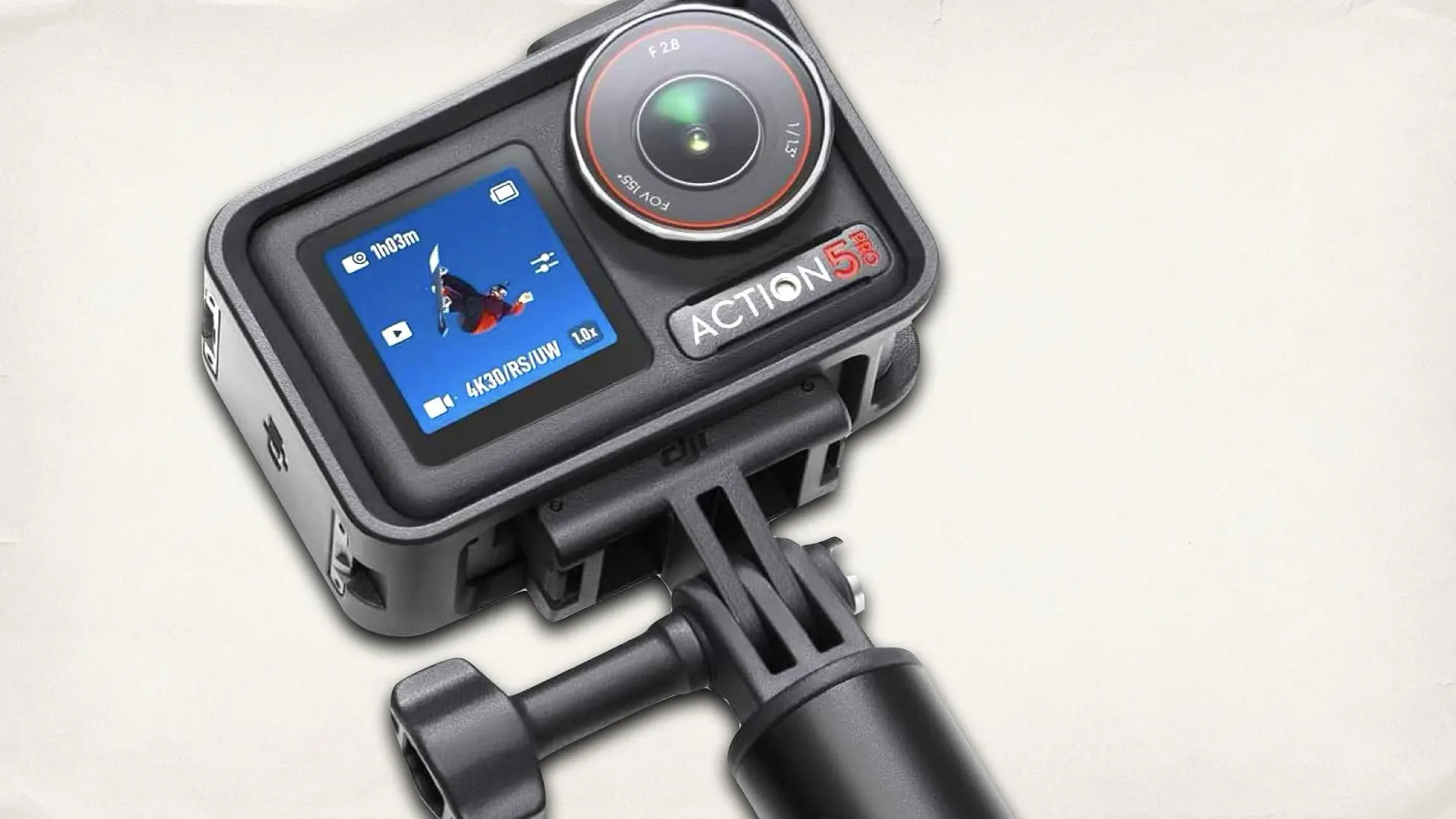
The DJI Osmo Action 5 Pro Adventure Combo tells a different story. Its price drop from around $419 to $368 is more controlled, and that is exactly the point. This is not a product being repositioned downward but being stabilized within a premium tier. The differences here are less about raw image and more about operational continuity. Dual OLED screens, an extended battery ecosystem, and improved thermal handling fundamentally change how the camera is used. This is a system designed for long shooting days, travel documentation, and situations where reliability becomes more important than peak image quality. In real production terms, this matters. A camera that can run longer, handle heat better, and provide immediate framing feedback on both sides reduces friction. And friction is one of the highest hidden costs in content creation. The price history reflects this positioning. Instead of sharp drops, you see gradual adjustments. DJI is maintaining the perception of this camera as a tool, not a gadget. For creators who understand workflow efficiency, it becomes less about buying a camera and more about investing in a system that reduces shooting limitations.
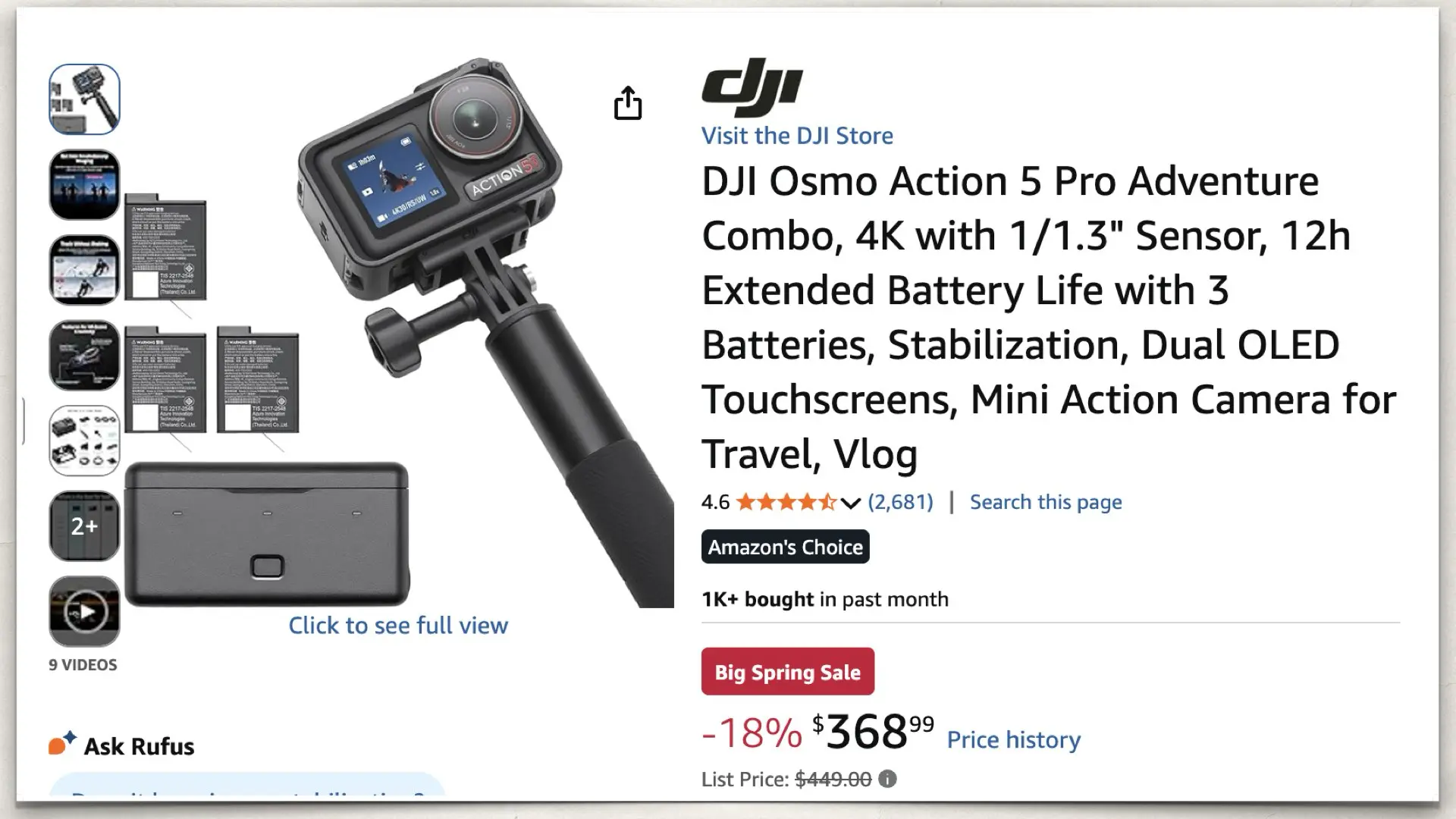
📦 See the DJI Osmo Action 5 Pro Adventure Combo on Amazon
The 360 camera introduces a different way to think about shooting
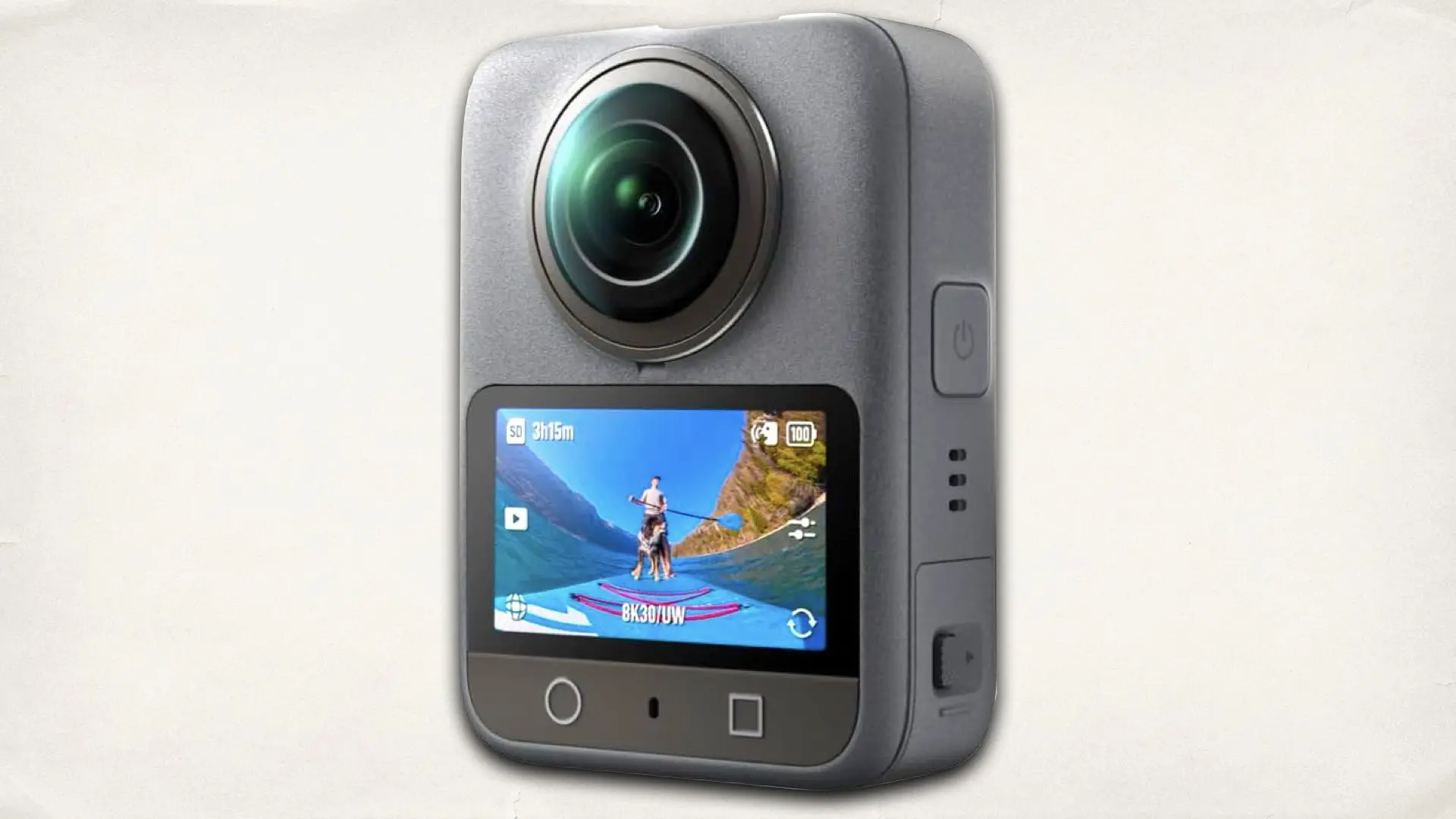
The DJI Osmo 360 Camera Adventure Combo represents the most significant conceptual shift among the three. Its drop from around $510 to $454, combined with a much higher list price, shows a more aggressive push. This is not just about selling units. It is about expanding the adoption of a different shooting paradigm. Traditional cameras require you to decide framing in the moment. A 360 camera removes that constraint. It captures the entire environment, allowing you to reframe later. That changes how scenes are approached, especially in dynamic environments where timing and positioning are unpredictable. From a creative standpoint, this opens new possibilities. Simulated camera moves, impossible perspectives, and flexible composition after the fact. For social content, travel storytelling, and experimental filmmaking, this becomes a powerful tool. But the tradeoffs are real. Workflow becomes heavier. Editing requires more processing power and more time. Low light performance, while improved, still faces limitations due to stitching and lens constraints. This is not a replacement for a traditional camera. It is a different instrument entirely. The pricing behavior suggests Amazon is pushing this category more aggressively than the others. The gap between list price and current price is significant, and recent drops are sharper. That indicates an effort to accelerate adoption. For creators willing to adapt their workflow, it represents access to a new visual language rather than just another camera.
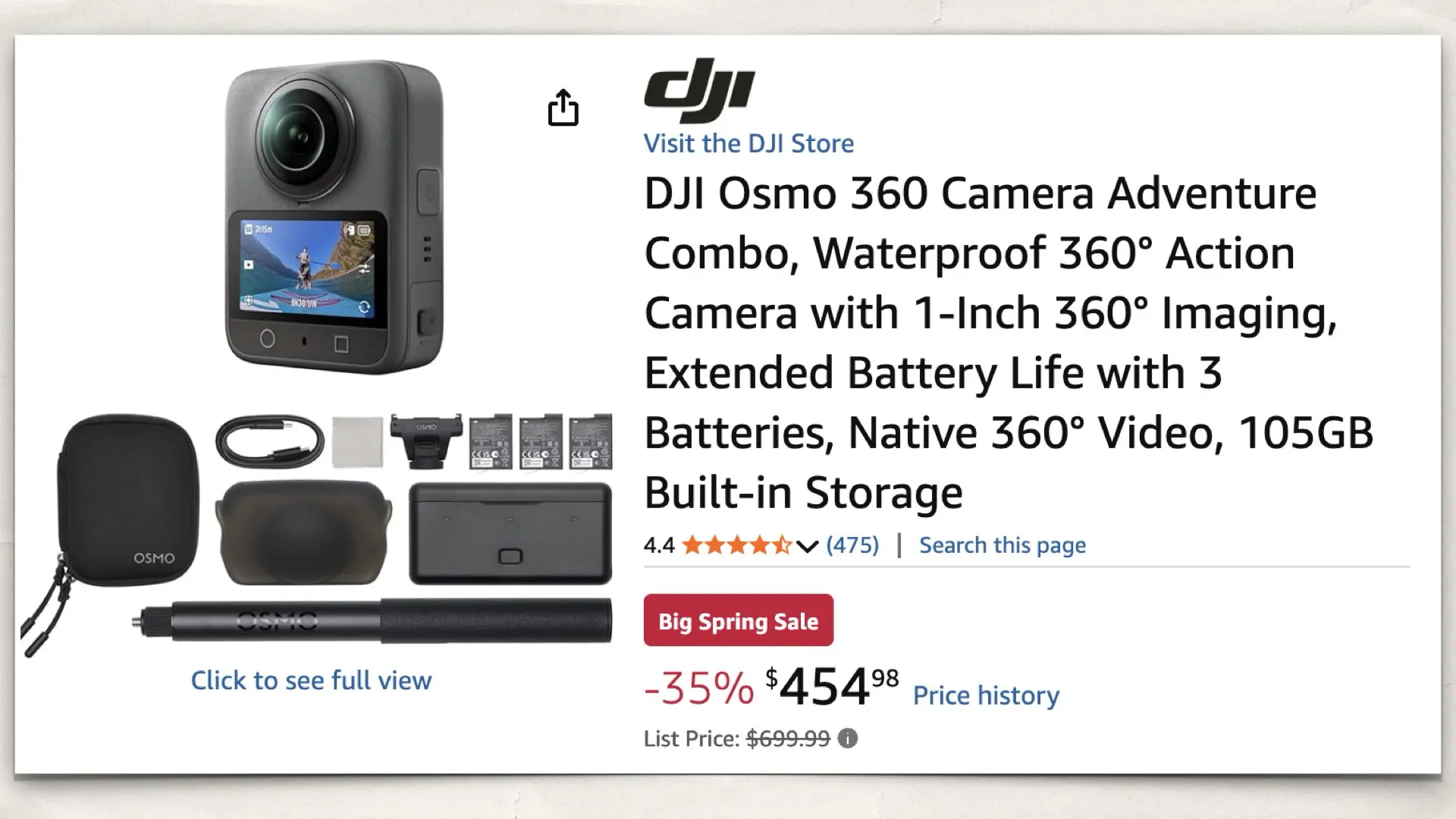
📦 See the DJI Osmo 360 Camera Adventure Combo on Amazon
What this sale reveals about the market
Looking at all three products together, a structured strategy emerges. Action 4 defines the new entry point for serious image quality. The Action 5 Pro defines the creator workflow tier. The 360 camera defines an expanding creative category that still needs broader adoption. This is where the educational value sits. Choosing between these cameras is about understanding how you shoot, how you edit, and how much friction you are willing to handle in your workflow. Amazon’s Big Spring Sale simply exposes these positions more clearly through pricing. And for creators paying attention, pricing is often the most honest signal in the market.
As an Amazon Associate, Y.M.Cinema earns from qualifying purchases. If you purchase through the Amazon links above, Y.M.Cinema may earn a small commission at no additional cost to you. This helps support our work.