When IndieWire published its Camera Survey of 45 of the Top Fall 2025 Films, it offered more than just a list of technical choices, but revealed the visual DNA driving this year’s most celebrated festival titles. Shot across Venice, Toronto, Telluride, and beyond, these 45 productions collectively define what modern cinematic language looks like in 2025. The results confirm a clear hierarchy: ARRI’s ALEXA 35 remains the undisputed powerhouse, film continues its creative resurgence, and the Sony VENICE still stands as the most respected challenger in digital cinema. Yet, beneath the surface, this dataset tells a deeper story about how filmmakers balance emotion, logistics, and technology, a story that directly connects to Y.M.Cinema’s ongoing investigations into the evolving landscape of cinematography. Let’s dive into it.
List of films, DP, and cameras
- Adulthood – Christopher Mably – ALEXA 35
- After The Hunt – Malik Hassan Sayeed – Arriflex Arricam ST and LT
- Ballad of a Small Player – James Friend – ALEXA 35, RED Dragon
- Blue Heron – Maya Bankovic – ALEXA Mini
- Carolina Caroline – Jean Philippe Bernier – RED V-Raptor X
- Christy – Germain McMicking – ALEXA 65
- The Currents – Gabriel Sandru – ALEXA Mini
- Erupcja – Pete Ohs – Canon 5D Mark III (Hacked Magic Lantern RAW)
- Eternity – Ruairi O’Brien – ALEXA 35
- Exit 8 – Keisuke Imamura – ALEXA 35, Sony a7
- Frankenstein – Dan Lausten – ALEXA 65
- Fuze – Giles Nuttgens – ALEXA 35
- Gavagai – Patrick Orth – ALEXA 35
- La Grazia – Daria D’Antonio – ALEXA 35
- Hamlet – Stuart Bentley – ALEXA 35
- Hedda – Sean Bobbitt – ALEXA 35
- A House of Dynamite – Barry Ackroyd – ALEXA 35
- If I Had Legs, I’d Kick You – Chris Messina – Arricam LT, ALEXA 35, Sony FX9
- Is This Thing On? – Matthew Libatique – Sony Venice 2
- It Was Just An Accident – Amin Jafari – ALEXA Mini, RED KOMODO
- The Kiss of the Spider Woman – Tobias Schliessler – ALEXA Mini LF, Sony Venice 2
- Kontinental ’25 – Marius Panduru – iPhone 15 Pro
- The Last One For the Road – Massimiliano Kuveiller – Arri 416
- The Lost Bus – Pål Ulvik Rokseth – ALEXA 35
- Lucky Lu – Norm Li – Arri 416 Plus
- Miroirs No. 3 – Hans Fromm – ALEXA 35
- Motor City – John Matysiak – ALEXA 35
- My Father’s Shadow – Jermaine Edwards – Arri 416 & Arri SR3
- Nouvelle Vague – David Chambille – Arri IIC & Sony Venice 2
- Olmo – Carolina Costa – ALEXA 35
- Peter Hujar’s Day – Alex Ashe – ARRI SR3
- Pillion – Nick Morris – ALEXA 35, RED Komodo X, DJI Ronin 4D
- A Poet – Juan Sarmiento G. – Arri 416
- Rental Family – Takuro Ishizaka – ALEXA LF
- Retreat – Luciana Riso – ALEXA 35
- Roofman – Andrij Parekh – Arricam LT
- Saipan – Piers McGrail – ALEXA Mini, Arri SR3, Sony DVW790, Sony Handycam
- The Secret Agent – Evgenia Alexandrova – ALEXA Mini, ALEXA 35
- Sentimental Value – Kasper Tuxen – ArriCam LT
- Sirât – Mauro Herce – ALEXA 35, ARRI 416
- The Smashing Machine – Maceo Bishop – Ikegami HL-59, Arri 416, IMAX
- Sound of Falling – Fabian Gamper – ALEXA Mini, Sony FX6
- The Testament of Ann Lee – William Rexer – Arri LT, ST and 435
- Train Dreams – Adolpho Veloso – ALEXA 35
- A Useful Ghost – Pasit Tandaechanurat – ALEXA Mini
The Camera Chart
Note: The chart includes only cinema cameras that were used in more than one film, excluding single-use systems such as the RED Raptor, IMAX, iPhone, and other one-off choices featured in the full IndieWire survey.
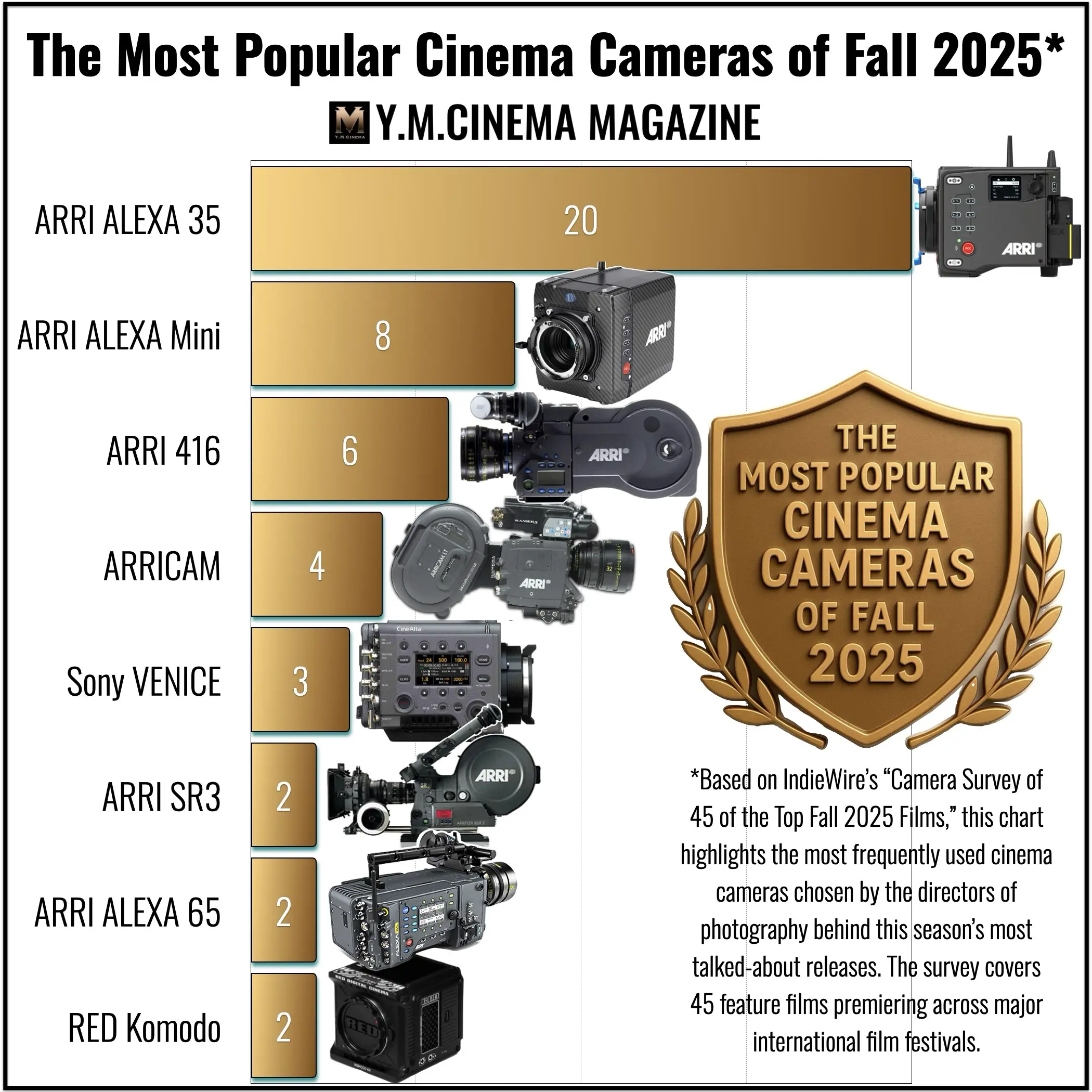
Deep dive. What the chart really says…
ARRI’s grip tightens. Super 35 still rules
ALEXA 35 at 15 appearances is the story. This is consistent with our broader tracking that saw the same trend at Sundance and Cannes. See Sundance 2025. ARRI ALEXA 35 dominates the festival circuit and Cannes 2025. ARRI ALEXA 35 takes the throne. Super 35 rules supreme. The repeated pattern across events suggests comfort, reliability, and a look pipeline that colorists and finishing houses can match quickly. The bar for ALEXA Mini at 8 further reinforces Super 35 sensibilities. This echoes our earlier TIFF read where Super 35 practicality beat full frame appetite. See The cameras of TIFF 2024. Super 35 rules with the ARRI 35 Mini.
Film is not a niche, but a language choice
ARRI 416 at 6, ARRICAM at 4, and SR3 at 2 equals 12 film selections in a 45-film cohort. That is material. It aligns with our seasonal takeaway that film usage spikes where authorial intent is foregrounded and where texture and highlight behavior matter more than clinical sharpness. We saw the same in our Oscars forward look at format preferences. See Oscars 2026. Film cameras vs digital. The chart visualizes that swing in a single frame. Super 16 appears as the intimacy tool. 35 mm arrives when scale and skin rendition are priorities.
VENICE’s role is focused rather than dominant
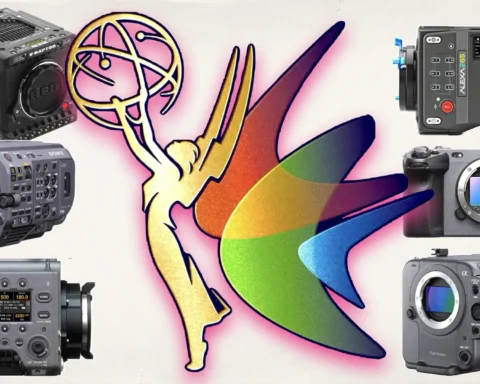
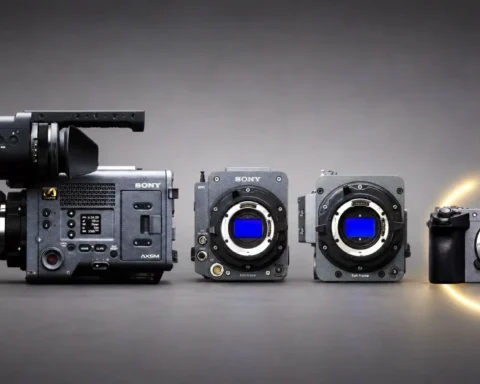
Sony VENICE shows up 3 times. That is consistent with our festival audits, where VENICE wins specific briefs. Color separation, skin tone latitude, and dual base ISO for night exteriors are common deciding factors. The pattern matched our Emmy season review, where VENICE often paired with controlled stage and multi-camera days. See Cameras behind Emmys 2025.
RED is the agility play
RED Komodo at 2 reads as the director’s mobility or stunt rig answer rather than the default A-camera in prestige drama. That throughline appears in our multi-festival strength index, where RED over-indexes for specialty setups, gimbal, vehicle, and travel constraints. See The camera strength chart 2024. What the industry’s most prestigious festivals tell us about filmmakers’ gear of choice.
The canon question is still open
The chart mirrors our Sundance reporting, where Cinema EOS presence was limited despite strong corporate momentum. The takeaway remains that glass ecosystems, rental availability, color pipelines, and on-set muscle memory weigh more than spec sheets. See Canon’s absence from Sundance 2025. Why aren’t Cinema EOS cameras dominating indie filmmaking. Until a breakout cycle puts more Canon bodies into top-tier rental packages with baked-in LUTs and show looks, this pattern likely persists.
Cross-event synthesis
When we put the graphic next to the three Y.M.Cinema datasets, and the signal is clear.
• Sundance docs leaned lighter and more hybrid. See The cameras behind Sundance 2025 documentaries.
• Cannes narrative favored ALEXA 35 and Super 35 discipline. See Cannes 2025. ARRI ALEXA 35 takes the throne. Super 35 rules supreme, and our previous year baseline Cannes 2024 proves that Super 35 is back into the game.
• Awards tracers echo these festival choices through delivery and post workflows. See Cameras behind Emmys 2025 and Oscars 2026. Film cameras vs digital.
What this means for filmmakers right now
-
If you want festival-caliber safety with maximum post flexibility, ALEXA 35 remains the shortest path from set to grade.
-
When the brief is intimacy, memory, or period texture, Super 16 and 35 mm remain compelling, and the chart proves programmers accept and reward that choice.
-
VENICE is best deployed where color separation and high ISO night reliability are strategic needs.
-
RED Komodo excels as the second toolkit for movement and tight spaces rather than the main sensor for prestige narrative.
-
Vendor ecosystem momentum is decisive. The bodies that dominate rental shelves and color pipelines dominate festival screens.
Final thoughts
The IndieWire Fall 2025 Camera Survey reinforces what Y.M.Cinema has been documenting throughout the year, a cinematic landscape defined by consistency, craft, and conscious choice. The dominance of ARRI’s ALEXA 35 signals that reliability and color science still outweigh raw resolution in the eyes of top directors of photography. At the same time, the steady presence of film cameras like the ARRI 416 and Arricam LT proves that analog formats remain creatively relevant, not as nostalgia, but as deliberate storytelling tools. Meanwhile, Sony’s Venice continues to earn trust from DPs who prioritize skin tone fidelity and flexibility under challenging lighting, while RED’s compact systems occupy specialized roles that emphasize mobility and experimentation. What this chart truly captures is the evolving balance between innovation and tradition. It reminds us that no matter how advanced digital tools become, filmmakers still choose their cameras not for specs, but for emotion, texture, and the stories they want to tell.
Gear mentioned in this article
Available on Amazon
| Product | New | Renewed | Used |
|---|---|---|---|
| Canon 5D Mark III | $1,299.99 | — | From $374 |
| Apple iPhone 15 Pro | $558.19 | — | — |
| DJI Ronin 4D | $9,999 | — | — |
| Sony FX6 | $8,876 | — | — |
Prices checked: Sep 23, 2026, 9:30 AM GMT+0000
As an Amazon Associate, Y.M.Cinema earns from qualifying purchases. If you buy through our links, we may earn a small commission at no extra cost to you.
Product prices and availability are accurate as of the date/time indicated and are subject to change. Any price and availability information displayed on Amazon.com at the time of purchase will apply to the purchase of this product.
CERTAIN CONTENT THAT APPEARS ON THIS SITE COMES FROM AMAZON. THIS CONTENT IS PROVIDED “AS IS” AND IS SUBJECT TO CHANGE OR REMOVAL AT ANY TIME.