
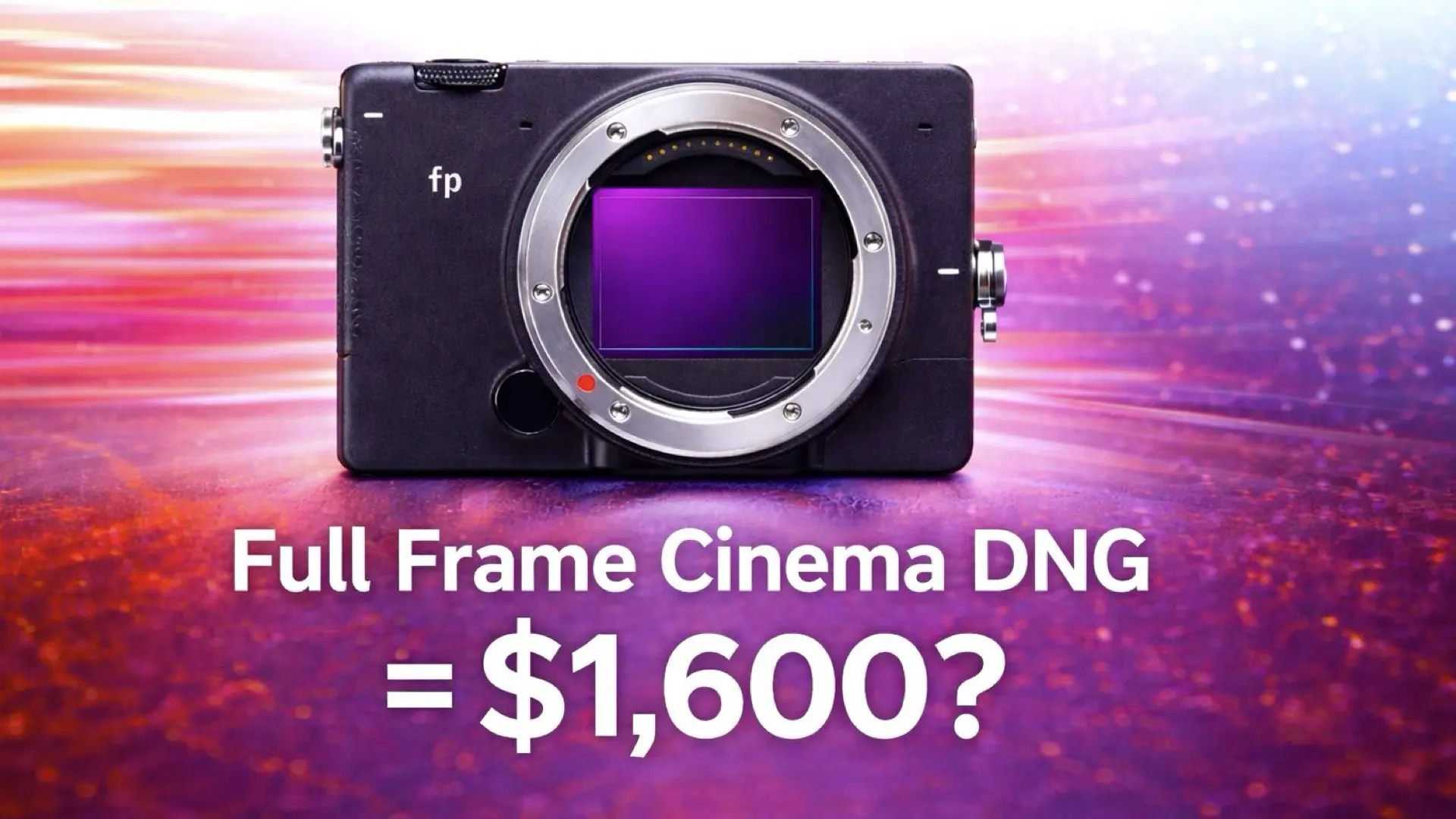
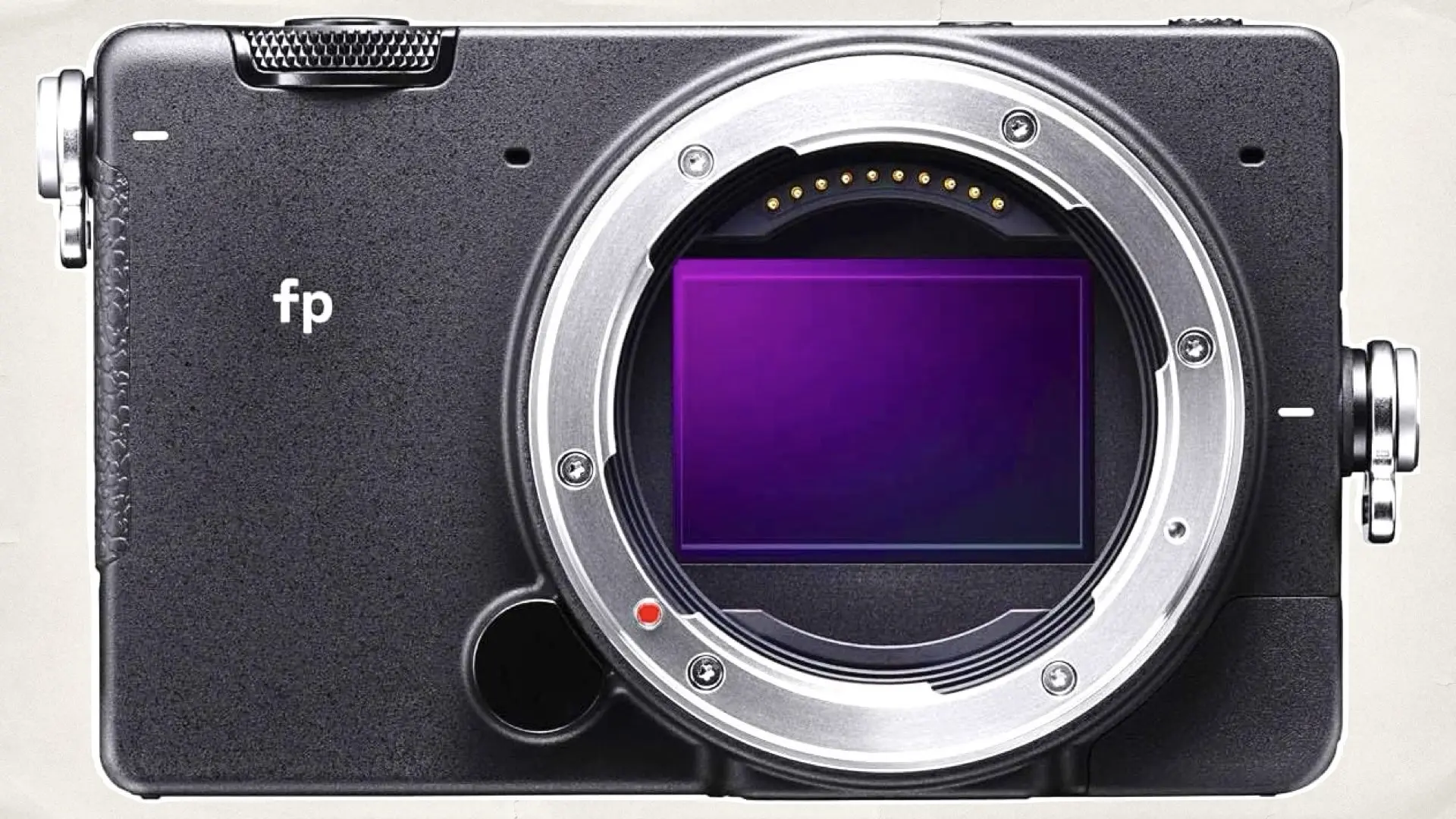
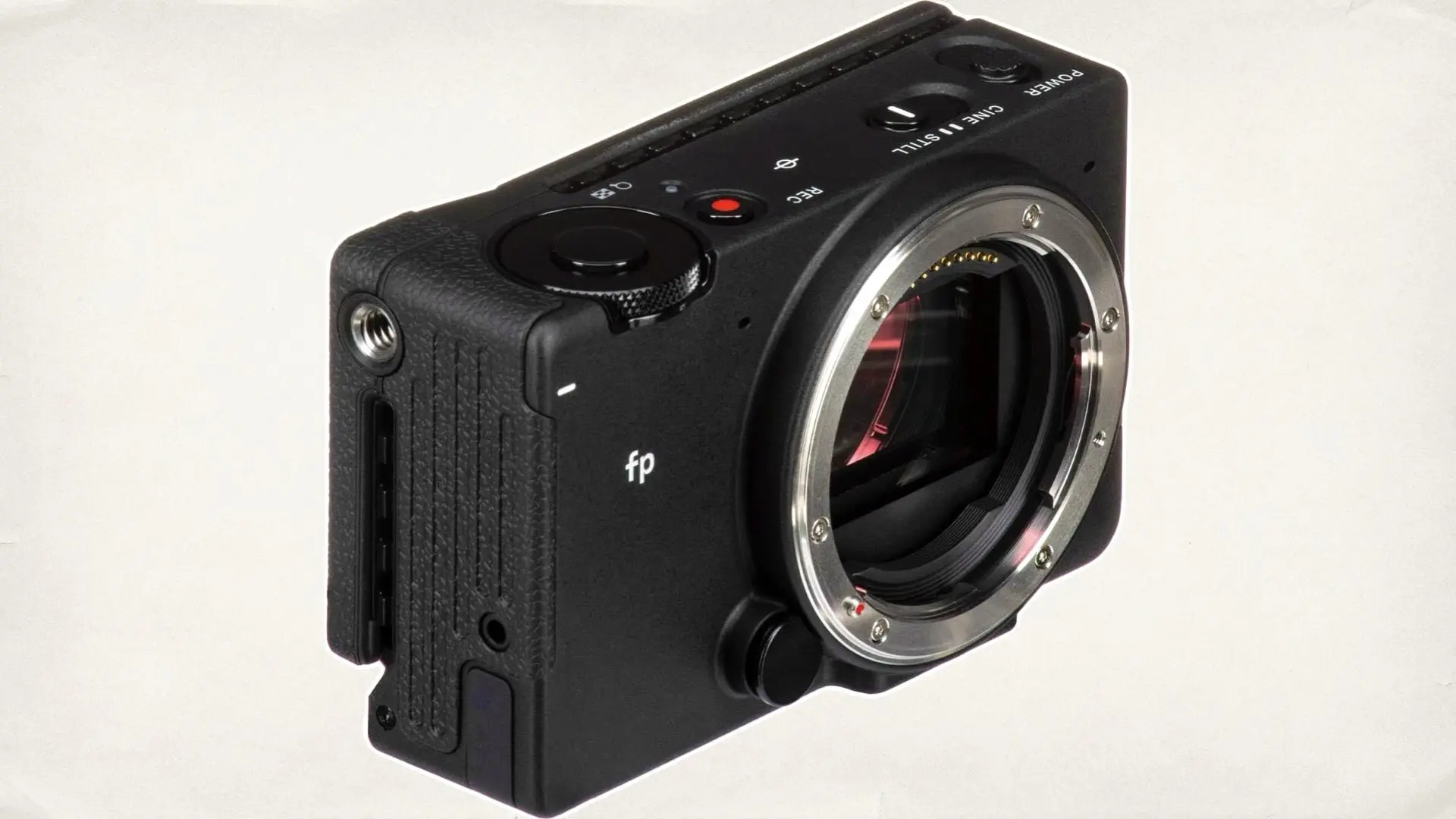
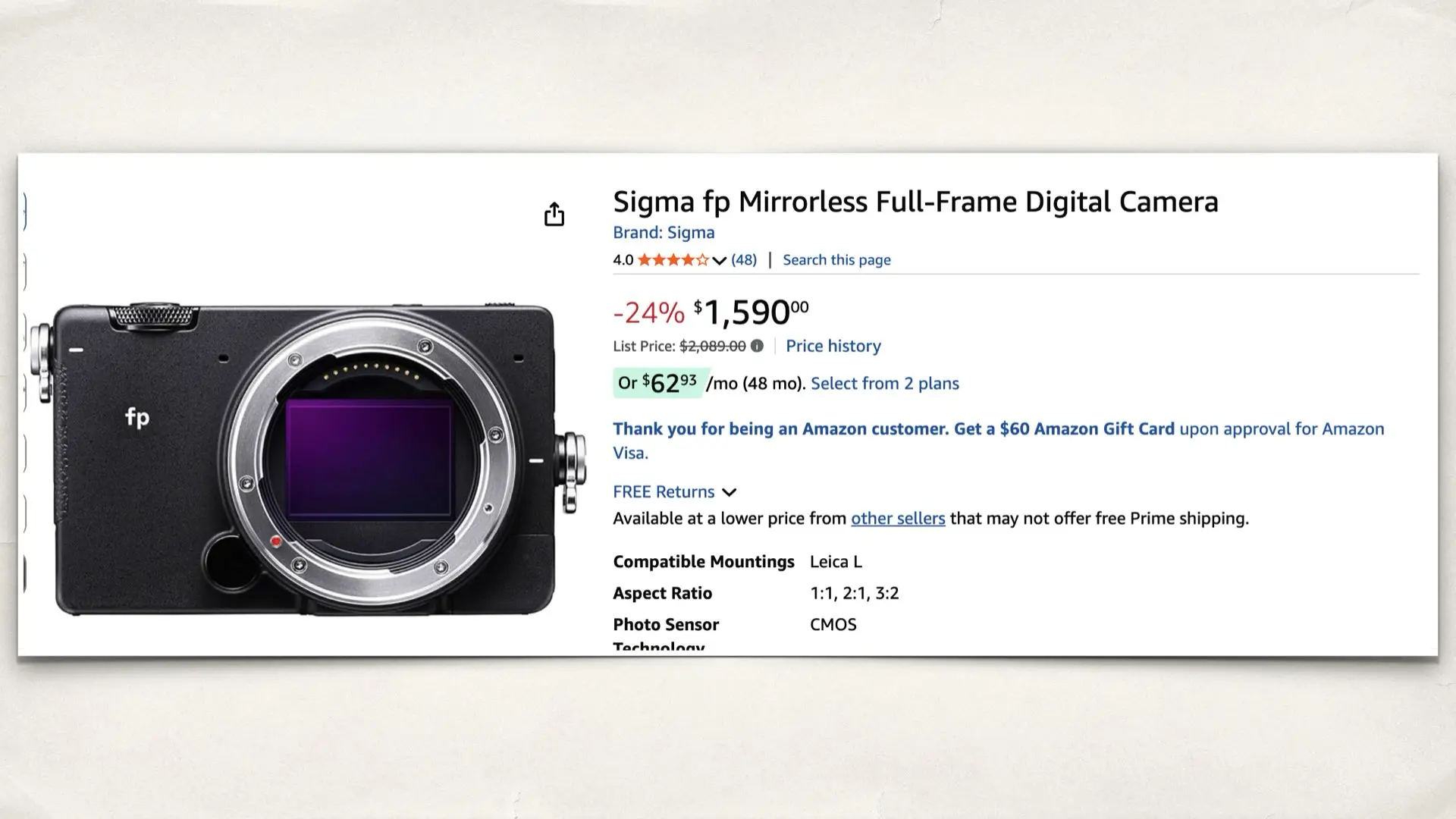
We found the Sigma fp ($1,740 on Amazon) available on Amazon at around 1,590 USD, and interestingly, it remains in stock there while several other outlets currently list it as unavailable. That alone says something about its niche demand and lingering relevance. Full frame RAW once required serious cinema bodies and serious budgets. Large rigs, external recorders, and price tags pushed most independent filmmakers away. Then the Sigma fp entered the market and disrupted that assumption with something radically compact. A minimalist metal body weighing under 1 pound, built around a 24.6MP full frame BSI sensor capable of recording CinemaDNG RAW internally, with 12-bit options available depending on resolution and recording mode, and expanded RAW flexibility when paired with external recording. Just a modular capture device built with a very specific philosophy. The real question is whether it still makes sense today.
Why the Sigma fp changed the affordable raw cinema conversation
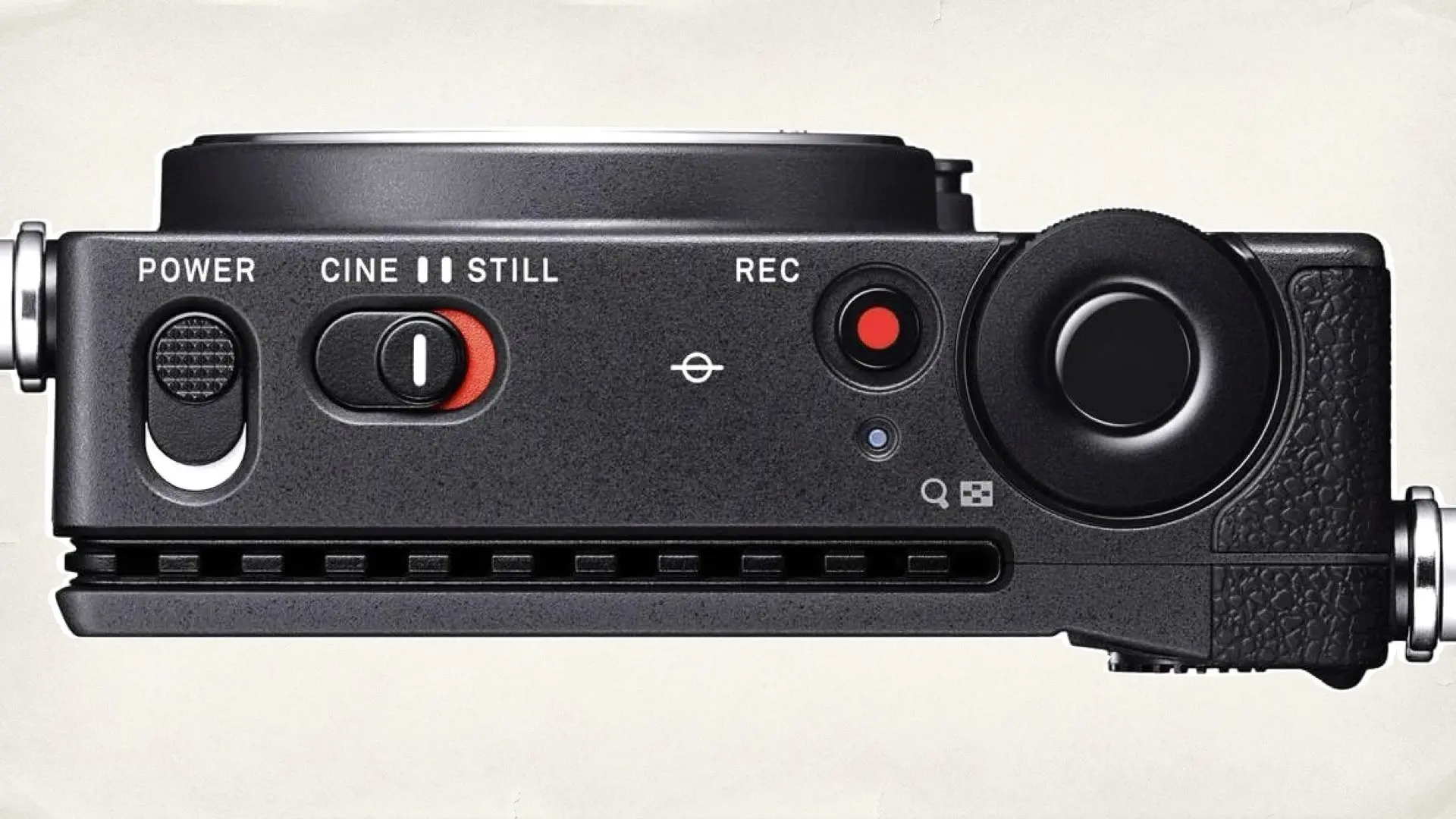
When the fp launched, it was not trying to compete in the traditional hybrid race. It was not built to dominate sports photography or to offer class-leading autofocus. Its disruption came from purity. Internal CinemaDNG RAW in a body this small was extremely rare at this price point. The fp could record RAW internally to a UHS II card, with bit depth depending on resolution, and offered expanded 12-bit RAW options when paired with external recording. Most cameras in their bracket required external recorders to unlock any form of RAW at all. Add to that the Leica L mount ecosystem, Director’s Viewfinder simulations including ARRI ALEXA LF and RED MONSTRO, and a heat sink-based design that allowed sustained recording without artificial time limits, and it became clear this was not a consumer experiment but a compact cinema brain aimed at intentional filmmakers.
Full frame 12-bit cinema DNG in 2026. Does the image still hold up?
In controlled environments, the answer remains yes. CinemaDNG still offers significant grading flexibility compared to heavily compressed codecs. White balance adjustments in post are far more forgiving than in baked video formats, provided the exposure is handled correctly at capture. The full-frame sensor delivers depth, dynamic nuance, and tonal separation that remain competitive today. When properly exposed and graded, the image retains strong highlight detail and smooth tonal transitions. For narrative work, product cinematography, music videos, and carefully lit projects, the output does not feel outdated. In fact, when handled with intention, it can compete visually with newer mirrorless bodies that prioritize efficiency over grading latitude. The sensor has aged more gracefully than its operational features. The RAW workflow still provides creative control that many filmmakers value.
📦See the SIGMA fp on Amazon
The technological gaps that matter in a 2026 production workflow
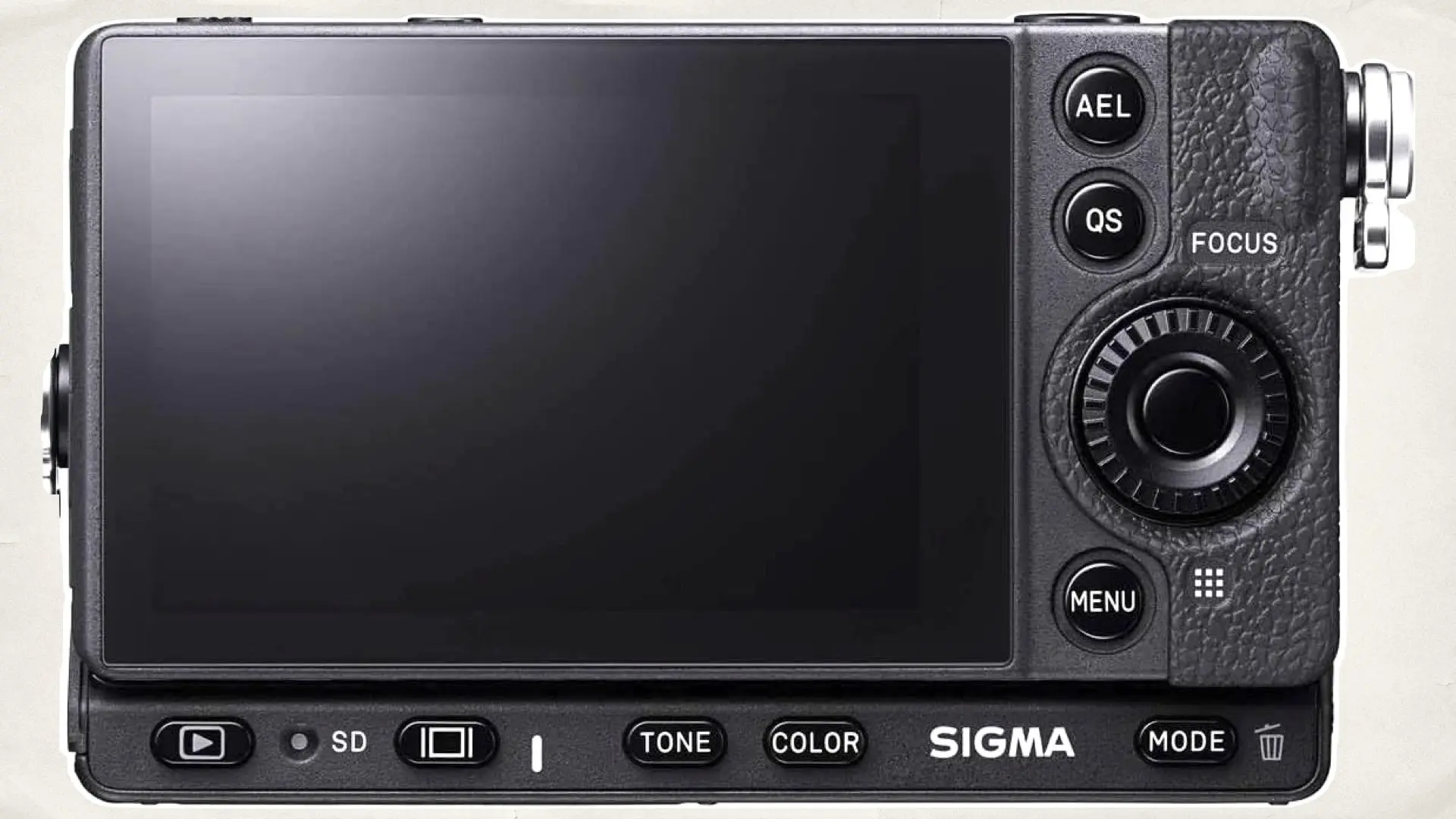
The camera world in 2026 prioritizes intelligence and efficiency. Phase detect autofocus tracks subjects reliably across complex scenes. In-body stabilization allows handheld work to look controlled. Rolling shutter has been reduced in many newer sensors, improving motion rendering. The Sigma fp operates under a different philosophy. Its autofocus is contrast detect-based and cannot match modern tracking systems. There is no in-body stabilization. Rolling shutter in 4K is noticeable during rapid motion. CinemaDNG files are large and demand serious storage planning and a disciplined post-production pipeline. Battery life is modest. It rewards preparation and controlled environments rather than speed and automation. These limitations do not reduce the underlying sensor quality, but they can affect motion handling and overall shooting efficiency in real-world scenarios.
The type of filmmaker who will still benefit from this camera
If you light your scenes, pull focus manually, build modular rigs, and value RAW flexibility over operational convenience, the Sigma fp remains uniquely interesting. Very few cameras under 1,600 USD still offer internal full-frame CinemaDNG RAW in such a compact form, with higher bit depth options available depending on resolution and recording configuration. For filmmakers who prioritize grading latitude and sensor output above automation, it remains a specialized creative tool. If your priority is event coverage, sports, wildlife, fast-paced documentary work, or hybrid versatility, there are more practical and forgiving options in 2026. The fp does not try to be everything. It remains narrow by design.
Final assessment: Specialized tool or smart buy in 2026?
At 1,590 USD, the Sigma fp is not a hidden bargain waiting to be discovered, but it is not irrelevant either. It occupies a niche that still has value. There are more advanced autofocus systems available. There are more feature-rich hybrid bodies. There are cameras with better stabilization and more efficient codecs. Yet very few cameras at this size and price point offer internal full frame CinemaDNG RAW, with higher bit depth options depending on recording mode and configuration. The Sigma fp is not outdated in core sensor performance. It specializes in philosophy. For the right filmmaker, it remains an affordable path to flexible RAW capture within a compact modular system. For everyone else, it will feel like a camera built for a different era and a different mindset. Whether that mindset aligns with your workflow is the real answer to whether it is still worth it in 2026. Anyway, for those who are interested, you can check it out on the Amazon store, where it is still available.
As an Amazon Associate, Y.M.Cinema earns from qualifying purchases. If you purchase through the Amazon links above, Y.M.Cinema may earn a small commission at no additional cost to you. This helps support our work.
Gear mentioned in this article
Available on Amazon
| Product | New | Renewed | Used |
|---|---|---|---|
| Sigma fp | $1,740 | — | From $1,398 |
Prices checked: Sep 30, 2026, 9:31 PM GMT+0000
As an Amazon Associate, Y.M.Cinema earns from qualifying purchases. If you buy through our links, we may earn a small commission at no extra cost to you.
Product prices and availability are accurate as of the date/time indicated and are subject to change. Any price and availability information displayed on Amazon.com at the time of purchase will apply to the purchase of this product.
CERTAIN CONTENT THAT APPEARS ON THIS SITE COMES FROM AMAZON. THIS CONTENT IS PROVIDED “AS IS” AND IS SUBJECT TO CHANGE OR REMOVAL AT ANY TIME.


Good points. It is a process focused camera that takes a bit of thought for outstanding results.
Storage is not much of an issue with slimraw. It is the one power up that boosts cinemadng shooting with the sigma through the roof, as has been the case with other cinemadng cameras in the past.