
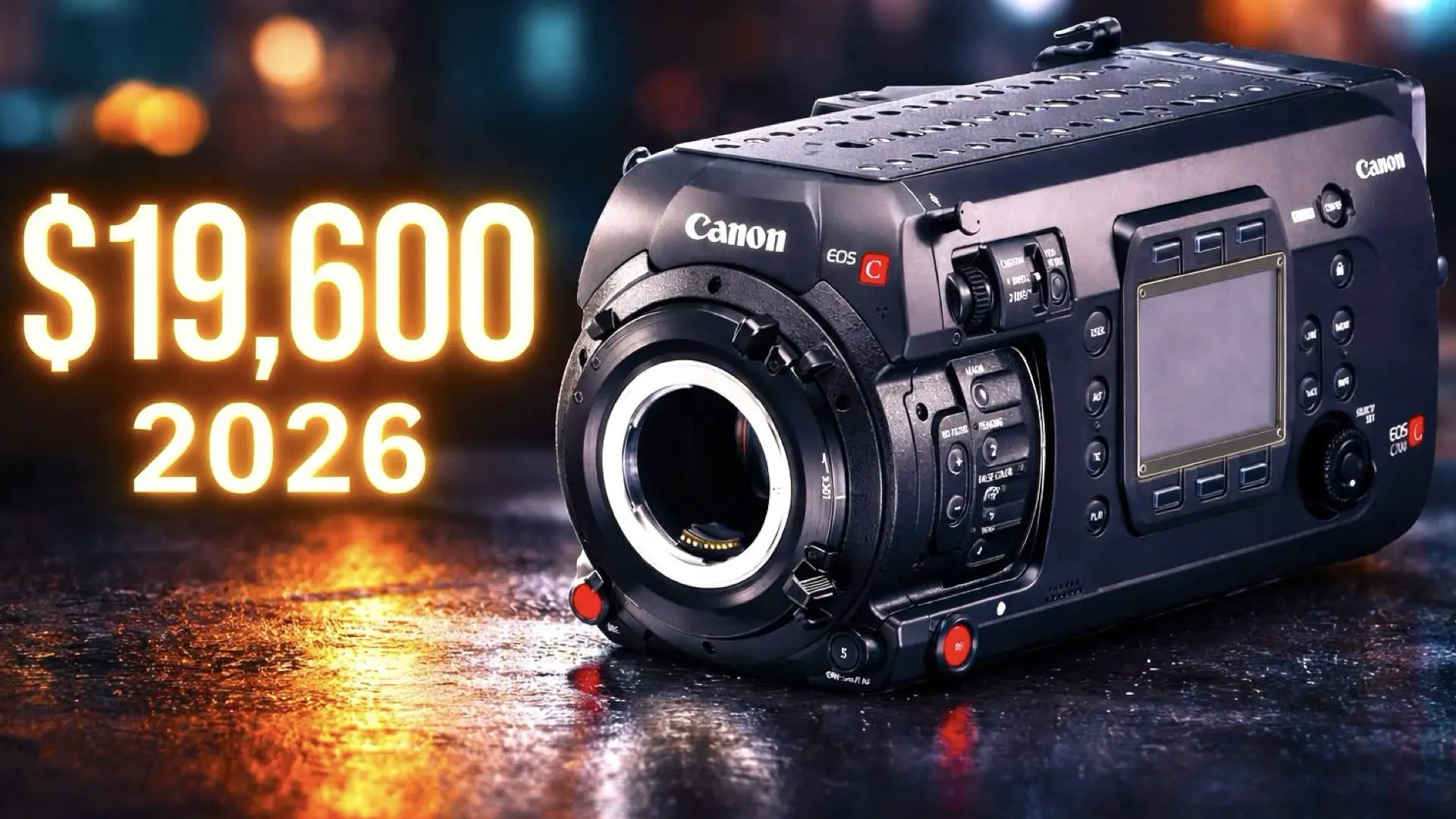
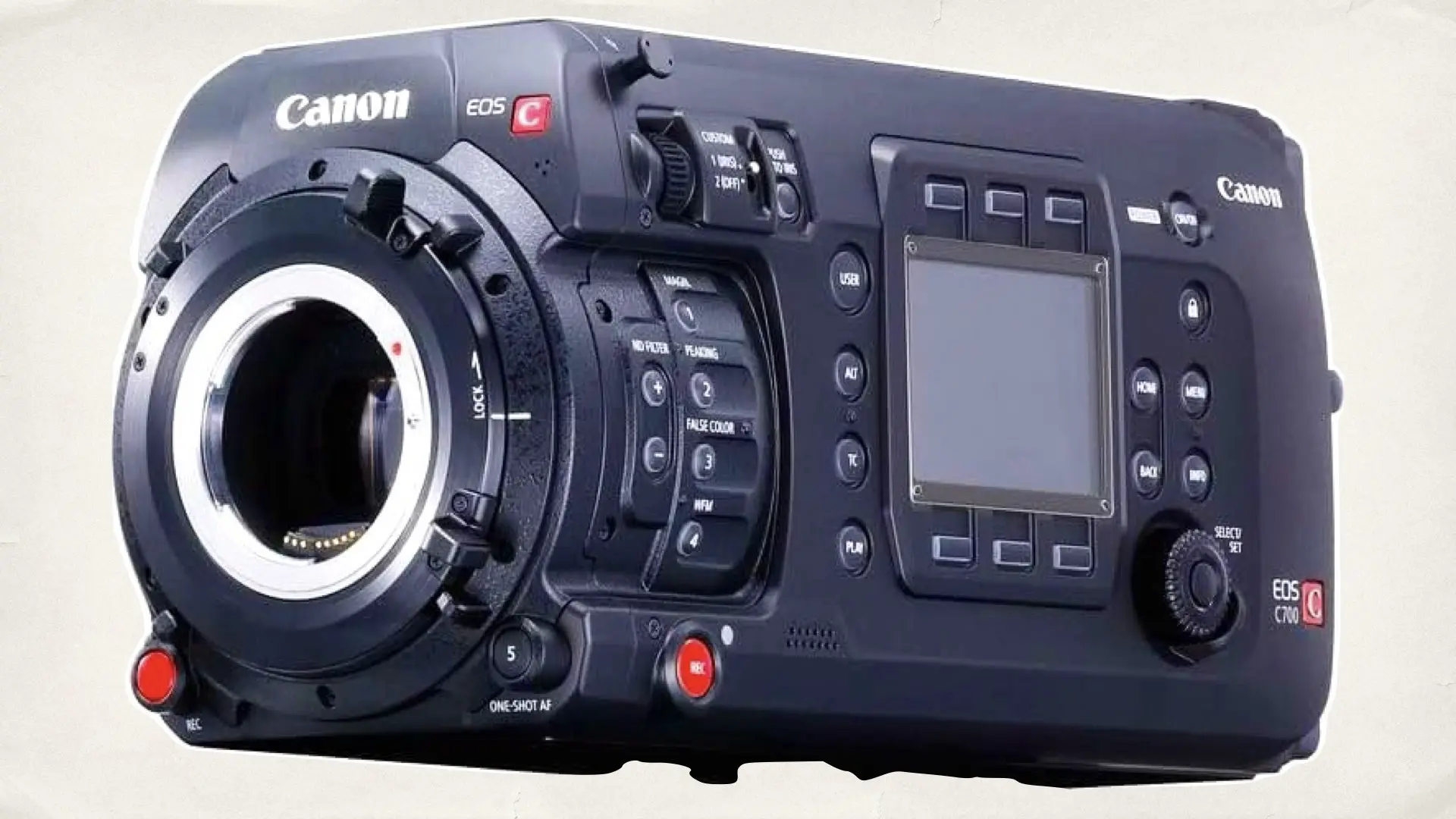
The Canon EOS C700 was introduced as Canon’s most ambitious modular cinema system, positioned to compete directly with high-end platforms from ARRI and Sony. At launch, it represented serious intent in the digital cinema space, offering a Super 35 sensor, robust build quality, and integration into broadcast and commercial production pipelines. In its prime, it was a legitimate flagship. Seeing it listed on Amazon for $19,599 in 2026 raises a different question. The issue is no longer whether it was important. The issue is whether it is rational at this price point today.
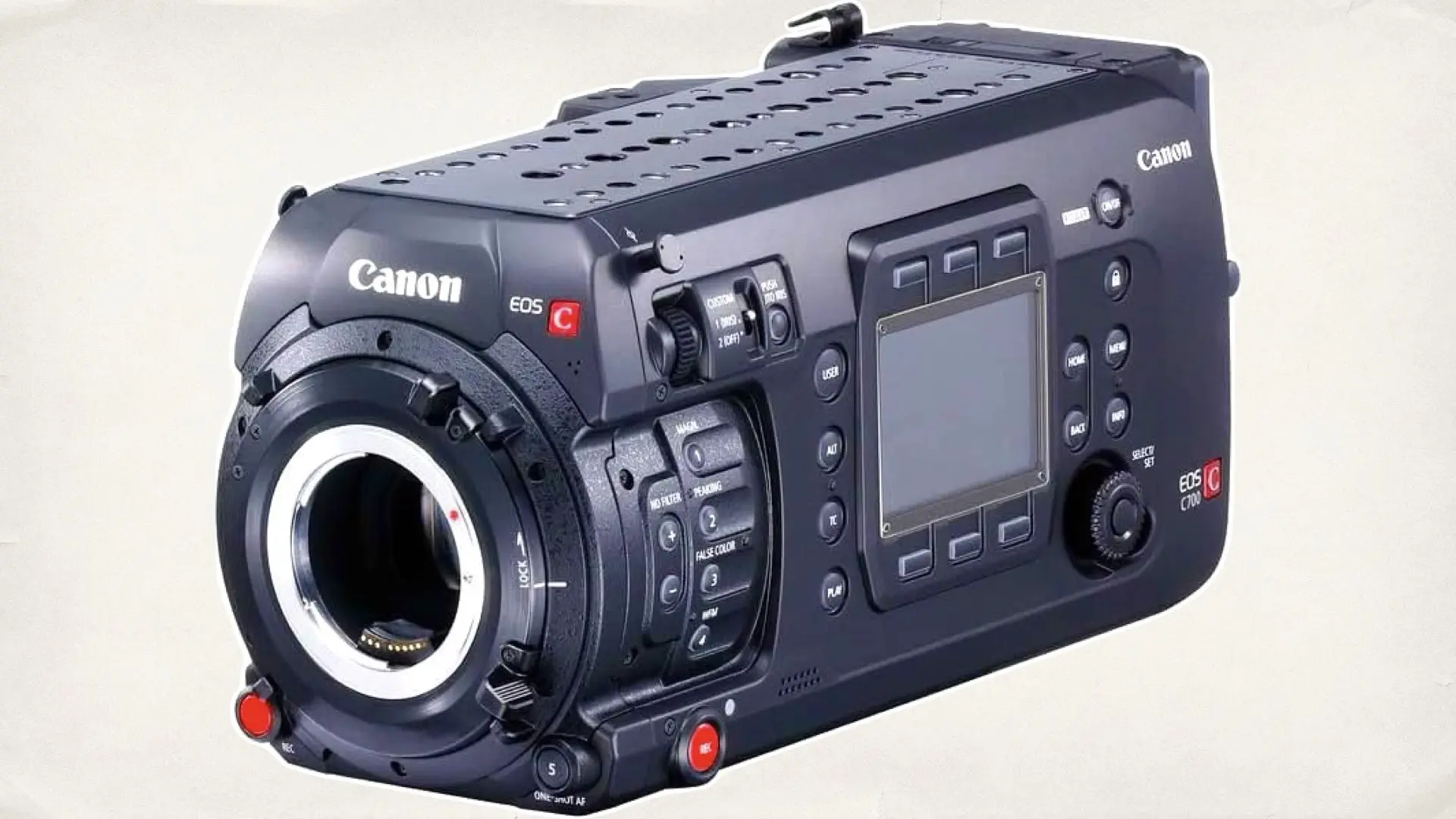
Image quality is not the problem
Technically, the C700 remains capable. Its Super 35 CMOS sensor delivers strong color science, natural skin tones, and approximately 15 stops of dynamic range. In controlled lighting conditions, the image still holds up well. Canon’s rendering pipeline remains respected in professional environments. For productions that prioritize color reproduction and consistency over sheer resolution numbers, the C700 is still functional. The camera’s image characteristics have aged better than its specifications.
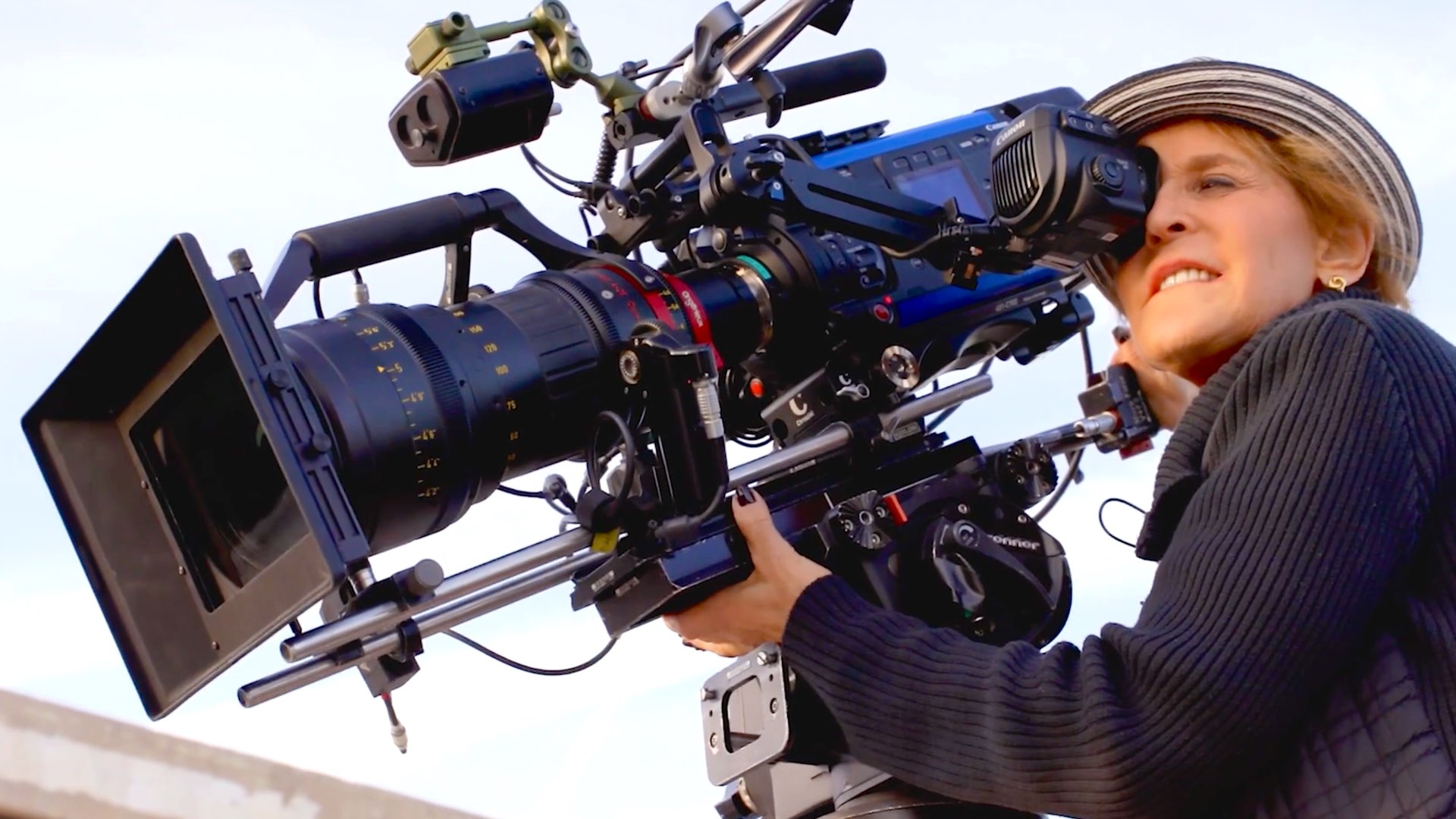
The ecosystem has moved forward
Where the C700 begins to feel dated is not in the core image, but in its surrounding ecosystem. Modern production environments prioritize internal RAW recording, higher resolution capture, improved media efficiency, and compact body design. Internal 6K, 8K, and even 12K workflows are now common in high-end productions. Full-frame and large format sensors have become standard in many commercial and streaming projects. The C700 is fundamentally a 4K Super 35 system from an earlier design philosophy. It lacks the workflow efficiency and internal flexibility that newer systems provide at similar or lower price points.
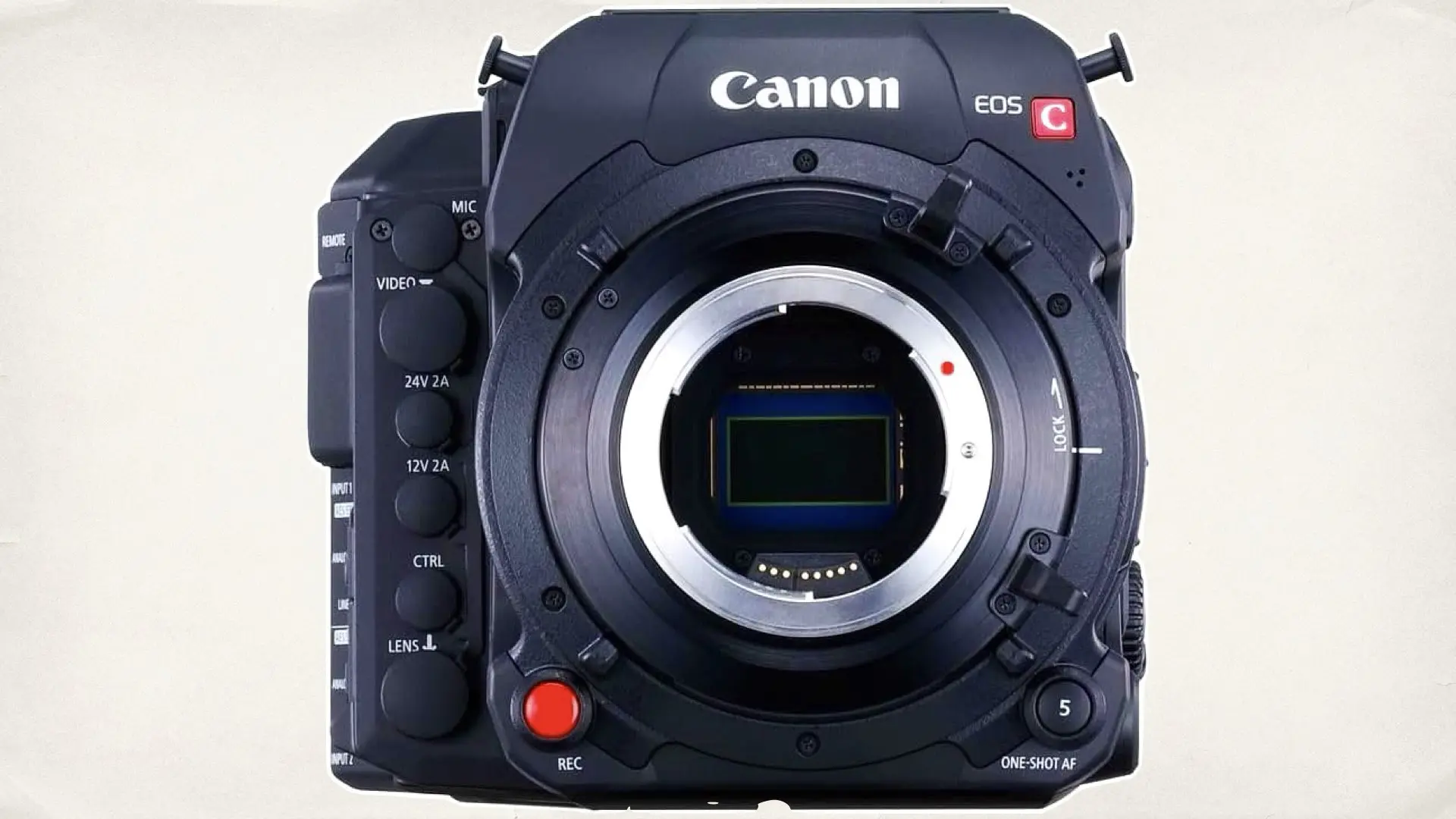
📦See the Canon C700 on Amazon
Capital allocation in 2026
At roughly $20,000, buyers in 2026 can access significantly more future-aligned platforms. The Canon EOS C500 Mark II offers full-frame capture in a smaller body with more modern workflow integration. The Sony FX9 remains strong in documentary and commercial sectors with contemporary codec efficiency and autofocus performance. The Blackmagic URSA Cine 12K LF delivers high-resolution internal RAW recording and extensive reframing latitude. When viewed through a capital expenditure lens, the C700 competes directly with cameras that provide greater resolution headroom, stronger resale prospects, and more flexible production pipelines.
Ergonomics, renal, and production reality
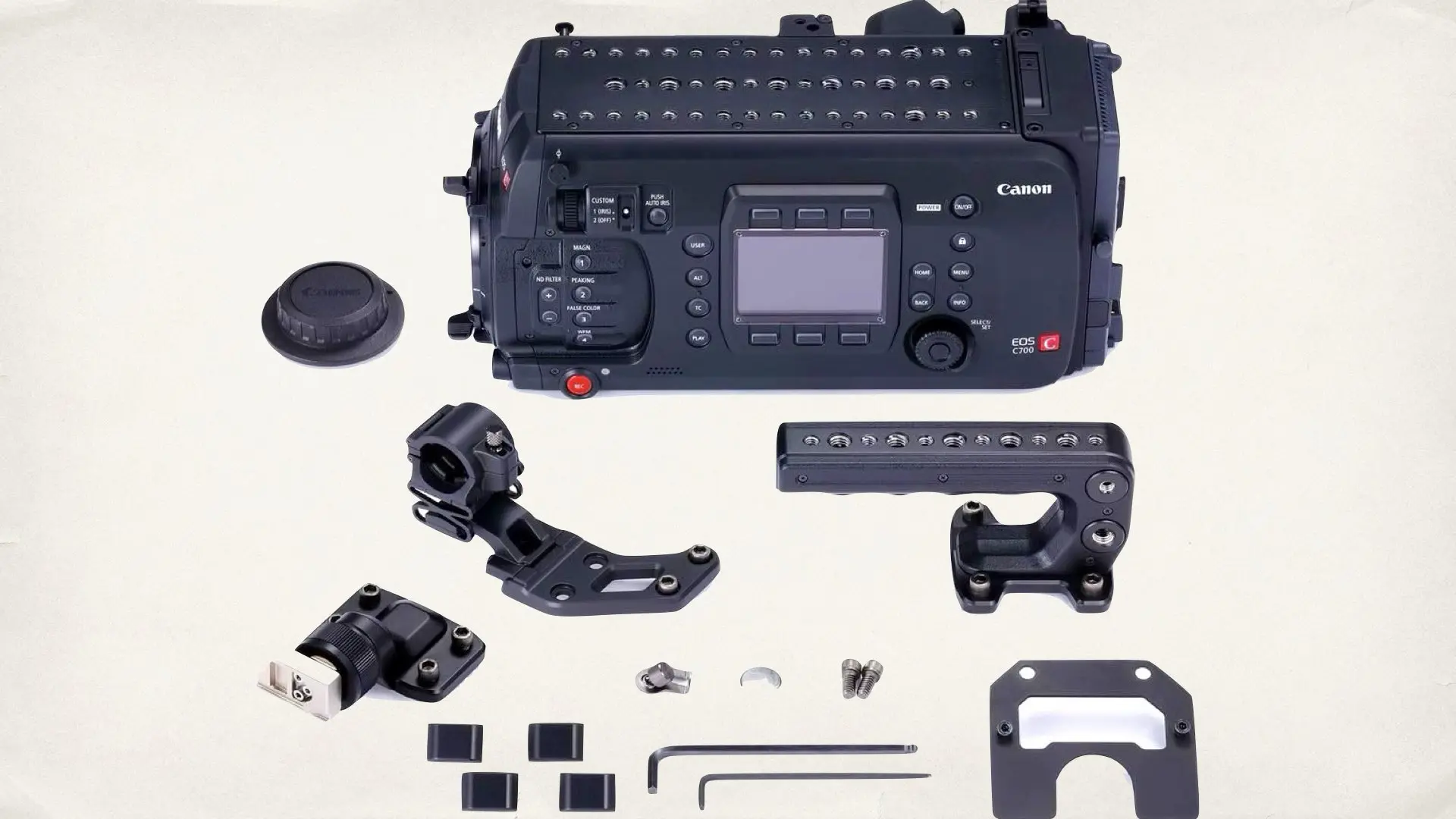
The C700 was designed for crew-based operation. It is physically large and modular, intended for studio or structured production environments. In 2026, many productions are leaner. Smaller, lighter bodies dominate mid to high-tier shoots unless a specific requirement dictates otherwise. Portability and efficiency influence hiring decisions. While the C700 remains well built and durable, its form factor reflects a previous generation of production logic. Another important dimension is residual value. Rental houses have largely transitioned toward newer platforms. Owner operators must consider how frequently a camera will be requested by clients. The C700 no longer commands strong rental demand in most markets. A $19,599 purchase that depreciates quickly and offers limited rental traction represents a weaker investment compared to modern alternatives with active demand.
📦See the Canon C700 on Amazon
What this listing really represents
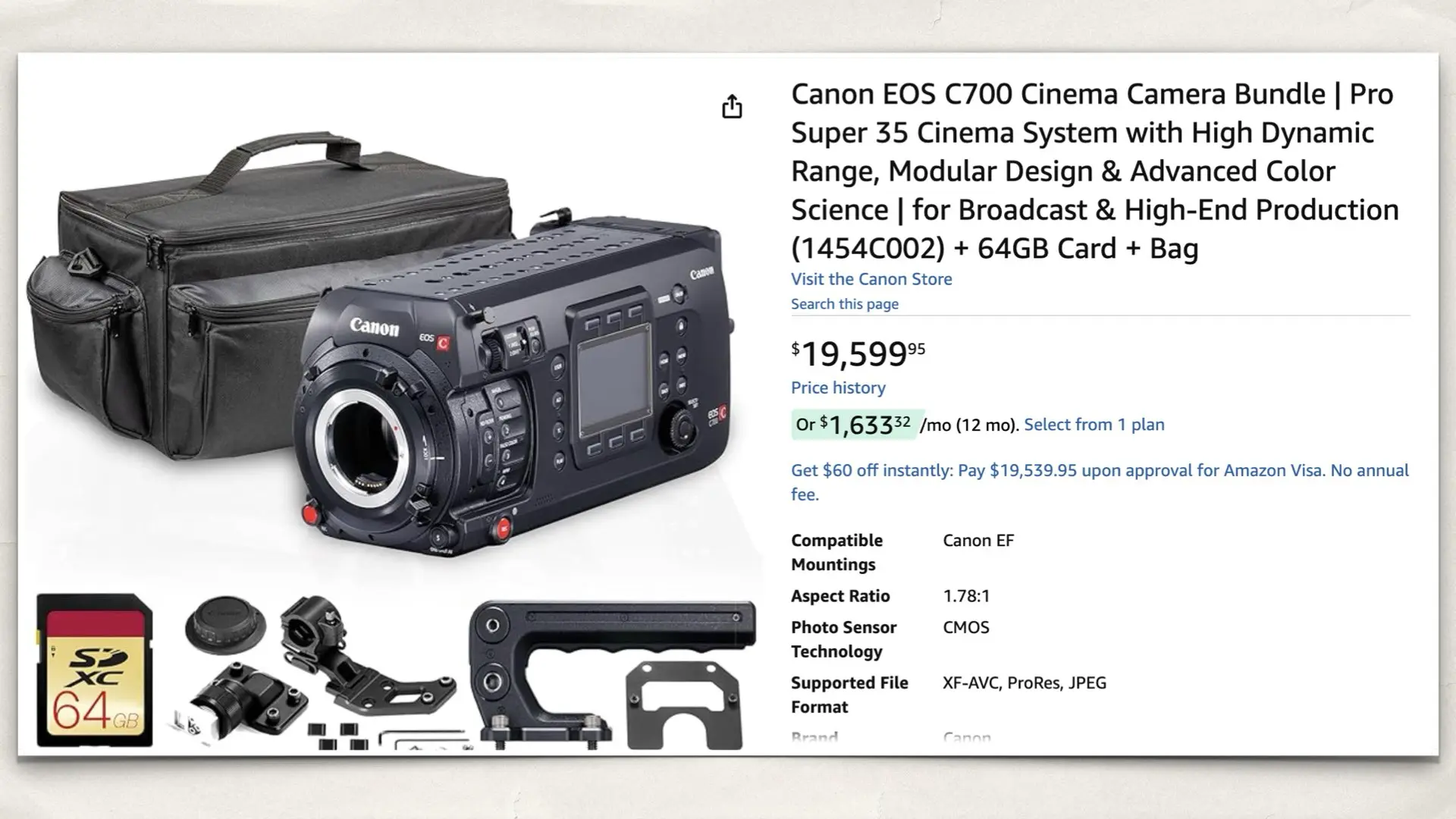
The Amazon listing appears to reflect legacy pricing rather than current market valuation. The inclusion of a 64GB card and bag does not materially change the equation at this level. This is not a discounted clearance opportunity. It is a premium-priced legacy system. If the camera were positioned closer to $12,000 to $14,000, it would enter a different conversation as a discounted professional image tool. At nearly $20,000, it occupies an uncomfortable middle ground. It is neither a bargain nor a forward-looking flagship.
Final assessment
The Canon EOS C700 remains a capable cinema camera with strong color science and professional construction. Its image can still meet high production standards. However, pricing must reflect technological evolution and market demand. At $19,600 in 2026, the listing feels disconnected from the broader cinema camera landscape. The camera is not obsolete in terms of image quality. It is misaligned in value. Or should we wait for the Mark II version?2
As an Amazon Associate, Y.M.Cinema earns from qualifying purchases. If you purchase through the Amazon links above, Y.M.Cinema may earn a small commission at no additional cost to you. This helps support our work.
Here are the products mentioned in this article and the buttons to buy them on Amazon.
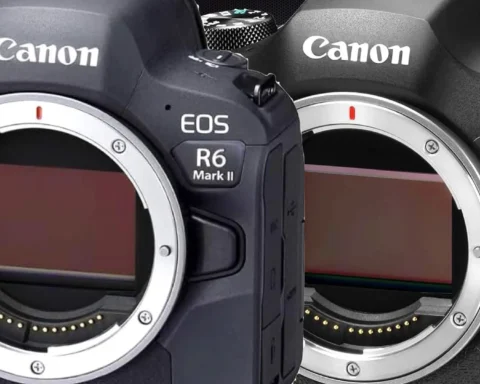









The Canon C500mk2, Canon C300mk3, or Canon C80 just makes far more sense for most Canon Cine Camera buyers in 2026