

Nikon’s latest patent reveals more than a clever way to send RAW over HDMI. It might be a quiet but strategic signal that the company is preparing to reshape its entire video pipeline, and RED’s compressed RAW technology could be at the heart of it.

A New Signal from Nikon — Literally
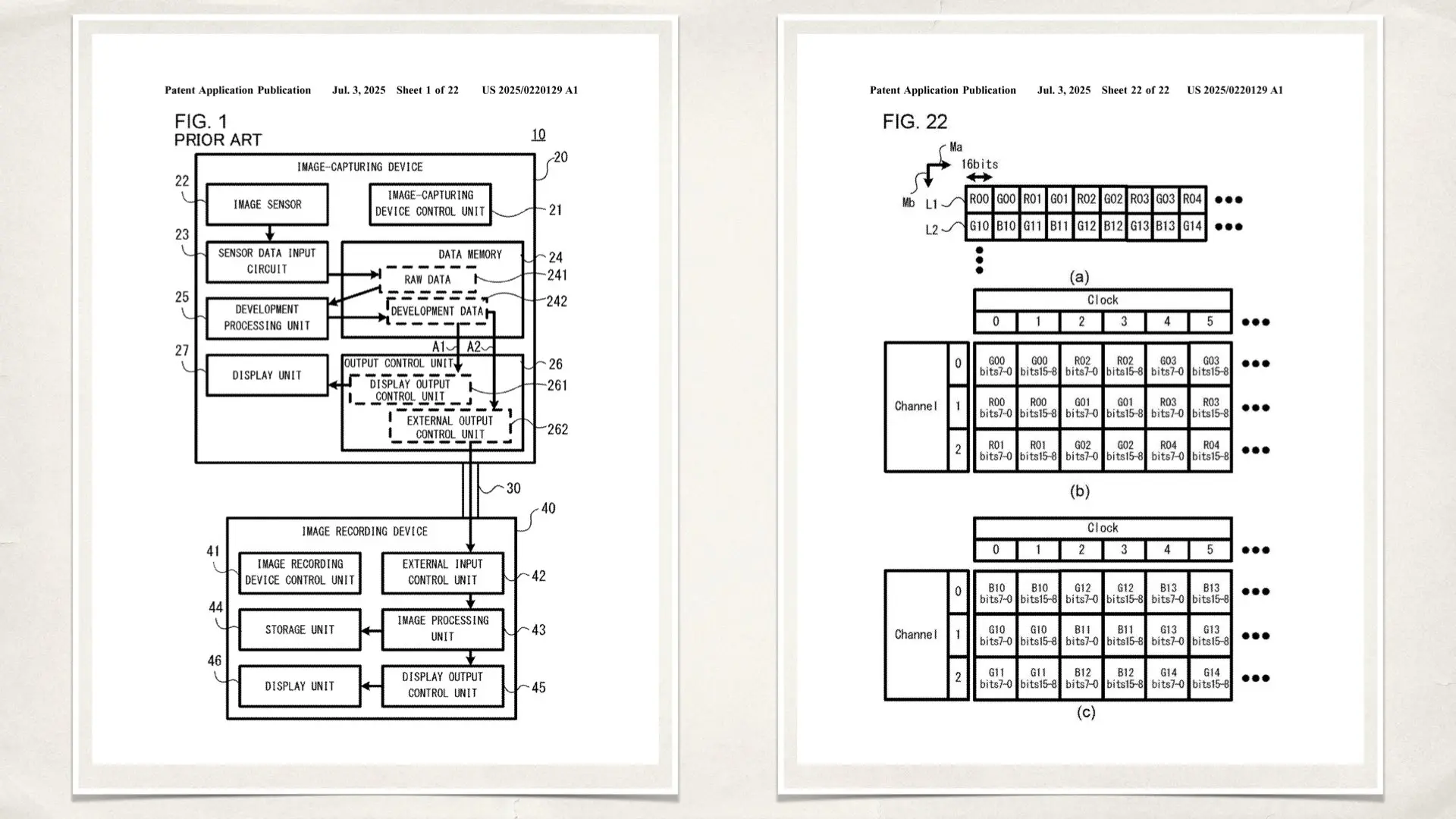
A recently published Nikon patent titled IMAGE-CAPTURING DEVICE AND IMAGE TRANSMISSION RECORDING SYSTEM describes a method for transmitting RAW sensor data via HDMI, cleverly embedding it inside standard YUV video streams. On paper, it sounds technical. In reality, it could represent the start of a major shift in how RAW video is handled, not just by Nikon, but across the industry. Until now, RAW over HDMI has largely depended on proprietary pipelines, such as Nikon’s own collaboration with Atomos for ProRes RAW. But this patent outlines a more open and flexible solution, one that could make RAW video workflows more accessible, more affordable, and perhaps most importantly, more Nikon-native.

An image-capturing device includes: an image sensor that captures an image of a subject to output an image-capturing signal; a development processing unit that generates development data based on the image-capturing signal; and an output control unit that outputs the development data to an external device in a predetermined transmission format via a connecting member that connects the image-capturing device to the external device. The output control unit outputs the image-capturing signal to the external device via the connecting member in the predetermined transmission format.
– From the Nikon’s patent: IMAGE-CAPTURING DEVICE AND IMAGE TRANSMISSION RECORDING SYSTEM
What the Patent Actually Describes
At its core, the patent introduces a technique for mapping RAW pixel data into the structure of a conventional HDMI signal — like YUV422 or YUV444. Instead of sending traditional color-processed video, Nikon proposes embedding RAW values (e.g., R, G, B) directly into the output stream. Think of it as RAW-in-disguise — riding inside a pipeline originally meant for finished video. This would allow an external recorder to extract and process the full RAW data stream, assuming it understands the structure. No proprietary handshake. No locked ecosystem. Just signal and data.
But Wait — Doesn’t the Z9 Already Do RAW?
Yes, it does. Nikon’s flagship Z9 records N-RAW and ProRes RAW internally to CFexpress media — a first for the company and a big win for creators. So why the need for RAW-over-HDMI?
Because internal and external workflows serve different needs.
-
Live broadcast and on-set monitoring
-
Redundant recording
-
Use with larger recorders or cloud-connected hardware
-
Future-proofing the signal pipeline for compressed RAW transmission
And that last point is key. Because Nikon’s new patent arrives just months after it made an unexpected — and game-changing — move…

Enter RED: The Hidden Link to This Patent
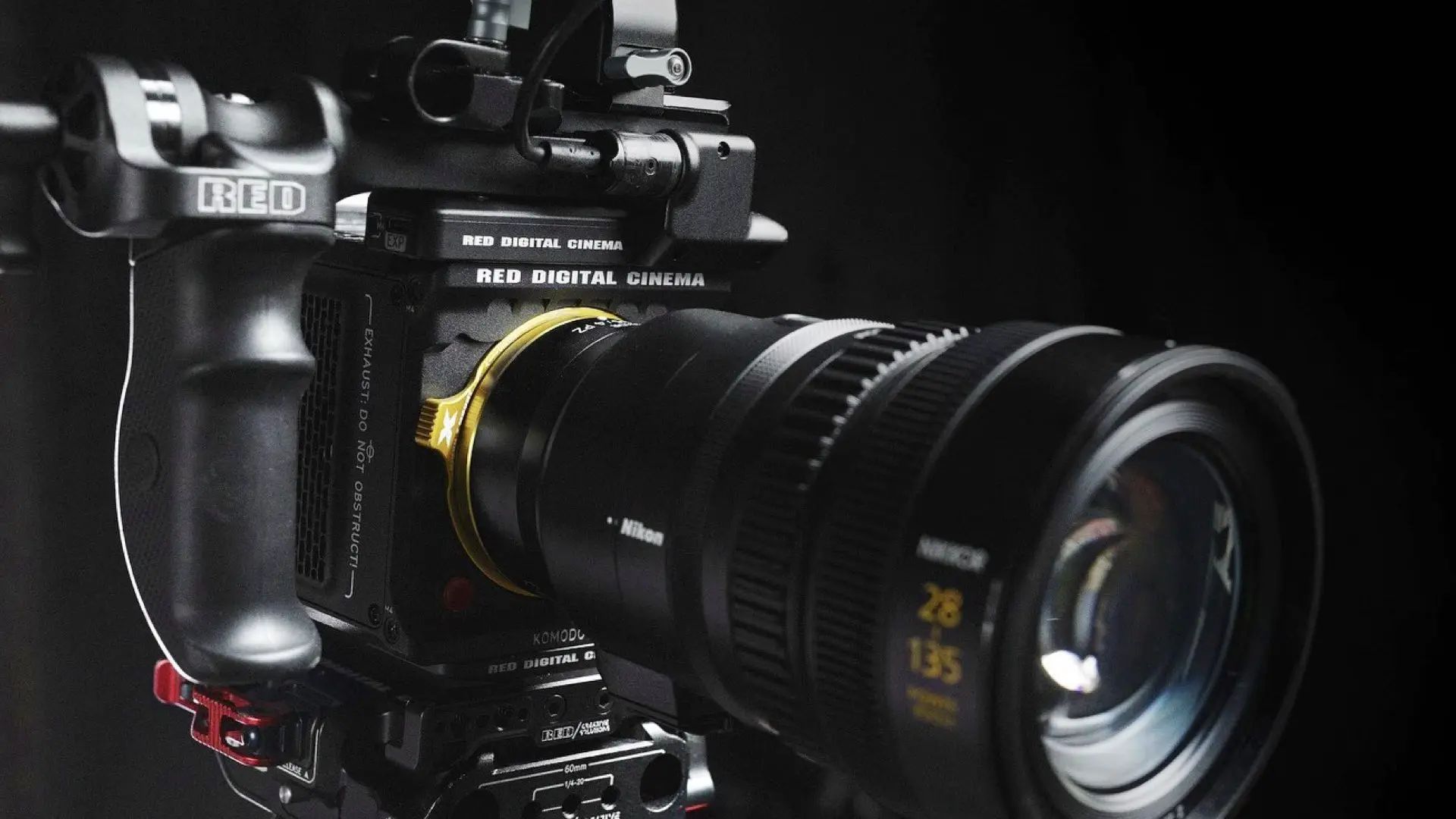
In March 2024, Nikon acquired RED Digital Cinema, including its legendary portfolio of patents, especially those tied to compressed RAW workflows, like REDCODE.n This includes the heavily litigated U.S. Patent No. 9,245,314, which RED used to challenge Apple, Sony, and others over RAW compression IP. That IP now belongs to Nikon. So while this new patent doesn’t explicitly mention RED, its timing and structure strongly suggest a strategic foundation for combining compressed RAW encoding with universal HDMI output — a killer combo Nikon couldn’t attempt before owning the rights.
What This Patent Could Enable
If Nikon uses this new HDMI transmission method alongside RED’s compressed RAW algorithms, here’s what it could mean:
| Feature | Before (Z6/Z9 HDMI RAW) | After (Future Nikon via this patent) |
|---|---|---|
| Recorder Requirement | Atomos-only | Possibly any recorder |
| Licensing | Apple (ProRes RAW), Atomos | None, Nikon/RED-owned stack |
| Signal Type | Proprietary RAW stream | RAW disguised in YUV container |
| Compatibility | Limited | Broad, open potential |
| Compression | ProRes RAW/N-RAW | Possibly REDCODE-based or new format |
It’s a vision of freedom from codec politics. And it makes Nikon one of the only camera manufacturers with the legal firepower to pursue it.
Could This Be Firmware-Enabled?
It’s unlikely for most existing cameras. The technique requires deep-level access to the image pipeline and HDMI encoder, something many Nikon bodies simply weren’t designed for. But for future cameras? Absolutely. This looks like foundational tech for Nikon’s next-generation hybrid or cinema camera, something that could transmit compressed or uncompressed RAW over HDMI, without extra licenses or recorder lock-in. Even the Nikon Z9, which already handles internal N-RAW beautifully, might not support this exact system unless its HDMI circuitry was designed with it in mind.
The Bigger Picture: Nikon’s Future in Cinema
This patent shows that Nikon is plotting a different path entirely.
By combining:
-
Internal recording (N-RAW, ProRes RAW)
-
External HDMI transmission of RAW in standard formats
-
Full ownership of RED’s compressed RAW IP
Nikon is building a complete, end-to-end RAW ecosystem, one it controls from sensor to screen. And that’s a big deal. Because in a world of streaming-first productions, cloud workflows, and open hardware, the ability to transmit RAW easily and freely is going to be just as important as the ability to record it.

Final Thought
Nikon is preparing for a future where RAW isn’t restricted. And with RED’s IP in its arsenal, the company might just become one of the most disruptive forces in cinema camera technology in years. Stay tuned. Nikon’s next move might be even bolder.
Further Reading on YMCinema
-
Nikon Z Cinema: A New Era or a Risky Bet Against Sony and Canon?
-
RED V-RAPTOR X Z-Mount: A Groundbreaking Move Following Nikon’s Acquisition
-
Nikon’s Sensor Breakthrough: A Move Toward Independence and Cinema















“Could This Be Firmware-Enabled?”
No, it’s not possible with a simple firmware modification. You need hardware acceleration to compress in raw (lowercase, not uppercase) at any reasonable framerate, and the current lossy raw compression is another algorithm entirely.
So they’d need to replace the EXPEED 7 if they wanted a switch. This might be possible by servicing camera, but would it really be worth it, and would it be the right strategy on the old Z9? Unlikely. Perhaps on some of the newer cameras. It’s also early for that, unless Nikon had been working very quickly or started before the acquisition was official (which is not impossible).
The compression pipeline, especially for RAW (compressed or otherwise), typically relies on dedicated silicon. Nikon’s EXPEED 7 was built long before the RED acquisition, so retooling it for something like REDCODE would likely require a new ASIC or FPGA logic.
Firmware alone wouldn’t cut it, at least not for real-time, high-frame-rate encoding. This makes it more probable that Nikon is laying the groundwork for future bodies, not retrofitting the Z9.
That said, the patent doesn’t exclude internal compression, it focuses on external RAW transmission over HDMI using standard signal containers, which could be implemented without full REDCODE-level compression. But if Nikon’s planning a full stack (sensor → compressed RAW → recorder), then yes, a new processing pipeline would be essential.
Curious to see if Nikon already had this in motion before the RED deal, as you noted, or if we’re witnessing the start of their cinema roadmap from the ground up.