Vivo just put a new mixed reality headset in front of real people in China. It is a guided demo called Vision Discovery Edition. Vivo describes the experience as a Giant Mobile Cinema. The signal is bold. Comfort and mainstream pricing are the headlines. Content and creator tools will decide the outcome. What are the differences between this and the Vision Pro? Let’s see.

What Vivo is actually launching
This is a structured in store demo tour. Not a retail release yet. Visitors book a session. Try the headset in a curated flow, and give feedback. It is a very different go to market from Apple’s premium first approach with Vision Pro. The bet is simple: Prove comfort and immersion. Then scale when the content and price are ready. For context on Apple’s content problem and early positioning, see Why Apple Has Failed With The Vision Pro.
The hardware direction
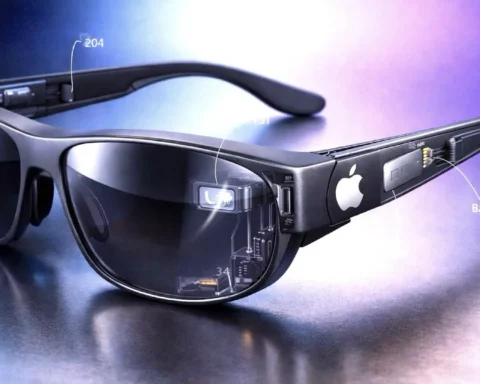
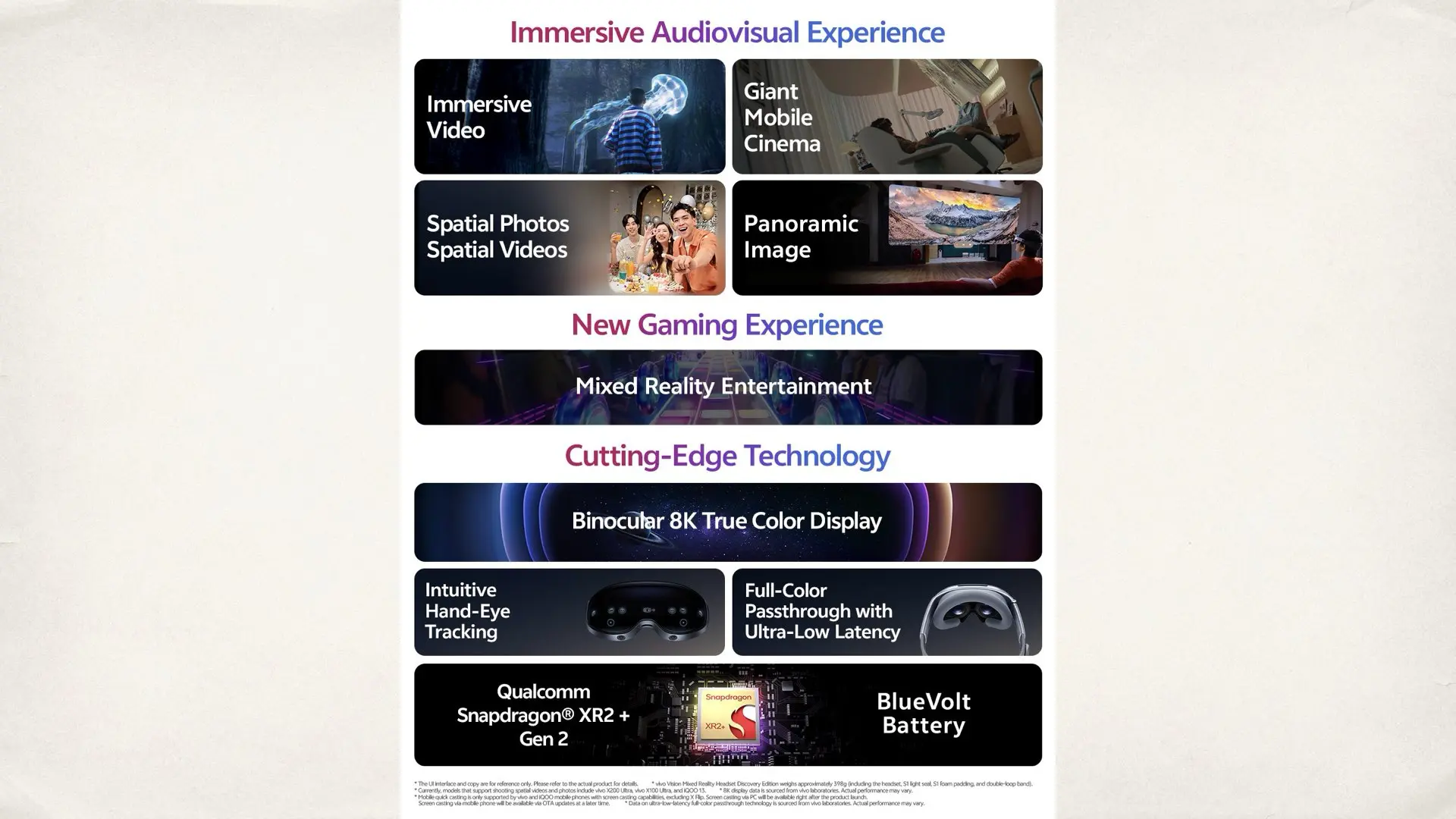
Vivo’s visor aims to be light on the face with an external power pack to move weight off the head. Expect dual micro OLED displays. precise eye tracking. and natural hand input. The chipset is in the Snapdragon XR class. which is efficient and tuned for spatial experiences. The design language follows the comfortable cinema viewer idea first. Heavy desktop-style apps later. For a look at why Apple’s bigger compute headroom still has not translated into must-watch spatial shows, read Why Apple’s Vision Pro Failed. The Struggle Of Immersive 3D Cinema To Capture The Public.

Why Vivo is framing it as a “Giant Mobile Cinema”
Vivo is naming the core use case up front. Sit down, watch immersive sports. concerts. and movies. and jump into panoramic views. That is a smart narrative for a first-time audience. It sets expectations around comfort, clarity, and battery life, and it avoids the trap of promising a full desktop replacement on day one. It also places pressure on content partners to deliver repeatable programming, which is exactly where Vision Pro has struggled. For the broader argument on content scarcity, see Why Apple Has Failed With The Vision Pro.
Pricing and timing signals
Vivo is hinting at a mainstream ticket that sits closer to flagship phones than to high-end computers. That would widen the audience fast if the experience holds up. The Discovery Edition label suggests a long runway. Expect more beta demos, iterative hardware tweaks, and developer outreach before a full retail push. That is a patient play, and it mirrors how camera makers validate new systems before global release. For how competitors may try to hit mass audiences from other angles. For instance, check Canon’s AR VR Glasses Patent. A Counterstrike To Apple Vision Pro Aiming At The Masses.
The creator pipeline is ready. The catalog is not
The tools to capture and finish great spatial video now exist. Blackmagic’s URSA Cine Immersive workflow and Resolve updates give filmmakers a clean path from set to headset. That removes a major excuse. The remaining gap is greenlighting and funding shows that people will actually watch. For a deep dive on the production chain and what the next wave could look like, read Blackmagic URSA Cine Immersive Powers Apple Vision Pro’s Next Leap.
How it stacks up with Apple Vision Pro
Comfort and mass. Vivo is clearly chasing a lighter feel with an external pack. Apple remains heavier, balanced by a dual strap. Apple’s M series enables complex multi app workflows. Vivo is focused on efficient spatial media and utility apps first. Regarding the displays and optics: Both pursue high density micro OLED and precise eye tracking. Apple’s passthrough polish is proven in shipping units. Vivo’s demos will tell us how close it is. Catalog: Apple’s library is thin for the time invested. Vivo must secure sports, concerts. and documentary partners before a retail launch. For why this content keeps stalling adoption, you can check out our article Why Apple’s Vision Pro Failed. The Struggle Of Immersive 3D Cinema To Capture The Public.