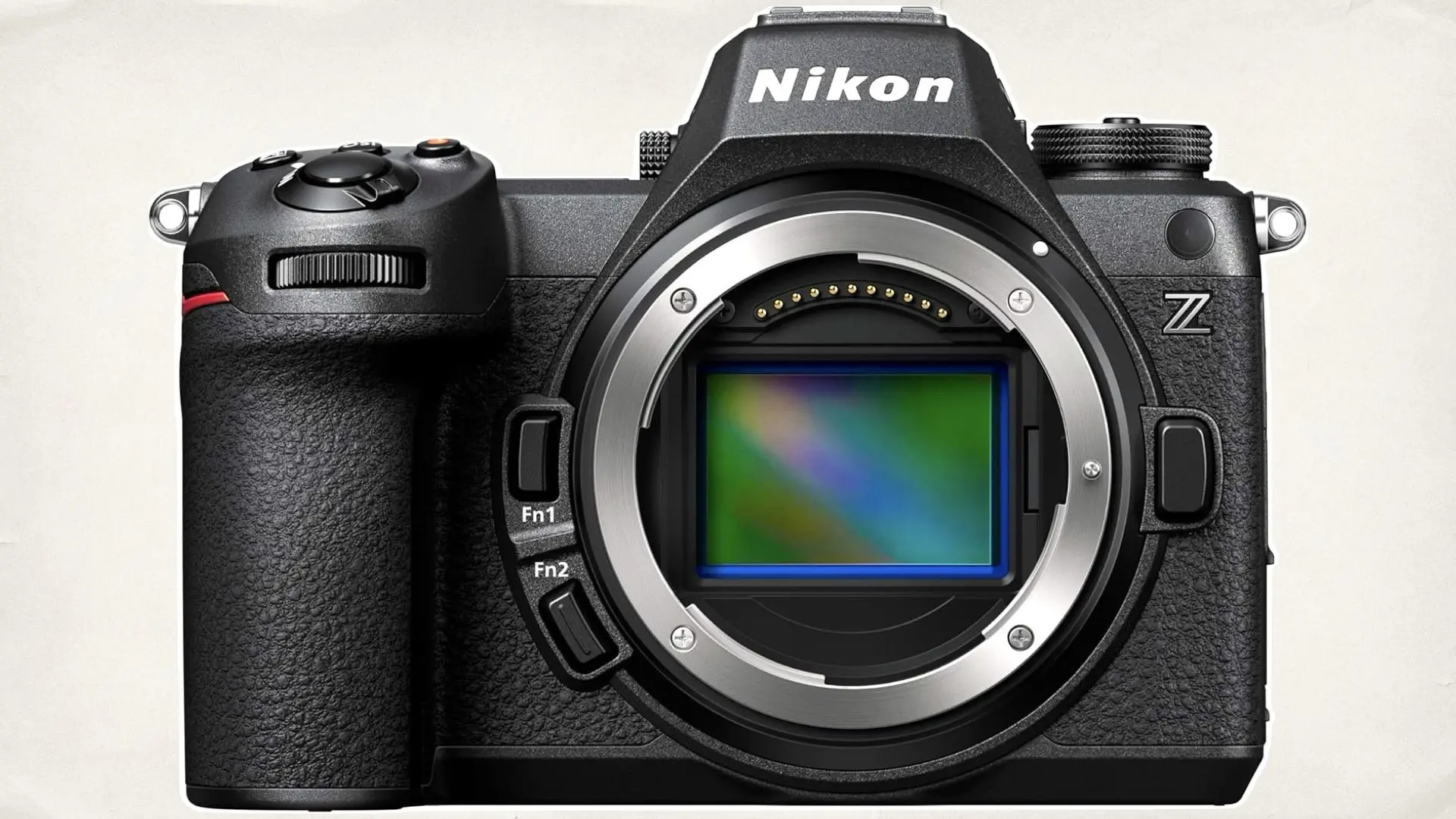
Nikon has already staked its ground in cinema with the bold announcement of the Z Cinema. But beneath the headlines and spec sheets lies a quieter story. A newly surfaced patent reveals that Nikon has been re-engineering the very heart of its Z-mount to handle the extreme demands of filmmaking. This upgrade is not cosmetic, but it is the hidden electrical backbone that could decide whether Nikon can compete with Sony and Canon in the professional cinema market.
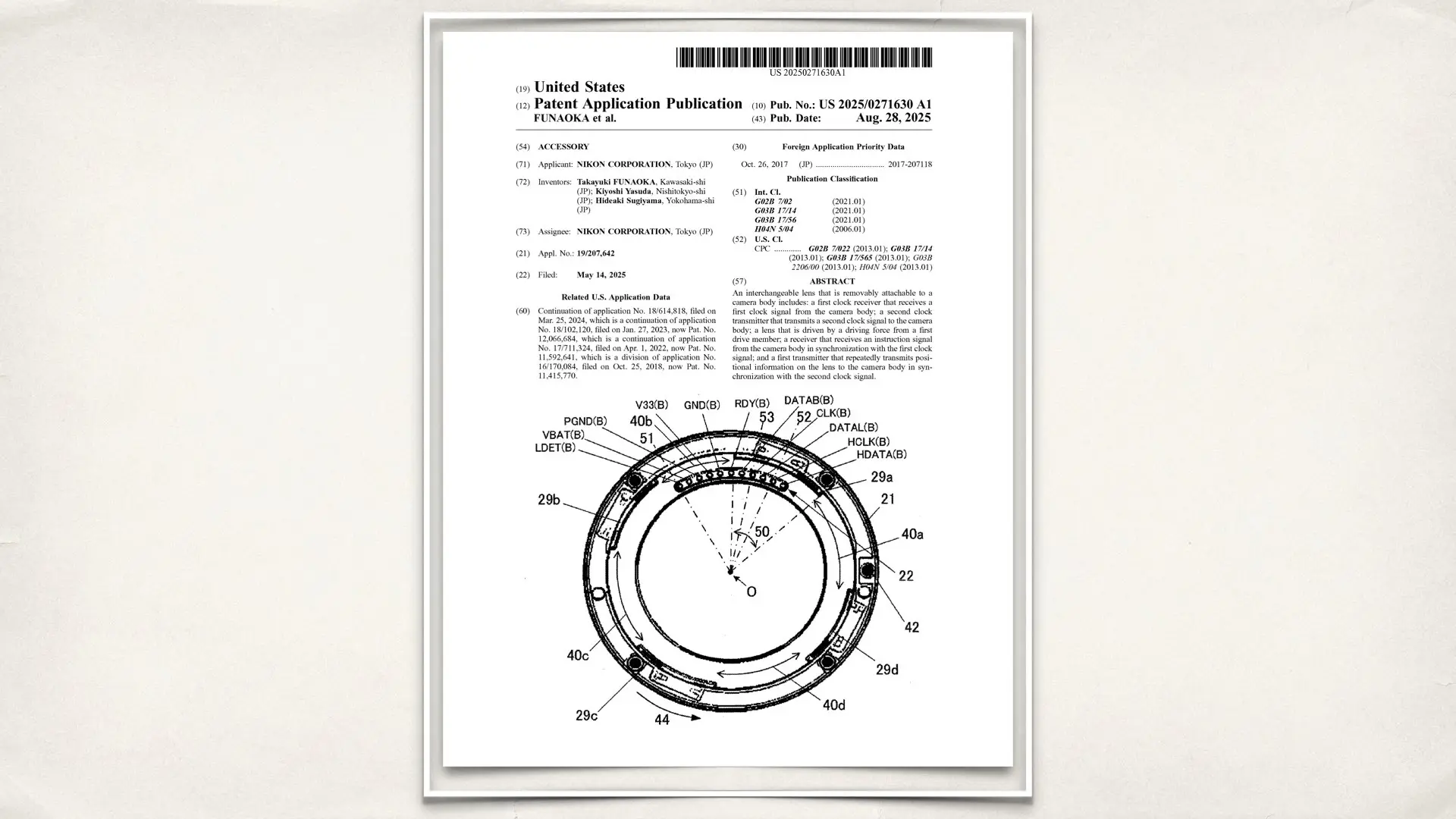
Dual-clock communication for cine precision
The patent describes a system where the lens and camera body communicate on two parallel paths. One is a command channel clocked by the camera. The other is a hot-line telemetry channel clocked by the lens, capable of running at up to 20 MHz. That means the camera can continuously receive real-time updates on the exact position of focus groups, VR elements, and aperture blades. For cinematographers, this translates to faster autofocus tracking, smoother iris transitions, and rock-solid stabilization. This aligns with Nikon’s broader push to optimize performance for moving images. As covered in Nikon in the cinema world, the company has been methodically reshaping its ecosystem to deliver reliability in film production rather than just still photography.

Fighting noise and wear with smart engineering
The document spends pages on something most shooters never think about: terminal placement. High-voltage power pins are deliberately isolated from delicate data lines, while readiness signals (used to detect if a lens can communicate) are buffered by stable ground and data pins. Nikon even accounted for wear: the most critical clock pins are pressed harder by the bayonet springs, ensuring reliable contact even after thousands of lens changes. This kind of detail may sound arcane, but on a film set, it is the difference between a smooth shoot and a lost take. Nikon knows that cinema demands a mount that is not only fast but also unshakably stable.

A system built for accessories
The patent avoids saying “lens” exclusively, instead using the broader term “accessory.” That covers teleconverters, extension rings, and — most importantly for cinema — smart adapters. The Z Cinema could eventually rely on this advanced interface to integrate PL or third-party cine glass with full metadata support. Nikon’s willingness to expand Z-mount functionality signals its intent to challenge Canon’s RF ecosystem and Sony’s E-mount, both of which already have strong cine pipelines.
Connecting the dots
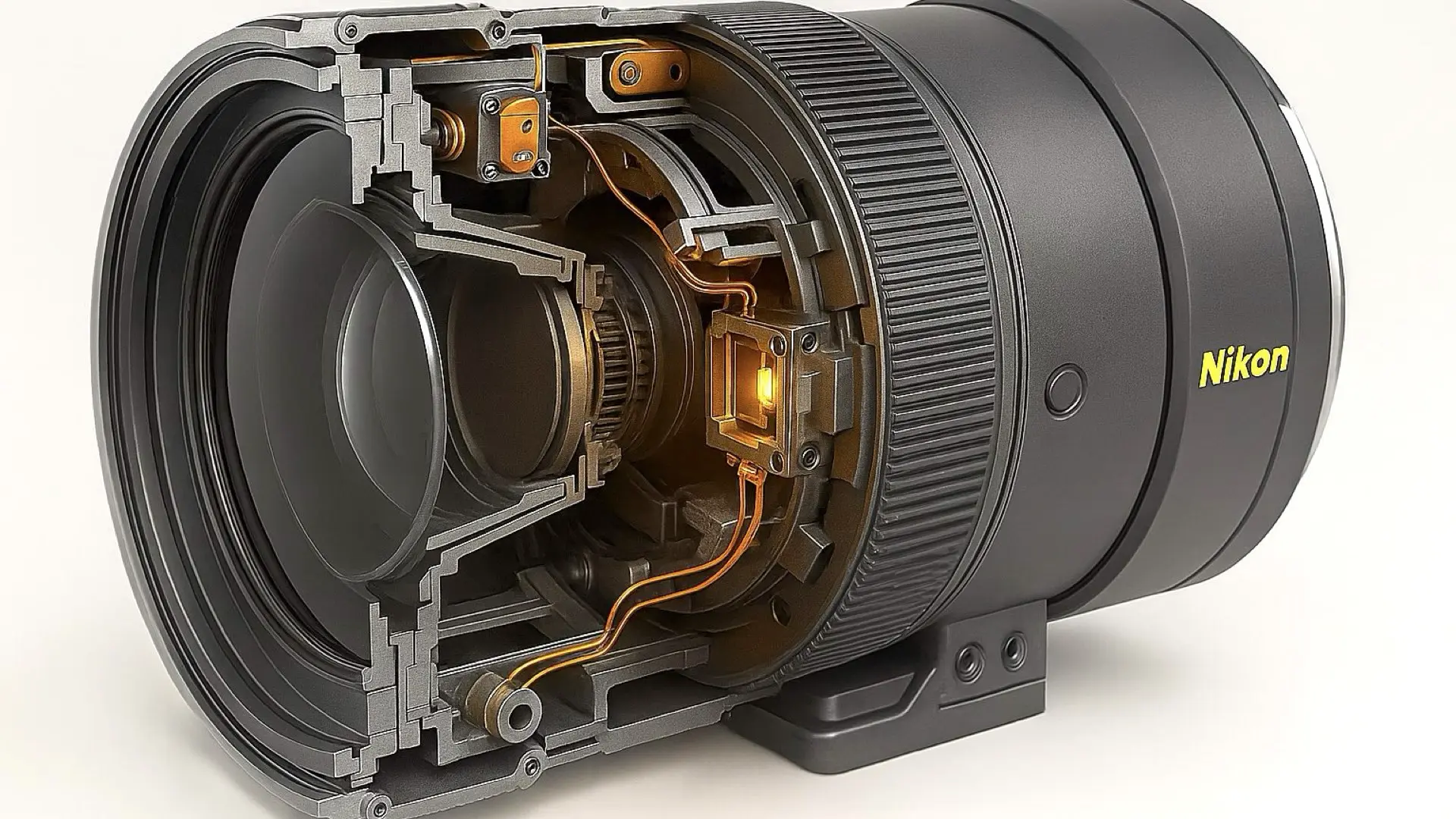
This isn’t Nikon’s first hint at pushing Z-mount electronics further. Earlier patents hinted at massive autofocus gains even during movement and even a potential RAW workflow tied to RED’s tech. Put together, these filings outline a coordinated strategy: Nikon is rebuilding the mount, data flow, and lens integration needed to sustain a professional cinema line for the long haul. The Z Cinema is Nikon’s first bold move into professional filmmaking. But it is patents like this that show the company is thinking long-term. By upgrading the Z-mount with high-speed, noise-resistant, and wear-proof communication, Nikon is laying the foundation for a true cinema ecosystem. The hidden Z-mount upgrade may prove to be the quiet innovation that powers Nikon’s cinematic future.