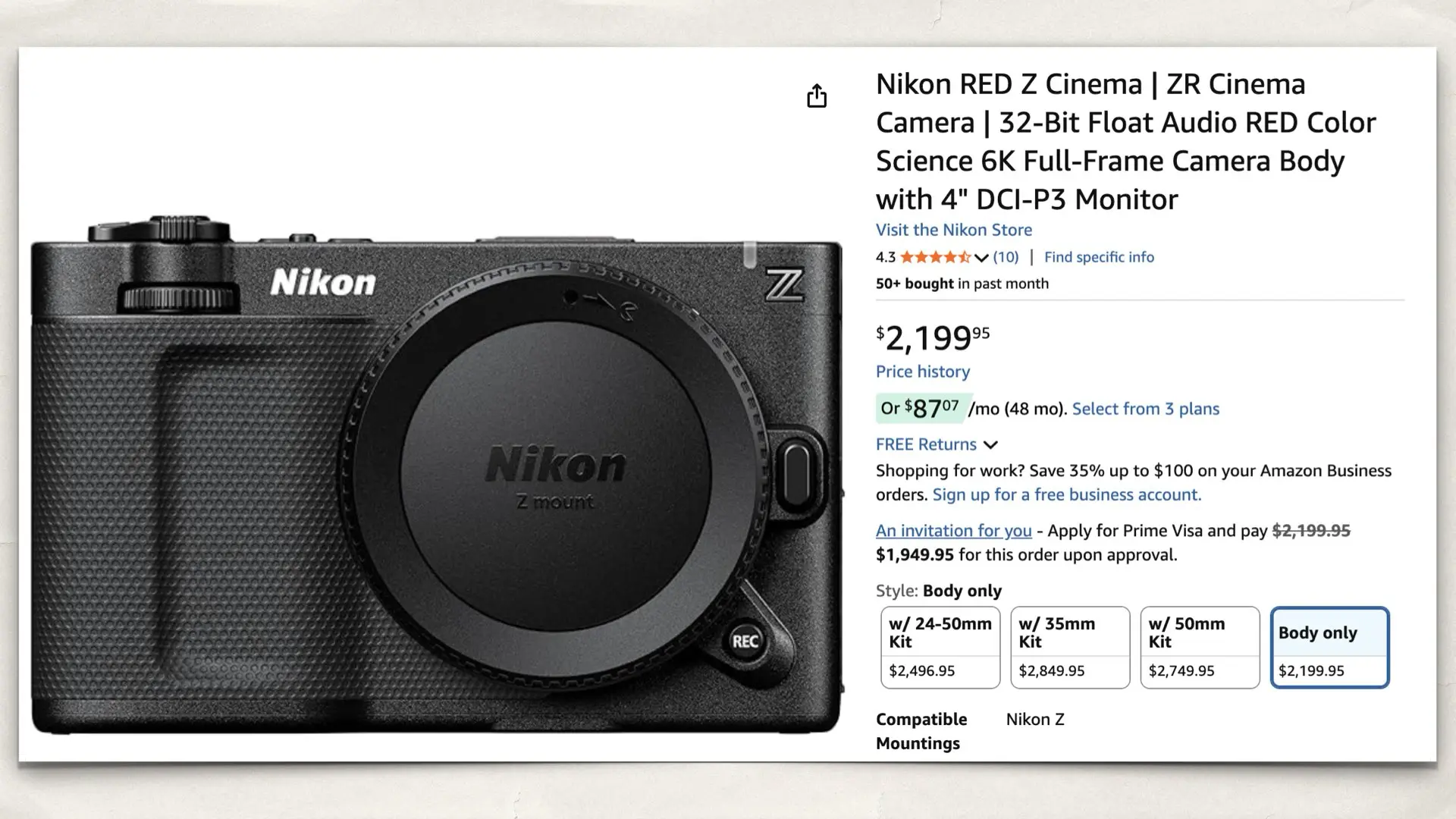
A surprising 1-star Amazon review for the Nikon ZR recently caught attention. The reviewer wrote:
The camera is fully functional but the sensor arrived loose inside the camera body. Now the return takes 30 days to refund and Nikon USA won’t help since it’s an Amazon purchase.
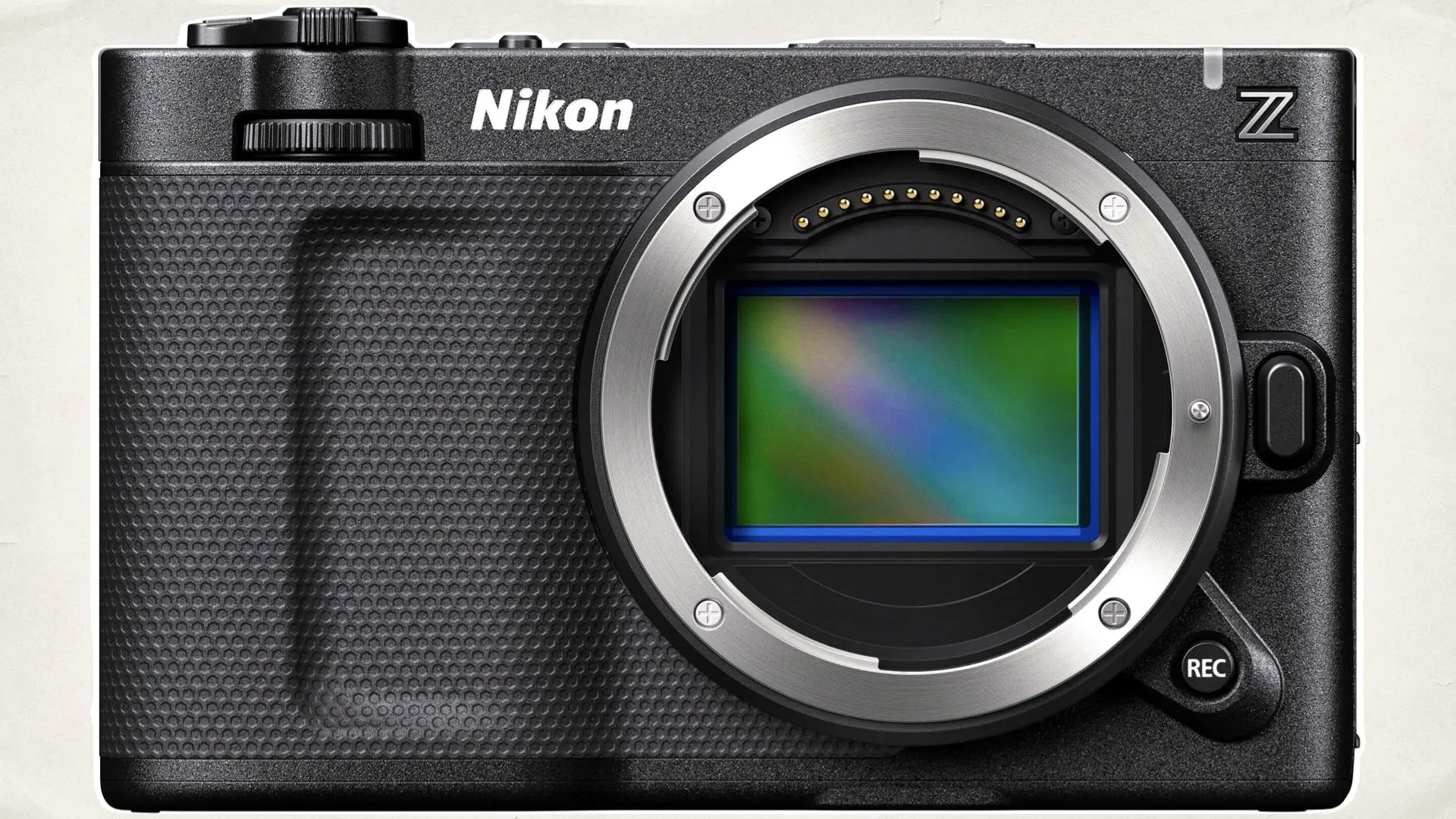
That sounds serious. But what the user described is actually a normal behavior of cameras equipped with IBIS — In-Body Image Stabilization. This system physically moves the image sensor to counteract hand motion and vibrations. When the camera is turned off, the sensor is free to float slightly within its magnetic suspension. It’s not broken. It’s designed that way. This distinction is especially important now, as Nikon pushes further into the professional video space. As explained in Nikon Cinema: Push & Financial Outlook, Nikon’s hybrid strategy depends on confidence in its engineering. Misunderstood reviews can damage that trust faster than any technical flaw.

What IBIS actually does
In-Body Image Stabilization (IBIS) is a technology that shifts the camera’s sensor in real time to offset motion detected by internal gyroscopes. Unlike optical stabilization in lenses, IBIS corrects shake directly at the imaging plane. It allows sharper stills and smoother video even when using non-stabilized lenses. The Nikon ZR’s sensor assembly is suspended on electromagnetic actuators that move across five axes. When the camera is off, those magnets lose power, allowing the sensor to move freely. That soft rattle or slight shift you feel is simply the unpowered suspension system doing what it was built to do. When the camera turns on, the IBIS magnets engage, locking the sensor at its center point and actively stabilizing it. The same mechanism underpins Nikon’s professional cinema ambitions. As covered in Nikon RED ZR Cinema 1: New Release (Amazon), the ZR incorporates RED-level stabilization and processing. Its floating sensor is part of that lineage, not a design flaw.
What real users are saying
In that same Amazon thread, another verified purchaser posted a detailed correction:
Note that I bought mine from Best Buy and I am posting to clarify on the floating sensor design used in this camera. For people who are new to cameras with floating sensors, note that the in-body image stabilization (IBIS) is not locked when the camera is turned off, so the sensor will move around when it is off. That is by design. It is not broken.
That statement perfectly summarizes how IBIS works across all major camera systems — Nikon, Sony, Canon, Panasonic, and Fujifilm included.
When a loose sensor might be a real issue
The only time to worry is if you hear a heavy metallic clunk, feel excessive play, or notice tilted or vibrating imagery while the camera is powered on. That could mean impact damage. But a gentle shift when powered off is normal for any IBIS-equipped system. It’s worth remembering that perception influences sales as much as performance. As detailed in Top 5 Nikon Best-Selling Cameras (Amazon) – October, small drops in ratings can move a product down Amazon’s algorithm quickly, even when the cause is a misunderstanding like this. So, if your Nikon ZR feels like the sensor moves when off, try this: power it on, enable IBIS, and gently tilt the camera. The motion will vanish as the magnets engage. Then review your footage or stills. You’ll see that the system compensates beautifully. You can even test stabilized performance using the downloadable R3D samples in Nikon ZR R3D Sample Download.

Final thoughts
A floating sensor is the heart of Nikon’s stabilization technology, not a sign of poor assembly. Educating buyers about IBIS helps prevent misinformation from snowballing into reputation damage. The ZR remains a groundbreaking hybrid camera that delivers cinema-grade performance with mechanical precision.
📦 See the Nikon ZR on Amazon.
As an Amazon Associate, Y.M.Cinema earns from qualifying purchases. If you purchase through the Amazon links above, Y.M.Cinema may earn a small commission at no additional cost to you. This helps support our work.