
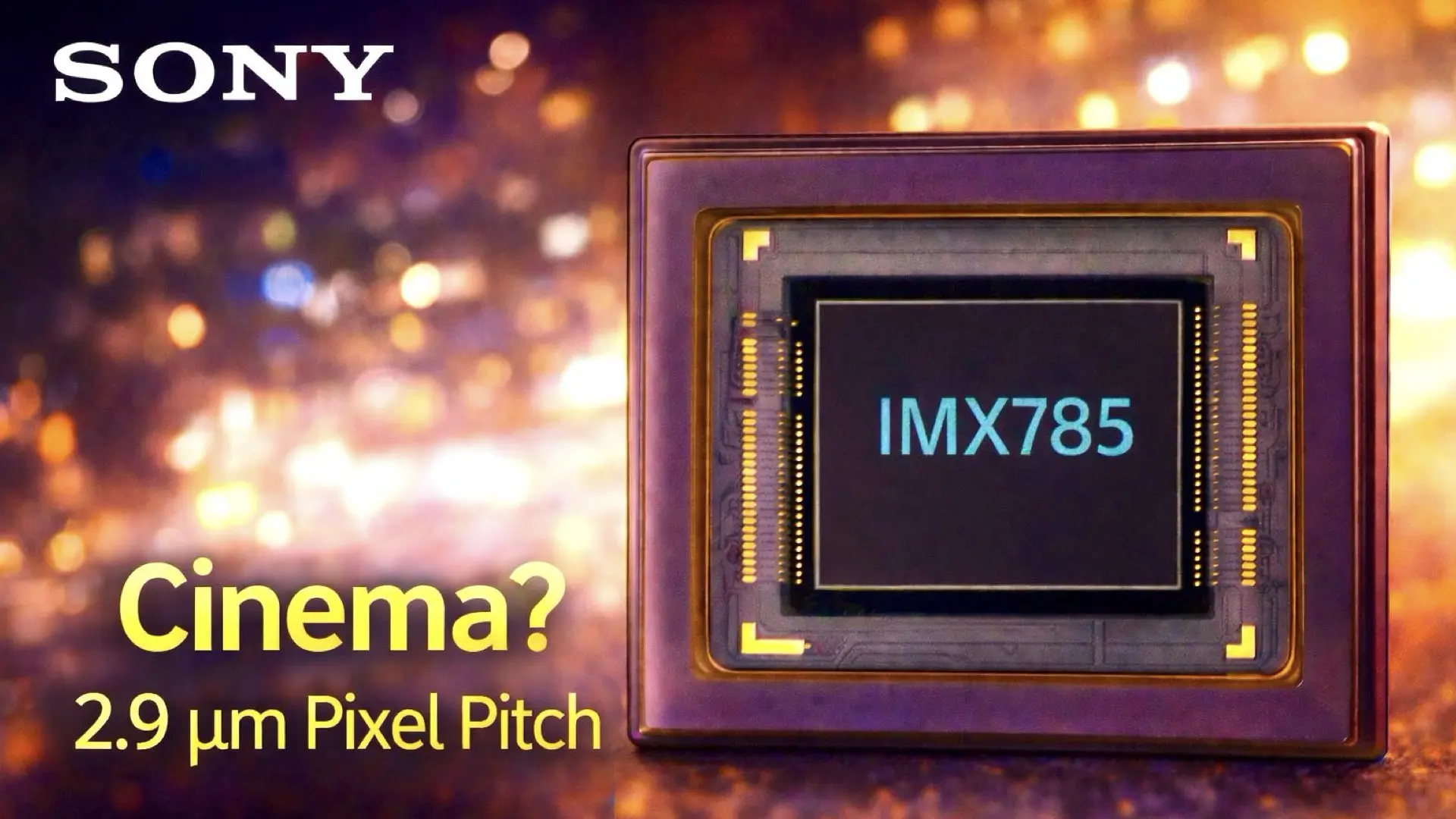
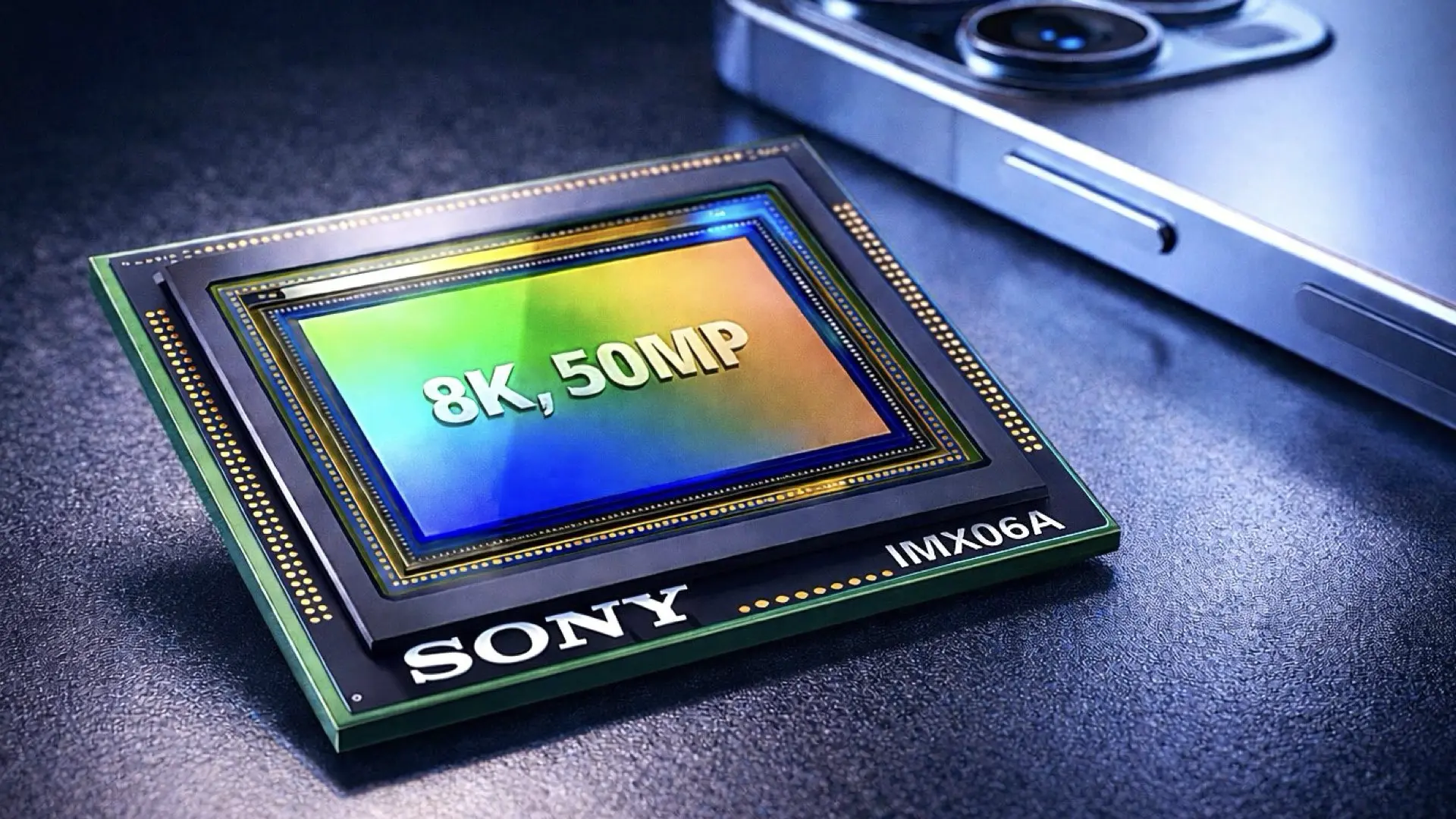
One week, Sony talks about a 50 MP flagship smartphone sensor. Now it announces a 5 MP sensor with massive 2.9 µm pixels. Something interesting is happening. Earlier this month, we analyzed Sony’s push into higher resolution mobile imaging in our coverage of the Sony 50 MP sensor for flagship smartphones. That announcement followed the expected path of more resolution, more detail, and stronger marketing positioning. The newly announced IMX785 moves in the opposite direction. Lower resolution, larger pixels, deeper emphasis on dynamic range, and it was not even designed for phones. Yet from a cinema perspective, this may be the more relevant sensor.
The specs that actually matter
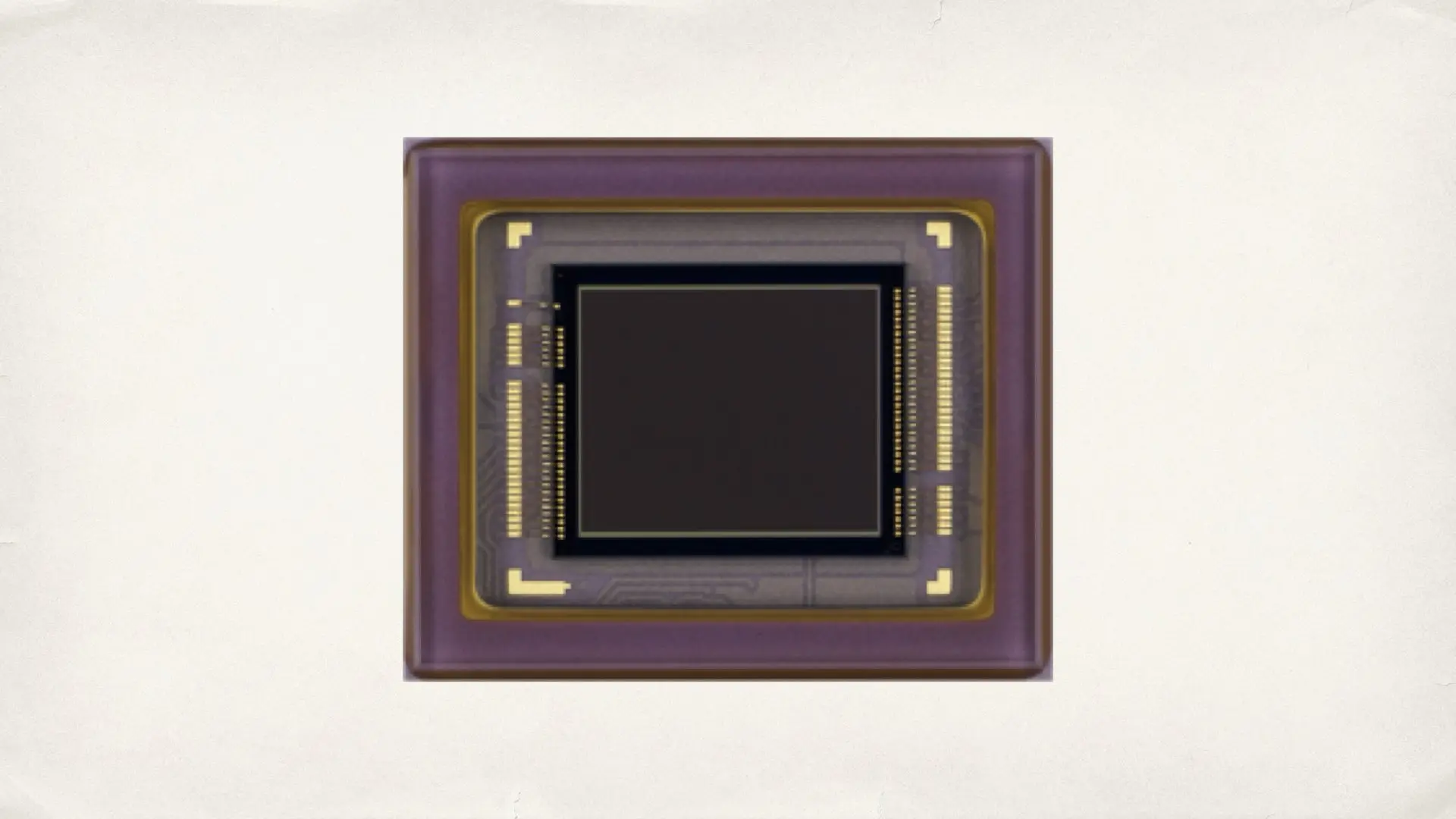
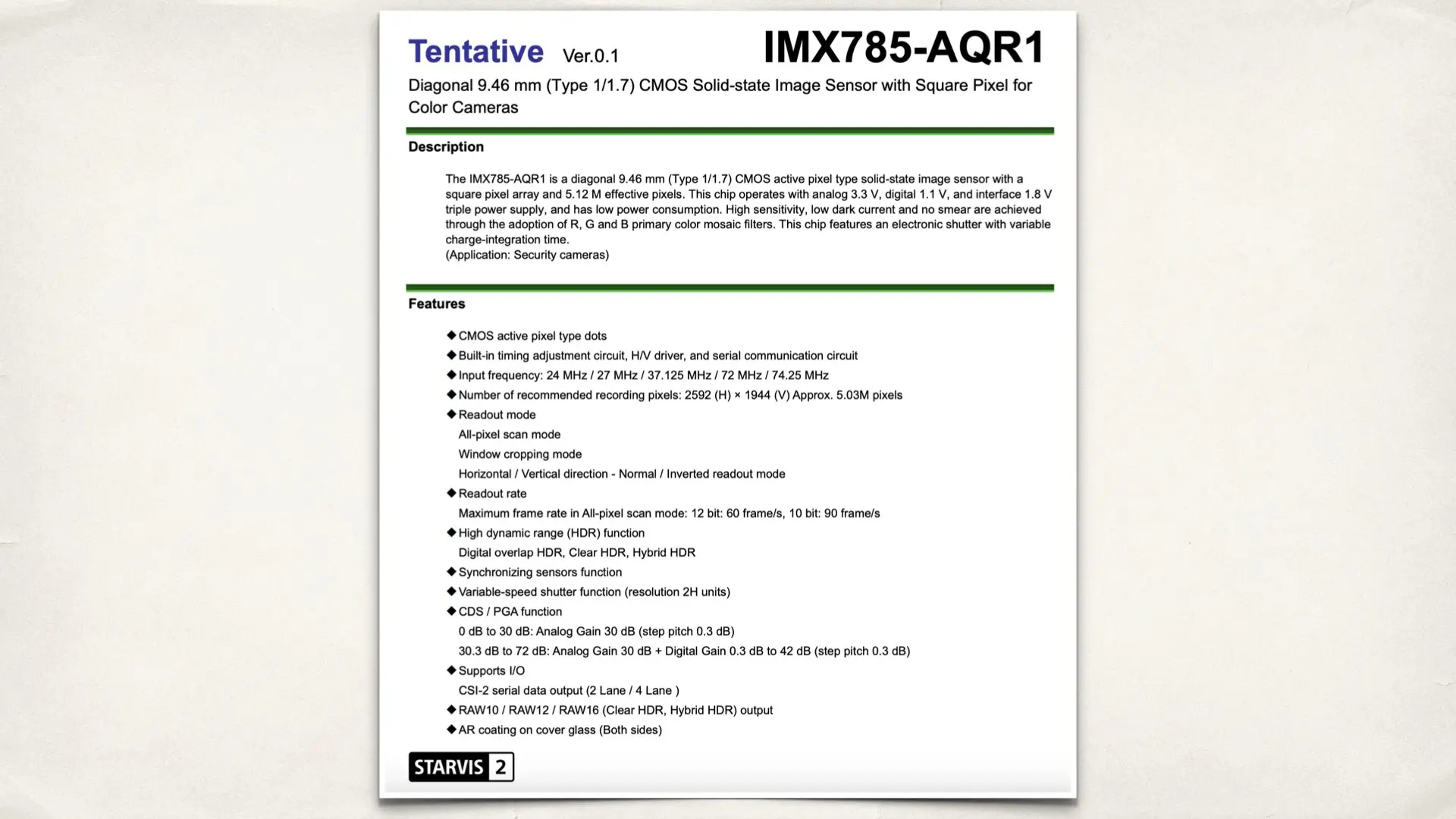
The IMX785 is a Type 1 over 1.7 sensor with approximately 5.12 MP resolution and a 2.9 µm pixel pitch. It supports up to 90 fps at 10-bit and 60 fps at 12-bit readout, built on STARVIS 2 back-illuminated architecture with multiple HDR modes. In 2026, 5 MP sounds modest. In terms of light physics, it is substantial. A 2.9 µm pixel is dramatically larger than the 1.0 to 1.2 µm pixels common in high-resolution smartphone sensors. Larger pixels collect more photons per exposure. That increases full well capacity. Higher full-well capacity improves highlight retention and signal-to-noise ratio. That directly influences tonal roll off, shadow detail, and low-light integrity. These are the elements that define cinematic rendering far more than headline resolution numbers. The 12-bit pipeline at 60 fps is also significant. Bit depth controls how precisely tonal transitions are encoded. When paired with strong single exposure dynamic range, it allows smoother gradients and more stable color in complex lighting. This is not a resolution-driven sensor but a photon efficiency-driven sensor.
Why this feels closer to cinema than mobile
Cinema sensors are not optimized around megapixel marketing. They prioritize dynamic range, noise floor, highlight behavior, and motion stability. Security sensors, interestingly, optimize for very similar physics. They must perform in unpredictable lighting with strong contrast and minimal tolerance for noise. Both domains value wide latitude and stable exposure more than pure resolution. The IMX785 reflects that philosophy. Resolution is restrained. Pixel size is generous. Dynamic range is emphasized. Frame rate remains high enough to support serious motion capture. These are cinema-aligned decisions, even if the intended application is surveillance.

The contrast with the 50 MP era
Modern smartphone sensors compete on resolution density. Higher megapixel counts allow aggressive cropping and stronger marketing claims. They rely on pixel binning and computational stacking to recover sensitivity and reduce noise. The IMX785 takes a more direct approach. Instead of combining multiple small pixels to simulate one larger pixel, it uses physically large pixels from the start. That reduces dependence on heavy multi-frame processing and preserves cleaner single-frame data. If mobile video continues to mature as a creative platform, especially in 4K and beyond, the industry may eventually confront a choice. Is resolution still the primary frontier, or is dynamic range and photon efficiency the more meaningful evolution?
The bigger signal
A 5 MP main camera will not sell flagship devices in 2026. Consumers are conditioned to expect 48 MP, 50 MP, or even 200 MP labels. Marketing ecosystems are built around that expectation. Security sensors are also tuned for near-infrared performance and industrial reliability, with color science and packaging optimized differently from mobile modules. This makes immediate smartphone adoption unlikely. Sony is simultaneously pushing ultra-high resolution mobile sensors and large pixel dynamic range-oriented architectures. That dual investment reveals a broader truth. Image quality is not defined by megapixels alone. It is shaped by photon capture efficiency, well capacity, read noise management, and bit depth precision. The IMX785 was designed for security cameras, yet its structure aligns closely with the demands of serious mobile video and cinematic capture. In an industry obsessed with resolution escalation, Sony has demonstrated that light still matters more than pixel count, and maybe one day, it will be implemented in top mobile devices as well.









One thing about a 5 megapixel sensor: it’s probably actualy able to produce t megapixel images. Sensors, of course, do not contain pixels. They contain photodiodes. Photodiodes sample light through colored filters, that gets digitized, and there’s the information that goes into your raw file. Still samples, not pixels.
But we can make pixels, which are R, G, B triplets in a color camera. Each sample becomes R, G, or B in a pixel — a software construct — while for or eight neighbors are interpolated to deliver the remaining two R, G, or B components. Voila! Pixels! A 5 “megapixel” sensor likely gas 5 million photodiodes, 5 million micro lenses, and 5 million color filter elements. All of those need to match for a true 5 megapixels.
Most phone sensors are different. A typical 50 “megapixel’ sensor has 50 million photodiodes, 50 million micro lenses, but only 12.5 million color filter elements. There is no way to get a true 50 megapixels. They cheat.
A typical 200 “megapixel” sensor has 200 million photodiodes, 50 million micro lenses, and 12.5 million color filter elements. Just as color follows the color filter count, spatial data follows the micro lens count. The microlenses on these sensors each cover 2×2 photodiode blocks, which are used for autofocus. I have a camera that dies this, but it only claims to be 20 megapixel, even though it can read out 80 million photodiode samples for focus calculations. Still only 20 million unique spatial points.
Anyway, it would be awful nice if the press was more accurate about these.
Ufff.. This is made for user in dash cameras.
However, not accidentally but intentionally for AV Gear.
A world-class brand, renowned for exceptional TVs and Audio Equipment, yet they dig their own grave by following wrong footsteps – prioritizing ‘aesthetics over longevity’ in TVs, and ‘pleasant sounds over dynamics’ in audio/Soundbars, a lazy & pathetic, Sonnos strategy. Result: Gone Girl to China..!!
“Winners never quit and quitters never win”. Winning & loosing is part of the game, but never, ever surrender the legacy.