
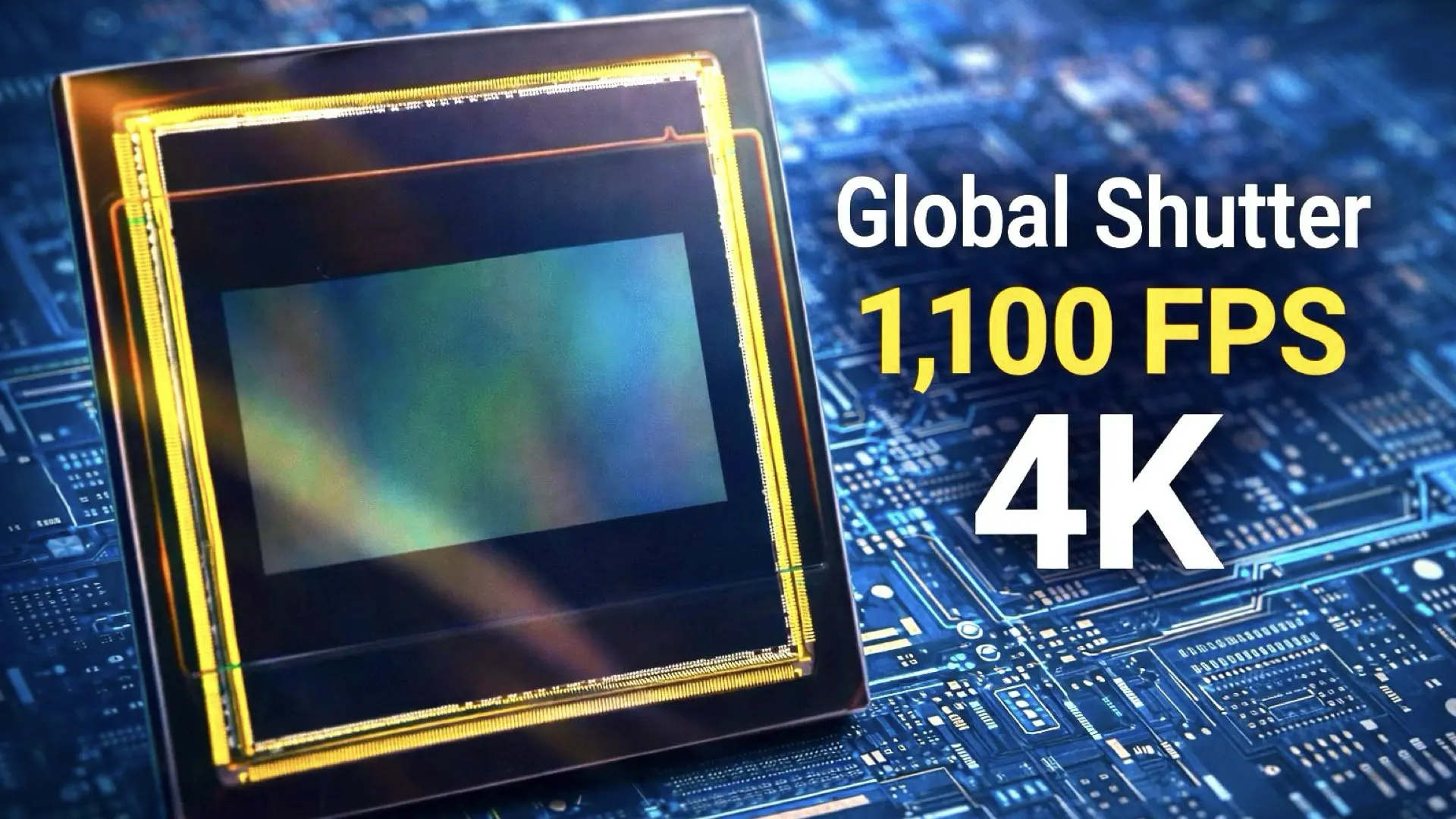
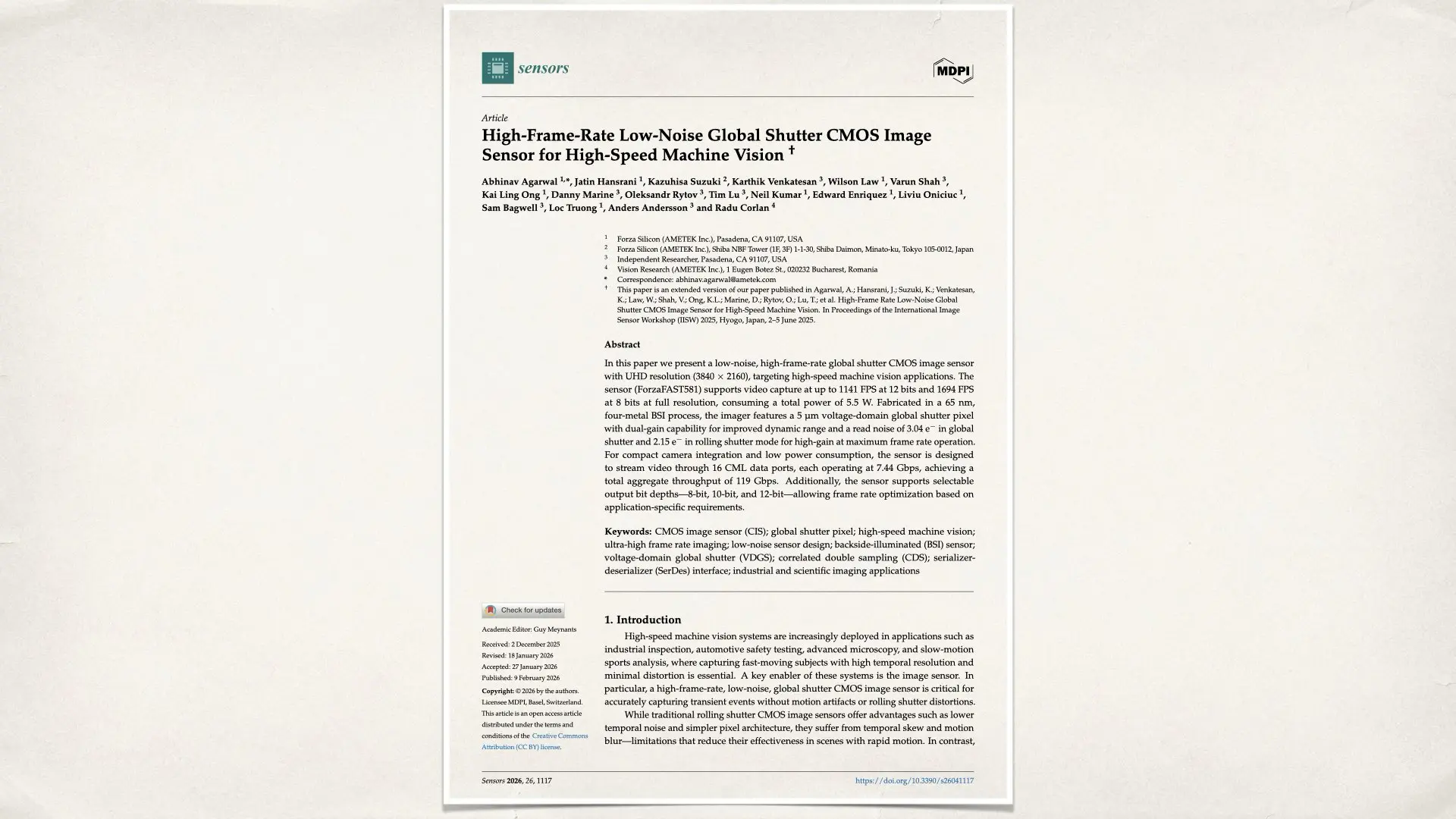
A recent technical publication titled High-Frame-Rate Low-Noise Global Shutter CMOS Image Sensor for High-Speed Machine Vision presents the design and performance of Forza Silicon’s latest flagship sensor. The paper outlines the architecture, readout strategy, noise characteristics, and high-speed interface of a 4K global shutter CMOS device engineered for extreme frame rates. While the primary target market is machine vision, the specifications immediately attract attention from anyone following sensor development in cinema and motion capture.
The company and the sensor
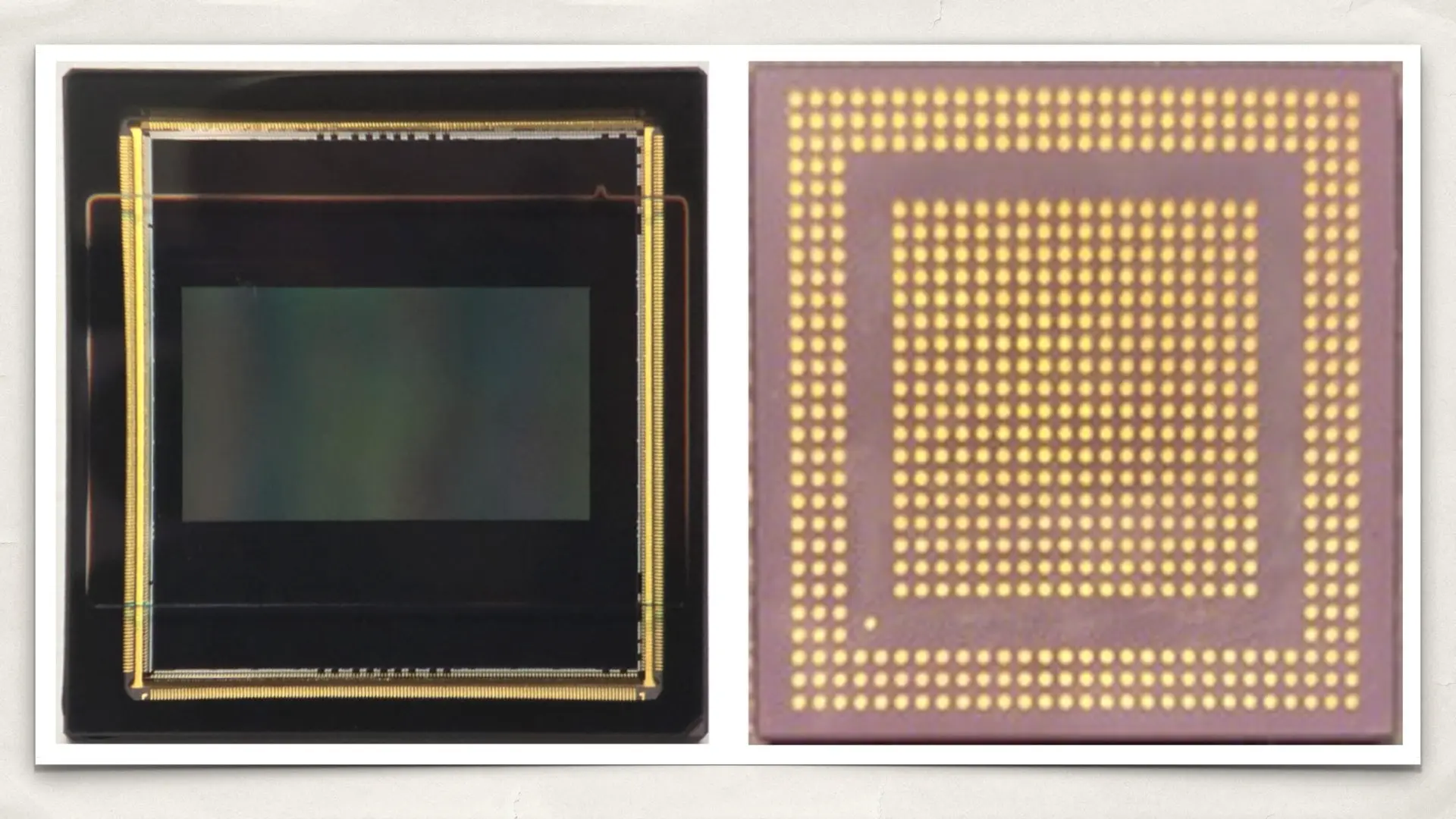
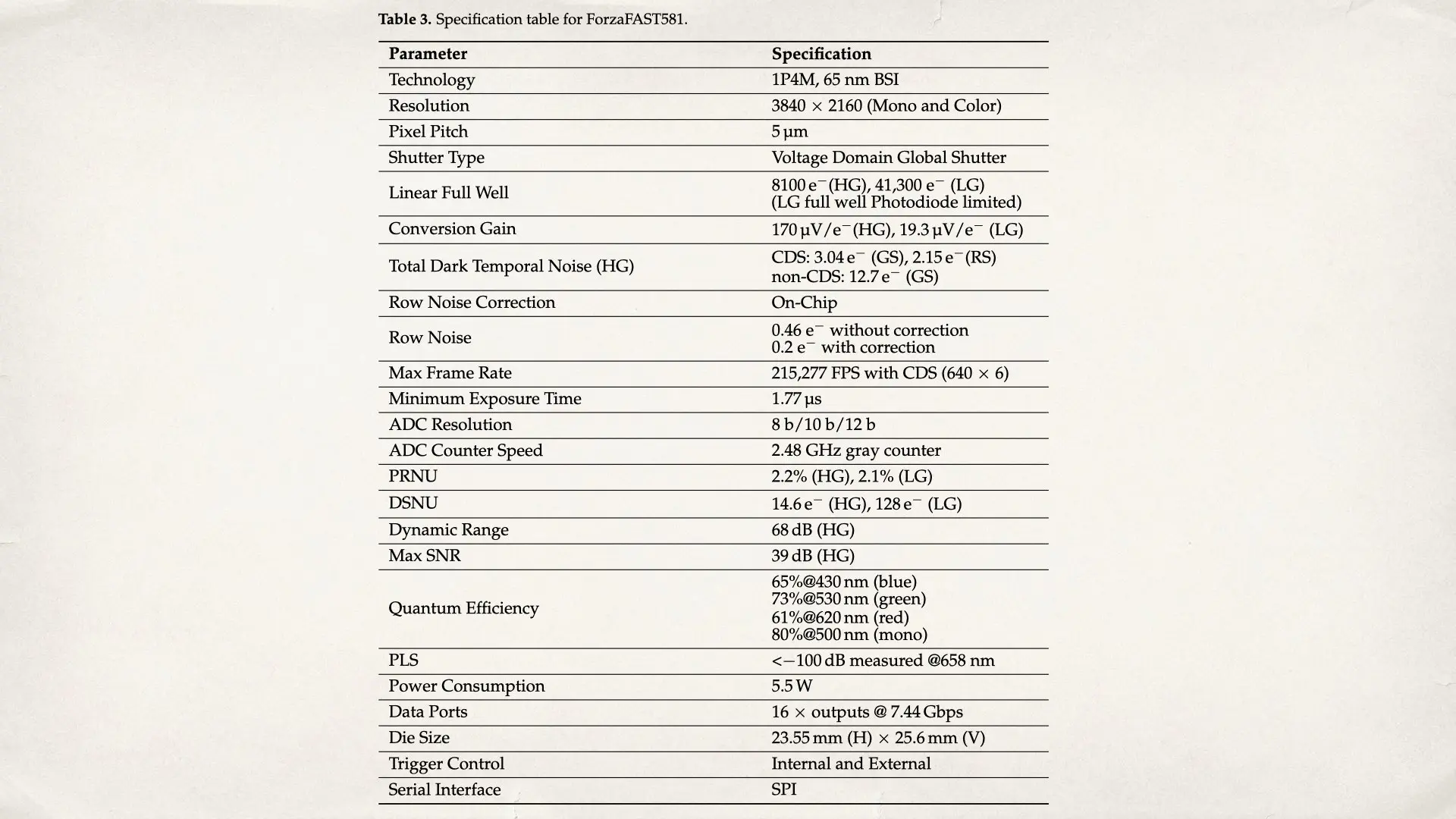
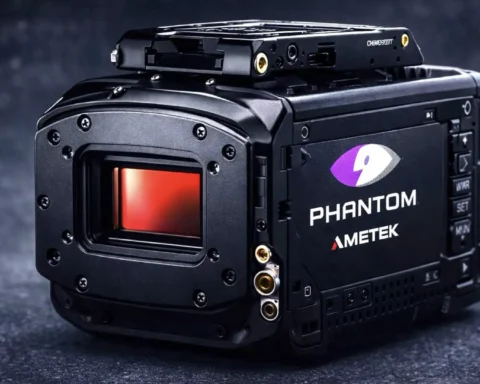
ForzaFAST581 is the flagship 4K global shutter image sensor developed by Forza Silicon, part of AMETEK, the same corporate group that owns Vision Research, manufacturer of Phantom high-speed cameras used in cinema, VFX, scientific research, and advanced motion analysis. This is not an experimental design but a production sensor presented in a detailed technical paper and positioned for high-speed professional applications. The sensor captures a native resolution of 3840 × 2160, which is true 4K. It uses a 5-micrometer backside illuminated pixel and a voltage domain global shutter design built in a 65-nanometer process. While it is primarily targeted at machine vision and scientific imaging, its performance characteristics are directly relevant to motion capture in cinema.
What 1,100 frames per second at 4K actually means
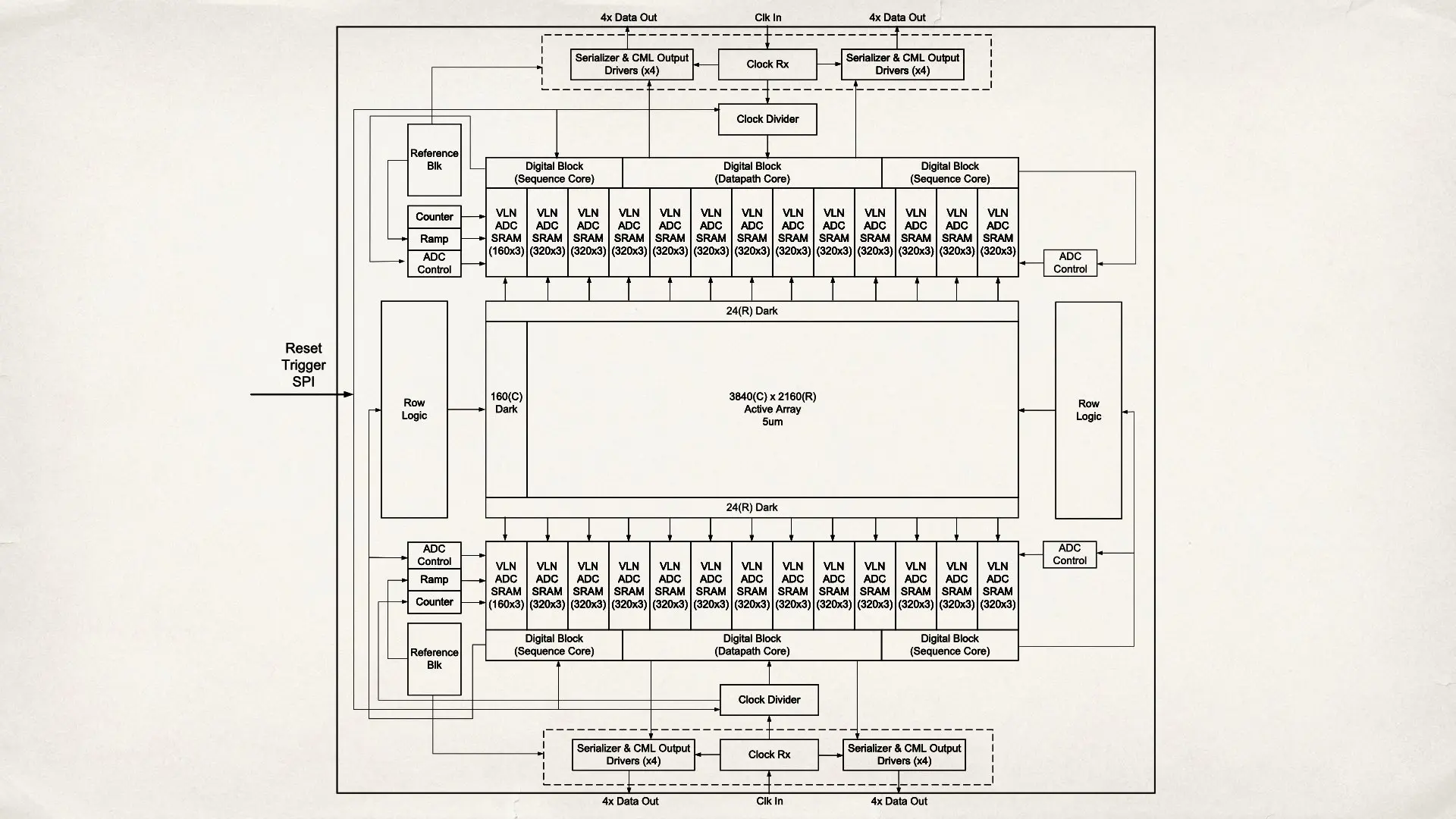
At full 4K resolution, the sensor can operate at 1,141 frames per second in 12-bit mode. If the bit depth is reduced to 10-bit or 8-bit, the frame rate increases further. In practical terms, most cinema cameras record 24, 60, or 120 frames per second at full resolution. When very high frame rates are required, resolution is usually reduced. Here, the full 4K frame is maintained while exceeding 1,100 frames per second. The minimum exposure time is under 2 microseconds, which allows extremely fast motion to be captured without visible motion blur. This is the type of performance typically associated with dedicated high-speed systems rather than general-purpose cinema cameras. To sustain this speed, the sensor moves a very large amount of data. It uses 16 high-speed output lanes, each operating at 7.44 gigabits per second. In simple terms, the sensor is engineered to handle enormous data throughput while keeping timing stable and precise.
Global shutter in simple terms
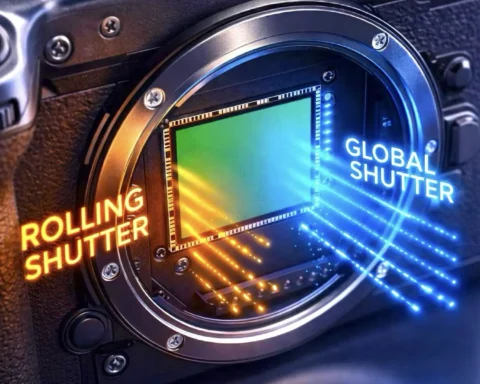
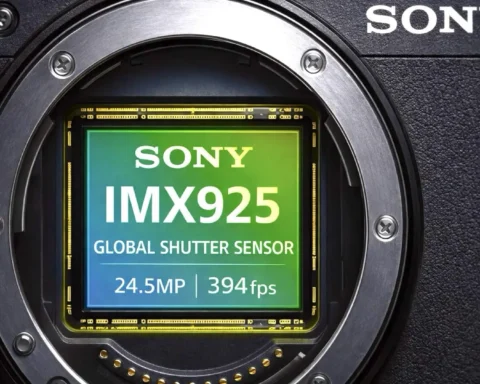
Most modern cinema cameras use a rolling shutter. In a rolling shutter system, the image is read line by line from top to bottom. If the camera or subject moves quickly during that scan, vertical lines can appear slanted, and fast motion can look distorted. This effect is often visible in handheld footage, action scenes, or when filming fast-moving objects. A global shutter captures the entire frame at exactly the same instant. Every pixel is exposed simultaneously. This eliminates skew and wobble. Fast motion appears geometrically correct because the image is not scanned sequentially. For applications like VFX tracking, motion analysis, or high-speed cinematography, this behavior is important. Historically, global shutter designs came with tradeoffs. They tended to produce more electronic noise and lower dynamic range compared to rolling shutter sensors. That is one reason the rolling shutter became dominant in many cinema cameras.

Noise and dynamic range explained
In this sensor, dark temporal noise in global shutter mode is specified at approximately 3 electrons in high gain. In rolling shutter mode, it is even slightly lower. Without going into semiconductor detail, lower noise means cleaner shadows and more stable image information in low light conditions. Dynamic range is specified at 68 decibels in high gain mode, which translates to roughly 11 to 12 stops. This is lower than some cinema-oriented sensors that prioritize extreme dynamic range, but it is strong for a sensor operating at such high speed. The sensor also offers a low-gain mode with a significantly larger full well capacity, meaning it can handle brighter scenes without clipping, although it does not combine both gain modes into a single HDR frame. Another key parameter is parasitic light sensitivity, which measures how much unwanted light leaks into storage areas inside the pixel. In this design, it is kept extremely low. In practical terms, that means cleaner global shutter operation with fewer artifacts.
Why this matters for cinema
ForzaFAST581 is not marketed as a cinema sensor. It is designed for industrial and scientific systems where extreme frame rates and precise motion capture are required. However, its specifications show that global shutter performance no longer automatically implies severe image quality compromise. The remaining barriers to using such a sensor in compact cinema cameras are mostly practical. The die is physically large, which affects cost and manufacturing yield. Power consumption at peak performance is around 5.5 watts, which is manageable in a dedicated high-speed system with active cooling but more complex in smaller camera bodies. The architecture also prioritizes speed over advanced on-chip HDR techniques that are common in modern cinema-focused sensors. Even so, this sensor demonstrates that 4K global shutter at over 1,100 frames per second with controlled noise is technically achievable. The limitation is no longer whether it can be done, but how it is integrated into complete camera systems. Click here for the publication.







people in the real business do not care about amateur (and professional ) filmmakers and best sensors never used in cinema .I know 22 bit sensor ,sensor with 120 dB dynamic , sensor with 16 bit near zero noise (less than 0.2 eV) that nobody in industry know and use. When I asking sensor manufacturer did it knew that his sensor is best for cinema camera je ask me how cameras i can sell.I answered 100 per year .He says I’m not interested ,I sell 100+ per day .So,nobody from serious industry wants to deal with amateurs (big cinemamakers are also kind of amateurs).That is the reason I modified scientific camera for cinema amd use it.Its cheaper and better than any camera on the market including optics that cost 3 times less Because optics when hearing for cinema multiple prices x 3
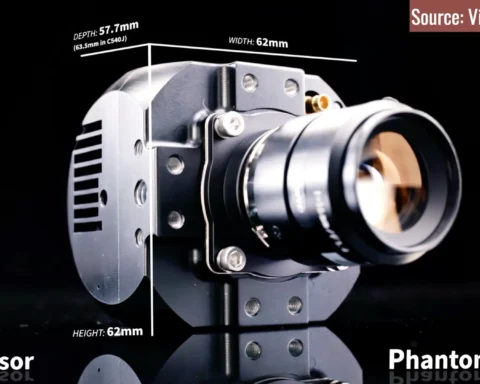
Yes but can scientific camera run 4k, over 1,000 fps, probably not. This argument as it’s stated is not logical. This sensor was likely designed for a Phantom camera.