
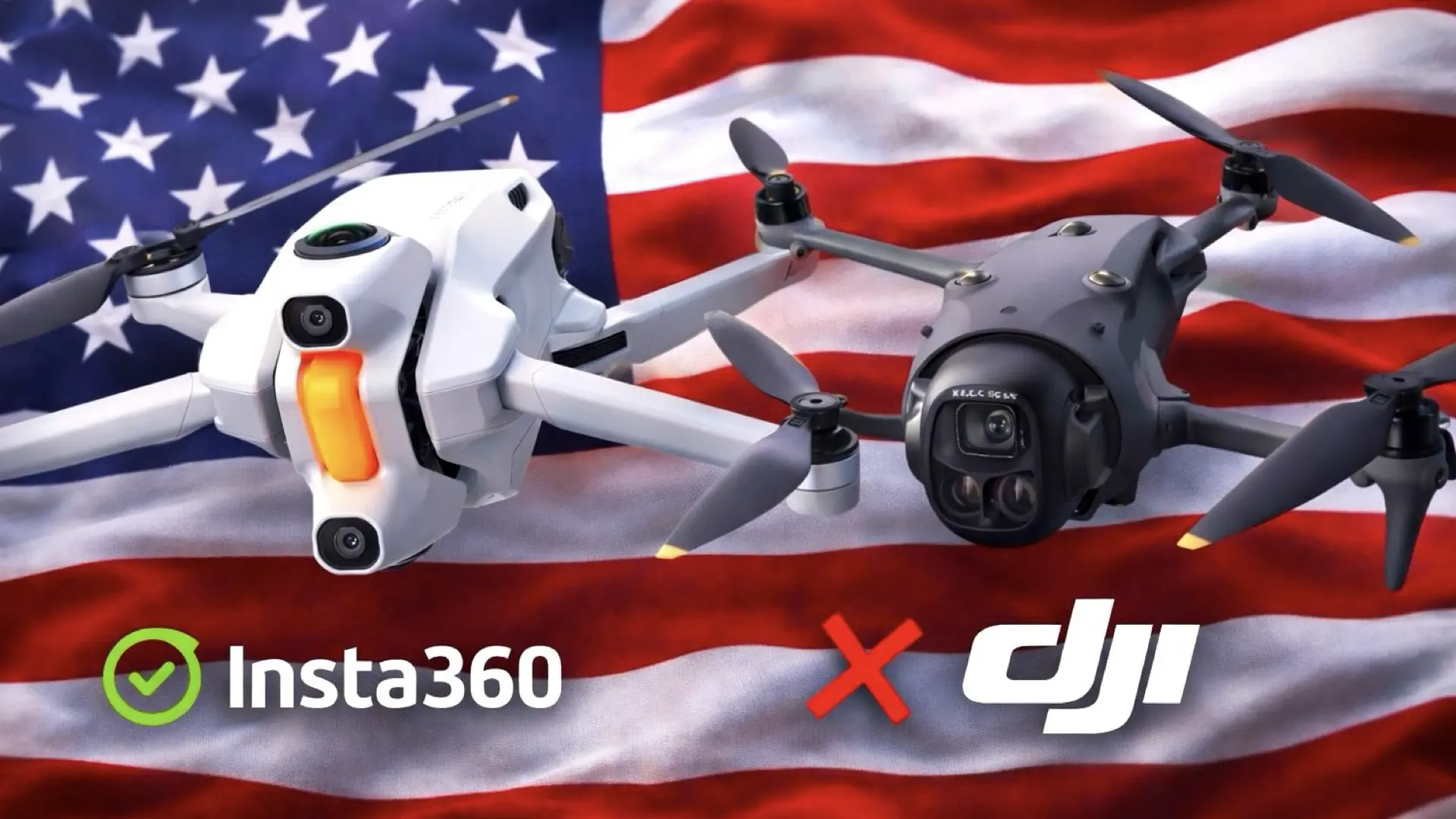
For more than a decade, DJI has defined the consumer and prosumer drone market in the United States. From compact folding drones to high-end imaging platforms, the company has shaped how filmmakers, YouTubers, and commercial crews approach aerial cinematography. Now, regulatory pressure in the U.S. is complicating DJI’s future product access, and another Chinese imaging company is stepping into the conversation. Insta360, known globally for its 360 cameras and action imaging systems, is moving into the American drone market at a moment when DJI’s expansion faces new scrutiny. This development is more than a competitive headline. It may represent the beginning of a structural shift in how aerial imaging tools reach creators in the United States.
DJI’s regulatory headwinds in the U.S.
Recent U.S. regulatory tightening has placed additional scrutiny on Chinese drone manufacturers, with national security reviews and certification processes becoming more restrictive. While DJI products remain widely used across the country, uncertainty around future approvals and market access has created friction around new launches and long-term positioning. For years, DJI operated with relative dominance in the U.S. market. Its ecosystem of batteries, controllers, firmware updates, and accessories created a stable platform that professionals relied on. When regulatory processes begin to slow that pipeline, even slightly, the impact extends beyond corporate revenue. It influences rental houses, production planning, firmware roadmaps, and purchasing decisions for creators. This is where opportunity appears.

Insta360’s strategic timing
Insta360 has built its brand around immersive capture. Its 360 cameras have become popular among action creators and increasingly among professionals who want the flexibility to reframe shots in post production. Entering the drone market is a logical extension of that philosophy. Aerial 360 capture allows creators to decide framing after flight, effectively turning one pass into multiple usable angles. If Insta360 positions its drone platform around high-resolution 360 capture, potentially in the 8K range, it introduces a different creative value proposition compared to DJI’s traditional stabilized single lens systems. Instead of competing purely on dynamic range, sensor size, or flight time, Insta360 could compete on flexibility and post-production freedom. The timing is notable. When the dominant player faces regulatory complexity, even a strong incumbent ecosystem can experience hesitation from buyers. That hesitation creates space for experimentation.

The current drone landscape and where Insta360 fits
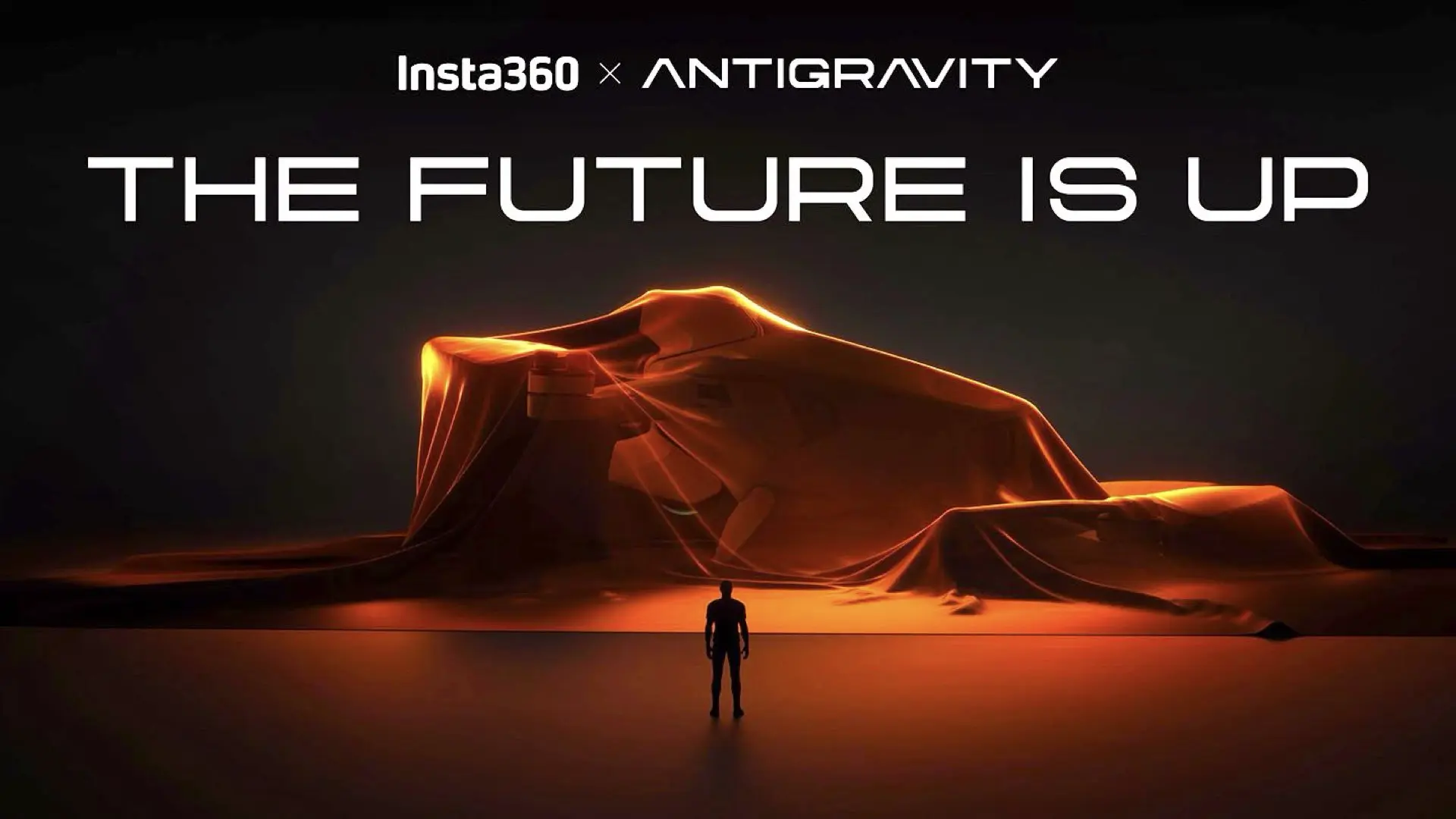
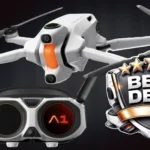
To understand the significance of Insta360’s move, it helps to look at the drones that currently define the U.S. aerial imaging market. At the high end, models like the DJI Mavic 3 Pro have set the benchmark for portable professional aerial cinematography. Its multi-camera system allows creators to switch between wide, medium telephoto, and longer focal lengths mid-flight, offering flexibility without changing platforms. For many commercial shooters, this drone represents the established standard for cinematic aerial coverage. In the lightweight category, the DJI Mini 3 Pro has become one of the most influential drones of the last few years. Weighing under 250 g, it sits in a regulatory sweet spot while still offering 4K capture, vertical video, and advanced obstacle sensing. For travel filmmakers and social media creators, it balances compliance and capability in a single package. Between these tiers, models such as the DJI Air 2S have delivered strong image quality thanks to larger sensors, appealing to creators who prioritize dynamic range and low-light performance without stepping into heavier and more expensive platforms. Against this backdrop, Insta360’s Antigravity A1 introduces a different philosophy. Instead of competing purely on sensor size or lens diversity, it centers the experience around 360 capture and post-production reframing. If executed well, that approach allows creators to extract multiple compositions from a single flight path. The emphasis shifts from capturing the perfect angle in the air to designing the final frame in editing. This contrast highlights the core question raised by the current regulatory moment. If DJI’s ability to introduce new models into the U.S. market becomes more complicated, will filmmakers continue relying on incremental upgrades to familiar platforms, or will they explore alternative capture paradigms such as immersive 360 aerial workflows? The answer will depend on image quality, reliability, and ecosystem maturity. However, the presence of credible alternatives alone changes the psychology of the market. For the first time in years, the U.S. drone conversation is no longer defined exclusively by one brand’s roadmap.
What this means for aerial cinematography
DJI shaped aerial workflows over the last decade. LUT pipelines, gimbal behavior, controller ergonomics, and file structures became familiar standards across productions. If access to future DJI releases becomes less predictable in the U.S., filmmakers may begin evaluating alternatives earlier in the production cycle. This does not imply that DJI disappears. Its installed base is massive, and its technical expertise remains significant. However, market uncertainty encourages diversification. Rental houses may stock additional brands. Independent creators may test new ecosystems. Production insurance policies may evolve depending on regulatory clarity. For aerial cinematography, this could result in a more fragmented but also more experimental landscape. 360 aerial capture, AI-assisted reframing, and lighter category drones optimized for specific FAA weight classes could become more prominent. Instead of one dominant imaging standard, multiple creative philosophies may coexist.

The emergence of parallel ecosystems
The larger implication extends beyond one product launch. If regulatory barriers continue to shape market access, regional ecosystems could become more distinct. The U.S. market may develop different dominant drone platforms compared to Asia or Europe. Firmware updates, accessory compatibility, and even codec preferences could begin diverging across regions. For filmmakers, this means paying attention not just to sensor specifications and rolling shutter performance, but also to policy and certification pathways. The next phase of aerial imaging may be influenced as much by regulatory frameworks as by megapixels.
Final thoughts
DJI’s position in the drone market remains strong, but regulatory pressure introduces uncertainty into a space that once felt stable. Insta360’s move into the U.S. drone market arrives at a strategically interesting moment. Whether it becomes a serious competitor or simply a niche alternative will depend on execution, imaging performance, and creator adoption. What is clear is that aerial cinematography is entering a more complex phase. Innovation continues, but it now operates alongside geopolitical and regulatory realities that shape how imaging technology reaches filmmakers. For creators, that shift deserves attention.
As an Amazon Associate, Y.M.Cinema earns from qualifying purchases. If you purchase through the Amazon links above, Y.M.Cinema may earn a small commission at no additional cost to you. This helps support our work.





You can buy the Mavic 4 Pro here in the states. Anything that was authorized by the FCC prior to December 25th can be purchased. Such as the mini 5 Pro, neo 2, avata 360 and the pocket 4
GoPro patent might stop Insta360 according to US trade panel.
Insta360 is made in China.
It’s still a security risk.
They only offer the antigravity a1 for like $1500+ with googles only. Dji has cheaper options for like $300 and up, with controller. some people don’t wanna put that much into something just to start off playing around.
What is this nonsense article? This drone cannot be in competition with DJI in the US. The insta360 is manufactured in Shenzhen, China, meaning the US FCC will not authorize it to operate within the US.