

The third chapter of Dune finally puts celluloid at the center. A new cinematographer who loves film is in. IMAX sequences are planned. The result could be the most beautiful trip to Arrakis so far. Let’s talk a bit about Dune Part Three.

From digital pipelines to a true film base
The first two chapters leaned on large format digital capture, then chased film texture in finishing. We documented the original approach in Dune was shot on Alexa LF, transferred to 35mm film, then scanned back to digital. That decision added grain, highlight bloom, and a tactile feel without changing the principal format. By Part Two, Villeneuve’s team sharpened the premium path. Our explainer Dune Part Two. Filmed for IMAX or filmed with IMAX shows how capture and exhibition labels shape audience expectations. Greig Fraser’s choices are unpacked in Dune Part Two. Five interesting cinematography facts and in the stage conversation covered in Dune Part Two. IMAX Q and A with Greig Fraser. Distribution was a reality check. IMAX 70 mm prints were scarce. We tracked that pinch point in Dune Part Two. IMAX 70mm screening at only 12 theaters worldwide. Part Three changes the foundation. The intent is to shoot on film. That single choice reshapes exposure strategy, filtration, and the entire path to the screen.

A film enthusiast takes the camera chair
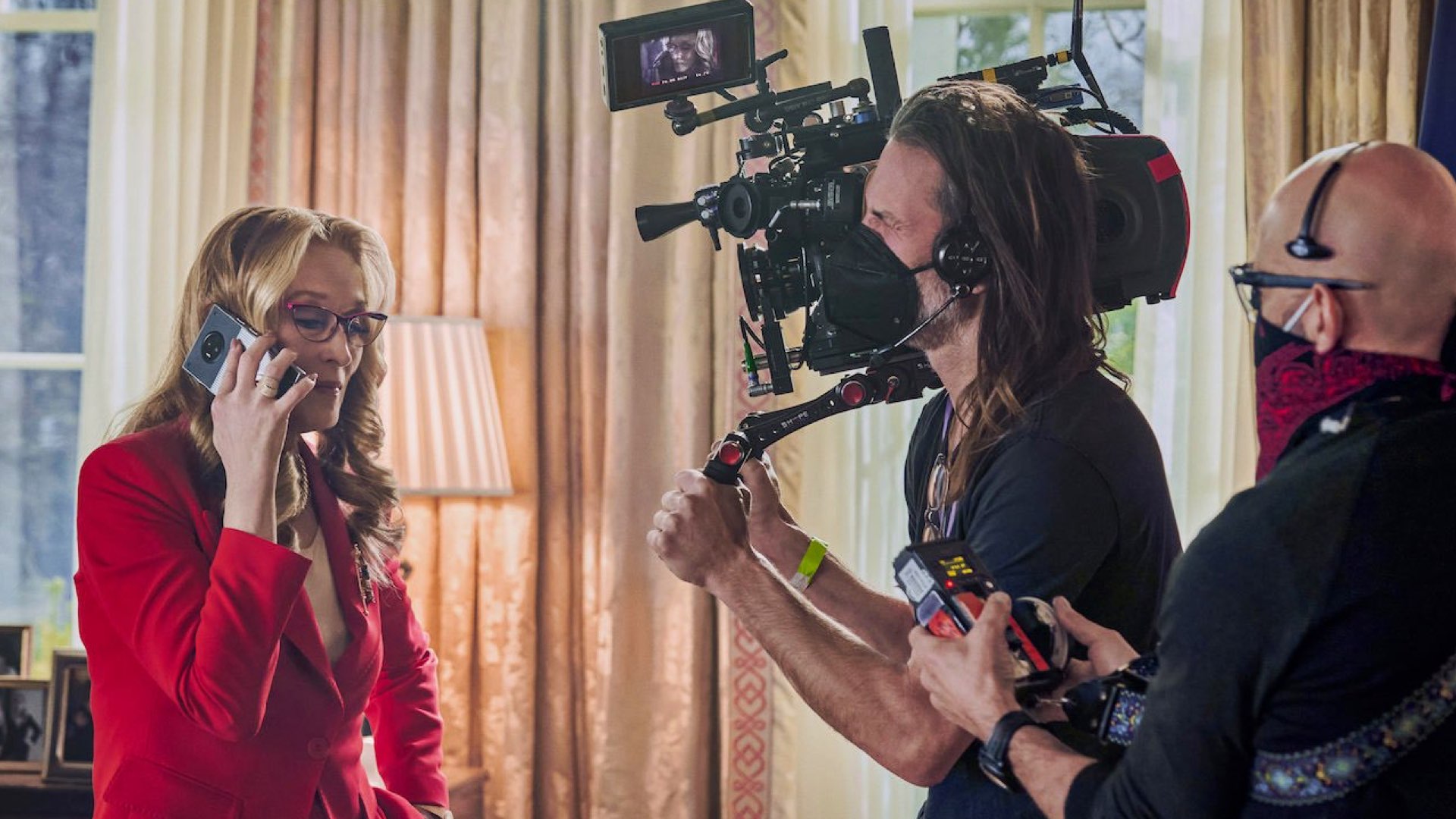
A new director of photography (Linus Sandgren!) comes in with a deep love for photochemical capture. That love shows up in the way highlights are protected, blacks are shaped, and color separation is allowed to breathe. This is not nostalgia. It is a creative stance. Why this matters to the image. Our case study DON’T LOOK UP. Aaton Penelope and Kowa Cine Promiser Macros for the Extreme Closeups explains how film elevates intimacy and micro detail. Emulsion turns tiny textures into emotion. That is exactly the kind of sensitivity a film forward cinematographer brings to open desert, ceremonial interiors, and faces under hard sunlight. Expect careful lens character too. We have seen how a single piece of glass can steer a scene’s mood in Dune Part Two. One more fascinating lens. With film in the gate, halation and color separation become story tools rather than filters added later.
IMAX. Big moments on bigger film
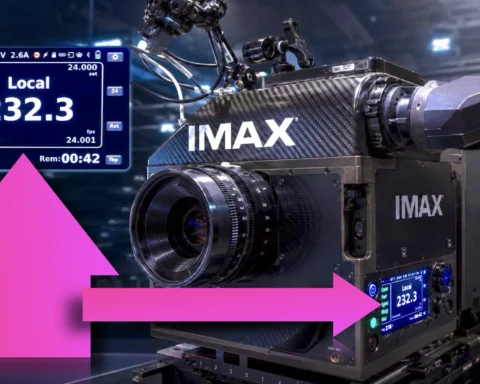
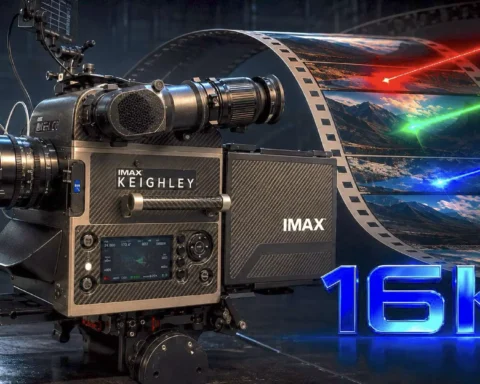
Early excitement pointed to IMAX film cameras for the whole feature. Later updates dialed that back. The expectation now is IMAX for the major set pieces, with the rest captured on film stock to keep a coherent photochemical backbone. Our April note set the tone and detailed the new bodies in Dune Part Three will be shot with the new IMAX film cameras. This is still a significant upgrade in native large format film. IMAX gives scale real weight. The desert becomes a presence. Machinery feels monumental. Faces read like topography. Film at this size carries highlights with shape and lets sand sparkle without digital grit. The promise of Part Three is more of that feeling, used with purpose.

What this means for the look of Arrakis
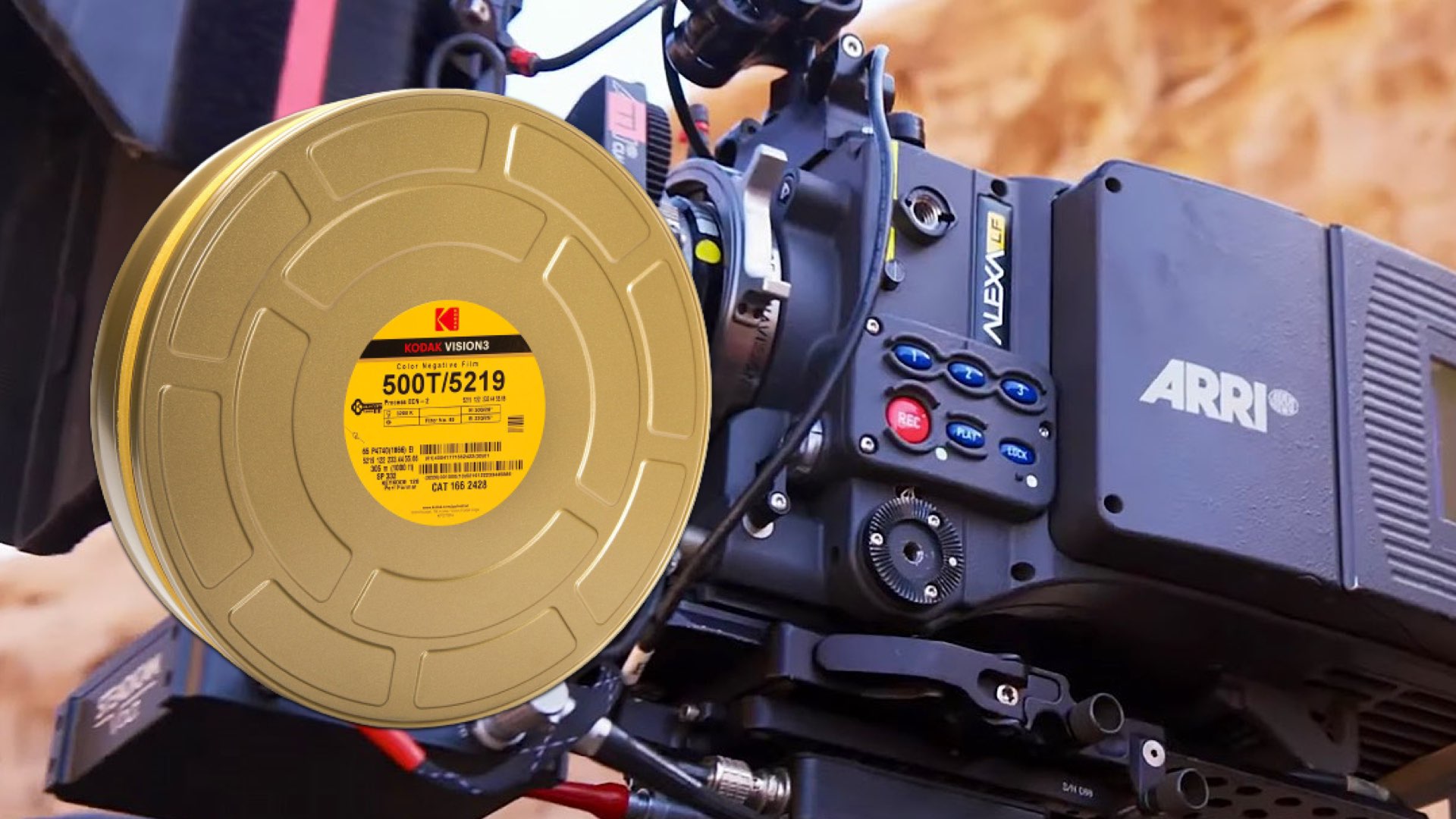
Color should feel richer at both ends of the curve. Warm skies and cool shadows can live together without plasticity. Grain will sit in the image rather than on top of it (no need for plastic emulation). Motion will feel immediate because emulsion responds at the grain level. Dialogue on five perf sixty five mm should hold depth and elegance. Battle and ceremony on fifteen perf should feel operatic without losing intimacy. Finishing will still be modern. Expect high resolution scans, precise registration, and respectful grain management. The difference is that the look starts inside the camera, not in a filmout loop after the fact. We saw how powerful that loop can be in Dune was shot on Alexa LF, transferred to 35mm film, then scanned back to digital. Now imagine that sensibility baked into the negative from day one.
Lessons from the last release
Part Two proved that premium exhibition changes the emotional temperature of the story. The footprint was limited, as we reported in Dune Part Two. IMAX 70mm screening at only 12 theaters worldwide. If Part Three delivers more native IMAX sequences and an all film base, even digital IMAX screens should benefit. The banner will mean more than a bigger auditorium. It will signal deeper format intent, as explained in Dune Part Two. Filmed for IMAX or filmed with IMAX.

Our read on the creative arc
Everything points in one direction. A cinematographer who champions film. A director who chases scale and presence. IMAX sequences when the story demands size. Film negative for the rest. The series has been moving toward this outcome since we first unpacked its film texture strategy and lens language in Dune Part Two. Five interesting cinematography facts and Dune Part Two. IMAX Q and A with Greig Fraser. The difference now is commitment. Celluloid is no longer a finishing accent, but it is the canvas.

Final thought
This is the moment the look of Dune was built for. Film will carry the heat of Arrakis, the mystery of the spice, and the scale of empire with grace and power. If the team lands what the signals promise, Dune Part Three will be the most ravishing Dune yet.









I said from day one they should have been shooting the entire Dune series on film, from the get-go. But instead, they chose to screw around with all this other post-processing nonsense that added nothing to the movies aesthetically and cost tons of money, for no reason. It was all pointless and stupid. Just shoot on film for crying out loud! The world of Dune is one that frankly demands it have the organic qualities film — and only film — provides. Digital capture ruined the first two movies in my opinion. They completely fail to capture the aesthetic Herbert paints in your mind while reading the books. Instead of feeling alive and lived in, the world in the first two movies feels sterile and inorganic, all due to digital capture. Villeneuve did the same thing with Blade Runner 2049. It’s a phenomenal movie that is half ruined by digital capture. Every time I’ve watched the movie I can’t help but feel it’s a total betrayal of the world created in the first film by Scott et al, which is one of the most amazing world’s ever created for cinema (and on a very modest budget nonetheless). Villeneuve is a talented director, but he needs to figure out that digital capture is largely ruining what he’s doing. Let’s hope with Part Three they don’t scrub the grain AT ALL in post. “Grain management” is entirely unnecessary with modern movies/TV shot on film. It shouldn’t be done. Leave the grain alone! Please! 35mm theatrical prints in addition to IMAX and standard 70mm prints would also be appreciated. Maybe the Dune film franchise will finally redeem itself with Part Three. I hope so. The books are among my all-time favorites.
Love the passion. A few thoughts to add context, and I think we actually agree on the big picture.
First, film absolutely fits Arrakis. Texture, highlight roll off, and that lived in feel you mention are the reasons many of us are excited about Part Three moving to film, with native IMAX moments for the biggest set pieces.
About the first two movies. They were captured on large format digital, then run through a filmout and scan back to bring halation, grain, and softer shoulders into the image. That was not busywork. It was a way to graft photochemical character onto a pipeline that had to carry very heavy VFX and extremely dark interiors while hitting a huge global schedule.
On Blade Runner 2049, Roger Deakins chose digital for control of low light and color separation with complex practicals. Whether one prefers that look is subjective, but the choice served the creative plan rather than budget tricks.
On grain management. Good teams do not scrub grain to make it sterile. They even it out so intercut shots match, so IMAX blowups do not turn grain into distraction, and so streaming compression does not smear fine detail. The goal is a stable, natural texture across formats, not plastic faces.
What changes now. A film enthusiast DP is stepping in, and the plan is film across the movie, with IMAX film for major sequences. That gives a coherent negative for most of the story, plus true IMAX scale when needed. If the team resists heavy noise reduction and lets the emulsion breathe, this could be the most tactile Dune yet.
On prints. We would love to see 35mm alongside IMAX and standard 70mm. The limiting factor last time was exhibition footprint and print logistics, not a lack of desire. If availability improves, we will cheer the loudest.
Bottom line. Your core point stands. Film suits this world. The great news is that Part Three appears to embrace that reality. We will keep pushing for minimal grain taming and the widest possible film exhibition.
Anyway….. It’s all about the new ‘film’ DP! Let’s wait and see 🙂
A few followup points:
Regarding the first two movies, you say they did the filmout process and such “to graft photochemical character onto a pipeline that had to carry very heavy VFX and extremely dark interiors…” Yeah, that’s what they claimed. The problem is, they failed. Period. There is no photochemical character to the first two films. That’s the whole issue. Digitally-captured imagery just doesn’t look/feel like film, and no matter what you do to it — even if you go so far as to print it to film and scan it back into the digital domain — it never will. For cinema, frankly, digital just looks like crap no matter how hard Hollywood keeps trying to convince everyone otherwise. It’s totally fine for documentaries and it’s acceptable for TV sitcoms, but otherwise, it’s garbage.
Regarding the “extremely dark interiors” and “low light” of both Dune and Blade Runner 2049 *allegedly* needing to be digitally captured, or at the very least *allegedly* benefiting from it. Last I checked a big (huge) part of the art of cinematography/photography was proper lighting. The original Blade Runner is arguably a far darker film than its sequel (and inarguably better looking), and yet it was shot on film. It’s all about employing proper lighting techniques. I’m sorry, but shooting “dark” or “low light” scenes in *actual* low light/darkness and then claiming you chose digital so you could do so is pure laziness and/or incompetence, plain and simple. Hire lighting experts and do it right. Before digital ever existed, “low light” and “darkness” were being captured on film, and they were effectively never actually shot/exposed in low light or darkness, excluding a very few outliers like Barry Lyndon for example. The sad thing to me is that Deakins should know better. He’s been in this game a very long time.
Regarding grain management, yeah, I know what’s typically done, and I can’t stand it. I stick to my “leave the grain alone” comment. If you’ve decided to shoot a production on multiple film formats (e.g. IMAX and 35mm), then you just need to accept that there WILL be a visual difference between those formats in the final product. End of story. Attempting to lessen that difference via “grain management” will only serve to lessen the entire film, if not ruin its aesthetics/visuals altogether. If you’ve made a conscious choice to use multiple formats, embrace it. Don’t try to achieve visual continuity — in terms of grain/texture — after the fact in post. That’s just dumb, because it’s honestly not possible (I mean, think about the resolution difference between an IMAX film cell and 35mm. Seriously…). The fact is grain *isn’t* a “distraction” anyway, even if there are density fluctuations between shots due to the utilization of different formats/stocks. It’s cinema. It’s what it’s *supposed* to look like. The smooth, textureless, inorganic aesthetic of digital is the real distraction of movies today. It’s gross, especially on a huge cinema screen. If you want perfect grain/textural continuity, you just need to shoot the whole production on a single film format (and ideally on a single film stock). Problem solved, even though it wasn’t ever really a problem to begin with. Multiple film formats and film stocks with very different granularity were regularly used on single productions for countless decades, long before any digital grain management techniques even existed. And it never harmed anything.
DNR to reduce the appearance of film grain is self-defeating. AI smoothing/tampering is even worse. Please, Hollywood — STOP!
“Streaming compression” is a whole other can of worms, one that I’m not going to open. I’ll just say that it’s another issue in need of a solution, an issue that shouldn’t/wouldn’t even exist if the morons in Hollywood hadn’t been pushing/forcing everything they shouldn’t (i.e. streaming services). The *real* solution to this problem is precisely what it’s always been: physical media.