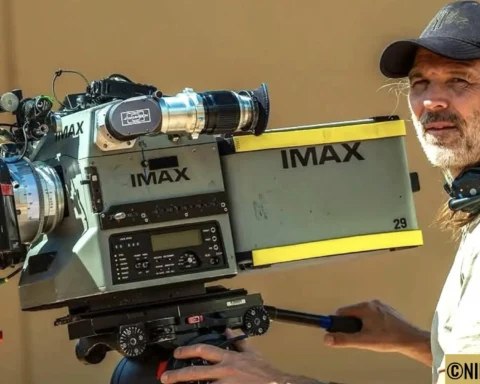
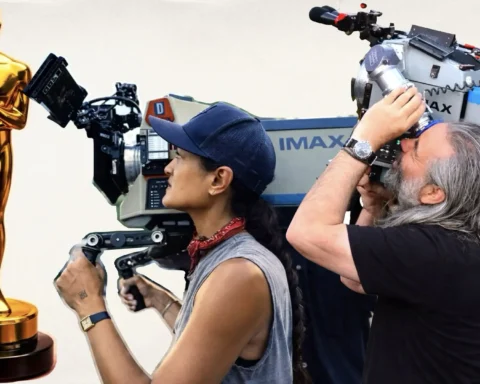
Empire Magazine has unveiled the first behind-the-scenes image from Christopher Nolan’s The Odyssey, and it’s a historic moment for cinema technology. For the first time ever, the elusive next-generation IMAX film cameras have been spotted on an actual set, confirming that Nolan and his trusted cinematographer Hoyte van Hoytema are pioneering the debut of these long-awaited 65mm beasts.

Nolan, a lifelong advocate for large-format filmmaking, appears to have been the first to gain access to these cameras: a logical continuation of his relationship with IMAX, which has trusted him to test and refine their most ambitious prototypes. The Odyssey is therefore not just a cinematic event but also a technological milestone marking the dawn of a new era for analog large-format motion picture capture.
The long-awaited reveal
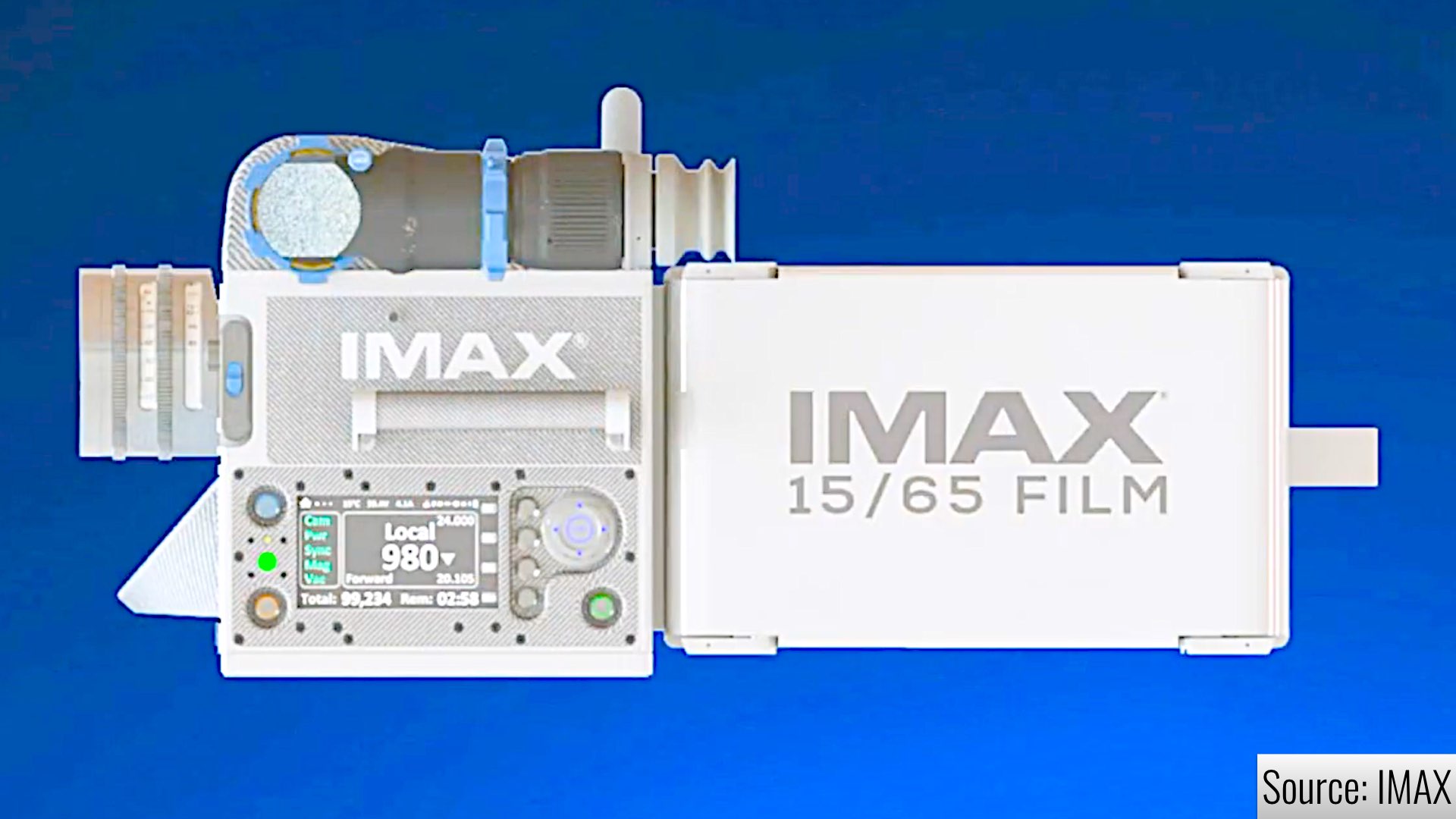
For years, IMAX engineers have been quietly working on the evolution of their 65mm film platform. As revealed in IMAX Next-Gen 65mm Film Cameras: All Details, the development was driven by the need for lighter, quieter, and more user-friendly IMAX cameras suitable for extended production use. Until now, their design and final form remained completely under wraps, until this moment. In Empire’s photo, Nolan and van Hoytema are seen operating what is unmistakably the next-generation IMAX camera, featuring a carbon fiber body that marks a radical departure from the bulky aluminum housings of previous generations. The weight reduction is not merely cosmetic; it represents a profound step toward making IMAX film a practical option for more versatile shooting conditions.
A new era of usability
What makes this camera instantly recognizable to insiders is the new integrated digital display located on the camera’s body. Unlike the original IMAX MSM 9802 and the later film models, which required external monitoring systems, this display provides real-time readouts for frame rate, film load, and exposure data. Such an interface signifies a rare balance between analog precision and digital ergonomics, giving filmmakers direct access to key metrics without disrupting the tactile IMAX workflow. This innovation aligns perfectly with Hoyte van Hoytema’s hands-on cinematography philosophy, as demonstrated throughout Nolan’s IMAX-driven projects. In Christopher Nolan’s The Odyssey: IMAX Cameras, YMCinema detailed how Hoytema and Nolan have consistently pushed the IMAX format to new frontiers, from the deserts of Dunkirk to the microphysics of Oppenheimer. The Odyssey now extends that legacy into uncharted technological territory.

What makes this camera instantly recognizable to insiders is the new integrated digital display located on the camera’s body.
The carbon fiber revolution
The carbon fiber texture visible in the Empire image points to a full structural redesign aimed at addressing one of the biggest IMAX limitations: bulk and noise. The previous generation of cameras was heavy, loud, and challenging to maneuver, particularly for handheld or confined-set shots. This new build likely incorporates vibration-dampening materials, optimized airflow, and refined sound insulation, all while maintaining 65mm mechanical precision. Such advancements could also imply the introduction of modular components, enabling quicker film reloading and simplified maintenance on set. These features, if confirmed, would make the next-gen IMAX camera far more production-friendly, potentially expanding its use beyond the most elite productions.

The carbon fiber texture visible in the Empire image points to a full structural redesign aimed at addressing one of the biggest IMAX limitations: bulk and noise.
From rumor to reality
Back in early 2025, YMCinema investigated the whereabouts of these next-generation cameras in Christopher Nolan’s The Odyssey: Where Are the Next-Gen IMAX Cameras?. At the time, all signs pointed to an IMAX–Nolan collaboration, but visual proof was nonexistent. Today, thanks to Empire Magazine, that speculation is confirmed. Nolan, a lifelong advocate for large-format filmmaking, appears to have been the first to gain access to these cameras: a logical continuation of his relationship with IMAX, which has trusted him to test and refine their most ambitious prototypes. The Odyssey is therefore not just a cinematic event but also a technological milestone marking the dawn of a new era for analog large-format motion picture capture.
What does it mean for IMAX filmmaking?
The appearance of the new IMAX 65mm camera on set confirms that film technology is not standing still. In a digital-dominated landscape, IMAX and Nolan continue to prove that innovation and tradition can coexist. By blending classic celluloid craftsmanship with cutting-edge engineering, they reaffirm the unmatched visual and emotional power of true 65mm imagery. With The Odyssey slated for release in 2026, the world will soon witness what this next generation of IMAX cameras can truly deliver.