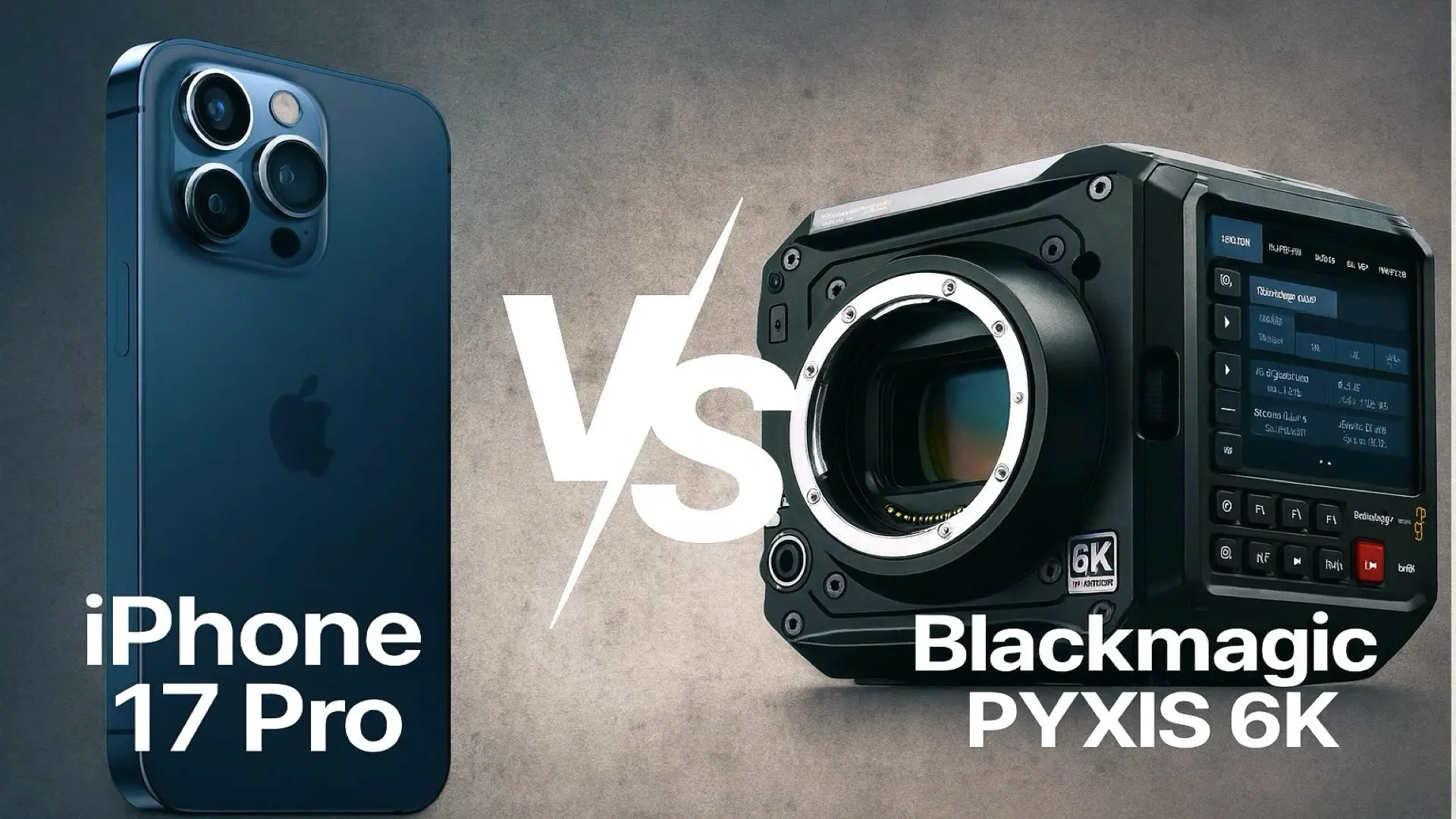
Every few years, the same question resurfaces, wrapped in new silicon, better codecs, and louder marketing. Can a smartphone finally compete with a real cinema camera? This time, the comparison is framed as iPhone 17 Pro versus Blackmagic Pyxis 6K. The answer is obvious. But Andrew Lanxon’s CNET experiment is still worth serious attention, precisely because it avoids marketing theater and treats the question like a real filmmaker would. Lanson did something rare. He removed hype, worked with an experienced Director of Photography, built a proper shoot, and let both tools fail where they naturally would. That alone makes the test valuable, even if the conclusion was never really in doubt.
On paper, the iPhone 17 Pro looks formidable. ProRes RAW recording. Log profiles. External SSD support. Sensors that are large by smartphone standards. In controlled lighting, with moderate contrast and limited depth demands, the footage can look surprisingly close to that of a cinema camera.
The premise already gives the answer away
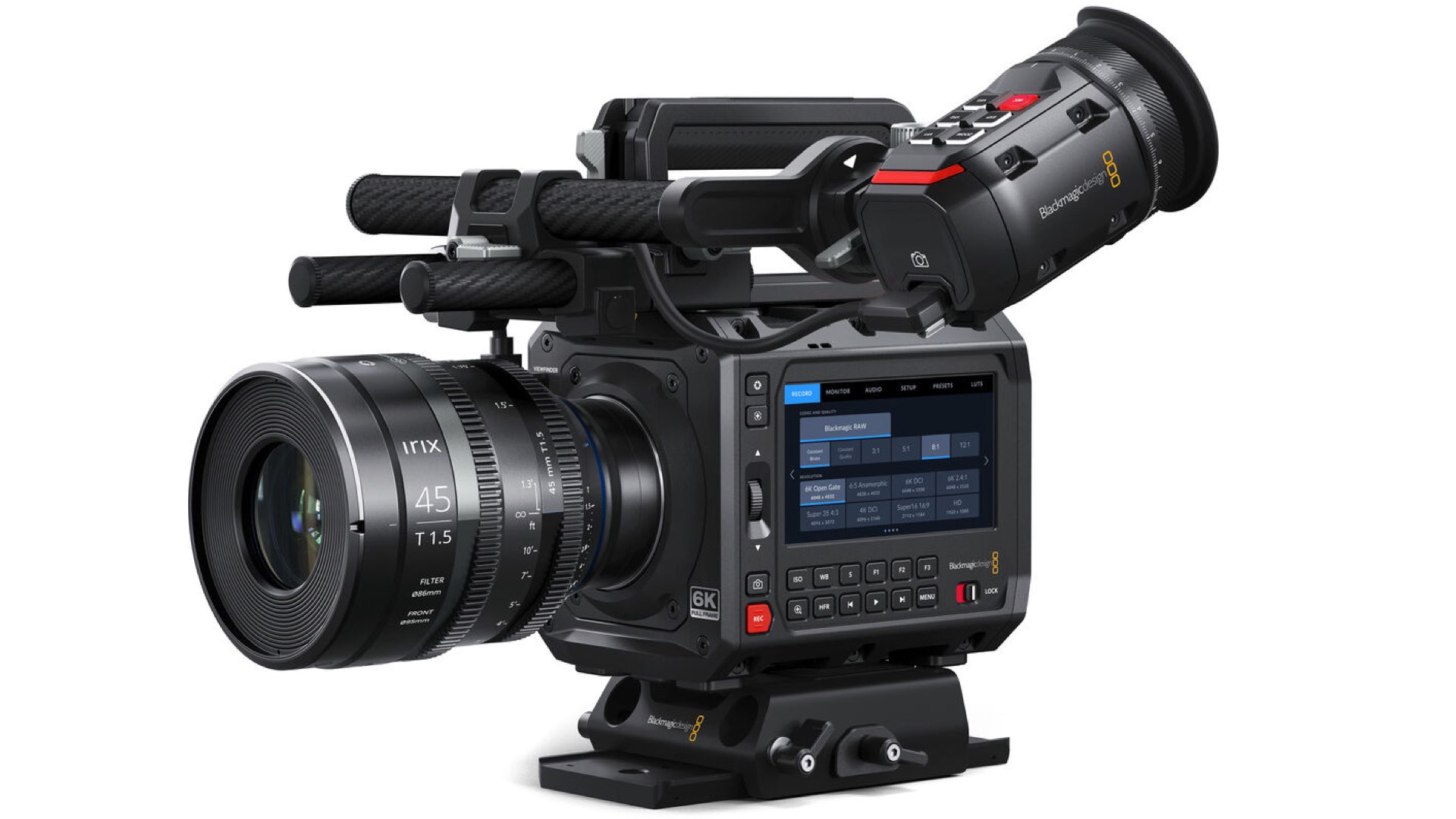
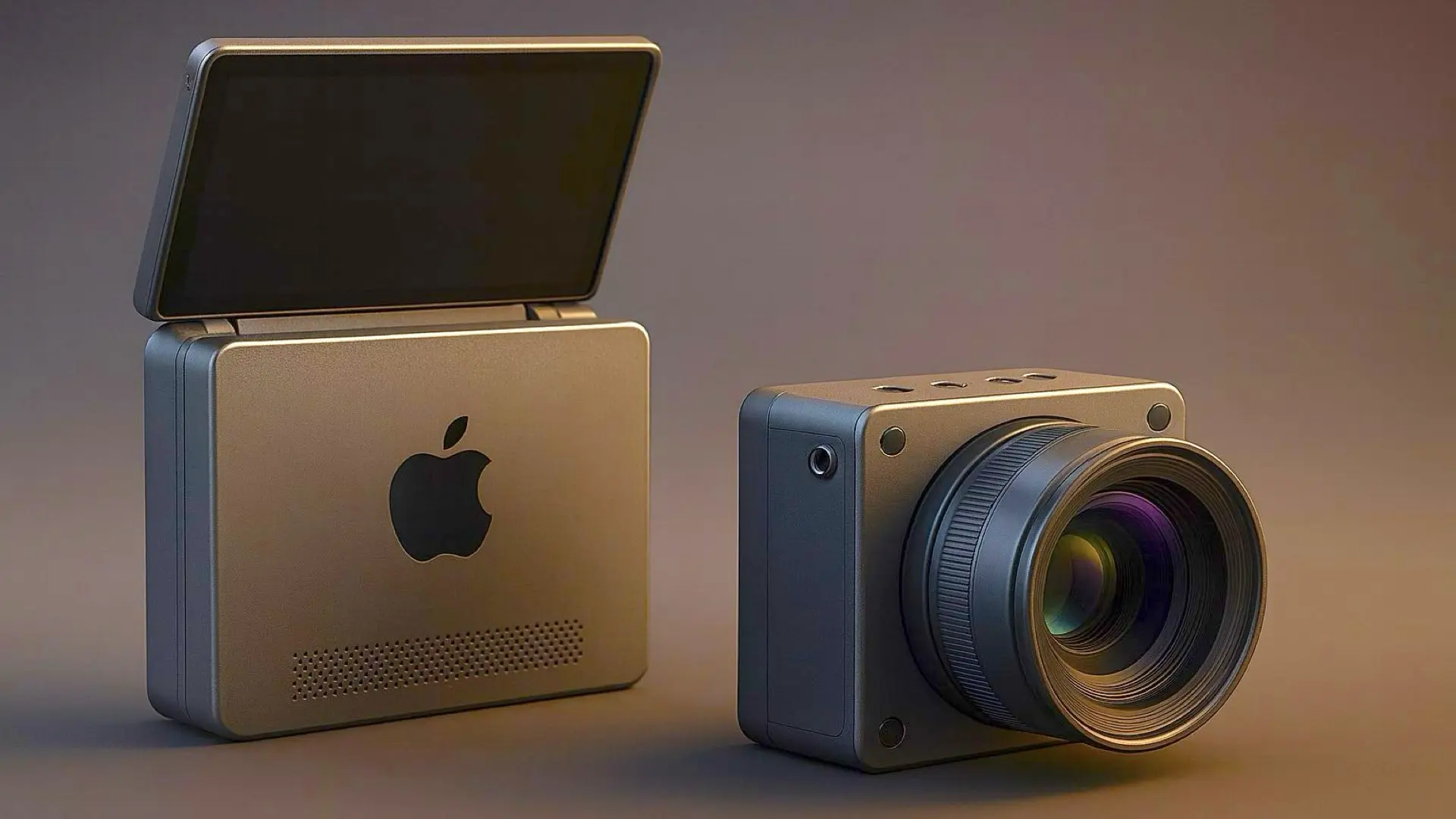
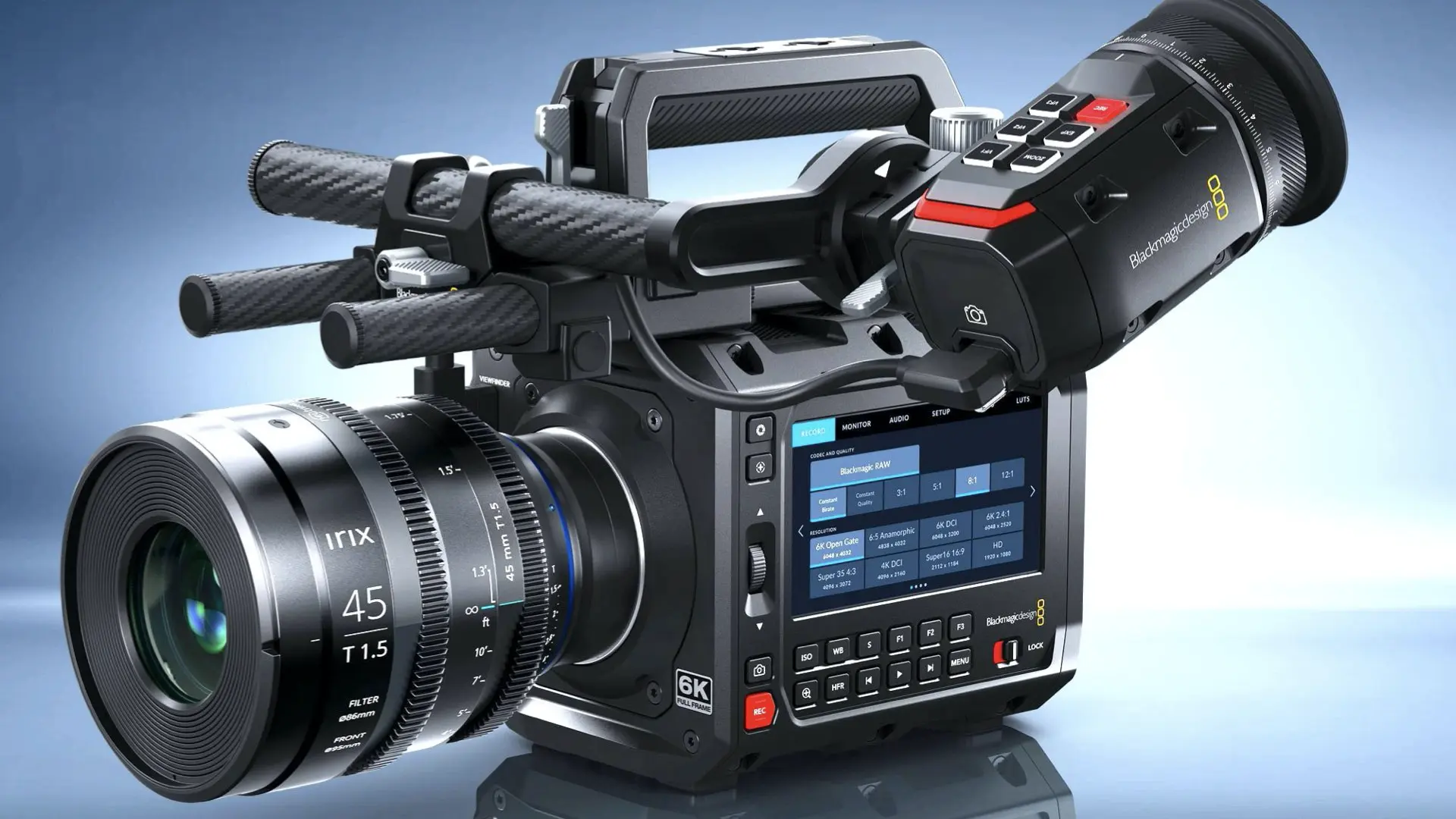
The Blackmagic Pyxis 6K is a purpose-built cinema camera. The iPhone 17 Pro is a consumer device pushed to impressive limits. Treating them as equals is misleading. Evaluating how each fits into a professional workflow is where the discussion becomes meaningful. Even Apple quietly acknowledges this gap. The company’s long term direction increasingly points toward physical solutions rather than purely computational ones, as seen in Apple Modular Camera System With Interchangeable Lenses Patent. That patent is not about better algorithms. It is about optics, mounts, and modularity. In other words, the same problems cinema cameras solved decades ago.
Where the iPhone genuinely shines is not in image quality. It is access. Its small size enabled shots that were simply impossible with a fully rigged cinema camera. Mounting the phone inside machinery. Placing it in extreme positions. Capturing movement that would be unsafe or impractical with heavier gear.
Why the iPhone looks convincing. Until it does not.
On paper, the iPhone 17 Pro looks formidable. ProRes RAW recording. Log profiles. External SSD support. Sensors that are large by smartphone standards. In controlled lighting, with moderate contrast and limited depth demands, the footage can look surprisingly close to that of a cinema camera. Lanson’s test confirms this. Several replicated shots showed minimal differences at first glance. Apple’s ProRes pipeline provides enough latitude for light grading, and as long as the footage is not stressed, it behaves well. But filmmaking does not stop at favorable conditions. Once contrast increases, once highlights stretch, once shadows need to hold structure, the phone’s limitations surface quickly. This is not about codecs but about sensor behavior under stress. Rolling shutter artifacts. Noise patterns. Readout limitations. All the unglamorous issues cinema cameras are engineered to handle consistently. Apple is clearly aware of this limitation, which is why it continues to research hardware solutions such as global shutter designs, explored in Apple Global Shutter iPhone Sensor. The technology is promising. But it is still not shipping in a form that replaces a cinema camera on set.

Lenses still define cinema language
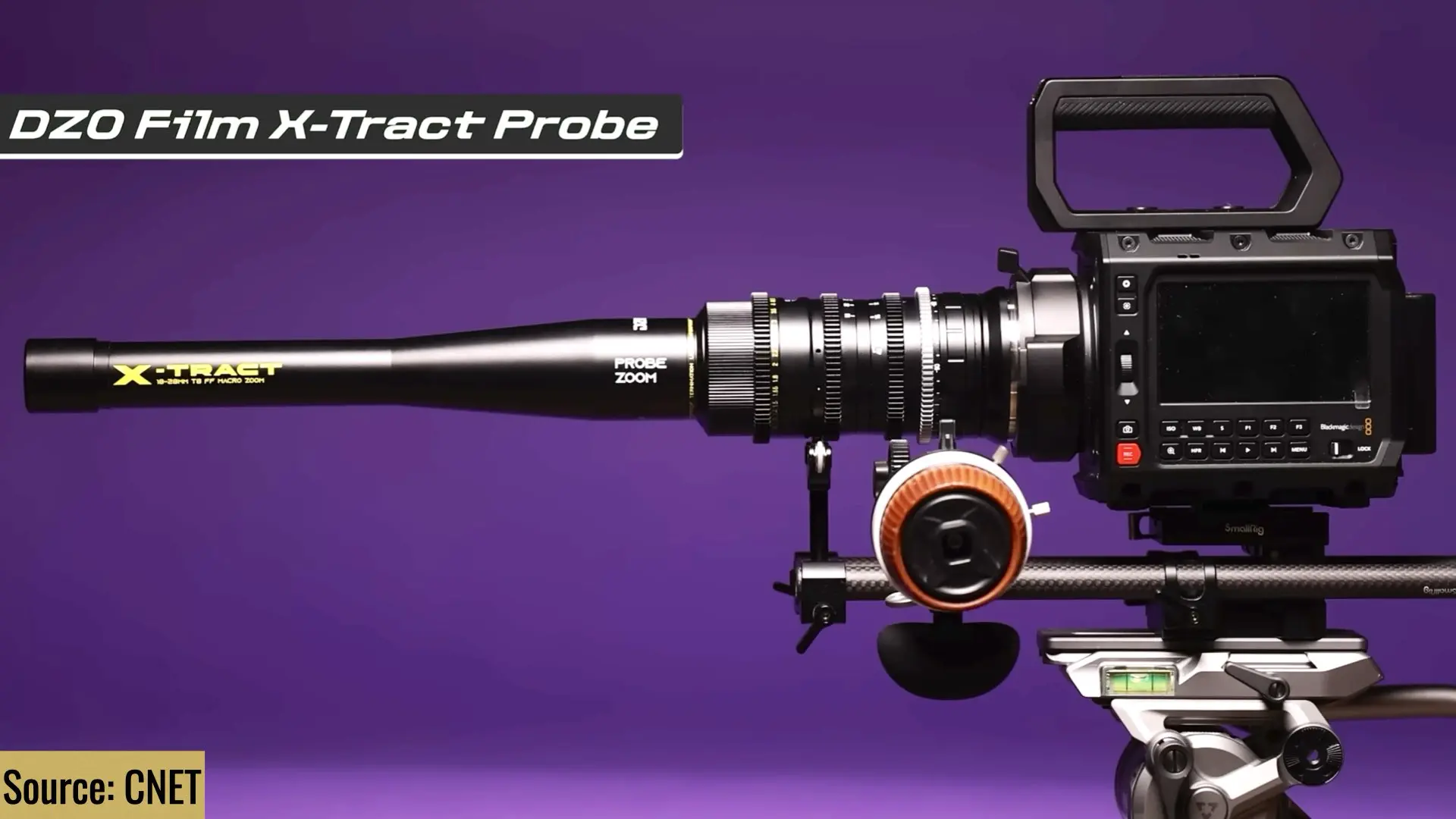
One of the most revealing moments in the CNET shoot involved real cinema glass. Arles primes. Sigma cine lenses. And especially the DZOFilm probe lens. This is where the comparison stops being theoretical. The probe lens is not a gimmick. It enables shots defined by optical physics, not software. Extreme close focus combined with controlled falloff and deliberate background suppression creates images the iPhone simply cannot replicate. When Lanson tried to match these shots using the iPhone’s ultrawide lens, the footage looked acceptable, but visually compromised. Computational blur does not remove information. It merely masks it. Distracting background elements remain visible. Depth remains shallow in theory but not in perception. This is not a failure of the iPhone. It is a reminder that cinema language is built on glass.
Phones are built for speed. Cinema cameras are built for survival.
Color grading exposes the real gap
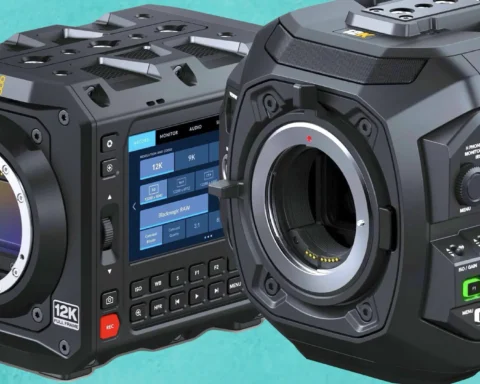
The most honest insight in the article comes not from the author, but from the Director of Photography. While the iPhone footage could be graded to match in simple scenes, it began to fall apart in more demanding ones. This is where cinema cameras earn their reputation. The Blackmagic Pyxis 6K is designed for heavy grading, not just flexible grading. Its sensor, color science, and raw pipeline maintain integrity when pushed. Blackmagic’s engineering philosophy becomes even clearer when looking at its broader Pyxis line, including Blackmagic Pyxis 12K, A Compact Beast With 12K Resolution and 16 Stops of Dynamic Range. These cameras are built for resilience, not convenience. Phones are built for speed. Cinema cameras are built for survival.
Size is the iPhone’s real weapon
Where the iPhone genuinely shines is not in image quality. It is access. Its small size enabled shots that were simply impossible with a fully rigged cinema camera. Mounting the phone inside machinery. Placing it in extreme positions. Capturing movement that would be unsafe or impractical with heavier gear. This is not a weakness of cinema cameras. It is a strength of phones. And it points to the real future of professional filmmaking. Hybrid setups. Cinema cameras as the backbone. Phones as creative tools for moments where traditional rigs cannot go.

The Blackmagic Pyxis 6K remains vastly superior for real filmmaking. In optics. In grading resilience. In sensor behavior. In predictability. That was never in question. But the iPhone has earned its place on professional sets,
The economics tell the same story
There is also a practical reality. The Blackmagic Pyxis 6K is not cheap, but it is priced as a professional tool, something explored in Blackmagic Pyxis 6K New Amazon Price. Its cost reflects reliability, consistency, and longevity in production environments. The iPhone, despite its rising price, is still designed for annual upgrades, thermal compromises, and consumer usage cycles. These are fundamentally different product philosophies.
No illusions required!?
Andrew Lanson’s experiment deserves praise because it does not try to crown a winner. It demonstrates something more useful. The iPhone is not a cinema camera. It is also no longer just a phone. The Blackmagic Pyxis 6K remains vastly superior for real filmmaking. In optics. In grading resilience. In sensor behavior. In predictability. That was never in question. But the iPhone has earned its place on professional sets, not as a replacement, but as an augmentation. A tool for speed. For access. For shots that would otherwise be impossible. The future is not phone versus cinema camera. It is phone plus cinema camera. Anyone still asking which one wins is asking the wrong question. Check out the whole comparison below:
As an Amazon Associate, Y.M.Cinema earns from qualifying purchases. If you purchase through the Amazon links above, Y.M.Cinema may earn a small commission at no additional cost to you. This helps support our work.