

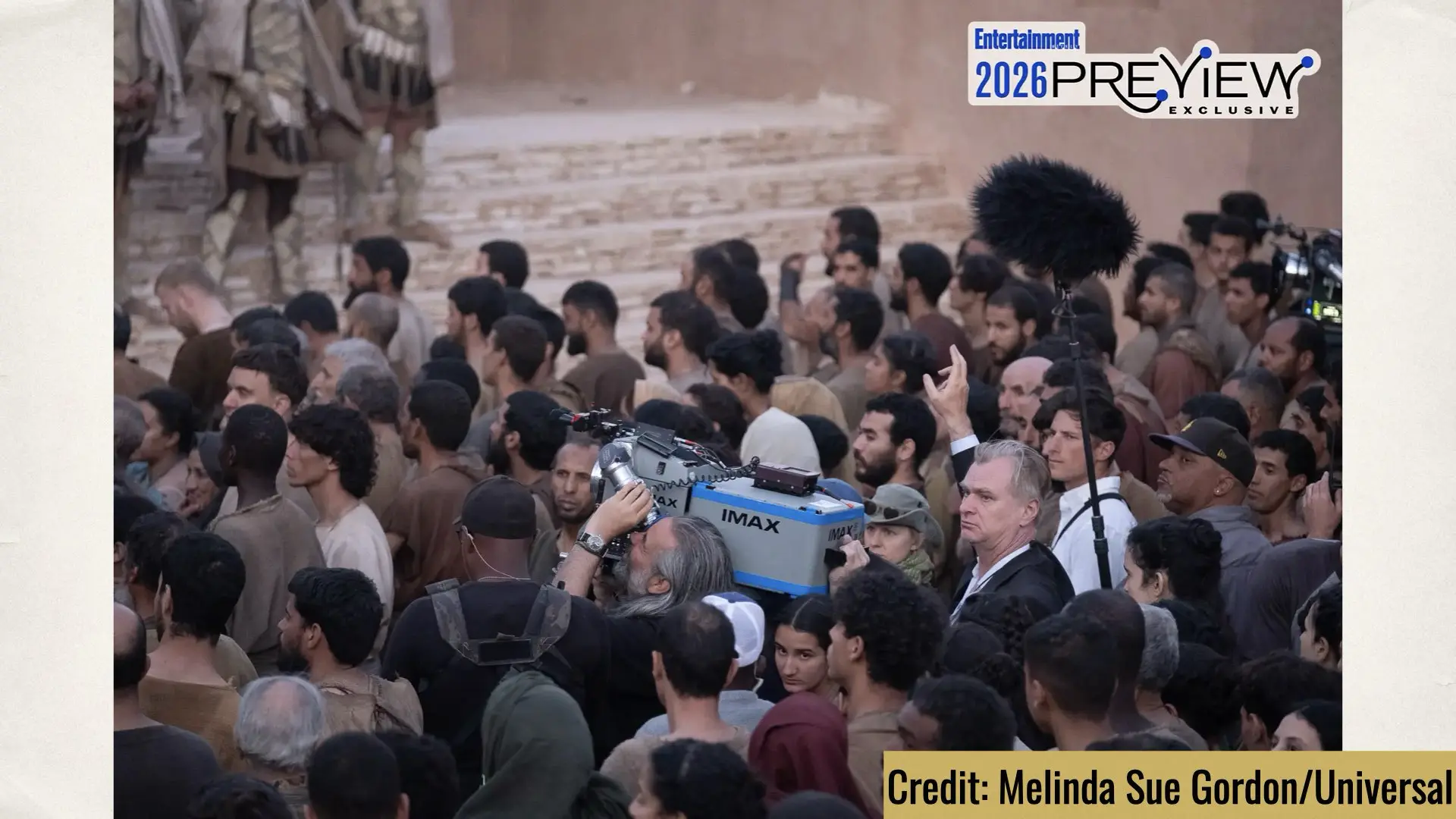
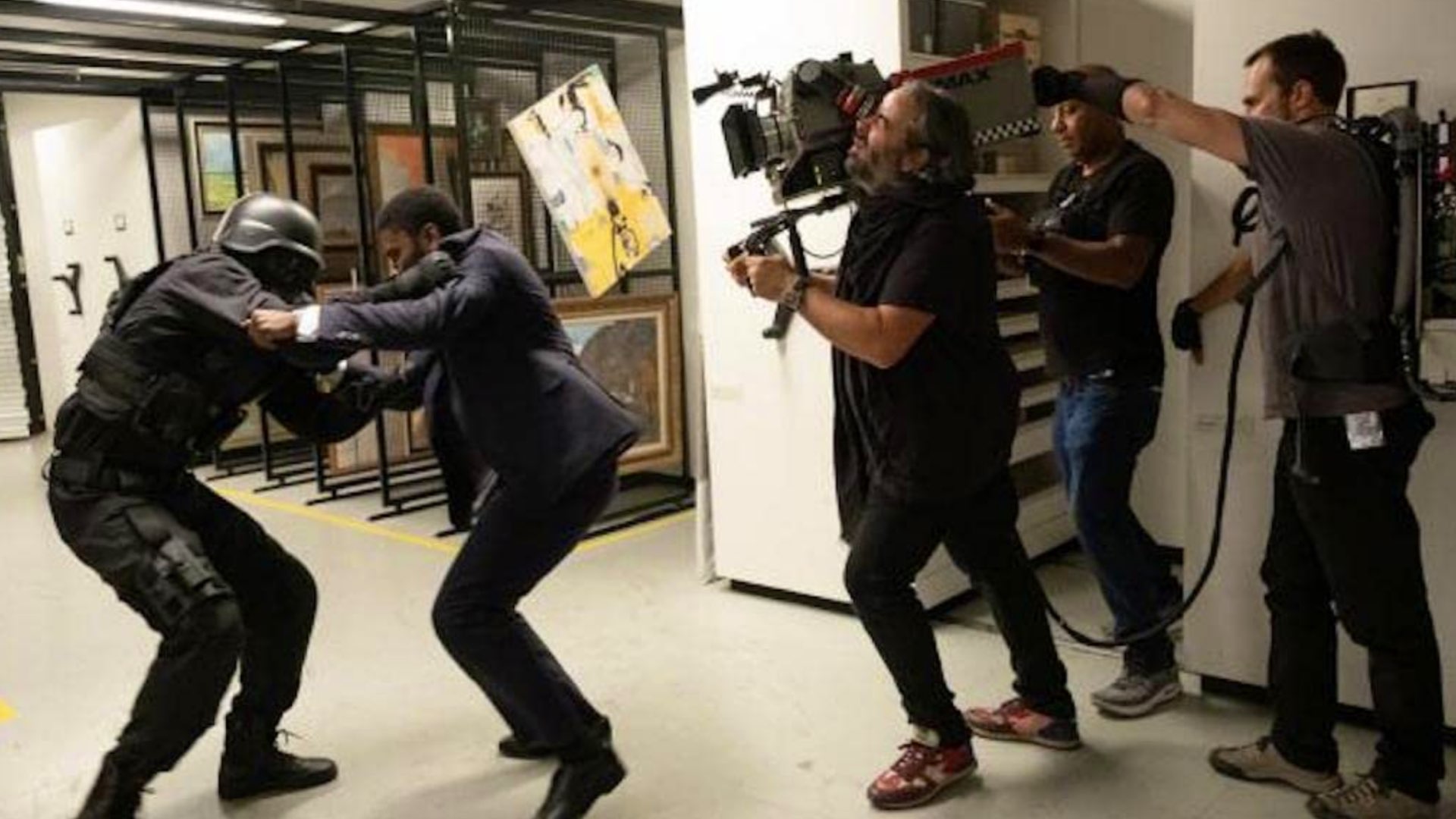
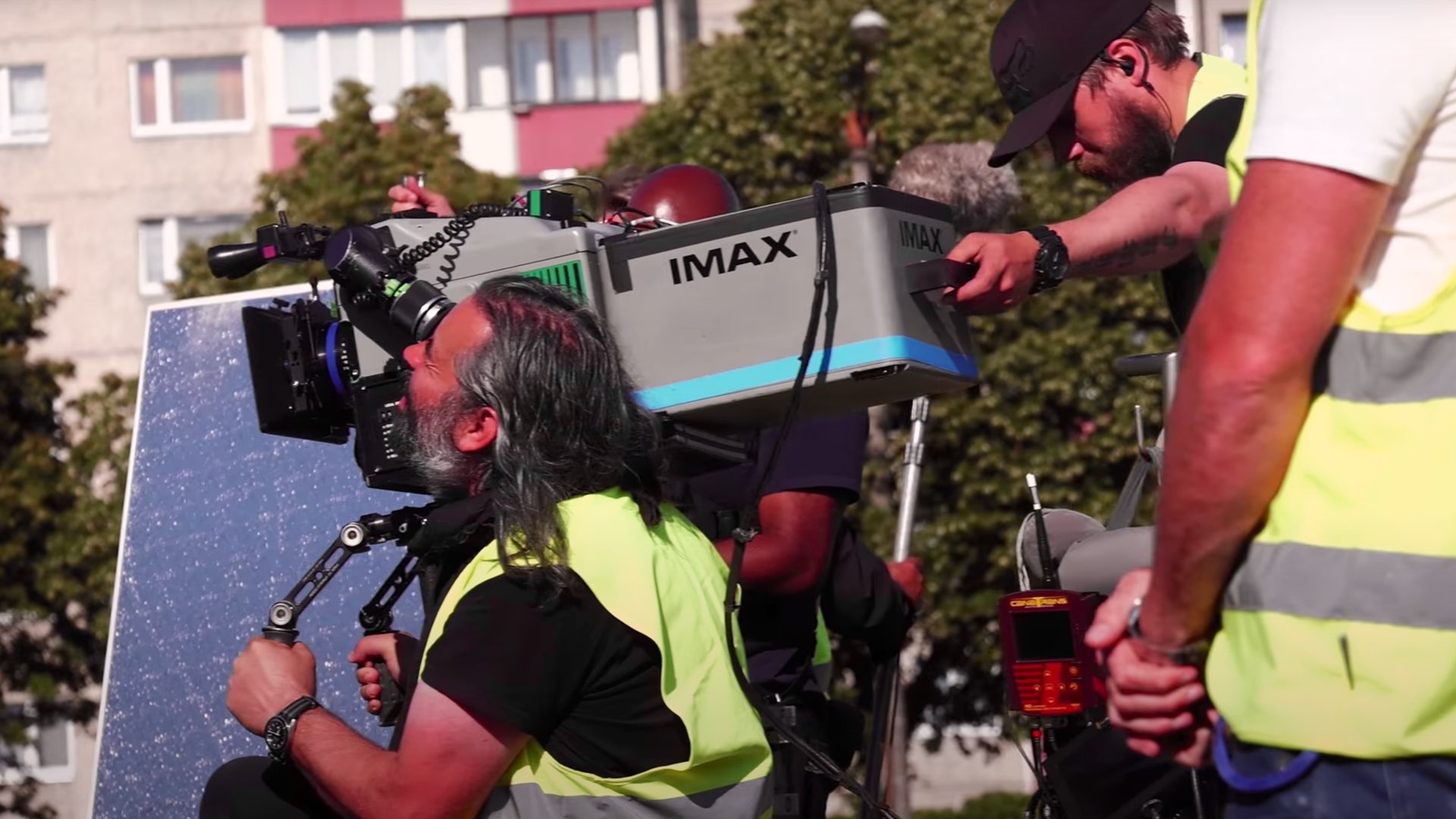
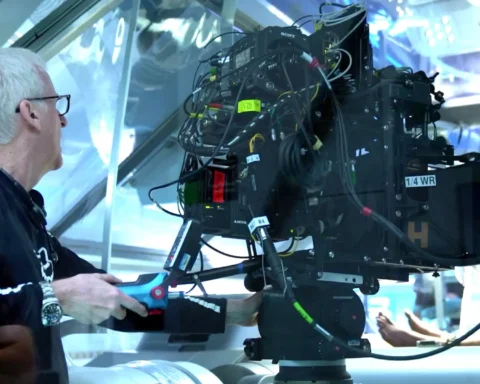
A rare behind-the-scenes photograph from Christopher Nolan’s The Odyssey has quietly confirmed something extraordinary. Cinematographer Hoyte van Hoytema is operating a first-generation IMAX film camera handheld, on his shoulder, inside a live crowd scene, with Nolan physically supporting the camera. More importantly, this image confirms that handheld IMAX film is no longer an experiment for Nolan and Hoytema. It is now a deliberate, repeatable part of their cinematic language.
Why this image matters more than it seems
IMAX film cameras were never designed to be handheld. Their weight, mechanical vibration, film transport system, and power requirements historically demanded rigid stabilization. For decades, IMAX meant tripods, cranes, custom mounts, and controlled motion. Seeing a full size IMAX film camera embedded inside a crowd, shoulder-mounted by the director of photography himself, fundamentally challenges those assumptions. It is a creative choice made under extreme physical and logistical constraints. And it builds directly on a trajectory that has been developing for years.
This was not the first time…
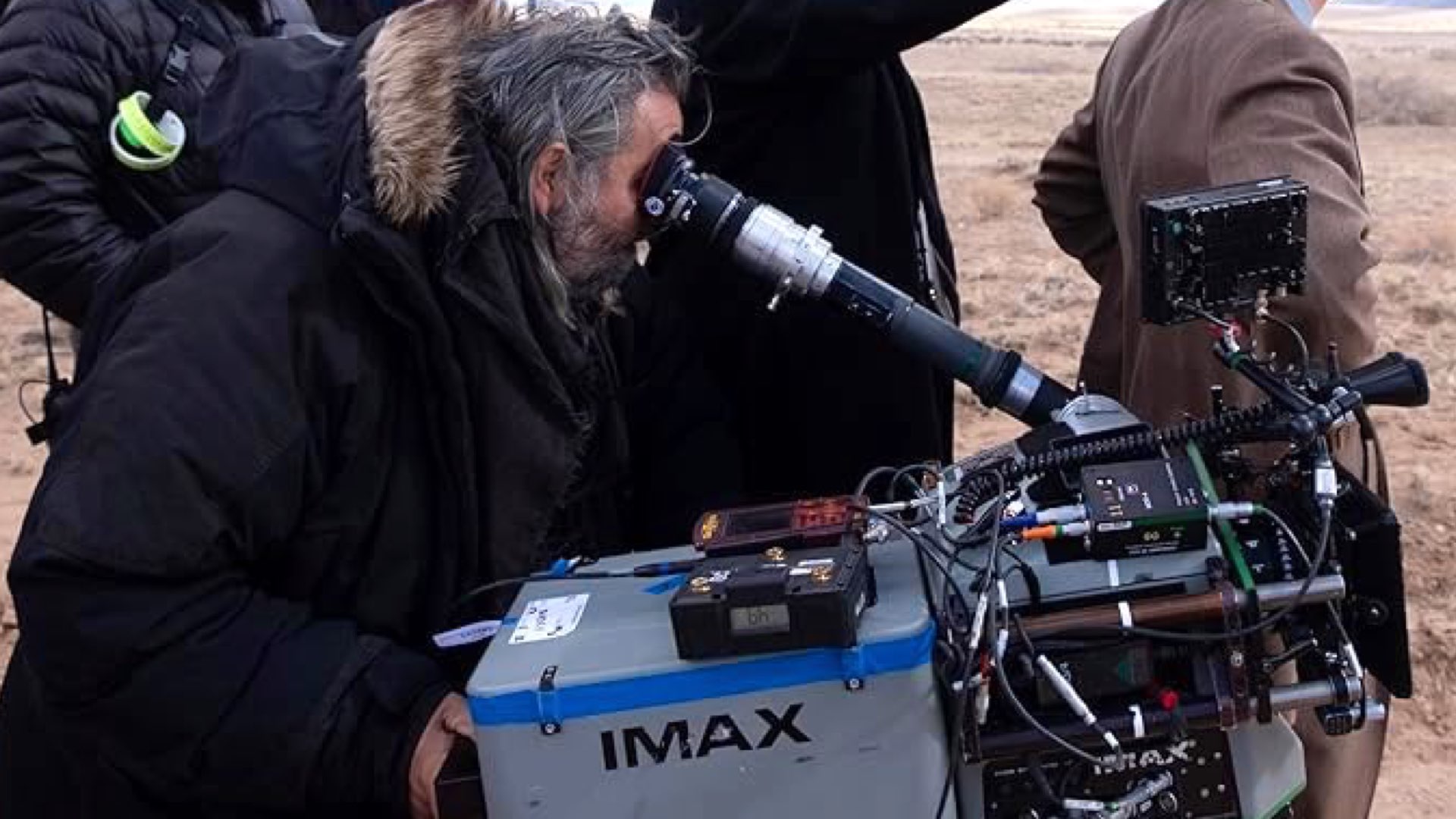
Handheld IMAX film did not begin on The Odyssey. Hoyte van Hoytema already used this approach on Tenet, marking the first time large-scale IMAX film imagery adopted the visual language of handheld cinema. What changes now is confirmation. Earlier reporting suggested that Nolan and Hoytema were actively testing new IMAX film configurations during pre production. In Rumor: Nolan and Hoyte Test IMAX’s New Film Camera for The Odyssey, we explored how IMAX hardware was being evaluated for greater flexibility and operator proximity. This BTS image moves that discussion from rumor to reality. The technique works. It was trusted again. And it has clearly evolved.
The physicality of authorship
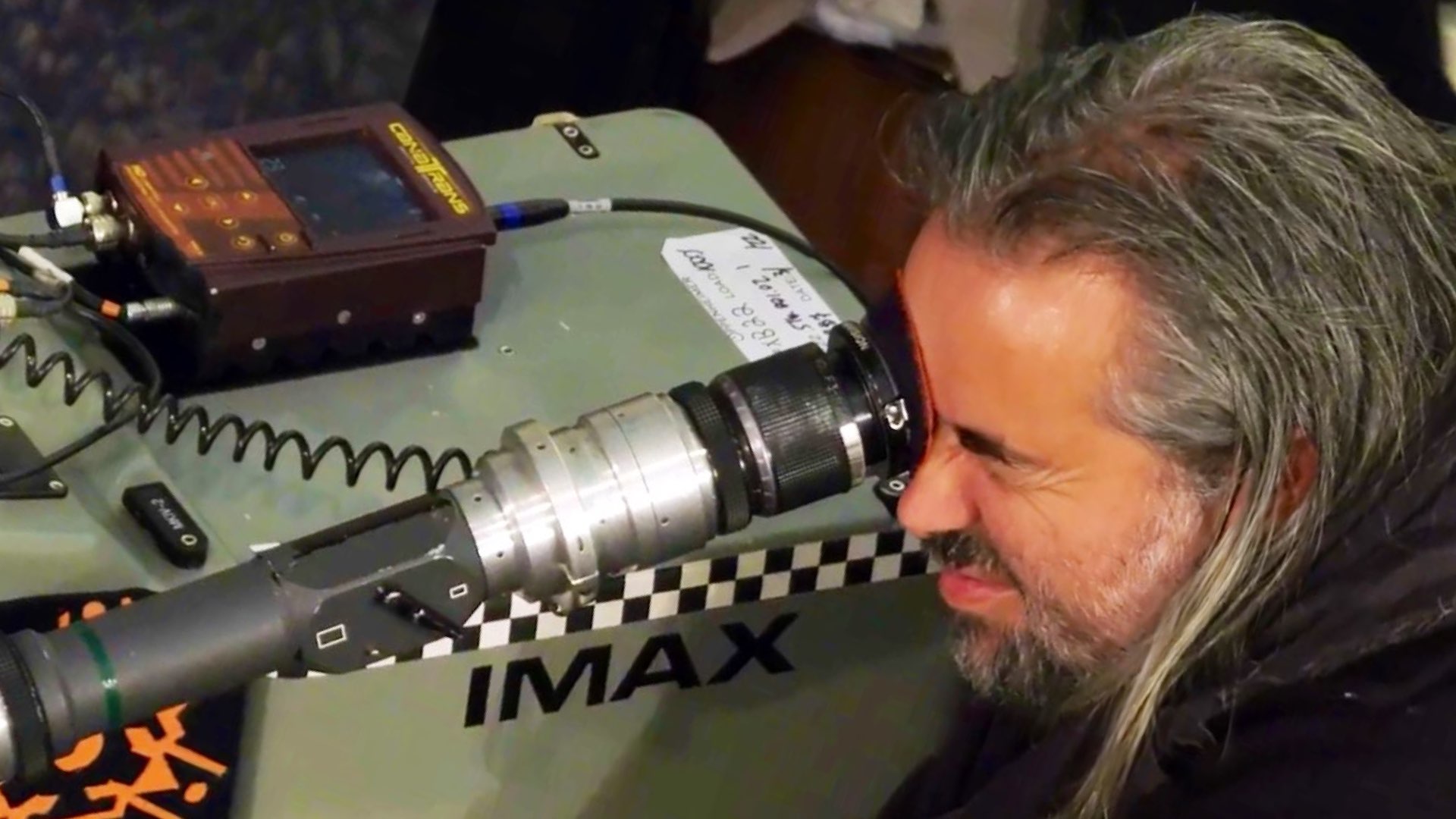
One of the most striking aspects of the image is not just the camera, but the people. Hoyte van Hoytema is operating the camera himself. Christopher Nolan is physically assisting him, supporting the camera body by hand. There is no separation between director, cinematographer, and image capture. This matters because Nolan’s filmmaking philosophy has always rejected abstraction. He favors physical cause and effect, practical constraints, and real world systems. Supporting the camera is not symbolic as that philosophy has been expressed repeatedly in Hoytema’s own words. In Oppenheimer’s Cinematographer: Shooting Film Is Much Easier Than You Think, Hoytema explains that film is not a burden when embraced fully. It becomes intuitive, direct, and creatively liberating. Handheld IMAX film is the extreme extension of that belief.
Faces, proximity, and large format intimacy
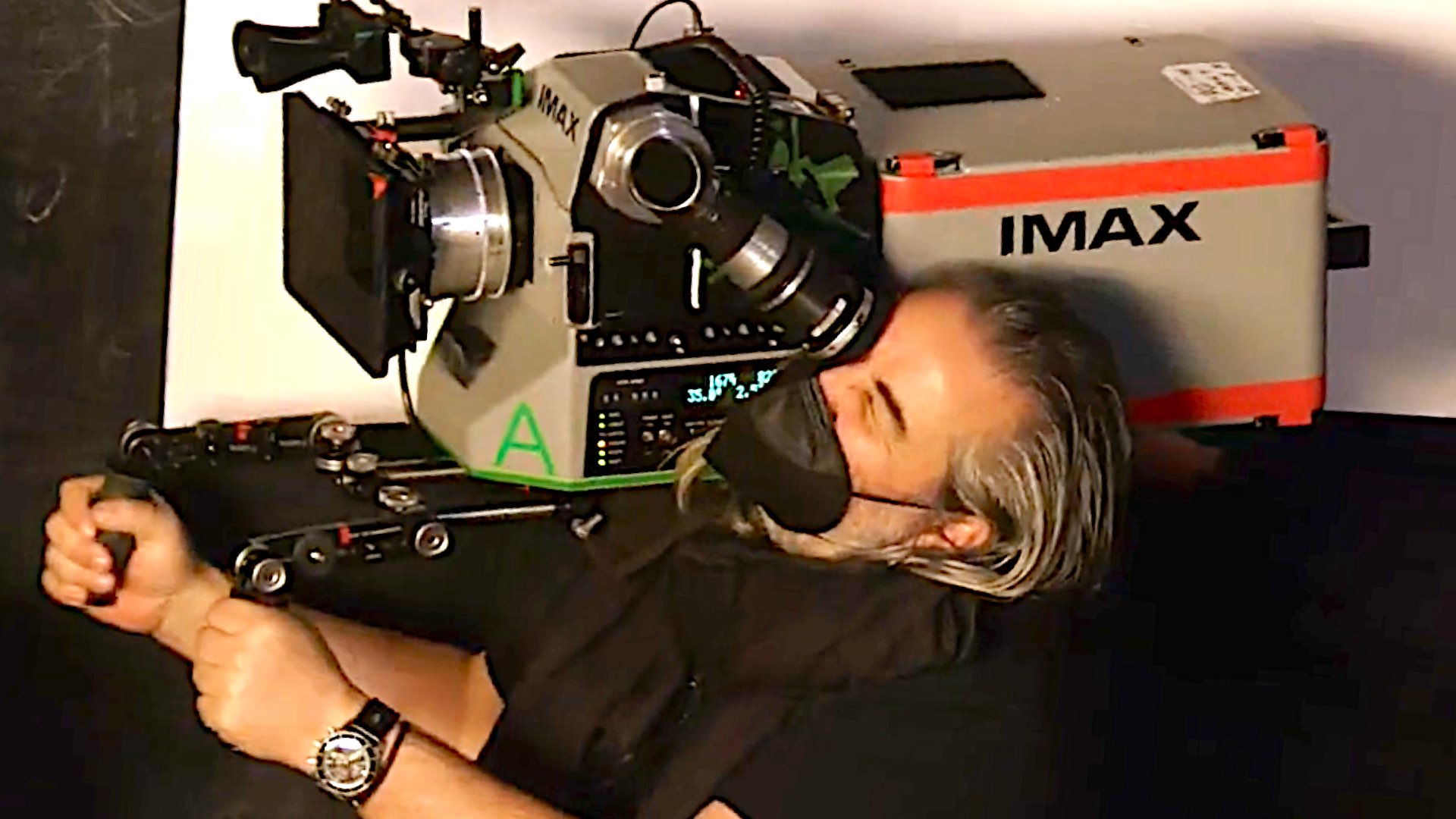
Hoytema’s cinematography has increasingly focused on proximity. Even in large-scale films, his images prioritize faces, skin texture, and human presence. This approach was central to Oppenheimer, as discussed in Cinematographer Hoytema van Hoytema: Oppenheimer Is Reliant on the Faces of Its Characters. Large format film was not used for spectacle alone, but to render human emotion with overwhelming clarity. Handheld IMAX film pushes that concept further. It allows large-format imagery to exist inside chaos rather than observing it from a distance. The Odyssey appears to be applying that same logic to mythic-scale storytelling.
Film is a ‘system’ Nolan understands
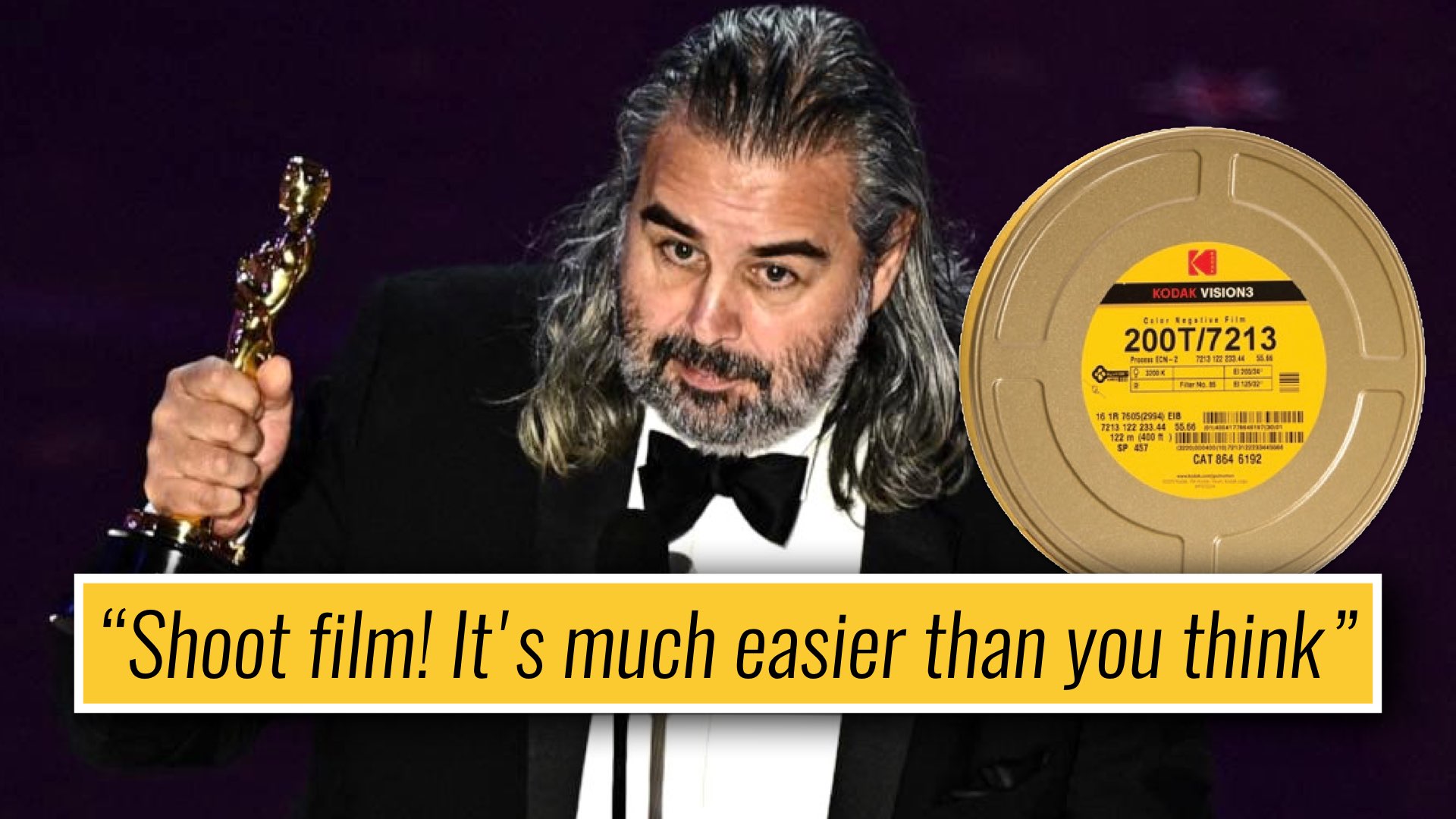
The continued use of IMAX film is often misunderstood as nostalgia. Hoytema has repeatedly rejected that framing. In Hoyte van Hoytema: Celluloid Is Alive and Kicking, he makes it clear that film remains relevant because it offers qualities digital systems still struggle to replicate at scale. Dynamic highlight roll off, organic motion cadence, and optical depth remain unmatched in large format film. Crucially, Hoytema does not treat film as fragile. He treats it as robust. That confidence is what enables handheld operation. When the cinematographer trusts the medium completely, new physical possibilities emerge.
Large format as a living language
Hoytema’s collaboration with Nolan is built on constant evolution. Their shared discussions around large format storytelling were explored in Hoyte van Hoytema Talks About Film, Large Format, and Nolan, where Hoytema describes large format not as a fixed aesthetic, but as a language that must adapt to narrative needs. Handheld IMAX film is a direct manifestation of that idea. Large format no longer means distance, symmetry, or monumentality alone. It can now express instability, urgency, and immersion without abandoning its visual authority.
The Odyssey as a testing ground for IMAX’s future
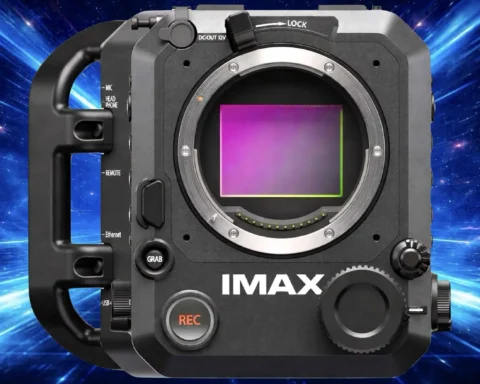
This BTS image also connects directly to IMAX’s hardware evolution. In IMAX Next Gen Camera First Appearance: The Odyssey Set, we reported early signs that The Odyssey was being used as a proving ground for new IMAX film technologies. Lighter configurations, improved ergonomics, and refined mechanical tolerances appear to be part of that process. Seeing handheld operation on a first-generation IMAX film camera suggests two things. First, Hoytema is pushing existing hardware beyond its intended limits. Second, future IMAX systems are likely to be shaped by these real-world demands. This is not theoretical research and development but filmmaking driving engineering. But yes, we are a little disappointed we haven’t noticed the carbon body of the new IMAX film cameras.

Not a gimmick
It is worth stating plainly. Almost no other filmmaker could attempt this. Handheld IMAX film requires physical endurance, mechanical understanding, absolute confidence in exposure, and a director willing to accept imperfection in pursuit of immediacy. It also requires a production environment that prioritizes craft over efficiency. Nolan and Hoytema operate outside conventional risk calculations. That is why this technique exists at all. From Tenet to The Odyssey, handheld IMAX film has moved from experiment to established practice. It is now part of Nolan’s visual grammar and Hoytema’s operational expertise. Sorry to be so excited about it 🙂







A perspective to share here! The hand holding the back handle of the IMAX mag is not that of Nolan. There appears to be a person with a blue baseball cap behind Hoytema’s right shoulder, whose hand it is. This would make more sense, as assisting a camera operators move takes incredible condensation, timing, precision, and focus. This is also supported by the camera being on Hoytema’s right shoulder, leaving space for an assistant to stand behind his right shoulder, while easily supporting the back of the camera with a left hand (as pictured). The angle of the hand, and apparent upwards force it is exerting, also does not align with Nolan’s position and orientation of his left shoulder. My interpretation doesn’t take away from your analysis at all, as a good assistant (as I’m sure hoytema has) would act as an extension of his body.
Hey, great tip! You are right. It’s NOT Nolan’s hand. We’ve just noticed that. Thx for the insights and cheers!
I remember an IMAX film in 1989 narrated by William Shatner “To The Limit”, about human physical endurance, that had a downhill skier photographed. The Point of View perspective shots were taken by a beefy skier using a hand held rig as shown in the magazine: “American Cinematographer”.
30 years back an IMAX film was made about climbing Everest. So not only were parts handheld, but the camera was carried up the highest mountain in the World. So I think Nolan and Hoytema are a bit late in the game with handheld IMAX.
The filmmakers had a special lightweight IMAX camera constructed to be light enough to climb with and also to withstand the cold.
I was lucky enough to see it on a proper IMAX screen in Bradford at the National Film and Photography Museum. Very impressive.