
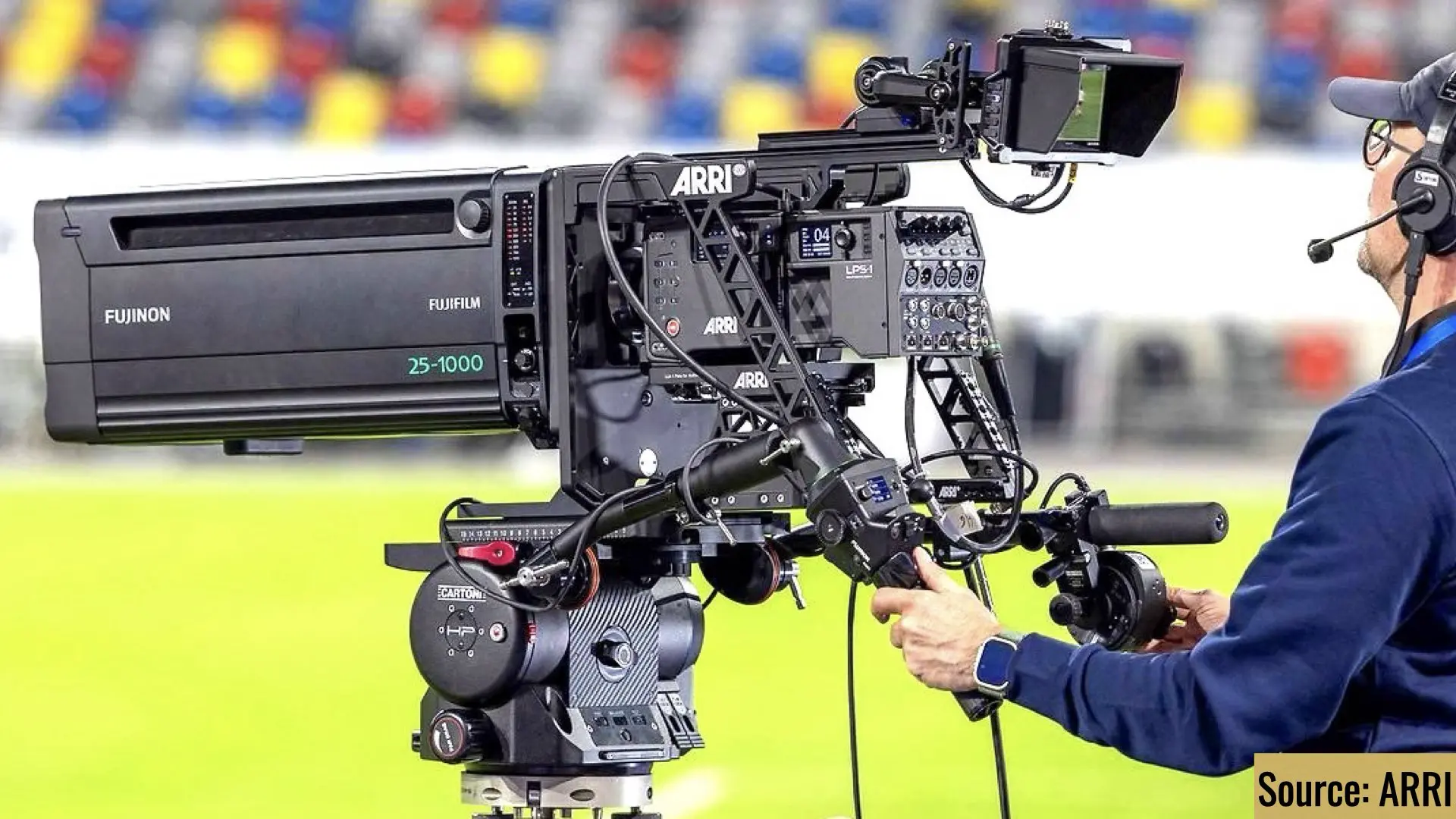
The new strategic partnership between ARRI and The HELM looks on paper like a simple integration deal. In practice, it might be one of the most important moves in ARRI’s modern history. It connects ARRI’s premium cinema heritage with a very different world. Multicam, managed services, and live broadcast at scale. Below is an in-depth analysis of what this announcement really signals. How it fits into ARRI’s recent strategy moves. And what it could mean for the future of cinematic live production.
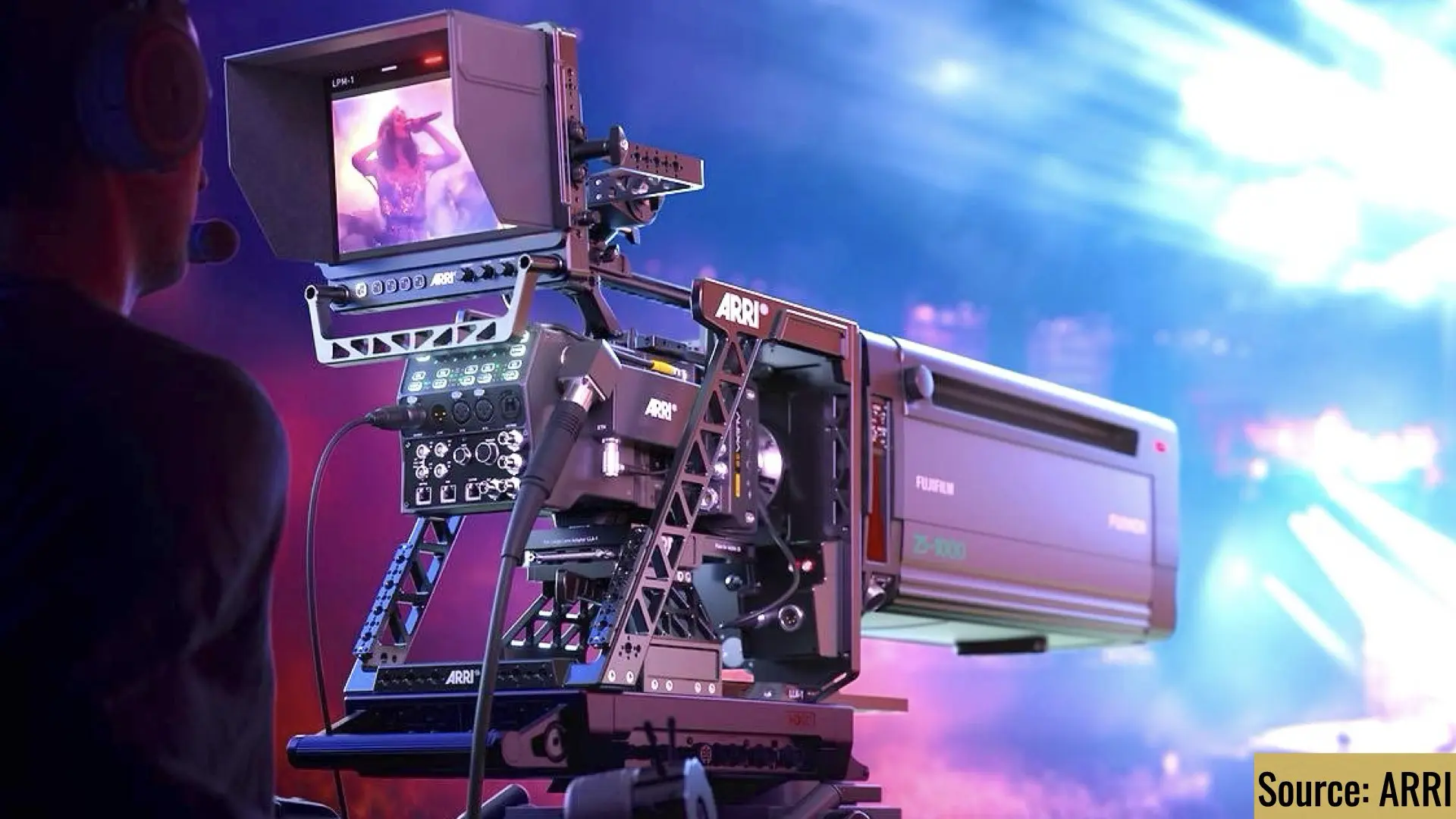
The live production market is enormous and very different from feature film or episodic. There are more shows, more events, and more recurring revenue. For decades, Sony and Panasonic have dominated this space with dedicated broadcast chains and hard cameras. However, tastes have changed. Platforms and promoters want “cinematic broadcast”. Shallow depth of field, rich highlight roll off, and an image that feels closer to streaming drama than classic television.
ARRI’s live ambitions move from experiment to strategy
The press release formalizes HELM as ARRI’s first global Live Solution Partner and global integration partner for live production. That language matters. It is not another one off activation, but a framework for scaling ARRI Live Solutions as a managed service across concerts, broadcast, film and television, and corporate events worldwide. This is the logical continuation of ARRI’s earlier technology announcements. When ARRI unveiled the ALEXA 35 Live multi cam platform, it was positioned as a technical bridge between cinema image quality and live workflows. We have covered that shift in ARRI announces the ALEXA 35 Live, where the company presented live as a new frontier for the ALEXA 35 sensor and color science rather than a side experiment. Since then, ARRI quietly tested live configurations in real world sports and event environments. For instance, the AMIRA paired with Fujinon Duvo 25 to 1000 for football coverage, which we analyzed in ARRI AMIRA and Fujinon Duvo 25 1000 to broadcast football games, and the AMIRA Live based setup for the World Karate Championships, documented in Three ARRI AMIRA Live cameras Fujinon PL box lens and Canon PL 25 250 to livestream the World Karate Championships. The HELM partnership takes those experiments and wraps them in a structured commercial model. One that promises turnkey integration, project delivery, training, and pilot projects under a single global umbrella.
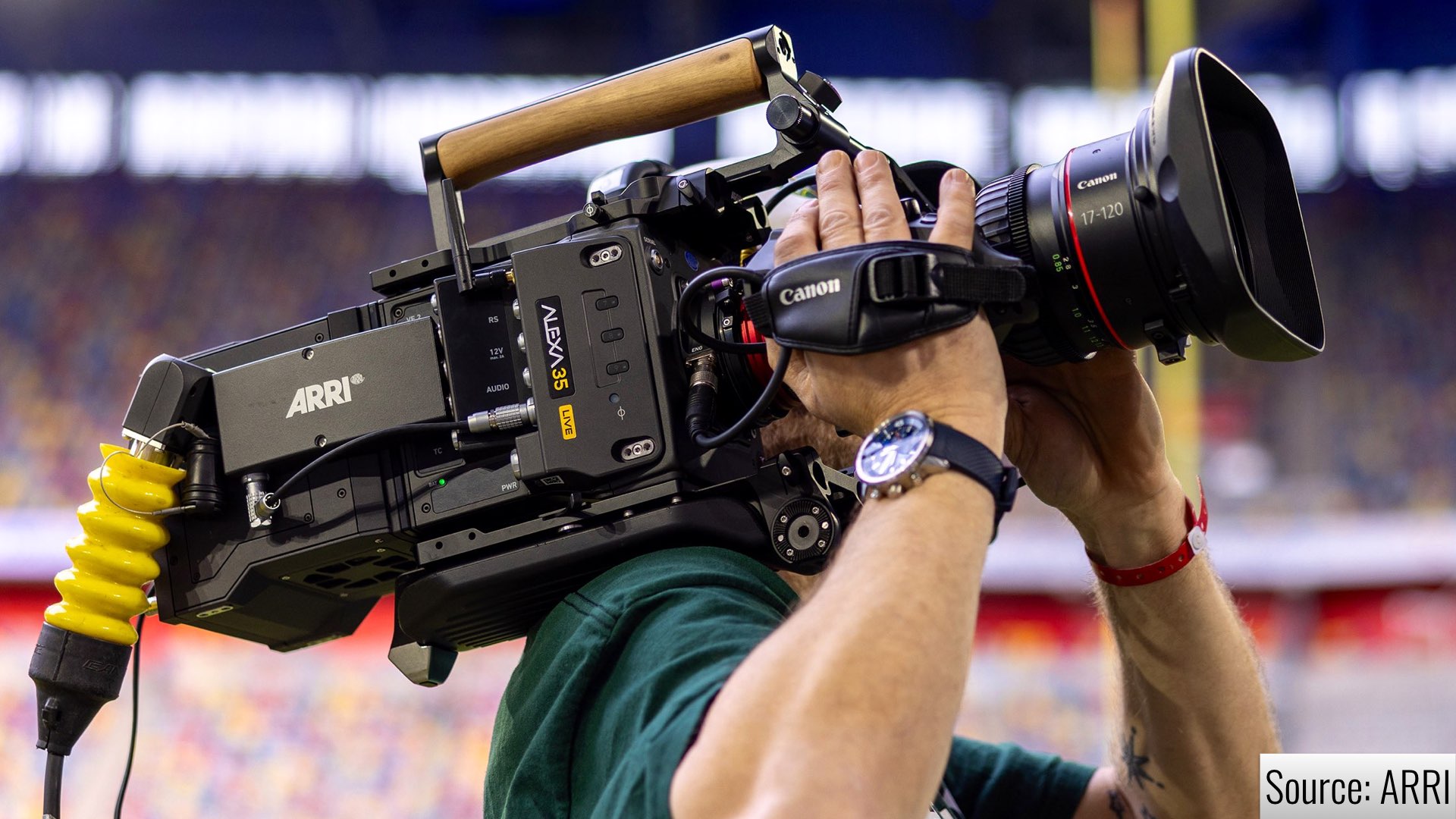
From sale rumors to strategic positioning
This announcement also cannot be separated from the bigger corporate context. ARRI has been the subject of potential sale discussions and market speculation, which we examined in ARRI considers sale industry impact analysis. If a sale or strategic restructuring remains on the table, this partnership strengthens ARRI’s narrative in a critical way. It tells investors and potential buyers that ARRI is:
-
Not only a high end cinema camera brand
-
But also a technology and workflow company with scalable service revenue in live production
In other words, ARRI is moving from a pure hardware plus rental story into a platform and solutions story. That tends to increase strategic value in a market that rewards recurring services and integrated workflows. At the same time, this strategy might fit nicely with potential advice on the company’s push into the prosumer and mid-tier cinema segment, which YMCinema dissected in ARRI’s prosumer cinema camera strategy. ARRI is building a multi-layer stack. Premium cinema systems at the top. Prosumer adjacent products below. Live and broadcast solutions alongside. All wrapped with rental and service.
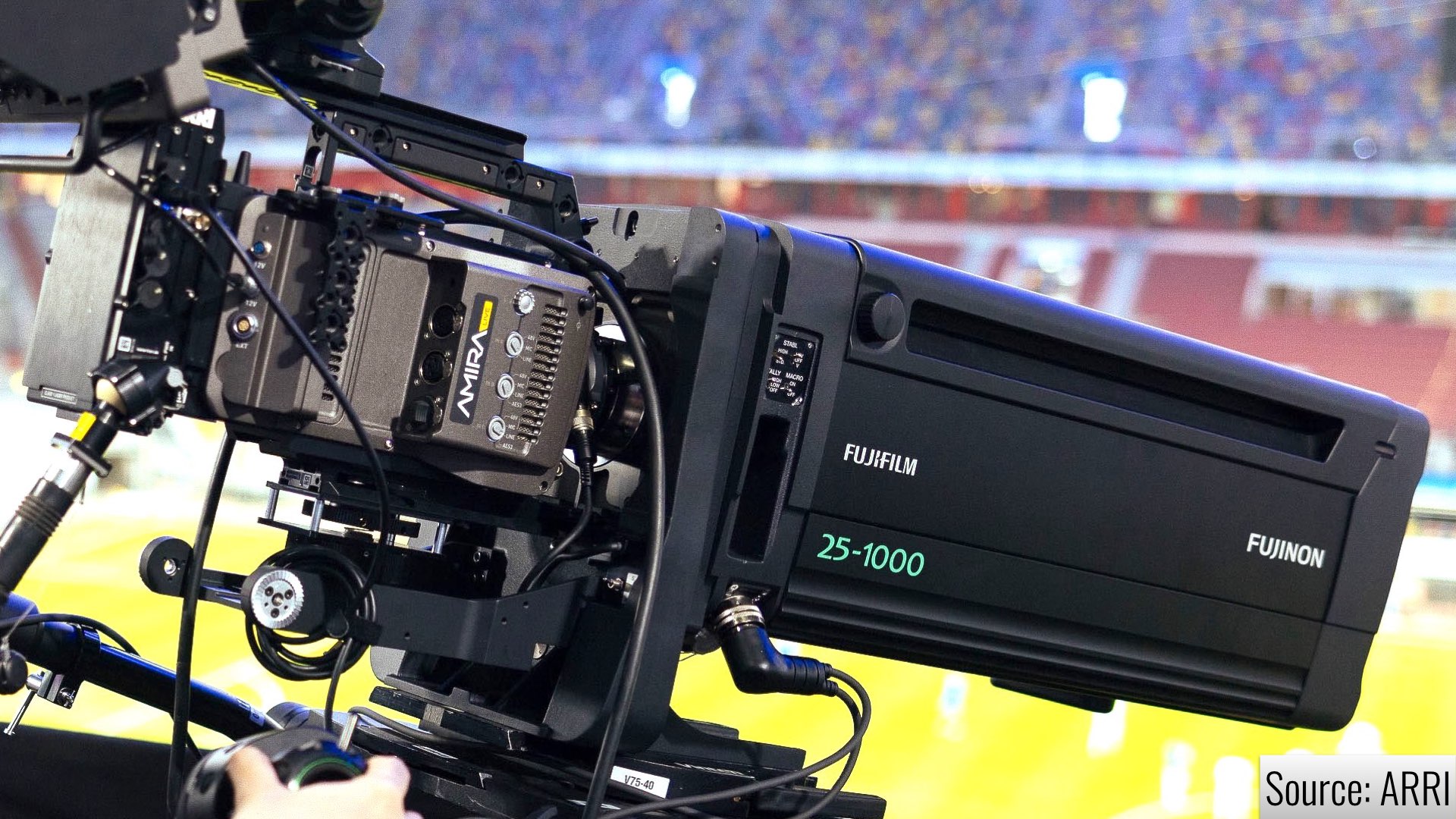
Why live broadcast is ARRI’s next battleground
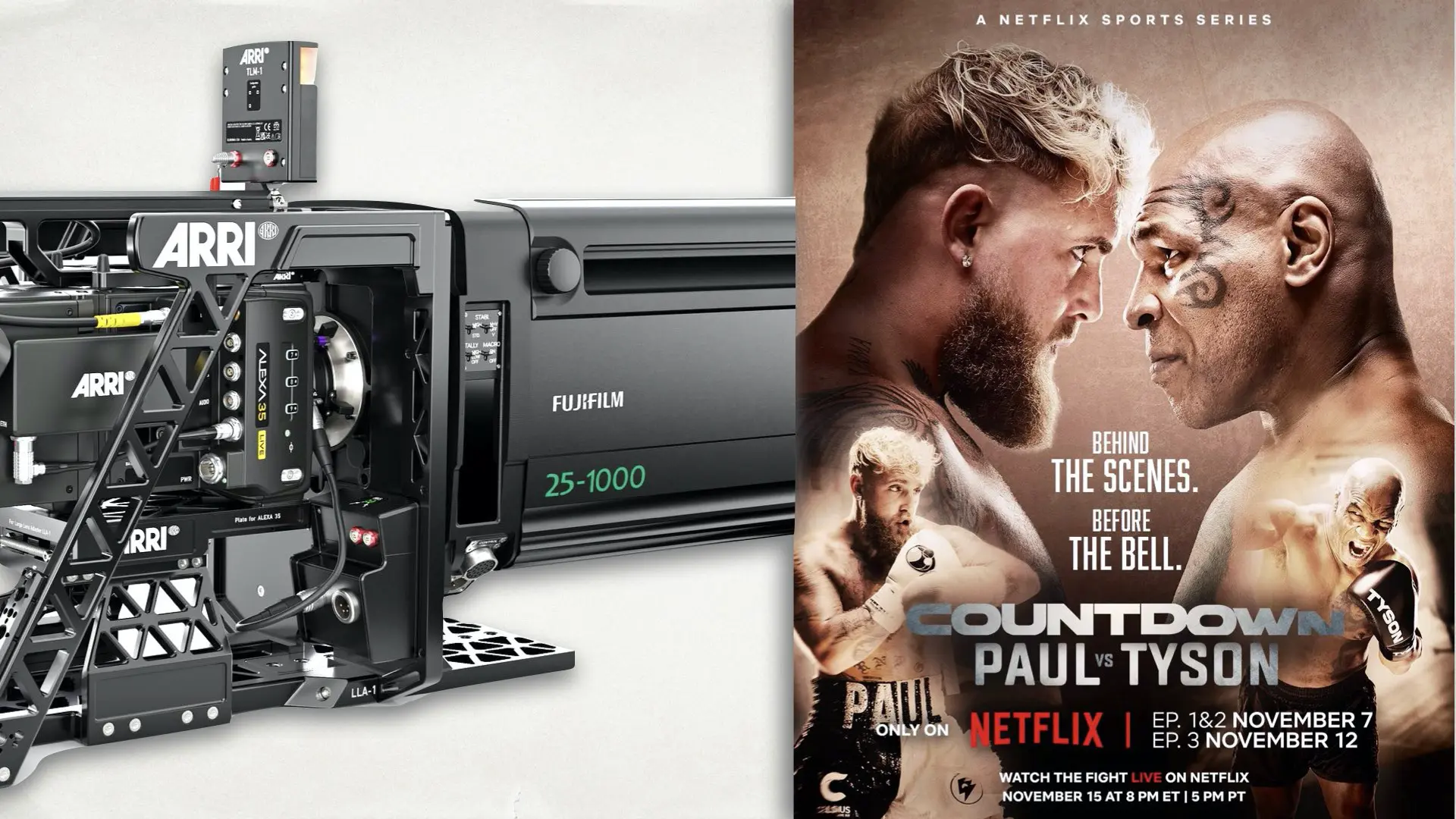
The live production market is enormous and very different from feature film or episodic. There are more shows, more events, and more recurring revenue. For decades, Sony and Panasonic have dominated this space with dedicated broadcast chains and hard cameras. However, tastes have changed. Platforms and promoters want “cinematic broadcast”. Shallow depth of field, rich highlight roll off, and an image that feels closer to streaming drama than classic television. We have seen this shift very clearly in boxing and combat sports. In Why Tyson vs Paul should be broadcast with cinema cameras The case for cinematic broadcasting, YMCinema argued that premium PPV events are leaving visual performance on the table by sticking with traditional broadcast chains. The Canelo vs Scull pay per view coverage for Riyadh Season, which ARRI explicitly cites as an ALEXA 35 Live deployment, is almost a direct manifestation of that thesis. The HELM has already worked in that arena, along with high-profile touring and streaming events such as TikTok awards and Troye Sivan concerts. ARRI is effectively capturing that demand and turning it into an official channel. Live events that want the “ARRI look” can now call one team, get one integrated package, and rely on a workflow that has been validated globally.
The HELM as ARRI’s integration and risk shield
The critical piece here is risk. Live productions cannot tolerate uncertainty. Missing a feed in a football final or a combat main event is a different level of disaster compared to a camera glitch on a narrative set. By designating The HELM as its Live Solution Partner, ARRI is doing several things at once.
-
Offloading the complexity of system design, fiber, routing, RF, shading, and monitoring to a specialist team that lives inside broadcast.
-
Creating a trusted layer between conservative broadcasters and a brand that is still associated primarily with cinema.
-
Accelerating adoption of ALEXA 35 Live, AMIRA Live, and upcoming systems by offering them as managed services rather than boxes that broadcasters have to figure out alone.
This is very similar to how major systems integrators work with broadcast vendors. The difference is that here the integrator is explicitly aligned with one camera manufacturer and marketed as part of the brand’s official live offering. In practice, The HELM becomes ARRI’s real world testbed for live workflows. Feedback from tours, PPV events, and corporate shows will flow straight into the Live Solutions roadmap.

Sony already drew the map for cinematic broadcast
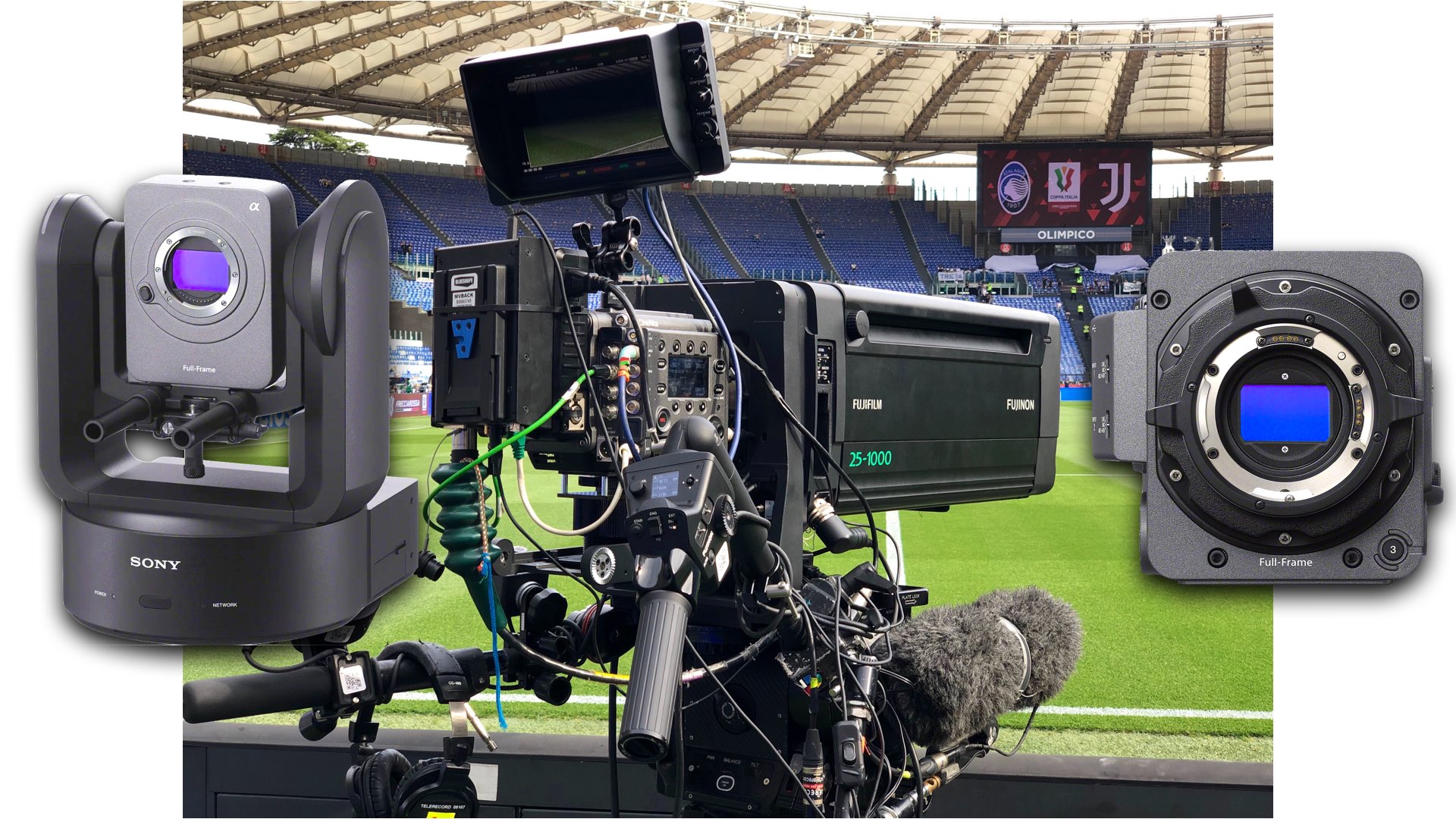
ARRI is not entering a vacuum. Sony has been building a cinematic broadcast stack for years with Venice, Burano, FR7 , and related systems. In Sony VENICE 2 Burano FR7 lethal combination for cinematic broadcasting, we showed how Sony created a toolset that covers fixed cameras, remote heads, and A camera positions with consistent color science and direct integration into broadcast infrastructure. Sony then took that philosophy to the biggest stage in American sports. Super Bowl. The halftime show relied on an army of cinema cameras, including a significant number of Venice units, as documented in 12 Sony VENICE cinema cameras to shoot Super Bowl halftime show. ARRI has clearly been studying that trajectory. The ALEXA 35 Live announcement, followed by AMIRA based sports tests, then the TRINITY Live hybridization of gimbal and Steadicam for cinematic broadcasting, all point toward a similar integrated ecosystem. The HELM partnership is ARRI’s answer to one of Sony’s main advantages. Sony has deep broadcast integration channels that can put Venice or Burano into OB vans and stadiums worldwide. ARRI does not have that legacy scale. So it is building a different structure. A live specialist partner that can deploy ARRI systems into these environments without broadcasters needing to become ARRI workflow experts first.
Who wins. Broadcasters, promoters, and high-end streamers
The direct beneficiaries of this partnership are productions that want cinema image quality without carrying all of the technical risk. That includes:
-
Concert tours that already design their stage shows with LED walls and cinematic visuals in mind.
-
PPV combat sports, where the stakes for visual impact are extremely high and cinematic language fits the drama.
-
Premium streaming events, game launches, and creator awards that want to stand out in a crowded live market.
-
Corporate shows for global brands that increasingly demand television level visuals or better.
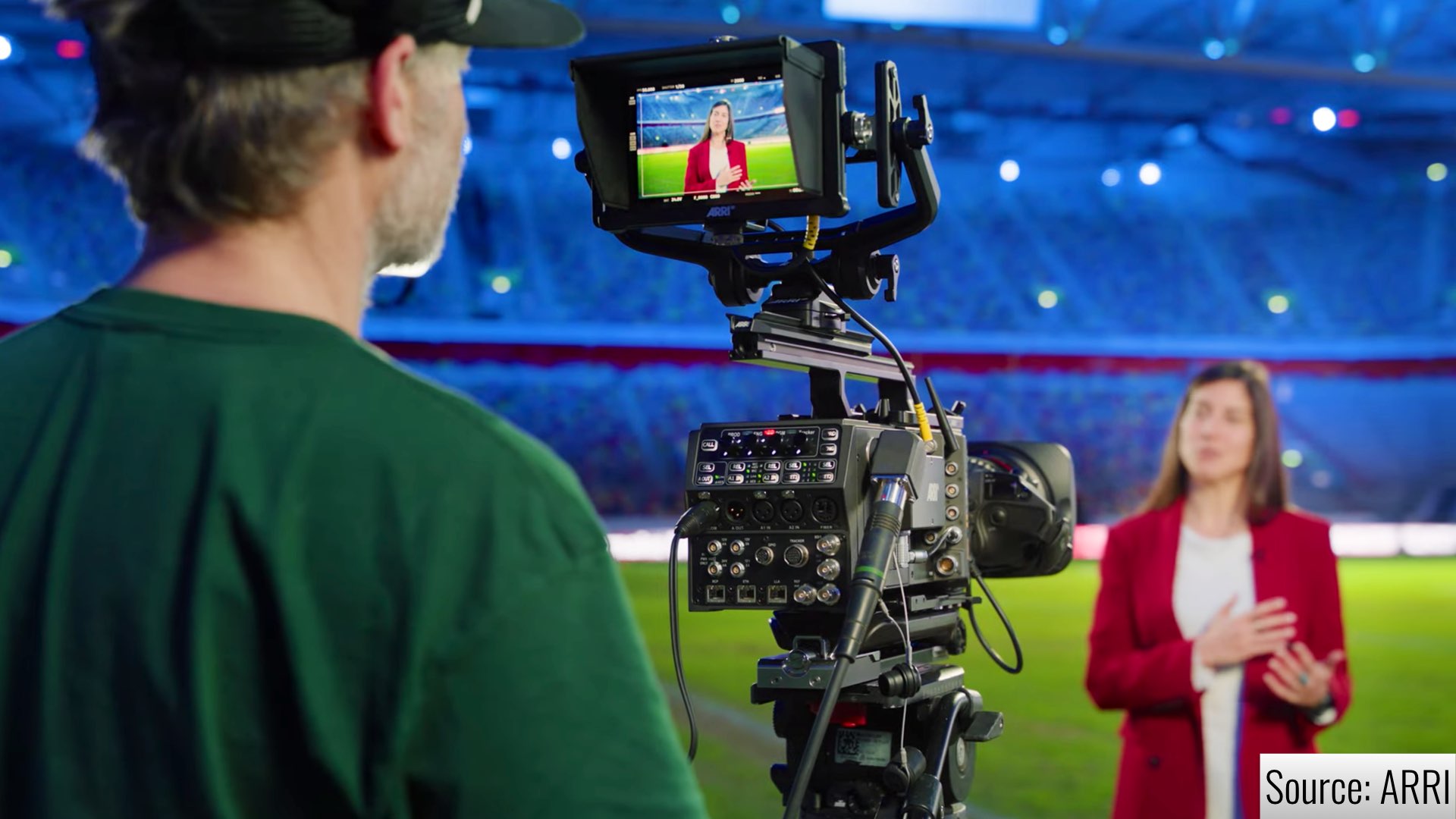
For these clients, the value is not just the ALEXA 35 sensor or the ARRI color space, but the ability to call a single team that understands routers, tally, intercoms, monitoring, shading, backup paths, and all the details that make live production reliable. At the same time, this partnership gives crews and DPs a clear route into live environments with ARRI tools. DPs who have built their careers on ARRIs for drama now have a more structured way to bring that look to the worlds of broadcast and events.
The risks and open questions
This is still a strategic bet, and it comes with genuine challenges.
-
Price and complexity: ARRI cameras and ecosystems are premium. Many broadcasters run on tight margins and already own large fleets of traditional broadcast cameras. ARRI must prove that the creative uplift and brand value justify the higher cost and operational complexity.
-
Workflow conservatism: Large broadcasters and rights holders can be slow to change. Many have standards built around long standing vendors. The HELM will need to demonstrate reliability over many cycles before ARRI Live becomes a standard option on tender lists.
-
Internal focus: In case ARRI is simultaneously exploring prosumer strategies, potential corporate restructuring, and now a deeper live broadcast push, as covered in ARRI considers sale industry impact analysis and ARRI’s prosumer cinema camera strategy. The risk is dilution. ARRI will need rigorous internal prioritization to avoid spreading engineering and marketing resources too thin.
-
Competitive response: Sony, Canon, and others will not stand still. They already have established positions in live production and are actively promoting cinema-based tools for broadcast work. It is reasonable to expect more integrated offerings, bundles, and aggressive pricing to defend that territory.
What comes next
In the short term, do not expect an explosion of ALEXA 35 Live feeds in every stadium. The more realistic path is a series of high-visibility pilot projects. Big concerts, PPV cards, major esports finals, and corporate flagship events where both ARRI and The HELM can showcase what cinematic live looks like when it is fully integrated. Over the medium term, the success metrics will be clear.
-
How many major broadcasters and promoters adopt ARRI Live Solutions as a trusted option.
-
How many regions rely on The HELM or similar partners as default integrators for ARRI based live systems.
-
Whether ARRI extends the Live line into more specialized bodies and control surfaces designed specifically for broadcast environments.
The arrival of The HELM as ARRI’s Live Solution Partner shows that cinematic broadcast is no longer a fringe experiment, but more a strategic battlefield where camera manufacturers, integrators, and platforms will fight for image quality, workflow control, and recurring revenue. ARRI is stepping into that fight with its strongest asset. The unmistakable ARRI look. Wrapped now in a global service structure that could finally make that look practical, repeatable, and de-risked for live production at scale.





So this might be me thinking conspiracies, but Keslow also announced that they partnered with the helm. It’s odd that the helm is partnering with both Arri and Keslow.
A few years ago, Arri collaborated with Ikegami, and posterior Amira was born. Regarding the cinematic transmission, it would be an oversaturation of the visual aspect that conditions the viewing with such little depth of field, and it would psychologically mix together a documentary about rhinos in Africa, a rock concert, and a Quintin film.