

Canon is cooking up something immersive, and this time, it’s not just another lens. Imagine capturing stunning stereoscopic footage using a single lens and sensor, no bulky rigs, no alignment headaches. A newly published Canon patent might be paving the way for 3D filmmaking demand. While it sounds technical, the concept is surprisingly elegant, and its implications for immersive filmmaking are huge. Let’s break it down.

A Compact Dual-Lens Design With a Twist
Let’s unpack what this patent actually proposes and why it’s clever. At first glance, it looks like Canon is simply putting two lenses side by side. But under the hood, it’s much smarter than that. The patent describes a dual optical system: two complete lens groups aligned in parallel, meaning both are designed to capture separate but synchronized images. These are ideal for stereoscopic photography and video, where each eye needs its own slightly offset view of the scene to generate depth perception, just like how our eyes work. But here’s the challenge: shooting in stereo isn’t as simple as strapping two lenses to a camera. Precision is everything. If the focus is even slightly off between the two lenses, the 3D effect becomes disorienting or flat-out unusable. And that’s where Canon’s innovation shines.

Two Drives. Two Functions.
Canon’s lens architecture includes two motorized systems:
-
A main drive (shared by both lenses) that moves the entire lens base forward and backward. This synchronizes focus across both optical systems.
-
A secondary, micro-adjustment drive that moves part of one lens independently. This allows for fine-tuning the focus of just one eye.
Think of it as a stereo headphone with one driver slightly louder than the other; you’d want to fix that. This patent gives you the tool to make that fix, down to fractions of a millimeter. This “fine focus” drive unit adjusts one side’s focus independently, compensating for lens manufacturing tolerances, small mechanical shifts, or even user-intentional parallax control. That’s a huge leap forward in practical 3D shooting, where previously, alignment was a manual nightmare involving rigs, rails, and gaffer’s tape.
Built for Compactness
One of the biggest problems with 3D rigs is size. Traditional stereoscopic setups, like the ones used on the Avatar sequels or by VR creators, are large, heavy, and hard to calibrate. Canon’s design avoids all that. Inside this lens, the components are arranged cleverly to save space. For example:
-
The two motors are stacked and offset so they don’t block or interfere with each other.
-
Positioning mechanisms like rollers and cam followers are strategically placed to avoid overlap.
-
The entire barrel is optimized to minimize both length (along the optical axis) and width (across both lenses).
Canon has engineered the entire system to work as a compact, unified lens module that could, in theory, fit on a standard RF-mount mirrorless body. This is huge—no more dual-camera rigs or clunky setups. You could shoot professional-grade 3D on a single Canon mirrorless camera with a single sensor.
A New Take on Focus Synchronization
Most 3D systems either focus both lenses independently (which causes mismatches) or try to sync them mechanically (which is bulky). Canon’s patent blends both approaches:
-
One main focusing mechanism ensures both lenses move together.
-
One precision actuator lets you shift one side slightly to correct or enhance parallax.
This means faster setup, more accurate results, and less time spent fixing alignment in post—a win for both professionals and emerging 3D content creators.
In Plain Terms: Why It Matters
Canon’s design solves three problems in one shot:
-
Focus mismatch between stereo pairs.
-
Bulkiness of dual-lens systems.
-
Lack of flexibility for immersive capture on standard camera bodies.
By miniaturizing the mechanics and building adjustment into the lens, Canon is laying the groundwork for plug-and-play immersive filmmaking gear, no special bodies, no rigs, just a smarter lens. And most importantly, this could democratize 3D and spatial video creation, putting it within reach of indie filmmakers, documentarians, YouTubers, and even journalists.

A lens apparatus according to one aspect of the disclosure includes a first optical system, a second optical system disposed in parallel with the first optical system, a base member configured to hold the first optical system and the second optical system movably in an optical axis direction, a first drive unit configured to move the base member in the optical axis direction, a first holder configured to hold a part of a plurality of lenses constituting the second optical system, and a second drive unit configured to move the first holder in the optical axis direction. An image pickup apparatus having the above lens apparatus also constitutes another aspect of the disclosure.
From the Canon’s patent LENS APPARATUS AND IMAGE PICKUP APPARATUS
From VR180 to True 3D: Canon Is Thinking Bigger
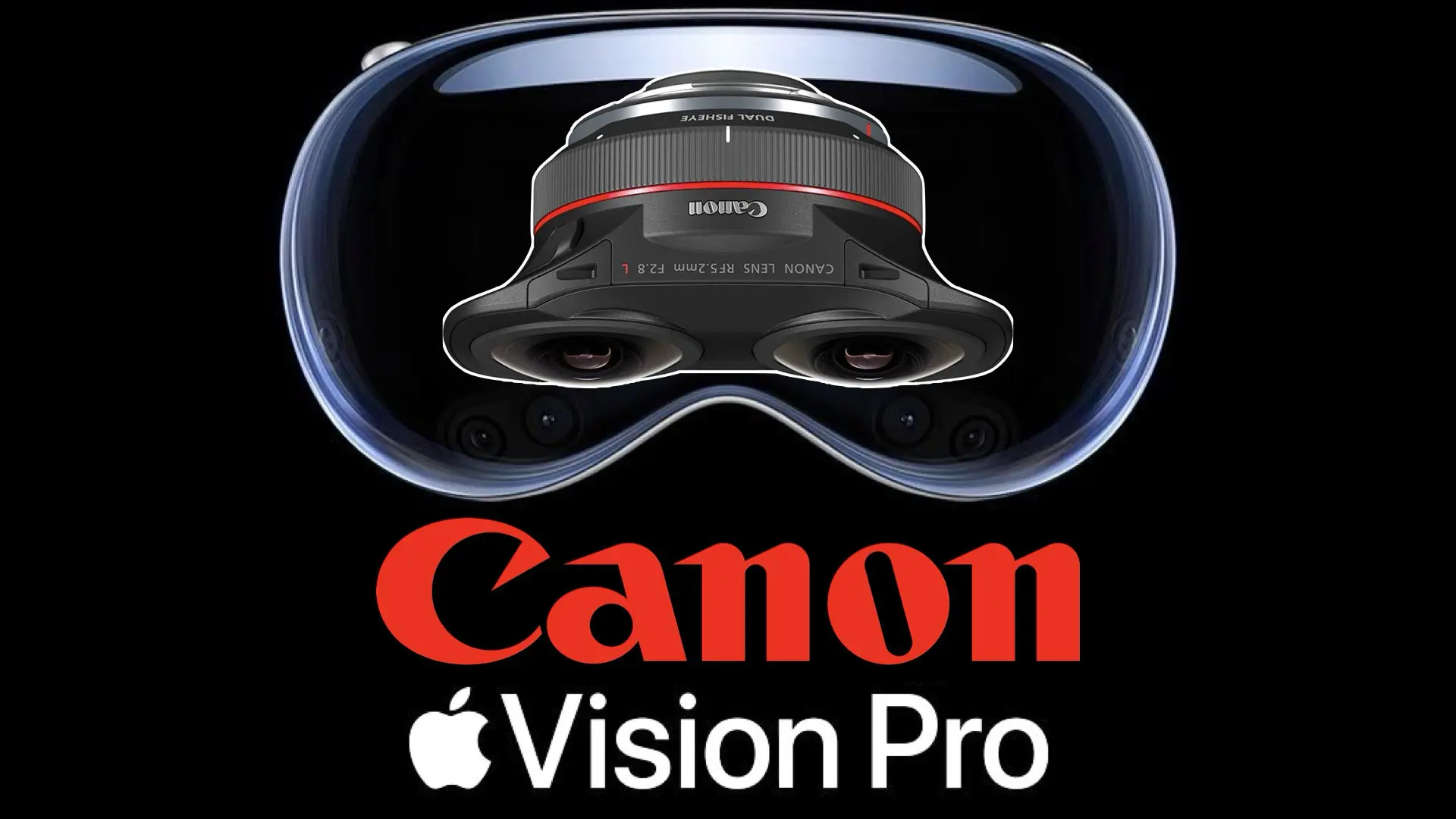
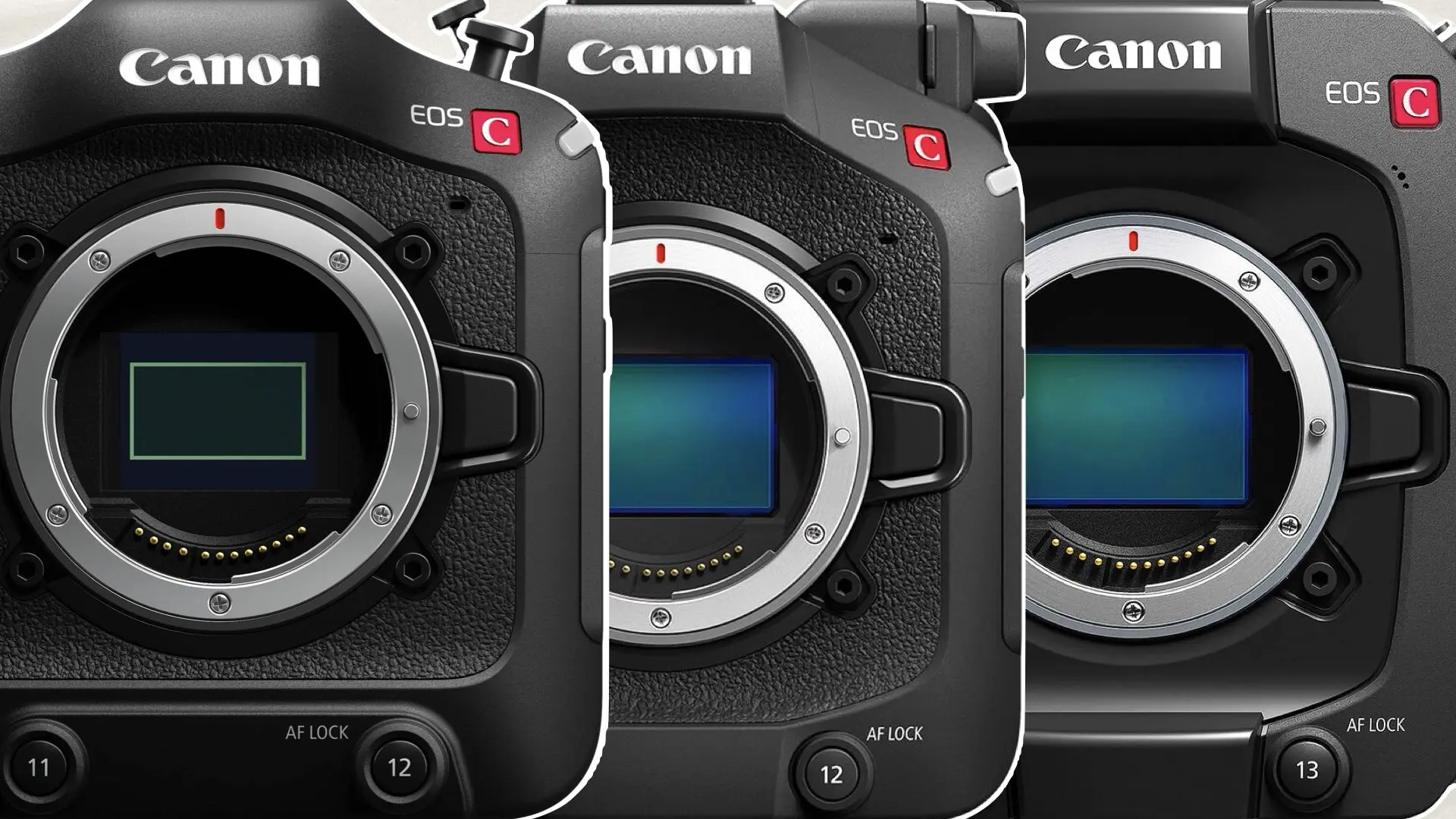
We’ve seen Canon’s efforts in The Best VR Pro Creator Deal on Amazon Right Now: Canon EOS R5 C ($3,199 on Amazon) + Dual Fisheye Lens ($1,999 on Amazon) , where Canon offered an impressive, but very niche VR180 solution. That fisheye lens was bold but limited. This new patent suggests Canon is expanding beyond fisheye VR to something far more versatile, perhaps even a new line of compact 3D lenses compatible with RF-mount cameras. The clever internal design (with overlapping components and motor positioning) means smaller lens barrels, potentially even compact enough for consumer-friendly immersive tools.

A Larger Ecosystem in the Making?
Let’s connect the dots. This dual-lens system isn’t an isolated innovation, but it fits a broader pattern. Canon has been quietly aligning its tech with Apple’s spatial video vision. In Canon’s Strategic Move: Strengthening the Spatial Video Ecosystem with Apple Vision Pro Integration, we explored how Canon is working hand-in-hand with Apple to make spatial video more accessible and practical for creators. The goal? To turn stereoscopic video into a standard, not a niche. Canon is also preparing hardware of its own. Remember Canon’s AR/VR Glasses Patent: A Counterstrike to Apple Vision Pro Aiming at the Masses? The pieces are falling into place: capture, edit, and view, all within Canon’s expanding spatial ecosystem. This new lens architecture might be the missing link between capture hardware and immersive consumer experiences.
The Future of Filmmaking Is Immersive, and Canon Knows It
Immersive content creation is no longer just for major studios. As devices like Vision Pro gain traction, creators will need compact, professional, and reliable tools to shoot spatial content. It’s a glimpse into Canon’s evolving vision for filmmaking in a spatial-first world. From stereoscopic simplicity to real-world 3D capture, Canon may be on the brink of making immersive cinematography mainstream. And if this patent becomes a product, the days of clunky rigs and dual-body setups might finally be behind us.
Gear mentioned in this article
Available on Amazon
| Product | New | Renewed | Used |
|---|---|---|---|
| Canon EOS R5 C | $3,199 | — | From $2,495.10 |
| Canon RF5.2mm F2.8 L Dual Fisheye | $1,999 | — | From $1,799.95 |
Prices checked: Sep 13, 2026, 9:31 AM GMT+0000
As an Amazon Associate, Y.M.Cinema earns from qualifying purchases. If you buy through our links, we may earn a small commission at no extra cost to you.
Product prices and availability are accurate as of the date/time indicated and are subject to change. Any price and availability information displayed on Amazon.com at the time of purchase will apply to the purchase of this product.
CERTAIN CONTENT THAT APPEARS ON THIS SITE COMES FROM AMAZON. THIS CONTENT IS PROVIDED “AS IS” AND IS SUBJECT TO CHANGE OR REMOVAL AT ANY TIME.






What is the range of interaxial (IA) on this lens? Minimum/maximum separation between the centres of the lenses. Eye width is a misunderstood “ideal” for the IA. Good 3D uses anywhere between millimetres and meters to complete the full range of 3D language. Millimetres if you are really close and meters if far away. It seems to me this will suit domestic 3D (particularly Headset 3D per Quest and Vision Pro) but will not be useful to cinematic 3D. Reach out if you want.
For full disclosure I produced Bugs! 3D, was Stereographer on Madam Butterfly 3D, Stereo Supervisor on Tiny Giants 3D and On Arctic 3D.
At this stage, Canon’s patent unfortunately doesn’t specify an adjustable IA or even the fixed center-to-center distance between the two optical axes. From the diagrams and language, it appears to be a compact, fixed-IA design, likely under the 65mm “eye distance” mark, which would indeed limit its utility for cinematic stereo work involving distant subjects or large sets. That said, we agree this lens feels aimed at domestic or headset-friendly spatial video, especially in light of Canon’s growing collaboration with Apple’s Vision Pro ecosystem. It seems to prioritize size reduction, single-sensor stereo, and ease of capture, potentially opening the door for more casual or editorial 3D creators rather than theatrical productions.