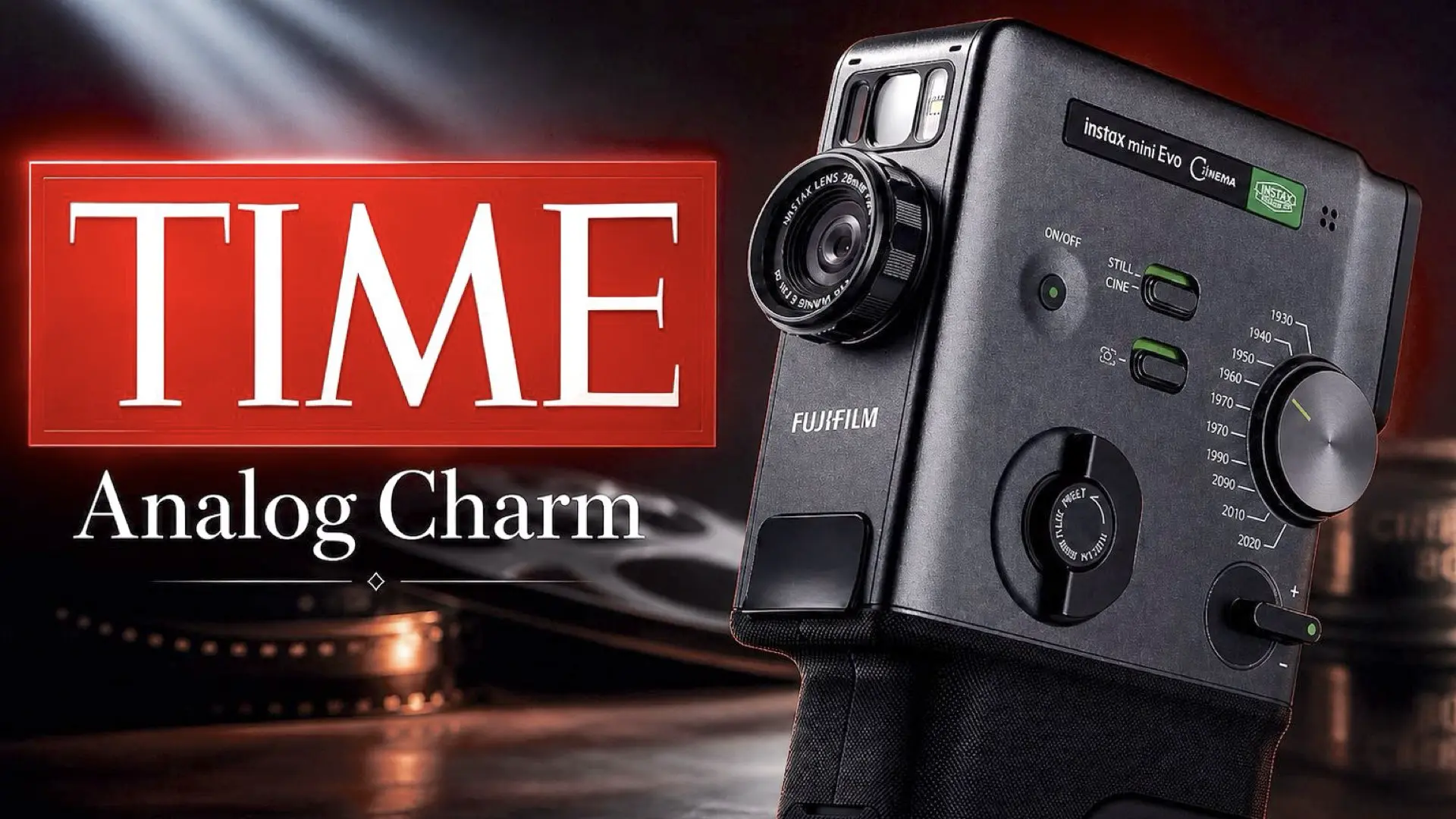
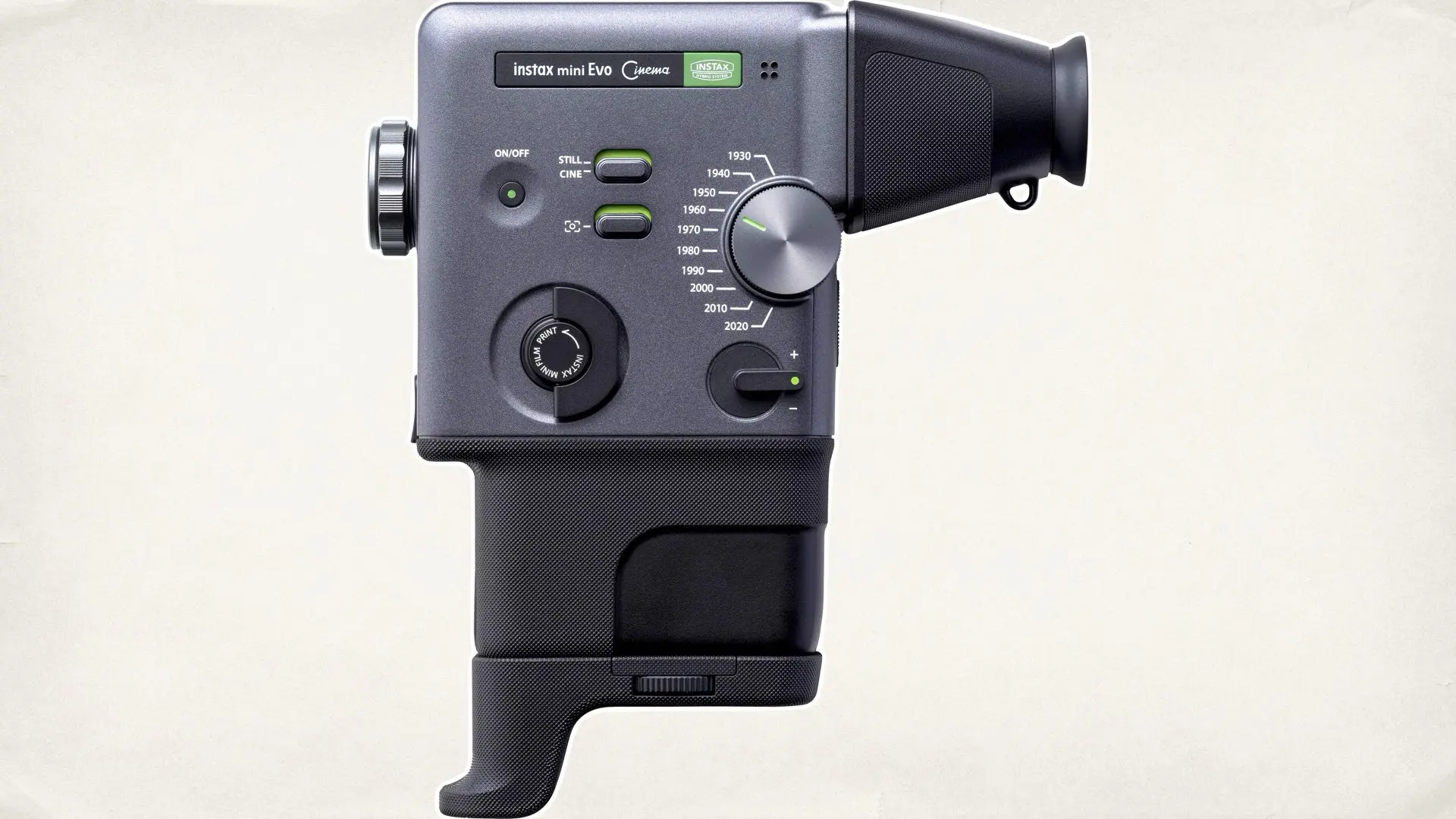
TIME named Fujifilm to its 2026 TIME100 Most Influential Companies list and also recognized the company as a 2026 Industry Leader in the Hardware sector. The title attached to Fujifilm’s recognition was “Analog charm”. According to TIME, Fujifilm’s most daring explanation for that recognition may be the instax mini Evo Cinema.
Fujifilm’s inclusion in TIME’s list arrives at a strange moment for the imaging industry. Smartphones are computational cameras. Editing apps are packed with AI tools. Social platforms reward speed, automation, and constant visual output. In that environment, Instax looks almost primitive. A small camera. A physical print.n Yet that simplicity is exactly why it has become culturally powerful. TIME highlighted the Instax ecosystem as a major part of Fujifilm’s influence, noting that colorful Instax cameras are especially popular with users younger than 30, who use them at weddings, concerts, parties, and personal events. Fujifilm says it has sold more than 100 million Instax cameras and printers worldwide since the line debuted in 1998. That is a massive number for a product category many people once assumed would be swallowed by smartphones.
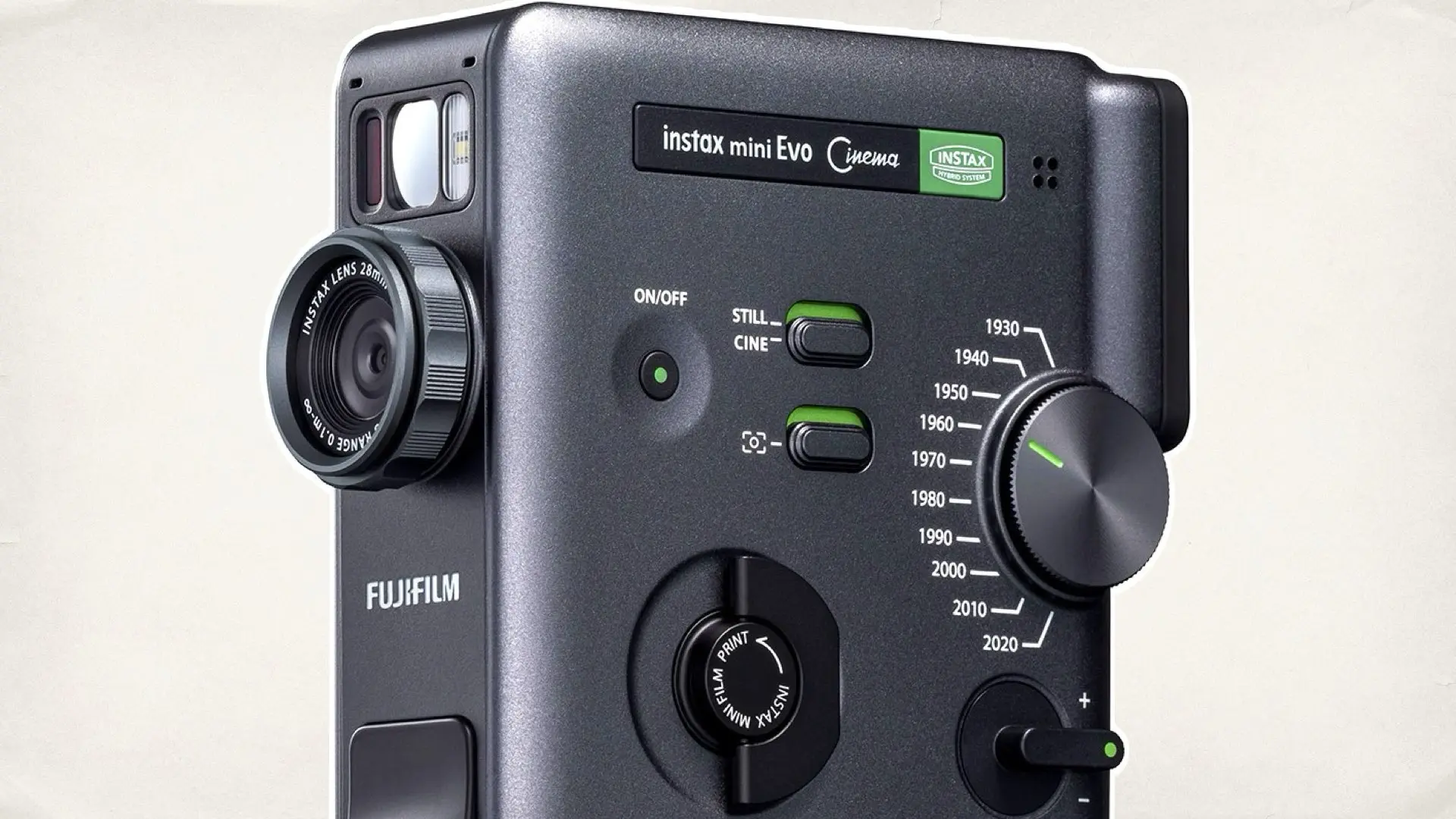
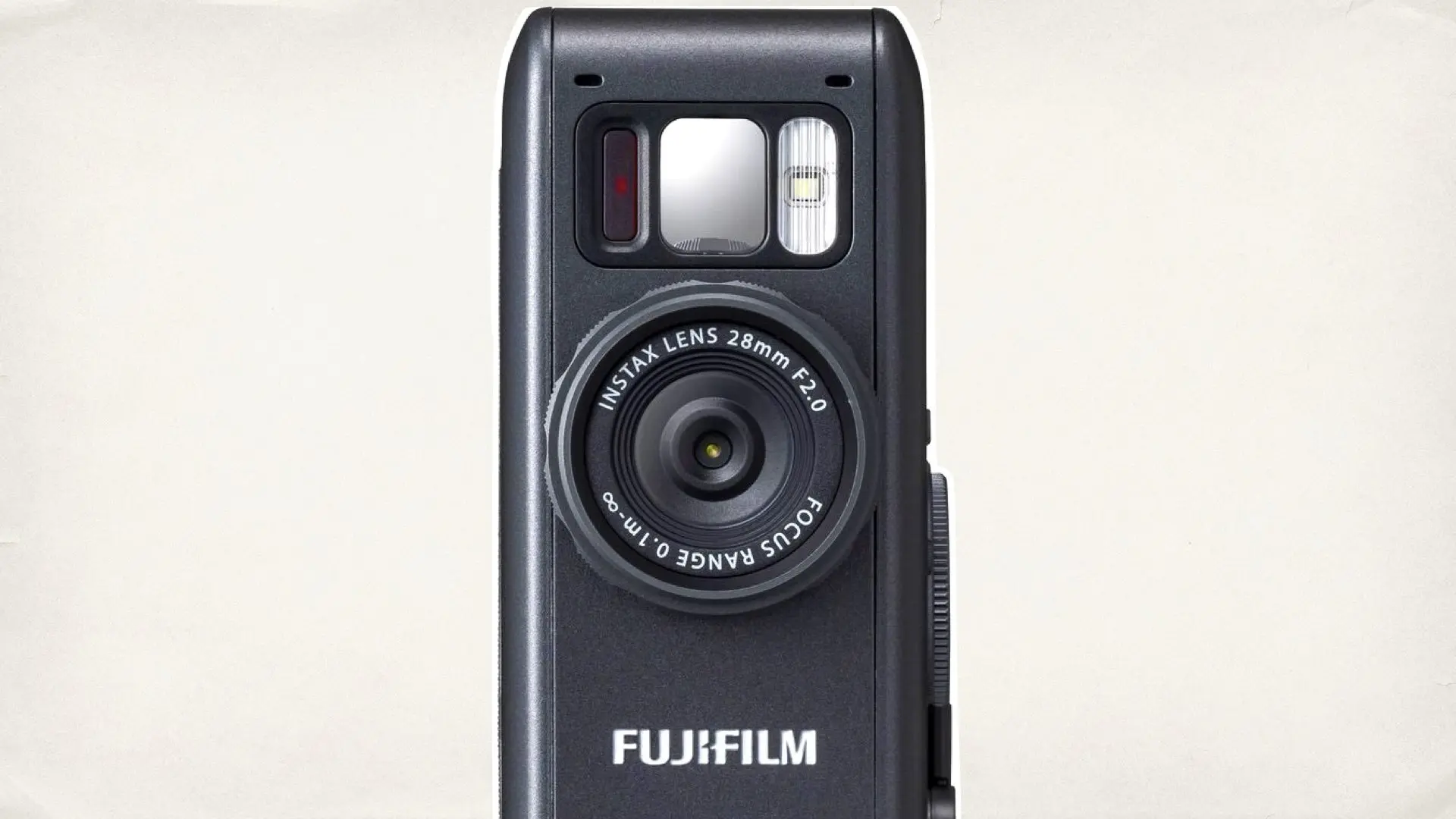
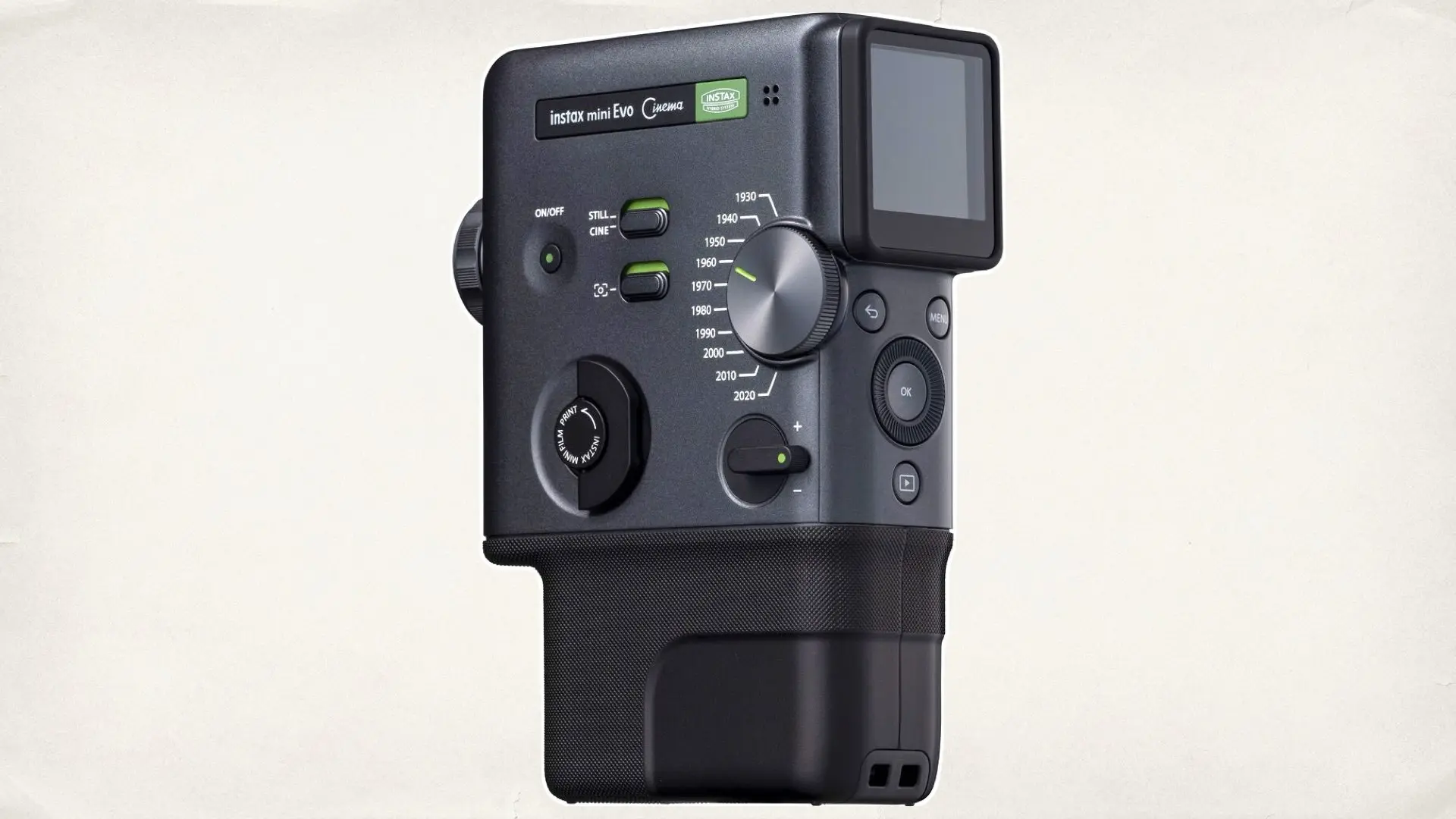
The instax mini Evo Cinema is the kind of product that makes sense only when you stop judging cameras by sensor size, resolution, autofocus speed, and video codecs. It is a hybrid instant camera that blends digital capture, short video recording, instant film printing, and retro cinema design into one playful object. As explained in The FUJIFILM instax mini Evo Cinema ($383.63 on Amazon) Costs $410. Should You Buy It?, the camera lets users shoot photos digitally, decide later which frames to print, record short video clips, and even print a still frame with a QR code that links back to the video. That means the product turns a moving memory into a physical print. It is a digital file with a paper body. That is the clever part. Fujifilm is not trying to defeat digital culture with analog nostalgia. It is merging both worlds in a way that feels social, tactile, and emotionally direct. The print becomes the gateway. The video remains digital, yet the emotional trigger is physical. Instead of asking users to scroll through a gallery, Fujifilm asks them to hand someone a print.
When Fujifilm announced the instax mini Evo Cinema, the immediate reaction from many camera people was predictable. It looked like a gimmick. A Super 8-inspired instant camera that records 15-second videos and prints QR-linked frames can sound like a toy. Yet that reaction is exactly why the product is so interesting. As explored in Fujifilm’s New Cinema Announcement Is a Gimmick. And That’s the Point, the camera is deliberately theatrical rather than technical. It is designed around experience, curiosity, and emotional interaction. The Eras Dial adds 10 era-inspired visual styles with 10 intensity levels, reinforcing the idea that this is a storytelling device rather than a spec sheet machine.
Fujifilm’s TIME recognition should be read as a hardware lesson. Influence in consumer technology is often measured by speed, automation, scale, and software intelligence. Fujifilm’s Instax strategy suggests another route. A camera can be influential because it changes how people behave with images. A print can be more powerful than another cloud folder. A physical object can create stronger social energy than another filter menu. That is why the instax mini Evo Cinema feels so relevant to this prize. It is an out-of-the-box product from a company that still believes cameras can be cultural objects. It does not need to beat a smartphone. It needs to create a different type of moment. That is what Instax has done for years, and the mini Evo Cinema pushes that idea further by adding motion, QR-linked memories, retro styling, and a deliberately tactile interface.
As an Amazon Associate, Y.M.Cinema earns from qualifying purchases. If you purchase through the Amazon links above, Y.M.Cinema may earn a small commission at no additional cost to you. This helps support our work.
As an Amazon Associate, Y.M.Cinema earns from qualifying purchases. If you buy through our links, we may earn a small commission at no extra cost to you.
Product prices and availability are accurate as of the date/time indicated and are subject to change. Any price and availability information displayed on Amazon.com at the time of purchase will apply to the purchase of this product.
CERTAIN CONTENT THAT APPEARS ON THIS SITE COMES FROM AMAZON. THIS CONTENT IS PROVIDED “AS IS” AND IS SUBJECT TO CHANGE OR REMOVAL AT ANY TIME.
YMCinema is a premier online publication dedicated to the intersection of cinema and cutting-edge technology. As a trusted voice in the industry, YMCinema delivers in-depth reporting, expert analysis, and breaking news on professional camera systems, post-production tools, filmmaking innovations, and the evolving landscape of visual storytelling. Recognized by industry professionals, filmmakers, and tech enthusiasts alike, YMCinema stands at the forefront of cinema-tech journalism.
Fujifilm has announced a new domestic price revision in Japan affecting several current GFX and X Series cameras, selected camera kits, and one interchangeable lens. The new shipment prices took effect on…
Canon appears to be continuing development around its unreleased handheld gimbal camera concept. A newly published patent application shows essentially the same compact camera architecture seen in previous Canon filings, but this…
For most filmmakers, ARRI has always been a brand they use rather than a brand they own. ALEXA cameras sit at the top of the professional cinema market, commonly purchased by rental…
Kron Technologies has officially announced the Chronos Q12, a high-speed camera capable of recording 5,148 frames per second at 1920 × 1080. The camera uses an APS-C global-shutter sensor and starts at…
The Blackmagic PYXIS 6K briefly became a sub-$2,000 full-frame cinema camera after its recent price cut, but that window appears to have closed. The EF and L-mount version ($3,599.95 on Amazon) are now…