
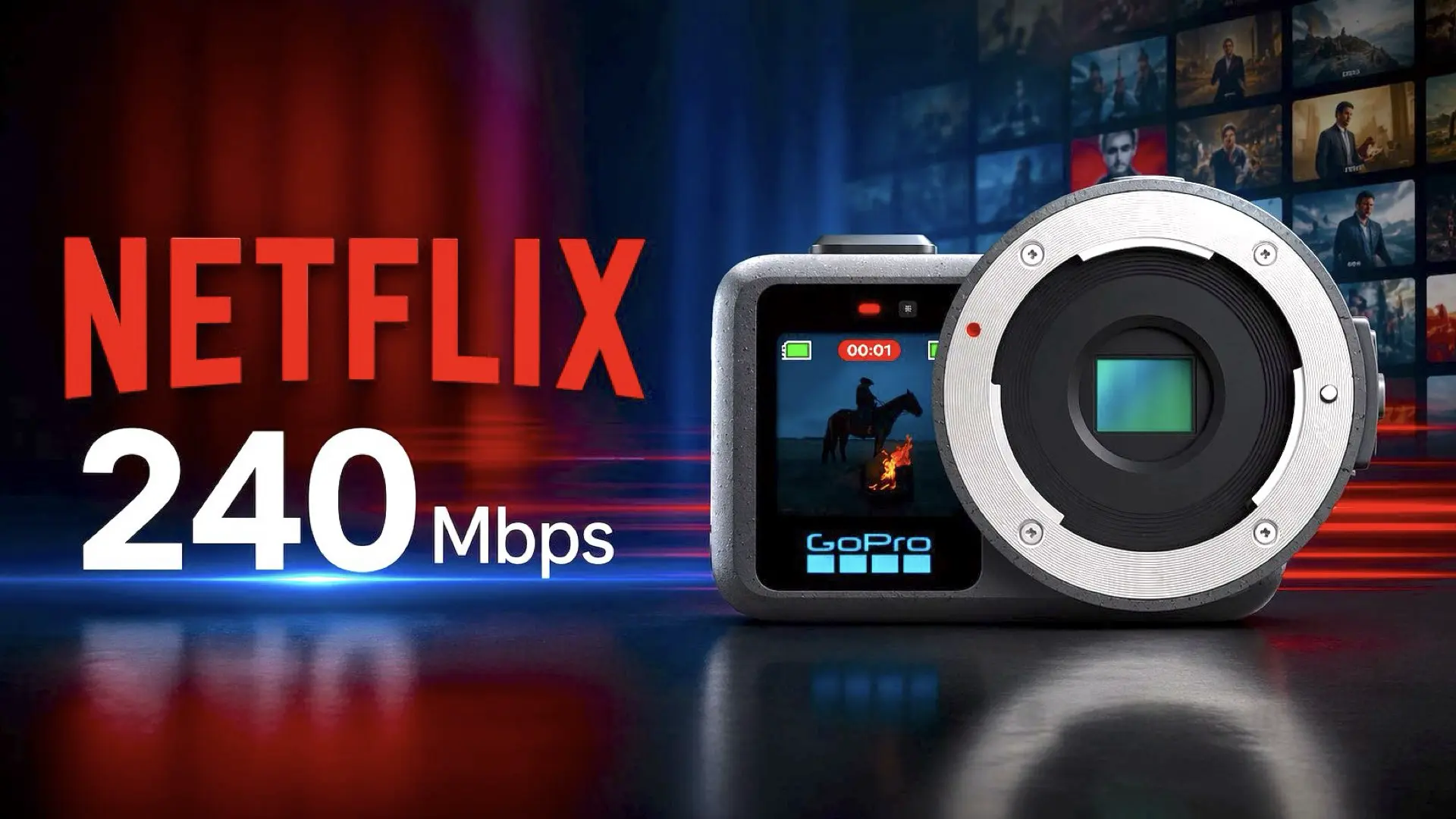
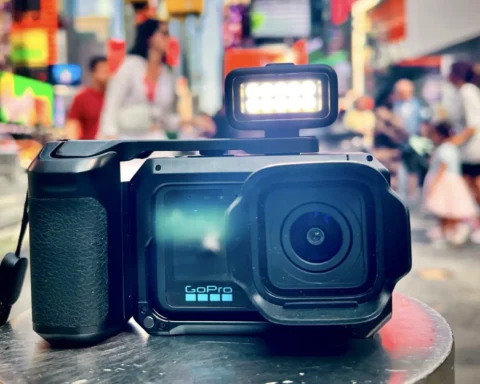
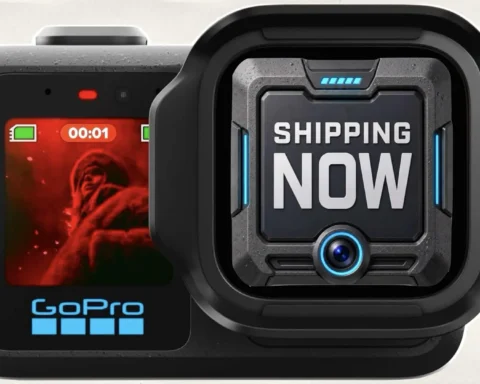
GoPro’s new flagship enters a different technical territory, and the reference to Netflix is not about certification but about signal. In the official reviewer’s guide, the company explicitly connects its new high bit rate mode to Netflix capture requirements. That shifts the conversation away from simple resolution claims and toward data integrity, compression headroom, and workflow relevance. In that sense, the MISSION 1 PRO ($599.99 on Amazon) should be understood less as a traditional action camera and more as a compact imaging platform whose specifications are being framed in production terms.
Why 240 Mbps counts
The key specification is straightforward. GoPro says the MISSION 1 Series can record at up to 240 Mbps on stock firmware, and the reviewer’s guide even asks the question directly: why 240 Mbps? Its answer is that this is Netflix’s required data rate in the company’s published capture requirements. The guide also notes that GoPro Labs can push the bitrate further, up to 300 Mbps. That does not mean Netflix approval. It means GoPro wants the discussion around the MISSION 1 PRO to include compression quality and post-production resilience. A higher bitrate reduces compression stress. That is especially relevant in high-detail scenes, fast motion, strong contrast transitions, and grading workflows where weak files tend to fall apart first. This is where the Netflix reference becomes technically interesting. It is functioning as a benchmark. For the broader market context, see GoPro MISSION 1 Series Pricing. Starting at $499.
The bitrate only matters because of the sensor behind it
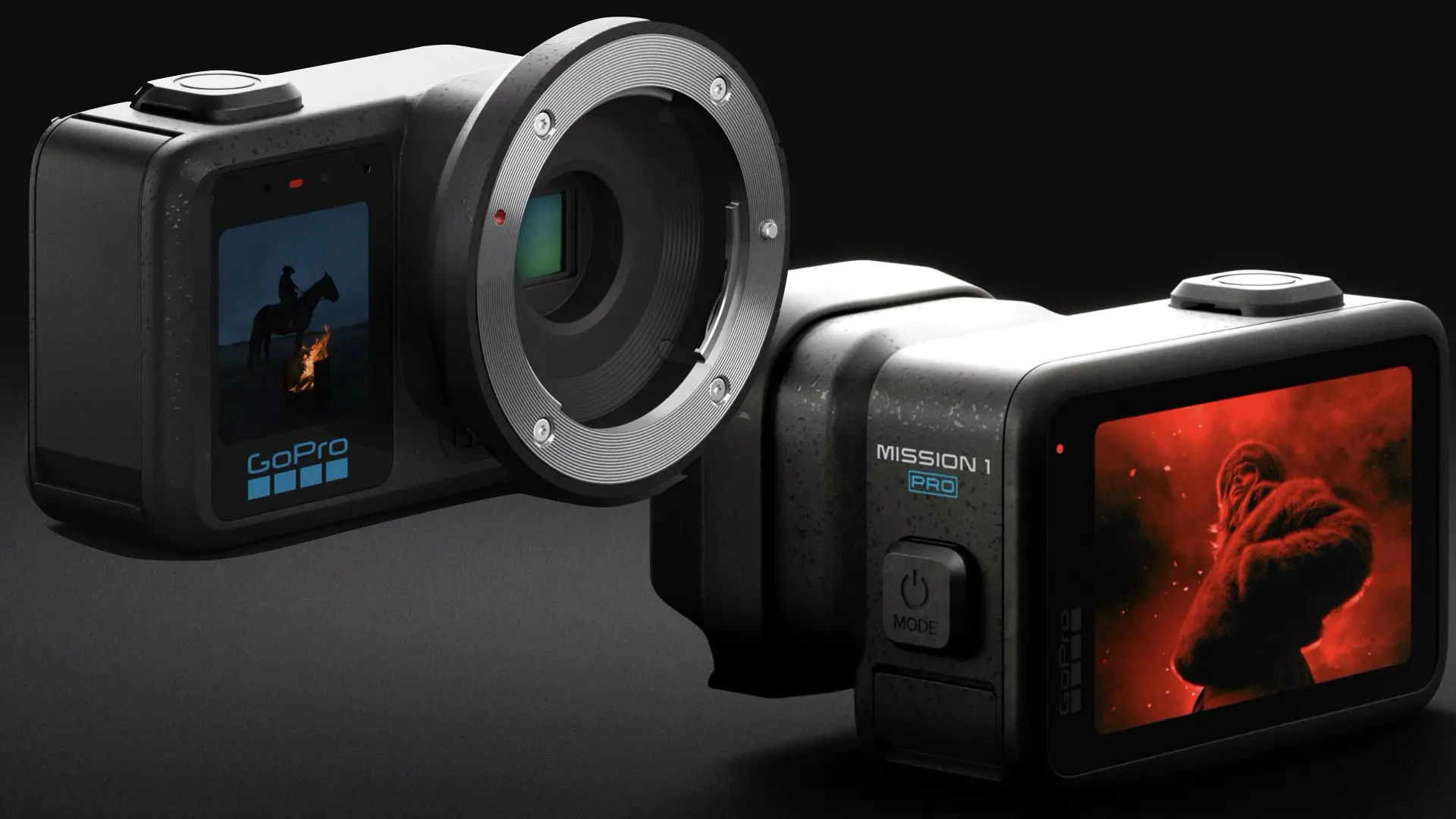
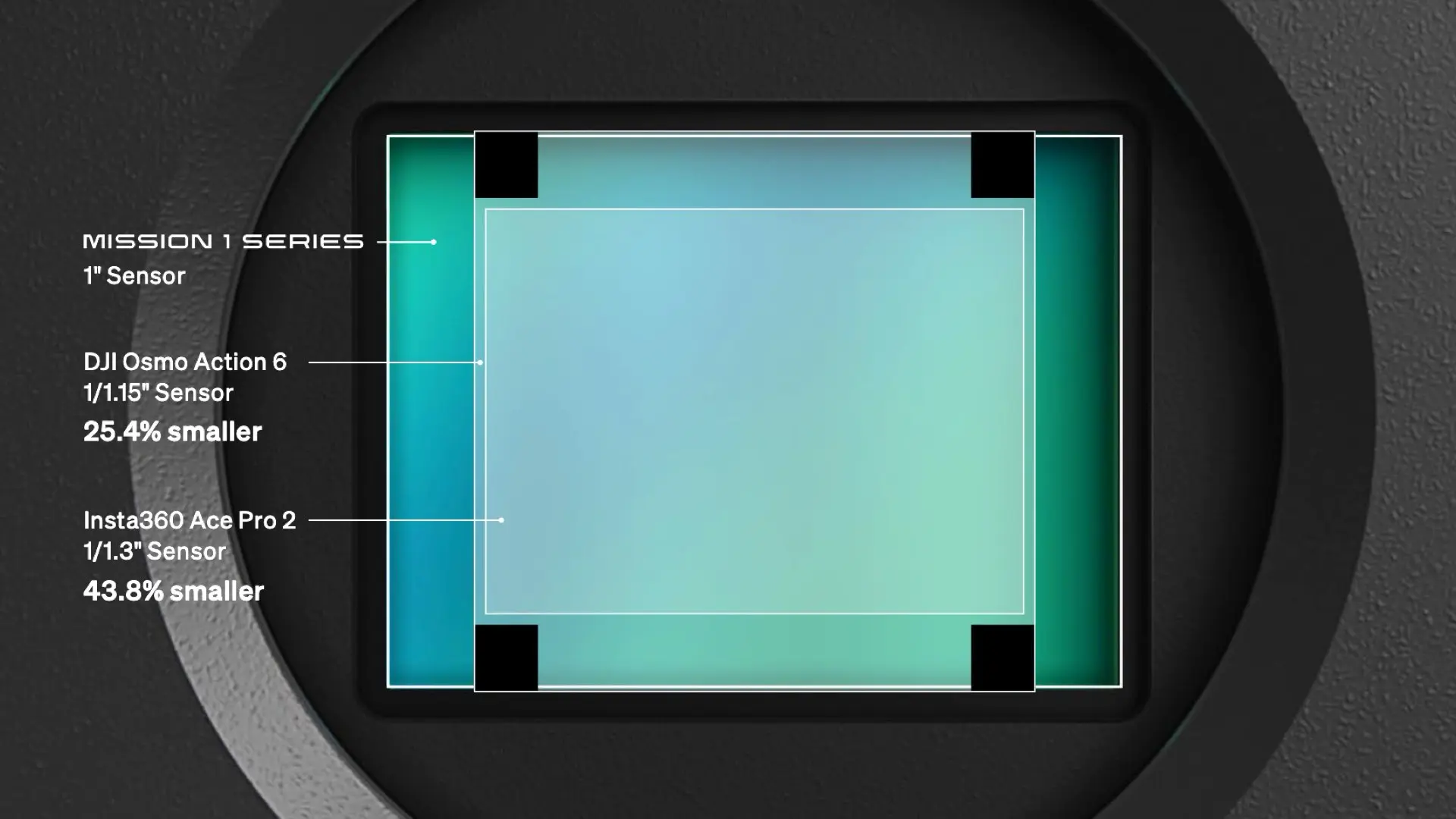
A high bitrate is only meaningful if the camera is actually producing enough data to justify it. Here, the MISSION 1 PRO is built around a new 1-inch sensor with a 50MP full readout. GoPro states that pixel pitch is about 1.6µm at 8K and 3.2µm in Quad Bayer 4K mode. The guide also compares the sensor area directly against rival products, positioning it as larger than the leading compact competition. This is where the 240 Mbps figure becomes more than marketing shorthand. A 1-inch sensor with this readout structure produces more image information, especially in modes designed for reframing and low-light use. If that data is compressed too aggressively, much of the benefit disappears. If the bitrate is sufficiently high, more of that tonal and spatial information survives the encoding stage. That is the practical link between sensor size and bitrate. For the first big picture, look at the platform, see GoPro MISSION 1 Action Cinema Cameras, 8K, 1 Inch Sensor.
Open Gate is a major part of the equation
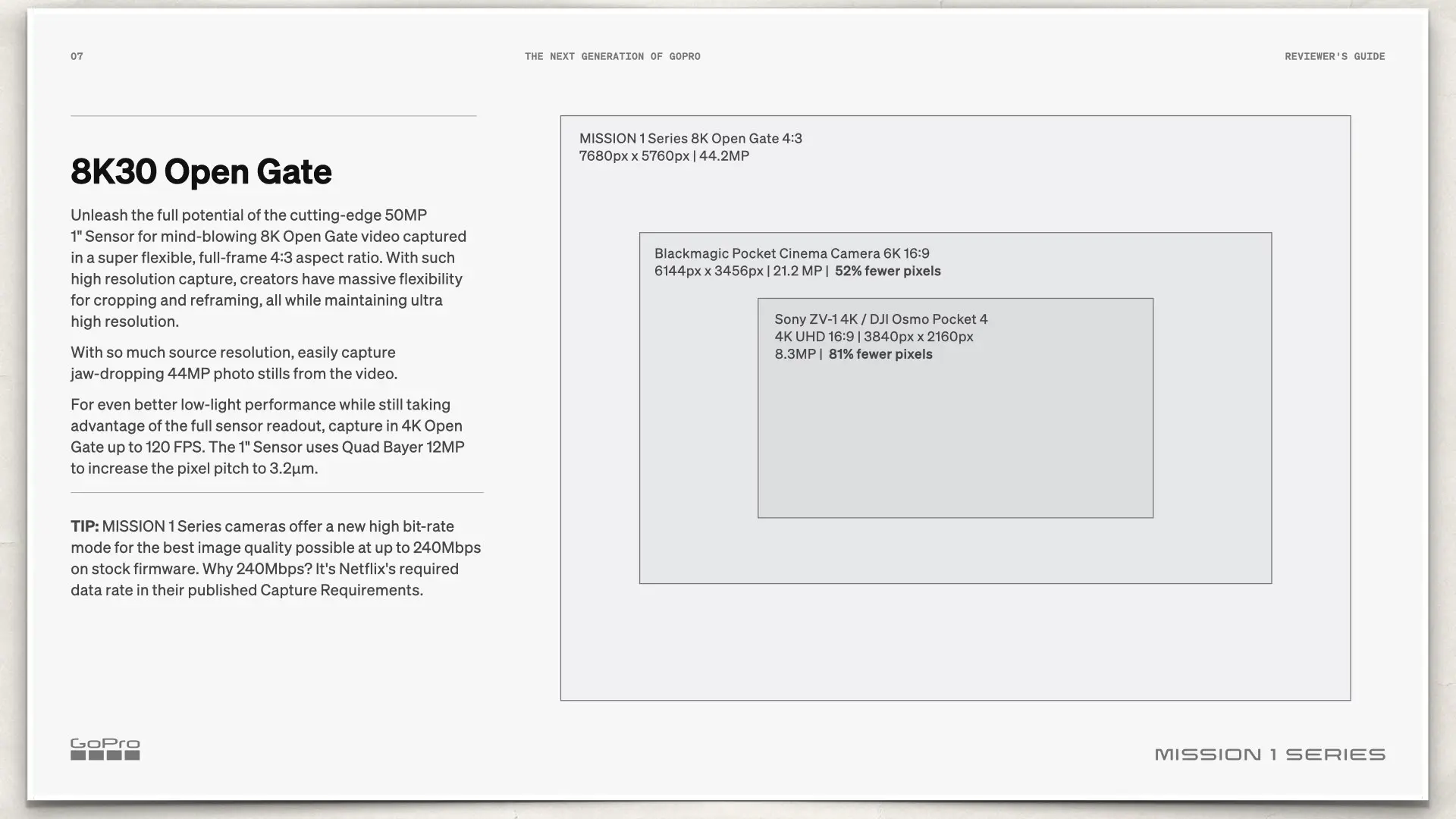
The MISSION 1 PRO captures Open Gate video at up to 8K30 in 4:3, with a 7680 x 5760 readout that GoPro describes as 44.2MP. It also supports 4K Open Gate up to 120 fps, using the Quad Bayer 12MP mode for a larger effective pixel size. Open Gate capture is important because it changes how the source file is used. Instead of recording a locked delivery frame, the camera records a larger image area that can later be cropped into horizontal, vertical, or stabilized outputs. That workflow places more pressure on file robustness. Reframing, digital stabilization, and post-production scaling all benefit from stronger source material. This is another reason the 240 Mbps figure matters. It is not only about recording a sharper image in the camera, but about preserving flexibility after the shoot.
Why is Netflix mentioned at all?
The most revealing part of the official guide is not the number itself but the decision to name Netflix. GoPro could have simply said “high bitrate mode” and stopped there. Instead, it references a widely recognized production benchmark. That choice suggests the company wants cinematographers, editors, and technically minded creators to view the MISSION 1 PRO in a different category. This is consistent with the rest of the guide. The camera supports 10-bit color, HLG HDR, GP Log2, and timecode sync for multi-camera editing in Final Cut Pro, Premiere Pro, and DaVinci Resolve. They tell the user that the camera is being positioned for grading, matching, sync, and controlled post work rather than only instant delivery. For the strategic angle behind the product itself, see GoPro MISSION 1 Camera Strategic Pivot.
Compression, grading, and why 10-bit needs bitrate
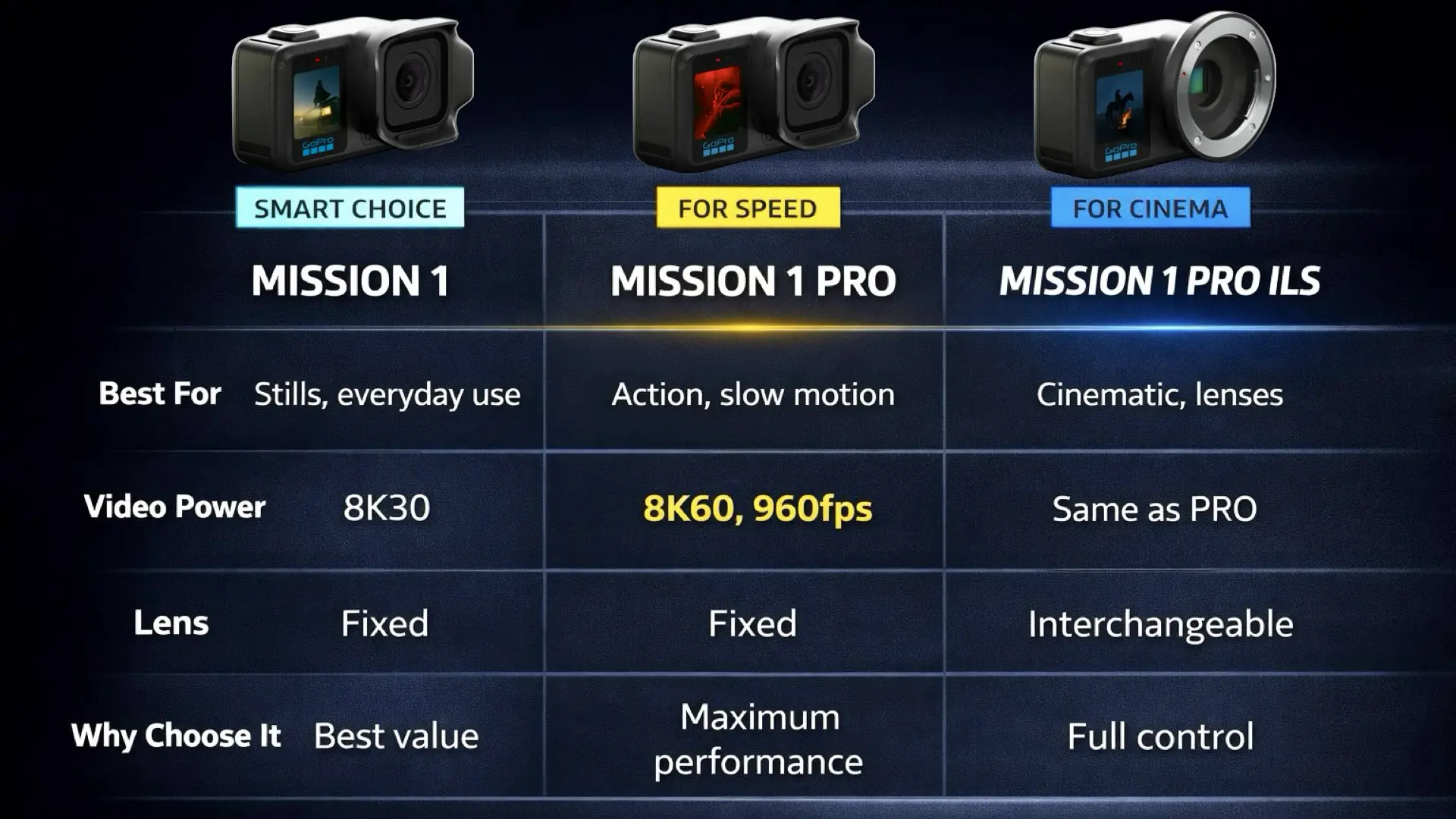
One reason this matters technically is that 10-bit and log recording are only genuinely useful when the codec has enough room to preserve the information they are trying to protect. GoPro says the MISSION 1 Series records in 10-bit color and GP Log2, and it includes LUTs for matching and grading workflows. If the bitrate is too low, a log image becomes fragile very quickly. Shadow transitions break down, skies can band, and secondary grading starts exposing compression artifacts that may not have been visible in the original preview. A 240 Mbps mode does not turn a compact camera into a cinema body by itself, but it does make log capture substantially more plausible in real work. For a practical comparison of the range, see GoPro MISSION 1 Which Model to Buy.
Conclusion
GoPro’s mention of Netflix in relation to the MISSION 1 PRO should not be interpreted as a claim of approval. The company is doing something more nuanced. It is using Netflix’s bitrate requirement as a familiar technical reference point to communicate that the new flagship is designed with higher data integrity in mind. Combined with a 1-inch sensor, 8K Open Gate, 10-bit color, GP Log2, timecode sync, and stronger thermal performance, the 240 Mbps mode becomes part of a coherent technical argument. GoPro now wants the MISSION 1 PRO evaluated in terms of workflow, compression, and post-production tolerance.
Gear mentioned in this article
Available on Amazon
| Product | New | Renewed | Used |
|---|---|---|---|
| GoPro MISSION 1 PRO ILS | $599.99 | — | — |
Prices checked: Oct 7, 2026, 1:31 PM GMT+0000
As an Amazon Associate, Y.M.Cinema earns from qualifying purchases. If you buy through our links, we may earn a small commission at no extra cost to you.
Product prices and availability are accurate as of the date/time indicated and are subject to change. Any price and availability information displayed on Amazon.com at the time of purchase will apply to the purchase of this product.
CERTAIN CONTENT THAT APPEARS ON THIS SITE COMES FROM AMAZON. THIS CONTENT IS PROVIDED “AS IS” AND IS SUBJECT TO CHANGE OR REMOVAL AT ANY TIME.






If we’re already talking about whether it’s production ready or not:
I’ve yet to find confirmation the FHD 960fps mode is achieved natively by the sensor, without interpolation (frame generation, optical flow etc) as smartphones tend to do.
Do you have an idea?
M4/3 lenses are designed for a larger sensor size. There will be a significant crop and focusing using the tiny GoPro screen will be a nightmare. Action camera are only really in focus at a distance of about 6 feet. But because they are so wide, you don’t notice the rest of the frame is out of focus. That won’t happen with a M4/3 lens unless it is 12mm or so. There is a reason GoPro didn’t want “influencers” who got preview units to post their actual footage. Add in the firing of customer service staff right before the launch and financials that put the viability of the company in doubt, and you have a product you need to think long and hard about before investing in it. The launch looks more like a pump and dump scheme. On that basis, it was a huge success.
Take a look at this! https://youtube.com/shorts/A4r8GWjC9DE?si=Egt9L6cwGizEJ8sh