
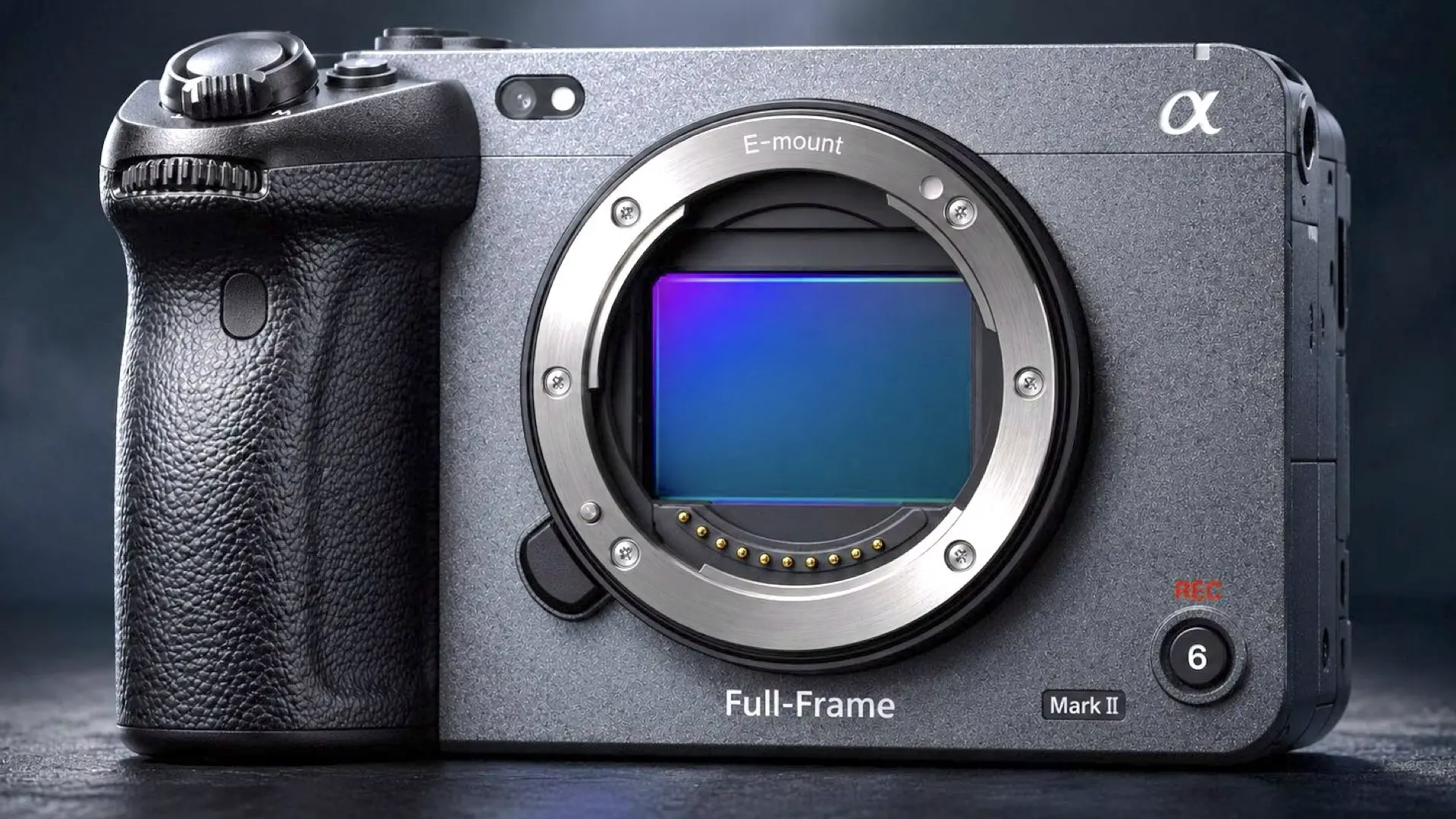
The Sony FX3 Mark II has not been announced. Sony has not confirmed its specifications. Yet the rumors around this unreleased camera are already telling us something important about where compact cinema cameras may be heading. The most interesting question is not whether Sony will add more features. The real question is whether the next FX3 will protect the qualities that made the original camera so influential: speed, low light, reliability, compact handling, and a sensor designed primarily for motion rather than megapixel bragging rights. The original FX3 ($3,998 on Amazon) was launched in 2021 as Sony’s smallest full-frame Cinema Line camera, built around a video-first design, 4K recording up to 120 frames per second, active cooling, professional audio options, and the compact body language of the Alpha ecosystem. It became one of Sony’s most recognizable compact cinema tools because it did something rare. It gave solo operators and small crews access to a camera that felt closer to a cinema device than a traditional mirrorless hybrid, without forcing them into a larger production body. Its successor should be focused on the sensor speed. Read on.
The core facts
At this stage, the FX3 Mark II remains a rumored and unreleased product. Recent rumor reporting has suggested that Sony may release an FX3 successor before the end of summer 2026, but the same source also stated that there are still no reliable specifications to share. One claimed detail mentions a possible dual processor and global shutter, but that should be treated as an unverified rumor rather than a confirmed technical direction. Earlier 2026 rumors pointed in different directions. Some suggested a 33 megapixel partially stacked sensor similar in spirit to Sony’s newer high resolution hybrid bodies. Later reports shifted attention toward a rumored 16 megapixel partially stacked full frame sensor, potentially aimed at the FX3 II and A7S IV. This matters because the difference between 16 megapixels and 33 megapixels is not a small spec variation. It suggests a completely different design philosophy. A 33 megapixel sensor would push the FX3 Mark II closer to the hybrid camera world, where stills resolution, oversampled 4K, and all-purpose versatility carry significant weight. A 16 megapixel sensor would keep the camera closer to the original FX3 and A7S logic, where larger pixels, faster readout, cleaner low light, reduced rolling shutter, and high frame rate video are central to the product identity. Neither direction is confirmed.
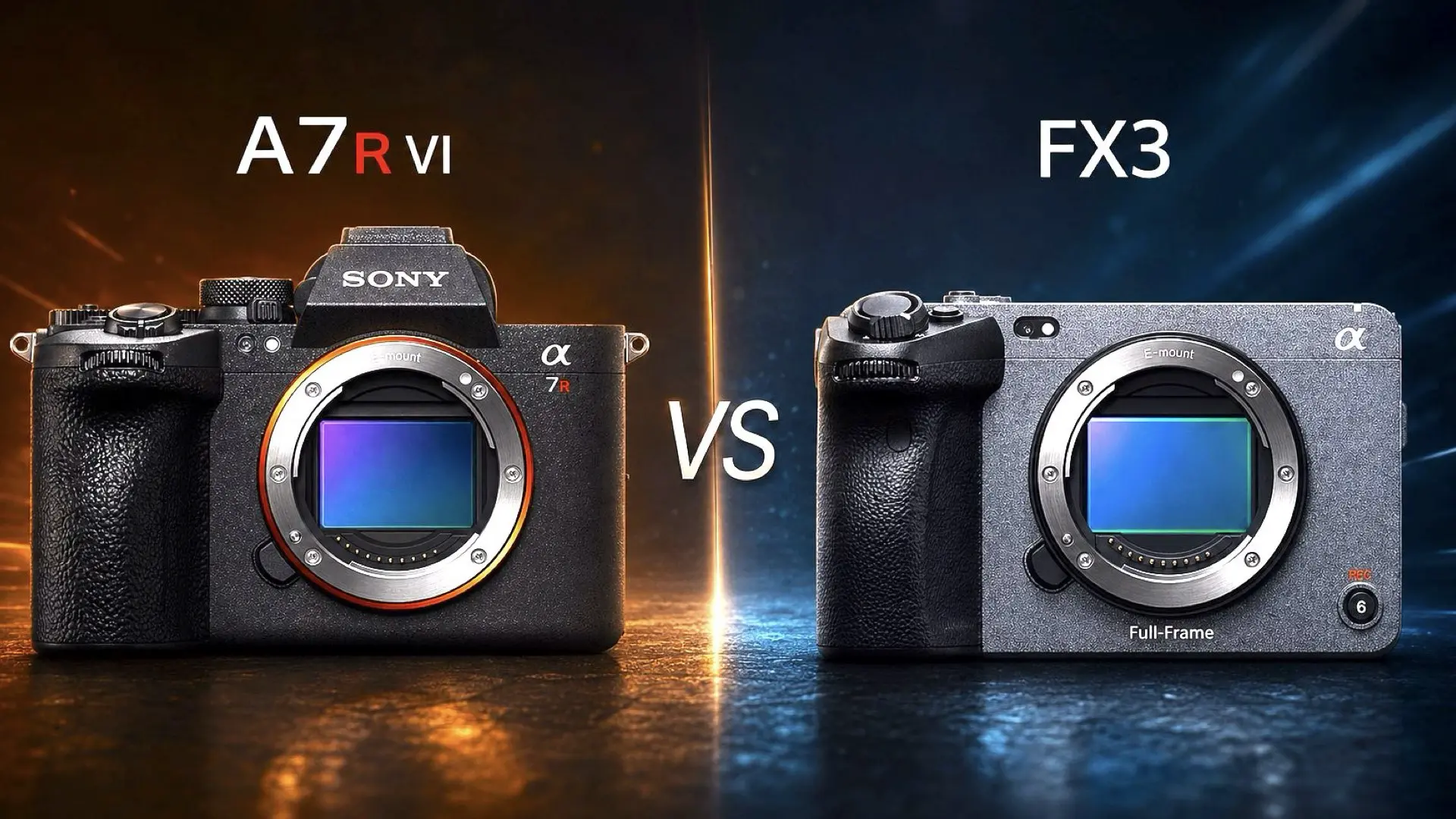
Why sensor speed is an important ‘cinema spec’
Cinema camera buyers often discuss resolution because it is easy to understand. 6K sounds bigger than 4K. 8K sounds more advanced than 6K. But in real production, sensor speed can have a greater effect on the image than raw pixel count. A faster sensor can reduce rolling shutter, improve motion rendering, support higher frame rates, and make handheld or action work look cleaner. For a camera like the FX3, that can be more valuable than a headline resolution increase. The current FX3 uses a 12.1 megapixel full frame sensor, with 10.2 effective megapixels in video mode, and supports UHD 4K up to 120 frames per second. Retail and official specification pages consistently position it as a low-light, high-speed, compact cinema camera rather than a high-resolution hybrid. This is also why the rumored 16 megapixel direction is more interesting than it may first appear. A modest resolution increase could allow improved processing, cleaner oversampling, and more flexible recording modes without turning the camera into a stills-first device. If Sony prioritizes readout speed, thermal stability, dynamic range, and improved autofocus processing, the FX3 Mark II could feel like a true cinema update rather than a spec sheet refresh.

The FX2 changed the context
The FX3 Mark II question became sharper after Sony introduced the FX2 ($2,498 on Amazon) . Sony describes the FX2 as a full-frame Cinema Line camera positioned as a gateway into professional filmmaking, using a 33 megapixel full-frame Exmor R sensor, BIONZ XR processing, S Log3, dual base ISO, and stronger still image functionality. In practice, that places the FX2 in a different lane. It is a compact Cinema Line product, but its identity leans toward hybrid versatility. That creates a strategic opening for the FX3 Mark II. If the FX2 is the more stills-capable, creator-friendly, compact Cinema Line body, the FX3 successor can become the purer motion tool. It does not need to chase the FX2. It needs to justify why a filmmaker should still choose an FX3-style body when the market is full of capable mirrorless cameras, affordable cinema bodies, and AI-assisted creator tools. This is where Sony must be careful. If the FX3 Mark II becomes too close to the FX2, the line becomes confusing. If it becomes too close to the FX6 ($8,876 on Amazon) , it may threaten Sony’s higher-tier cinema products. If it stays too close to the original FX3, buyers may question the upgrade. The ideal FX3 Mark II sits between these pressures. It should keep the body compact, keep the production first identity, and use the sensor and processing pipeline to improve the footage rather than inflate the marketing.
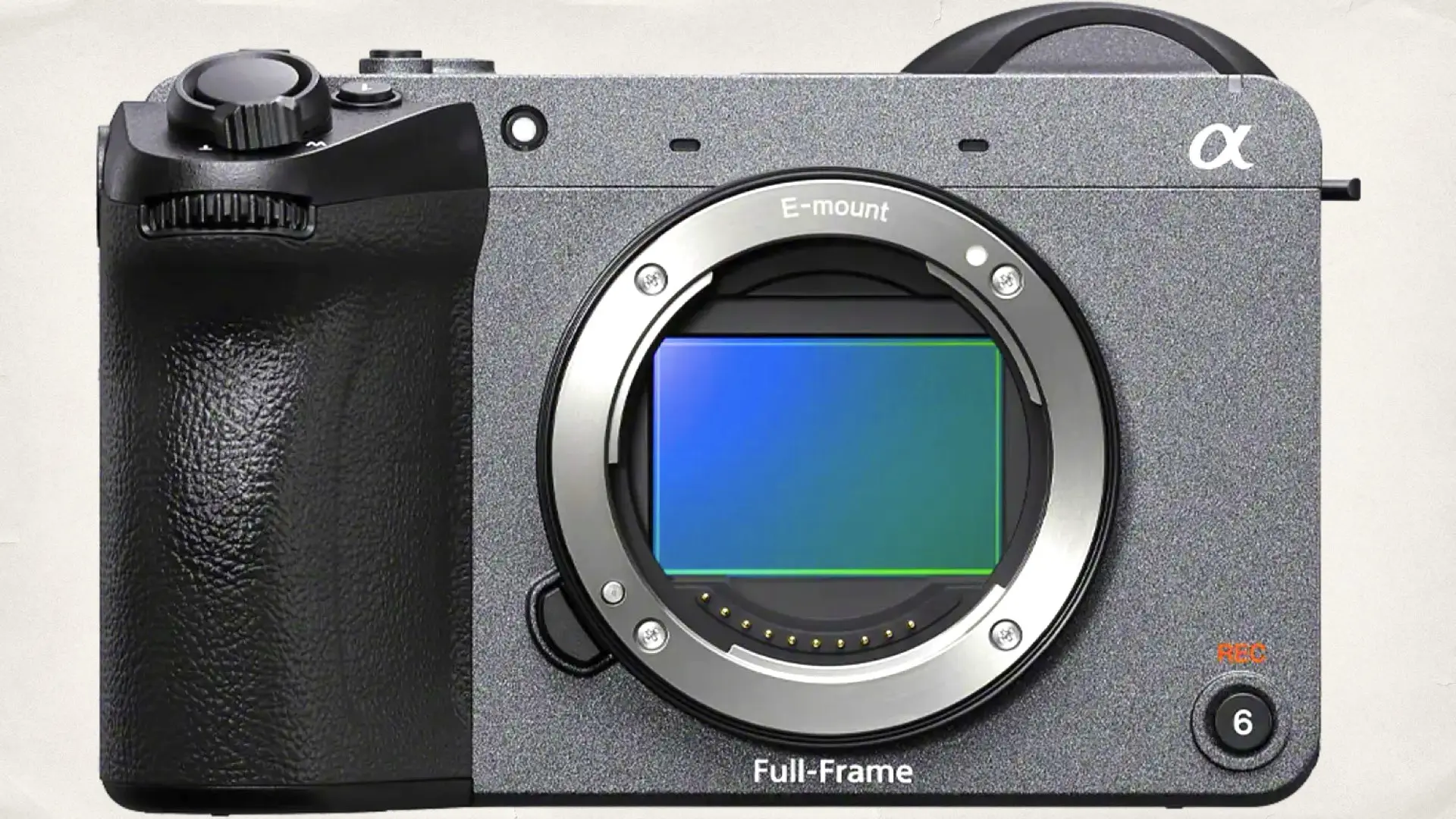
What filmmakers should expect realistically?
The safest expectation is that the FX3 Mark II, if it arrives, will improve processing, autofocus intelligence, stabilization behavior, thermal reliability, monitoring tools, and recording flexibility. Sony has already been moving its newer cameras toward stronger subject recognition, more advanced processing pipelines, and more creator-friendly operation. A global shutter would be a huge development if true, because it would remove rolling shutter artifacts in a way that directly improves action, handheld, VFX, LED wall, and fast camera movement workflows. However, the current global shutter claim is not confirmed, and treating it as fact would be irresponsible. A partially stacked sensor is a more plausible middle ground based on current rumor language, but even that remains unconfirmed. The most important improvement would be a faster, cleaner, more cinema-tuned sensor pipeline. For professionals, that means less skew in motion, better confidence with handheld work, better high frame rate performance, better low light stability, and less compromise when the camera is pushed in difficult conditions. Those are the details that separate a serious cinema tool from a camera that merely has strong video specifications.

Why Sony cannot simply add more pixels
Sony already has plenty of cameras for buyers who want high resolution. The Alpha line covers that territory well, and newer compact Cinema Line products have begun to overlap with hybrid needs. The FX3 Mark II should avoid becoming another all-purpose body with a cinema badge. Its value comes from restraint. A lower resolution full-frame sensor can still be the smarter cinema choice when the goal is 4K delivery, fast readout, lower noise, and efficient processing. Most professional online, broadcast, documentary, commercial, and creator work still lands in 4K or below. For those users, a clean 4K image from a fast sensor can be more valuable than extra pixels that create heat, rolling shutter, storage pressure, or crop limitations. That does not mean resolution is irrelevant. It means resolution should serve the image pipeline. The FX3 Mark II does not need to win a megapixel contest. It needs to produce a cleaner, more dependable moving image in situations where compact cinema cameras are actually used.
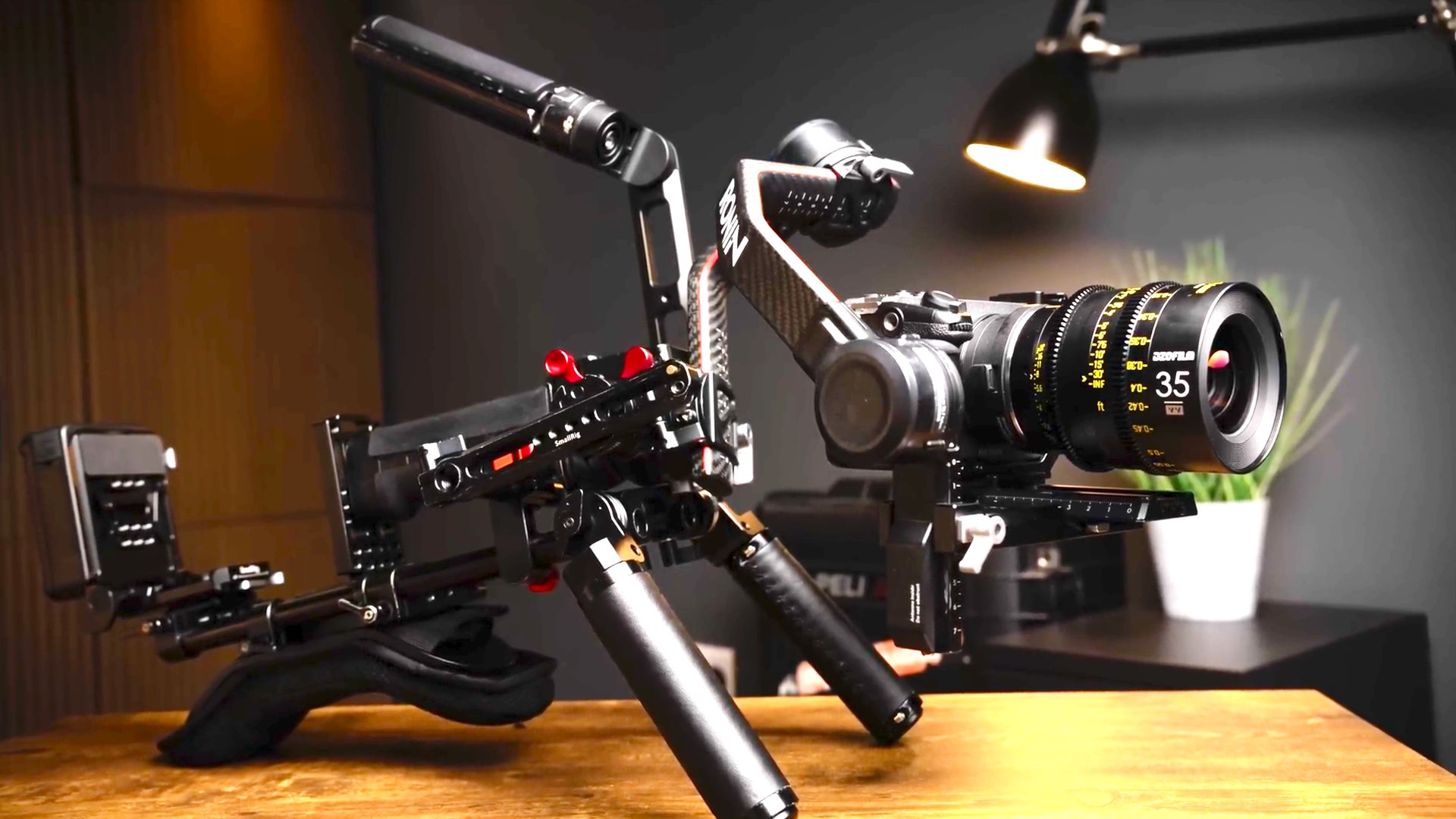
Final thoughts
The best version of the Sony FX3 Mark II would be a disciplined camera. Sony should resist the temptation to make it a miniature everything machine. The FX2 can serve the hybrid creator. The Alpha bodies can serve high-resolution stills and mixed media users. The FX6 can remain the more complete production body. The FX3 Mark II should focus on the compact cinema operator who wants a small body with serious motion performance. That means sensor speed should sit at the center of the product. Improved rolling shutter control, reliable 4K high frame rate recording, strong dynamic range, robust autofocus, clean low light, better monitoring options, and stable thermals would make more sense than chasing 8K or trying to turn the camera into a stills flagship. The rumor cycle is noisy, and many specifications circulating online should be treated with caution. But the discussion around a possible 16 megapixel partially stacked sensor reframes the debate.
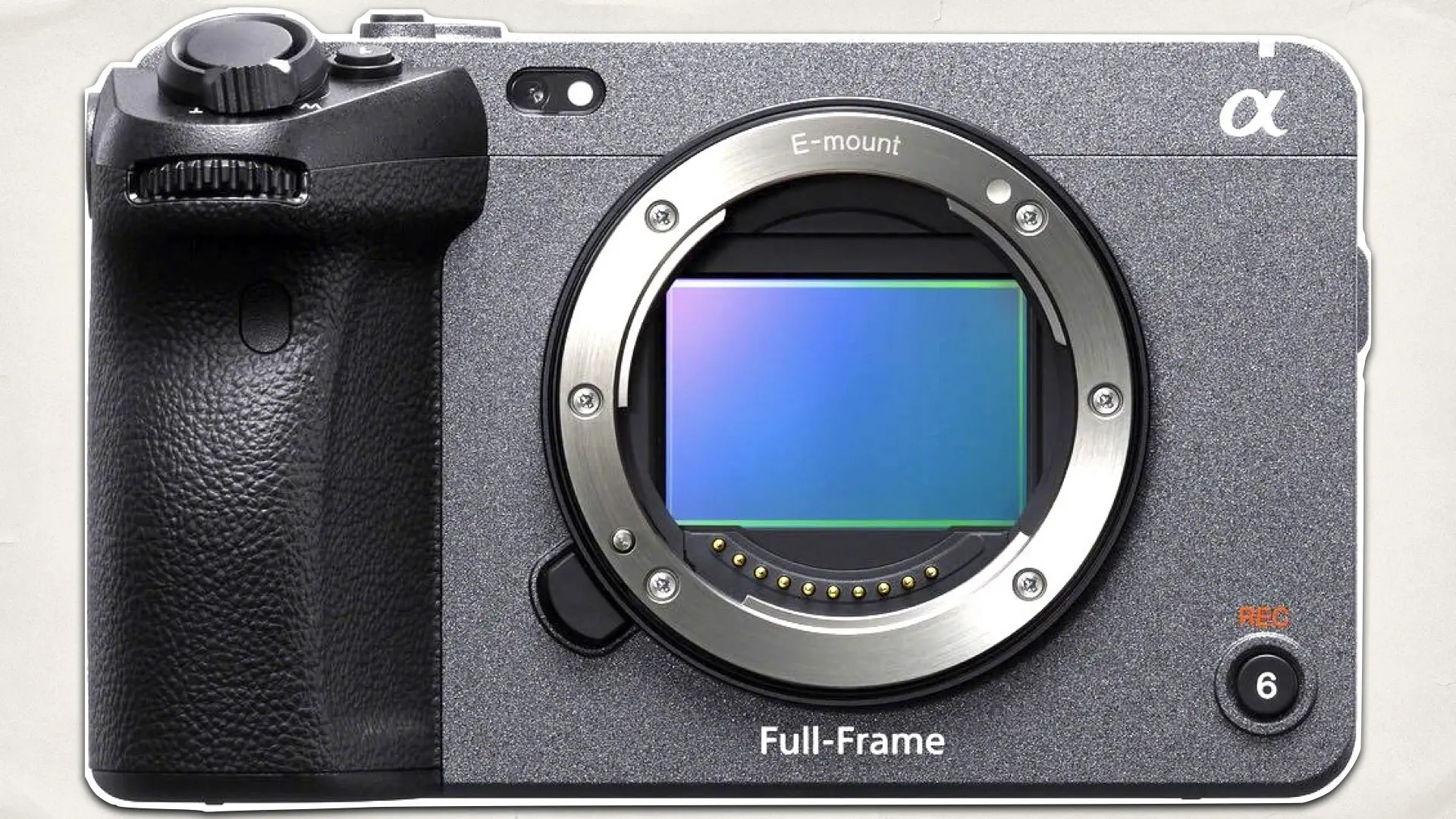
Gear mentioned in this article
Available on Amazon
| Product | New | Renewed | Used |
|---|---|---|---|
| Sony FX3 | $3,998 | — | — |
| Sony FX2 | $2,498 | — | From $2,050.89 |
| Sony FX6 | $8,876 | — | — |
Prices checked: Oct 7, 2026, 1:31 PM GMT+0000
As an Amazon Associate, Y.M.Cinema earns from qualifying purchases. If you buy through our links, we may earn a small commission at no extra cost to you.
Product prices and availability are accurate as of the date/time indicated and are subject to change. Any price and availability information displayed on Amazon.com at the time of purchase will apply to the purchase of this product.
CERTAIN CONTENT THAT APPEARS ON THIS SITE COMES FROM AMAZON. THIS CONTENT IS PROVIDED “AS IS” AND IS SUBJECT TO CHANGE OR REMOVAL AT ANY TIME.





So I might be in a bit of a unique position in that I own a Sony FX6 and the FX2 as well as an FX30.
I can tell you that the FX2 is a highly underrated camera that most people are sleeping on for a few reasons that an FX3 Mark II could dominate
For starters, the image stabilization is so handy.
with active stabilization unless you are taking large steps and doing some drastic things that really require a gimbal with active stabilization you can get solid shots that look like you’re on a gimbal without one just holding it still
In terms of dynamic range, it has one of, if not the highest dynamic range outside of the Burano and Venice.
In terms of low noise performance, it outperforms the FX3 and FX6, even though they have larger pixels. There’s less noise in the FX2.
Sure, it’s also nice that it has a physical shutter rather than an electronic shutter. It makes me taking photos less of a headache. Also, the EVF for photos makes it so much nicer in those rare times I am taking photos with it.
Talking about the EVF, it’s also an actually nice one to use when you’re out in the sun. And the fact that it tilts is so much more usable than just the back screen like the FX3 or FX6.
And another thing people forget to mention is the fact that you can use the rocker switch to crop in while maintaining 4k all along the way to Super 35, unlike the FX3 and FX6.
Sure… the FX6 has built-in variable ND filters, but if you shoot the FX3 or FX2, you’re probably used to having variable ND on the front of your lens all the time anyways, and that’s the big change I’ve done is adding variable ND filters on every single lens, so I’m never taking them off or putting them on. They are my lens cap in my camera case.
On my FX6, because I’m swapping lenses between cameras, I usually just leave the electronic VND in the FX6 turned off completely.
Only in the rare situation why I grab a lens that doesn’t have a VND on it, do I use the FX6 VND.
That said, it’s not all unicorns and rainbows with the FX2.
I could see an FX3 Mark II having the updated tilt flip screen like the A7v
I could see them updating the frame rate to 4K 120 but make it true 4K 120 video with audio not just the S&Q mode 120 bullshtik.
When I’m filming documentary style video, it’s no difference for me to film at a multiple higher like 120 and export at 30. It just drops three out of four frames and looks perfectly smooth and I can slow things down. But there’s no way to do that with audio capture on the FX3 or FX6. That would be a small but meaningful bump in usability. That is the perfect type of thing to do on this next camera.
Also, it would be really cool if they brought a pre-record buffer and the ability to shoot on a wider variety of SD cards like the FX6 does where if you put a memory card that’s not approved it just gives you a warning but usually works fine unlike the FX3 or FX2 which will not allow you to record at certain frame rates and quality if you don’t use the approved v90 cards.
I hope there isn’t a focus on global shutter. It’s not something that impacts most FX3 users. The FX3 is being used in commercial work, weddings, event capture, & social media content. There are extremely rare situations where rolling shutter is present. If you have to aggressively whip the camera left to right in order to reveal rolling shutter then it’s not a massive issue.
I understand the alpha bodies have higher resolutions but those have never been meant for long form recording. The Sony FX9 shot 6K. So clearly higher resolutions have a place in their FX line. There’s a middle ground where Sony can stick to the lowlight capabilities & compact form factor that made the FX3 great and make meaningful competitive upgrades. Offering open gate, false color, and increased dynamic range would be massive improvements.
FX3 II wish list:
– New 16MP stacked sensor
– 5K video recording
– Higher dynamic range
– Improved IBIS
– 5K 120 fps + 4K 240 fps (with audio) + HD 48o
– 32 Bit float internal audio recording
– 4 axis – 2.1 million dot LCD screen
– External SSD recording
– Open Gate + RAW recording
– Internal time lapse recording
– False color + waveforms
– 2nd quarter twenty on the bottom
I sure hope they bring OpenGate for those who need to make vertical and horizontal content from stuff they are going once.
Example podcasts, interviews, broadcast TV now…
Everything is shot horizontally knowing they also deliver a vertical version.
If clients think all modern cameras are becoming good enough, opengate on Nikon, Canon, etc… May make some of us switch.
Really seems Canon is listening to consumers releasing Opengate