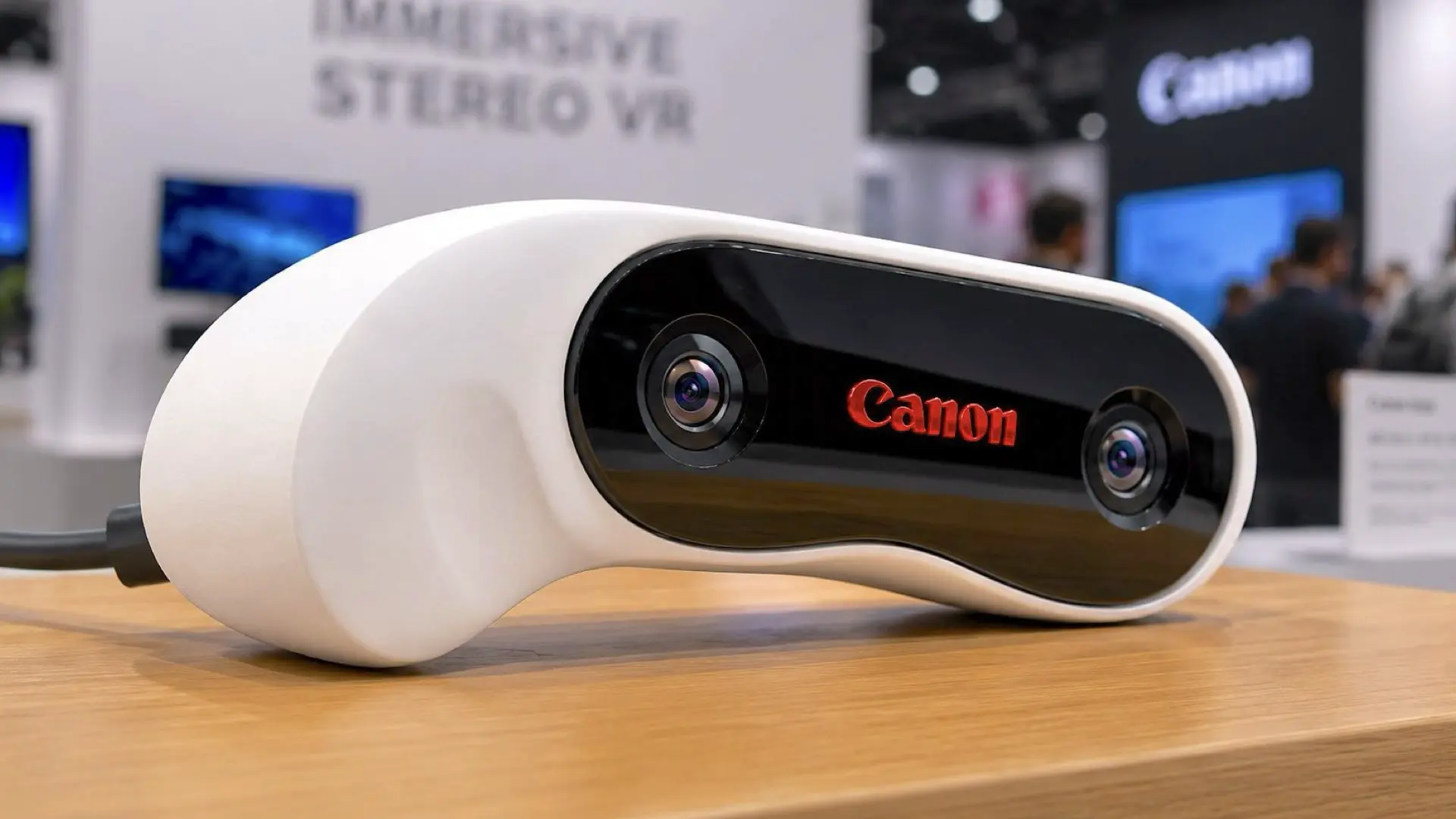
Canon has revealed a pocket-sized, high-image-quality Mixed Reality device concept at AWE USA 2026, alongside new XR software and a high-efficiency waveguide prototype for AR glasses. This announcement shows Canon moving deeper into compact immersive hardware, optical miniaturization, and real-time spatial visualization: areas that are becoming increasingly relevant to modern visual production.
While remaining ultra-compact, the device delivers high-definition visual performance and is planned to offer seamless compatibility with XR applications. As a concept model currently under development and not yet available for purchase, Canon is actively seeking co-creation partners across a wide range of industries at AWE to explore new value creation leveraging this technology.
– Canon
Canon at AWE USA 2026
At AWE USA 2026, Canon U.S.A. and its Business Innovation Group are showcasing three key technologies: MREAL Collaborator, a new XR software platform; a pocket-size MR device concept model; and a high-efficiency waveguide prototype for AR glasses. Canon says the showcase is focused on spatial computing technologies and core optical components designed to encourage industry collaboration and co-creation. The most eye-catching part is the MR device concept. Canon describes it as pocket-sized, highly portable, lightweight, and capable of delivering high-definition visual performance while remaining ultra-compact. The device is still under development and is not available for purchase. Canon says it is seeking co-creation partners across a wide range of industries to explore potential use cases.
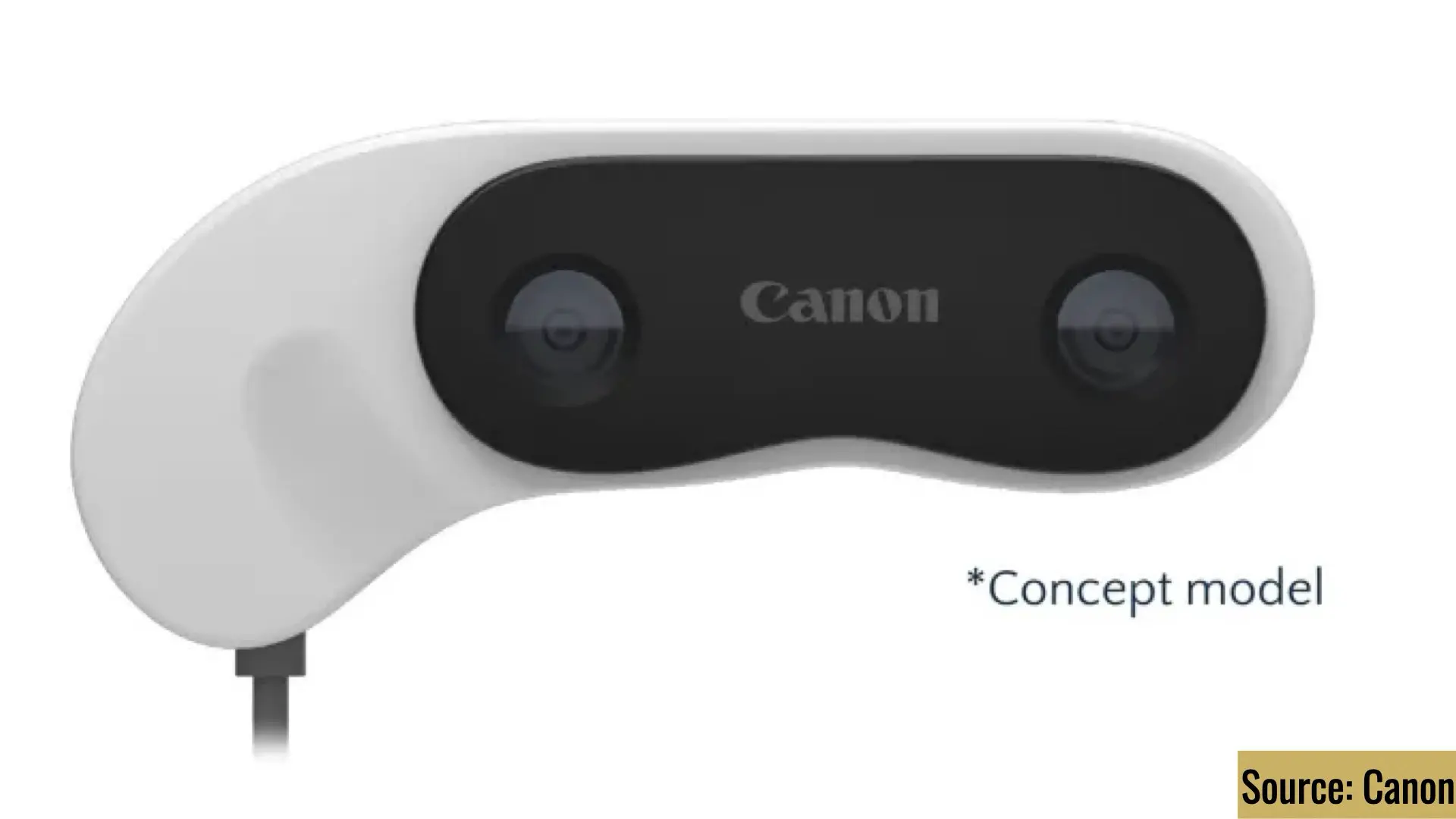
Canon’s pocket-size MR concept
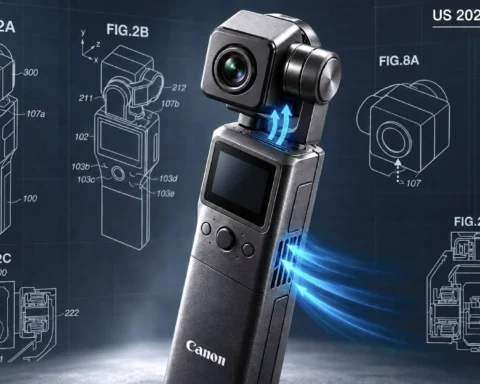
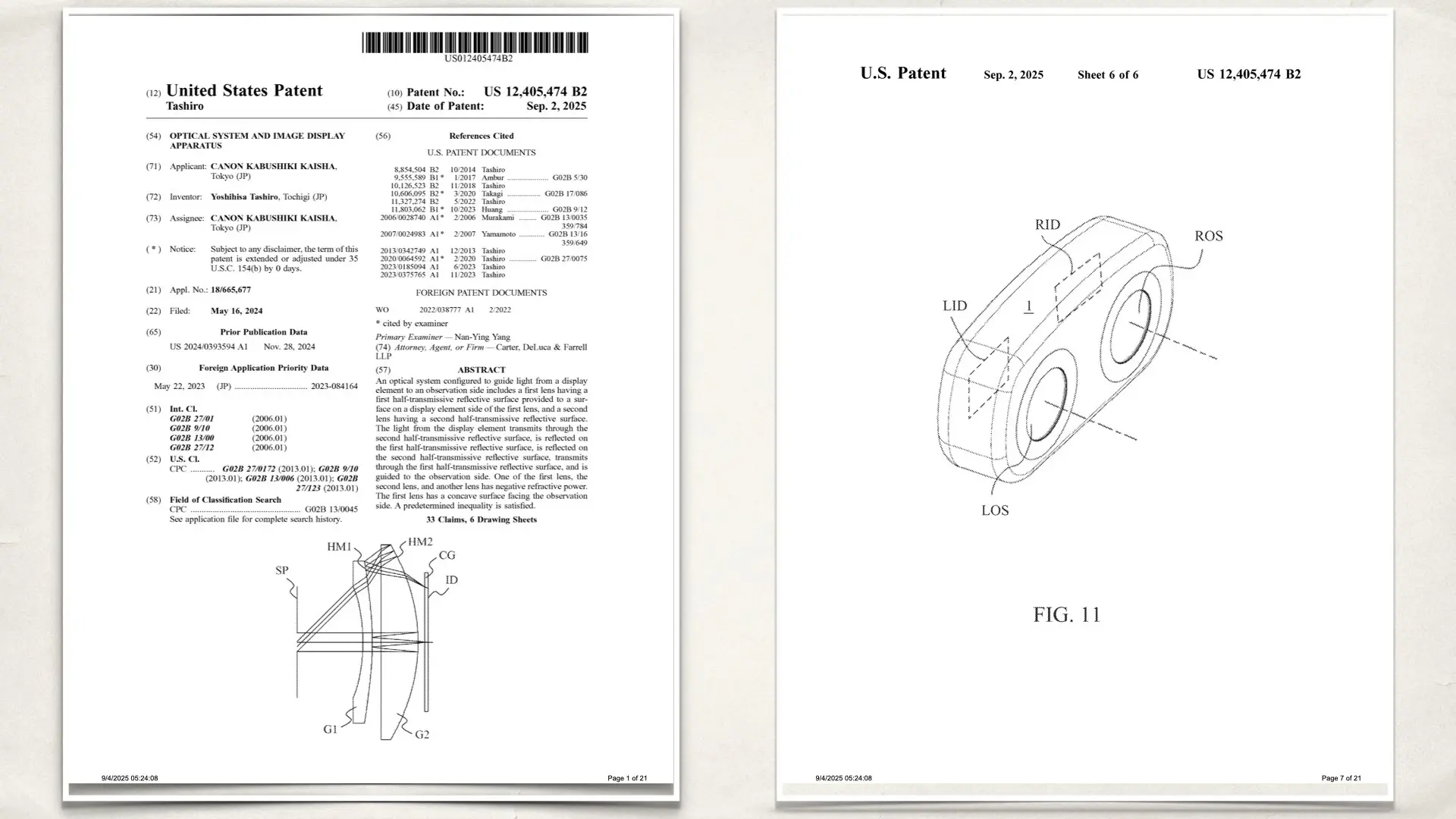
The pocket-sized MR device concept is especially notable because it continues a direction Canon has already hinted at through its patent activity. Back in September 2025, YMCinema reported on a Canon patent designed to shrink VR glasses into a more wearable form factor. That patent described a triple-pass optical system in which the light path is folded inside the lens structure, allowing a compact optical design while maintaining image quality. Now, Canon is showing a physical MR concept model that follows the same broad logic: immersive visual devices need to get smaller, lighter, and more practical. The AWE showcase does not confirm that the concept model is based on that specific patent, and Canon does not say that it is. But the direction is consistent. Canon is clearly interested in the optical challenge of making immersive devices less bulky.

The AR waveguide matters too
Alongside the MR device, Canon is also presenting a high-efficiency waveguide prototype for AR glasses. This may be the less flashy part of the announcement, but it is technically important. Waveguides are a key component in AR glasses because they help guide projected imagery into the user’s eyes while keeping the device thin and wearable. In simple terms, this is one of the technologies that can help AR glasses avoid becoming large headsets. Canon says it is leveraging its strengths in optical technology for this prototype, which makes sense. If AR and MR devices are going to become smaller, the optical system is one of the hardest problems to solve. This is where Canon’s imaging background becomes relevant. The company is showing optical components and compact hardware concepts, which suggests that Canon sees immersive devices as an extension of its core expertise.
MREAL Collaborator: Canon’s actual target is industrial XR
The most concrete product in the announcement is MREAL Collaborator. Canon describes it as XR software designed to support usability and collaboration in the manufacturing industry. The software is built for users who may not have specialized 3DCG expertise, allowing them to manipulate spatial data more easily. MREAL Collaborator is also compliant with OpenXR, which enables real-time 3DCG data sharing across supported XR devices and remote locations. Canon says this can reduce dependence on specific hardware and physical distance, improving collaboration between teams.
From cameras to spatial imaging
The announcement shows Canon expanding beyond capture devices and into the way visual information is experienced, shared, and manipulated in space. That is a natural extension for an imaging company with deep optical expertise. Canon’s previous VR glasses patent showed the engineering ambition: shrink immersive optics into a more wearable form factor. The new pocket-sized MR device concept shows that Canon is actively exploring compact mixed-reality hardware in public, not only in patent diagrams. That means Canon is building technologies that sit close to where filmmaking, virtual production, 3D visualization, and immersive display systems are heading.