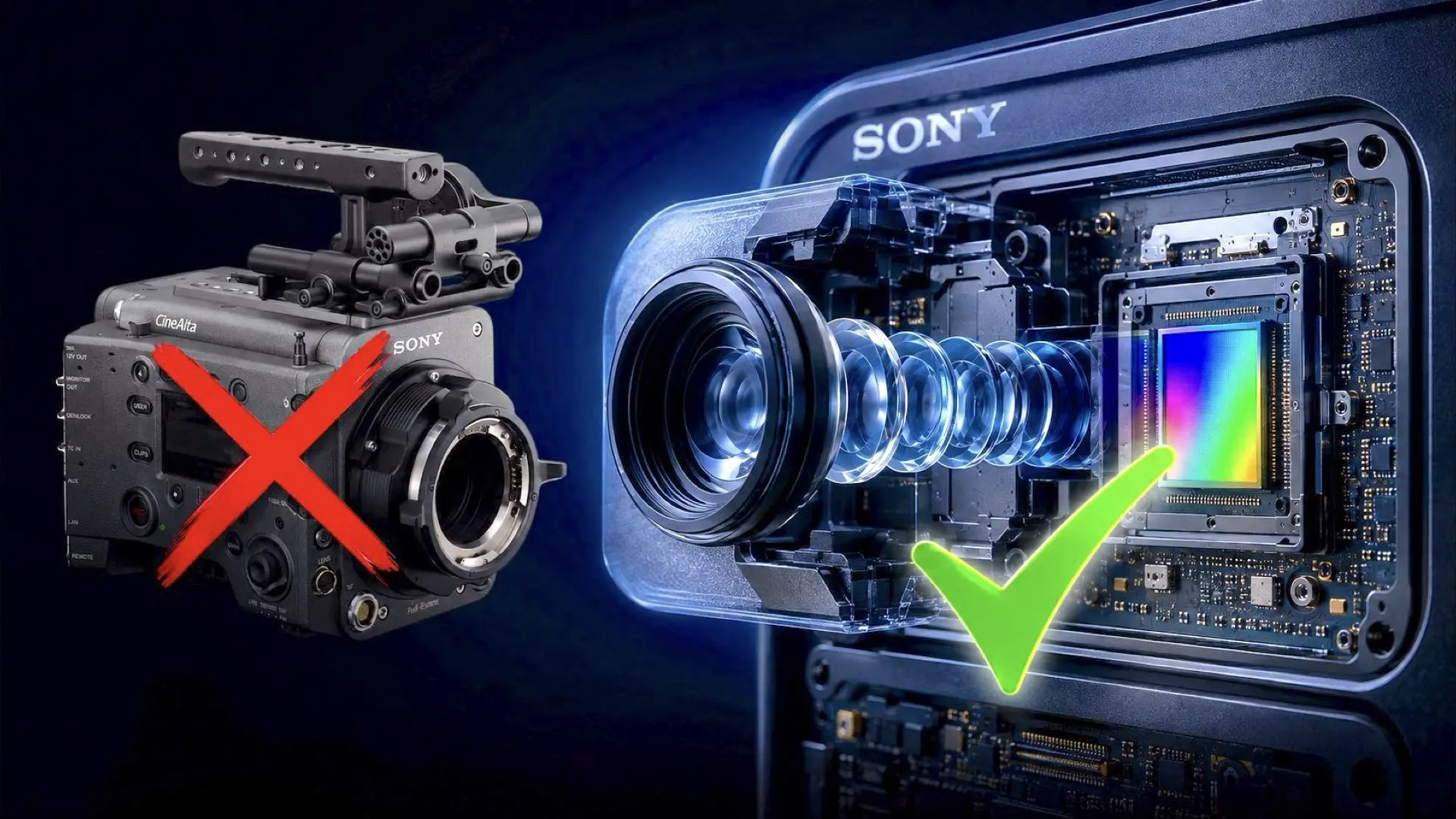
Sony’s camera-related Imaging category reached nearly 200 billion yen in quarterly sales, while the company’s much larger profit surge came primarily from image sensors developed for mobile devices. Here’s a financial overview and analysis released by Sony and interpreted by us for the filmmaking community.

Sony’s image sensors are booming
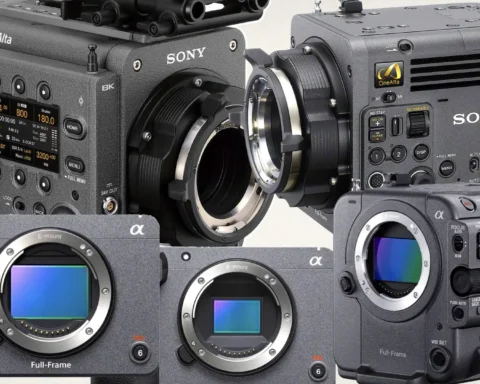
Sony has reported strong first-quarter results across its imaging operations, but the figures require an important distinction. The company’s camera-related business grew during the quarter, while the far more dramatic increase in profit came from its semiconductor division and, more specifically, image sensors for mobile devices. For the three months ended June 30, 2026, Sony’s Imaging category generated 199.7 billion yen in sales to external customers. That represents an increase of approximately 6.6% from the 187.3 billion yen recorded during the same quarter of the previous fiscal year. Sony defines this Imaging category as image and video content-creation products and solutions, including interchangeable-lens cameras and interchangeable lenses. It therefore covers a broader portfolio than Cinema Line cameras alone and does not provide individual sales figures for Alpha, Cinema Line, professional video cameras, or specific models. Nevertheless, the increase indicates continued growth for Sony’s camera, lens, and imaging-solutions operation. The category approached 200 billion yen in quarterly external sales, even as the broader Entertainment, Technology & Services segment delivered a more restrained result.
Camera-related sales grew, but segment profit remained flat
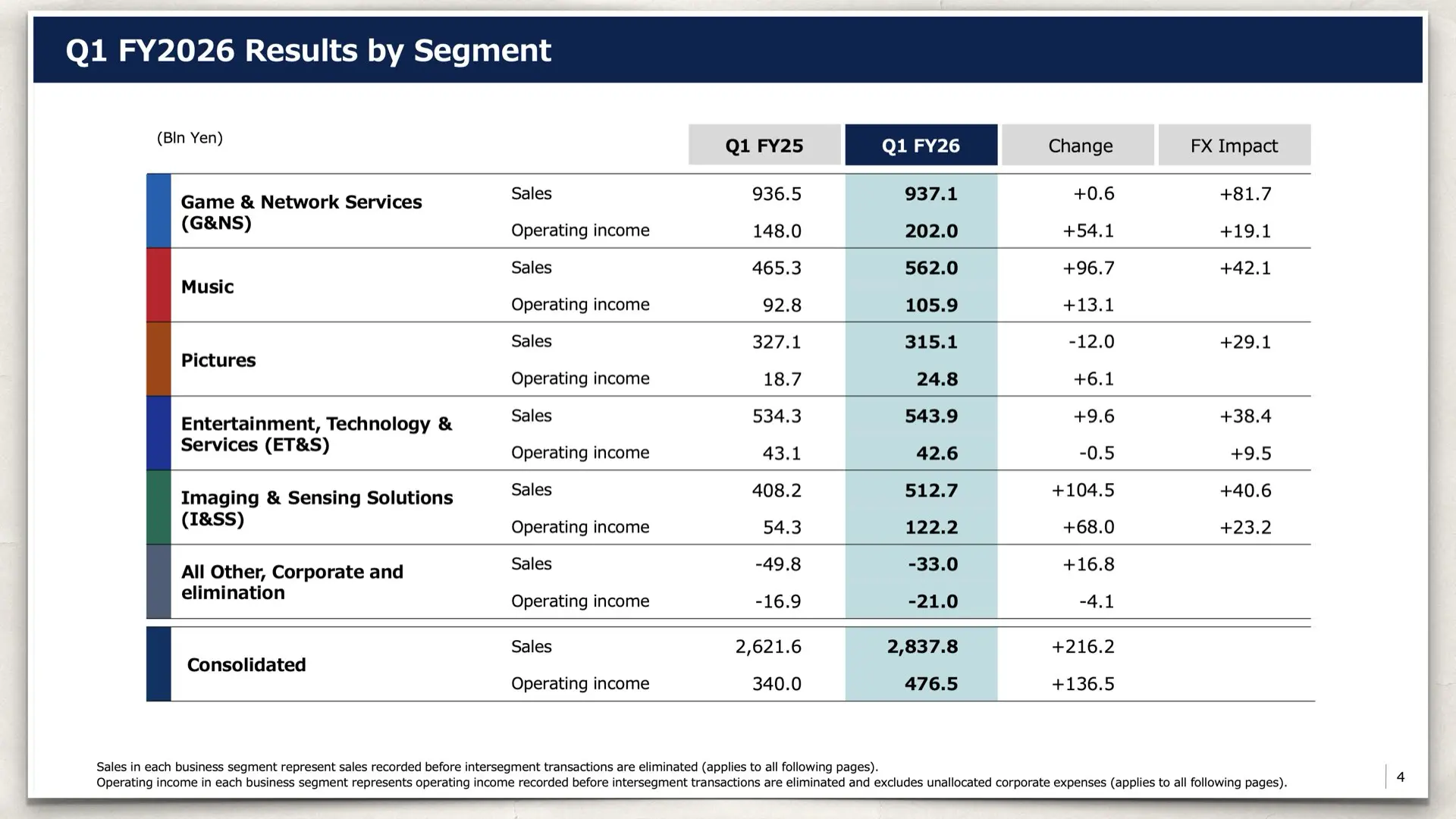
Sony’s Entertainment, Technology & Services segment, which contains the Imaging category, reported total sales of 543.9 billion yen before intersegment eliminations. That was up from 534.3 billion yen one year earlier. Operating income for the segment, however, was almost unchanged. It declined slightly from 43.1 billion yen to 42.6 billion yen. The result means that growth in Sony’s camera-related Imaging category should not be interpreted as a major profitability breakthrough for the entire consumer and professional electronics segment. ET&S also includes sound products, network services, displays, smartphones, home audio equipment, medical products, and several content-production support operations. Sony did not disclose the profitability of the Imaging category separately. It is therefore impossible to determine from the release how much operating income came specifically from interchangeable-lens cameras, lenses, Cinema Line products, or professional production systems. The financial material also contains no shipment figures for individual camera families. Any claim that products such as the Alpha series, FX line, BURANO, or VENICE directly produced the reported increase would go beyond Sony’s disclosure.
The major profit increase came from image sensors
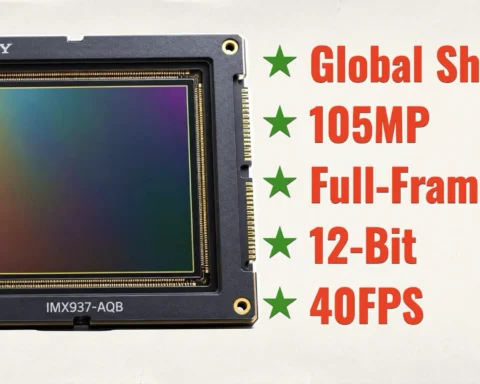
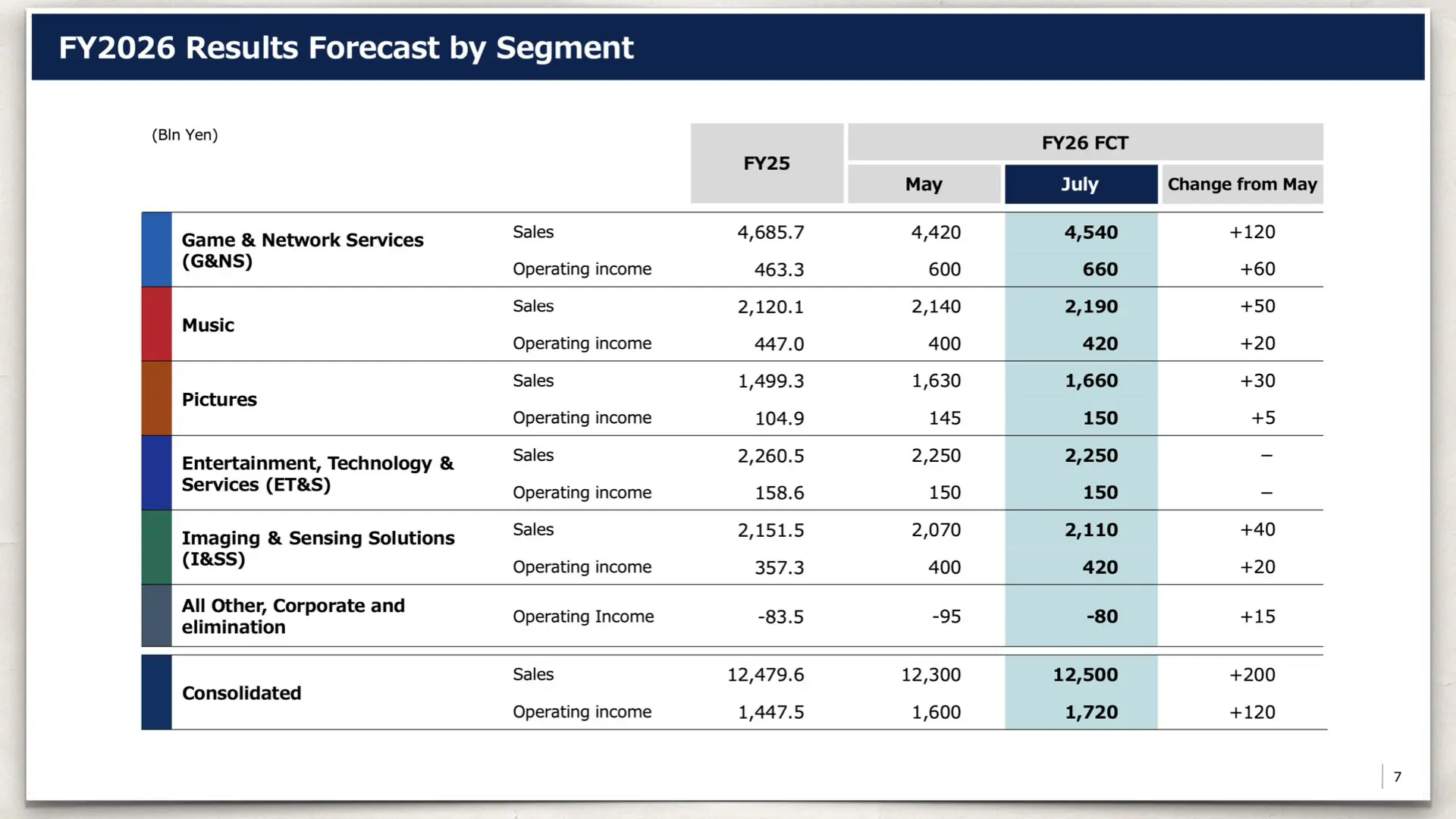
The more substantial financial development occurred in Sony’s Imaging & Sensing Solutions segment. I&SS sales increased by 26% year over year, rising from 408.2 billion yen to 512.7 billion yen. Operating income climbed from 54.3 billion yen to 122.2 billion yen, representing an increase of 125%. Sony described the 122.2 billion yen result as a first-quarter record for the segment. Those numbers may initially appear connected to Sony’s camera business, but I&SS is a separate operating segment centered on image sensors. Sony identified several factors behind the quarterly increase:
- Higher sales of image sensors for mobile products
- An improved customer and product mix
- A slight increase in unit sales
- Favorable foreign-exchange effects
Sony said mobile-sensor unit sales increased only slightly during the quarter. The much larger revenue gain came principally from higher average selling prices, an improved mix of customers and products, and currency conversion. The supplemental data provides additional context. Of the segment’s 512.7 billion yen in quarterly sales, 468.7 billion yen came from image sensors. Only 44.1 billion yen was attributed to other I&SS operations. Sony’s image-sensor results are therefore important to the broader imaging industry, but they should not be presented as evidence of equivalent growth in cinema-camera demand.
Two different imaging businesses
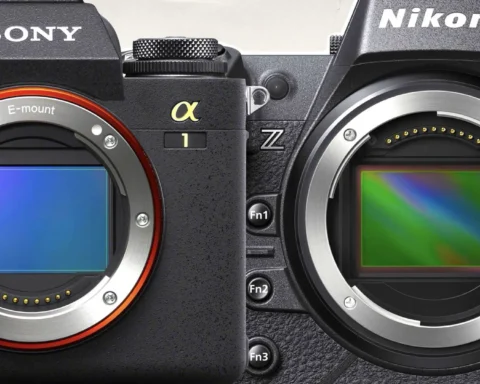
Sony operates on both sides of the digital-imaging market. Its ET&S Imaging category sells finished image-creation products and solutions, including interchangeable-lens cameras and lenses. Its I&SS division develops and manufactures the semiconductor technology used to capture images across smartphones and other applications. There is a technological relationship between these fields, but Sony reports them as separate businesses with different customers, revenue structures, and market drivers. The latest quarter shows both operations moving positively, although at very different speeds. Camera-related Imaging sales increased by approximately 6.6%, while I&SS operating income more than doubled. The distinction relevant because the 125% increase cannot be used as a measurement of Alpha, Cinema Line, or professional-cinema-camera performance. Sony explicitly linked the I&SS improvement primarily to mobile image sensors, product mix, pricing, foreign exchange, and only modest unit growth.
Sony remains cautious about the full year
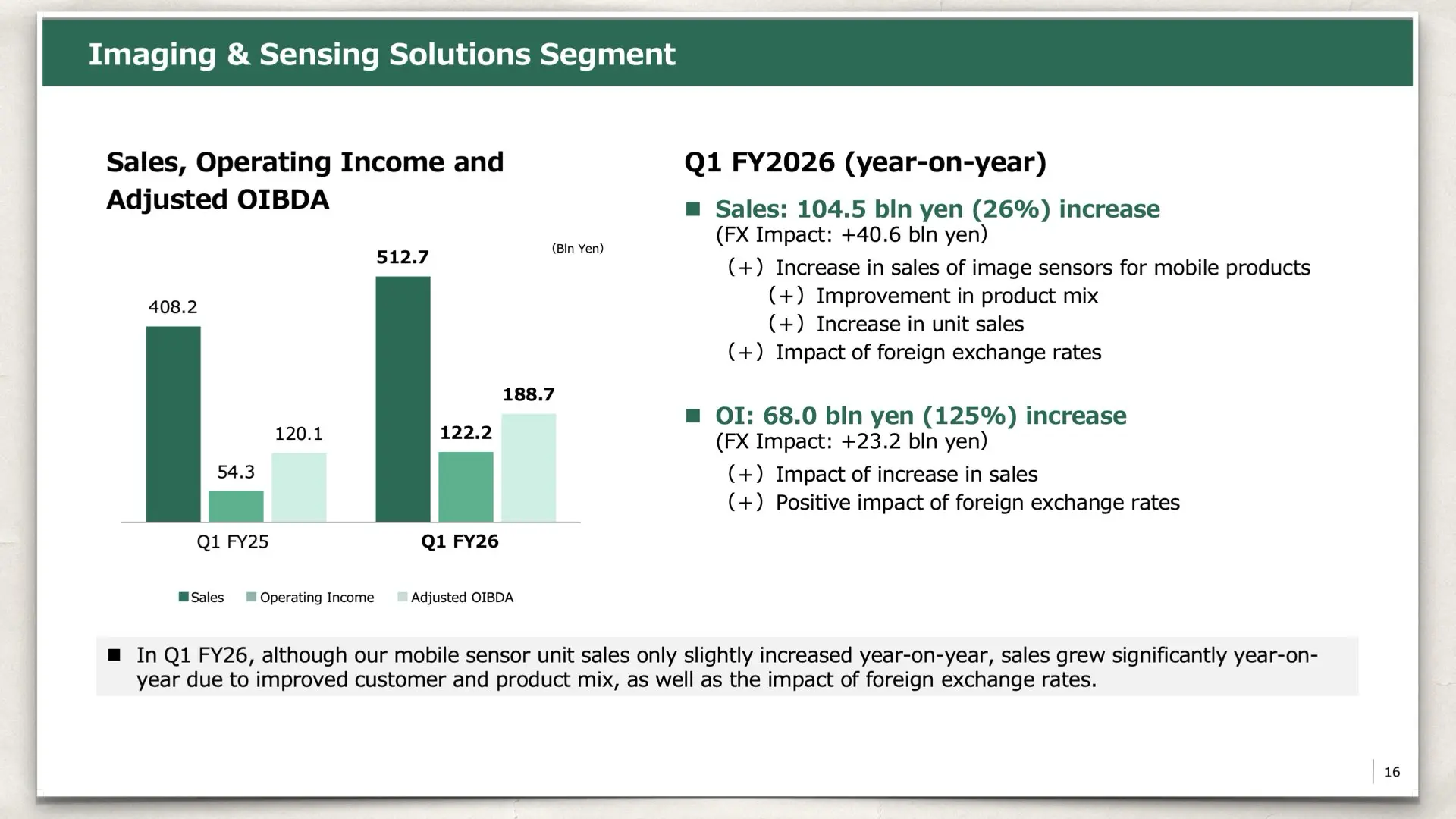
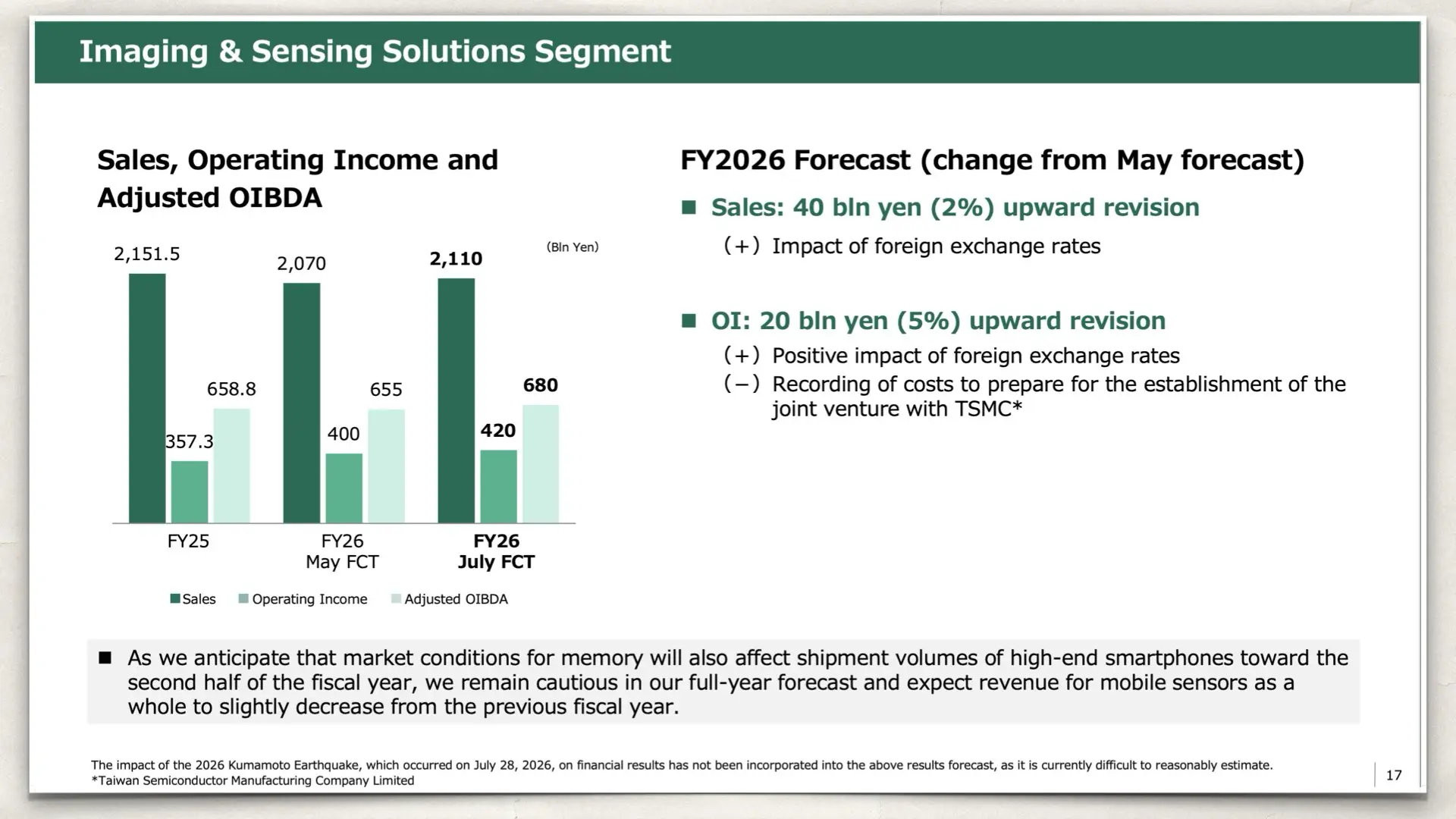
Despite the strong quarter, Sony is not assuming that the same mobile-sensor momentum will continue unchanged. The company raised its full-year I&SS sales forecast from 2.07 trillion yen to 2.11 trillion yen and its operating-income forecast from 400 billion yen to 420 billion yen. Sony attributed the revisions mainly to foreign-exchange effects. Sony also said it remains cautious about the second half of the fiscal year. The company expects conditions in the memory market to affect shipments of high-end smartphones and currently forecasts a slight full-year decline in mobile-sensor revenue compared with the previous fiscal year. This qualification prevents the first-quarter increase from being treated as a simple indication of accelerating unit demand. Sony’s own exclamation points instead point toward a combination of pricing, premium product mix, customer composition, and currency.
The Kumamoto uncertainty
Sony’s semiconductor operation also faces a more immediate production uncertainty following the July 28 Kumamoto earthquake. The company said its Kumamoto Technology Center experienced seismic intensity of 5+ and suspended production after the earthquake. Restoration work was underway when Sony published its financial results on July 31. Production had resumed at Sony’s facilities in Nagasaki, Oita, and Kagoshima, where the company reported no significant damage to buildings or equipment. Sony had not yet estimated the financial impact of the Kumamoto disruption and did not include it in its updated forecast. At this stage, the disclosure does not establish that camera production, sensor availability, or product shipments will be materially affected. Those consequences would remain speculative until Sony provides additional information about the suspended facility, affected production lines, and restoration timetable.
Wrapping up
Sony’s latest financial results reinforce the scale of its imaging position. The company is generating growth from finished image-creation products while earning substantially more from the semiconductor layer underneath the wider imaging market. However, the strongest quarterly result came from sensors intended primarily for mobile devices, not from Sony’s professional cinema-camera portfolio. For filmmakers and camera professionals, the relevant signal is more measured: Sony’s broader camera-and-lens category continues to grow, reaching almost 200 billion yen in quarterly external sales. That is a meaningful result, but Sony has not provided enough detail to determine which camera systems, customer groups, or production markets were responsible for the increase.