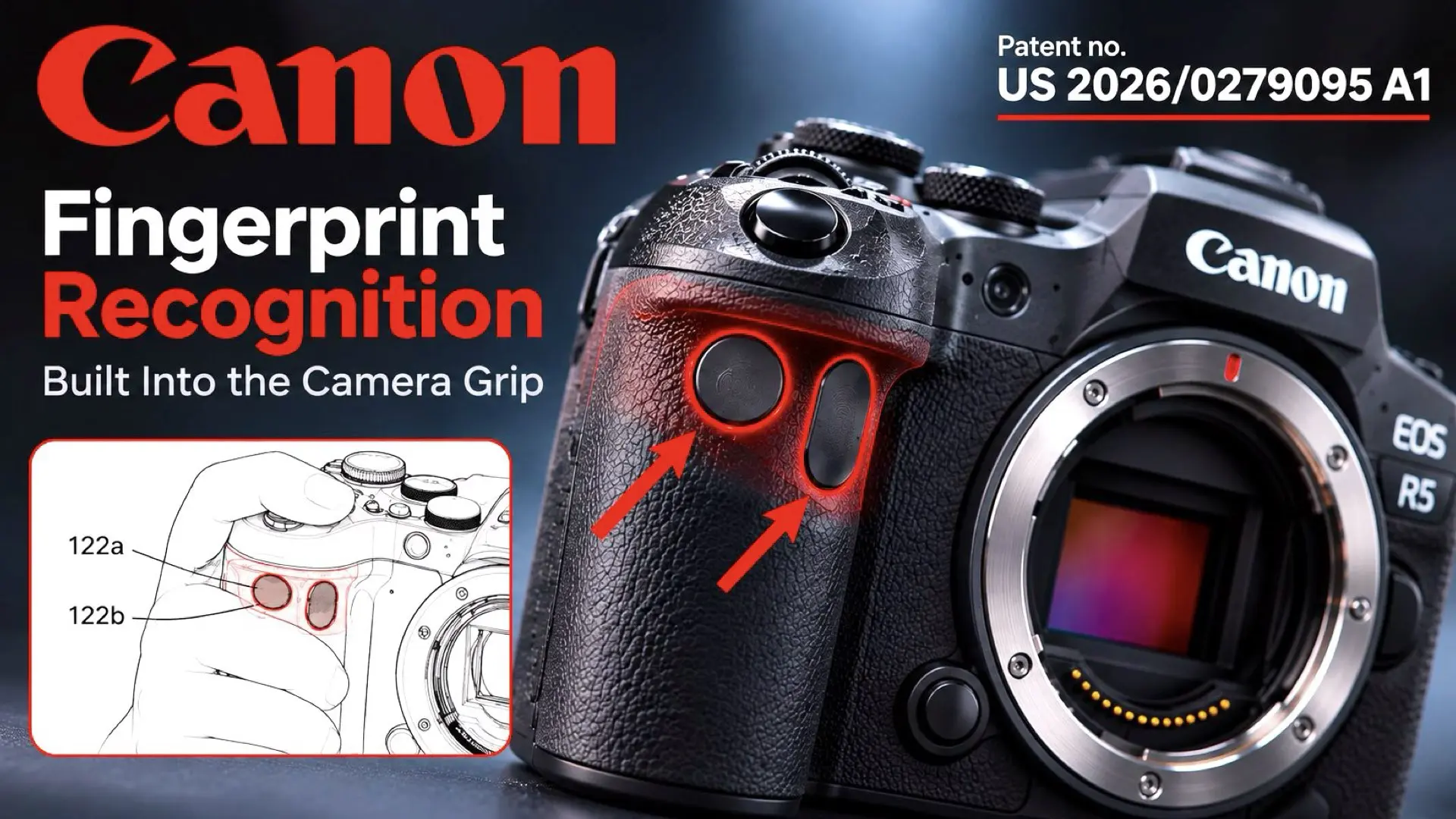
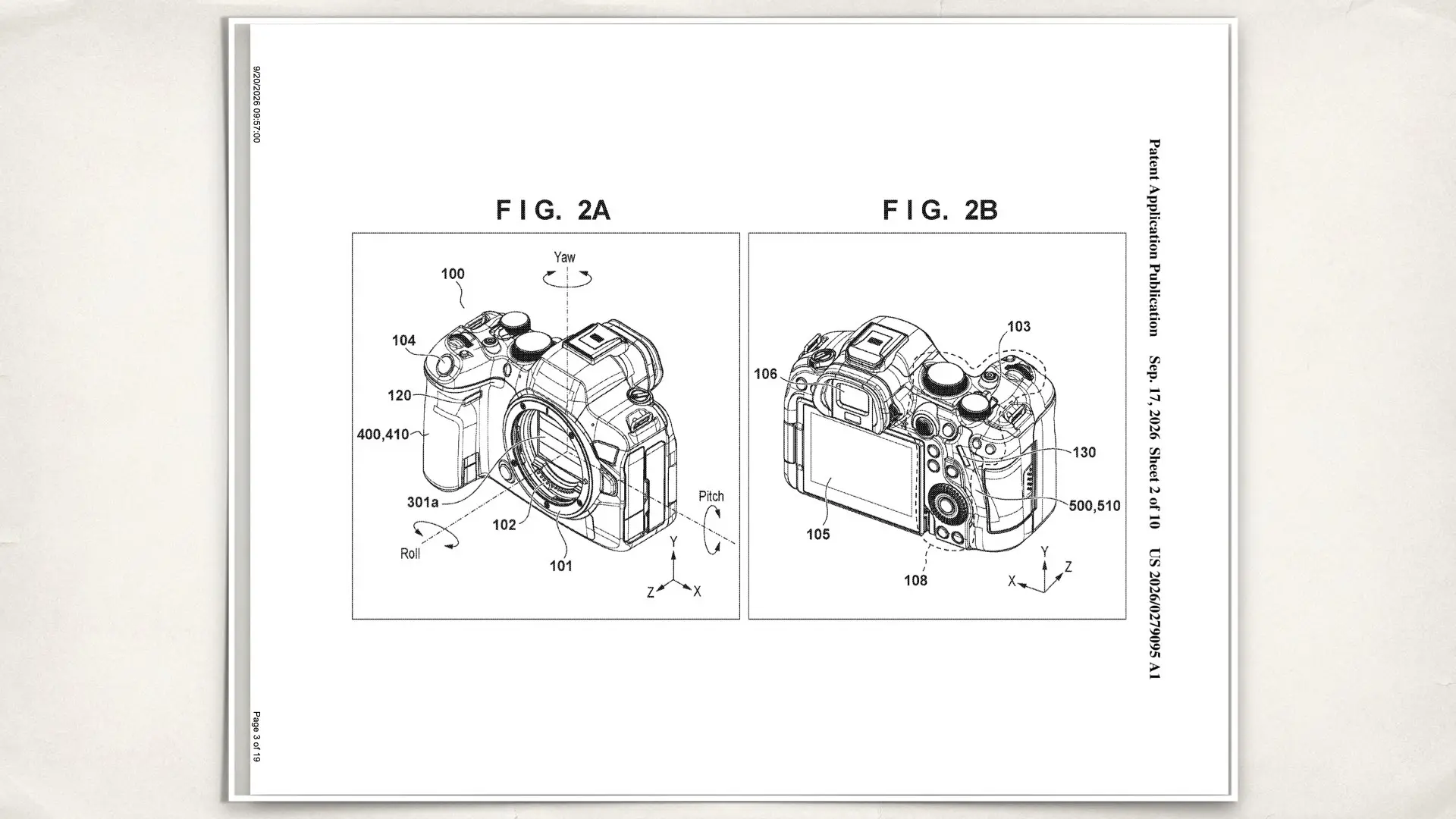
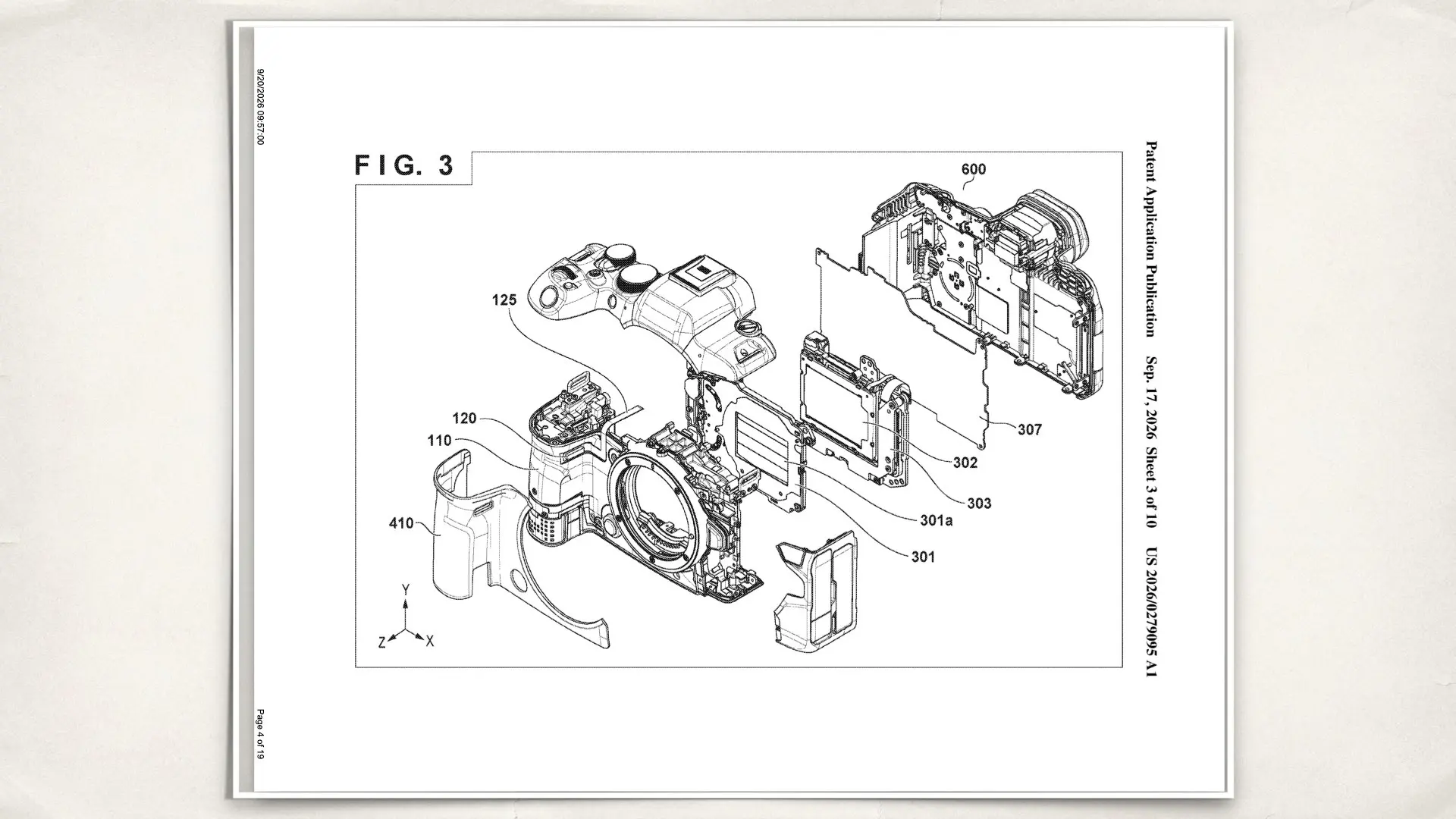
Canon has published a patent that explores an unusual idea for future cameras: fingerprint authentication built directly into the camera grip. The concept is not simply about adding a fingerprint reader somewhere on the body. Canon is designing the grip itself so the camera could recognize the person holding it while they are already in a normal shooting position. The patent, titled “Electronic Apparatus,” describes an interchangeable-lens camera with fingerprint sensors positioned around the front and rear grip areas. The goal is to authenticate the user without forcing them to move their hand, press a separate authentication button, or interrupt shooting.
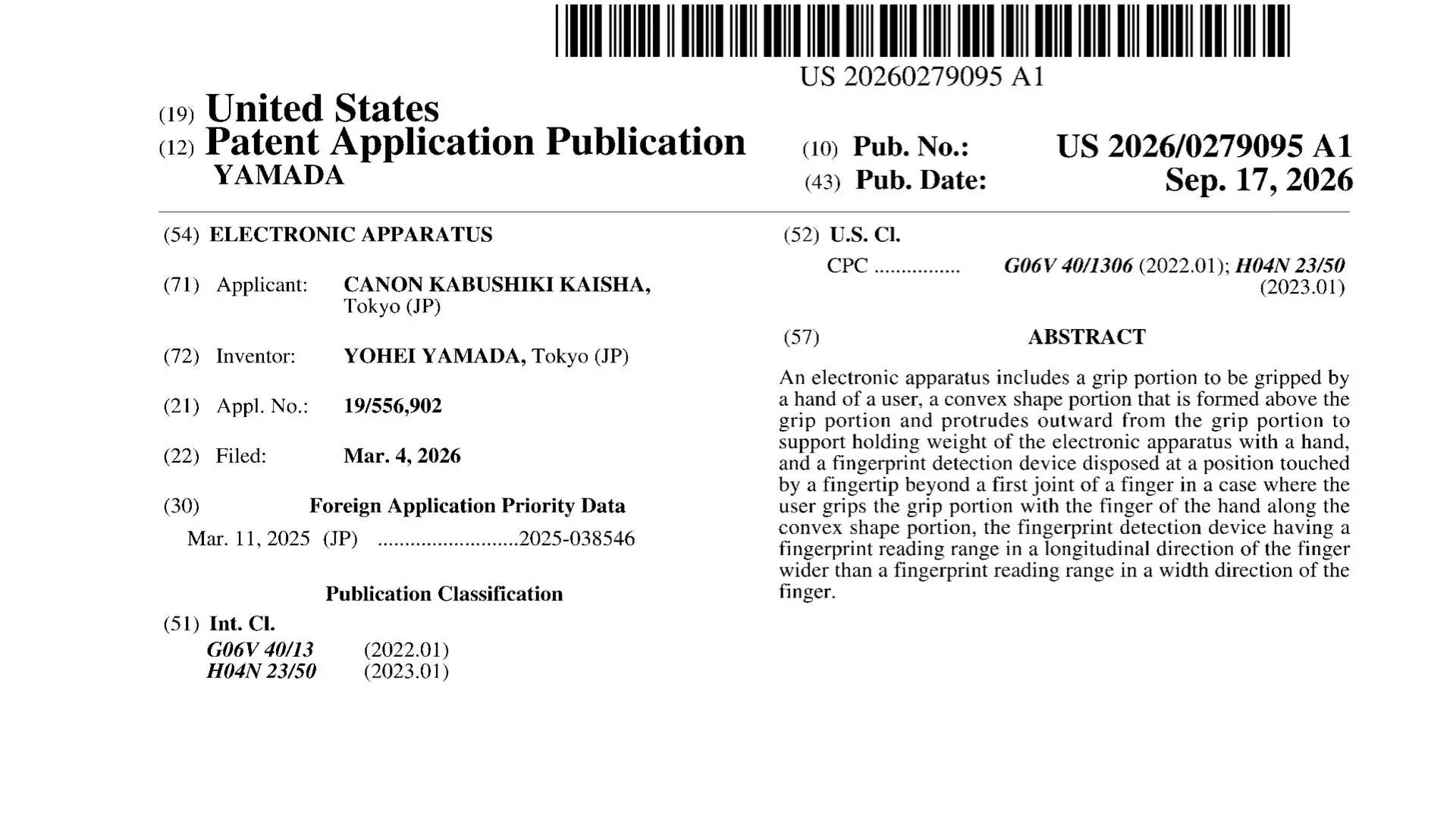
Canon’s new patent: ELECTRONIC APPARATUS
This creates a system that potentially understands two things: Is somebody holding the camera? And, using fingerprint authentication: Who is holding the camera? That distinction could become useful in professional environments.
Fingerprint recognition built into the grip
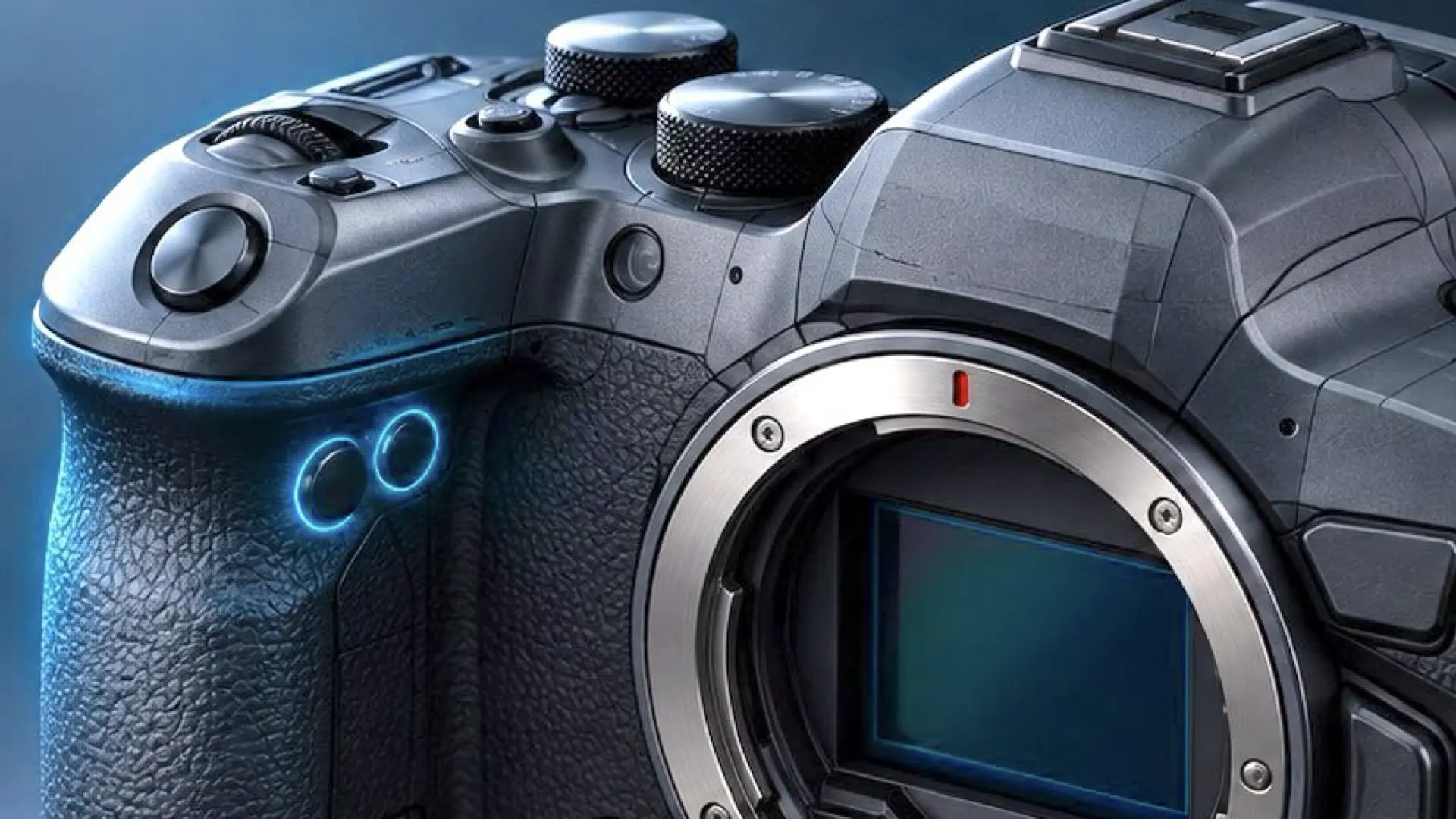
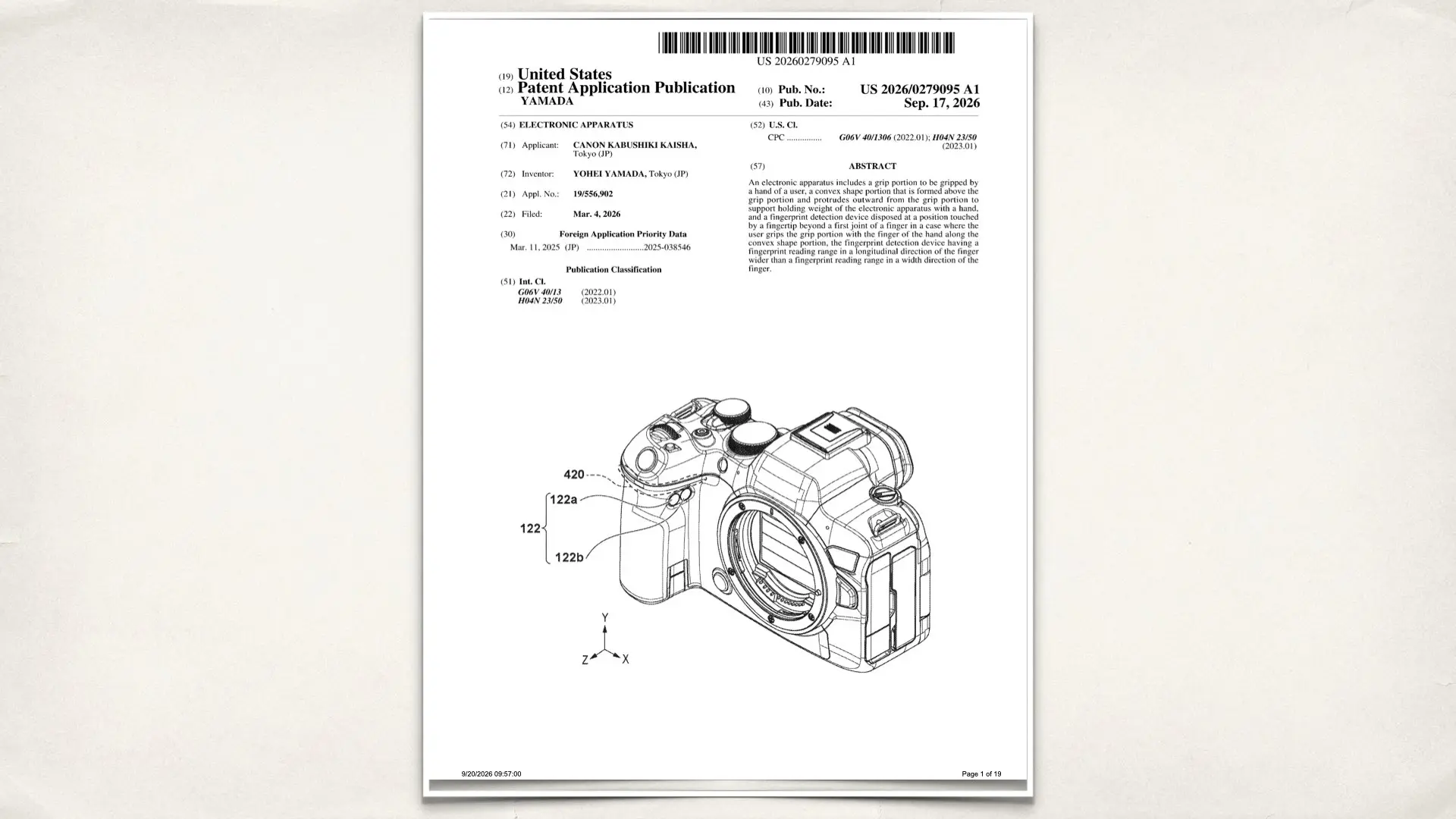
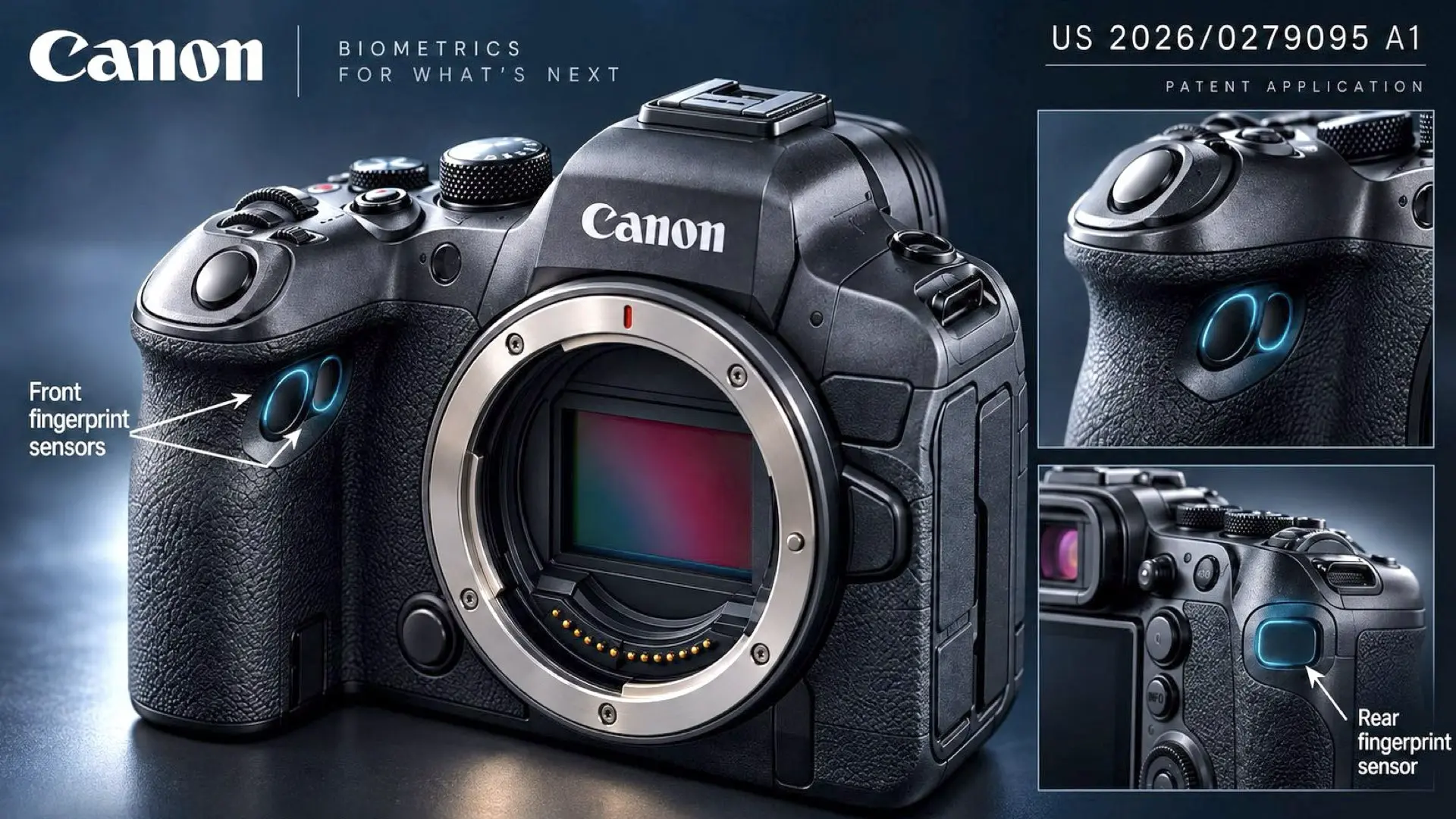
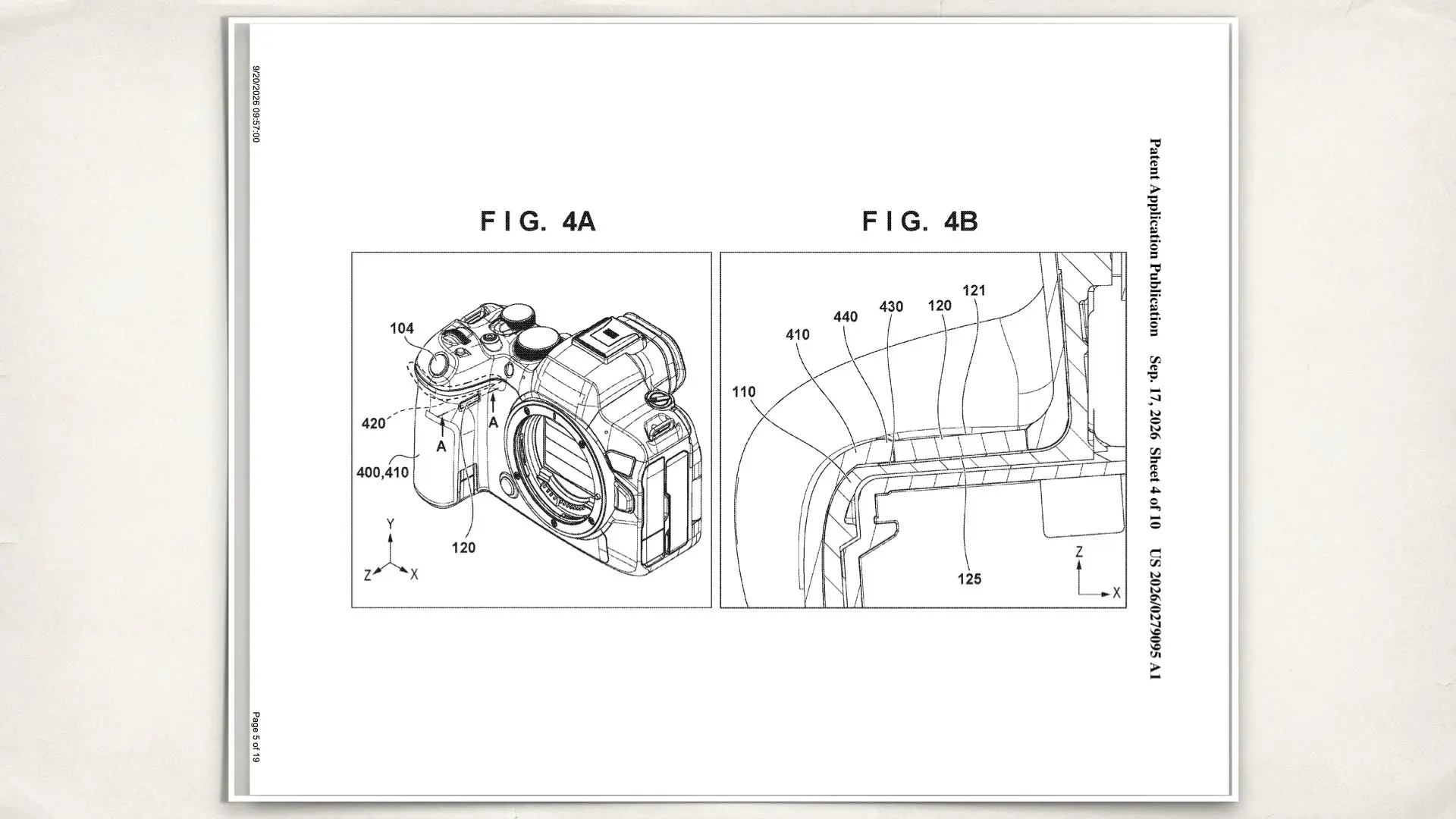
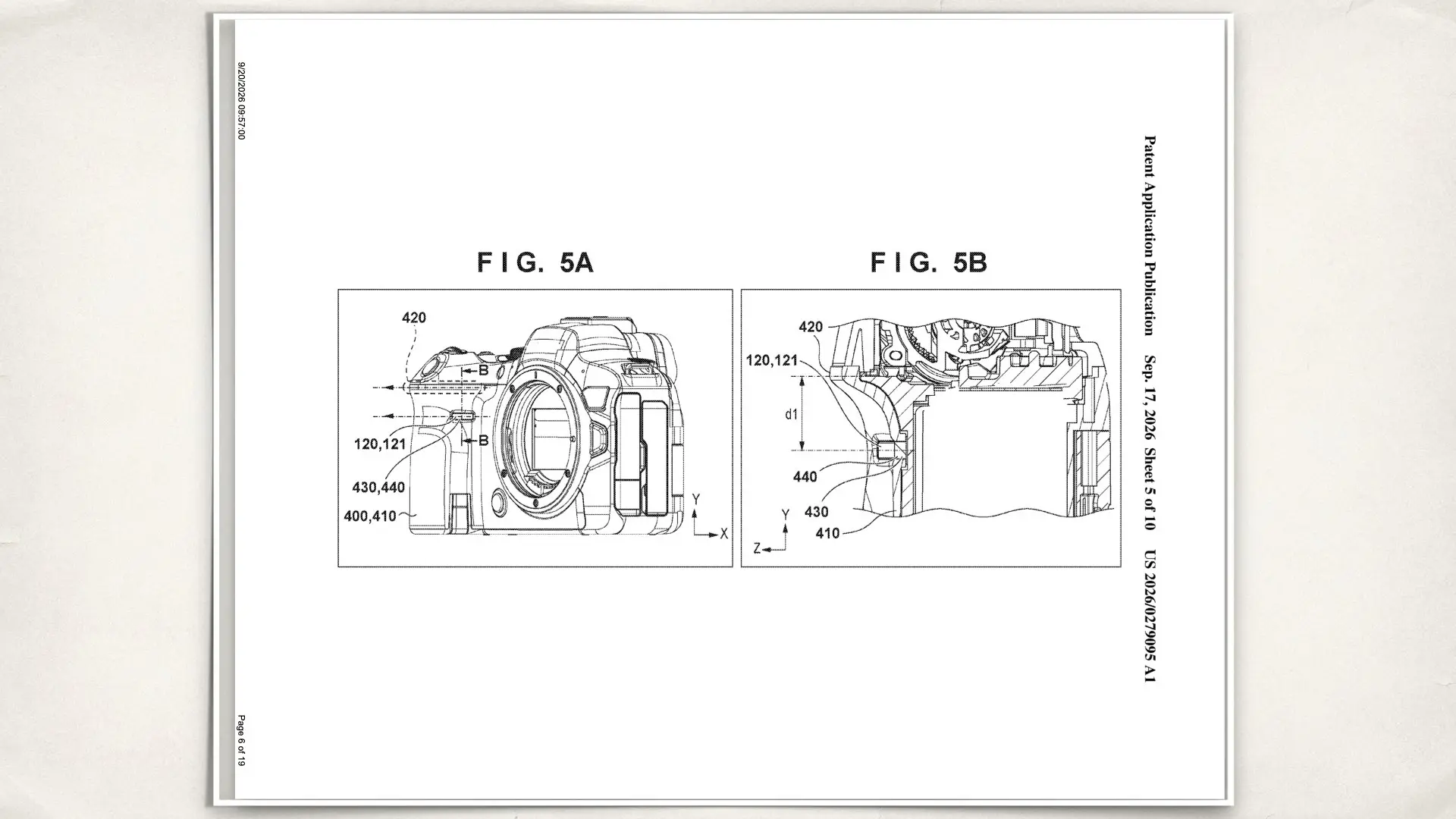
Canon’s drawings show a fairly conventional mirrorless camera body, but the grip contains additional sensing areas. One fingerprint sensor can sit on the front of the grip, around the area where the photographer’s middle finger naturally rests. Another sensor can be positioned on the rear of the camera where the thumb normally sits. Canon explains that fingerprint authentication already exists in previous camera-related technologies. The problem is that a small sensor placed in one fixed location may not work reliably for everyone. Different photographers have different hand sizes, finger lengths, and ways of holding a camera. Canon’s solution is largely about ergonomics. The front fingerprint sensor can be elongated in the direction of the finger. That gives the camera a larger area from which it can obtain a fingerprint, even when two photographers place their fingers slightly differently on the grip. Canon also describes designs using multiple fingerprint sensors positioned beside each other or placed at different angles. This could accommodate photographers who wrap their fingers around the grip differently. In other words, Canon is not asking the photographer to find the fingerprint reader. The fingerprint reader is being designed around the way photographers already hold cameras.
Canon’s new patent: ELECTRONIC APPARATUS: A rendered mockupCanon’s new patent: ELECTRONIC APPARATUS
The camera could know when it is being held
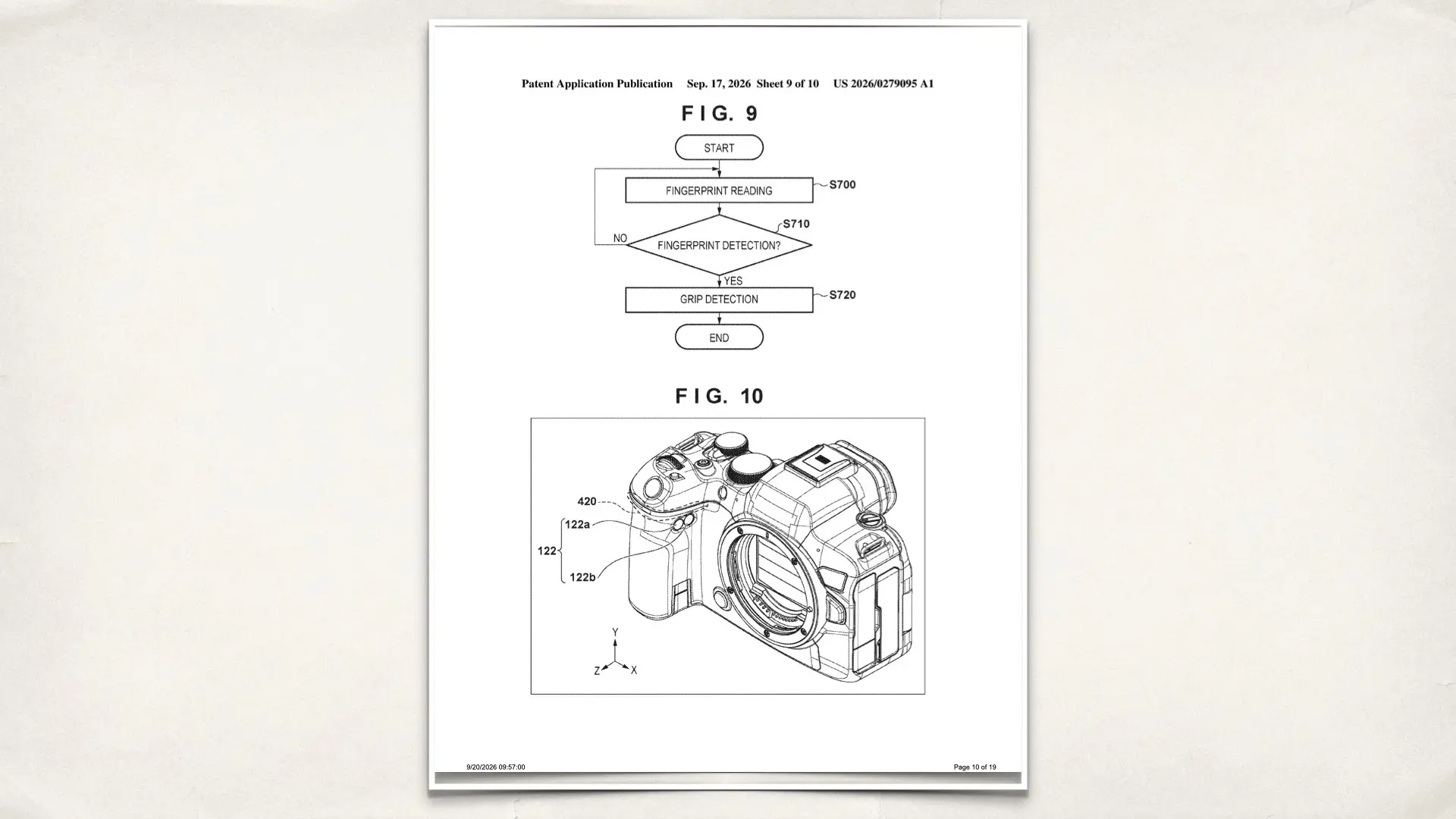
There is another interesting element. Canon describes using sensors on both the front and rear of the grip to determine whether somebody is actually holding the camera. The process shown in the patent is straightforward: the camera reads the sensors, detects fingerprint information and then determines that the camera is being gripped. Canon also says that one of these sensors could potentially be a pressure or optical sensor rather than a fingerprint sensor. This creates a system that potentially understands two things: Is somebody holding the camera? And, using fingerprint authentication: Who is holding the camera? That distinction could become useful in professional environments.
Canon’s new patent: ELECTRONIC APPARATUSCanon’s new patent: ELECTRONIC APPARATUS
Could the camera load different settings for different operators?
That would be an obvious possibility, but it is important to separate what Canon actually describes from what the technology could eventually enable. The patent focuses on fingerprint authentication, sensor placement and grip detection. It does not specifically say that recognizing a photographer would automatically load that person’s camera settings. Still, once a camera can identify its operator, personalized profiles become technically possible. A shared production camera could theoretically recognize different operators and associate them with different button assignments, monitoring preferences, autofocus configurations or other settings. Authentication could also have applications for rental cameras, shared studio equipment or productions where several operators use the same body. Those applications are possibilities rather than features claimed by this patent.
Canon’s new patent: ELECTRONIC APPARATUS: A rendered mockupCanon’s new patent: ELECTRONIC APPARATUS
Which Canon cameras could benefit?
The concept would make the most sense on higher-end Canon bodies that may be used professionally or shared between operators. Potential examples include the Canon EOS R1 ($6,799 on Amazon), Canon EOS R3 ($4,399 on Amazon), Canon EOS R5 Mark II, and Canon EOS R6 Mark II ($1,999 on Amazon). The Canon EOS R5 C ($2,999 on Amazon) is another particularly interesting example because it sits between Canon’s mirrorless and Cinema EOS ecosystems and is frequently used in professional production environments. This does not mean Canon is developing fingerprint authentication specifically for any of these models. The patent presents a general camera architecture, not a confirmed product roadmap.
Canon’s new patent: ELECTRONIC APPARATUSCanon’s new patent: ELECTRONIC APPARATUS
Authentication without interrupting shooting
That is ultimately what makes the patent interesting. Fingerprint authentication in electronics is nothing new. Canon’s idea is to make it essentially invisible to the photographer. Instead of touching a dedicated sensor, entering a password or navigating a menu, the camera could potentially authenticate its operator simply because that person picked up the camera normally. Whether Canon ever brings the technology to an EOS or Cinema EOS camera remains unknown. But the patent shows an interesting direction: a camera that does not just detect how it is being operated, but potentially recognizes who is operating it.
As an Amazon Associate, Y.M.Cinema earns from qualifying purchases. If you buy through our links, we may earn a small commission at no extra cost to you.
Product prices and availability are accurate as of the date/time indicated and are subject to change. Any price and availability information displayed on Amazon.com at the time of purchase will apply to the purchase of this product.
CERTAIN CONTENT THAT APPEARS ON THIS SITE COMES FROM AMAZON. THIS CONTENT IS PROVIDED “AS IS” AND IS SUBJECT TO CHANGE OR REMOVAL AT ANY TIME.
YMCinema is a premier online publication dedicated to the intersection of cinema and cutting-edge technology. As a trusted voice in the industry, YMCinema delivers in-depth reporting, expert analysis, and breaking news on professional camera systems, post-production tools, filmmaking innovations, and the evolving landscape of visual storytelling. Recognized by industry professionals, filmmakers, and tech enthusiasts alike, YMCinema stands at the forefront of cinema-tech journalism.
This is totally idiotic and offers no benefit whatsoever to the actual human using the camera. Michael Brooks is correct in his comment. But it goes beyond that. This is more forced surveillance, “you will own nothing and be happy,” track everyone in every way all the time, utterly moronic BS. Goodbye, Canon. I will no longer consider purchasing your products, ever again.
If you could program it such that there were different user groups, and could store admin-level controls, this kind of thing could be hugely beneficial to rental houses and other users who are concerned with equipment theft. For example, if you programed the camera to need an admin-user verification every [x] days or else it would lock it out, then eventually thieves would understand that they can’t use or resell these cameras, so they might be less likely to steal them. Once it becomes more ubiquitous, that could really cut down on industry thefts.
Regarding the forced surveillance comment above, I agree in concept, and would definitely want the biometric information stored locally on-device only. No cloud storage of that kind of thing.
Michael Brooks is correct. This “feature” can only benefit Canon. If the idea was to switch settings why not just allow a USER button to be programmed to swap between user preferences. I would rather not take photos than have it track my biometrics.
There is an argument to be made that by scanning biometrics it could crypto-graphically watermark photos as originating from humans as opposed to AI. Perhaps this is the case?
Fujifilm has announced a new domestic price revision in Japan affecting several current GFX and X Series cameras, selected camera kits, and one interchangeable lens. The new shipment prices took effect on…
Canon appears to be continuing development around its unreleased handheld gimbal camera concept. A newly published patent application shows essentially the same compact camera architecture seen in previous Canon filings, but this…
For most filmmakers, ARRI has always been a brand they use rather than a brand they own. ALEXA cameras sit at the top of the professional cinema market, commonly purchased by rental…
Kron Technologies has officially announced the Chronos Q12, a high-speed camera capable of recording 5,148 frames per second at 1920 × 1080. The camera uses an APS-C global-shutter sensor and starts at…
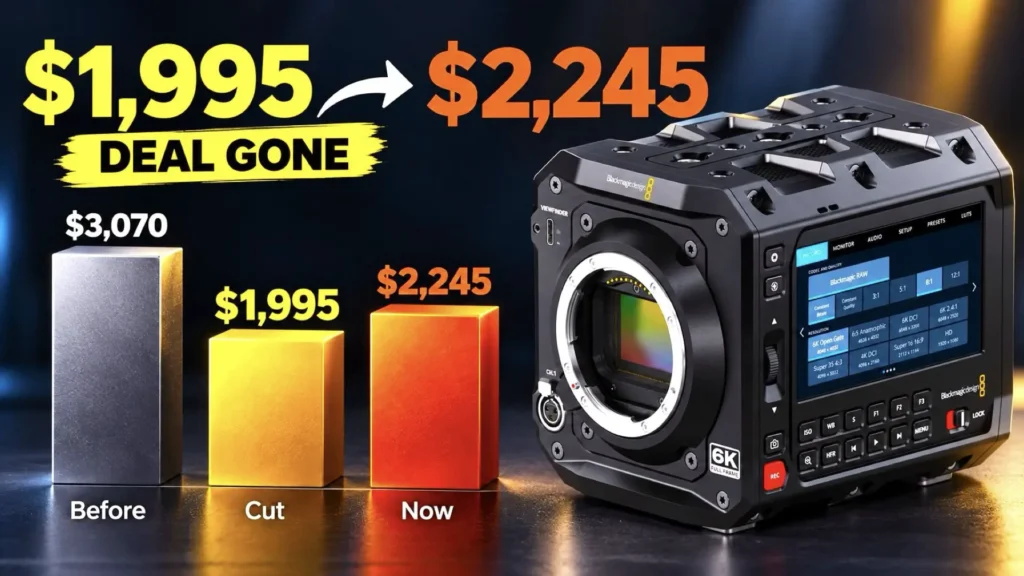
The Blackmagic PYXIS 6K briefly became a sub-$2,000 full-frame cinema camera after its recent price cut, but that window appears to have closed. The EF and L-mount version ($3,599.95 on Amazon) are now…











One step closer to a person user subscription on cameras
This is totally idiotic and offers no benefit whatsoever to the actual human using the camera. Michael Brooks is correct in his comment. But it goes beyond that. This is more forced surveillance, “you will own nothing and be happy,” track everyone in every way all the time, utterly moronic BS. Goodbye, Canon. I will no longer consider purchasing your products, ever again.
If you could program it such that there were different user groups, and could store admin-level controls, this kind of thing could be hugely beneficial to rental houses and other users who are concerned with equipment theft. For example, if you programed the camera to need an admin-user verification every [x] days or else it would lock it out, then eventually thieves would understand that they can’t use or resell these cameras, so they might be less likely to steal them. Once it becomes more ubiquitous, that could really cut down on industry thefts.
Regarding the forced surveillance comment above, I agree in concept, and would definitely want the biometric information stored locally on-device only. No cloud storage of that kind of thing.
So surveill EVERYBODY to aid a small body of purchasers? Not an optimum solution. But perhaps the feature could be an option for rental houses.
Michael Brooks is correct. This “feature” can only benefit Canon. If the idea was to switch settings why not just allow a USER button to be programmed to swap between user preferences. I would rather not take photos than have it track my biometrics.
There is an argument to be made that by scanning biometrics it could crypto-graphically watermark photos as originating from humans as opposed to AI. Perhaps this is the case?
So, no more TRIPOD shooting? Or do you have to authenticate before every tripod shot, potentially ruining your placement? Stupid.