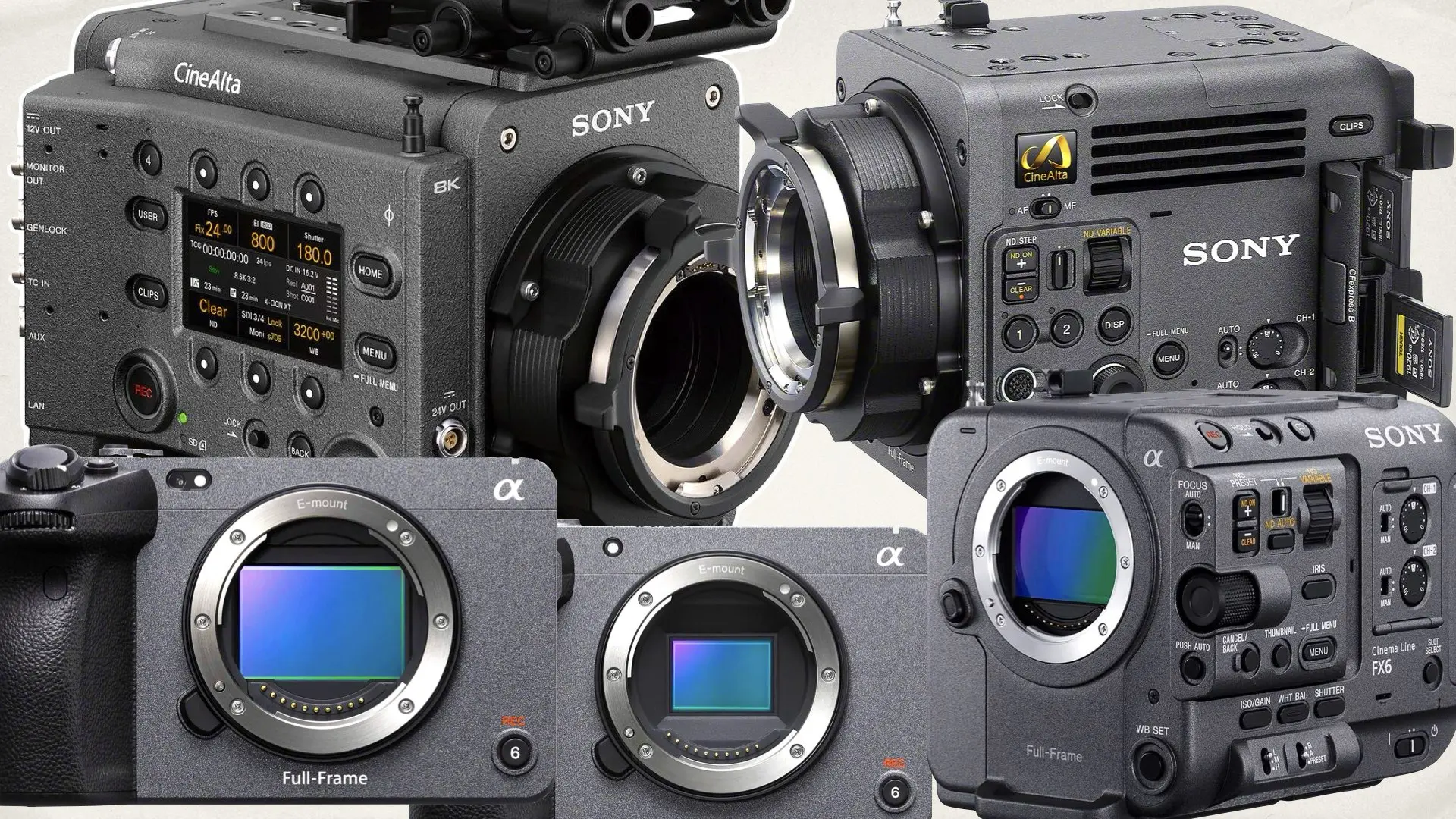
Sony has published a new 35-page guide titled Your Look, Your Story: Cinematic Expression for All Your Live Productions, outlining how its Cinema Line cameras are being integrated into modern live production workflows. While the guide covers everything from high-end digital cinema cameras to broadcast systems and automated PTZ solutions, pages 32 and 33 provide a particularly useful overview of Sony’s current cinema camera lineup. From the flagship VENICE 2 and BURANO to the more accessible FX6, FX3, FX2 ($2,698 on Amazon), and FX30 ($2,098 on Amazon), Sony explains the key strengths of each camera and how they fit into its broader production ecosystem.

Sony’s cinema camera ecosystem
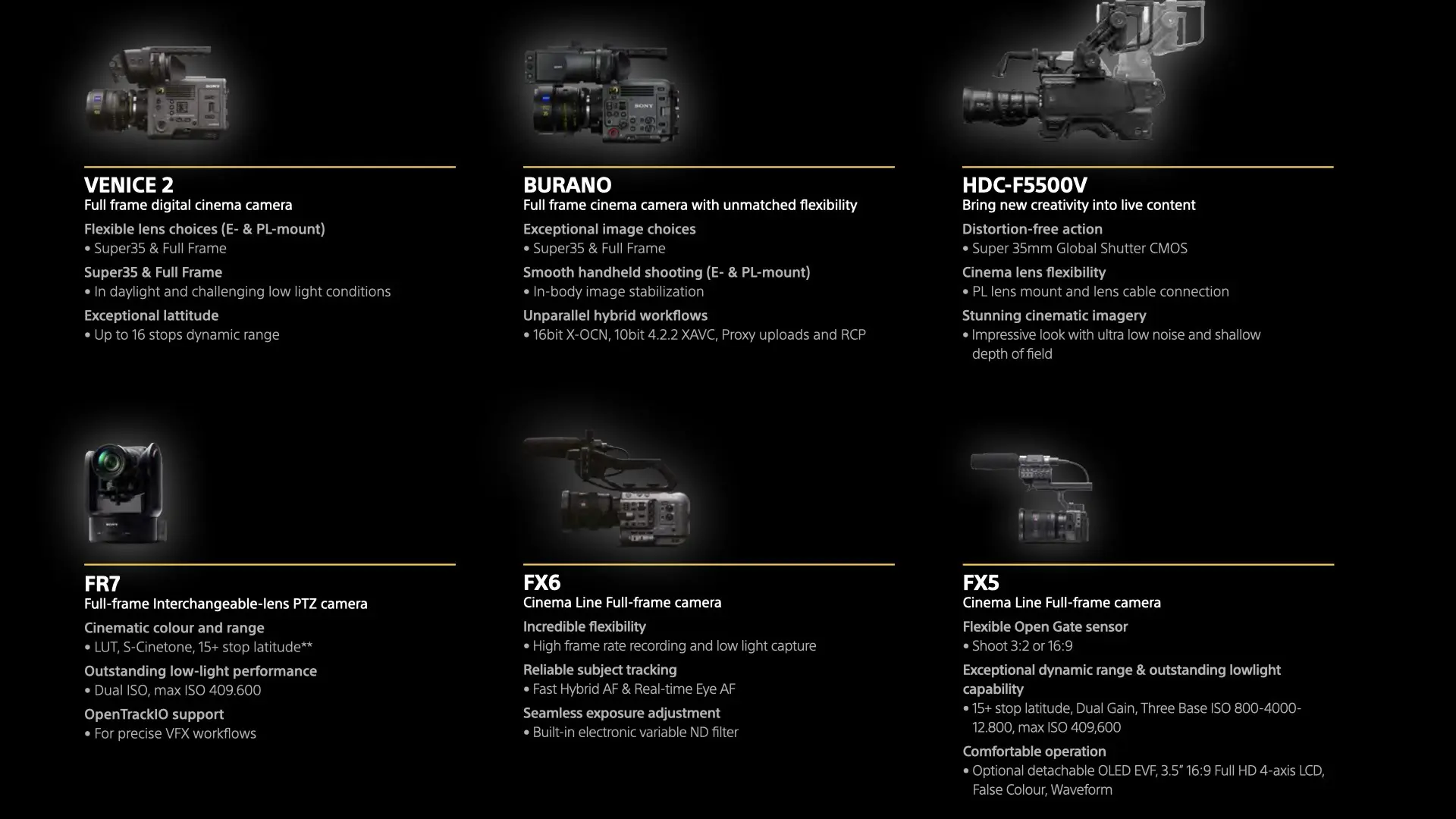
Sony’s guide focuses on the growing convergence between traditional cinema production and live broadcasting. The company highlights how large-format sensors, cinematic color science, shallow depth of field, and interchangeable lenses can enhance concerts, sports, television, and other live productions. At the top of Sony’s lineup is the VENICE 2, the company’s flagship digital cinema camera, offering Full Frame and Super 35 shooting, E-mount and PL-mount flexibility, and up to 16 stops of dynamic range. The BURANO provides another high-end option, combining Full Frame and Super 35 acquisition with in-body image stabilization, 16-bit X-OCN recording, 10-bit 4:2:2 XAVC, and workflow features designed for productions requiring both cinematic image quality and operational flexibility. Sony also includes the HDC-F5500V, a Super 35 broadcast system camera featuring a global shutter CMOS sensor and PL-mount lens compatibility. Although primarily designed for live production, its inclusion demonstrates Sony’s effort to bridge cinema and broadcast camera technologies. However, the most relevant section for a much broader filmmaking audience concerns Sony’s FX-series cameras.
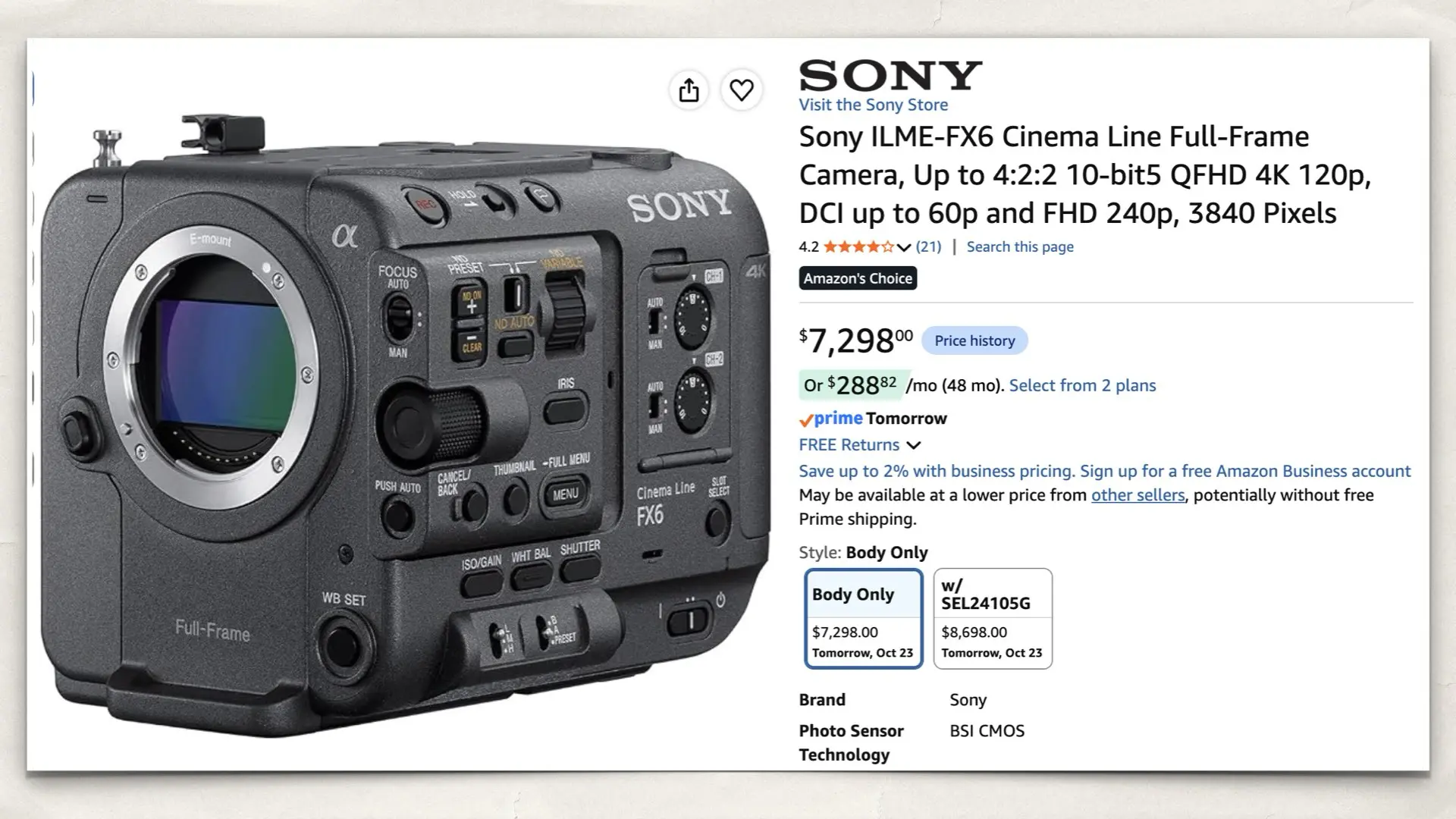
Sony FX6: Full-frame flexibility for professional filmmakers
The Sony FX6 ($8,876 on Amazon) occupies an important position in the Cinema Line, offering a professional full-frame camera platform in a considerably more compact configuration than Sony’s flagship cinema systems. In its guide, Sony emphasizes three core strengths of the FX6: high-frame-rate recording and low-light capture, reliable autofocus, and seamless exposure control. The camera features Fast Hybrid AF with Real-time Eye AF, allowing operators to track subjects during demanding productions. Sony also highlights the built-in electronic variable ND filter, which enables continuous exposure adjustments without changing the selected aperture. This is particularly useful for documentary, event, commercial, and run-and-gun filmmaking, where lighting conditions can change rapidly. Unlike the VENICE 2 and BURANO, which primarily address higher-budget productions, the FX6 offers a professional cinema-oriented feature set that is accessible to smaller production companies, independent filmmakers, and working cinematographers. Its inclusion in Sony’s live production guide also reinforces the camera’s versatility beyond conventional scripted filmmaking.
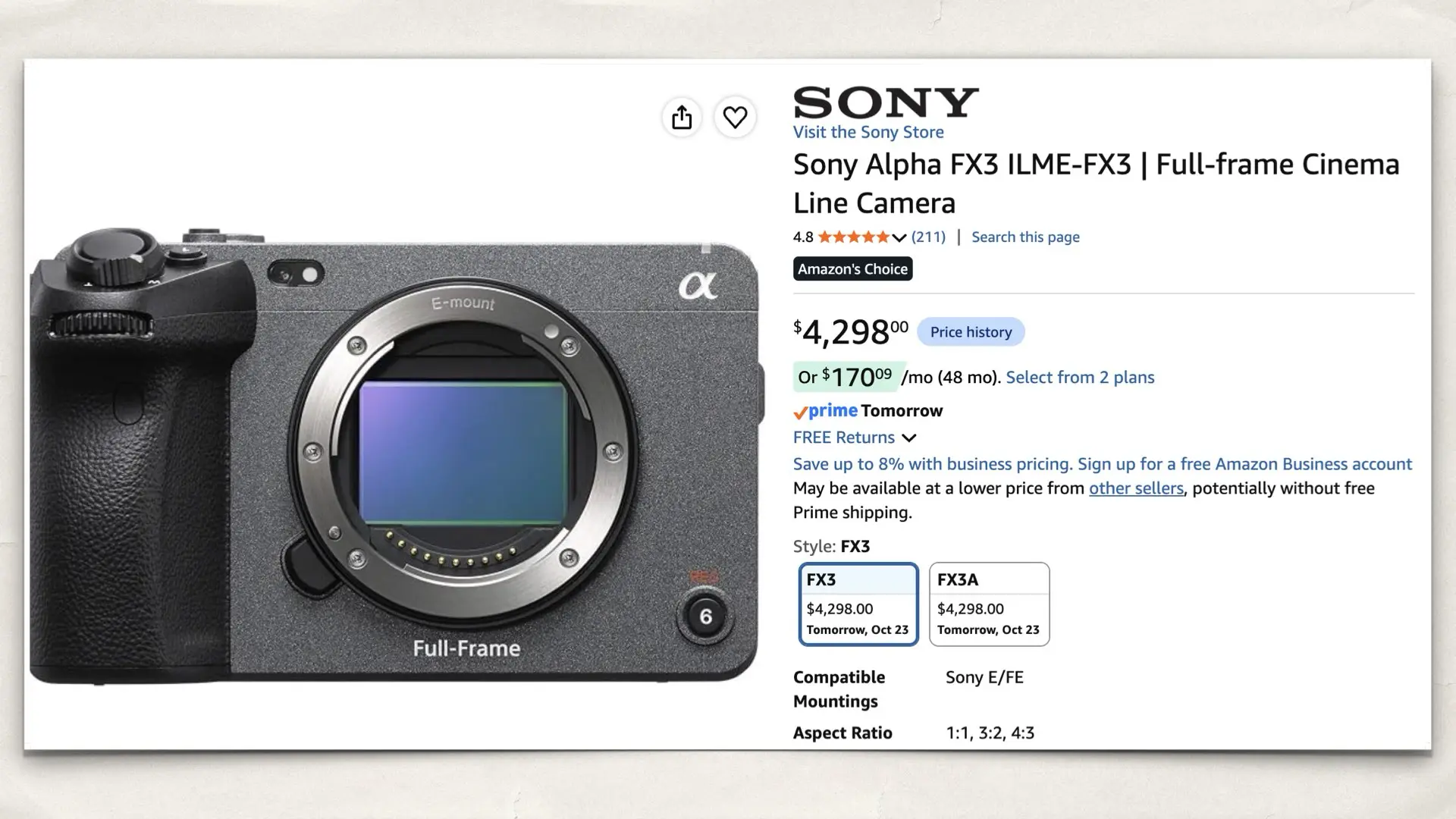
Sony FX3: Compact cinema without compromising mobility
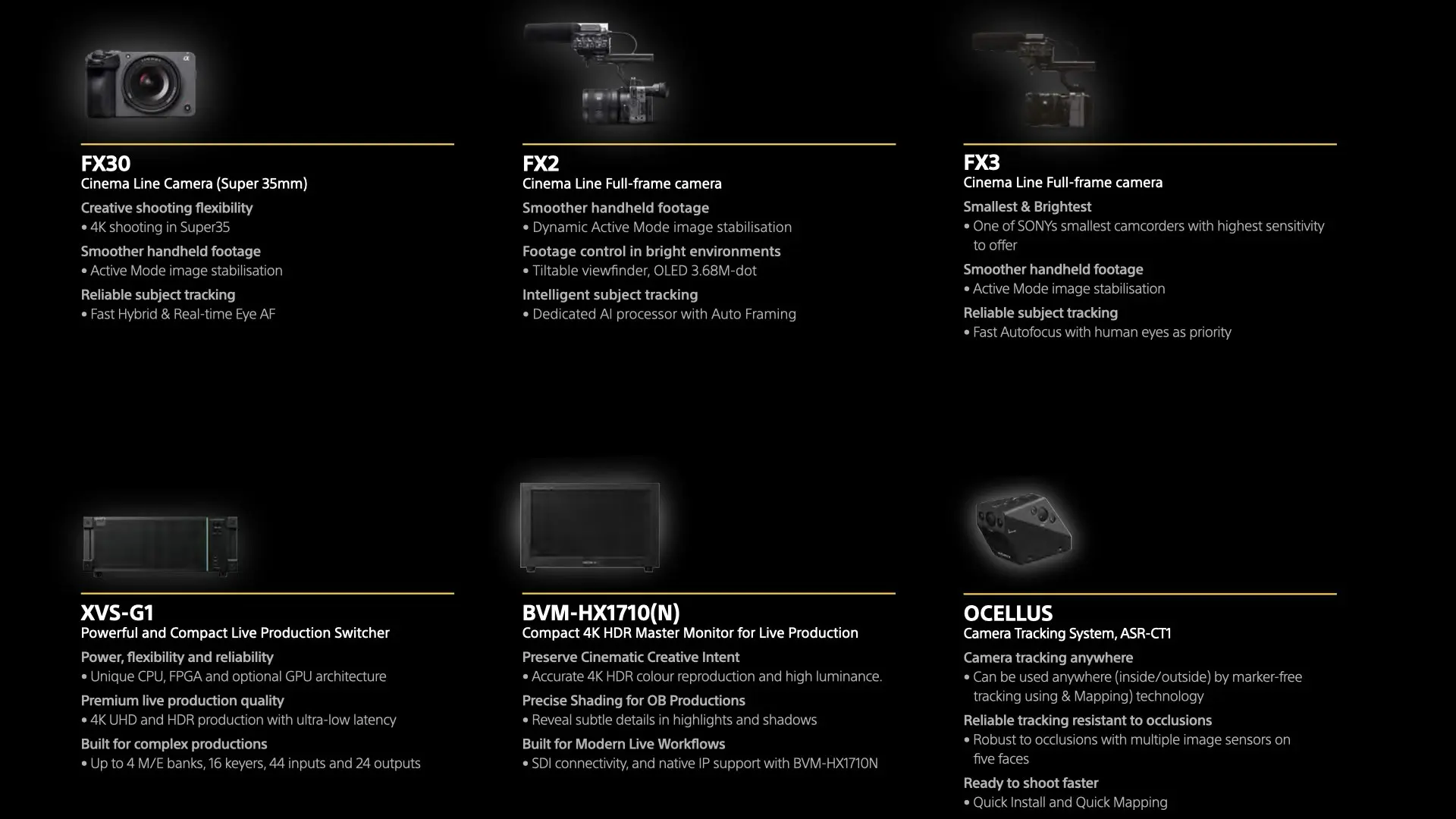
The Sony FX3 ($4,298 on Amazon) represents Sony’s compact Full Frame cinema camera approach. Rather than emphasizing large camera bodies and extensive production infrastructure, Sony focuses on portability, sensitivity, stabilization, and autofocus. According to the guide, the FX3 is among Sony’s smallest high-sensitivity cinema-oriented cameras. It features Active Mode image stabilization for smoother handheld shooting and autofocus designed to prioritize human eyes. These characteristics make the FX3 particularly relevant for independent filmmaking, documentary production, small crews, and camera operators who need to work in confined spaces or without extensive support equipment. The FX3 also demonstrates an important aspect of Sony’s Cinema Line strategy: cinematic image acquisition does not necessarily require a traditional cinema camera body. Its compact design allows filmmakers to use it as a primary camera on smaller productions or as a supplementary camera alongside larger cinema systems.
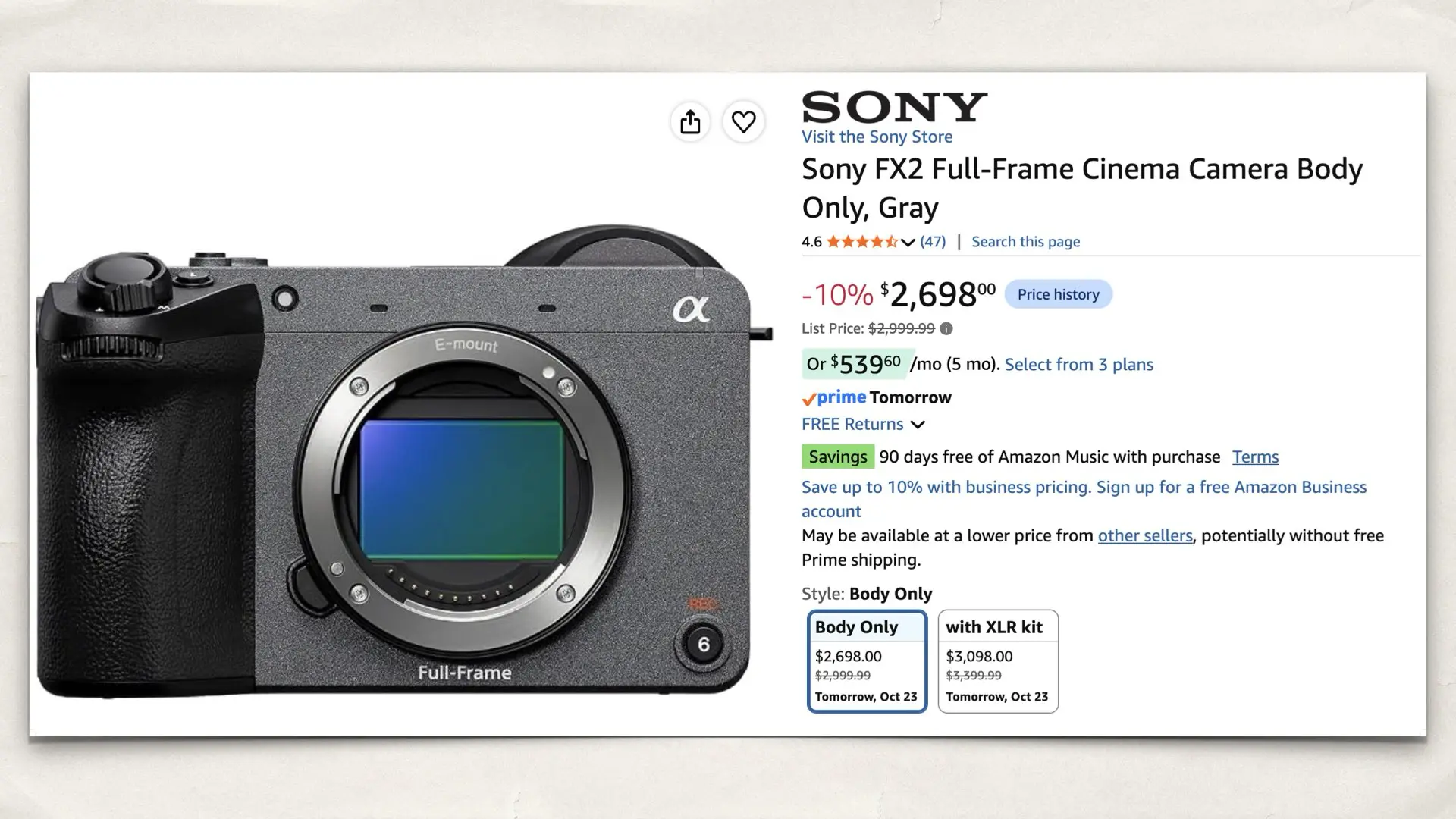
Sony FX2: Full-frame cinema with intelligent subject tracking
The FX2 takes a slightly different approach within Sony’s compact Cinema Line family. Sony highlights Dynamic Active Mode image stabilization, a tiltable OLED electronic viewfinder with approximately 3.68 million dots, and intelligent subject tracking powered by a dedicated AI processing unit. The guide specifically mentions Auto Framing, an automated composition feature designed to help maintain appropriate framing of subjects. These features distinguish the FX2 from the FX3 in Sony’s presentation. Whereas the FX3 is positioned around compactness and high sensitivity, the FX2 places greater emphasis on handheld operation, viewfinder-based shooting, and automated subject management. For independent filmmakers, solo camera operators, and small production teams, these capabilities can simplify camera operation when dedicated focus pullers or additional operators are unavailable. The FX2 therefore extends Sony’s Full Frame Cinema Line into workflows where operational simplicity is just as important as image quality.
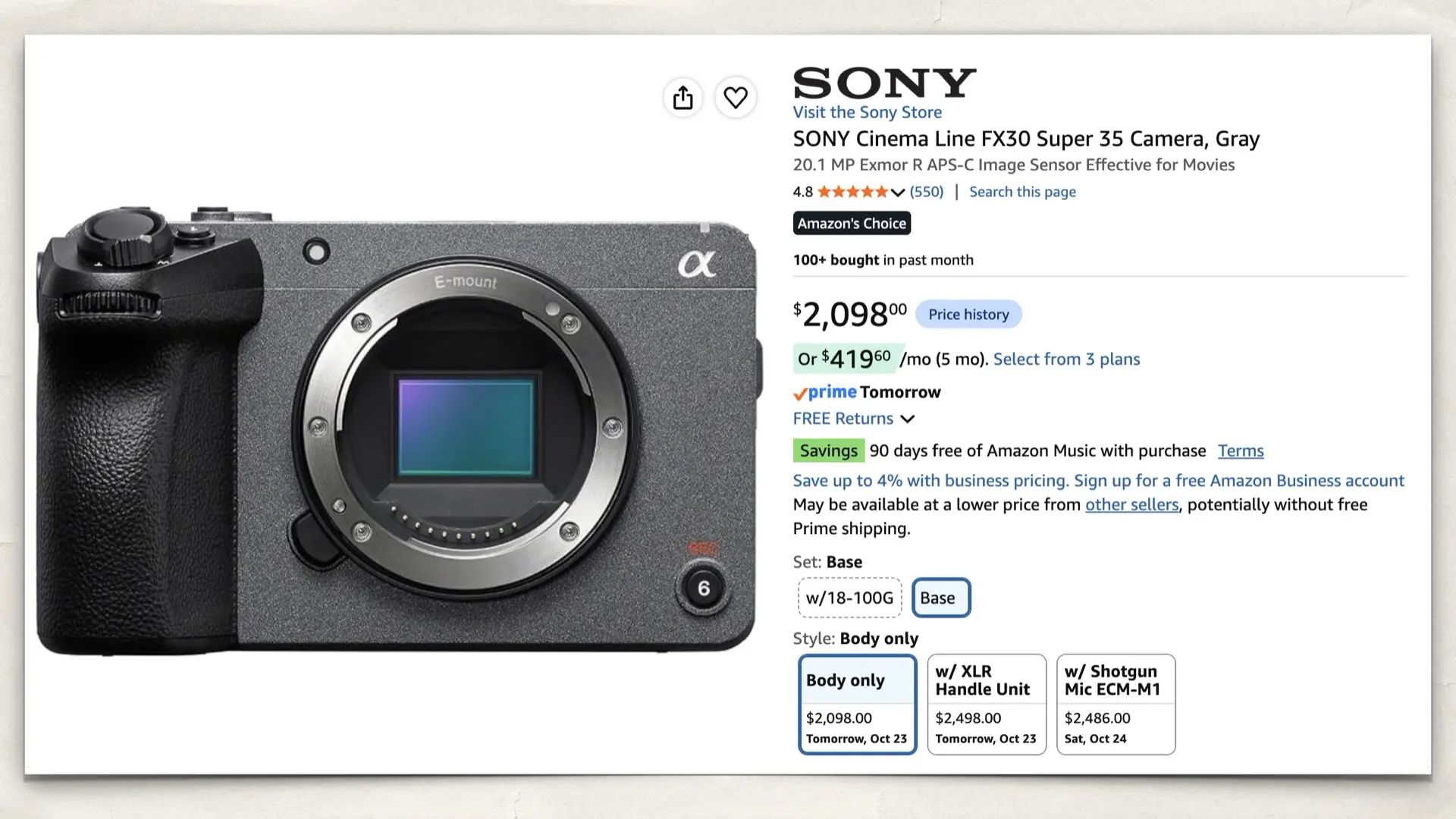
Sony FX30: Super 35 cinema for a broader market
At the more accessible end of Sony’s Cinema Line is the FX30, a Super 35 camera offering 4K recording, Active Mode image stabilization, and advanced autofocus capabilities. Sony identifies creative shooting flexibility as one of the FX30’s main strengths, alongside Fast Hybrid AF and Real-time Eye AF. Unlike the Full Frame FX6, FX3, and FX2, the FX30 uses a Super 35 sensor format, which remains highly relevant to traditional motion picture production. The FX30 is particularly significant because it brings Sony’s dedicated Cinema Line concept to filmmakers who may not require, or have the budget for, a Full Frame cinema camera. For students, emerging cinematographers, independent content producers, and small production companies, the FX30 provides an entry point into Sony’s wider cinema ecosystem. Its inclusion alongside much more expensive cameras such as the VENICE 2 and BURANO reinforces Sony’s approach of offering different camera platforms for different production scales.
The FX5 and FR7 expand the lineup
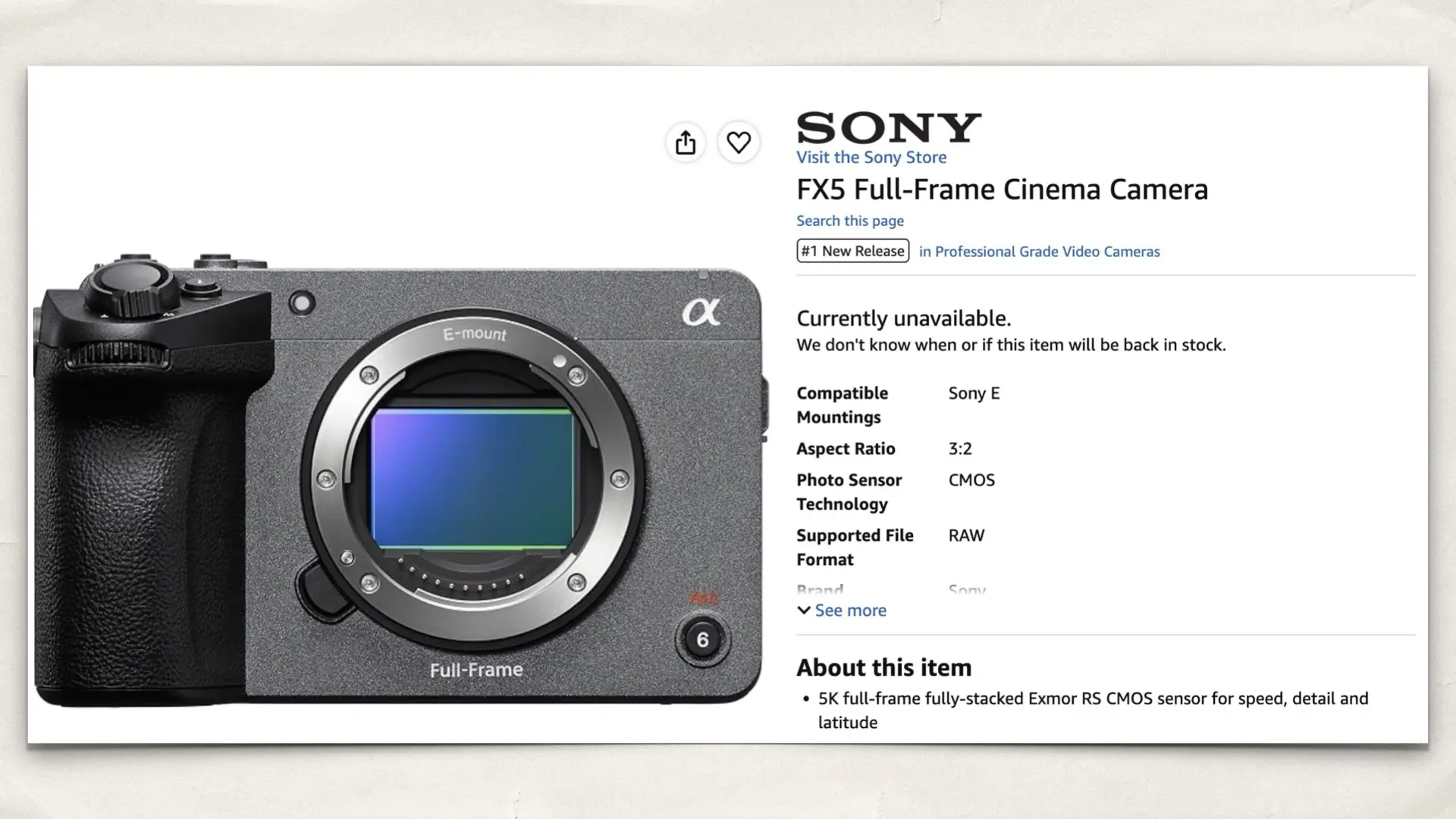
Beyond these four models, Sony’s guide also features the FX5 and FR7. The FX5 introduces additional acquisition flexibility with an Open Gate sensor supporting 3:2 and 16:9 recording. Sony highlights more than 15 stops of latitude, three base ISO settings of 800, 4000, and 12800, and a maximum ISO of 409,600. The camera also offers waveform and false-color monitoring tools and an optional detachable OLED viewfinder. The FR7 takes a different direction. It combines Full Frame cinematic imaging with remotely controlled pan, tilt, and zoom functionality. Sony highlights S-Cinetone, LUT support, more than 15 stops of latitude, and OpenTrackIO compatibility for VFX-oriented workflows. Both cameras illustrate how Sony is extending cinematic acquisition beyond conventional handheld and shoulder-mounted systems.
From independent filmmaking to large-scale productions
One of the central messages of Sony’s guide is that cinema cameras are no longer restricted to traditional film sets. Sony documents their use in concerts, sporting events, reality television, interactive productions, and virtual studios. The examples include productions using combinations of VENICE 2, BURANO, FX-series cameras, and broadcast systems in unified multicamera environments. The guide also highlights the importance of consistent color reproduction, shared workflows, remote camera operation, and compatibility with existing broadcast infrastructure. For independent filmmakers, however, the FX6, FX3, FX2, and FX30 remain particularly interesting. These cameras represent the more attainable segment of Sony’s Cinema Line, offering different combinations of sensor size, stabilization, autofocus, exposure control, and operating ergonomics. They also serve a substantially broader market than Sony’s flagship cinema systems, extending from solo creators and documentary shooters to commercial production companies and professional cinematographers. Check out the guide here.
Final thoughts
Sony’s latest guide does not introduce a new camera or announce a fundamental change to the Cinema Line. Instead, it provides a consolidated view of the company’s cinema and live production ecosystem. The VENICE 2 and BURANO remain Sony’s high-end digital cinema offerings, while the FX6, FX3, FX2, and FX30 demonstrate how cinema-oriented technologies are available across increasingly compact and accessible camera platforms. For filmmakers evaluating the lineup, the key differences extend beyond resolution and sensor format. Exposure control, autofocus, stabilization, handling, and compatibility with professional production workflows are equally important. And that is perhaps the clearest message of Sony’s guide: cinematic production is no longer defined by a single camera class, price category, or production environment.
Gear mentioned in this article
Available on Amazon
| Product | New | Renewed | Used |
|---|---|---|---|
| Sony FX6 | $8,876 | — | — |
| Sony FX3 | $4,298 | — | — |
| Sony FX2 | $2,698 | — | From $2,075 |
| Sony FX30 | $2,098 | — | From $1,556.46 |
Prices checked: Oct 22, 2026, 4:14 PM GMT+0000
As an Amazon Associate, Y.M.Cinema earns from qualifying purchases. If you buy through our links, we may earn a small commission at no extra cost to you.
Product prices and availability are accurate as of the date/time indicated and are subject to change. Any price and availability information displayed on Amazon.com at the time of purchase will apply to the purchase of this product.
CERTAIN CONTENT THAT APPEARS ON THIS SITE COMES FROM AMAZON. THIS CONTENT IS PROVIDED “AS IS” AND IS SUBJECT TO CHANGE OR REMOVAL AT ANY TIME.