
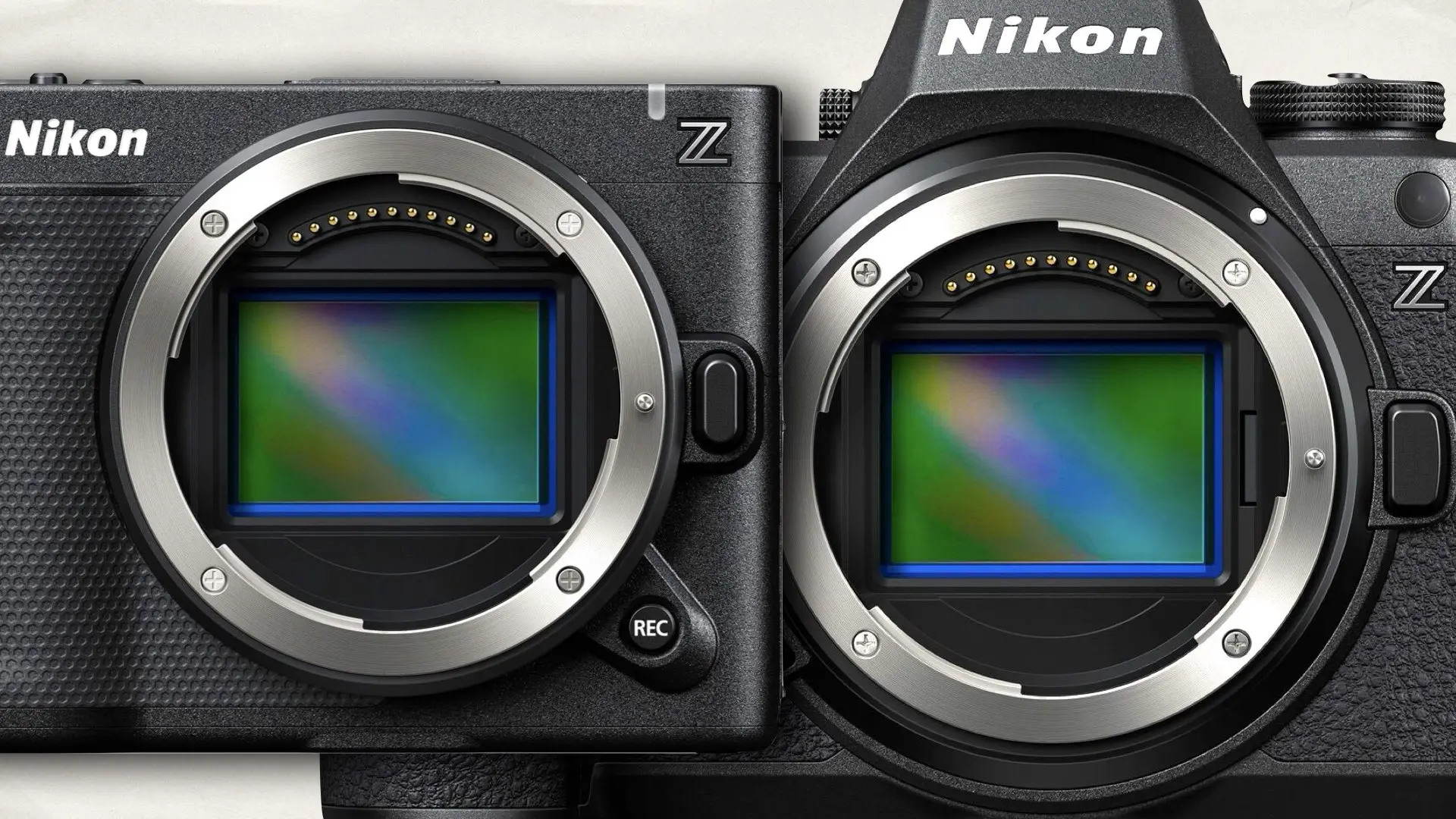
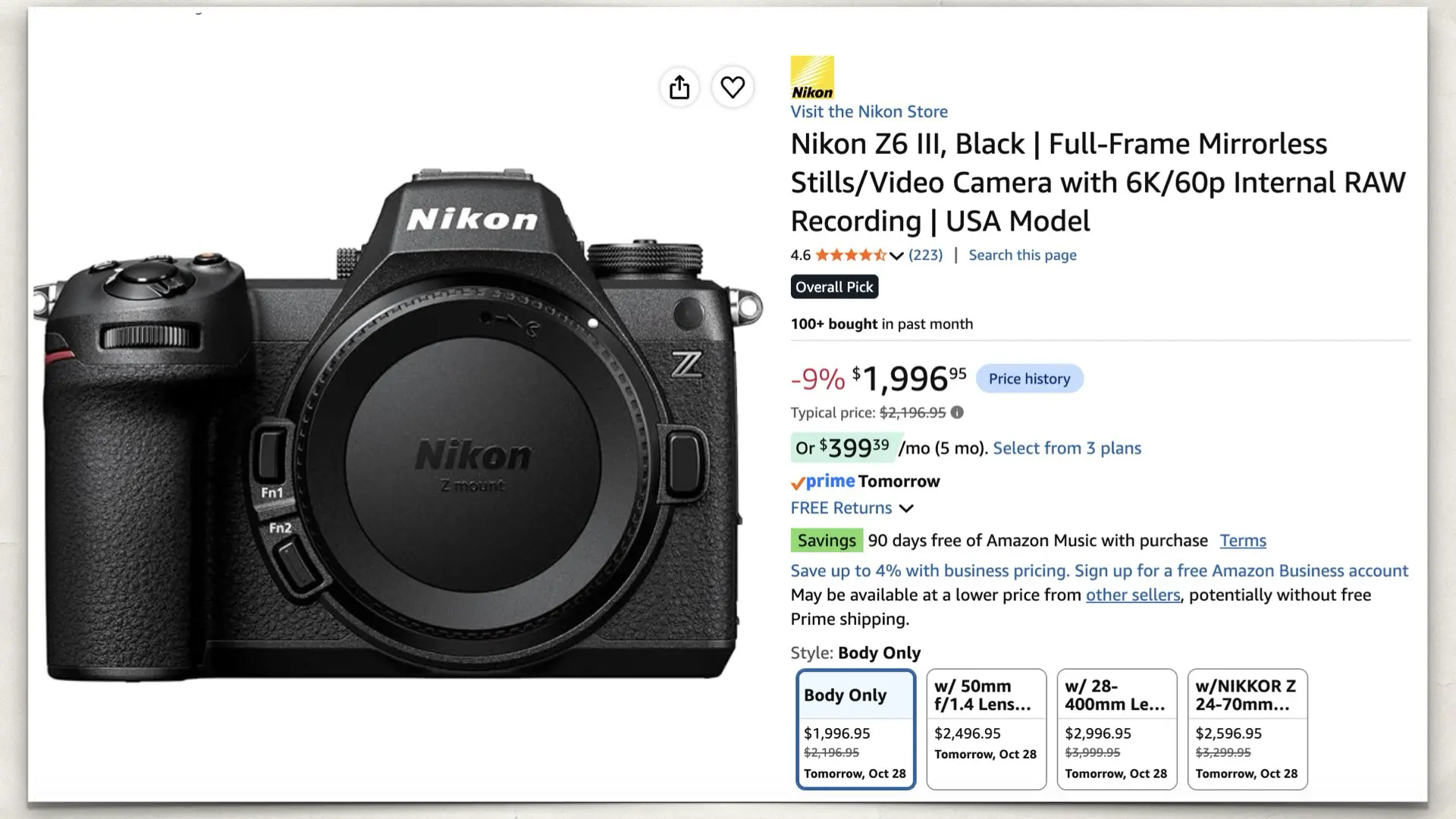
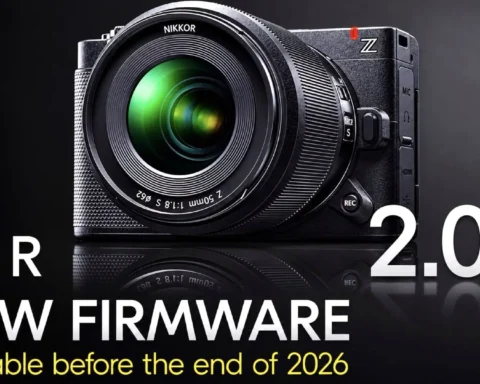
Nikon has published an official comparison between the Nikon ZR ($2,196.95 on Amazon) and Z6III ($1,996.95 on Amazon), explaining why two cameras built around the same sensor are designed for fundamentally different purposes. According to Nikon, the ZR is the more capable tool for dedicated filmmaking, thanks to its RED-developed RAW workflow, integrated 32-bit float audio, larger monitoring display, and cinema-oriented design. The Z6III, meanwhile, remains the more versatile option for photographers who also shoot video.

Same sensor, different priorities
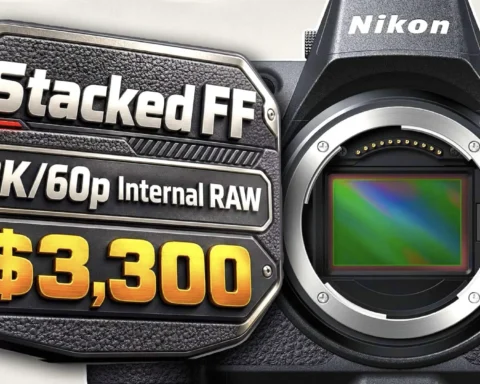
Both cameras feature a 24.5MP partially stacked full-frame CMOS sensor and Nikon’s EXPEED 7 image processor. This means the fundamental imaging hardware is shared, with the principal differences found in recording formats, ergonomics, monitoring, and workflow. In its comparison, Nikon emphasizes that the ZR was developed specifically for moving-image production, whereas the Z6III is intended for photographers and hybrid shooters. The ZR can record 6K/60p internally using R3D NE RAW, the 12-bit format developed in collaboration with RED Digital Cinema. Nikon claims more than 15 stops of dynamic range in this recording mode, based on its own measurements. The camera also supports N-RAW and Apple ProRes RAW HQ. Importantly, the Z6III is no lightweight when it comes to video. It already supports internal 6K/60p N-RAW, 6K/30p ProRes RAW HQ, and 4K/120p recording in DX crop mode. The ZR’s advantage is therefore not simply RAW recording, but its integration of RED color science into a dedicated cinema workflow.

Why Nikon favors the ZR for filmmaking
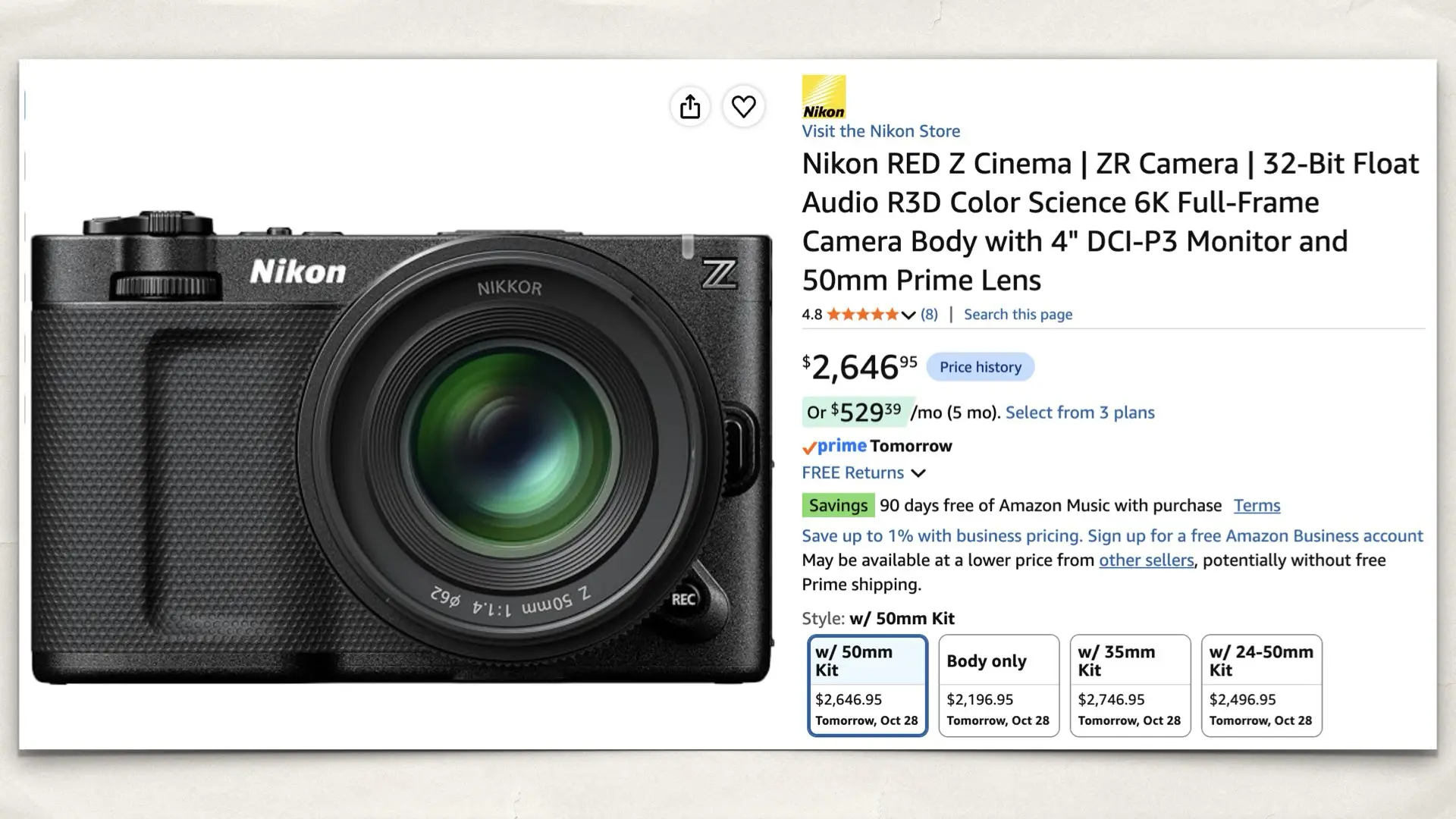
Nikon identifies several practical features that distinguish the ZR from its hybrid sibling. The most notable is built-in 32-bit float audio recording, available through the internal microphones and compatible external audio input. For documentary operators and small production crews, this can reduce dependence on a separate audio recorder. The ZR also incorporates a 4-inch, 3.07-million-dot display with 1,000-nit brightness, compared with the Z6III’s 3.2-inch rear screen. Its body weighs approximately 540g, compared with 670g for the Z6III, excluding batteries and accessories. However, these advantages come with compromises. The ZR eliminates the electronic viewfinder, offers a different handling configuration, and uses a secondary microSD card slot rather than the Z6III’s full-size SD slot. For photography, Nikon clearly favors the Z6III, particularly for action, wildlife, and assignments requiring both stills and video.
Nikon also challenges competing cinema cameras
Perhaps the most interesting section of Nikon’s publication extends beyond its own product lineup. Nikon compares the ZR with four unnamed compact full-frame cinema and video-oriented cameras, using manufacturer specifications collected as of August 13, 2026. According to Nikon’s comparison:
-
Only one of the four competitors offers internal RAW recording.
-
Two of the four include sensor-shift stabilization.
-
None provides built-in 32-bit float audio recording without additional equipment.
-
The ZR is lighter than the calculated category average and features a larger-than-average monitoring display.
Nikon argues that the ZR’s combination of internal RAW, 32-bit float audio, and in-body stabilization can reduce the equipment needed for professional filmmaking. However, the manufacturer does not disclose the identities of the four competing cameras. This makes it difficult to independently evaluate the selection criteria or establish how representative the comparison is of the wider cinema-camera market.
The bigger picture
Nikon’s comparison illustrates a broader development in the camera industry: the distinction between hybrid mirrorless cameras and dedicated cinema cameras increasingly concerns workflow rather than sensor technology alone. The Z6III already delivers substantial professional video capabilities. The ZR builds on that imaging foundation by prioritizing recording formats, integrated audio, monitoring, and compact filmmaking ergonomics. For Nikon, the argument is straightforward. Filmmakers do not necessarily need a different sensor. They need a camera designed around the practical requirements of production. The question is whether those workflow advantages are significant enough to make the ZR the preferred choice over an already highly capable hybrid camera. Read Nikon’s article here.
Gear mentioned in this article
Available on Amazon
| Product | New | Renewed | Used |
|---|---|---|---|
| Nikon ZR | $2,196.95 | — | — |
| Nikon Z6 III | $1,996.95 | — | From $1,868.42 |
Prices checked: Nov 12, 2026, 9:32 AM GMT+0000
As an Amazon Associate, Y.M.Cinema earns from qualifying purchases. If you buy through our links, we may earn a small commission at no extra cost to you.
Product prices and availability are accurate as of the date/time indicated and are subject to change. Any price and availability information displayed on Amazon.com at the time of purchase will apply to the purchase of this product.
CERTAIN CONTENT THAT APPEARS ON THIS SITE COMES FROM AMAZON. THIS CONTENT IS PROVIDED “AS IS” AND IS SUBJECT TO CHANGE OR REMOVAL AT ANY TIME.




Let’s get stsrted. Since I suggested the all in one features of the RedOne, and many technology improvements, Red has gone down a disappointing path.
This is not 8Kp48-60, or 100-240 stereo scopic 3D (using the low cost dual shutter 3D, which maybe out of patent by now) 16 bit, 17 clean stops out of Red’s old 21+ stops latitude, with the Arri like lowlight and bright light colour and latitude enhancements as I suggested to BMD for single gain at a time sensors. 6k is not an official cinema screening format (but maybe it now is). Lack of progression upwards, is not progression. This camera should have all these quite old technological features by now.
Why shouldn’t we just give up and buy the Sigma fp series? If Panasonic ever properly delivers their organic sensor with 24 stops, what will be the point in buying this? Or, if anybody uses the very old 30 stops+ technology? Everytime Jim didn’t follow suggestions Red’s future was ultimately less. We are looking at a sort of product that should have been out 15 yesrs ago. I am suggesting the sort of camera which should have been out several years ago.
I have made progress for the technological direction for my clear Medium Format film frame glass camera technology (yes, it would look like an transparent IMax film frame). What have you being doing?
Imagine just screaming into the void because something that is perfectly fine, isn’t to your liking.