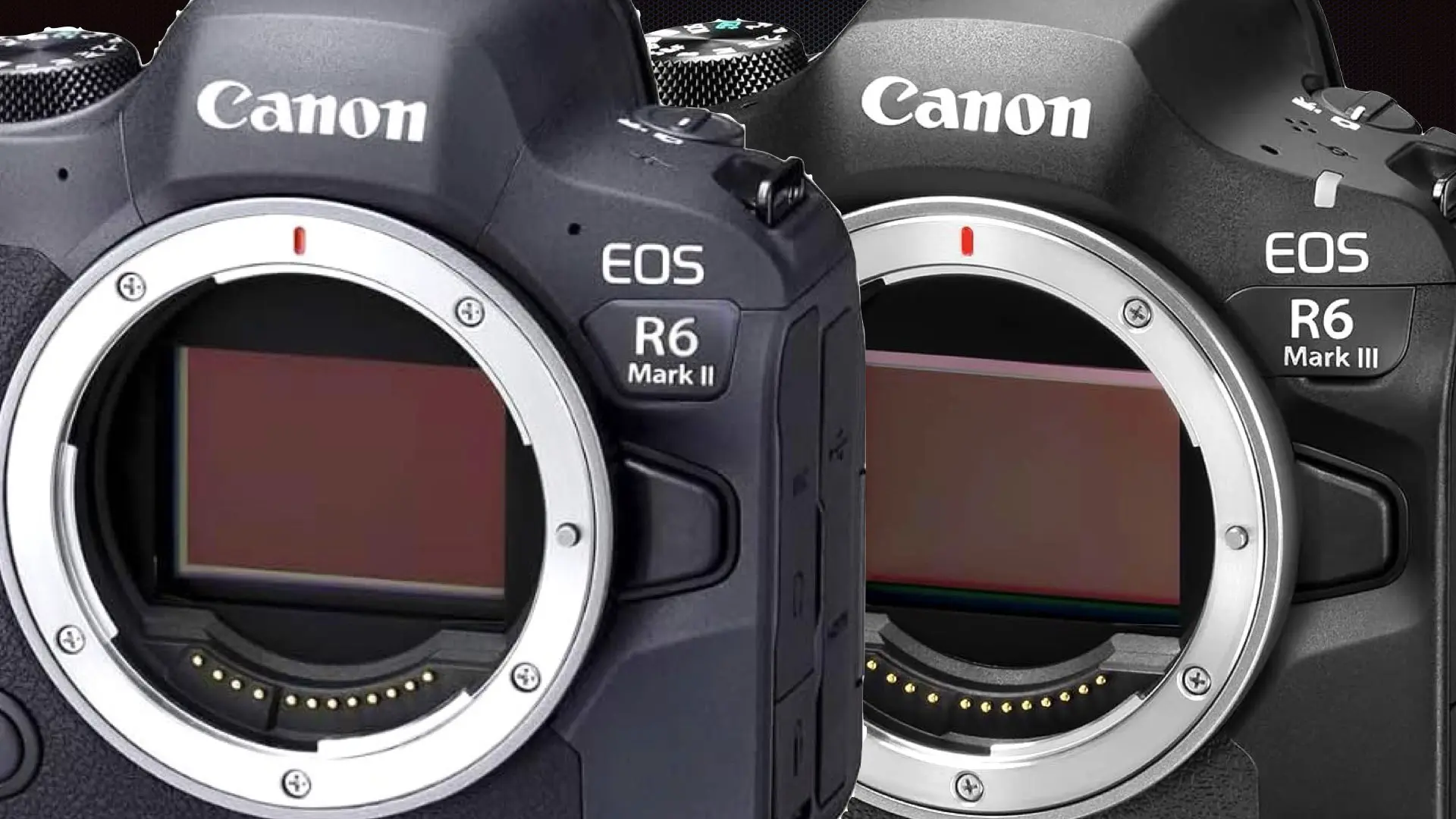
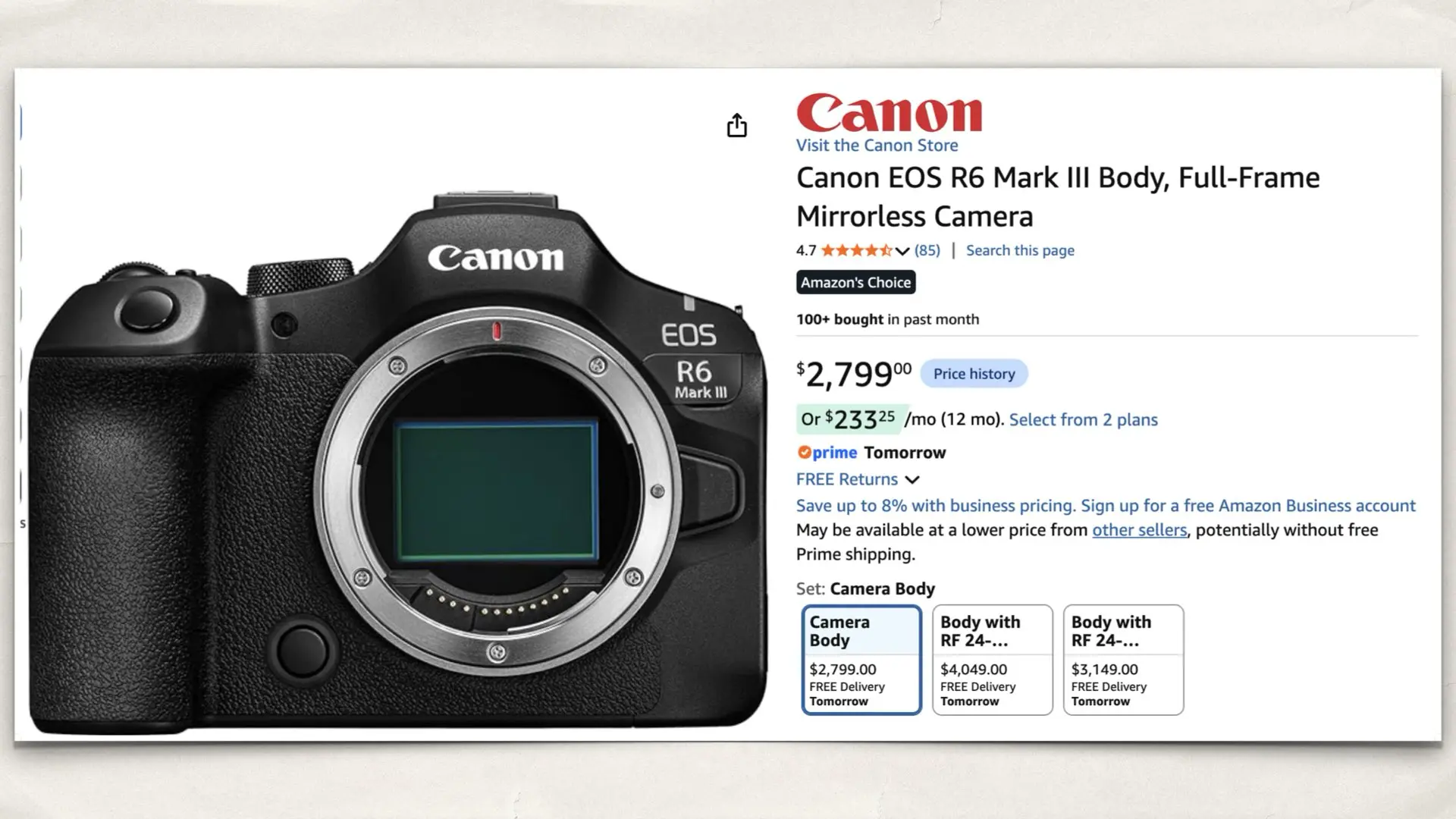
Canon’s EOS R6 Mark II ($1,999 on Amazon) is currently selling for $1,999, while the newer EOS R6 Mark III ($2,799 on Amazon) sits at $2,799. That creates a very simple question: is the R6 Mark III really worth another $800? The answer depends heavily on what you shoot. For photographers, the difference is meaningful but not necessarily decisive. For video shooters, however, the R6 Mark III is a much bigger upgrade than the model name might suggest.
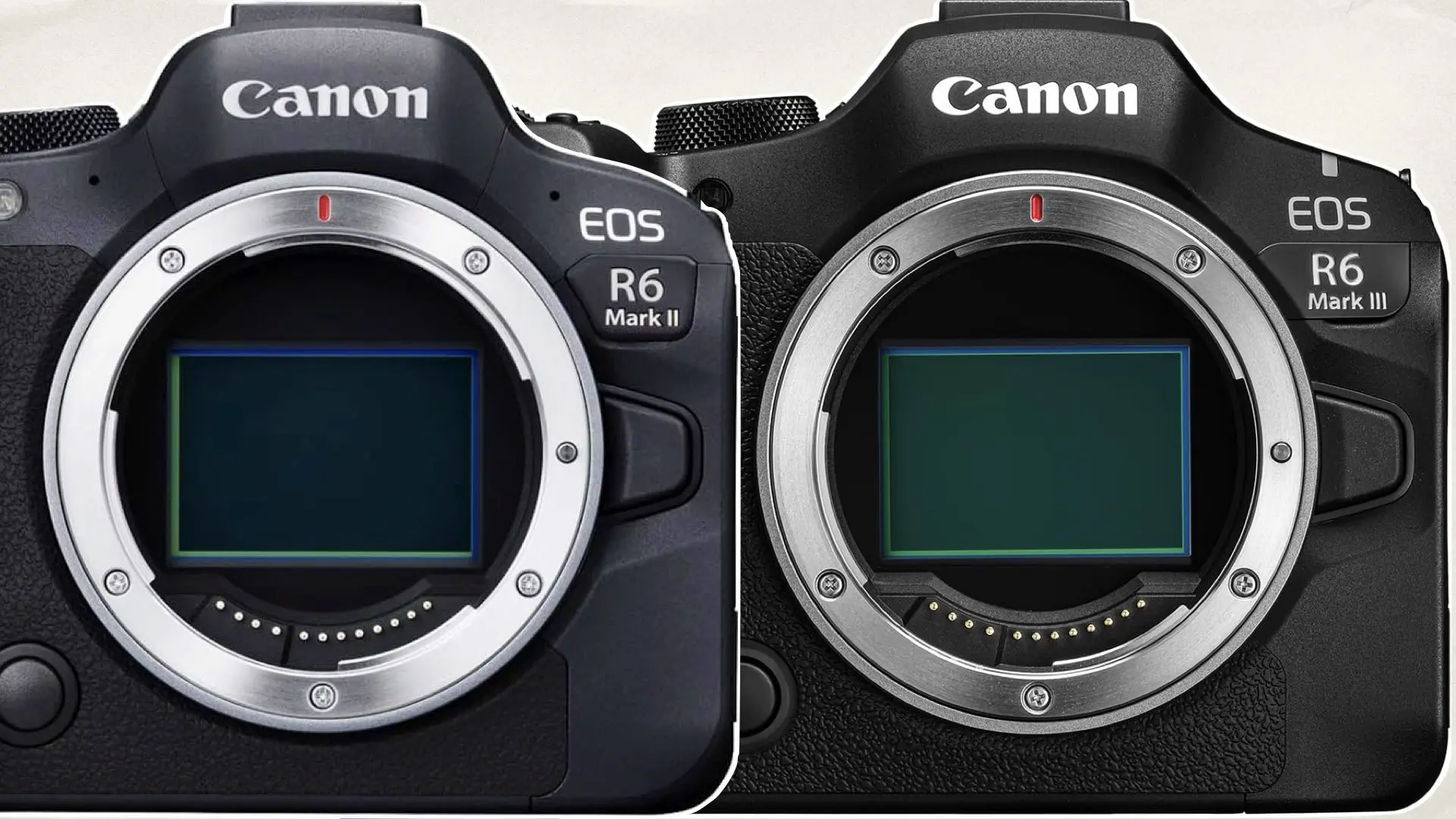
The price difference is now significant
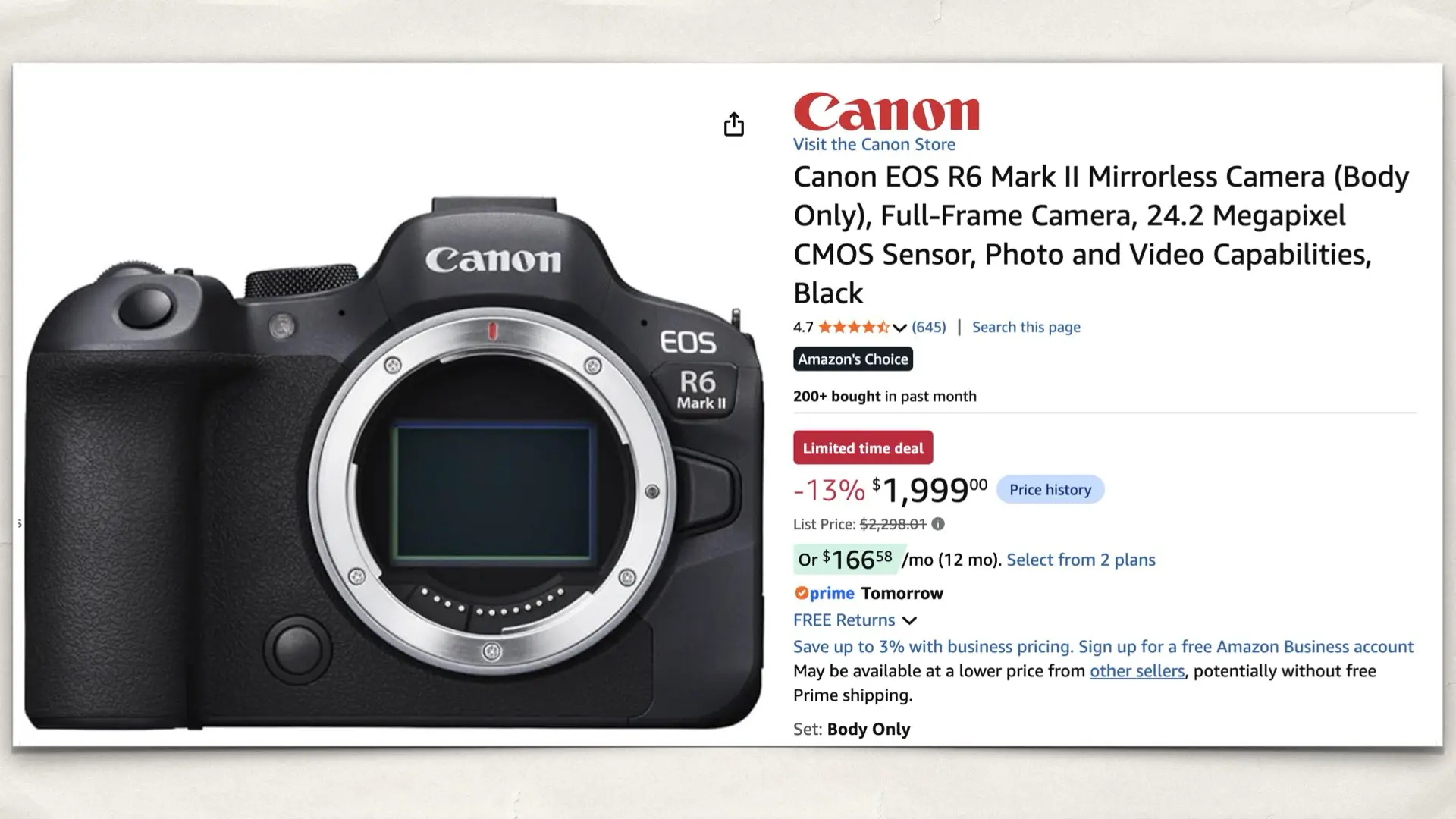
The EOS R6 Mark II launched in 2022 at $2,499. Canon is currently selling the body for $1,999, and Amazon is showing the same price. Amazon also indicates that more than 200 units were purchased during the past month, suggesting that the older model is still attracting plenty of interest even with its successor already on the market.
The EOS R6 Mark III launched in late 2025 at $2,799 and remains positioned as the current-generation model. That leaves an $800 gap between the two cameras. For some users, that $800 can go toward another lens, batteries, cards, a cage, or simply stay in the bank. For others, the extra money buys several upgrades that are genuinely substantial.
The main specifications
| Feature | Canon EOS R6 Mark II | Canon EOS R6 Mark III |
|---|---|---|
| Sensor | 24.2MP full-frame CMOS | 32.5MP full-frame CMOS |
| Processor | DIGIC X | DIGIC X |
| Electronic burst | Up to 40 fps | Up to 40 fps |
| Mechanical burst | Up to 12 fps | Up to 12 fps |
| Pre-shooting | Available | 20-frame pre-continuous shooting |
| IBIS | Yes | Up to 8.5 stops center |
| EVF | 3.69M dots | 3.69M dots |
| Main video resolution | 4K60 | 7K60 RAW |
| Open Gate | No | 7K30 |
| 4K slow motion | Up to 60p | Up to 120p |
| Internal RAW | No | 12-bit Canon RAW Light |
| Card slots | Dual UHS-II SD | CFexpress Type B + UHS-II SD |
| Current price | $1,999 | $2,799 |
📦See the Canon EOS R6 Mark II on Amazon
📦See the Canon EOS R6 Mark III on Amazon
Photography: 24MP vs. 32.5MP
The R6 Mark II uses a 24.2MP full-frame sensor, while the R6 Mark III increases that to 32.5MP. The extra resolution gives the Mark III more room for cropping, larger prints, wildlife photography, and situations where you simply cannot frame perfectly in-camera.
That said, 24MP is still more than enough for a huge amount of professional work. Weddings, events, portraits, travel, editorial, street photography, and general commercial shooting can all be handled comfortably at that resolution. The files are also smaller, which matters when you are shooting thousands of images in a day or working on machines with limited storage.
So the R6 Mark III clearly wins on resolution, but the difference is not necessarily transformative. If you crop heavily, shoot wildlife, or regularly produce large prints, the 32.5MP sensor matters. If most of your work ends up online or at conventional print sizes, the R6 Mark II still has plenty of resolution.
Both cameras are very fast
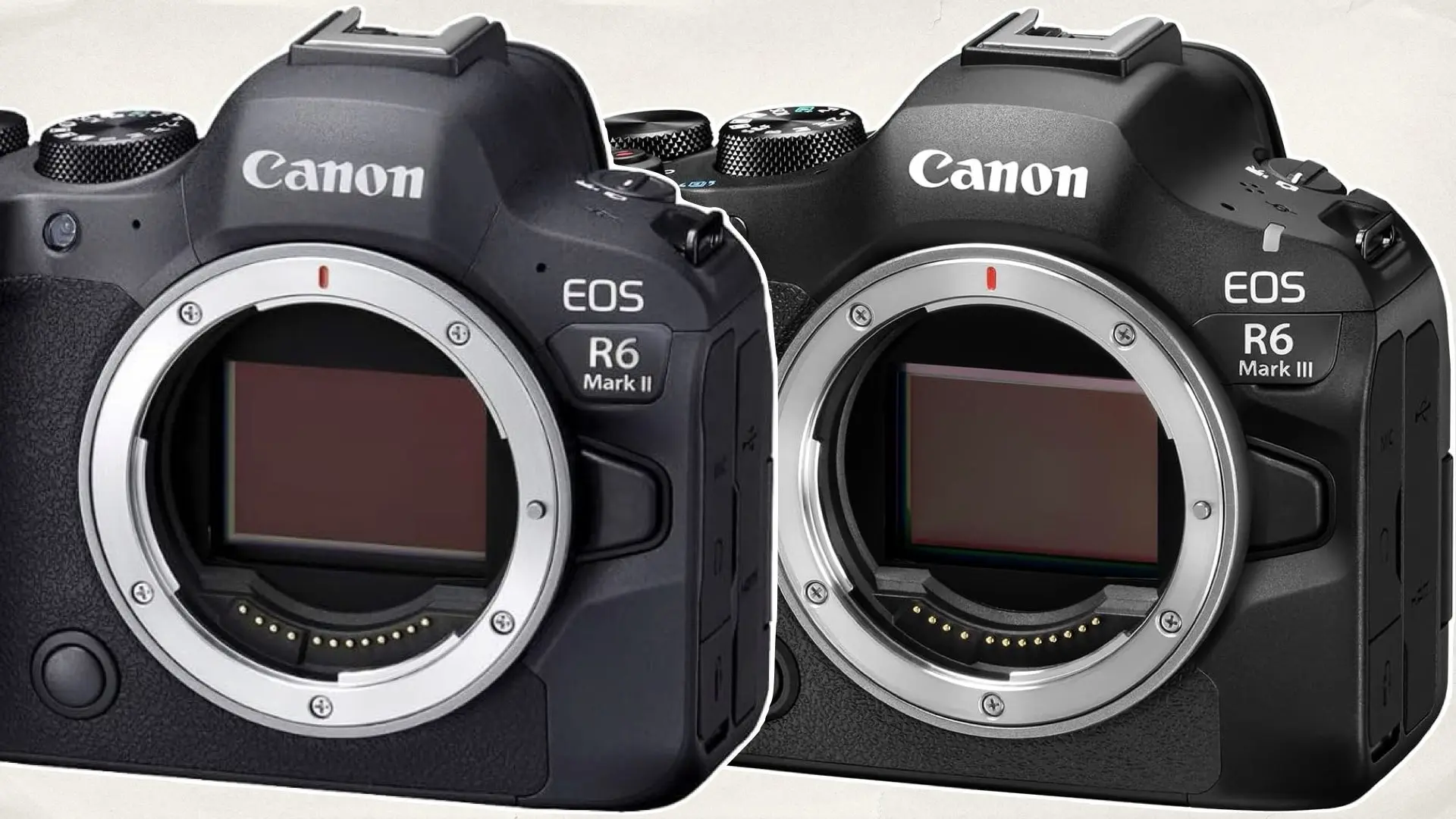
Interestingly, buying the newer camera does not increase the headline burst rate. Both cameras can shoot at up to 40 frames per second using the electronic shutter, with mechanical shooting up to 12 fps. That means the R6 Mark II remains an extremely fast camera for sports, wildlife, and action.
The R6 Mark III does improve the experience with a more advanced pre-continuous shooting system capable of capturing frames before the shutter is fully pressed. In real-world use, that can be useful with unpredictable subjects such as birds taking off, athletes launching into action, or fleeting moments during events.
Autofocus and stabilization
Both cameras use Canon’s Dual Pixel CMOS AF II system and both are built around the DIGIC X processor. The R6 Mark II was already a very strong autofocus camera, so the Mark III feels more like a refinement than a revolution in this area.
The R6 Mark III also offers advanced in-body stabilization, with Canon rating coordinated stabilization at up to 8.5 stops in the center of the frame depending on the lens and shooting conditions. For handheld photography and video, both cameras are highly capable. This is not an area where an R6 Mark II owner should suddenly feel that the camera has become outdated.
Video is where things get much more interesting
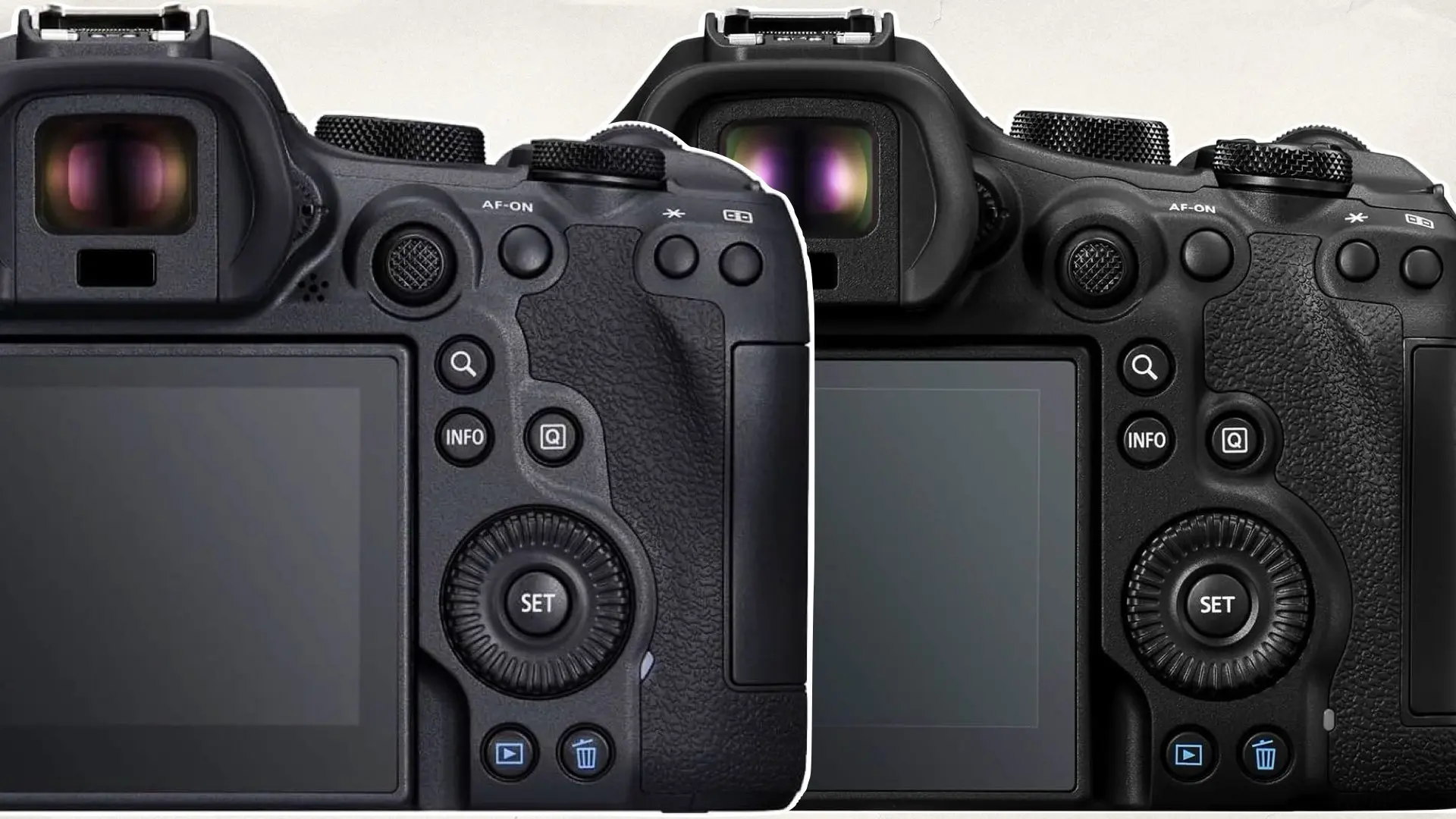
The video side is where the comparison changes completely. The EOS R6 Mark II is already a strong hybrid video camera, capable of recording uncropped 4K60 using the full sensor width, with the image oversampled from 6K. For interviews, documentaries, weddings, corporate work, YouTube, and general filmmaking, that remains a very respectable specification.
The R6 Mark III, however, moves into much more ambitious territory. It can internally record 7K up to 59.94p in 12-bit Canon RAW Light, while also offering 7K Open Gate recording and 4K at up to 119.8p. Those are not minor additions. For filmmakers and hybrid shooters, they can materially change how the camera is used.
📦See the Canon EOS R6 Mark II on Amazon
📦See the Canon EOS R6 Mark III on Amazon
7K RAW changes the equation
Internal RAW is one of the biggest differences between the two cameras. The R6 Mark III can capture Canon RAW Light internally to a CFexpress card, removing the need for an external recorder and giving productions much more flexibility in post-production.
For users who work with grading, VFX, reframing, or more demanding post workflows, that is a substantial benefit. The R6 Mark II can still produce excellent video, but it does not offer the same internal RAW capability.
Open Gate is one of the most useful upgrades
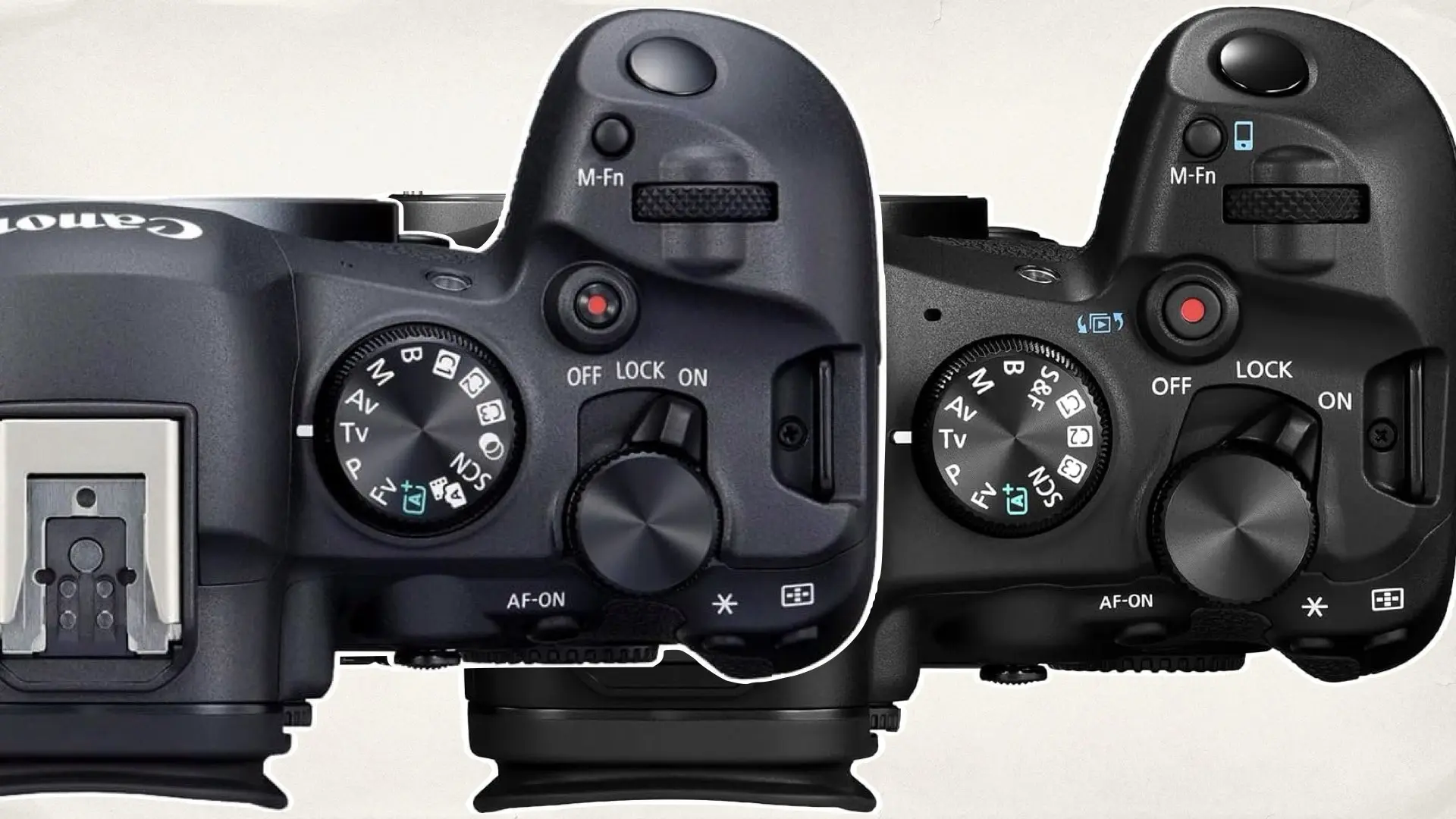
Open Gate recording is particularly relevant today because many productions need to deliver the same material in several aspect ratios. Instead of recording only a conventional 16:9 frame, the R6 Mark III can capture a much larger sensor area, which gives editors more freedom to create horizontal, vertical, and square versions from the same shot.
For social media production, branded content, and commercial workflows where a single shoot has to feed multiple platforms, Open Gate can be more useful than simply having another resolution number on the spec sheet. The R6 Mark II does not offer this option.
4K120 vs. 4K60
Slow motion is another clear advantage for the Mark III. The R6 Mark III offers 4K at up to approximately 120 fps, while the R6 Mark II tops out at 4K60. For sports, wildlife, commercial work, music videos, and cinematic B-roll, 4K120 is genuinely useful.
If you rarely shoot slow motion, however, this may have very little value. That becomes a recurring theme in this comparison: the R6 Mark III is clearly more capable, but the extra capability only matters if your workflow actually needs it.
CFexpress changes the workflow
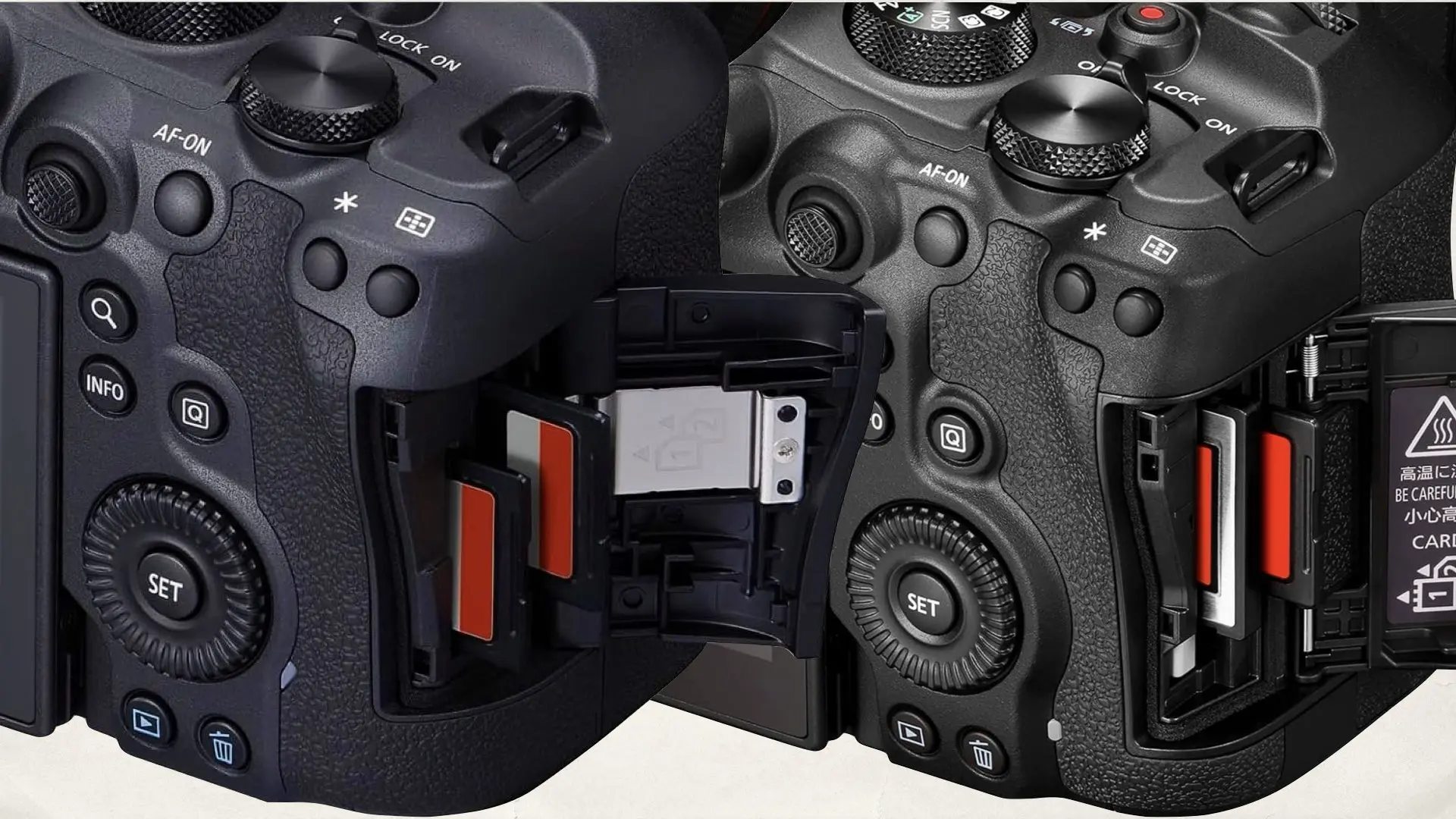
The R6 Mark II uses two UHS-II SD card slots, while the R6 Mark III uses one CFexpress Type B slot and one UHS-II SD slot. There is a clear reason for this. High-resolution RAW video and high-data-rate recording require much faster storage.
CFexpress also helps with buffer performance during high-speed photography, but it introduces additional cost. Many R6 Mark II users already own several SD cards, so moving to the Mark III may also mean buying CFexpress cards and a reader. In practical terms, the real upgrade cost can therefore be slightly higher than the $800 difference between the camera bodies.
The R6 Mark II has one practical advantage
There is also something to be said for simplicity. Two identical SD card slots are easy to manage, inexpensive, and widely available. For photographers who do not need RAW video or extremely high data rates, the dual-SD configuration of the R6 Mark II may actually be more convenient than the mixed CFexpress and SD setup of the Mark III.
Wedding and event shooters in particular may appreciate that straightforward workflow. Newer technology adds capability, but it does not always make every workflow simpler.
What about image quality?
For still photography, the R6 Mark III should deliver more detail simply because of its higher-resolution sensor. But resolution is not the same thing as overall image quality. The R6 Mark II already produces excellent full-frame images, strong high-ISO results, and the familiar Canon color rendering that many users already know well.
Moving from 24.2MP to 32.5MP is useful, but it is not comparable to moving from APS-C to full frame or from an older sensor generation to a radically different architecture. At normal viewing sizes, images from both cameras can look very similar.
Who should buy the R6 Mark II?
At $1,999, the R6 Mark II may actually be the smarter purchase for a large group of users. It makes particular sense for wedding photographers, event shooters, portrait photographers, travel photographers, general hybrid users, and creators who mainly work in conventional 4K.
You are still getting a 24.2MP full-frame sensor, 40 fps electronic shooting, IBIS, strong autofocus, and oversampled 4K60. For many photographers, spending the $800 difference on better RF glass may ultimately improve their work more than moving to the newer body.
📦See the Canon EOS R6 Mark II on Amazon
📦See the Canon EOS R6 Mark III on Amazon
Who should buy the R6 Mark III?
The R6 Mark III makes considerably more sense for users whose work sits closer to filmmaking or advanced hybrid production. The extra resolution, 7K RAW, Open Gate, 4K120, CFexpress support, and updated shooting tools make it a much more flexible production camera.
It is also the more attractive option for wildlife photographers who crop heavily, sports shooters who benefit from pre-capture, and creators who regularly need multiple delivery formats from a single shoot.
Is the R6 Mark III worth $800 more?
For video, probably yes. For photography, the answer is much less obvious.
The R6 Mark III is unquestionably the better camera. It offers more resolution, more advanced video formats, 7K RAW, Open Gate, 4K120, faster media, and several smaller improvements. But a better camera is not automatically a better purchase.
At $1,999, the EOS R6 Mark II is now $800 cheaper while retaining most of the features that made it such a successful hybrid camera in the first place. If you mainly shoot stills and conventional 4K video, saving the money makes a lot of sense. If video is a major part of your work, the equation changes because the jump to internal 7K RAW, Open Gate, and 4K120 is substantial.
The simplest way to put it is this: the R6 Mark II is the better value, while the R6 Mark III is the better hybrid filmmaking camera. At their current prices, both make sense. The real question is whether you need the additional capabilities enough to justify the extra $800.
As an Amazon Associate, Y.M.Cinema earns from qualifying purchases. If you purchase through the Amazon links above, Y.M.Cinema may earn a small commission at no additional cost to you. This helps support our work.
Gear mentioned in this article
Available on Amazon
| Product | New | Renewed | Used |
|---|---|---|---|
| Canon EOS R6 Mark II | $1,999 | — | From $1,899.95 |
| Canon EOS R6 Mark III | $2,799 | — | From $2,423.39 |
Prices checked: Oct 9, 2026, 5:33 AM GMT+0000
As an Amazon Associate, Y.M.Cinema earns from qualifying purchases. If you buy through our links, we may earn a small commission at no extra cost to you.
Product prices and availability are accurate as of the date/time indicated and are subject to change. Any price and availability information displayed on Amazon.com at the time of purchase will apply to the purchase of this product.
CERTAIN CONTENT THAT APPEARS ON THIS SITE COMES FROM AMAZON. THIS CONTENT IS PROVIDED “AS IS” AND IS SUBJECT TO CHANGE OR REMOVAL AT ANY TIME.