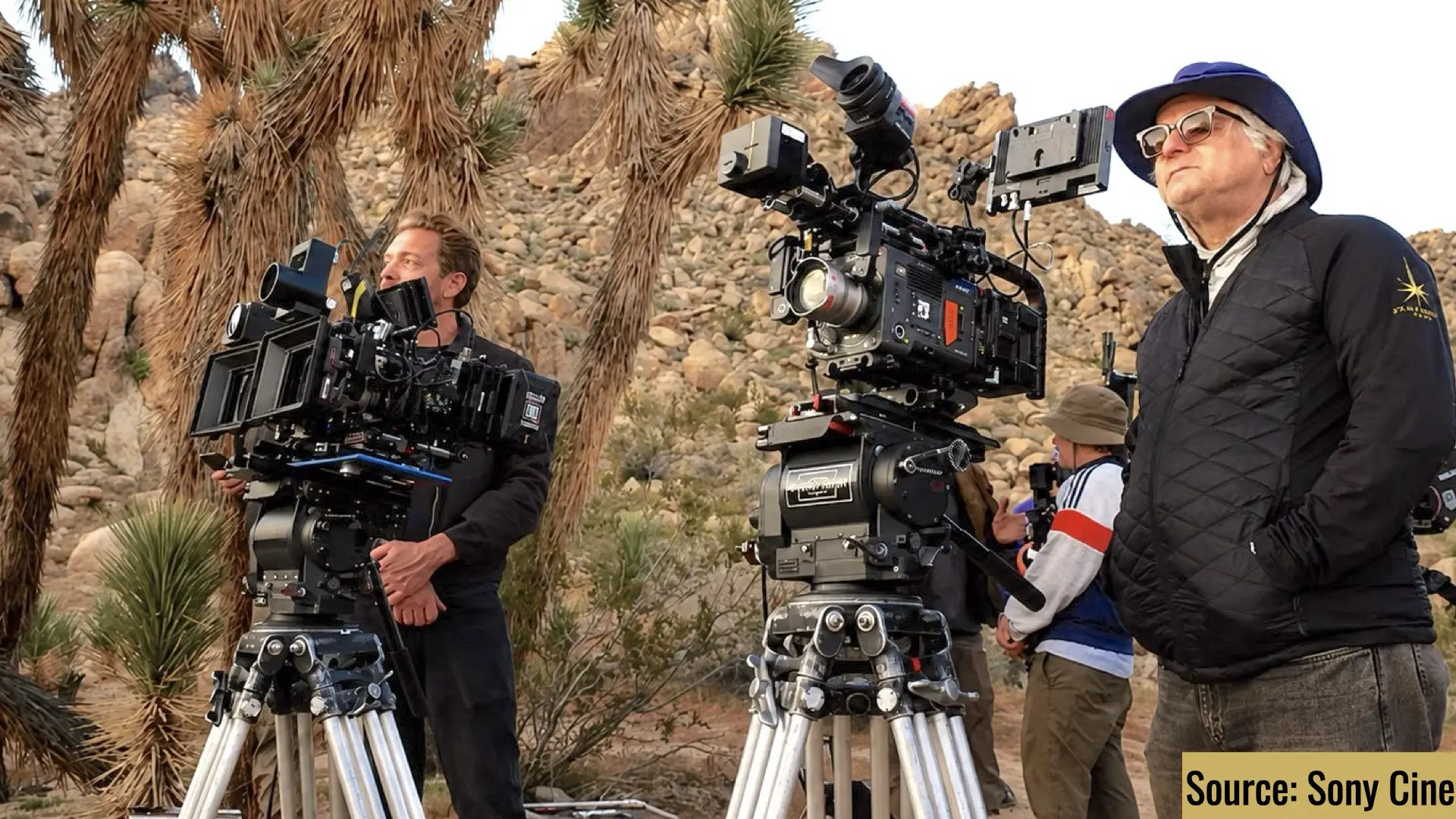
Sony has published a new camera test featuring Academy Award-winning cinematographer Claudio Miranda, ASC, ACC, comparing the FX5 with the FX3 ($3,998 on Amazon) while using the VENICE 2 as the image-quality reference. According to Miranda, the FX5 demonstrates more of the visual characteristics associated with the VENICE platform, including softer highlight roll-off, more organic color transitions, cleaner blacks, and stronger low-light behavior. The test offers one of the clearest explanations yet of where Sony intends to position the FX5 within its Cinema Line.
VENICE 2 as the reference
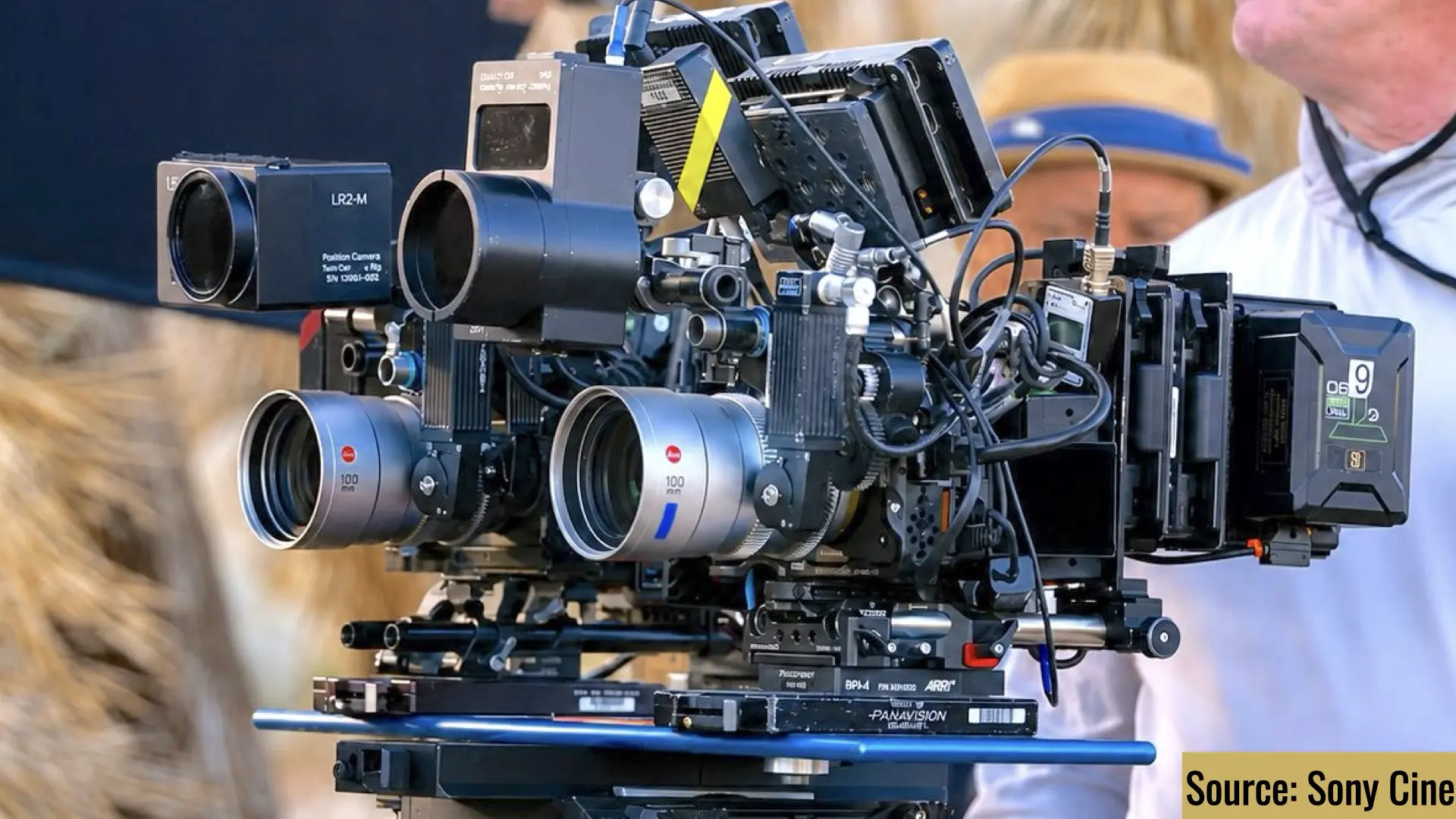
Miranda compared the FX3 and FX5 while using the VENICE 2 as what he called the “gold standard.” The cameras were evaluated for light values, color range, menu functions, image behavior, and practical operation on set. This does not mean the FX5 is being presented as a replacement for the VENICE 2. Sony’s flagship cinema camera remains the primary production tool in the comparison. Instead, the VENICE 2 served as a benchmark for determining how much of Sony’s high-end cinema image philosophy has reached the smaller FX5.
📦See the Sony FX5 on Amazon
Conditions
A familiar camera-test location
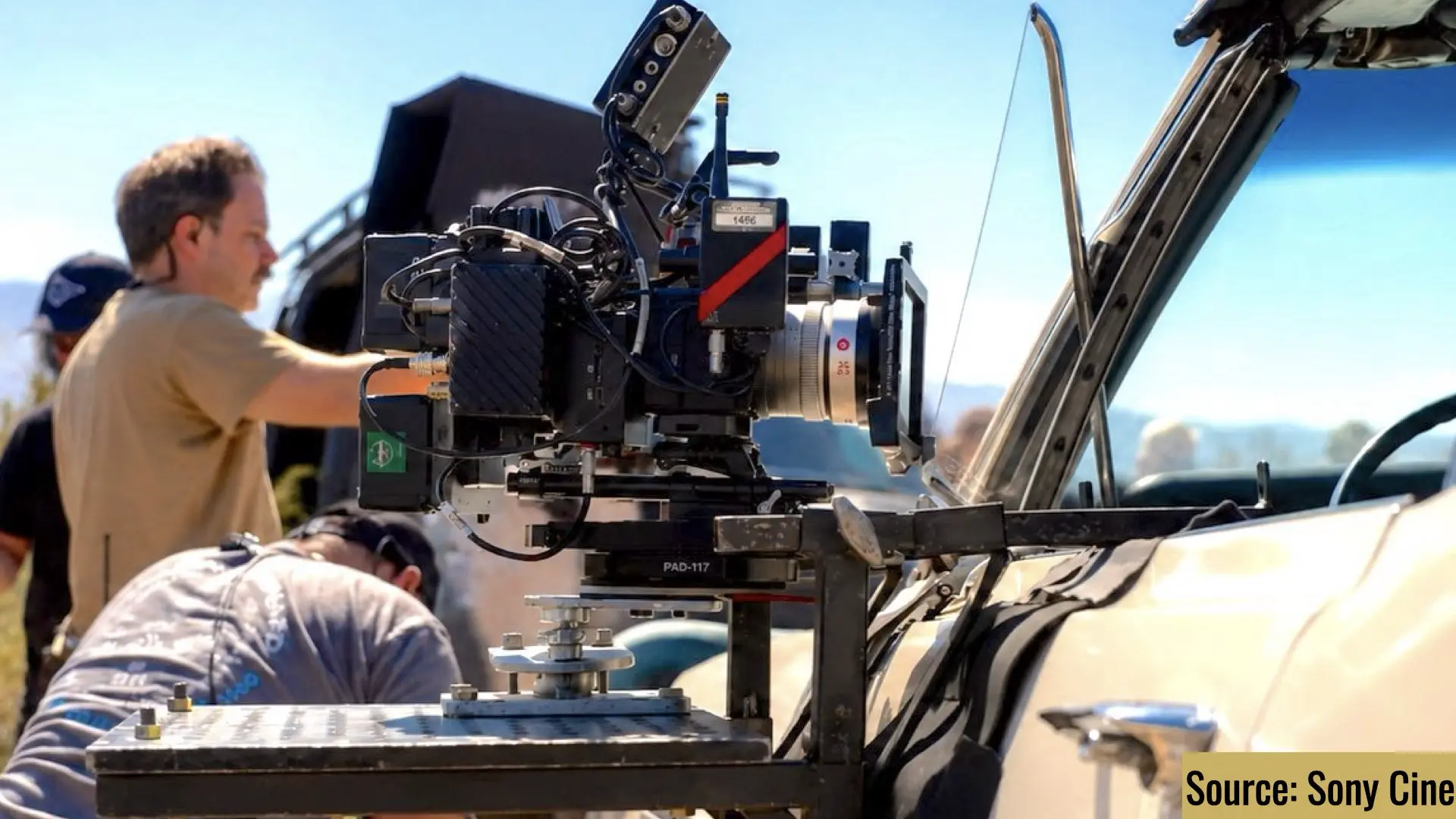
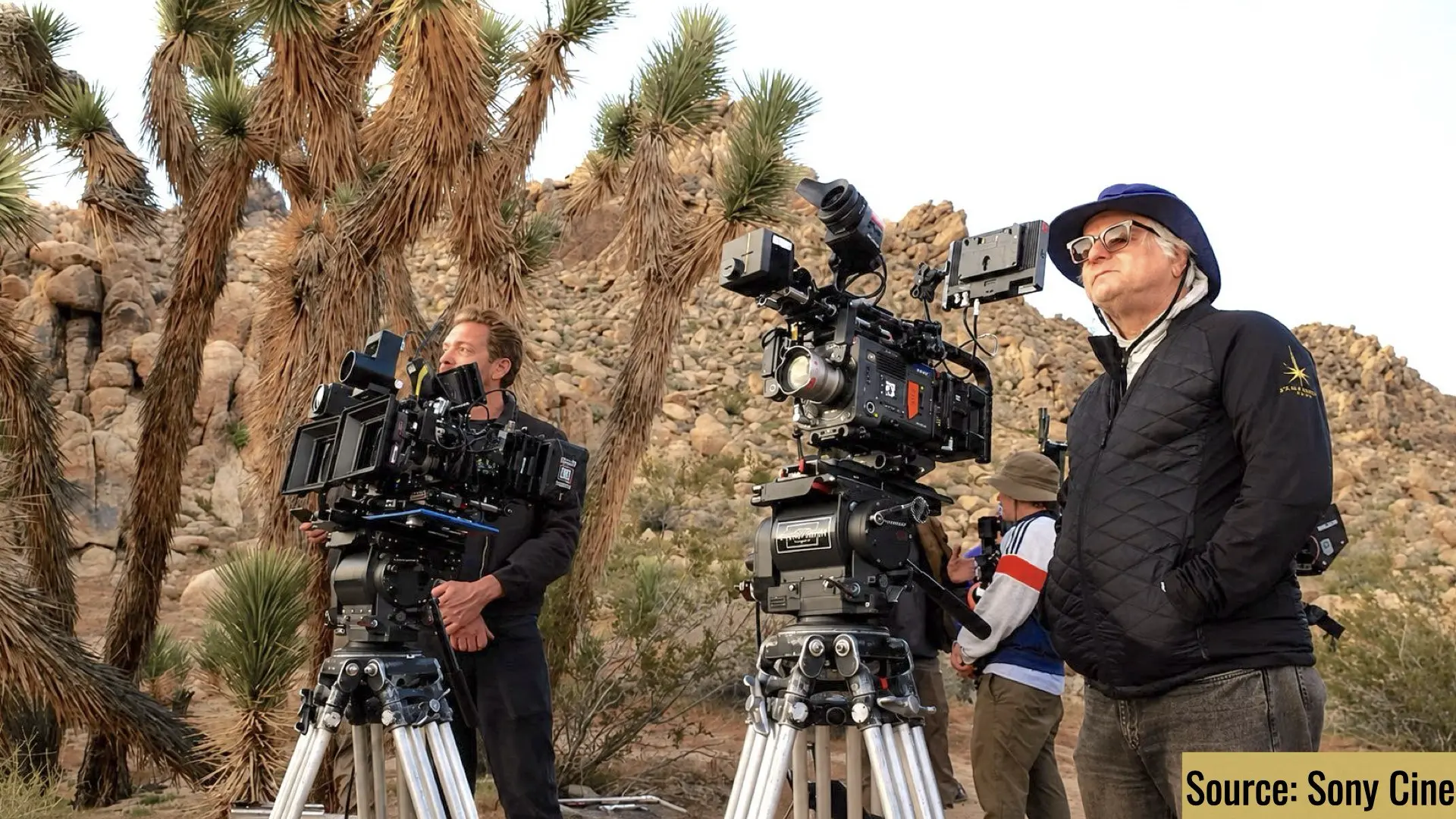
Miranda returned to a location he has used repeatedly throughout his career for camera evaluation. The site naturally combines difficult exposure conditions: sunlight reflecting from chrome, dark vehicle interiors, deep shadows, night skies, headlights, firelight, and mixed skin tones. Because Miranda already understands how this location behaves, he can quickly identify differences between cameras. That familiarity is particularly useful when evaluating subtle characteristics such as highlight roll-off, shadow color, and the way tones transition across the image.
No bounce cards and no interior lighting
During the daytime test, Miranda allowed the cameras to work with the available light. The sun reflected strongly from the vehicles while the interiors remained dark. No bounce cards were used, and the cars were not artificially lit. This created a demanding dynamic-range test. The cameras had to manage intense reflections and deep interior shadows within the same frame, without the assistance of controlled lighting. According to Miranda, the FX5 displayed more VENICE-like characteristics than the FX3. He specifically identified a softer highlight roll-off and a more organic flow of color across the image.
What about highlight roll-off?
Highlight roll-off describes how a camera transitions from normally exposed image information into very bright areas. When this transition is harsh, bright windows, reflective surfaces, skin highlights, practical lights, and flames can appear abrupt or electronic. A smoother roll-off allows the image to move more naturally toward overexposure. This does not necessarily mean that more highlight detail is always recorded. It means the transition toward clipping can appear more controlled and visually pleasing. For Miranda, this was one of the FX5’s most noticeable improvements over the FX3.
A more organic image
Miranda described the FX5 as feeling more cinematic and more organic. Two cameras may record a similar amount of information while still producing noticeably different images. Color transitions, skin-tone reproduction, highlight behavior, noise texture, and shadow color can all influence whether an image feels natural or overly digital. Miranda’s comments suggest that the FX5’s advantage is found not only in what it captures, but in how the image behaves across the tonal range.
Testing the FX5 at night
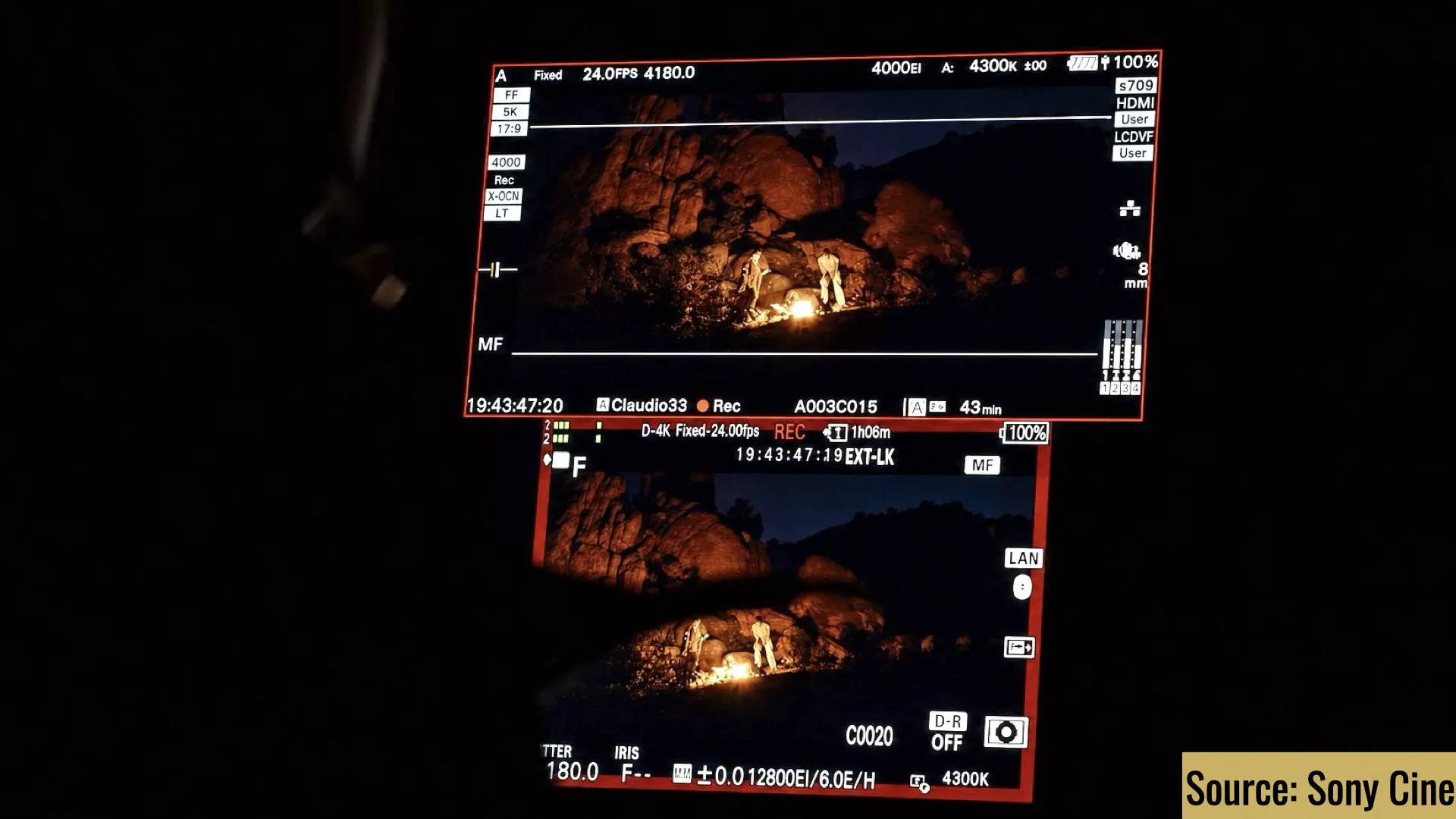
The nighttime sequence created an even more demanding test. Miranda used headlights, a campfire, distant city lights, and the natural night environment. No additional augmented lighting was introduced. The cameras were mounted close together to make the comparison more consistent. Miranda said he was particularly impressed by the FX5’s low-light performance. However, his most interesting observation was not simply that the camera could record an image in darkness. It was the way the FX5 transitioned into black. Miranda explained that some cameras develop a reddish or muddy appearance in very dark parts of the frame. As exposure falls, the shadows can become contaminated with unwanted color instead of moving naturally toward black. According to Miranda, the FX5 avoided this behavior and transitioned more smoothly into the dark areas. Low-light performance is often reduced to ISO values or noise levels, but shadow color is equally significant. A camera can appear sensitive while still producing unattractive blacks, unstable color, or heavy chroma contamination. The FX5’s low-light advantage, based on Miranda’s comments, appears to include better color integrity in deep shadows. Furthermore, fire is extremely bright, while the surrounding landscape, night sky, clothing, and faces may be several stops darker. Miranda placed two different skin tones beside the fire and kept the flame visible inside the frame. This allowed him to examine whether the camera could retain useful facial detail while still handling the intense firelight and dark background. When he reviewed the footage, Miranda found that the range remained contained. The people, fire, night city, and sky all retained usable information.
📦See the Sony FX5 on Amazon
Skin tones and color range
Miranda also praised the FX5’s skin-tone reproduction. Skin tones are among the most demanding elements for any cinema camera because viewers are highly sensitive to unnatural color shifts in faces. A camera may perform well with landscapes, products, or architecture while revealing weaknesses when reproducing different complexions under difficult or mixed lighting. The campfire test was especially useful because the faces were illuminated by a warm, unstable source while surrounded by deep darkness. Miranda’s positive response suggests that the FX5 maintained natural color separation under these conditions.
A familiar workflow for VENICE operators
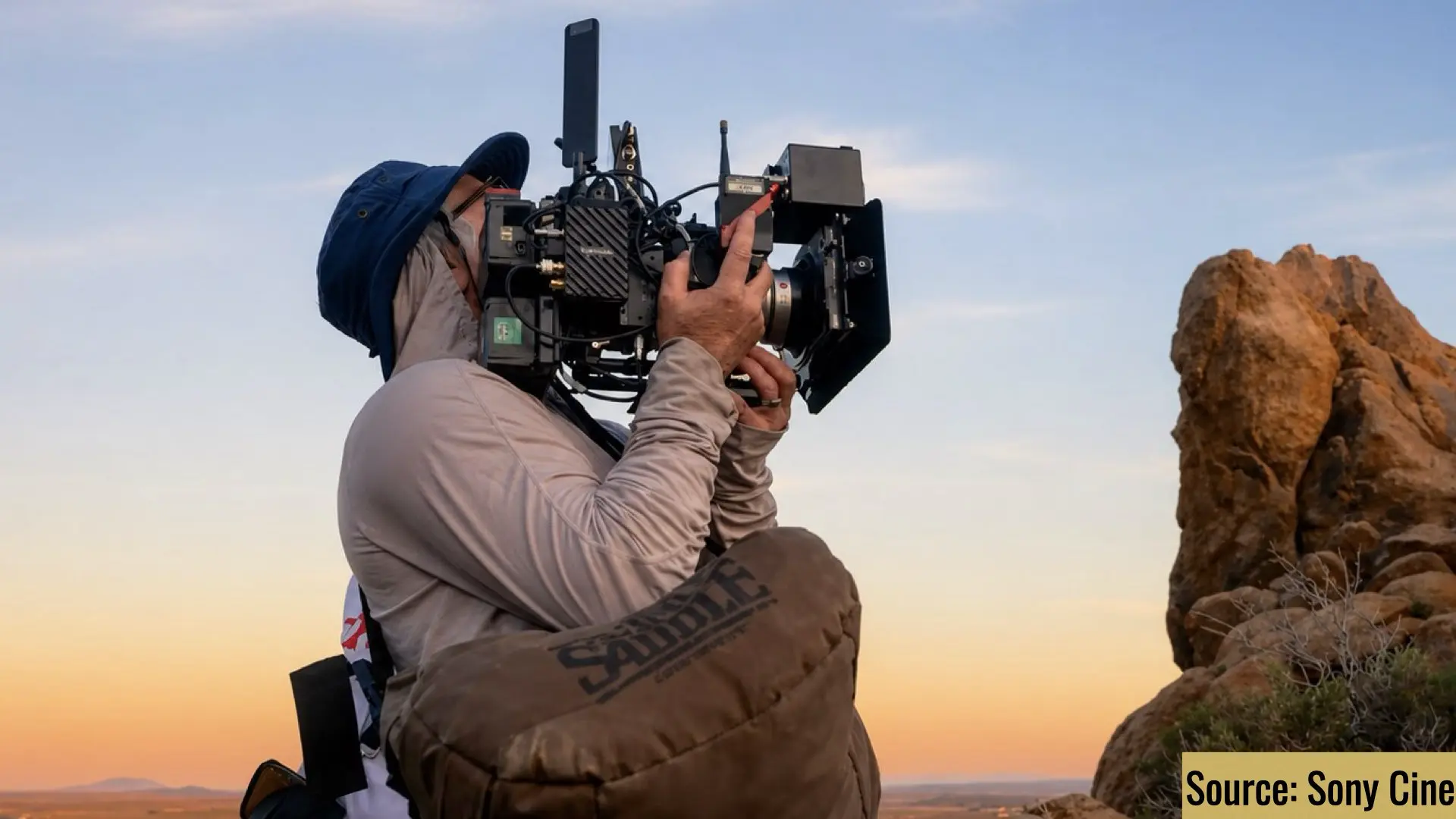
The comparison was not limited to image quality. Miranda also discussed the FX5’s menus and operating functions. He noted that users familiar with the VENICE system should feel at home with the new camera. That consistency may be particularly valuable when the FX5 is used alongside a VENICE or VENICE 2 on the same production. A compact camera may be required for vehicle mounting, gimbal work, restricted spaces, risky camera positions, or lightweight secondary-camera setups. When the smaller camera shares similar terminology, menu logic, color behavior, and operational philosophy, it becomes easier to integrate into an established cinema workflow.
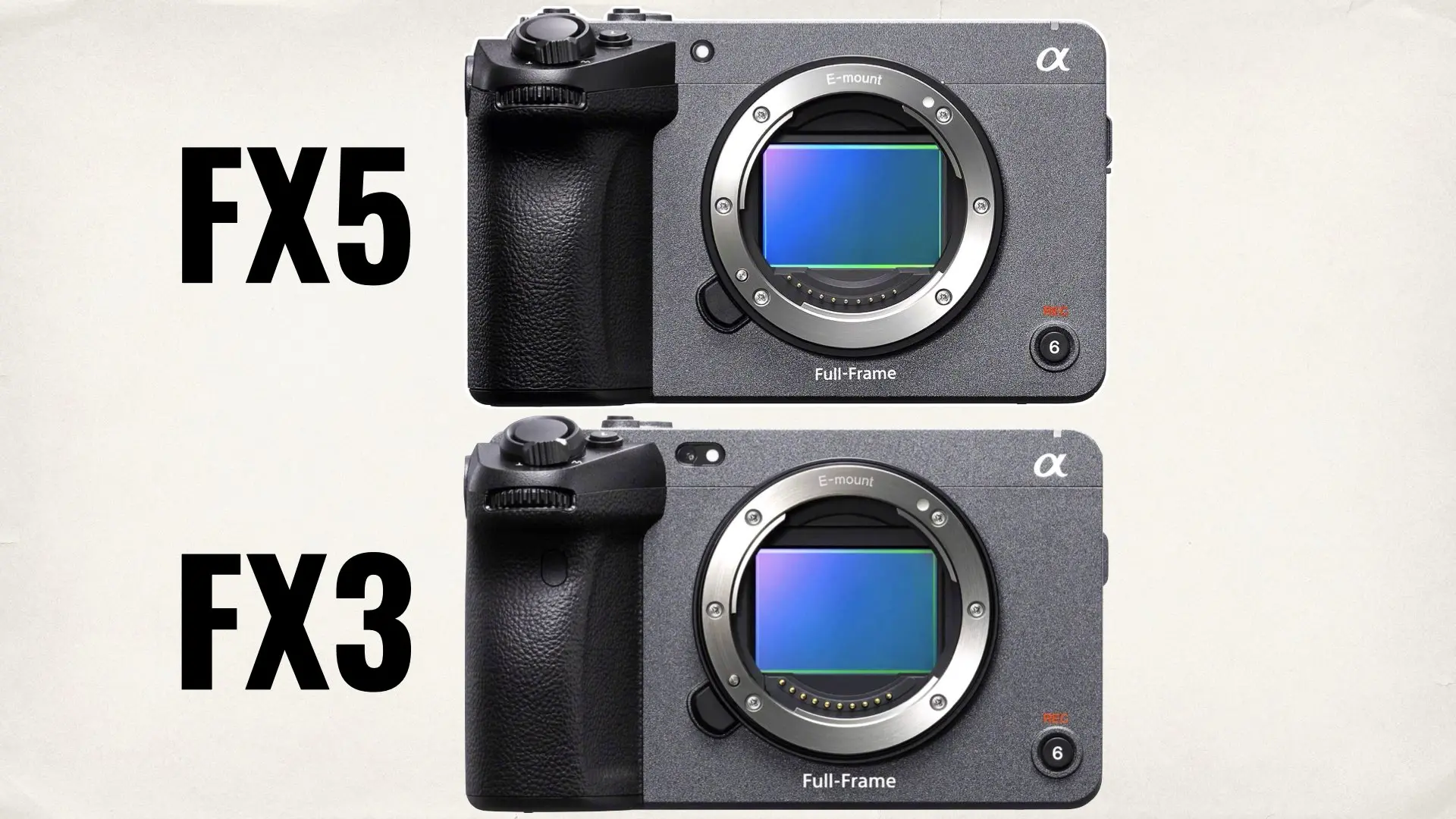
More than an FX3 upgrade
The FX3 remains one of Sony’s most capable compact cinema cameras. However, Miranda’s comparison suggests that the FX5 is not simply an FX3 with additional features. The main improvements identified in the test include:
• Softer highlight roll-off
• More organic color transitions
• Cleaner rendering in deep shadows
• Improved low-light color integrity
• Strong skin-tone reproduction
• A more VENICE-like image character
• Greater workflow familiarity for VENICE users
Watch the BTS below:
A Sony-produced test
The video was produced and published by Sony. It should therefore not be treated as a fully independent or laboratory-controlled comparison. Sony controlled the production environment, camera presentation, footage selection, and final edit. Nevertheless, Miranda’s comments are unusually specific. He did not limit his remarks to general statements about image quality. He discussed highlight roll-off, shadow color, skin tones, low-light behavior, dynamic range, menus, and production mobility. That makes the test technically informative despite its promotional context. Watch the final result below:
The FX5 moves closer to VENICE
The VENICE 2 remains the workhorse and the reference camera in Miranda’s comparison. The FX5 does not replace it. What the test demonstrates is that Sony has moved more of the VENICE image philosophy into a smaller and more flexible Cinema Line camera. Compared with the FX3, the FX5 appears to deliver a smoother, more organic image, particularly in highlights, deep shadows, skin tones, and difficult low-light scenes. The FX5 is not merely a more advanced compact camera. It is being positioned as a lightweight production tool with a closer visual and operational relationship to Sony’s flagship cinema platform.
As an Amazon Associate, Y.M.Cinema earns from qualifying purchases. If you purchase through the Amazon links above, Y.M.Cinema may earn a small commission at no additional cost to you. This helps support our work.
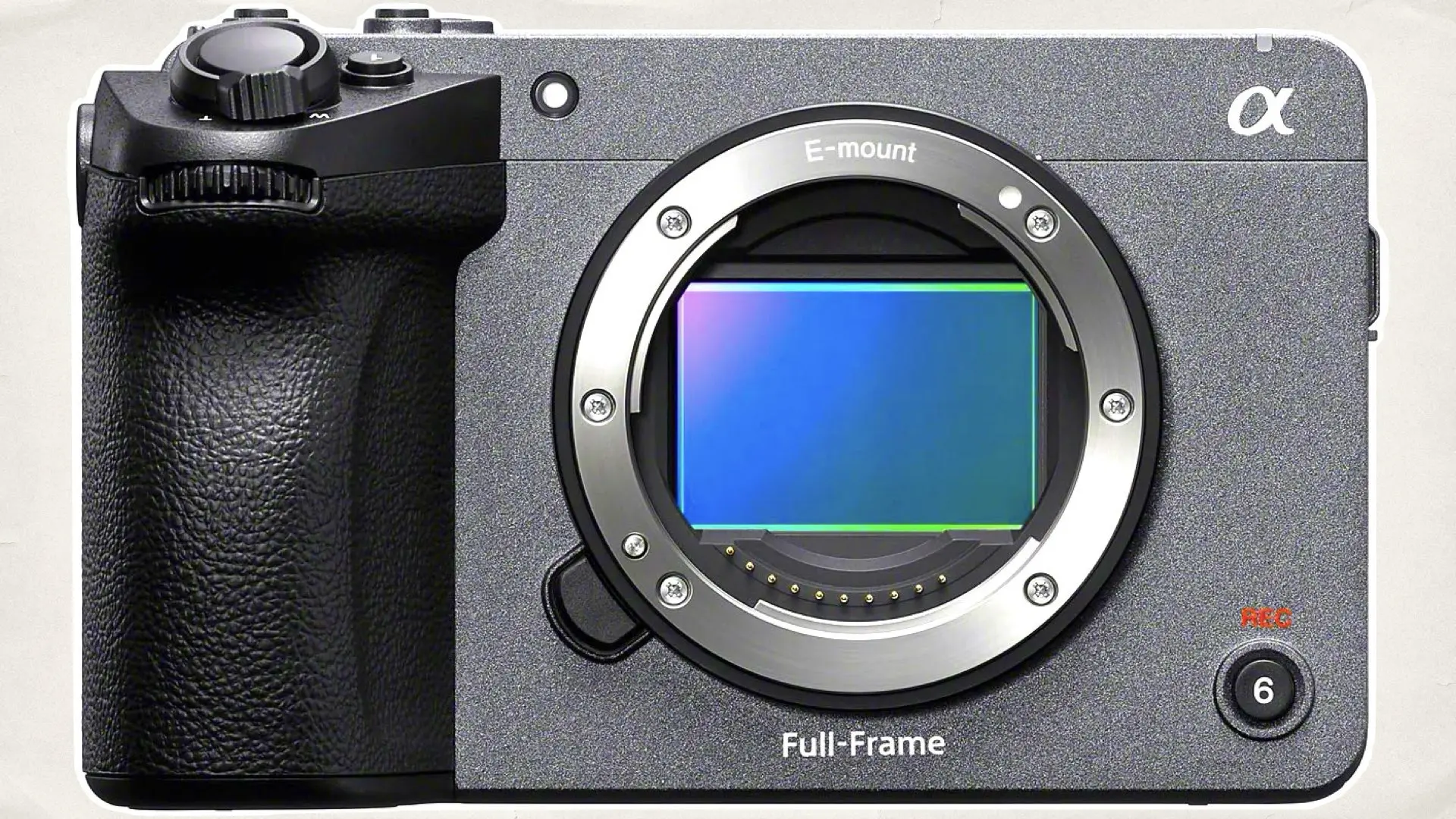
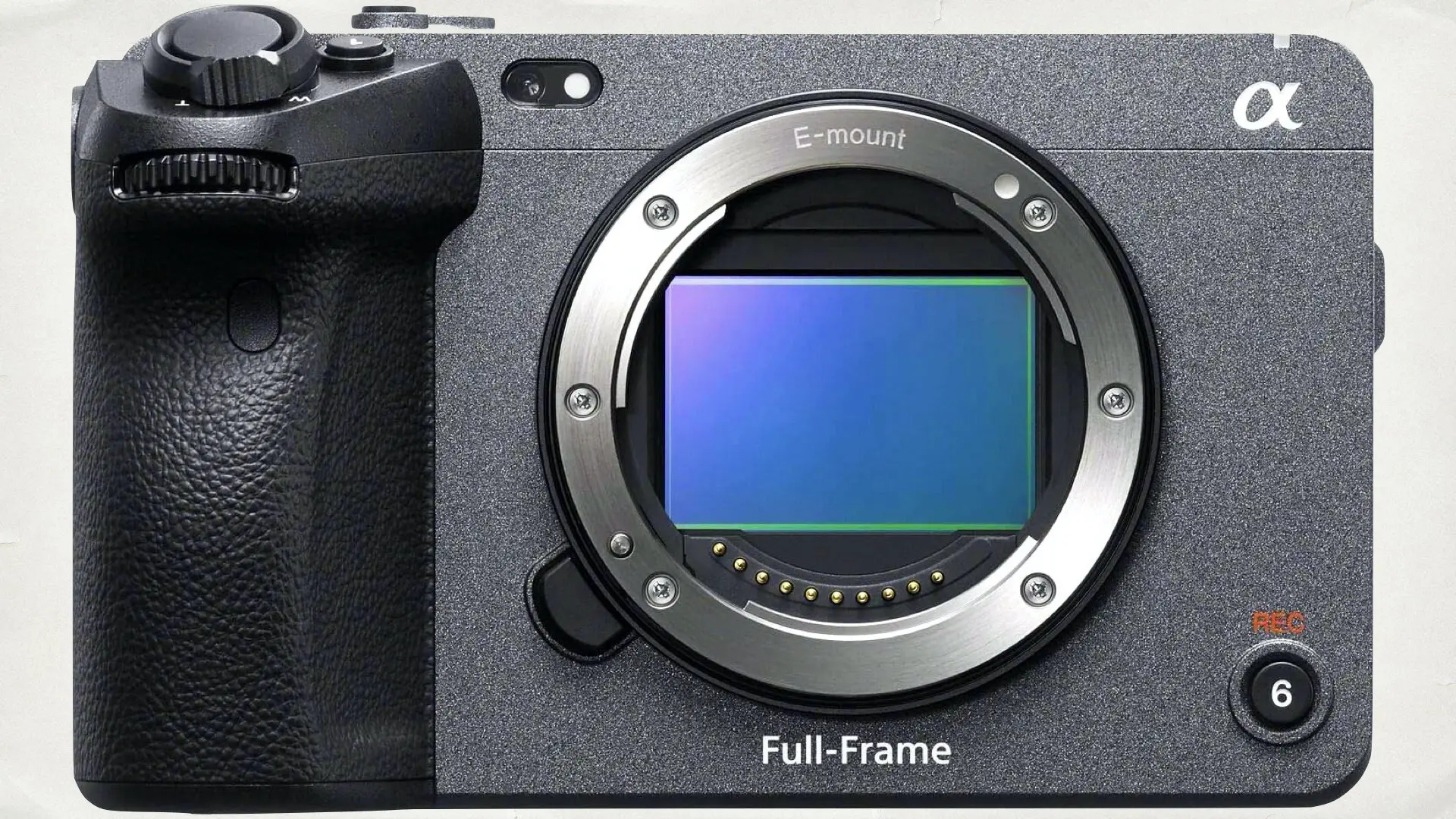
Gear mentioned in this article
Available on Amazon
| Product | New | Renewed | Used |
|---|---|---|---|
| Sony FX3 | $3,998 | — | — |
Prices checked: Oct 7, 2026, 3:19 PM GMT+0000
As an Amazon Associate, Y.M.Cinema earns from qualifying purchases. If you buy through our links, we may earn a small commission at no extra cost to you.
Product prices and availability are accurate as of the date/time indicated and are subject to change. Any price and availability information displayed on Amazon.com at the time of purchase will apply to the purchase of this product.
CERTAIN CONTENT THAT APPEARS ON THIS SITE COMES FROM AMAZON. THIS CONTENT IS PROVIDED “AS IS” AND IS SUBJECT TO CHANGE OR REMOVAL AT ANY TIME.