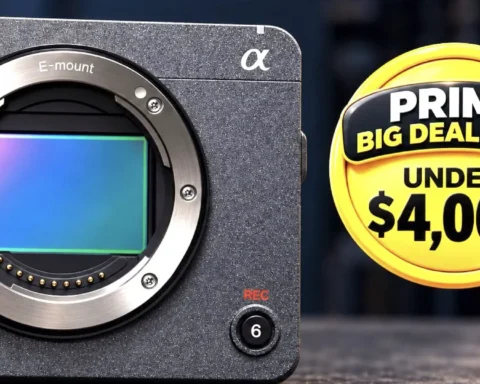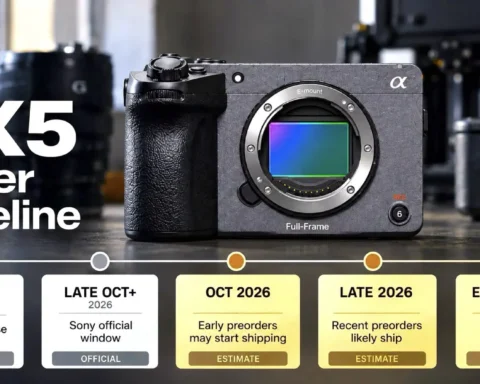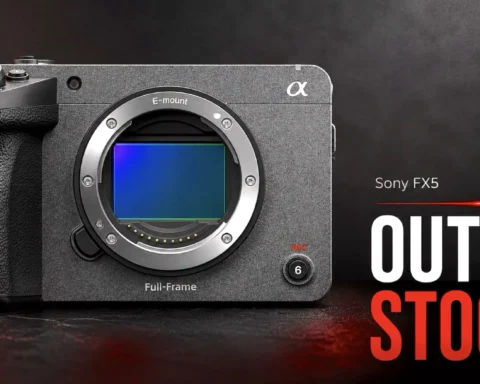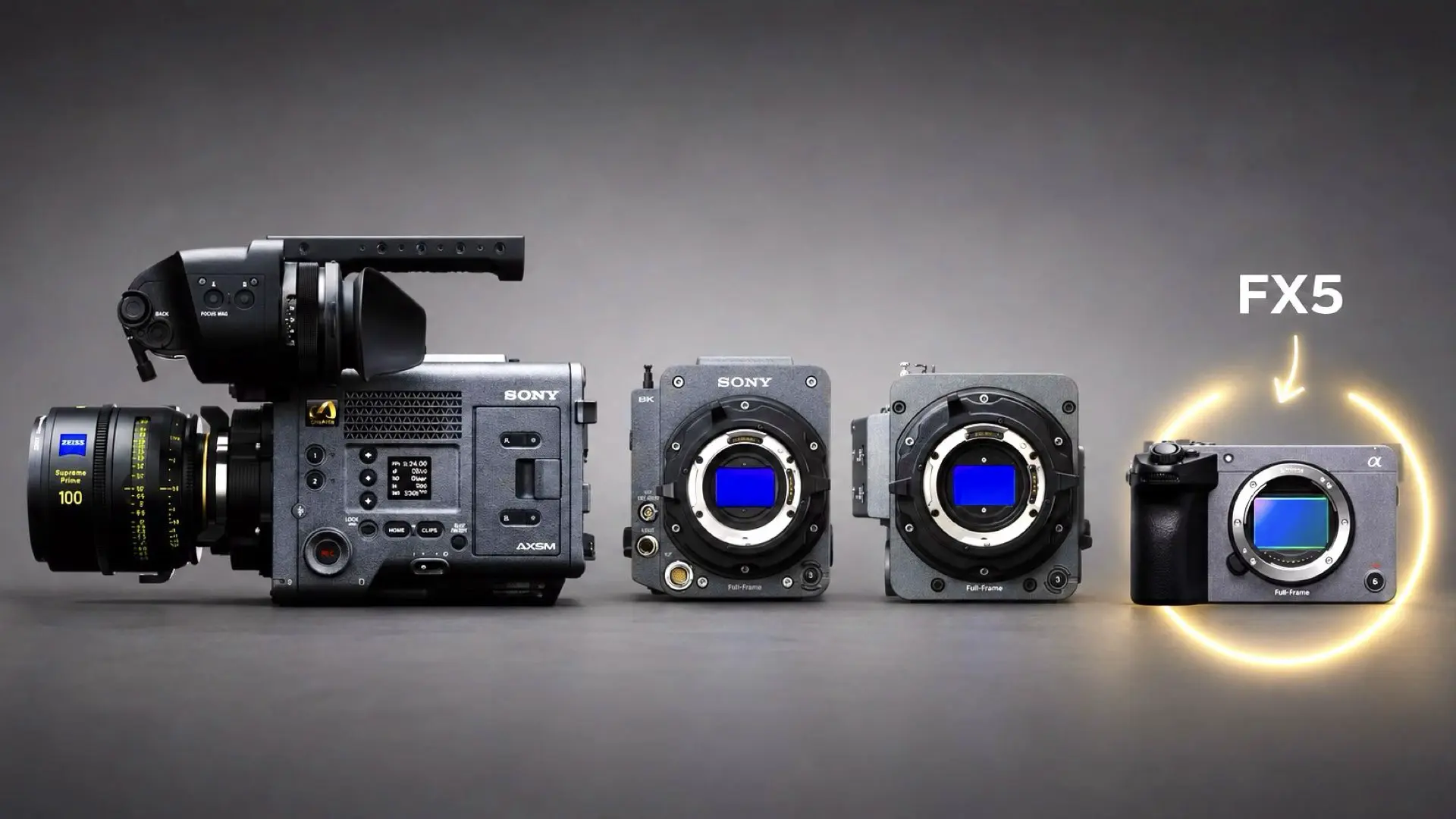
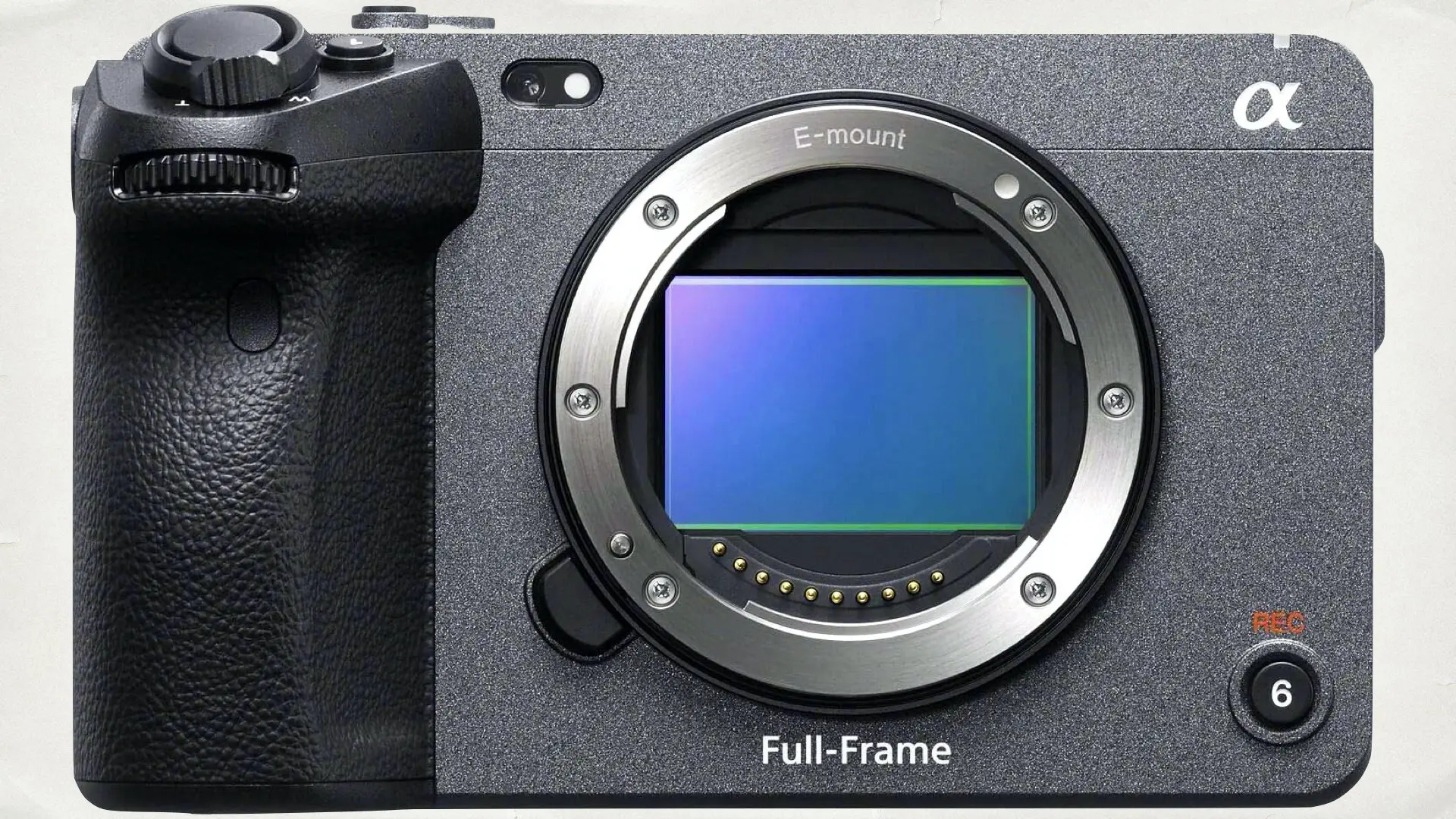
Sony has officially launched the FX5, and the most important part is its positioning. This is not an FX3 ($3,998 on Amazon) II. It is not a smaller FX6 ($8,876 on Amazon) either. Sony has built something more specific: a compact Cinema Line camera that takes the mobility of the FX3 and adds several workflow elements from the higher-end Sony cinema ecosystem.
Sony FX5: What is it?
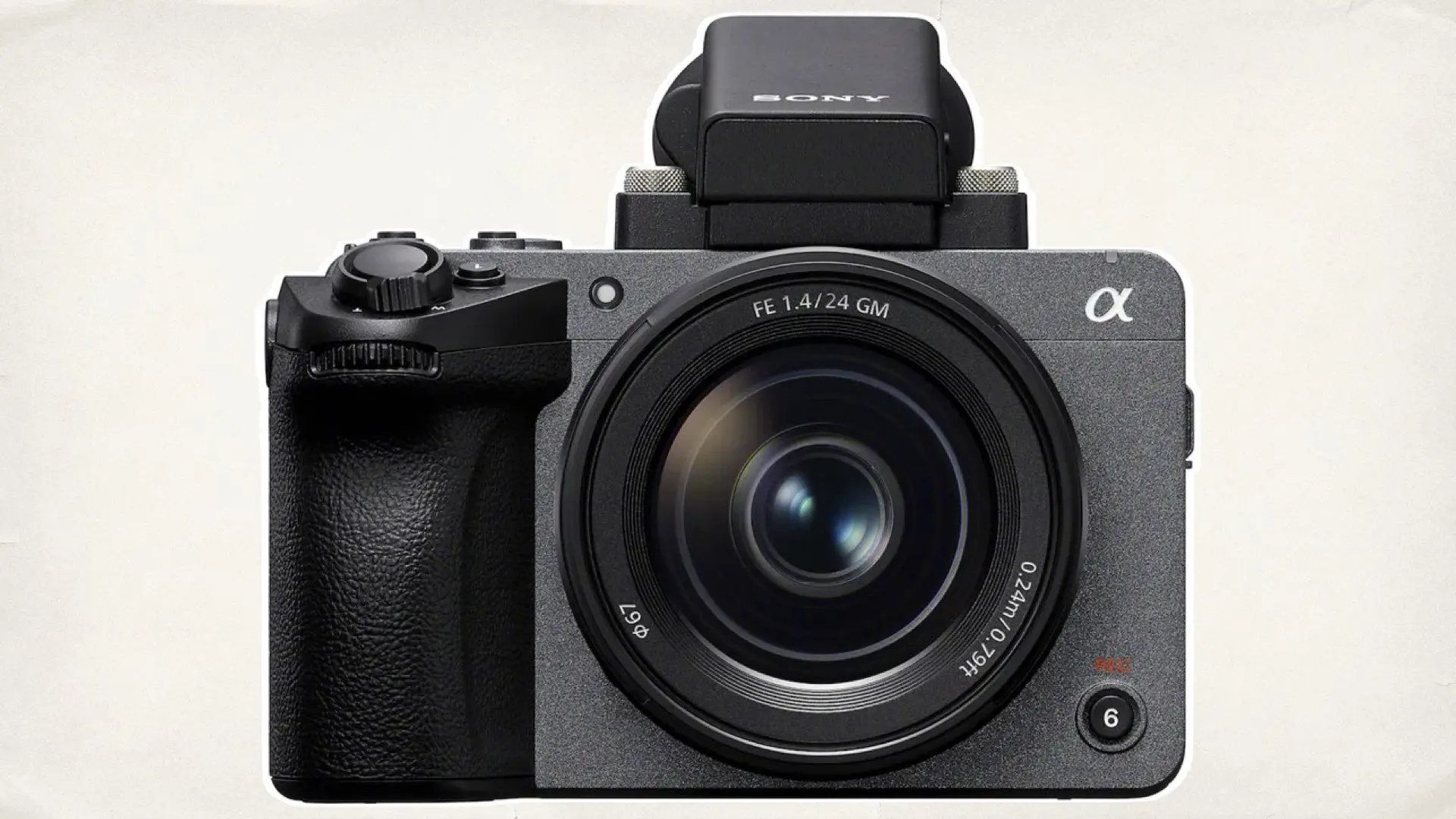
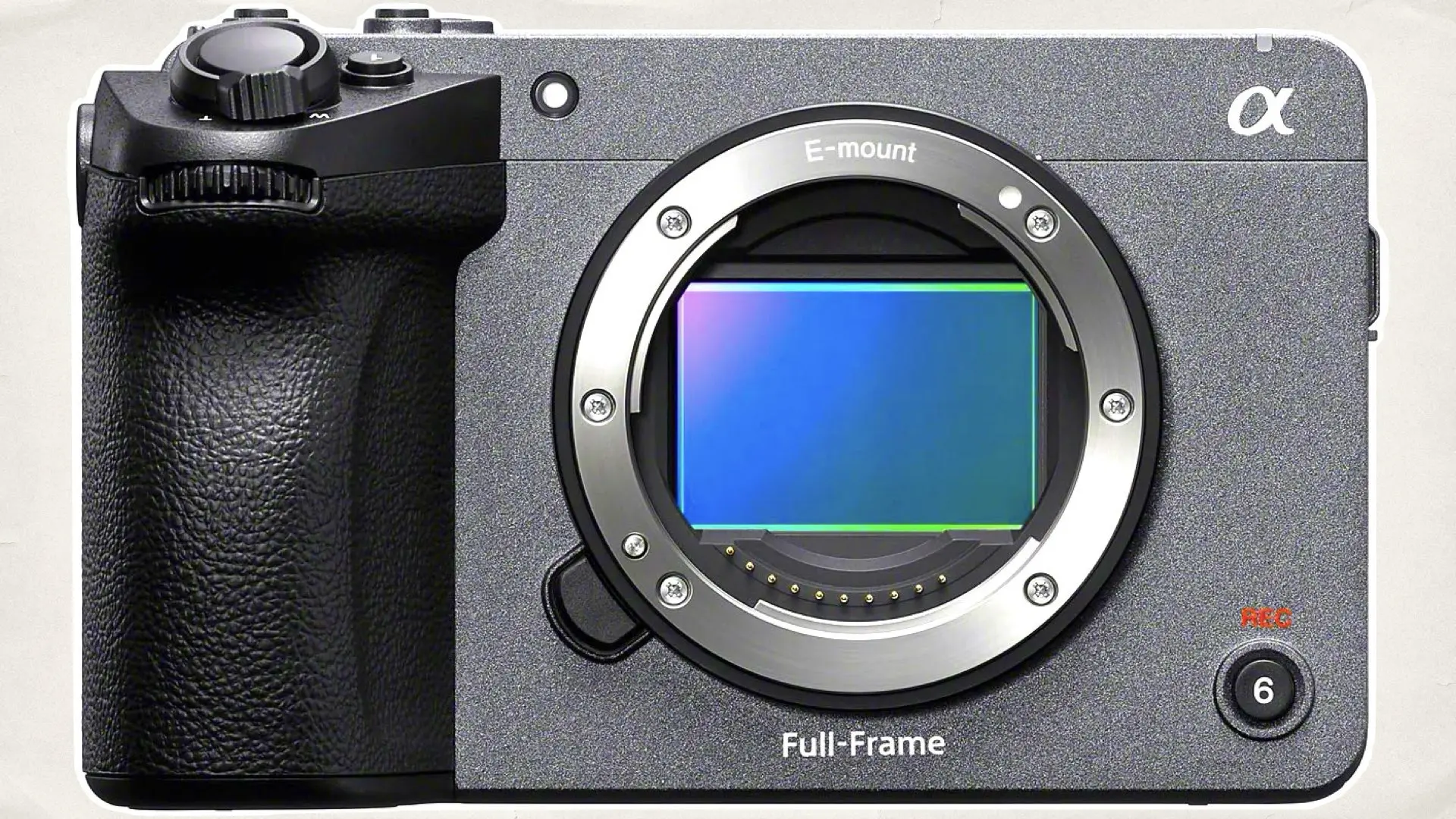
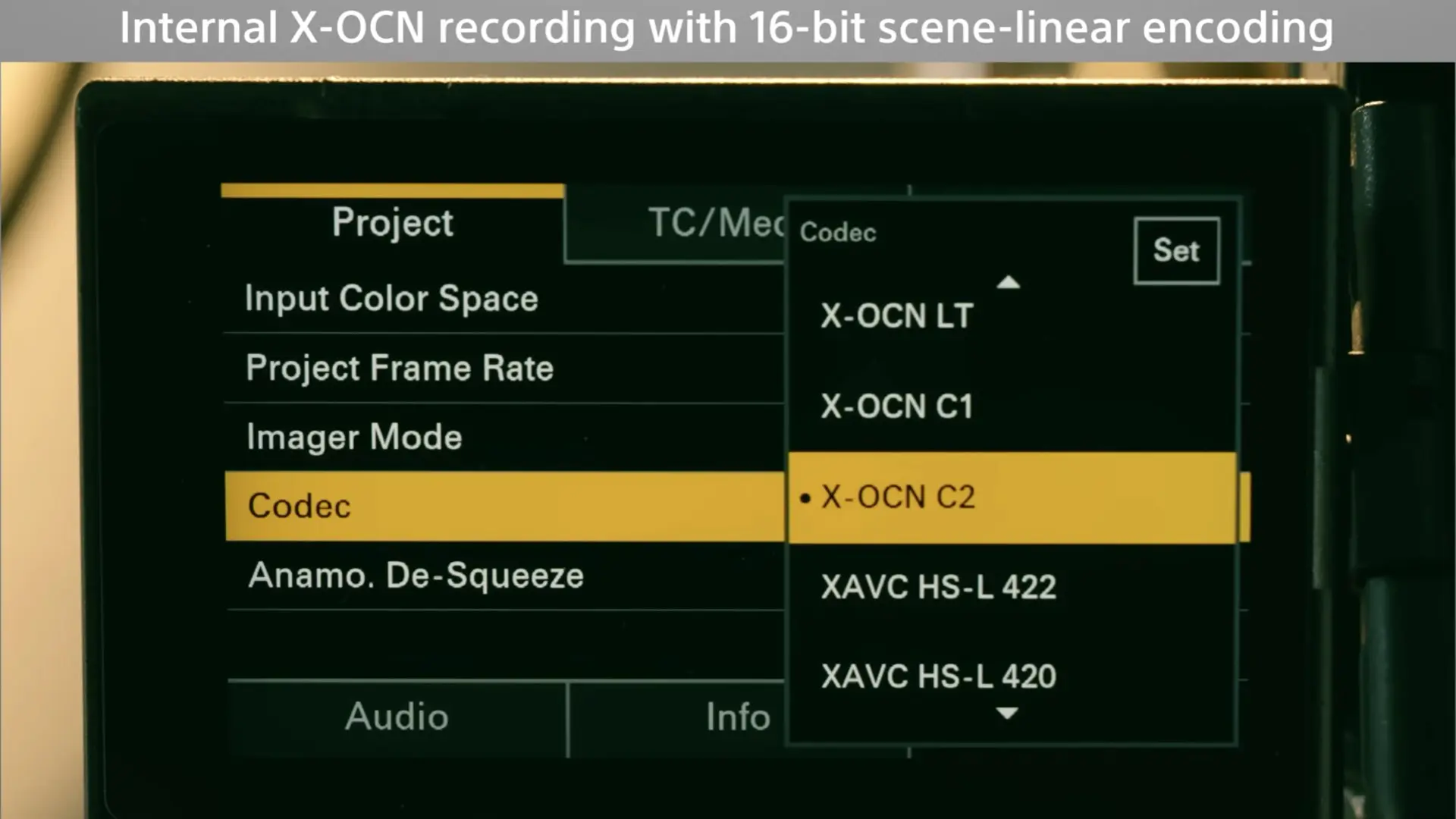
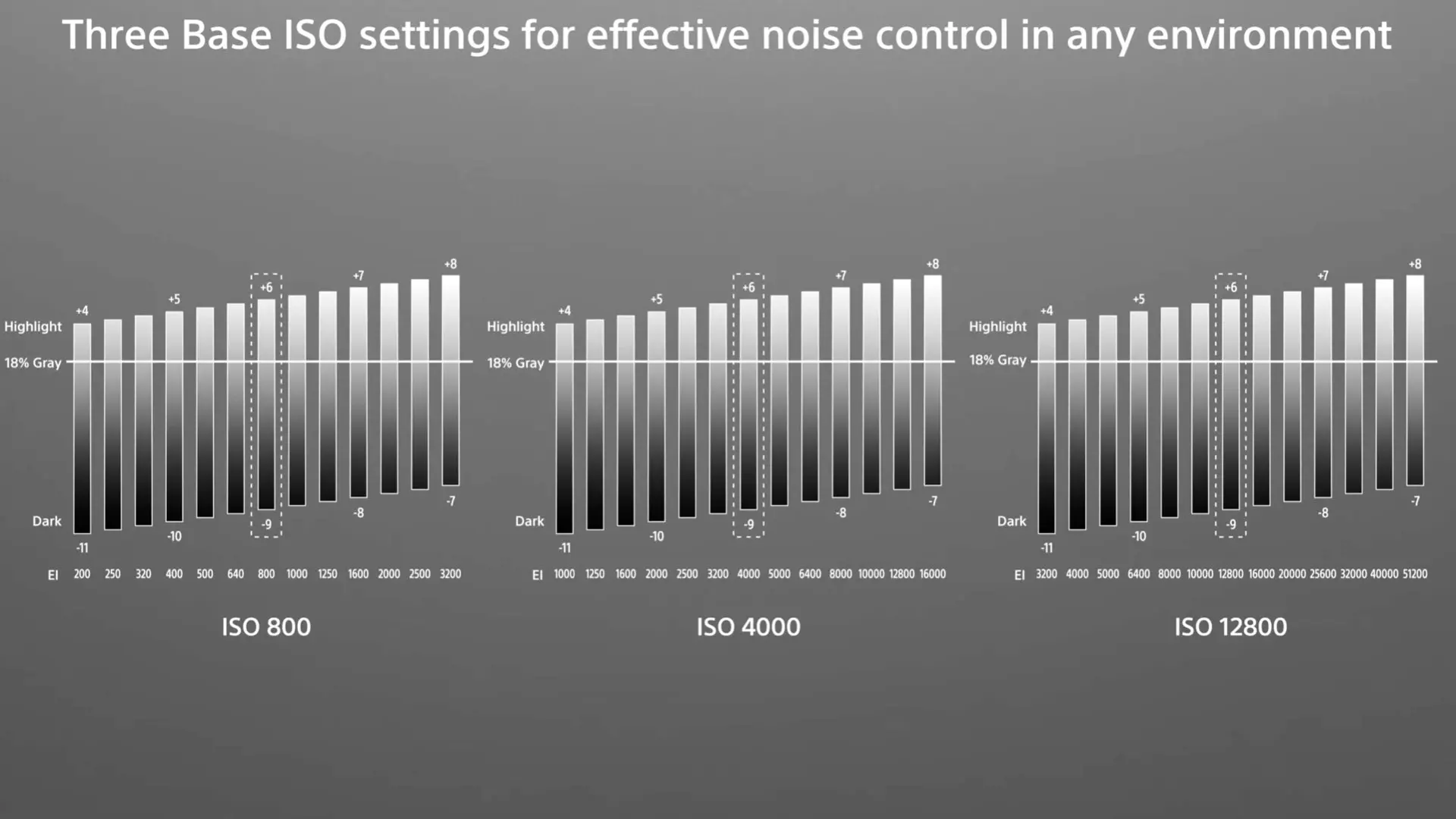
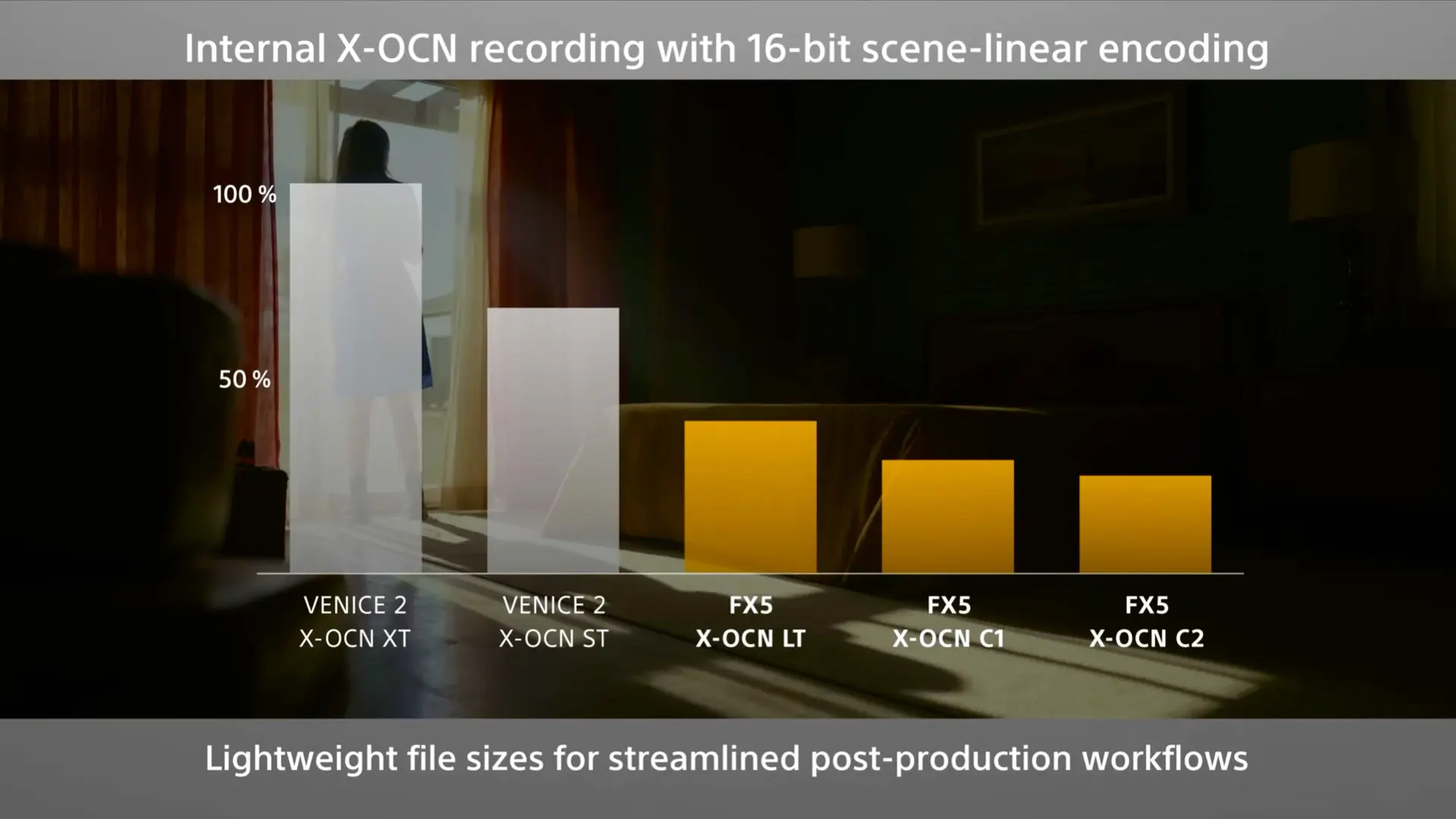
The FX5 is a new full-frame Cinema Line camera built around a newly developed fully stacked Exmor RS CMOS sensor and the latest BIONZ XR2 processor with a dedicated AI processing unit. Sony says the camera delivers 15+ stops of dynamic range in S-Log3, three base ISO settings of ISO 800, ISO 4000, and ISO 12800, and a new Dual Gain Shooting function, which appears for the first time in the FX series. But the headline feature is workflow. For the first time in the Cinema Line FX series, the FX5 supports Open Gate shooting and internal X-OCN recording. That means Sony’s proprietary 16-bit scene-linear RAW format is now available inside a compact FX body, without requiring an external recorder. The camera records in X-OCN LT, and also introduces X-OCN C1 and X-OCN C2, two compressed RAW options designed to reduce data size and speed up post-production workflows.
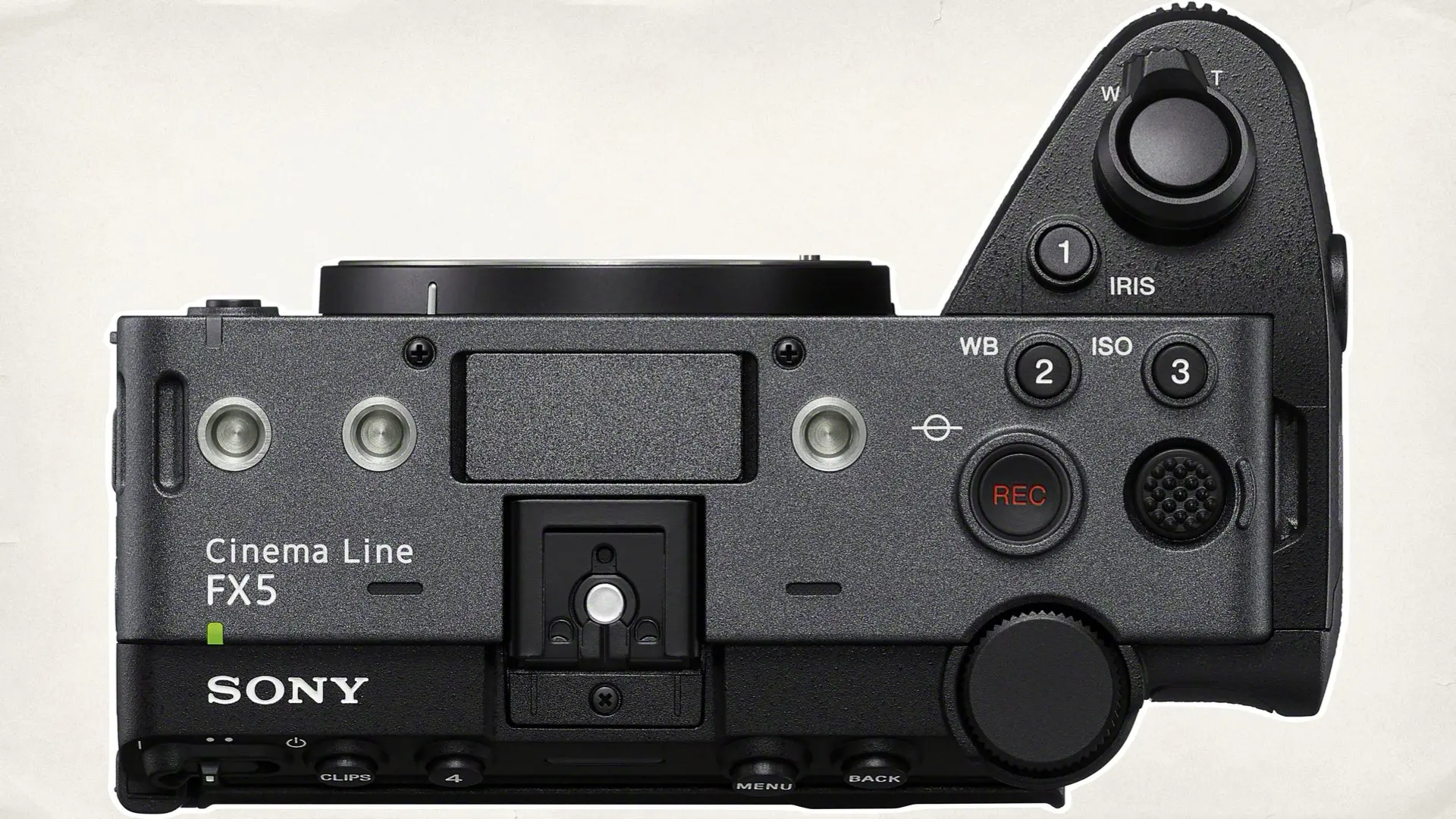
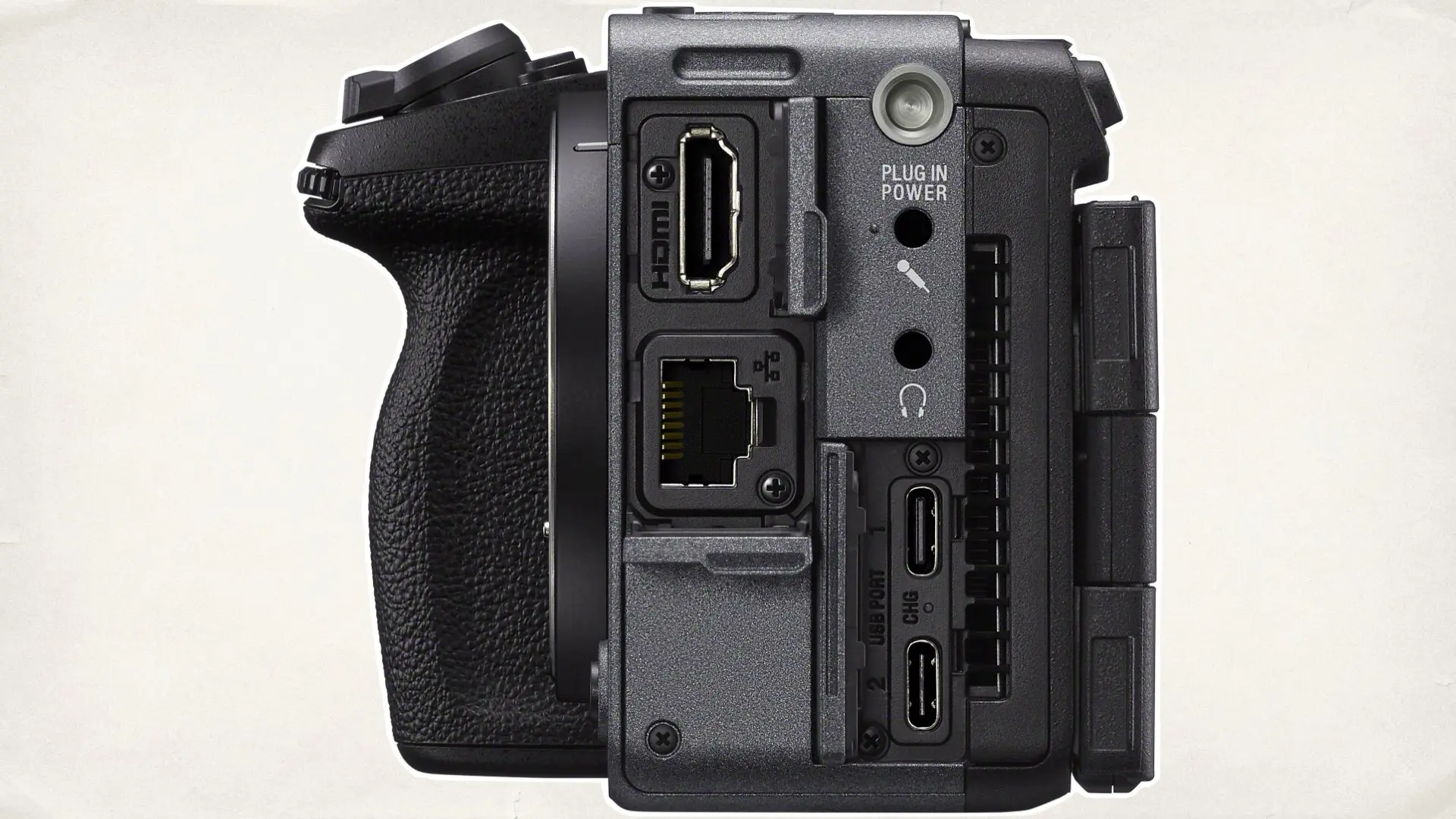
The successor to the mighty FX3
For years, the FX3 has been one of Sony’s most useful compact cinema cameras. It became popular because it is small, reliable, full-frame, gimbal-friendly, and easy to rig. But it still feels connected to the Alpha world. The FX5 goes further in the opposite direction. It is still compact, but Sony is clearly pushing it closer to a production camera. Sony’s own quote says it directly. Yang Cheng, Vice President of Imaging Solutions at Sony Electronics, said the FX5 builds on the FX3 and takes it “one step further” with VENICE 2 features, including internal RAW recording and Open Gate.
Open Gate: Only in X-OCN
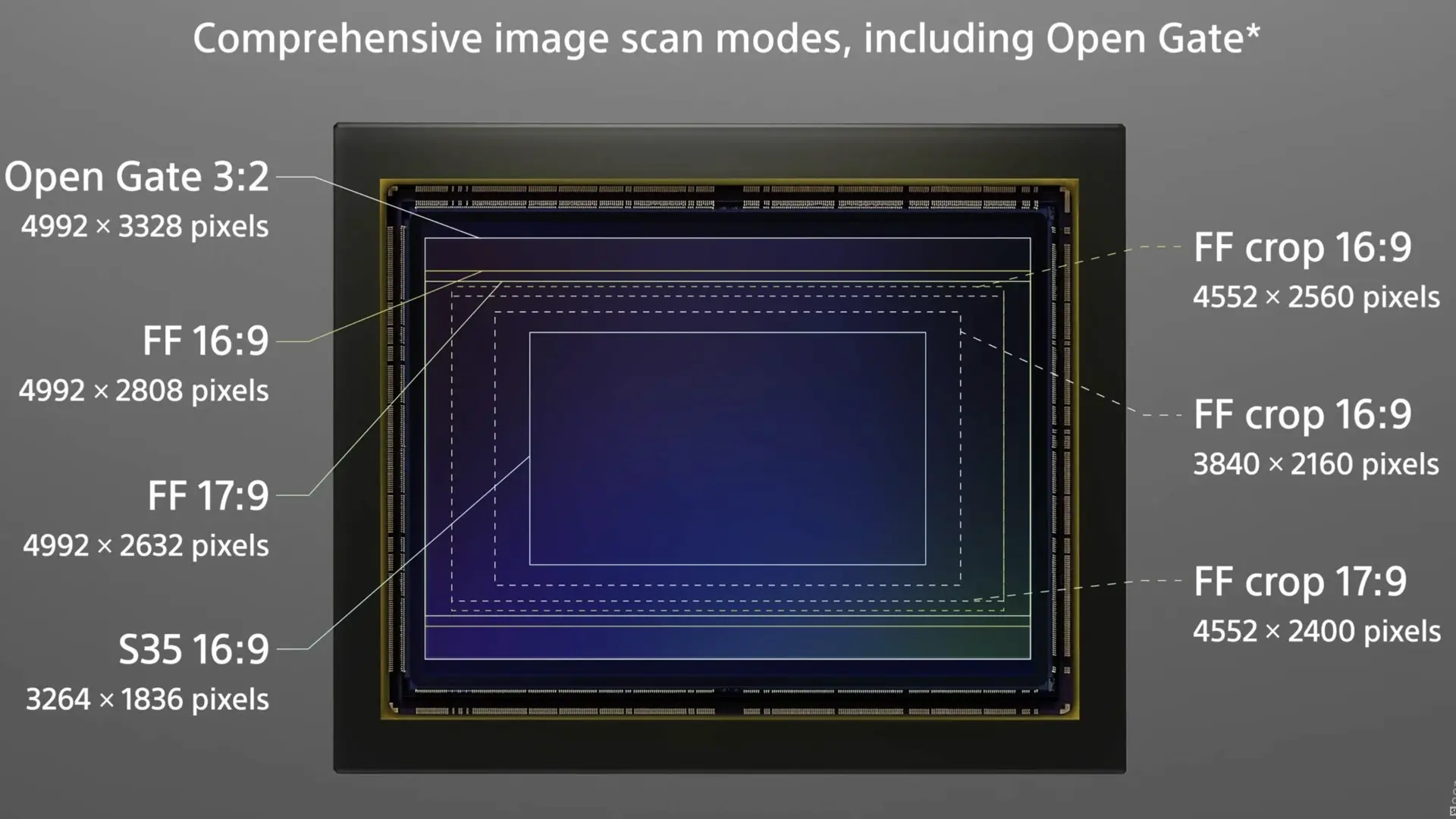
The FX5 records 5K up to 60 fps, 4K up to 120 fps, and Full HD up to 240 fps. It also supports 3:2 full-pixel readout across the entire sensor area, meaning Open Gate, alongside 17:9, 16:9, and Super 35mm scan modes. However, there is an important limitation: Sony’s footnote states that Open Gate is available only when recording in X-OCN. That makes the feature powerful, but not universal.
BIG6 CineAlta’s home screen
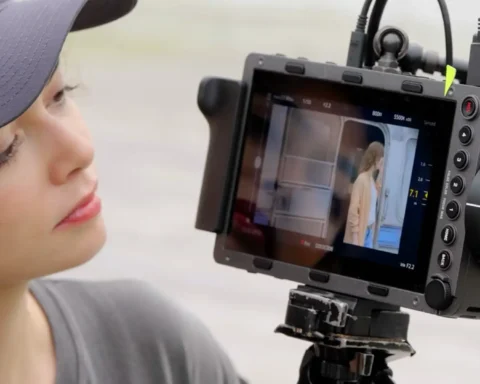
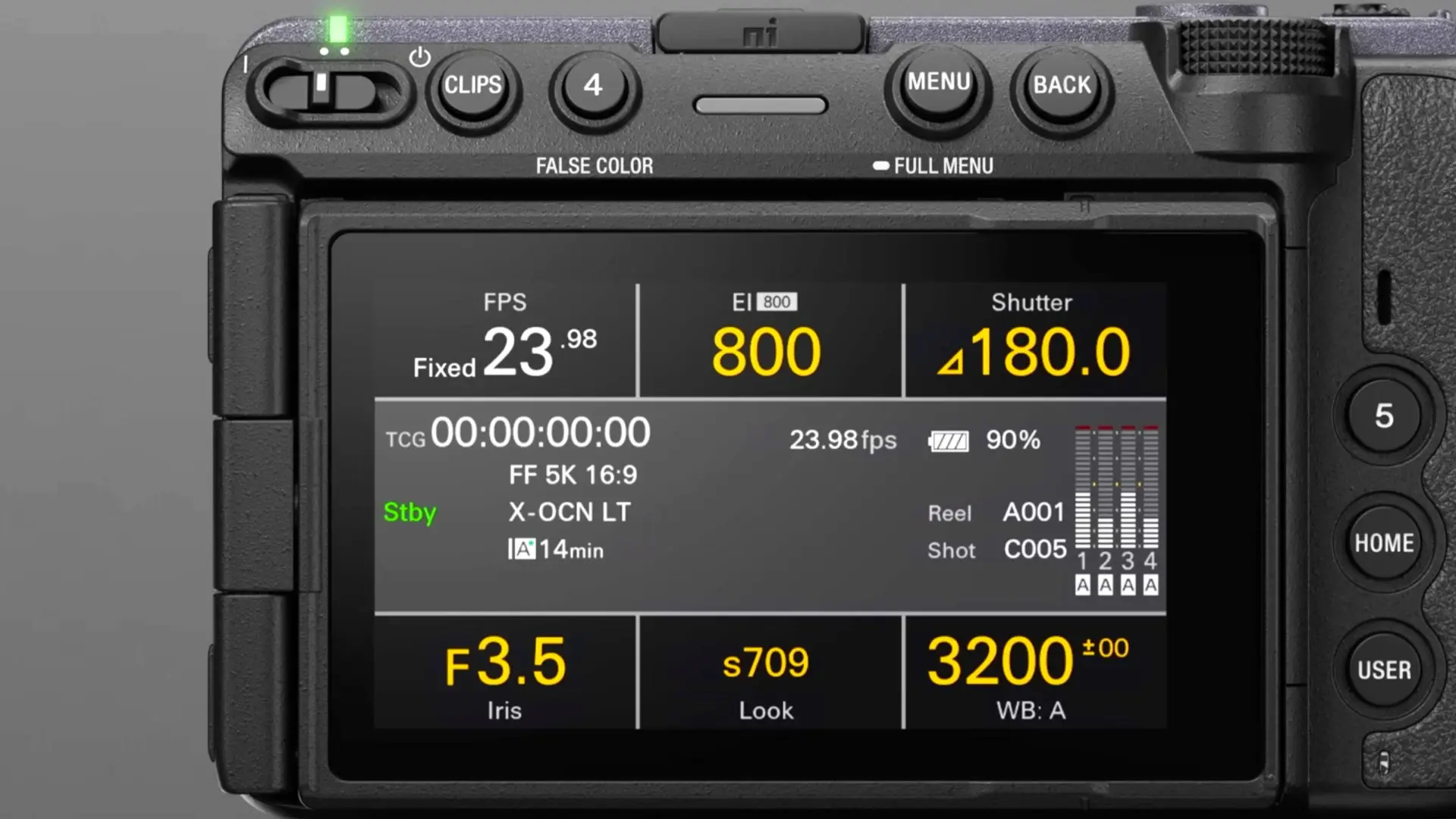
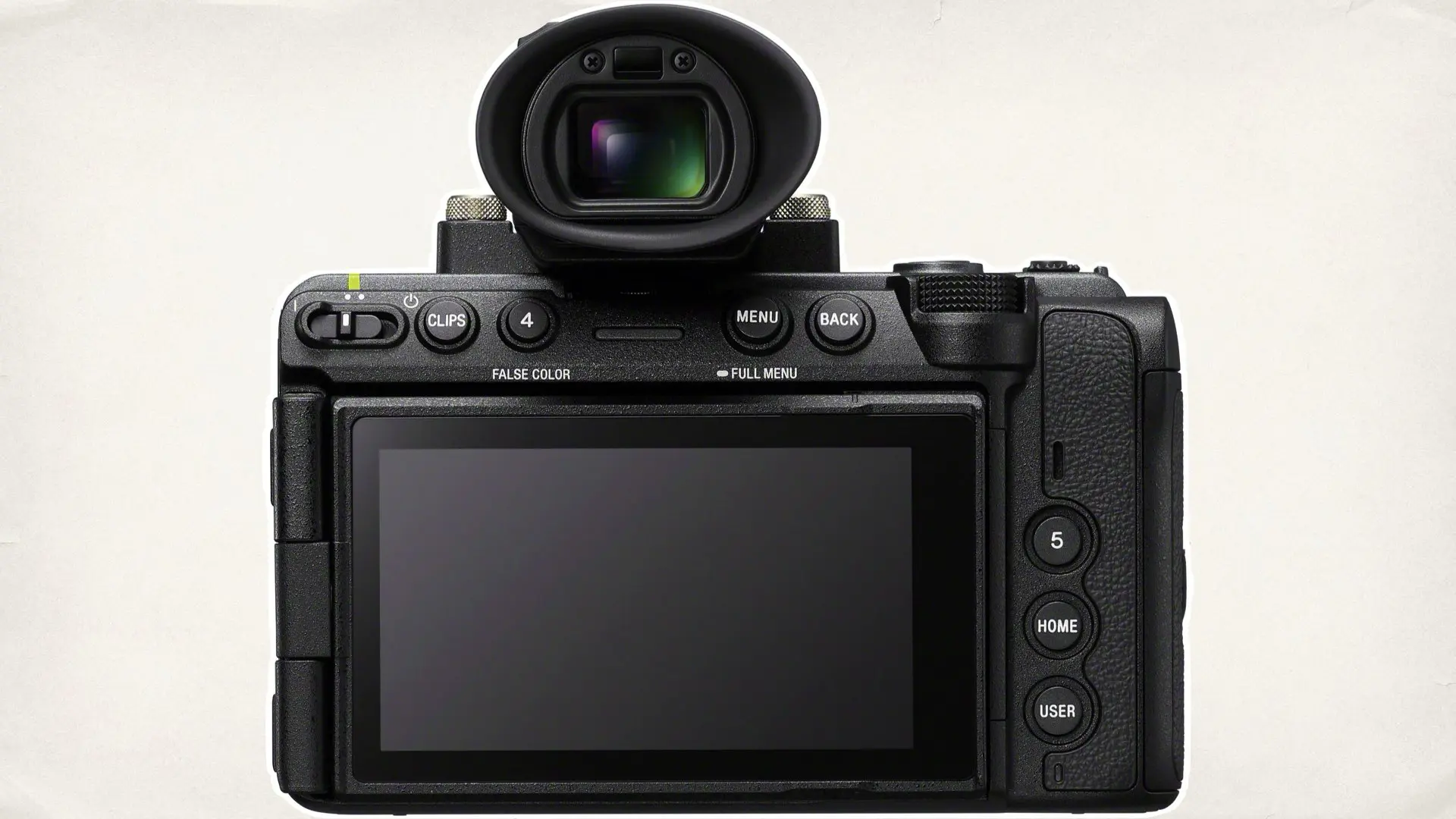
The operational side may be just as important. FX5 includes a 3.5-inch 16:9 touch-panel LCD with approximately 2.76 million dots, larger and brighter than the FX3’s screen. It is mounted on a four-axis multi-angle arm, tilts up and down, opens sideways, and displays shooting information around the image rather than over it. The camera also adopts the BIG6 home screen from CineAlta cameras, gathering key settings such as frame rate, exposure, and LUTs. That shows Sony is thinking about how this camera will be used on set.
The body
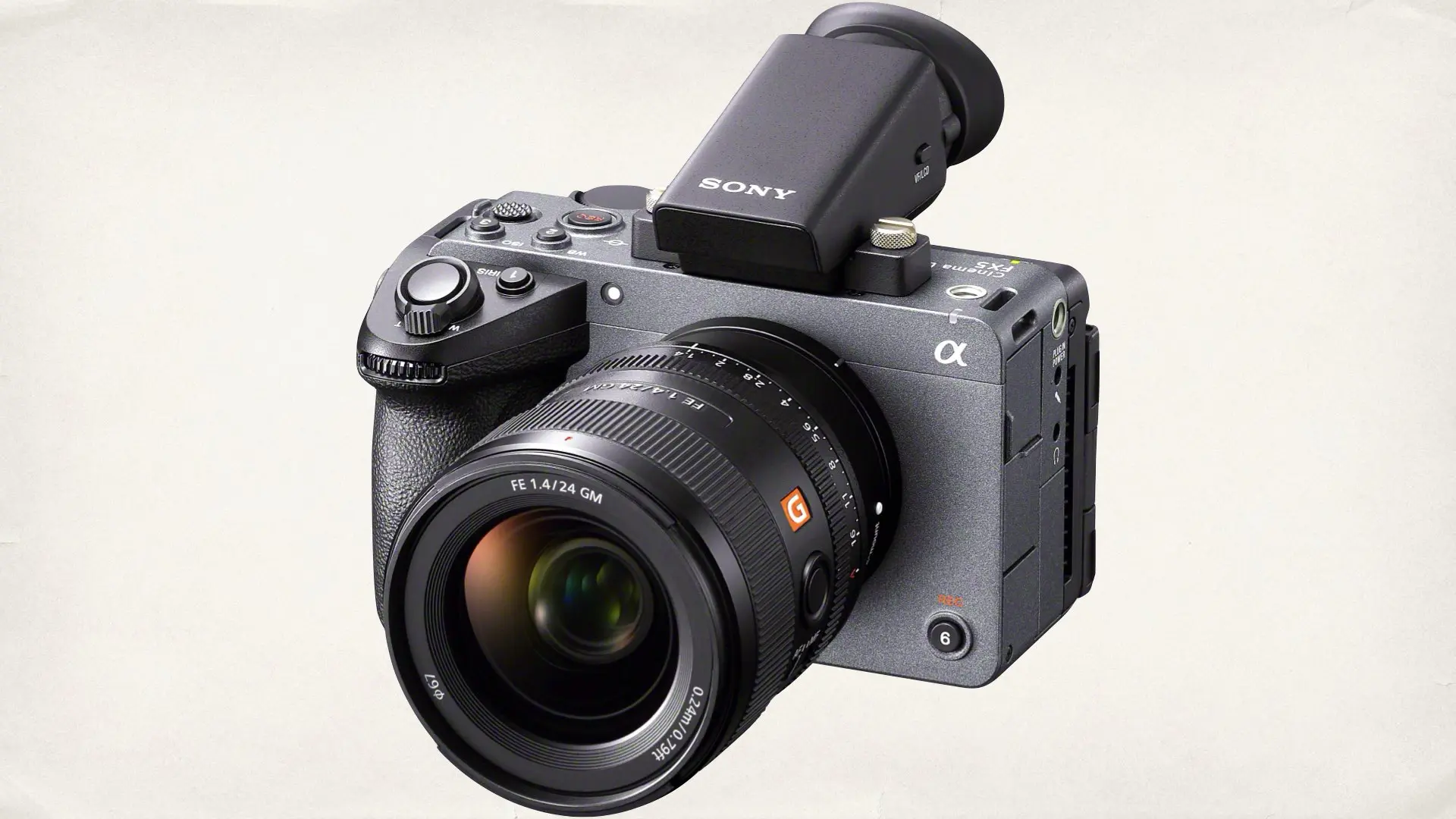
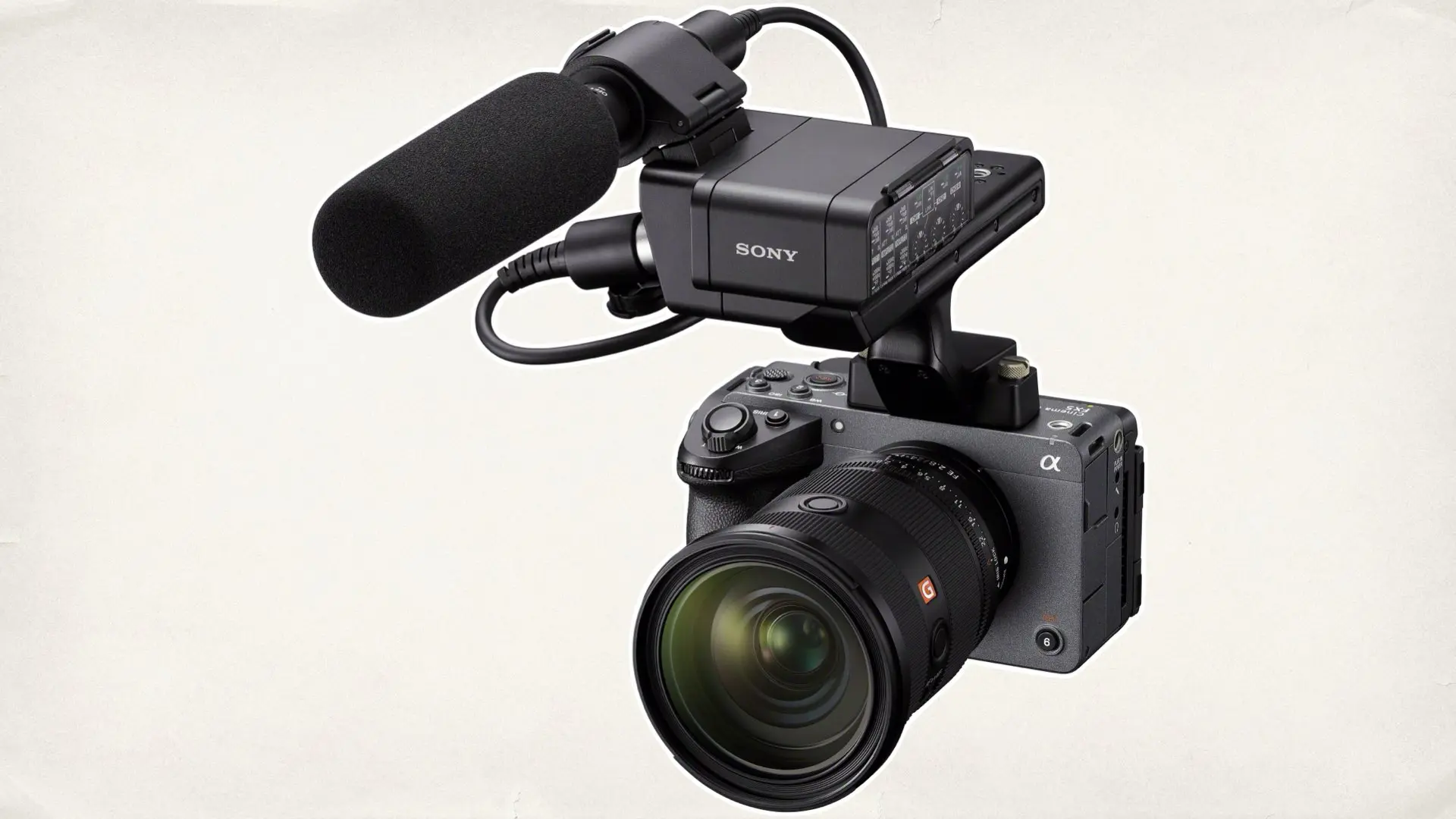
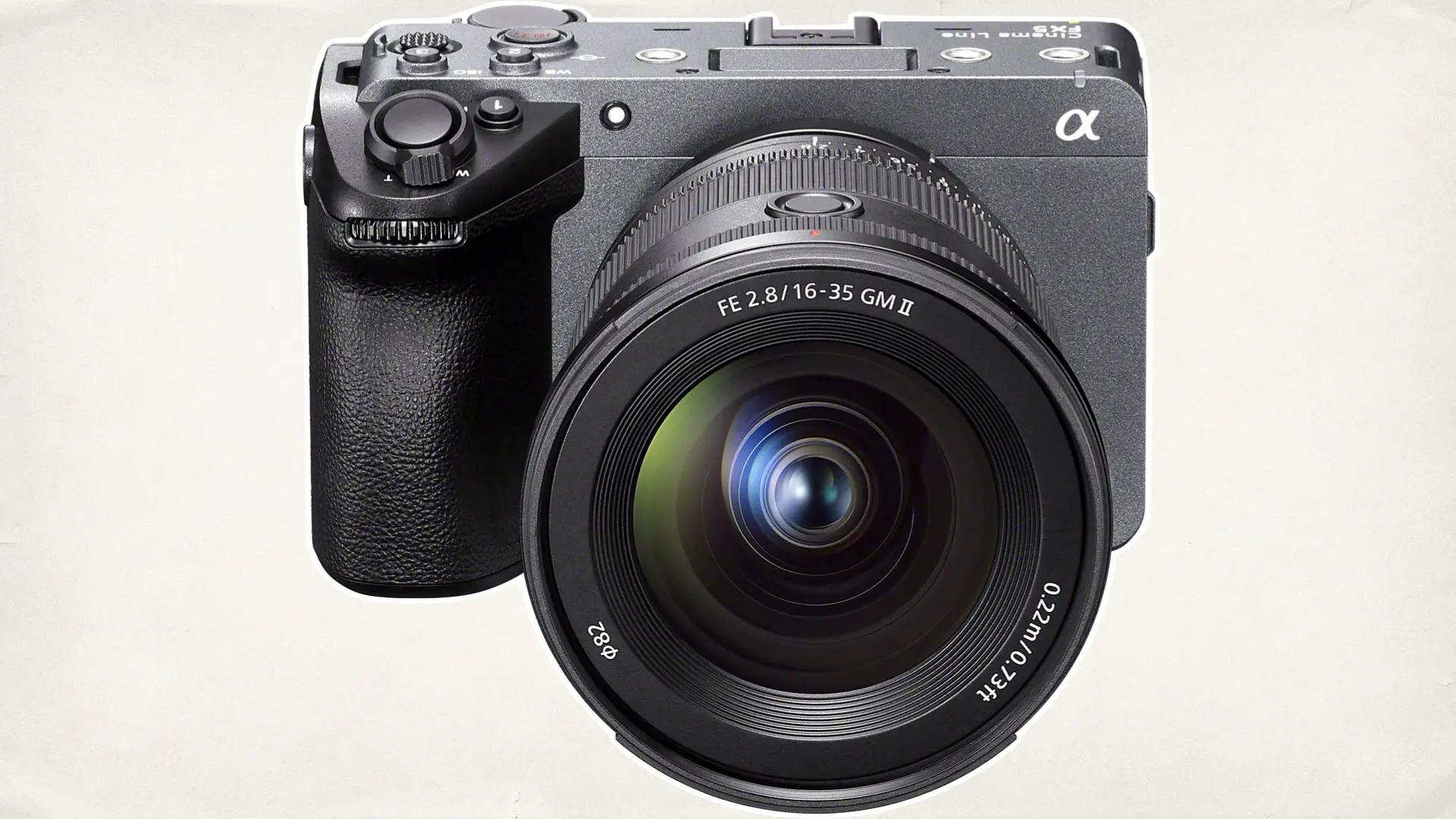
The body is compact and flat-topped, with multiple screw holes for mounting accessories directly without a cage. It includes a high-efficiency cooling fan in an independent air chamber, optimized heat dissipation, two USB-C ports, timecode input through an optional USB-C to BNC adapter, USB Power Delivery, wired LAN, and support for Sony’s Monitor & Control app. The FX5 also introduces a more modular accessory strategy. Sony is launching a detachable OLED viewfinder called DVF-EL1, with a 0.58-type 7.07-million-dot OLED panel, HDR display, DCI-P3-equivalent color gamut, 10-bit gradation, and 0 to 90-degree tilt. Sony is also releasing the XLR-H2 handle, with two XLR/TRS combo terminals, up to four-channel audio input, dual AD converters, and in-camera recording up to 96 kHz, 32-bit float.
How much?
In the U.S., the FX5 with XLR Handle Unit will be available in mid-August for $5,499.99. The FX5 body-only version, ILME-FX5B, will be available for $4,899.99. In Europe and the UK, Sony lists the FX5 with XLR Handle at €6,000 / £5,200, and the body-only model at €5,400 / £4,700. The DVF-EL1 viewfinder is listed at €750, the XLR-H2 handle at €900, and the VMC-BNCU1 timecode adapter cable at €100. That positions the FX5 clearly above the FX3, but below the territory of larger cinema bodies. It is not cheap. But it is also not priced like a niche high-end system. Sony seems to be aiming directly at working filmmakers who want a compact full-frame production camera with RAW, Open Gate, proper monitoring, stronger menus, and better rigging logic.
But where’s the internal ND?
Sony does not list built-in electronic variable ND in the FX5 press release. That means FX5 does not replace the FX6. This is an important distinction. The FX5 may borrow VENICE 2 workflow features, but it still avoids stepping directly into FX6 territory. So the cleanest way to understand the FX5 is this: It is not FX3 Mark II. It is not a mini FX6. It is not a baby VENICE. It is a compact Cinema Line camera with FX3 mobility and VENICE-inspired workflow. That may be exactly what Sony needed.
So what’s next?
There is also a future roadmap. Sony says a planned firmware update, version 2.0, is coming in 2027. It is expected to add high-frame-rate shooting up to 240 fps in X-OCN, XAVC S-I recording in 3:2 Open Gate, an optimized interface for vertical shooting, and a frame grab function. Some of the FX5’s most interesting workflow features will mature after launch. Sony has finally created a compact FX camera that moves beyond the Alpha-based cinema concept. The FX3 was the compact revolution. The FX5 is the production-focused evolution. And for Sony Cinema Line, that is a significant shift.
Gear mentioned in this article
Available on Amazon
Prices checked: Oct 7, 2026, 1:31 PM GMT+0000
As an Amazon Associate, Y.M.Cinema earns from qualifying purchases. If you buy through our links, we may earn a small commission at no extra cost to you.
Product prices and availability are accurate as of the date/time indicated and are subject to change. Any price and availability information displayed on Amazon.com at the time of purchase will apply to the purchase of this product.
CERTAIN CONTENT THAT APPEARS ON THIS SITE COMES FROM AMAZON. THIS CONTENT IS PROVIDED “AS IS” AND IS SUBJECT TO CHANGE OR REMOVAL AT ANY TIME.