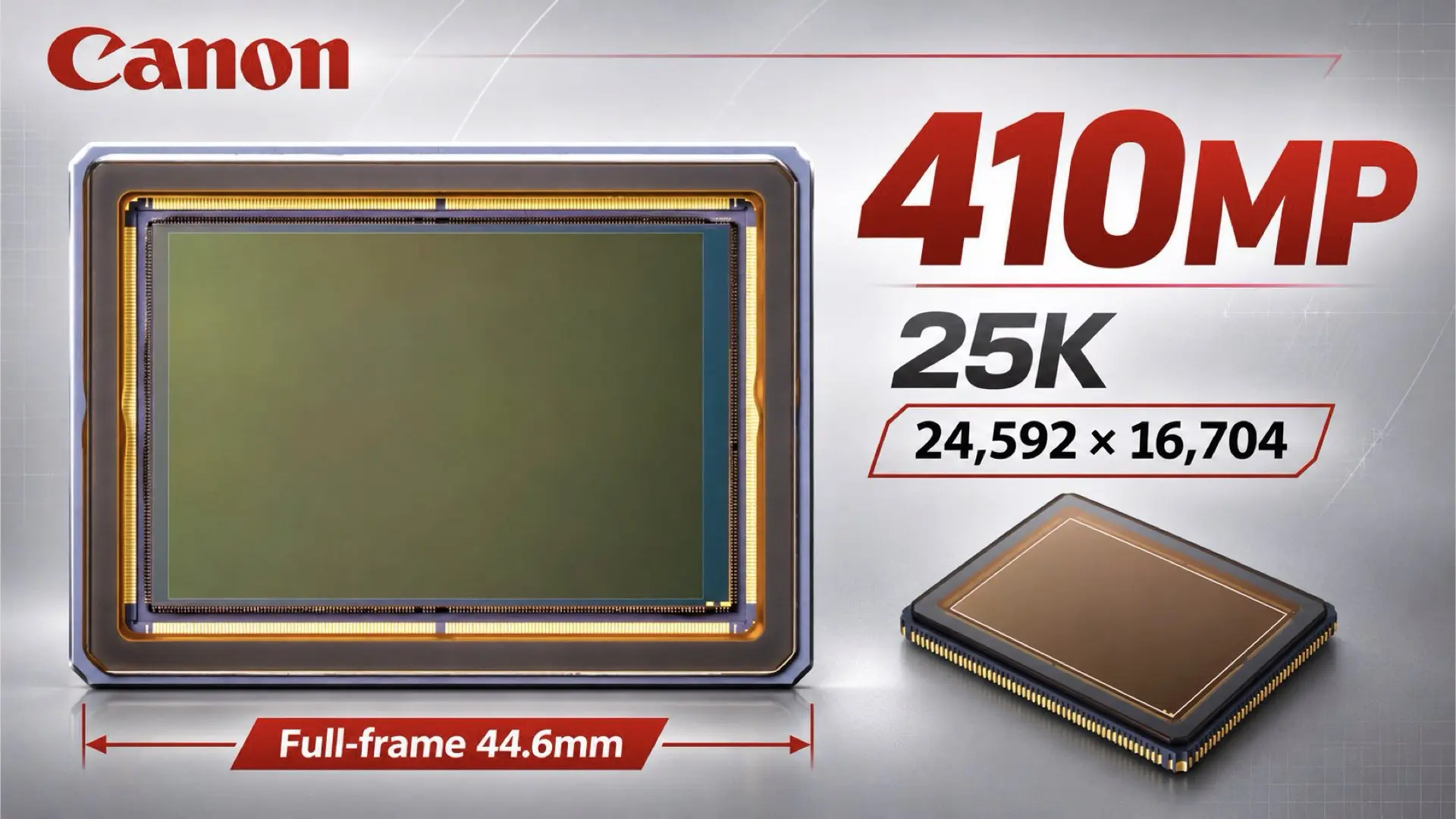
Canon’s extraordinary 410-megapixel full-frame CMOS sensor is taking another step toward commercialization. According to Canon’s distribution partner Macnica, engineering samples of the LI8030SA are now available, alongside complete evaluation systems ready to ship. The development marks another milestone for one of the highest-resolution full-frame sensors ever developed, bringing its 25K imaging capabilities closer to real-world industrial applications.
From technical demonstration to engineering samples
First announced in January 2025, Canon’s LI8030SA attracted considerable attention for packing approximately 410 million pixels into a conventional full-frame sensor. With a native resolution of 24,592 × 16,704 pixels, the device delivers nearly 25K horizontal resolution, far exceeding the pixel count of conventional professional cameras. Now, Macnica’s official product page states that engineering samples are available and complete evaluation systems are ready for shipment. This is an important development because it potentially allows external engineering teams to begin testing the sensor and designing imaging systems around its capabilities. However, Canon still classifies the LI8030SA as being under development. Macnica also invites prospective customers to inquire about sample availability and delivery schedules. Mass production has not been confirmed.

410MP and nearly 25K resolution on a full-frame sensor
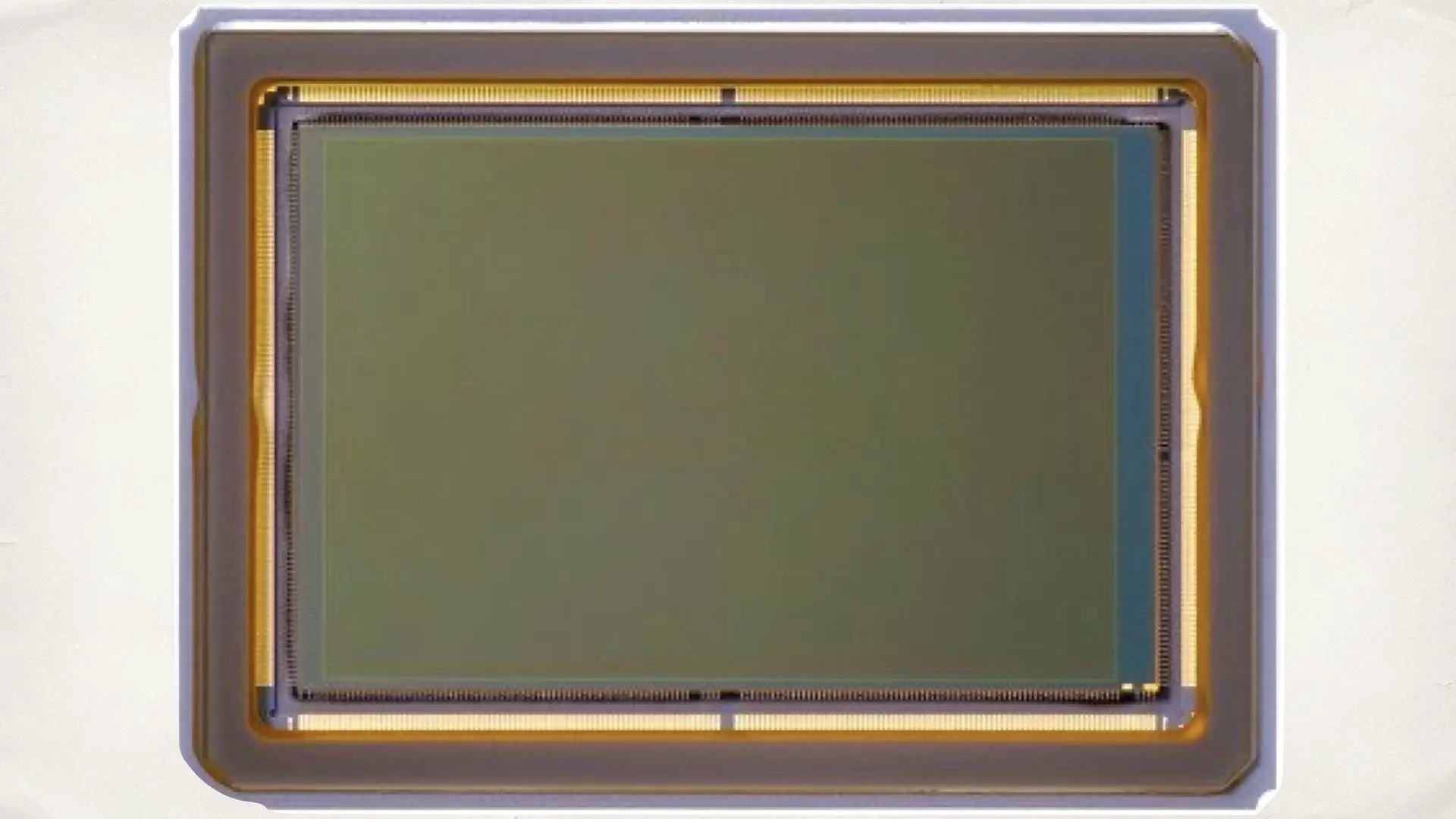
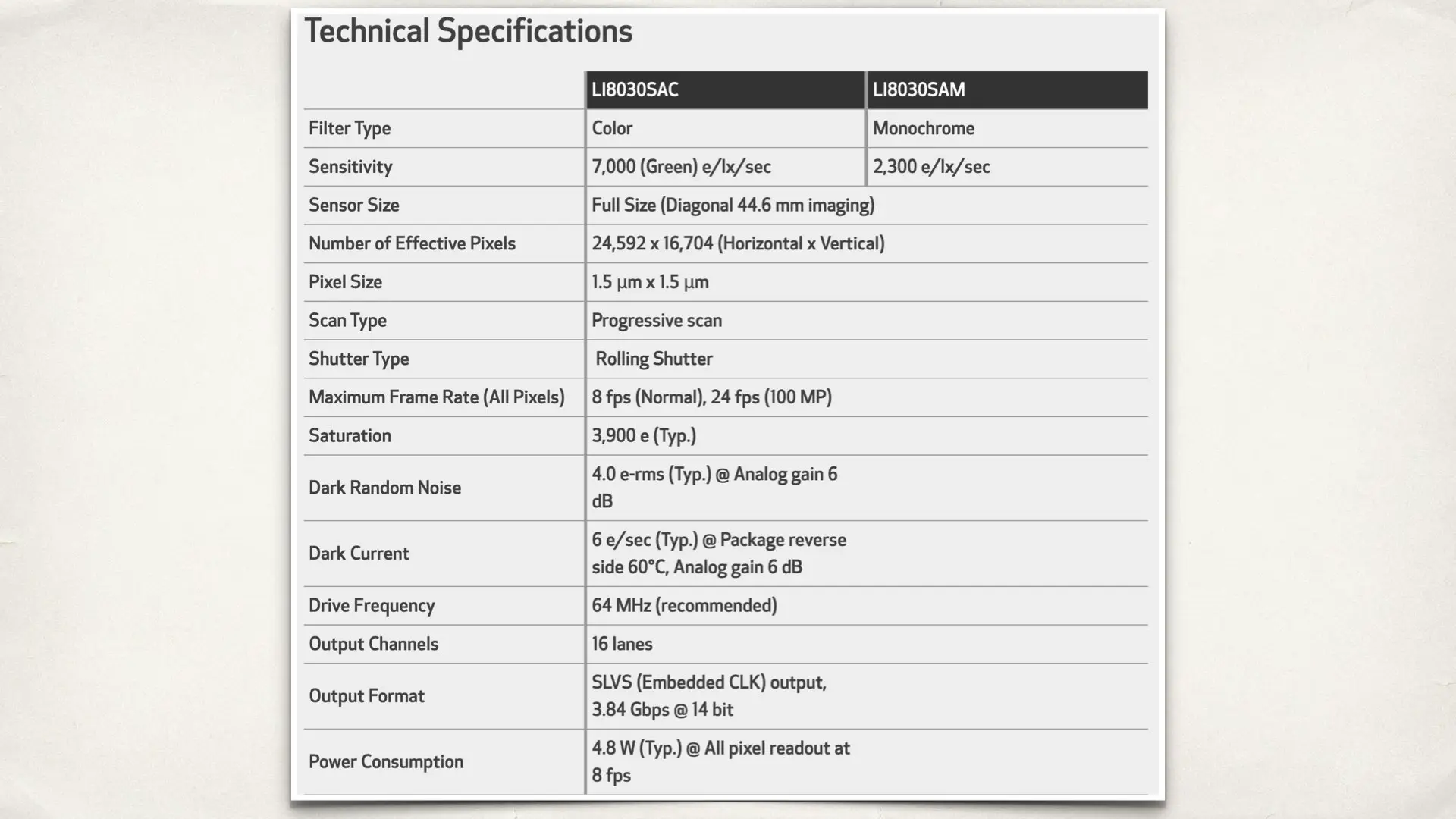
The LI8030SA is a back-illuminated, stacked CMOS sensor featuring 1.5μm pixels and a 44.6mm diagonal. Despite its enormous pixel count, Canon has managed to achieve full-resolution readout at 8 frames per second. The sensor’s published specifications include:
- Resolution: 24,592 × 16,704 pixels (approximately 410MP)
- Horizontal resolution: 24.6K, approaching 25K
- Format: Full-frame, 44.6mm diagonal
- Architecture: Back-illuminated stacked CMOS
- Pixel pitch: 1.5μm
- Shutter: Rolling shutter
- Maximum full-resolution frame rate: 8 fps
- Monochrome binning mode: 100MP at 24 fps
- Output: 14-bit, 16-lane SLVS interface
- Power consumption: Approximately 4.8W at full-resolution readout
At 8 fps, the sensor processes approximately 3.28 billion pixels every second. Handling this enormous volume of image data requires specialized processing hardware, interface design, and system integration.
Why Canon is targeting semiconductor manufacturing
Interestingly, Macnica is emphasizing an application that has little to do with conventional photography or cinematography: semiconductor inspection. As semiconductor packages become increasingly complex, manufacturers need to identify microscopic defects across large surfaces. The LI8030SA’s combination of enormous resolution and full-frame coverage potentially allows an inspection system to capture an entire wafer in a single image, reducing the need for multiple overlapping exposures. Macnica specifically identifies advanced semiconductor packaging, microscopic interconnects, and high-resolution automated inspection as promising applications. This illustrates the commercial value of extreme resolution. In industrial environments, additional pixels can translate directly into improved defect detection and more efficient inspection workflows.

What about cinema cameras?
As we explained in our previous article, Canon’s 410MP Flagship Sensor Is Not for Cinema, and That’s the Point, this sensor was never designed primarily for filmmaking. Its maximum full-resolution frame rate of 8 fps, rolling shutter architecture, and exceptionally small pixels make it fundamentally different from the sensors found in Canon’s Cinema EOS lineup. Even the 24 fps mode requires reducing the resolution to approximately 100MP through pixel binning and is available in the monochrome version. Nevertheless, the LI8030SA demonstrates Canon’s ability to manufacture extremely dense, high-throughput imaging sensors. The engineering knowledge developed through projects of this scale could eventually benefit future professional imaging systems, including cinema cameras.

The bottom line
The latest development is not a new camera announcement or confirmation of mass production. It is the availability of engineering samples and evaluation hardware for a sensor that has remained primarily an industrial technology showcase. Macnica’s announcement suggests that Canon’s 410MP flagship is progressing toward practical integration, although commercial deployment timelines remain unclear. For the imaging industry, the significance extends beyond the sensor’s nearly 25K resolution. It demonstrates how manufacturers are pushing CMOS technology into applications where enormous pixel counts, sensor density, and data throughput are becoming increasingly important.