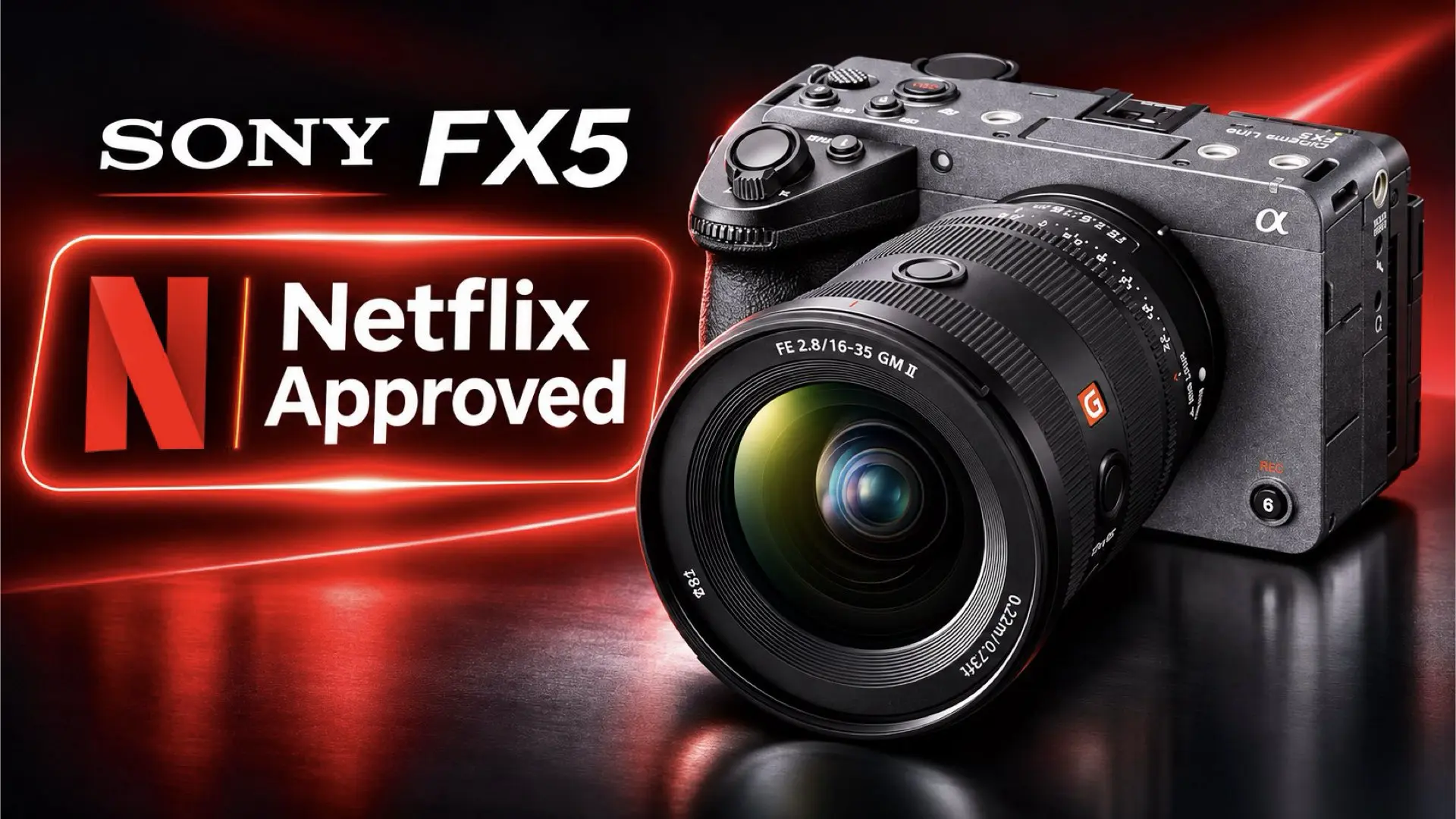
Netflix has added the Sony FX5 to its approved cinema cameras, accompanied by a dedicated six-page Camera Production Guide detailing the recommended settings for Netflix 4K Originals. Interestingly, Netflix prioritizes internal 16-bit X-OCN RAW recording and Sony’s Dual Gain technology. The guide also highlights several important considerations regarding Open Gate capture, sensor readout, stabilization, and high-speed cinematography. Let’s take a closer look.
Sony FX5: Netflix Approved
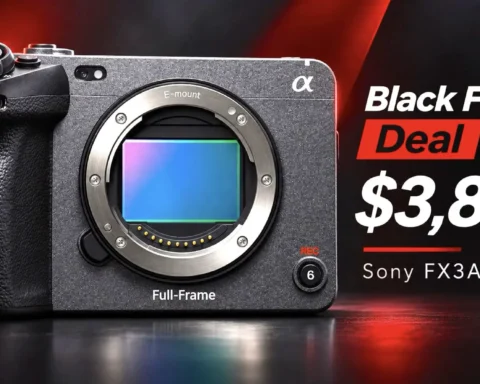
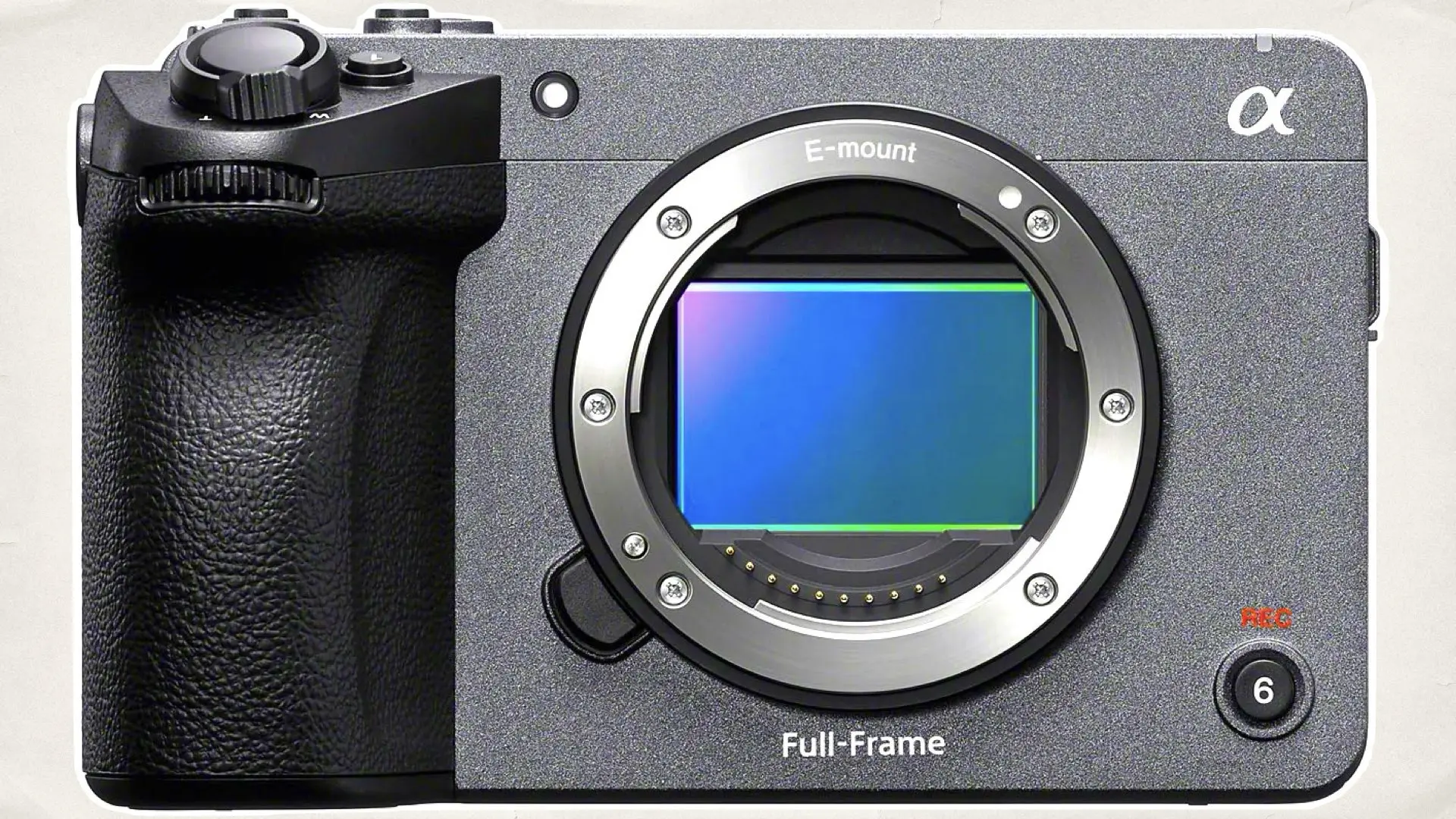
Sony’s latest addition to its Cinema Line joins the growing family of Netflix-approved Sony cinema cameras, including the FX3 ($3,999.95 on Amazon), FX6 ($7,300 on Amazon), FX9, BURANO, and VENICE. However, the FX5 brings a particularly interesting combination of imaging capabilities to this category: internal 16-bit RAW recording, full-frame 5K Open Gate acquisition, and Dual Gain sensor technology. These features bring certain elements of Sony’s high-end cinema imaging architecture into a considerably more compact camera system. Netflix’s dedicated production guide provides a detailed breakdown of how these capabilities should be utilized in professional productions.
Netflix recommends internal 16-bit X-OCN RAW
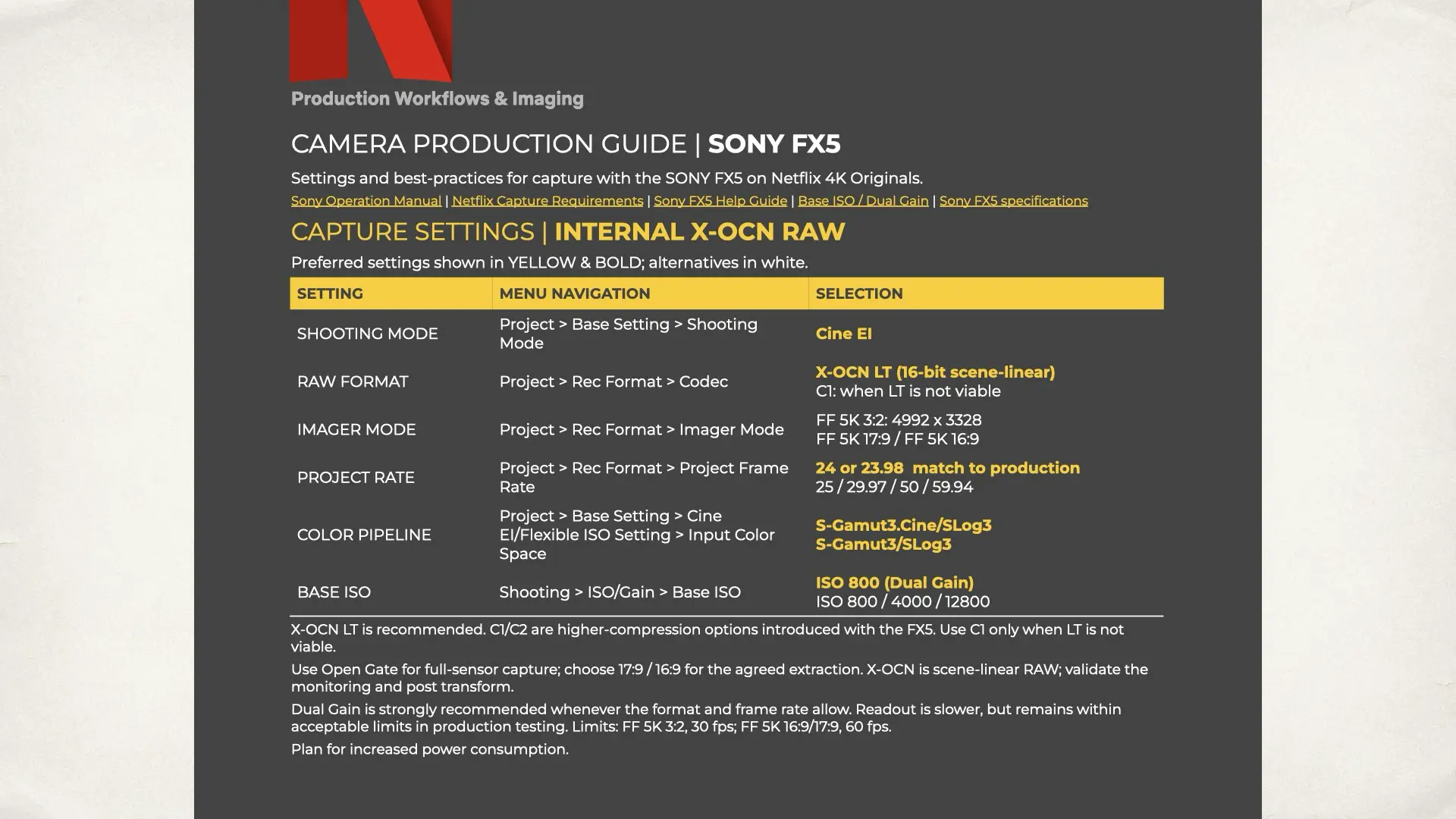
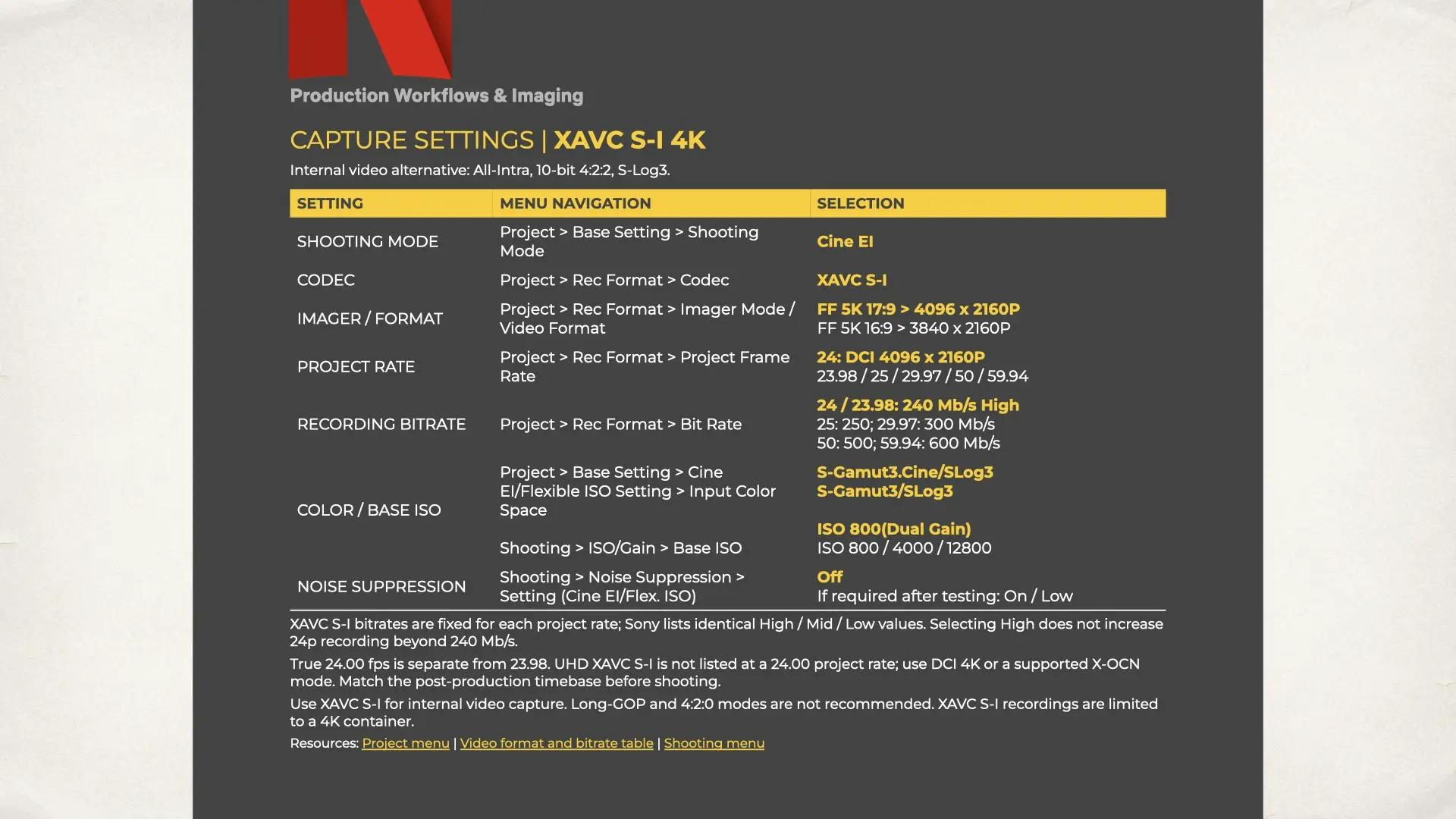
The most significant aspect of the production guide is Netflix’s preference for X-OCN LT, Sony’s 16-bit scene-linear compressed RAW format. The recommended capture configuration includes:
- Shooting mode: Cine EI
- Recording format: X-OCN LT
- Open Gate resolution: 4992 × 3328
- Sensor mode: Full-frame 5K 3:2, 17:9, or 16:9
- Project frame rate: 24 or 23.98 fps
- Color pipeline: S-Gamut3.Cine/S-Log3 or S-Gamut3/S-Log3
- Base ISO: 800 with Dual Gain
Netflix recommends using X-OCN C1 only when LT is not a practical option. Although the FX5 introduces both C1 and C2 as higher-compression X-OCN formats, C2 is not listed among the recommended capture settings. The preference for X-OCN LT reinforces the importance of preserving image information and maintaining flexibility throughout the post-production pipeline.
Dual Gain is strongly recommended
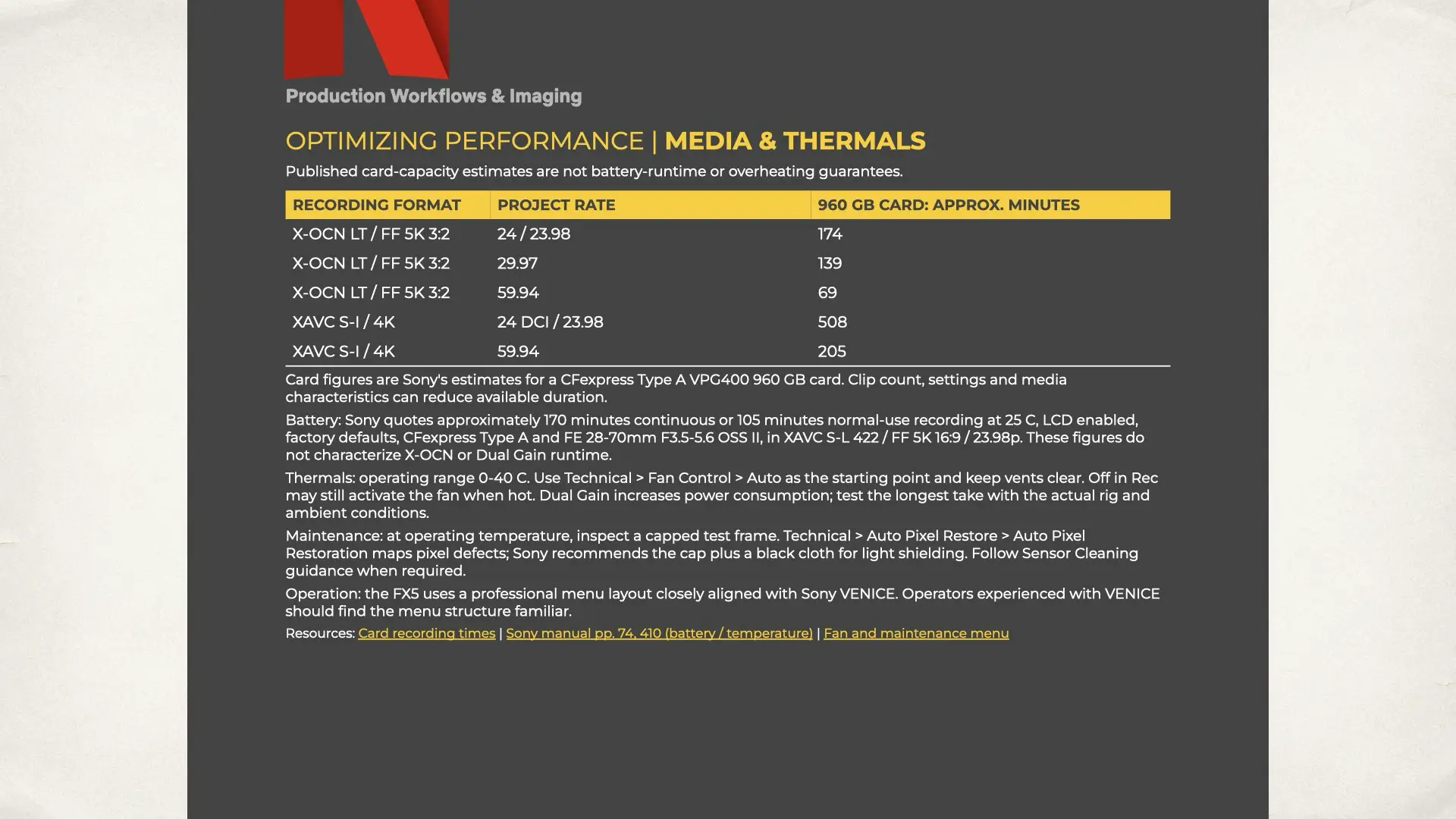
Perhaps the most interesting technical recommendation concerns Sony’s Dual Gain technology. Netflix strongly recommends enabling Dual Gain whenever the selected recording format and frame rate permit it. The guide acknowledges that Dual Gain results in slower sensor readout, although its performance remained within acceptable limits during production testing. The Dual Gain limitations are:
- Full-frame 5K Open Gate (3:2): Up to 30 fps
- Full-frame 5K 17:9 and 16:9: Up to 60 fps
Netflix also emphasizes the increased power consumption associated with Dual Gain operation. This is particularly relevant for cinematographers evaluating the balance between dynamic range, rolling shutter performance, high-speed acquisition, and battery endurance.
XAVC S-I is an alternative
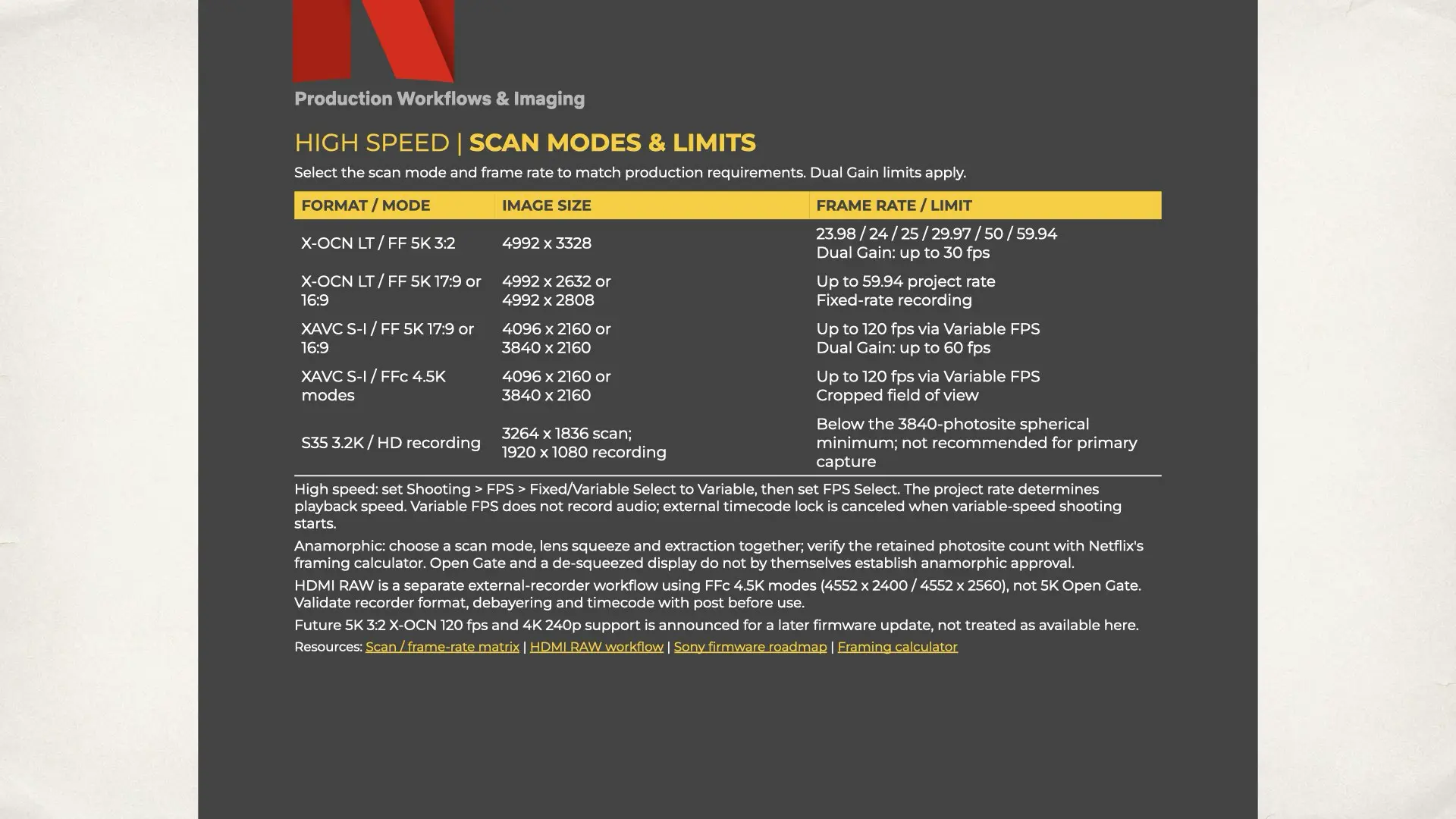
For productions that do not require RAW acquisition, Netflix also provides recommendations for internal 10-bit 4:2:2 All-Intra XAVC S-I recording. Both DCI 4K (4096 × 2160) and UHD (3840 × 2160) are supported under the appropriate settings. Recording bitrates range from 240 Mb/s at 24 fps to 600 Mb/s at 59.94 fps. Netflix does not recommend Long-GOP or 4:2:0 recording modes. Another important distinction is that XAVC S-I remains limited to a 4K recording container, whereas X-OCN enables full 5K acquisition.
Open Gate, anamorphic, and high-speed limitations
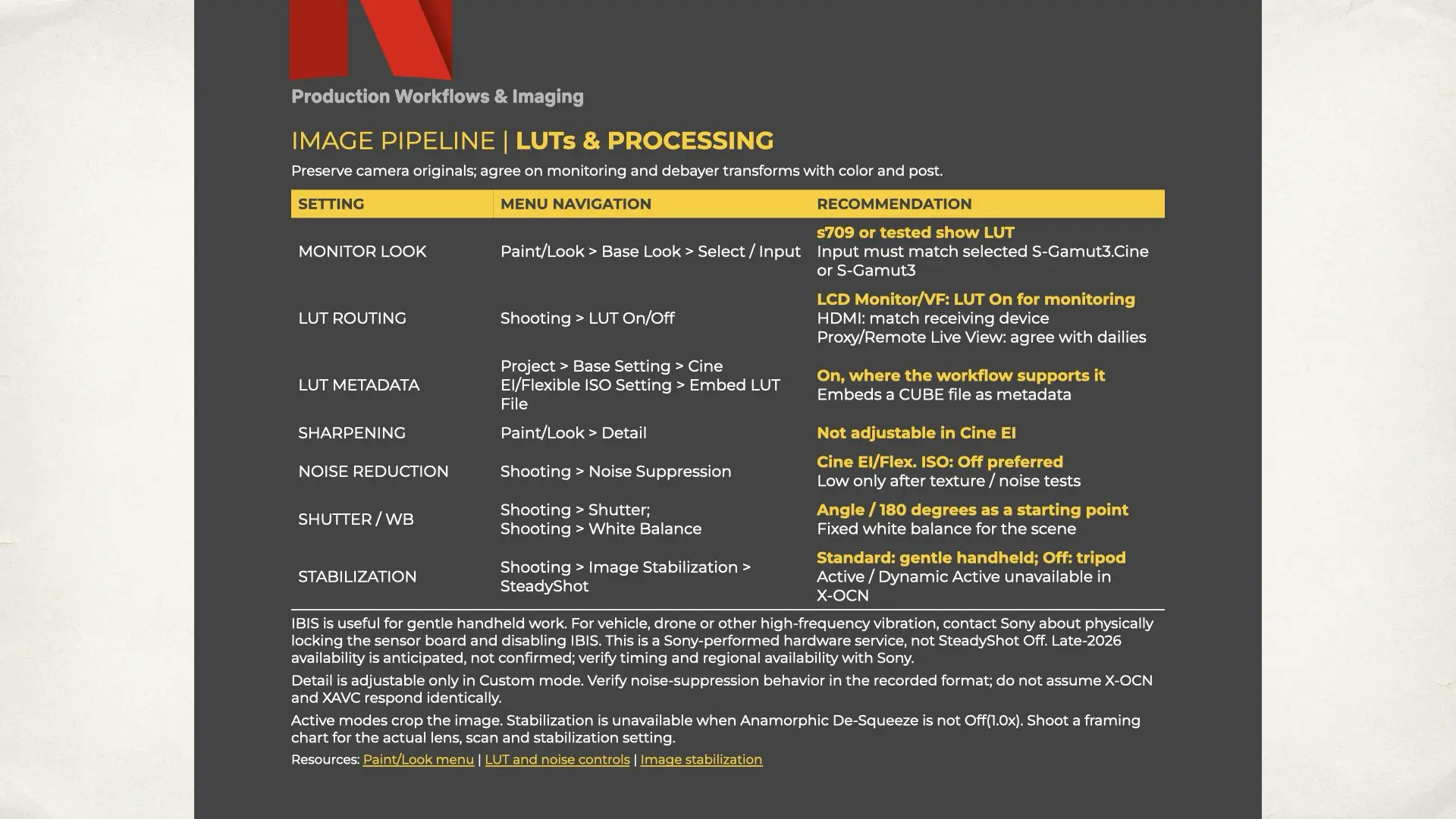
The production guide emphasizes that Open Gate capture does not automatically establish Netflix approval for every anamorphic configuration. Cinematographers must evaluate the sensor scan, lens squeeze factor, and final extraction to ensure that sufficient photosites are retained. Additionally, the FX5’s Super 35 3.2K scan falls below Netflix’s minimum horizontal photosite requirement for spherical primary capture. Internal XAVC S-I supports variable frame rates of up to 120 fps. However, the announced 5K Open Gate X-OCN recording at 120 fps and 4K recording at 240 fps are associated with a future firmware update and are not covered as currently available capabilities.
An interesting note regarding IBIS
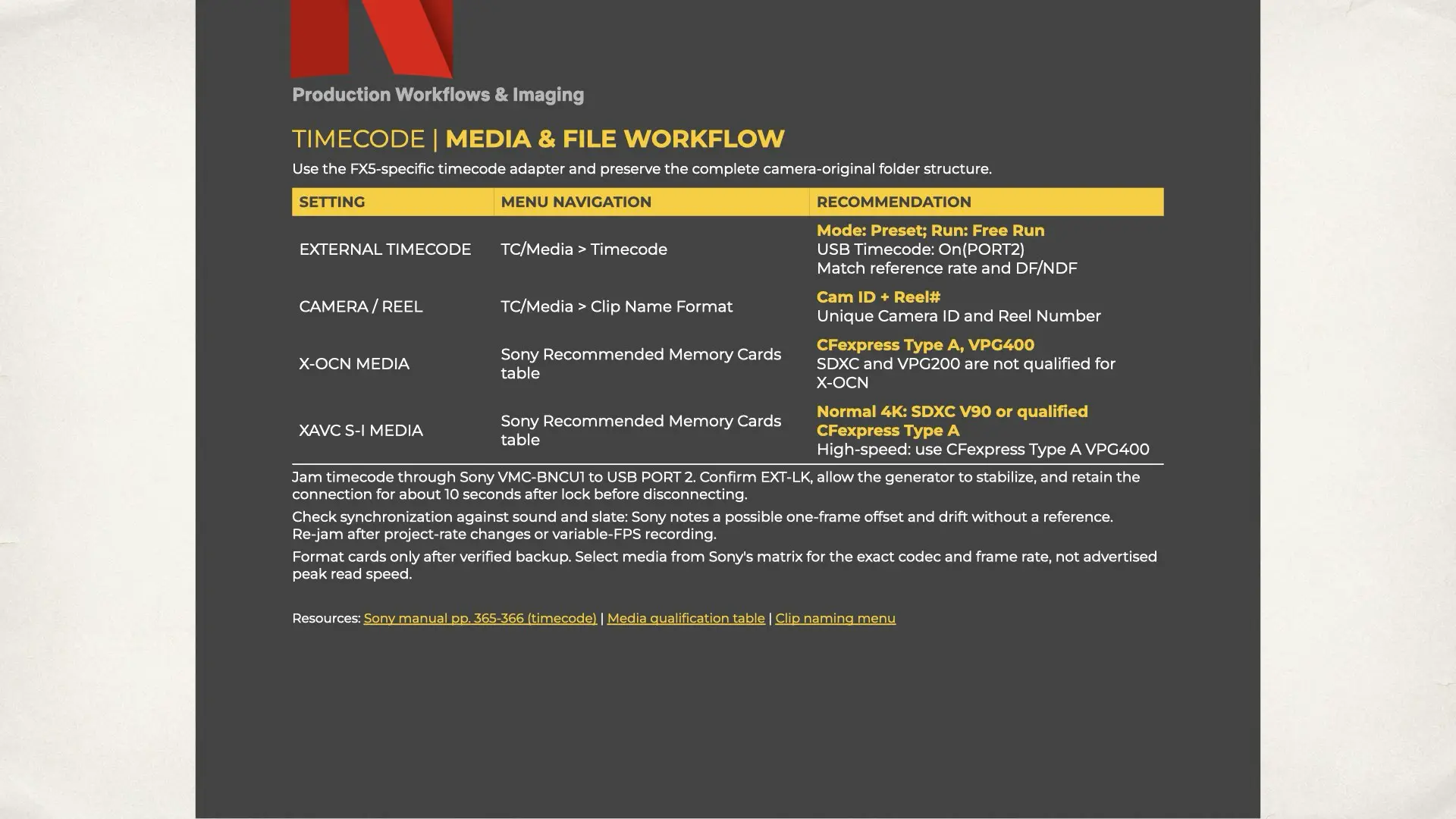
Netflix recommends standard in-body image stabilization for gentle handheld cinematography and disabling stabilization for tripod-mounted operation. However, for vehicle-mounted cinematography, drones, and other environments involving high-frequency vibrations, the guide advises contacting Sony regarding a hardware service that physically locks the sensor assembly. This is different from simply disabling IBIS through the camera menu. Availability of this service is anticipated for late 2026 but has not been confirmed in the guide.
Final thoughts
The Netflix approval of the Sony FX5 is not particularly surprising given the camera’s imaging architecture. Nevertheless, the production guide provides an interesting indication of how Netflix evaluates Sony’s latest Cinema Line technology. The preference for internal 16-bit X-OCN LT, full-frame Open Gate acquisition, and Dual Gain makes the FX5 a compelling addition to Sony’s professional cinema ecosystem. Rather than merely offering another Netflix-approved compact camera, the FX5 brings selected high-end cinema acquisition capabilities into a smaller production platform. For cinematographers already working with Sony VENICE and X-OCN workflows, that may be the most significant aspect of this approval.
Gear mentioned in this article
Available on Amazon
| Product | New | Renewed | Used |
|---|---|---|---|
| Sony FX3 | $3,999.95 | — | — |
Prices checked: Nov 25, 2026, 3:04 PM GMT+0000
As an Amazon Associate, Y.M.Cinema earns from qualifying purchases. If you buy through our links, we may earn a small commission at no extra cost to you.
Product prices and availability are accurate as of the date/time indicated and are subject to change. Any price and availability information displayed on Amazon.com at the time of purchase will apply to the purchase of this product.
CERTAIN CONTENT THAT APPEARS ON THIS SITE COMES FROM AMAZON. THIS CONTENT IS PROVIDED “AS IS” AND IS SUBJECT TO CHANGE OR REMOVAL AT ANY TIME.