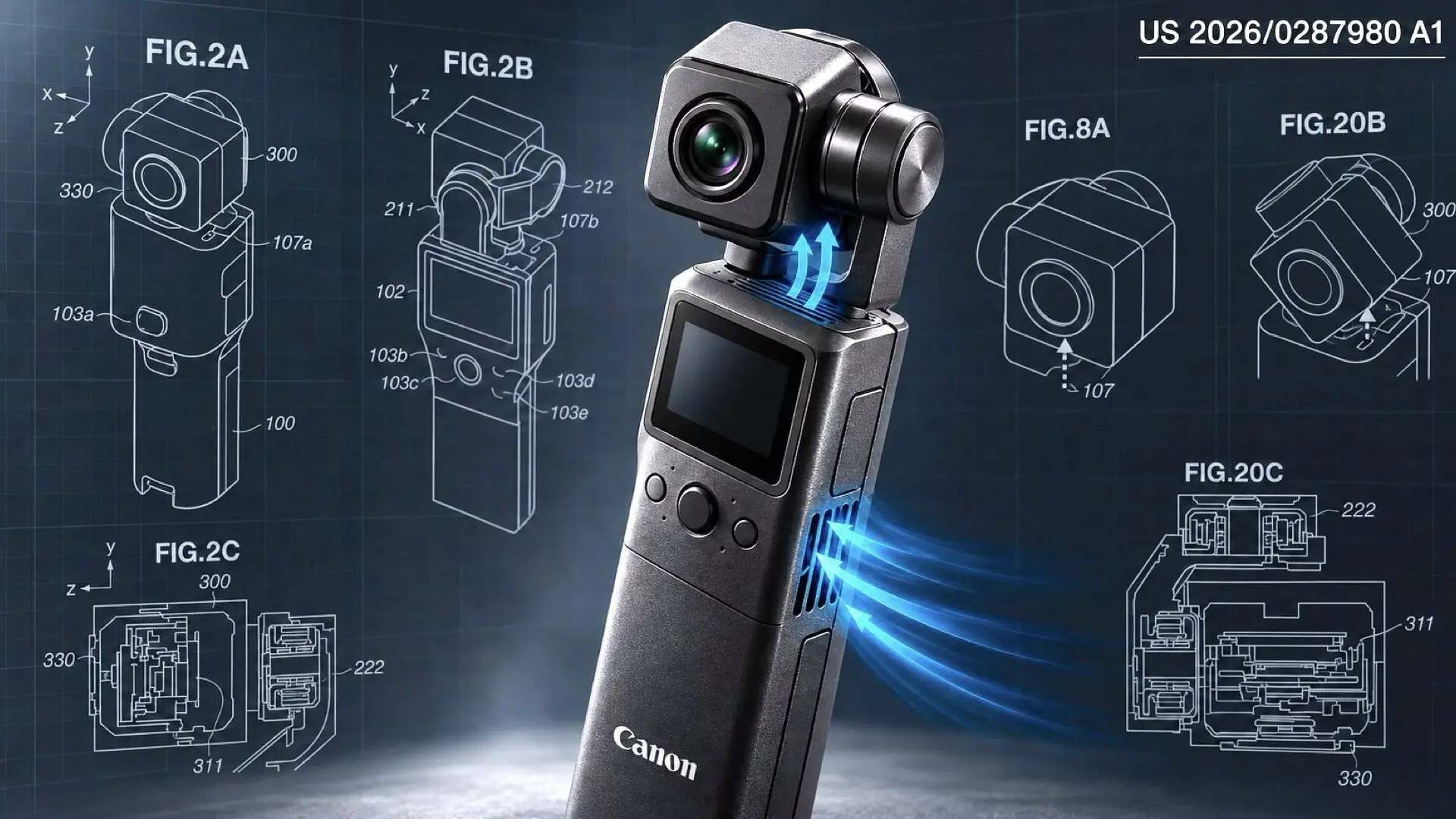
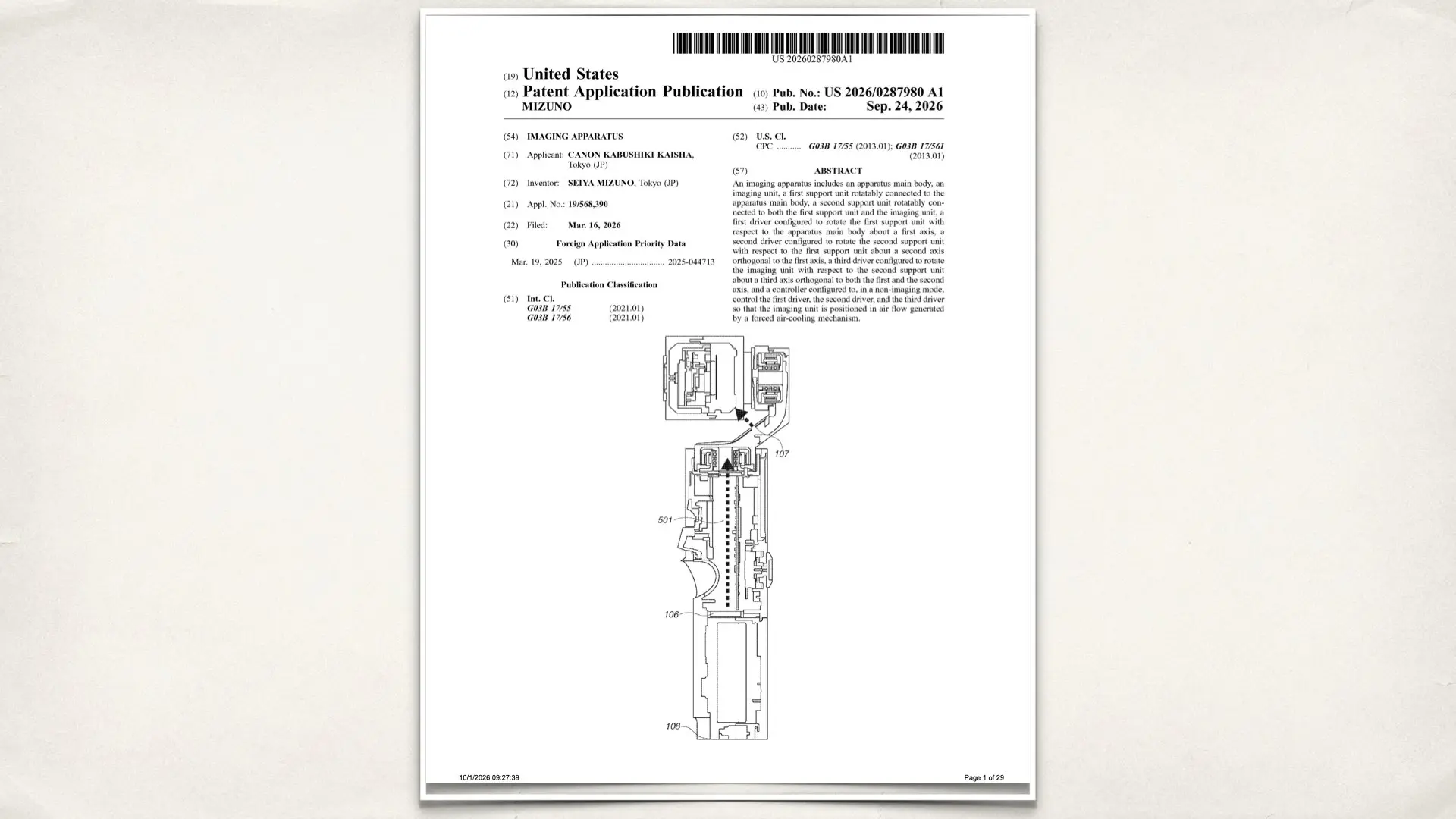
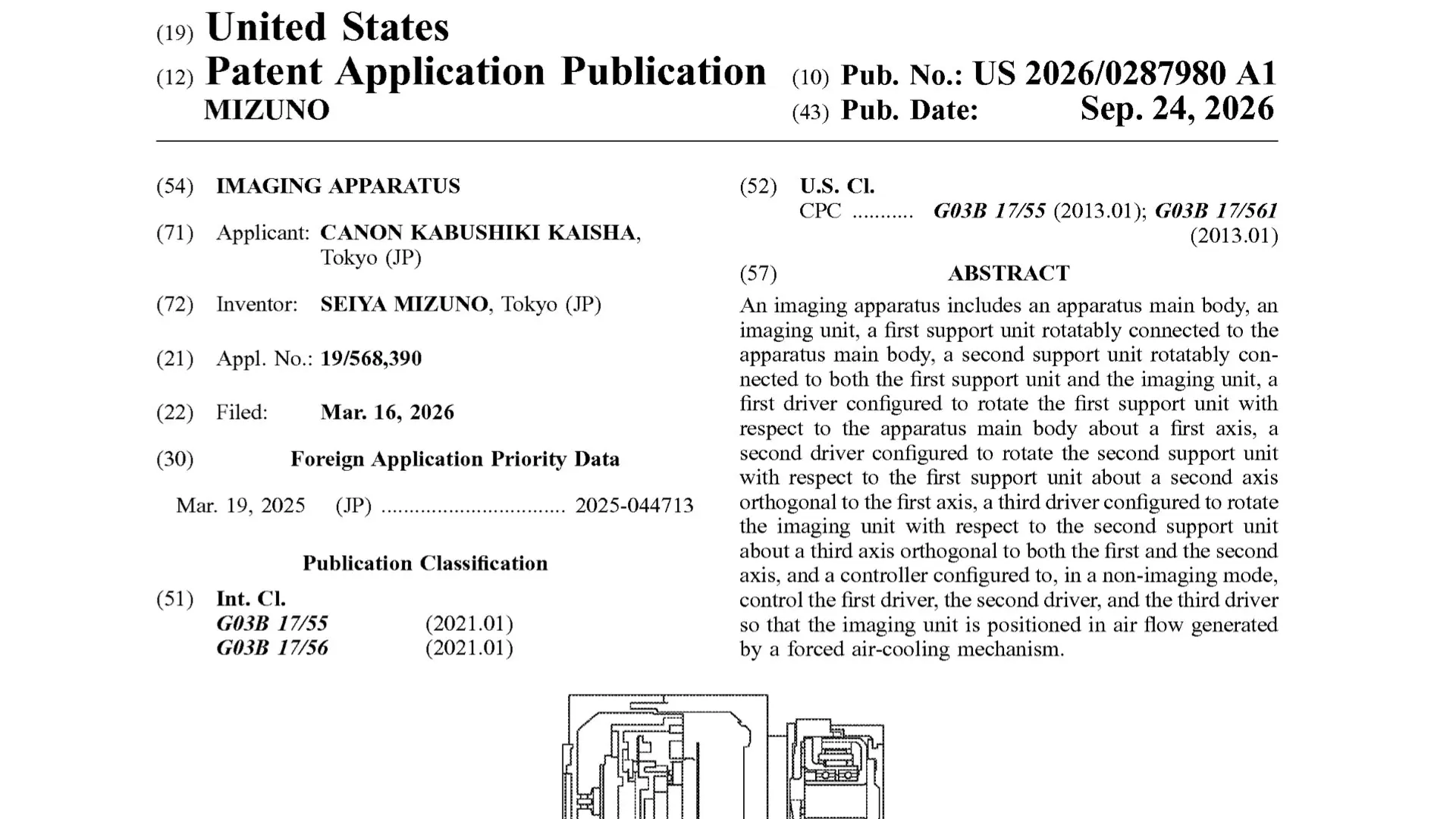
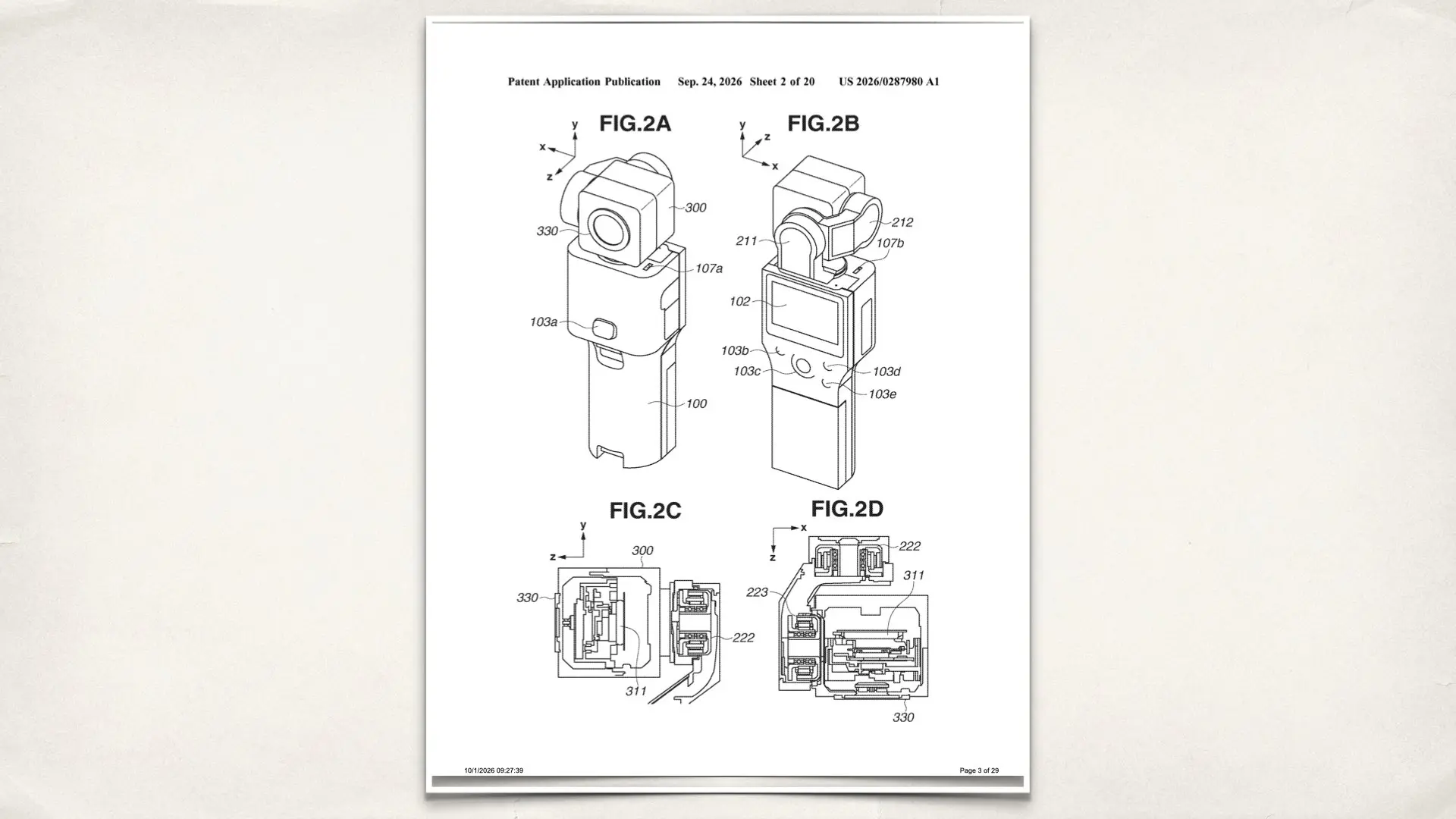
Canon appears to be continuing development around its unreleased handheld gimbal camera concept. A newly published patent application shows essentially the same compact camera architecture seen in previous Canon filings, but this time the focus is not subject tracking or automatic gimbal behavior. It is heat. The U.S. patent application, US 2026/0287980 A1, was published on September 24, 2026, and describes an “Imaging Apparatus” built around a camera unit mounted on a multi-axis gimbal. The drawings show the familiar handheld body with a small stabilized camera head above it, closely matching the design Canon has already explored in earlier patents.
The gimbal becomes part of the cooling system
The interesting part is how Canon proposes to manage heat inside such a compact body. Rather than treating the gimbal and cooling system as completely separate components, Canon describes a system in which the position of the camera head can influence airflow through the device. When the camera enters a non-imaging state, the system can check both the remaining battery level and the internal temperature. It can then adjust the gimbal position and control airflow according to those conditions. Figure 3 provides a straightforward flow: the camera detects whether it has entered a non-imaging mode, obtains battery and temperature information, performs gimbal control, and then adjusts airflow before returning to normal operation when imaging resumes. US_20260287980_A1_I That makes sense for this type of camera. A compact stabilized camera has very little internal space, while the imaging sensor, processor, display, motors and battery can all generate heat. Unlike a conventional camera body, however, Canon also has a movable camera module sitting directly above the main chassis. The patent explores using that mechanical movement as part of the thermal-management strategy.
Moving the camera head to improve airflow
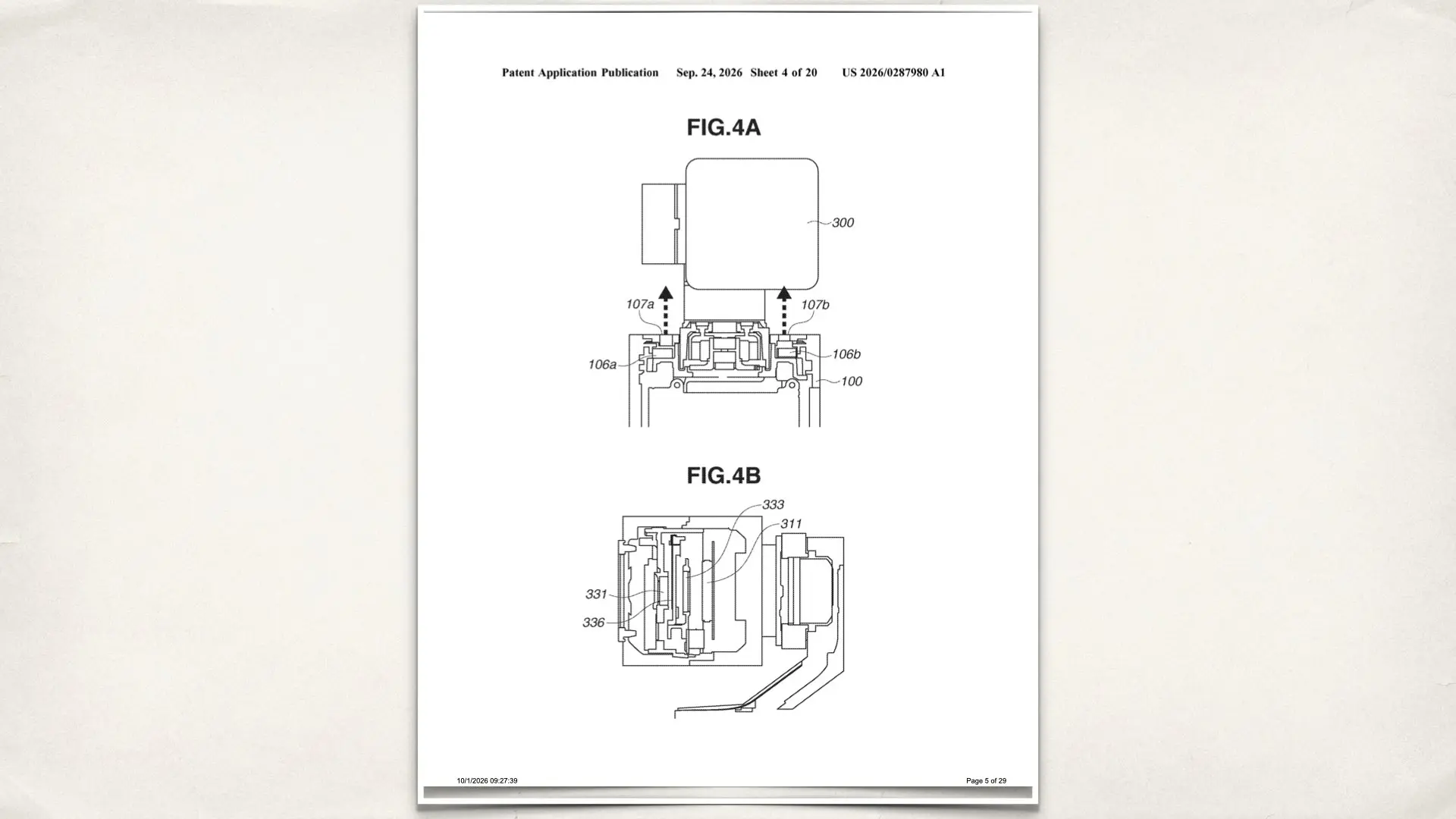
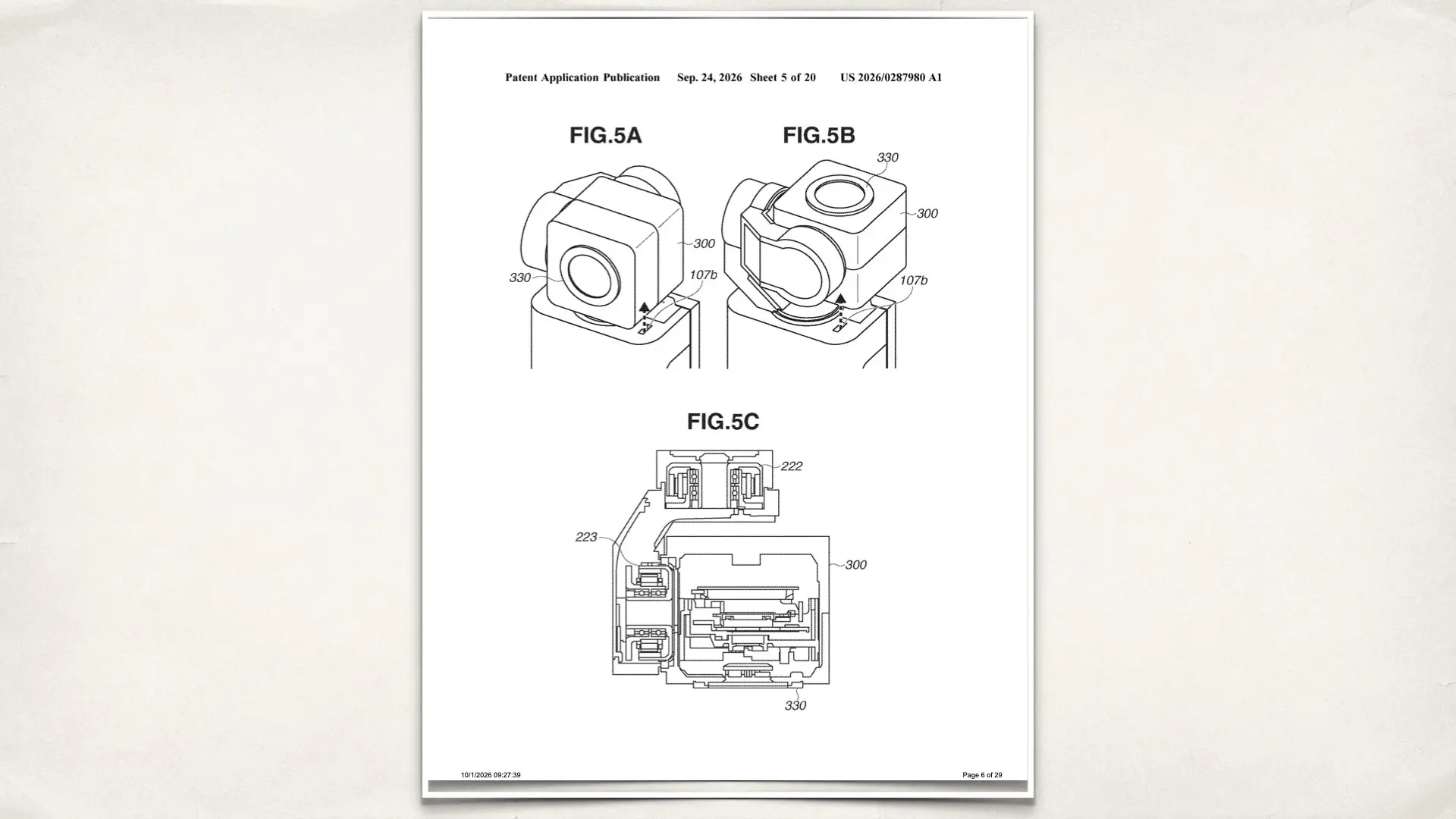
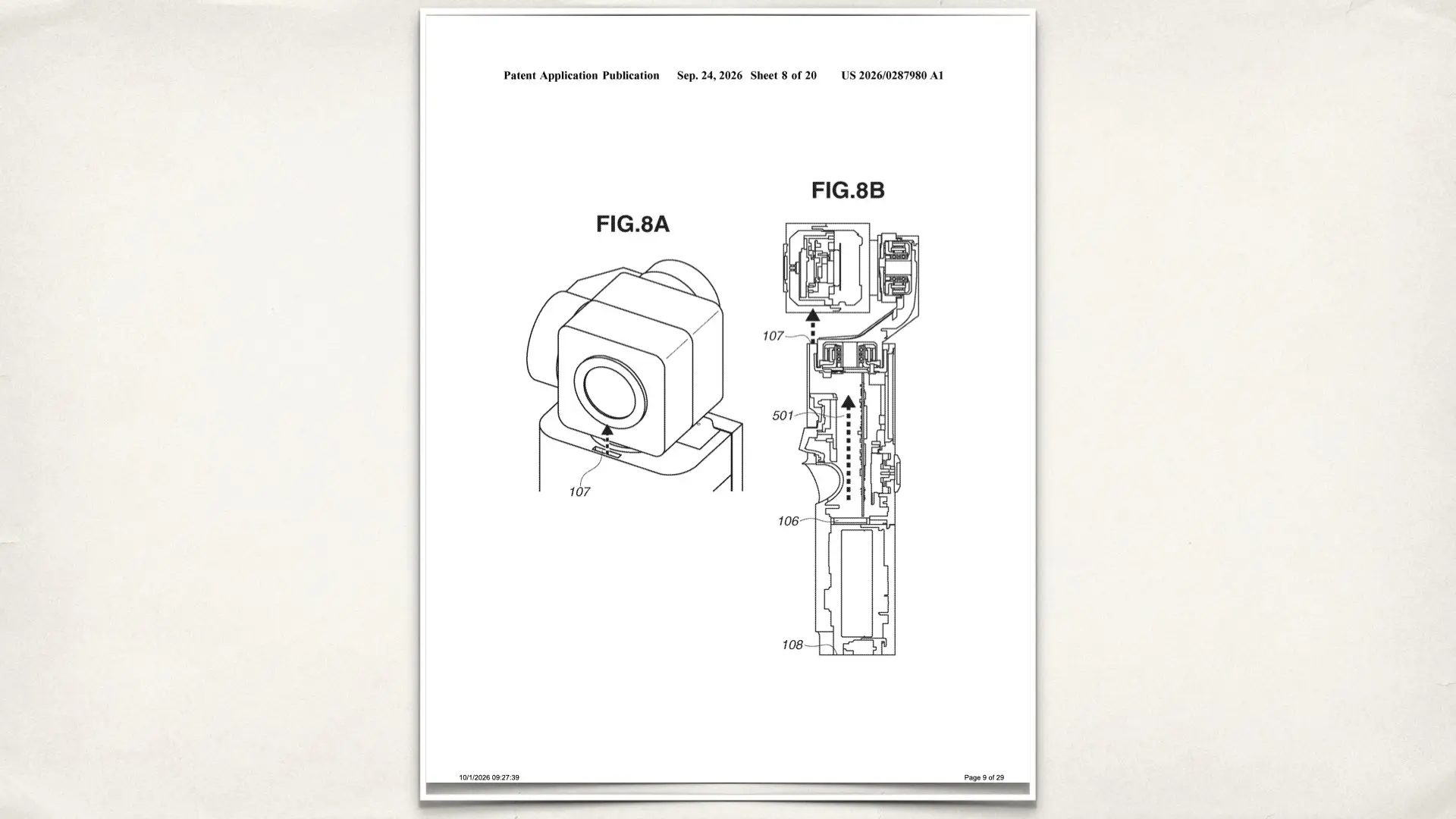
Several drawings show airflow traveling upward through the body toward the gimbal section. Depending on the configuration, repositioning the camera unit can change the available path for air entering or leaving the camera. Figures 8 and 10 illustrate air moving vertically through the handheld body and toward the upper section underneath the stabilized camera. Figures 12 and 14 show additional duct arrangements and different ways of routing that air around the gimbal assembly. In other words, Canon is not simply putting a fan inside the camera. The mechanical configuration of the stabilized head itself can become part of the cooling system. US_20260287980_A1_I The patent also describes temperature detection, airflow control and fan operation as coordinated systems rather than isolated components. Later embodiments go further, adding ducts and controllable airflow paths that can react to internal temperature conditions. US_20260287980_A1_I
Cooling without wasting the battery
Canon also connects the cooling strategy to remaining battery capacity. That is an important detail for a small handheld camera, because active cooling consumes power. The system can take the remaining battery level into account when determining how aggressively to cool the camera. Canon’s diagrams include different control behavior according to both temperature and available battery power. That suggests the objective is not simply maximum cooling, but balancing thermal performance against operating time. The patent therefore reads less like a basic “camera with a fan” concept and more like a coordinated thermal-management system in which battery condition, temperature, airflow and gimbal position can all influence one another.
Another piece of Canon’s gimbal camera project
Canon is solving the less visible problems
None of these patents confirms that Canon will release this camera. Manufacturers routinely patent technologies that never become commercial products. Nevertheless, the growing collection of filings is notable because Canon appears to be addressing increasingly specific parts of the same concept. The patents are no longer limited to the basic idea of putting a Canon camera on an integrated gimbal. They cover how the camera behaves, how the gimbal responds to shooting conditions, and now how the compact system could manage heat. If Canon eventually turns the concept into a product, intelligent thermal management could be particularly important. A small body capable of stabilized high-resolution video has little room to dissipate heat, and Canon’s solution appears to use one of the camera’s defining features — its movable gimbal head — as part of the answer. For now, it remains a patent. But Canon keeps engineering around this camera, and the latest filing shows that the work extends well beyond stabilization.