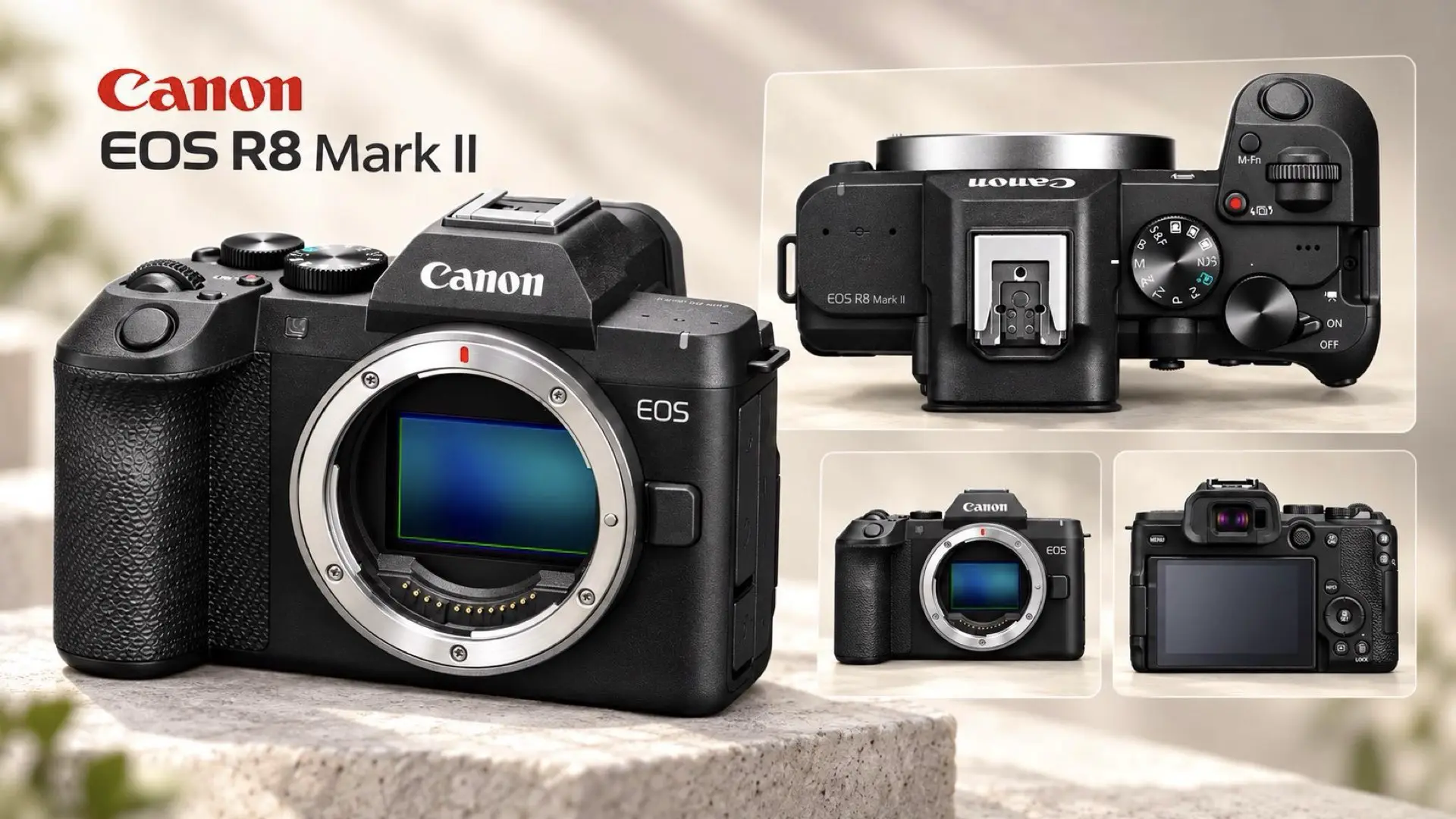
Canon has just announced the EOS R8 Mark II, and while much of the immediate discussion will naturally focus on specifications, IBIS, autofocus and video capabilities, there is another aspect that deserves attention: the camera looks different. Not radically different in the way a Sigma fp ($1,740 on Amazon) or Fujifilm X-Pro body does. But different enough that the EOS R8 Mark II may represent something more important than a cosmetic refresh. It could signal the beginning of a new design direction for Canon. Canon itself describes the R8 Mark II as adopting a “premium, modern flat-surface design” that breaks away from the curved forms used in recent EOS cameras. The company explicitly references older Canon models including the T80, F-1 and A-1 as part of the inspiration. Canon Japan goes even further, describing the new body as based around straight lines and arcs rather than the predominantly curved styling traditionally associated with EOS cameras. That makes the R8 Mark II more interesting than another generational update.
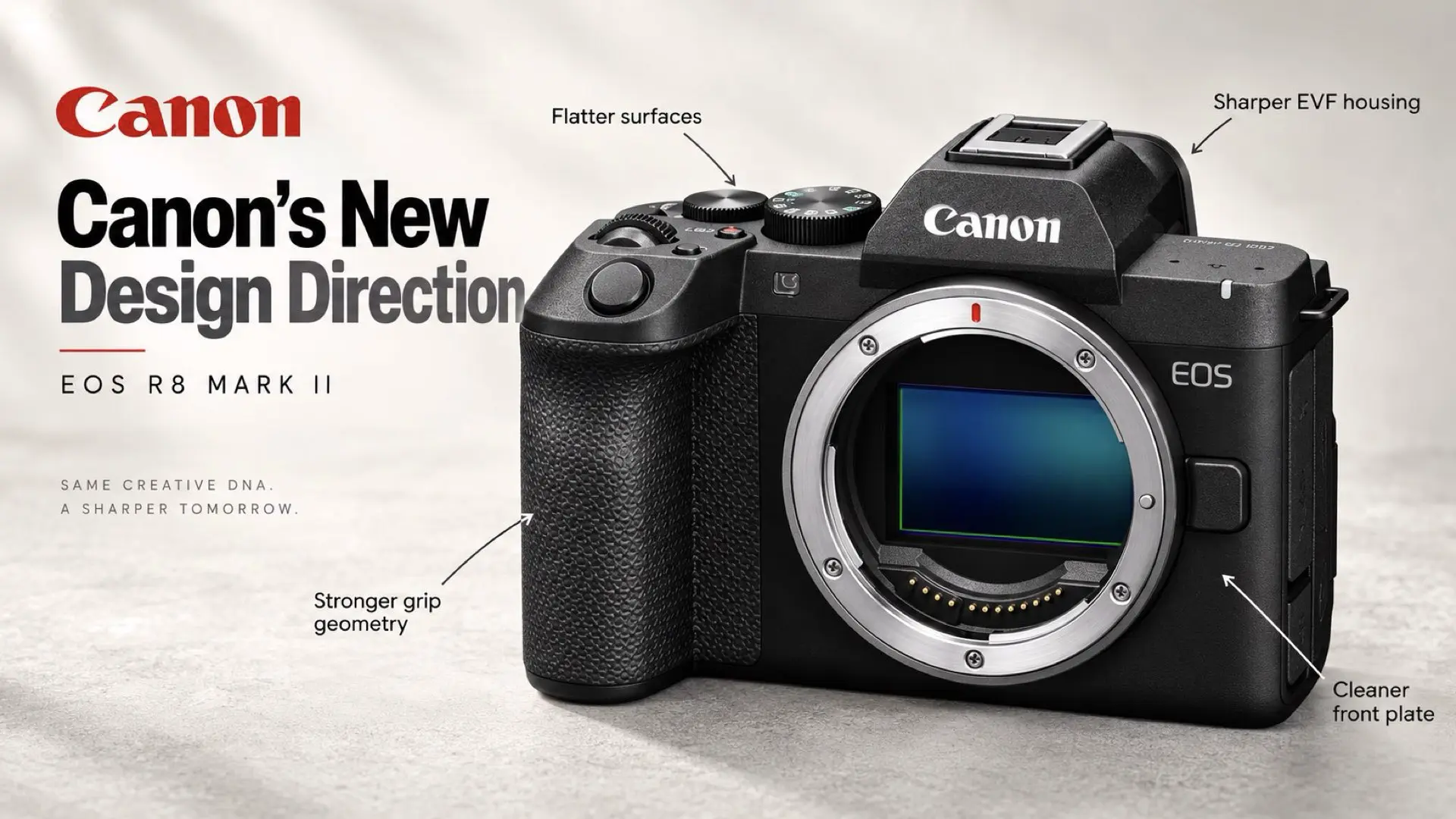
From soft curves to geometric surfaces
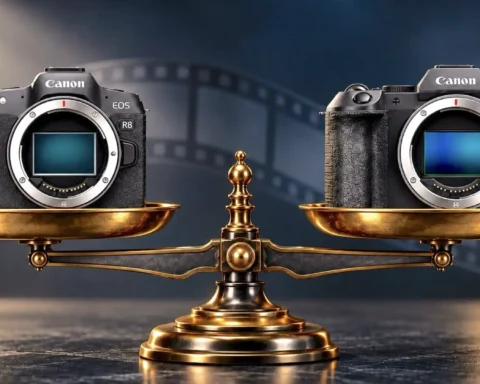
Place the original EOS R8 next to the R8 Mark II and the change is immediately visible. The original Canon R8 (See on Amazon) follows the familiar modern Canon formula. The shoulders are rounded, the EVF housing flows smoothly into the body, and almost every transition between surfaces is softened. It is ergonomic, compact and unmistakably Canon, but also visually conservative. The R8 Mark II introduces much harder geometry. The EVF housing is more architectural. The front surfaces are flatter. The shoulders are squarer. The transition between the grip, lens mount and main body feels more deliberate. Even the pentaprism-style central section now has a stronger silhouette. Canon has not abandoned ergonomics. The grip remains substantial, and Canon says it has been designed around comfortable handling. But ergonomics are now being incorporated into a body with a much stronger visual identity rather than dictating the entire exterior shape. There is a practical consequence to this redesign too. The R8 Mark II is slightly larger and heavier than the original. The R8 measures approximately 132.5 × 86.1 × 70mm and weighs 461g with battery and card, while the Mark II measures 131.4 × 90 × 79.7mm and weighs approximately 546g. But visually, the added volume makes the camera look more substantial rather than simply larger.
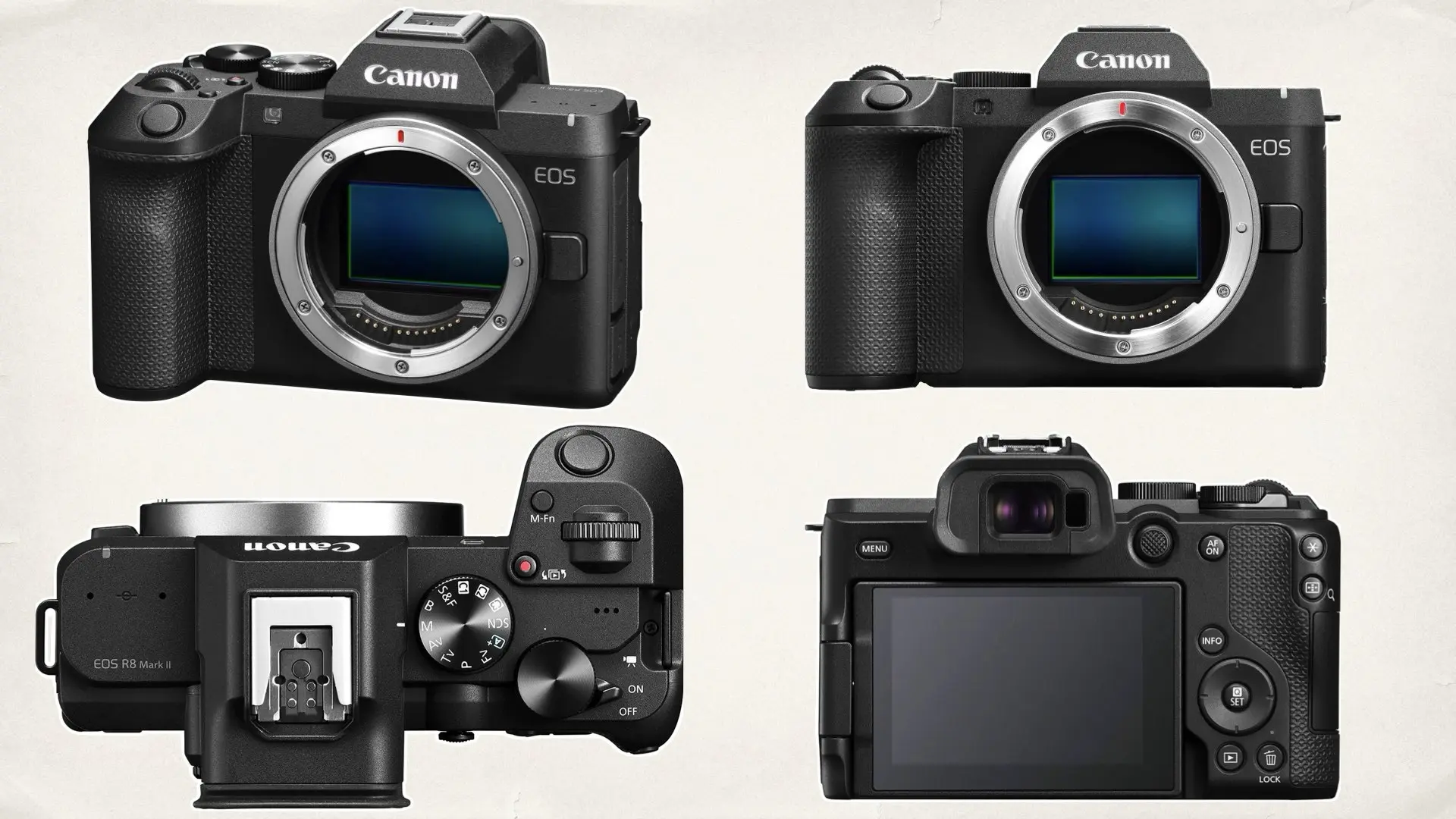
Canon has traditionally played it safe
Canon’s design approach has rarely been controversial. That is partly because it works. Bodies such as the EOS R6 Mark III ($2,799 on Amazon) continue a long-established EOS philosophy: deep grip, prominent EVF housing, smooth transitions and a form dictated heavily by usability. Canon describes the R6 Mark III primarily in terms of performance and hybrid functionality rather than exterior personality. The result is highly recognizable, but successive generations often look closely related. That consistency has advantages for professional users. Controls remain familiar and cameras feel like tools rather than fashion objects. But in a market where cameras increasingly compete on emotional appeal as well as specifications, visual identity matters. And Canon’s competitors have been increasingly willing to acknowledge that.
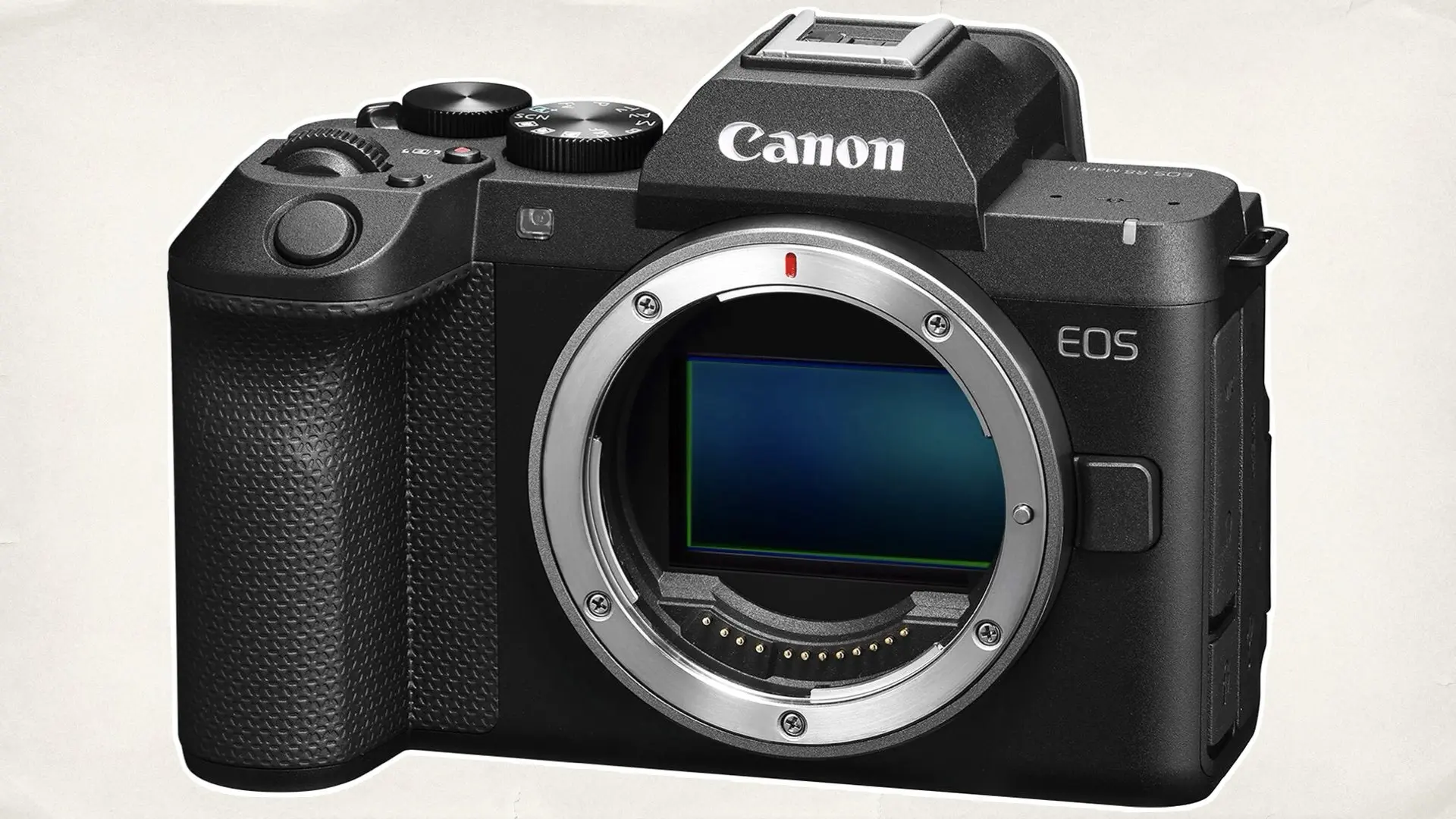
Panasonic proved that a modern camera can look different
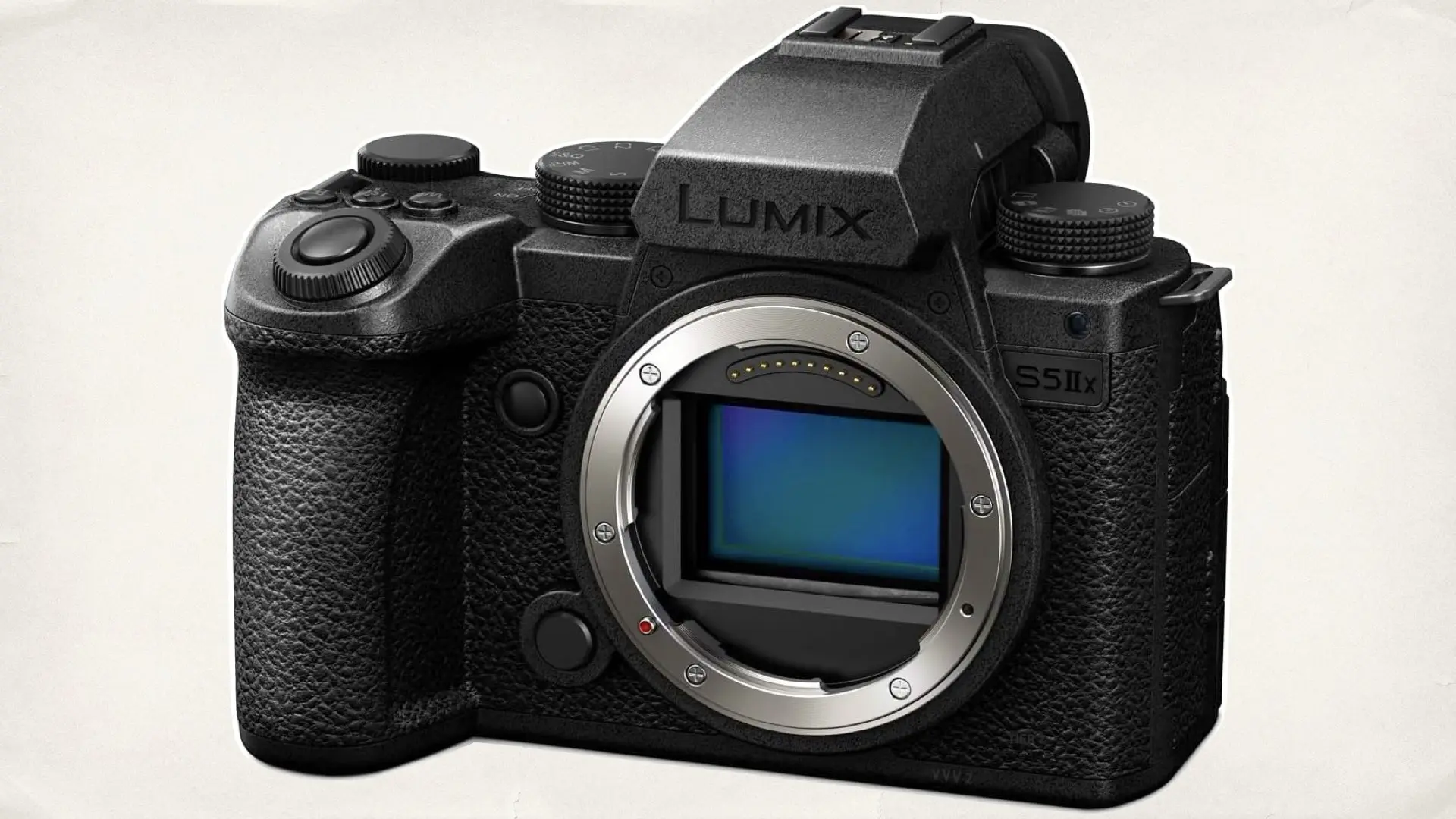
Consider the Panasonic Lumix S9 ($1,097.99 on Amazon). It is also a compact full-frame mirrorless body, but Panasonic deliberately removed many of the visual elements normally associated with traditional professional cameras. There is no EVF hump, the front is almost completely flat, and the body uses simple rectangular geometry. Panasonic also offers the S9 in multiple finishes including Night Blue, Dark Olive, Crimson Red, Smokey White and black. At 126 × 73.9 × 46.7mm and 486g with battery and card, it is built around portability and visual simplicity. Whether someone prefers that approach is subjective. The important point is that Panasonic made design part of the product proposition. The R8 Mark II suggests Canon may now be thinking in similar terms, although with considerably more respect for traditional camera ergonomics.
Nikon has already rediscovered design identity
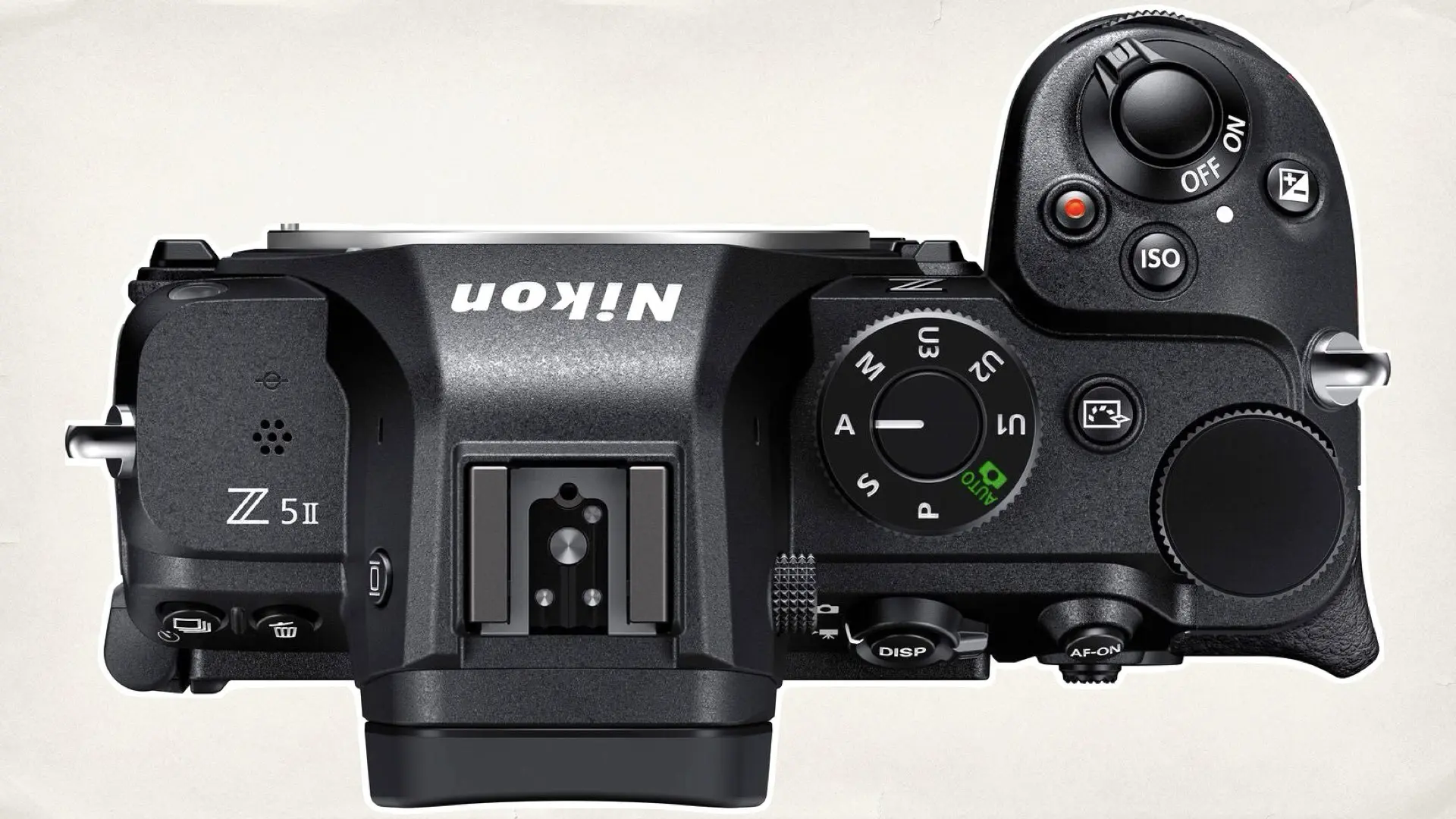
Nikon presents another useful comparison. The Z5II ($2,196.95 on Amazon) occupies a broadly similar accessible full-frame category, yet its design remains rooted in Nikon’s modern Z-series language: a pronounced grip, muscular shoulders and clearly defined surfaces. The body measures 134 × 100.5 × 72mm and weighs around 620g. More importantly, Nikon has shown through other recent products that heritage can become part of contemporary industrial design rather than simply nostalgia. That is an area where Canon has generally been much more cautious. The R8 Mark II therefore feels notable because Canon is finally referencing its own historical design vocabulary without creating an obvious retro replica.
Fujifilm understands that design sells the experience
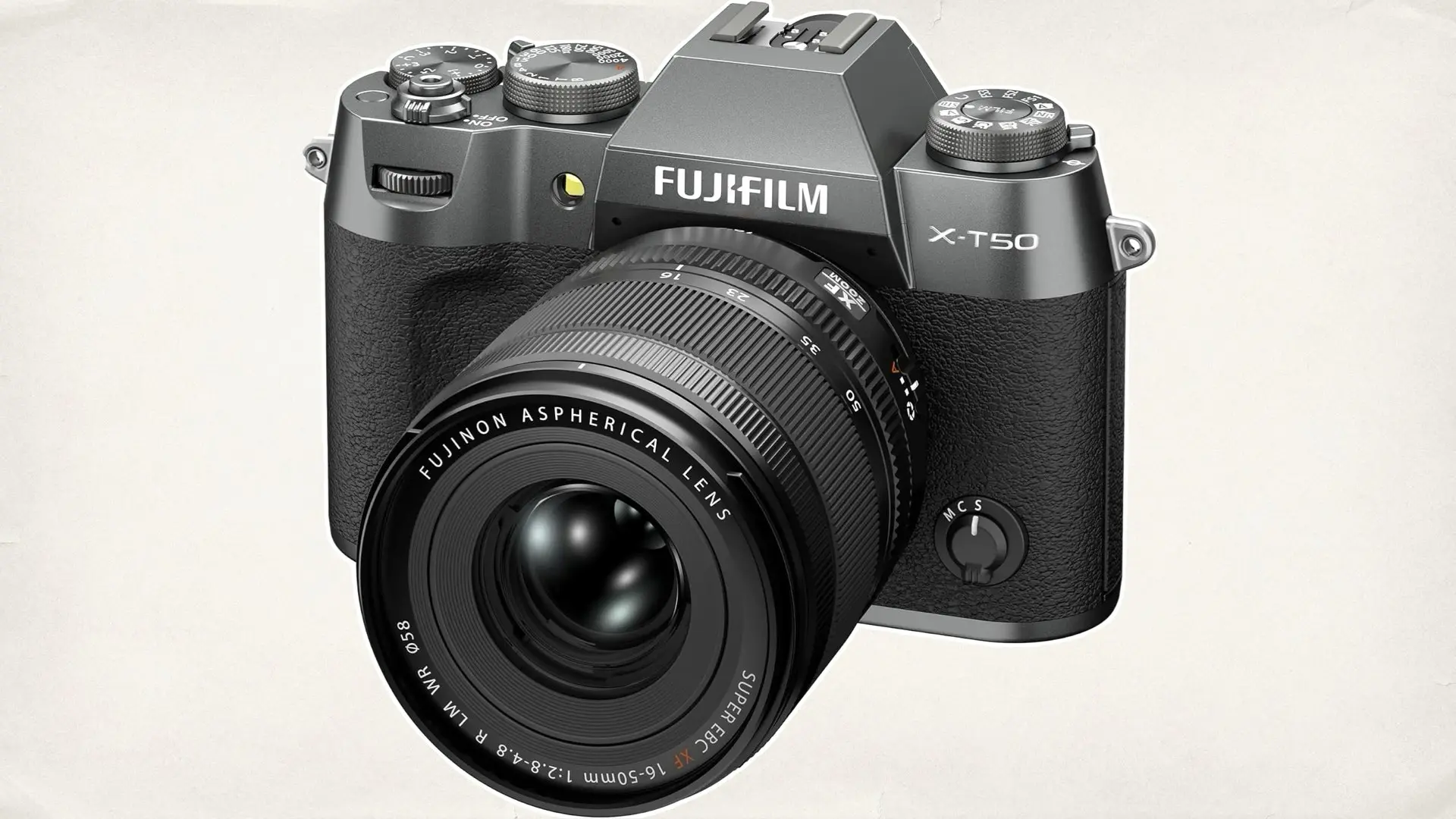
Fujifilm may be the clearest example of a manufacturer treating design as part of what a camera actually is. The X-T50 ($1,699 on Amazon) is explicitly marketed around “classic design,” with Fujifilm emphasizing its resemblance to traditional film cameras, physical controls and compact proportions. Even when Fujifilm updated the body with more rounded surfaces, the company discussed the styling itself as a major product characteristic. Fujifilm is not merely selling sensor specifications. It sells an experience associated with photography. Camera design, physical controls and visual identity all contribute to that experience. Canon has traditionally relied much more heavily on technology, autofocus, lenses, ergonomics and the strength of the EOS ecosystem. The R8 Mark II suggests that exterior design may now be receiving more strategic attention.
Not retro, but more character to stay relevant
Interestingly, calling the R8 Mark II simply a “retro Canon” probably undersells what Canon has done. There are historical references, but this is not an A-1 recreated as a digital camera. Instead, Canon seems to have extracted certain elements from its older cameras: flatter planes, clearer geometry, a stronger central viewfinder structure and less reliance on organic curves. Canon itself describes the result as carrying its design heritage into a more contemporary form. A modern camera does not necessarily need shutter-speed dials and faux-film styling to have identity. It just needs to look intentional. Moreover, Camera specifications are converging. Most current mirrorless cameras offer excellent image quality. Autofocus has become extremely capable. IBIS is common. High-quality 4K video is expected rather than exceptional. That makes industrial design increasingly important. A camera is also a physical object that photographers and filmmakers carry, operate and look at every day. Design affects perceived quality, desirability and ultimately how distinctive a product feels in an increasingly mature market. Canon does not need to imitate Fujifilm, Panasonic or Nikon. It arguably needed something else: a recognizable Canon camera that feels visually new. The EOS R8 Mark II may be exactly that. One redesigned body does not yet establish a new Canon design language. But Canon explicitly says it is moving away from the curved forms of recent EOS models toward straighter, more geometric surfaces. That makes this more than our interpretation of a photograph. Canon itself is presenting the change as intentional. If elements of this approach begin appearing on future EOS R bodies, the R8 Mark II may eventually be remembered not only as the second-generation R8, but as the camera where Canon started making its cameras visually interesting again.
Gear mentioned in this article
Available on Amazon
| Product | New | Renewed | Used |
|---|---|---|---|
| Sigma fp | $1,740 | — | From $1,398 |
| Canon EOS R6 Mark III | $2,799 | — | From $2,423.39 |
| Panasonic Lumix S9 | $1,097.99 | — | — |
| Nikon Z5II | $2,196.95 | — | — |
| Fujifilm X-T50 | $1,699 | — | From $1,438.38 |
Prices checked: Oct 25, 2026, 1:35 AM GMT+0000
As an Amazon Associate, Y.M.Cinema earns from qualifying purchases. If you buy through our links, we may earn a small commission at no extra cost to you.
Product prices and availability are accurate as of the date/time indicated and are subject to change. Any price and availability information displayed on Amazon.com at the time of purchase will apply to the purchase of this product.
CERTAIN CONTENT THAT APPEARS ON THIS SITE COMES FROM AMAZON. THIS CONTENT IS PROVIDED “AS IS” AND IS SUBJECT TO CHANGE OR REMOVAL AT ANY TIME.