The latest IMAX featurette shows Christopher Nolan and Hoyte van Hoytema pushing 15/65 IMAX film cameras into beaches, cliffs, forests, interiors, battles, and dialogue scenes. Watch the selected BTS footage IMAX has just released. Christopher Nolan’s The Odyssey is being promoted as a rare large-format milestone: a feature shot entirely with IMAX film cameras. The official Odyssey format page states that every frame was captured with IMAX Film Cameras and that IMAX 70mm presentations will use the 1.43:1 expanded aspect ratio with 15-perf horizontal film projection. But the new IMAX BTS featurette reveals something more interesting. It shows what it actually means to build an entire movie around IMAX film capture. The footage shows IMAX cameras deployed across almost every kind of production environment: fire-lit battle scenes, rugged beaches, cliffs, forest setups, interior dialogue scenes, dolly moves, actor-heavy blocking, wet locations, and massive crew coordination around the camera body. Let’s analyse it.
IMAX as the center of the set
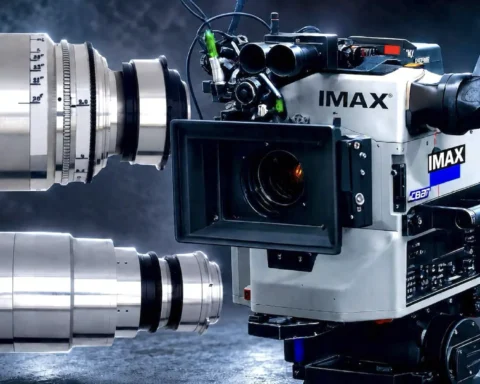
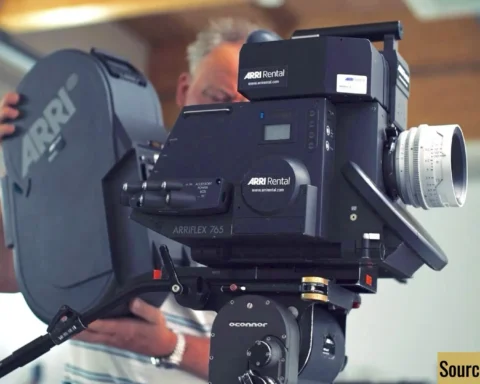
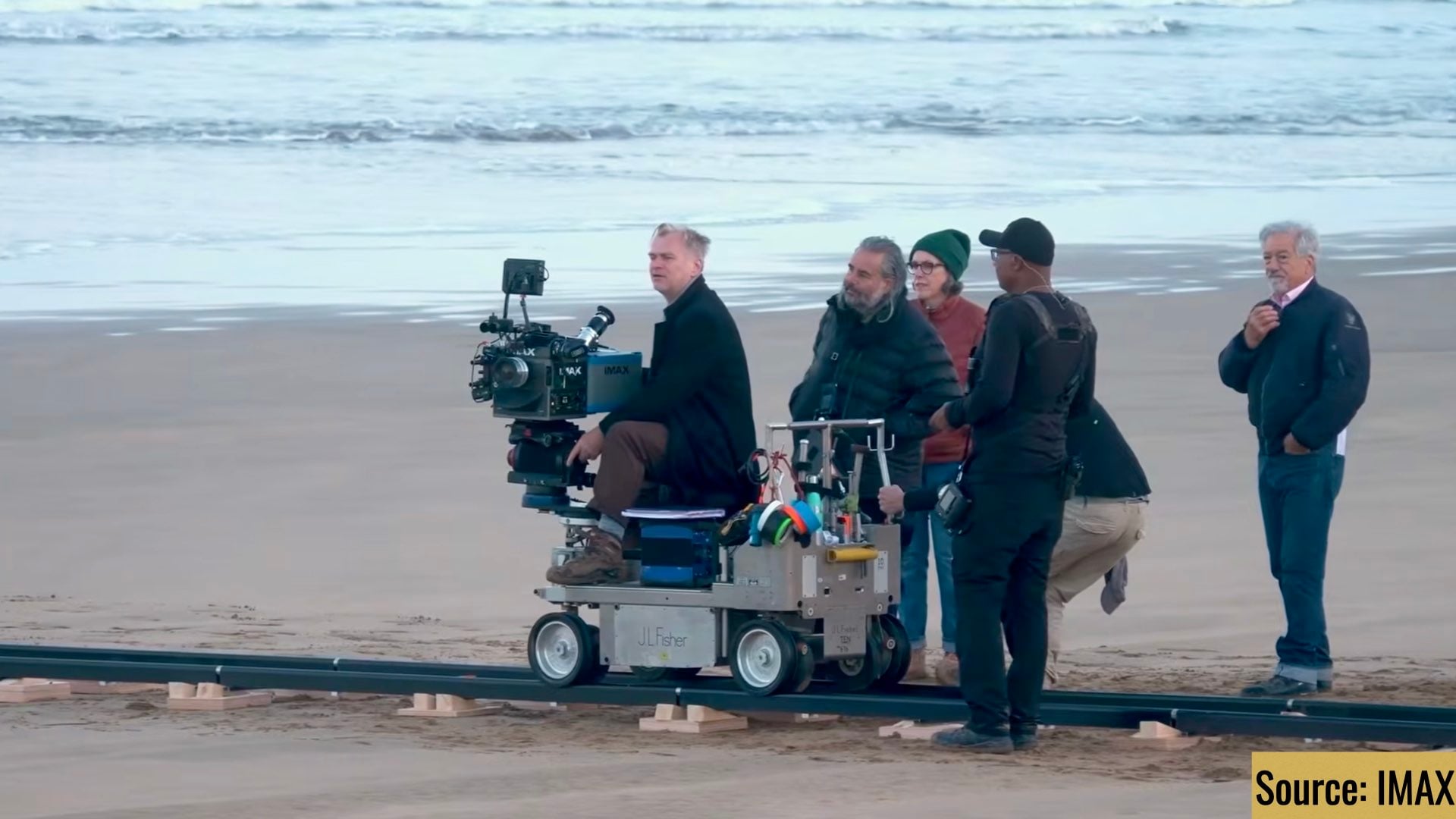
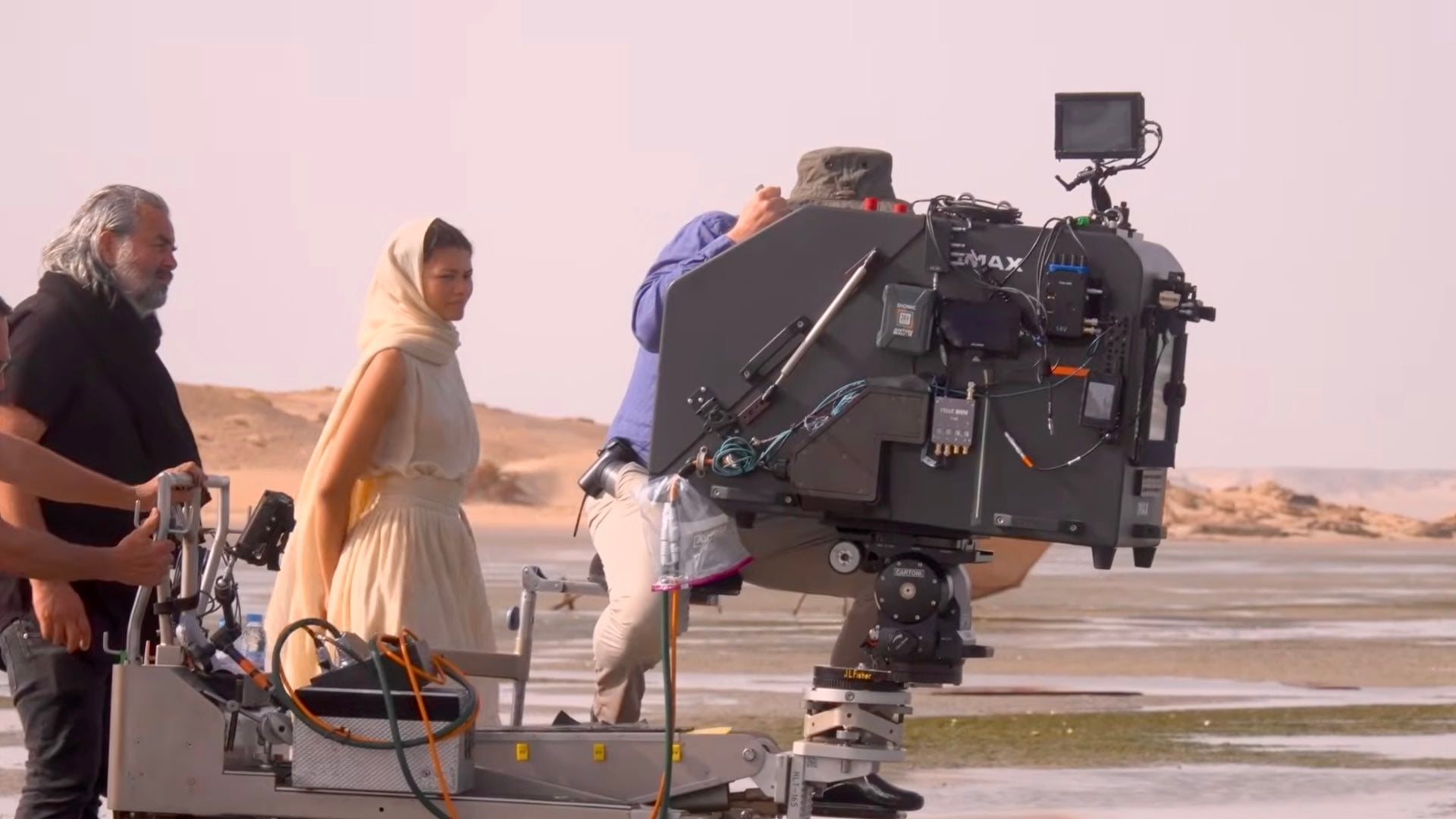
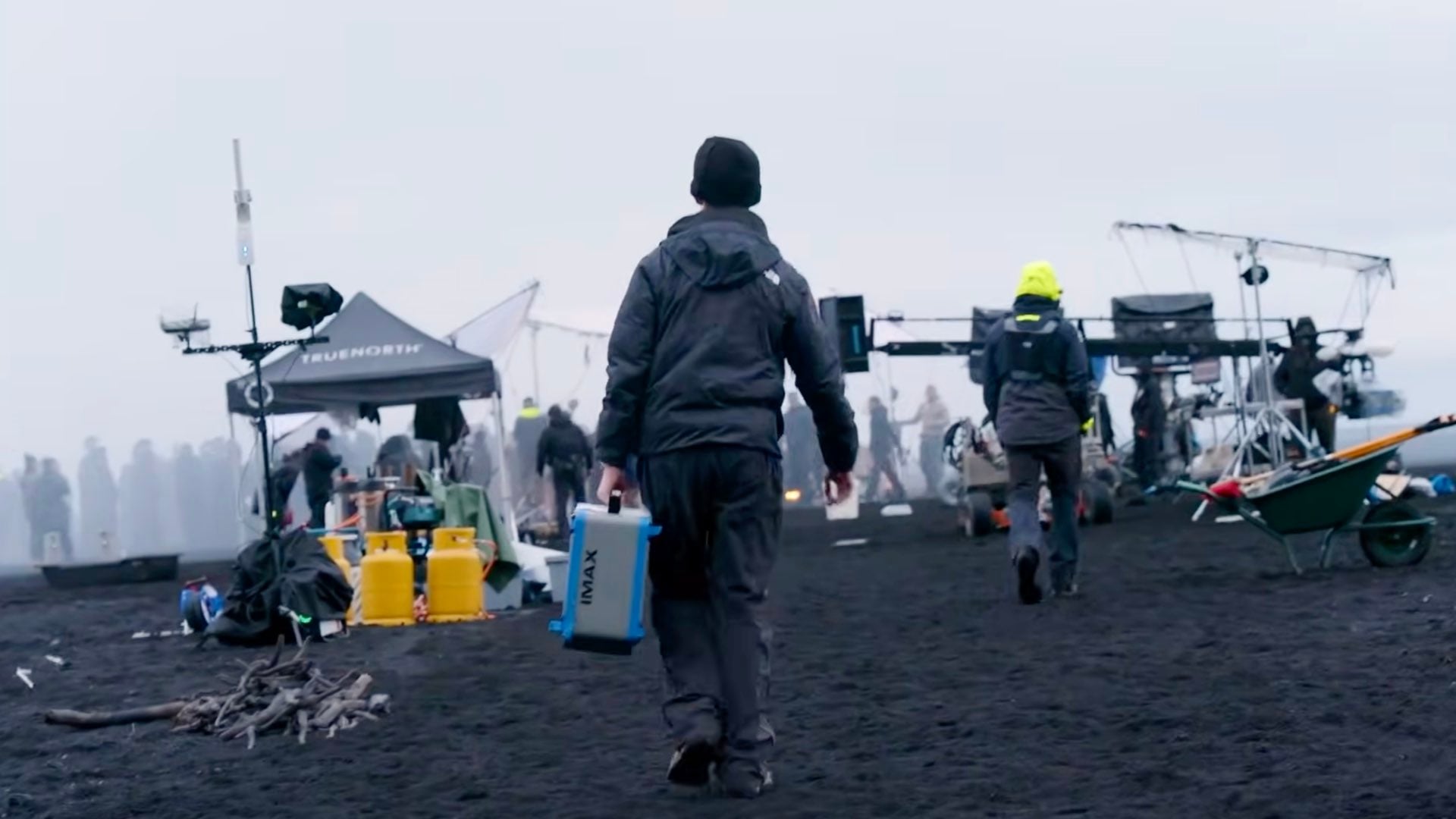
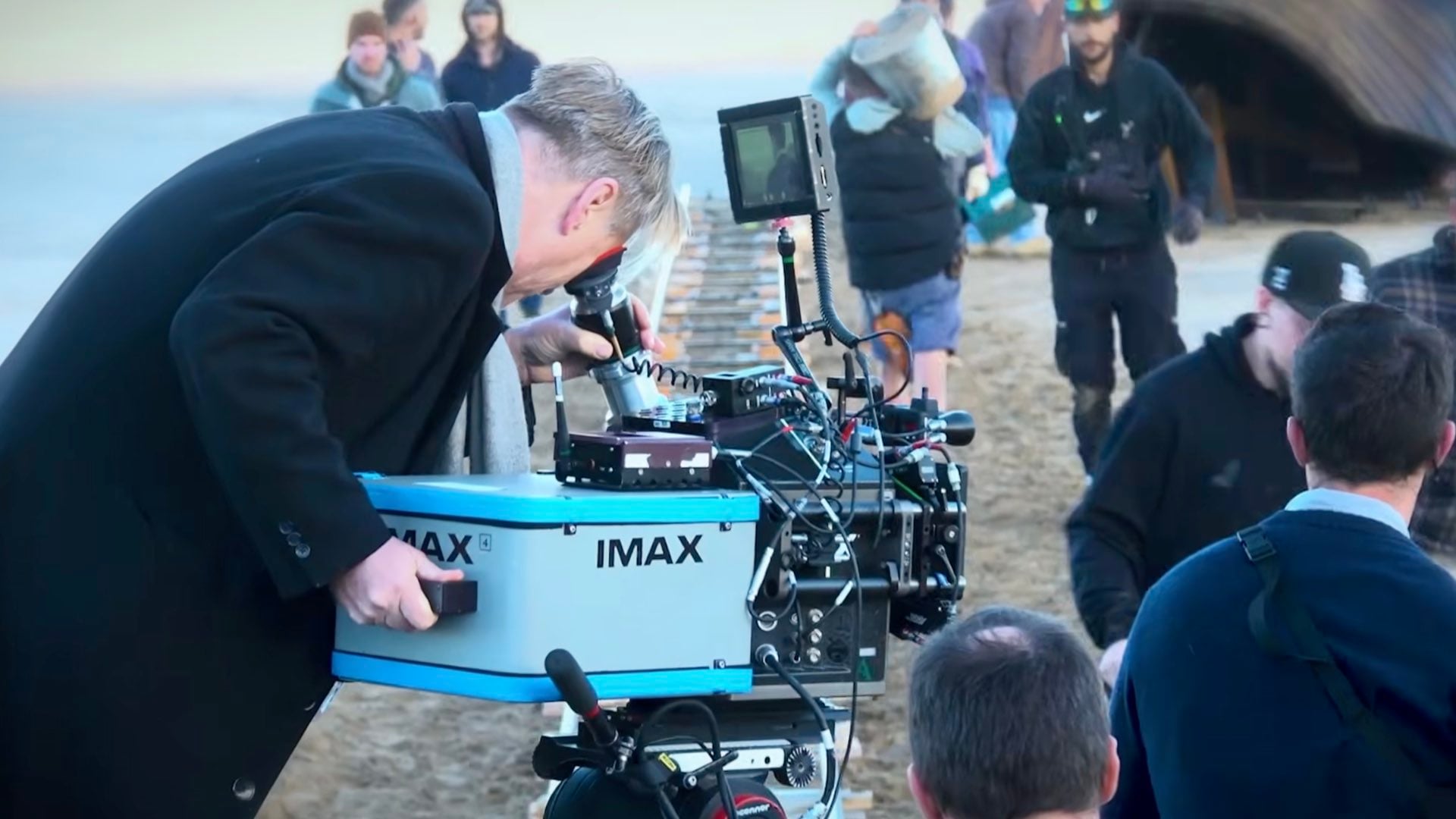
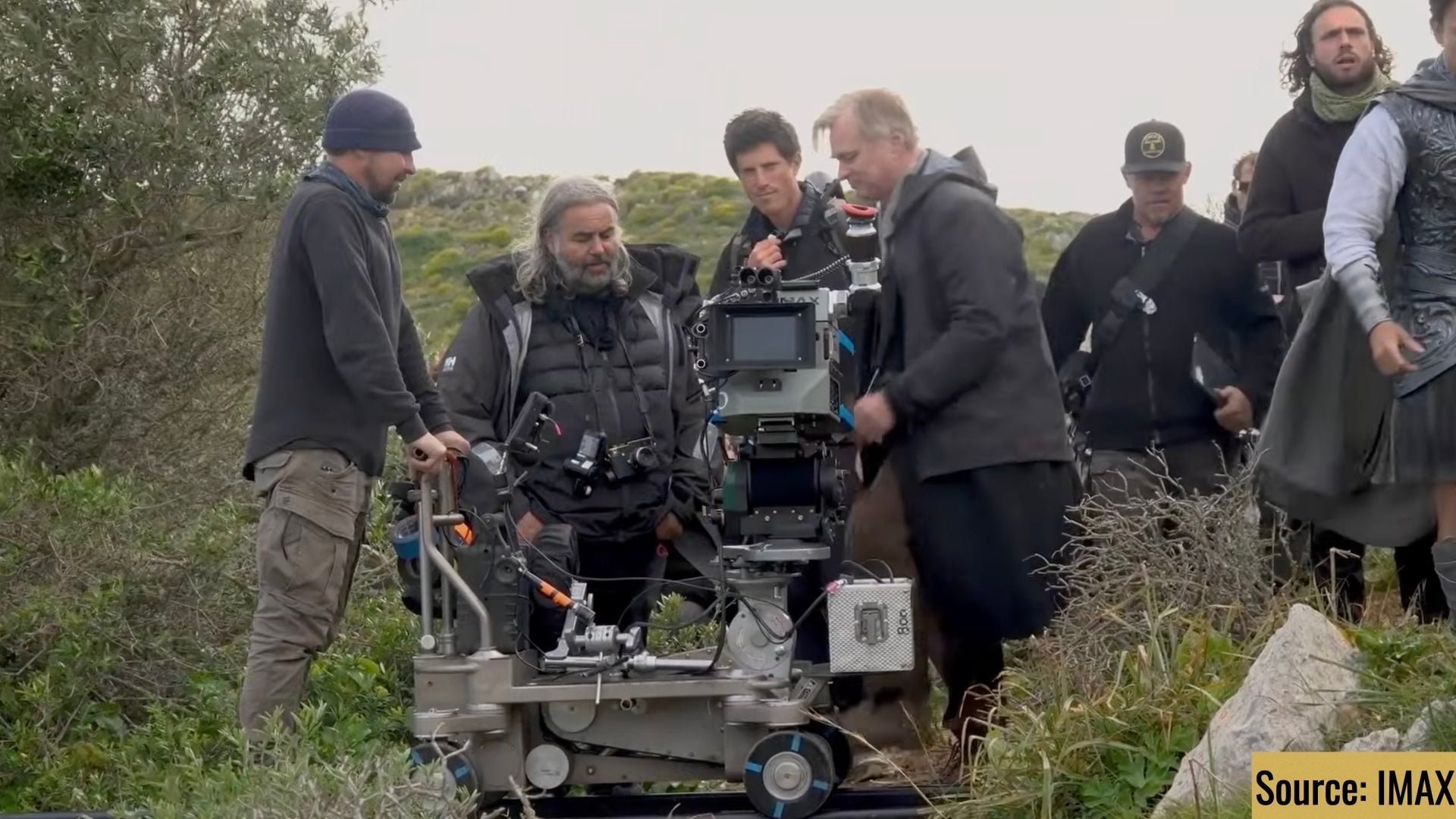
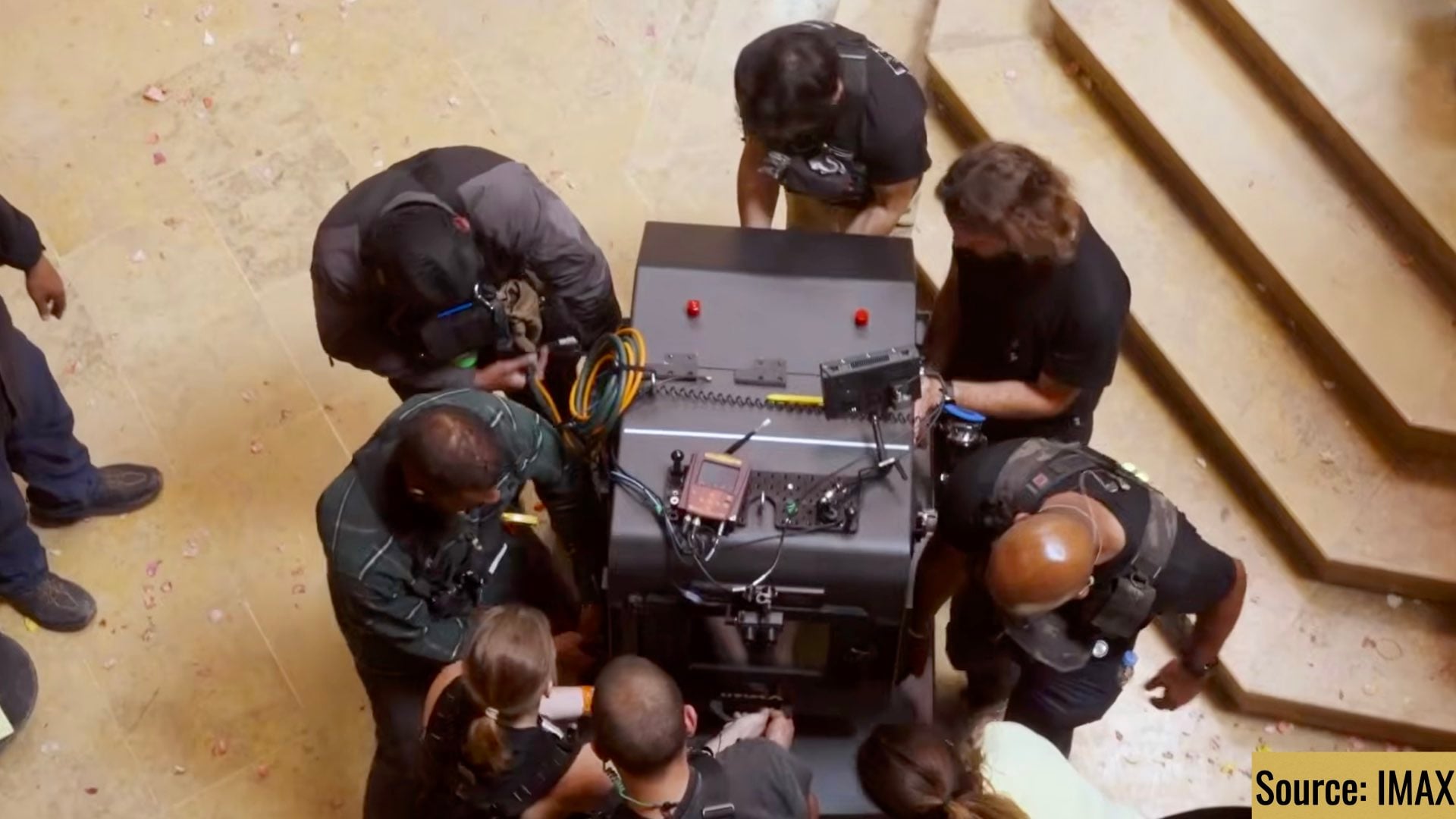
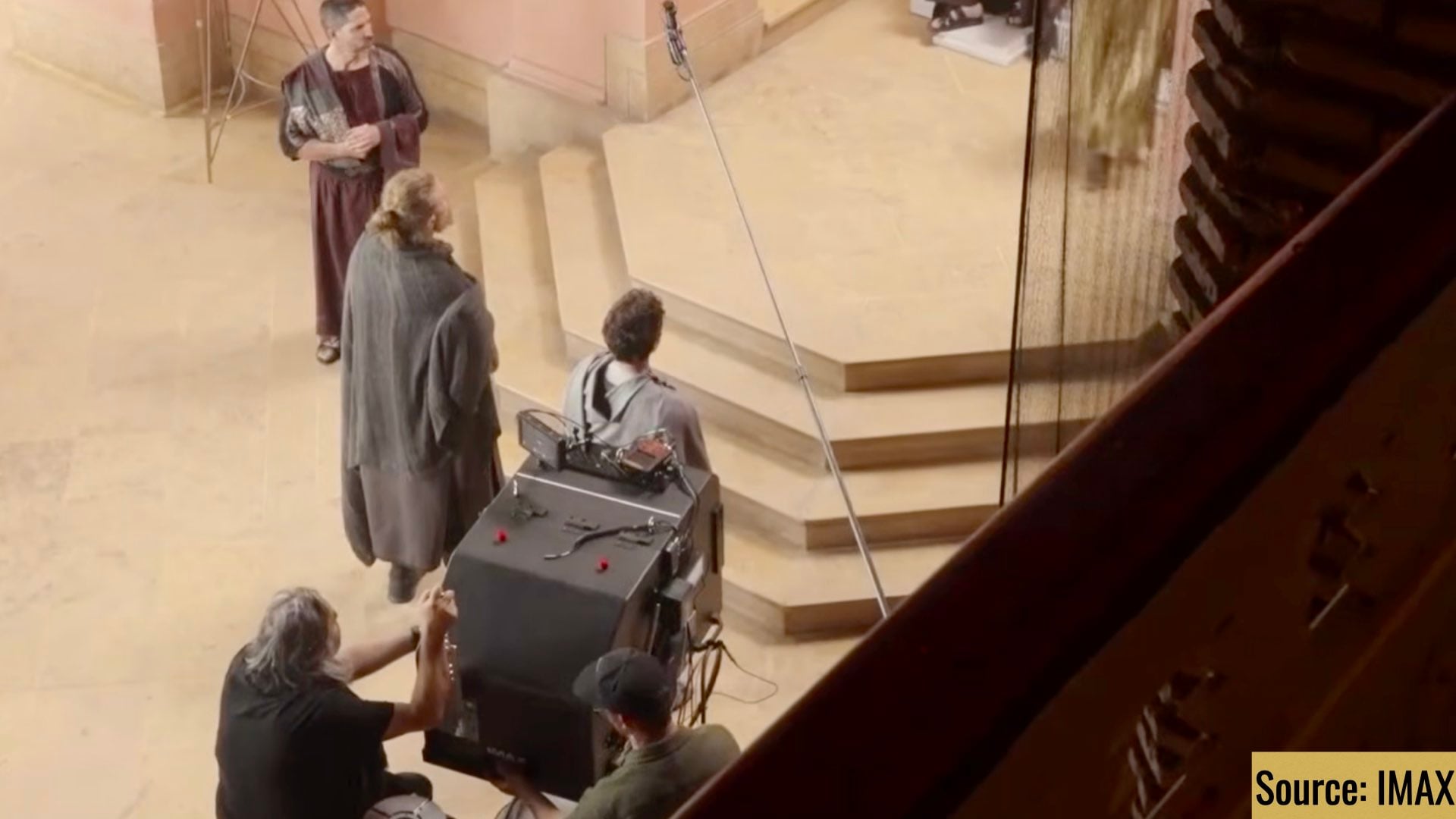
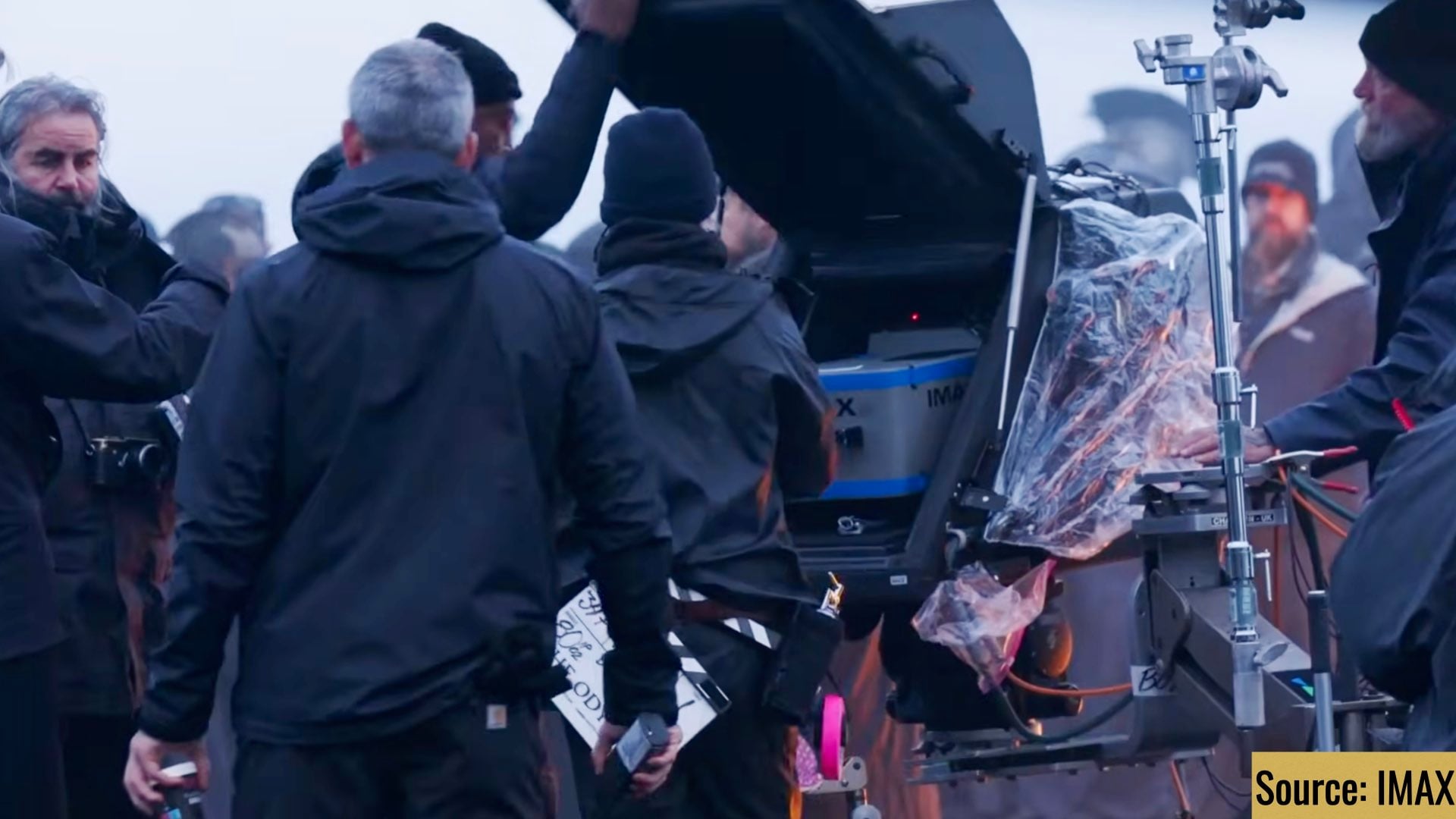
In several shots, the camera looks less like a compact cinematography tool and more like an industrial object that the entire production must orbit. Crew members surround it. Actors perform around it. Assistants manage the body, lens, video assist, cabling, magazines, support, and movement. The geography of the set is built around the machine. Shooting an entire feature on IMAX means designing the whole production around a very large, very specific mechanical system. Camera placement, actor blocking, lensing, dolly movement, focus pulling, sound, loading, transport, weather protection, and crew access all become part of the IMAX workflow.
From beaches to cliffs to interiors
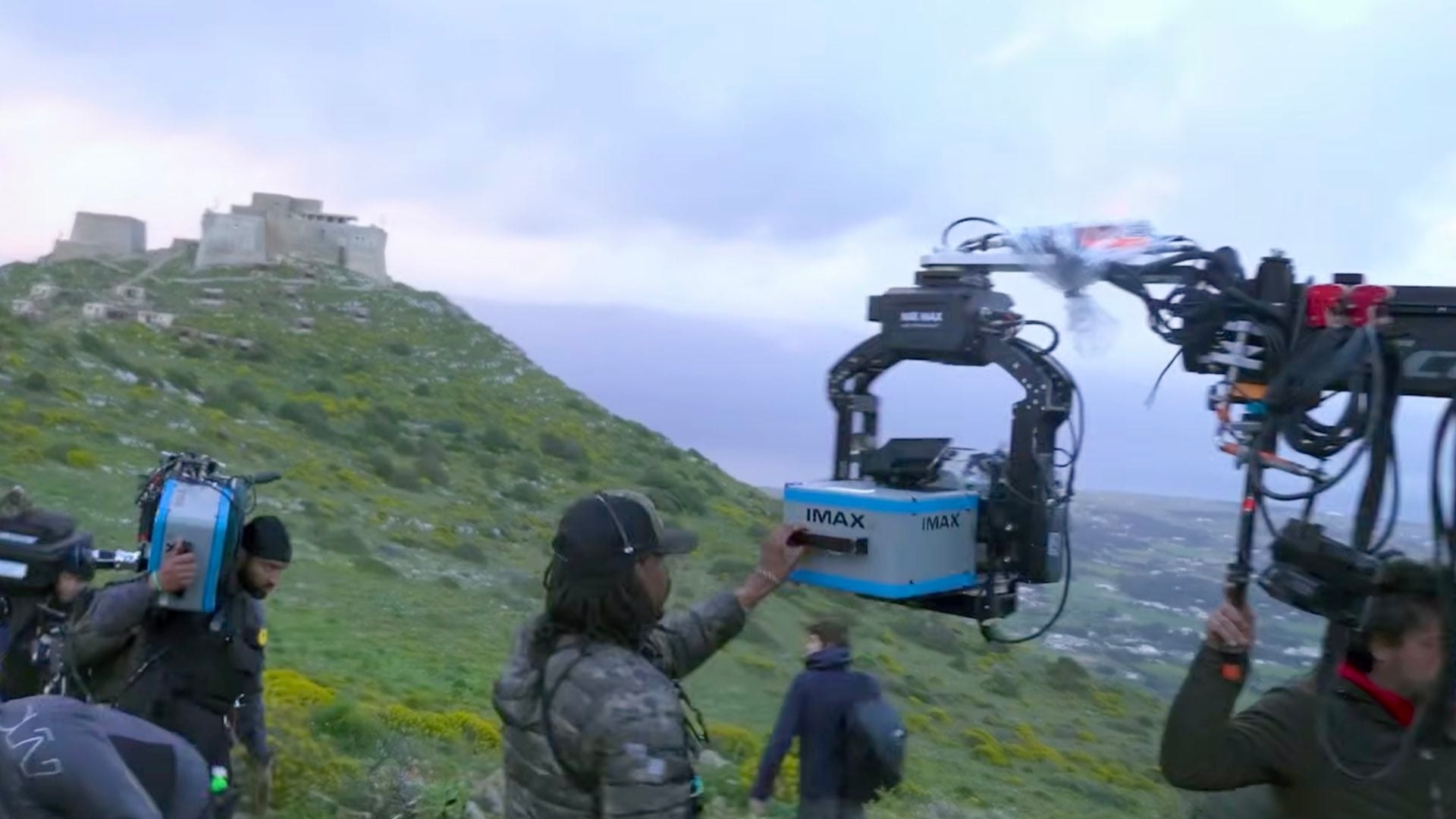
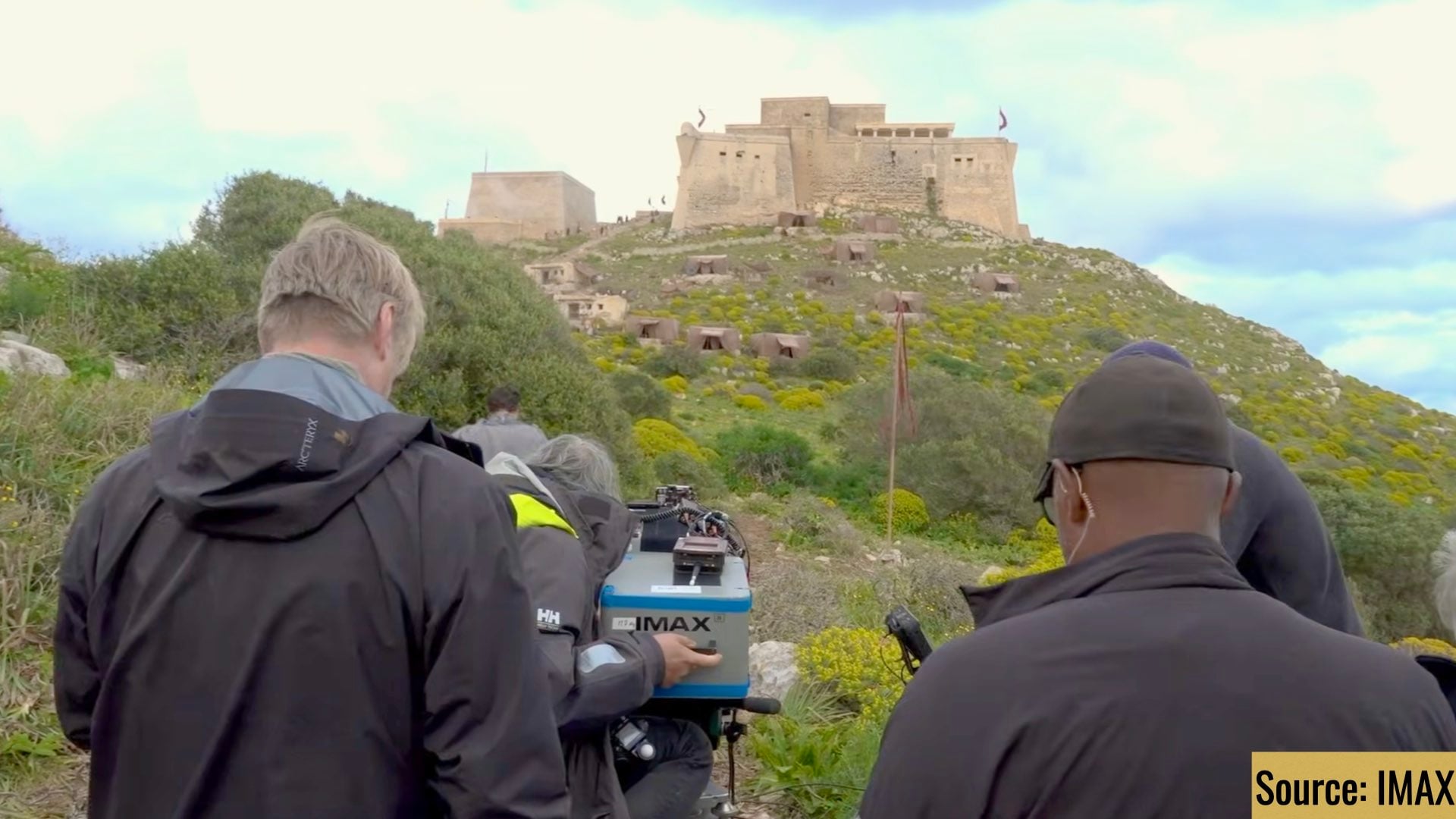
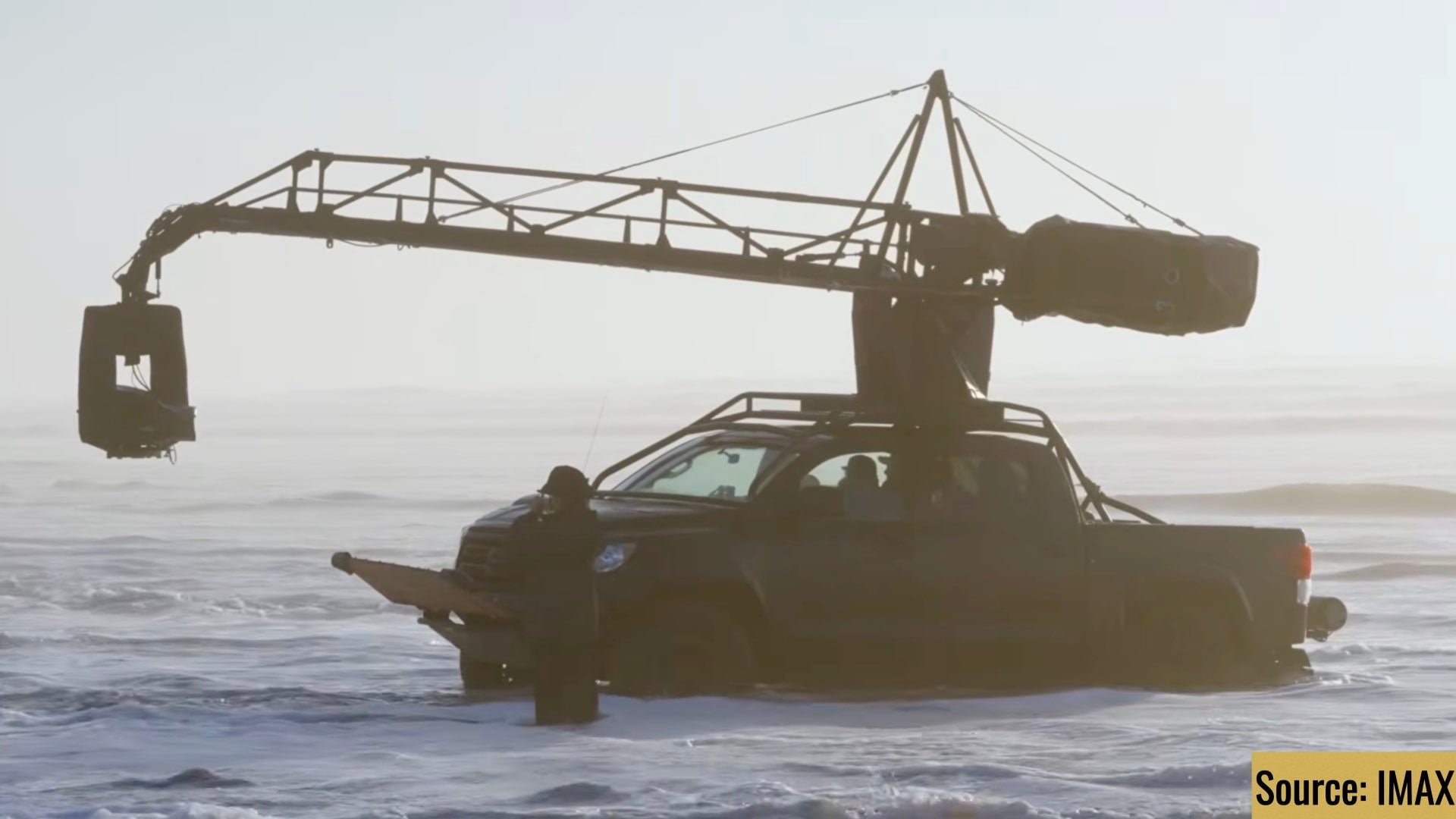
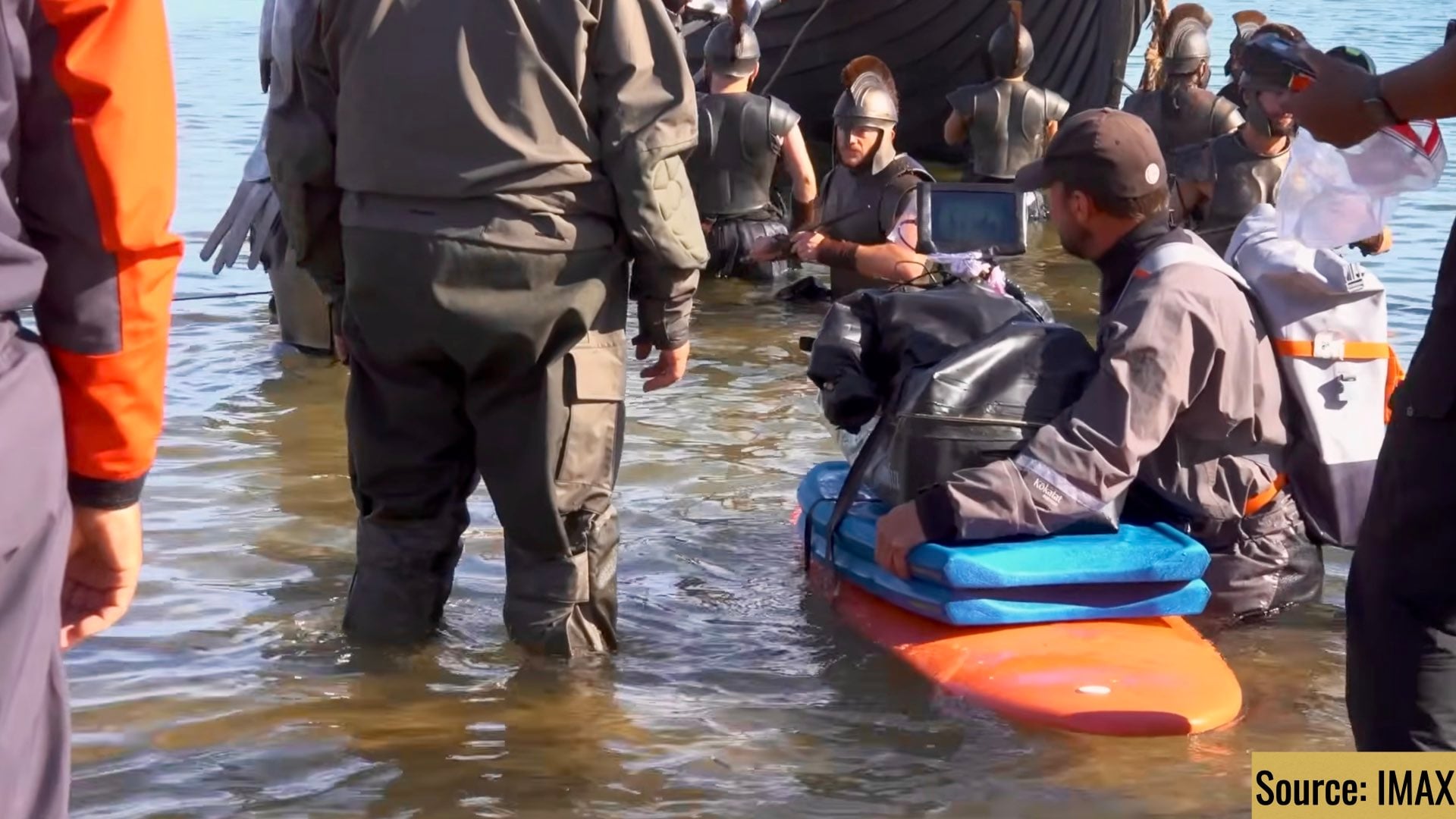
One of the most impressive things in the featurette is the range of environments. The camera is seen on a beach dolly near the ocean. It appears in rugged exterior terrain. It is carried or positioned near cliffs and hilltop locations. It is placed inside controlled interiors. It is surrounded by extras in battle setups. It is shown near fire, smoke, costumes, armor, and practical production chaos. That counts because IMAX film cameras have historically been associated with scale, but not always with flexibility. The format is huge, heavy, loud, and logistically demanding. Yet the Odyssey footage shows the camera being pushed into places where many productions would normally use smaller digital systems or lighter 65mm setups. That may be the central technical achievement here: not just shooting IMAX, but normalizing IMAX across the entire daily production process.
The camera inside the action
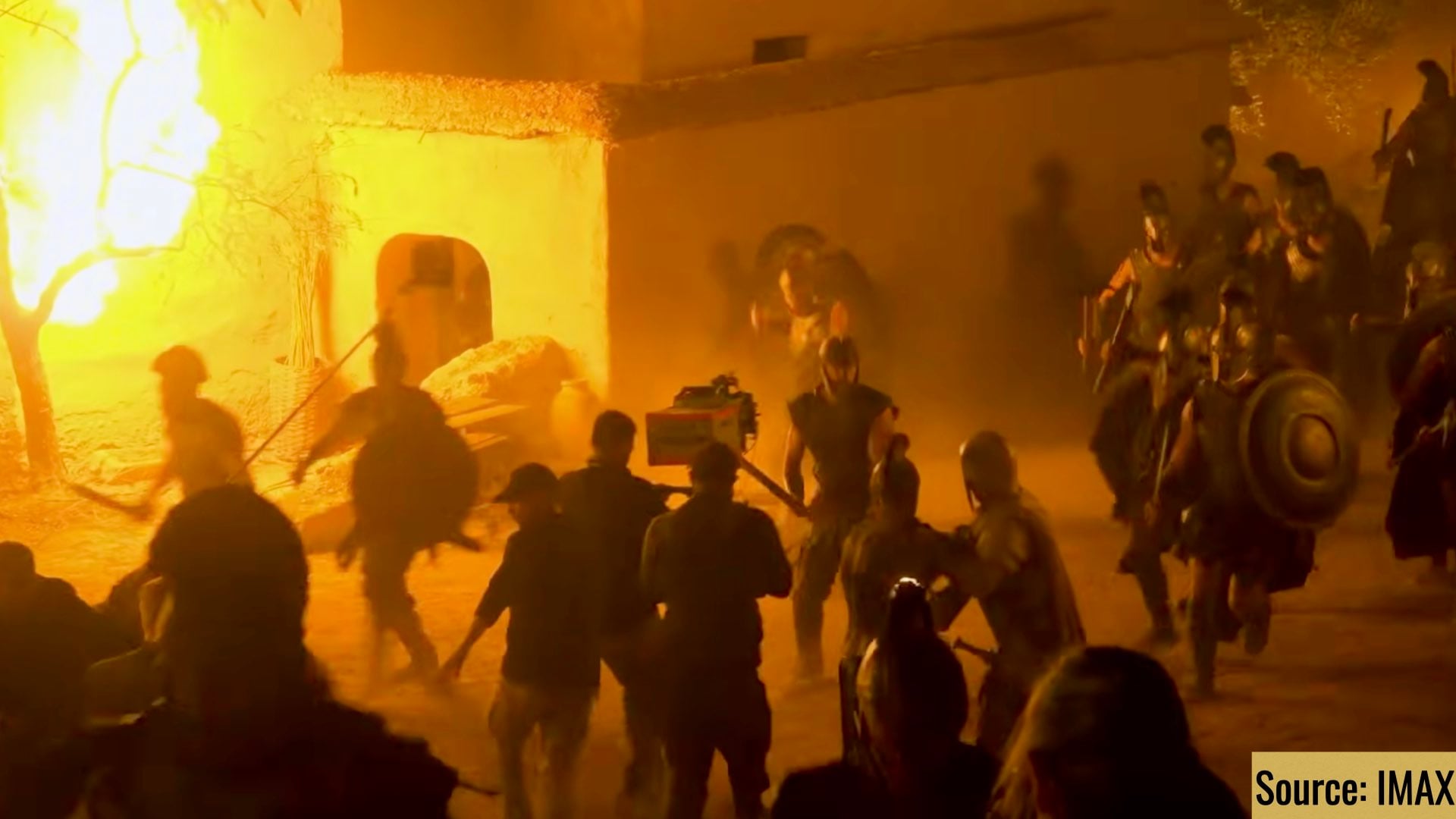
One BTS frame from the battle sequence is especially interesting. It shows the IMAX camera pushed into the middle of a chaotic fire-lit scene, surrounded by actors, movement, smoke, and practical effects. It is tempting to call it Steadicam, but the frame does not clearly reveal the support system. It is safer to describe it as a mobile or stabilized IMAX setup rather than making a hard claim. Still, the point is clear: the camera is not sitting far away like a passive spectacle recorder. It is inside the action. The Odyssey seems to be using IMAX not only to photograph scale, but to participate in scale. The camera is physically embedded into the environment.
The blimp is part of the visual story
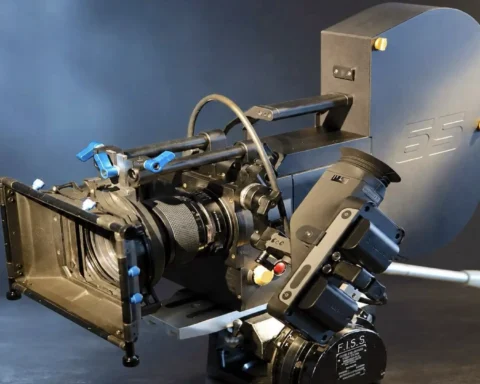
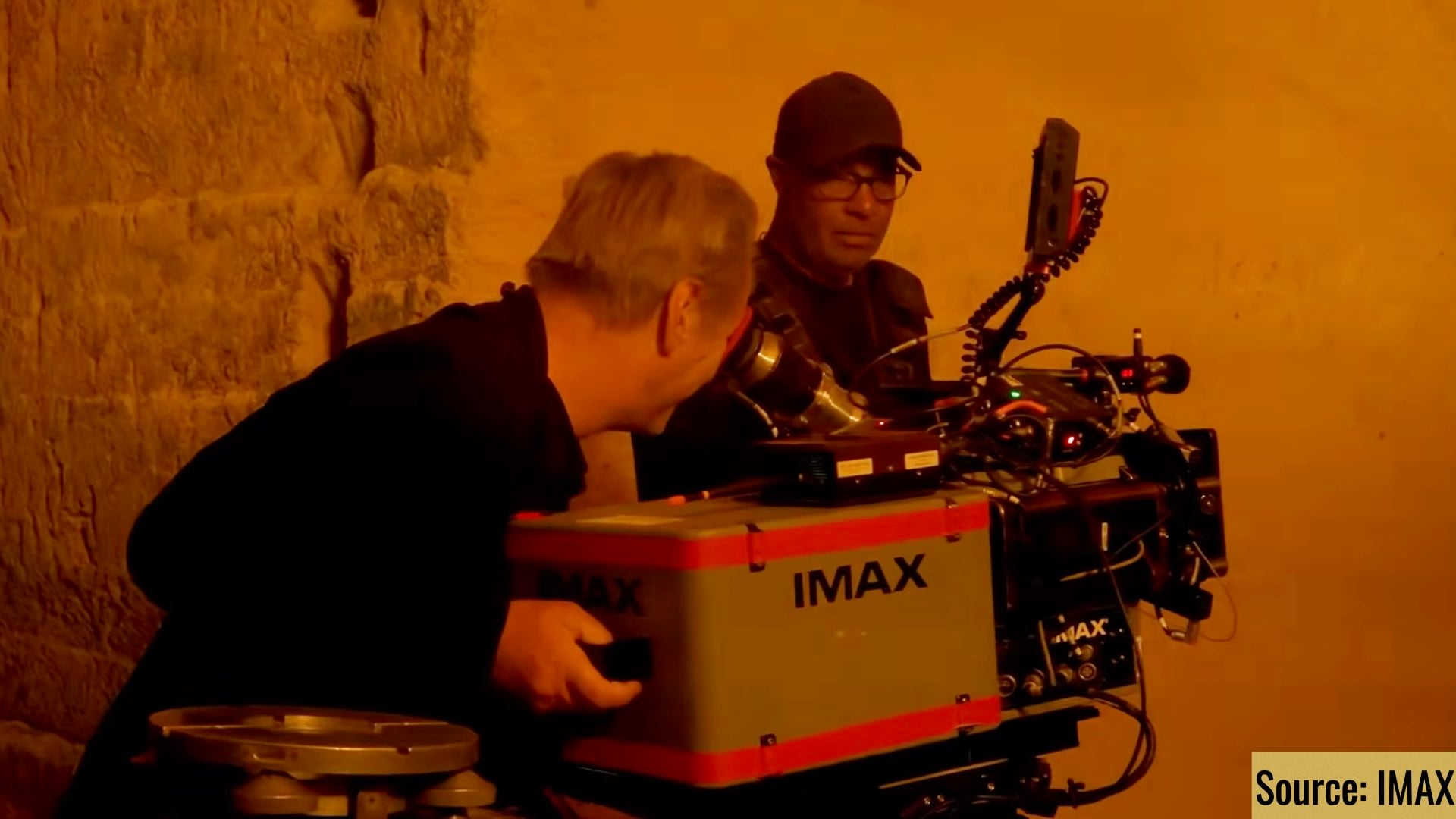
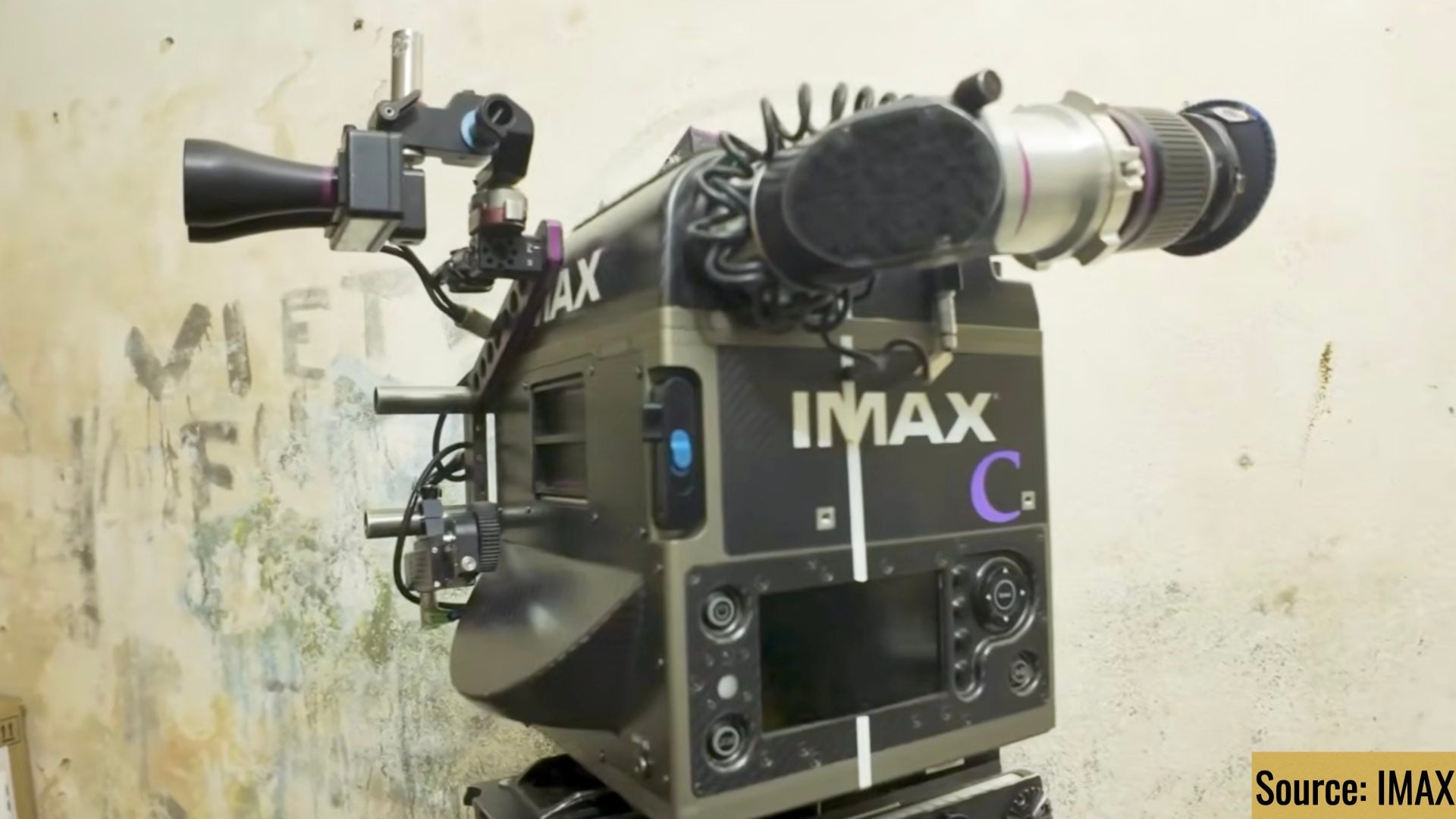
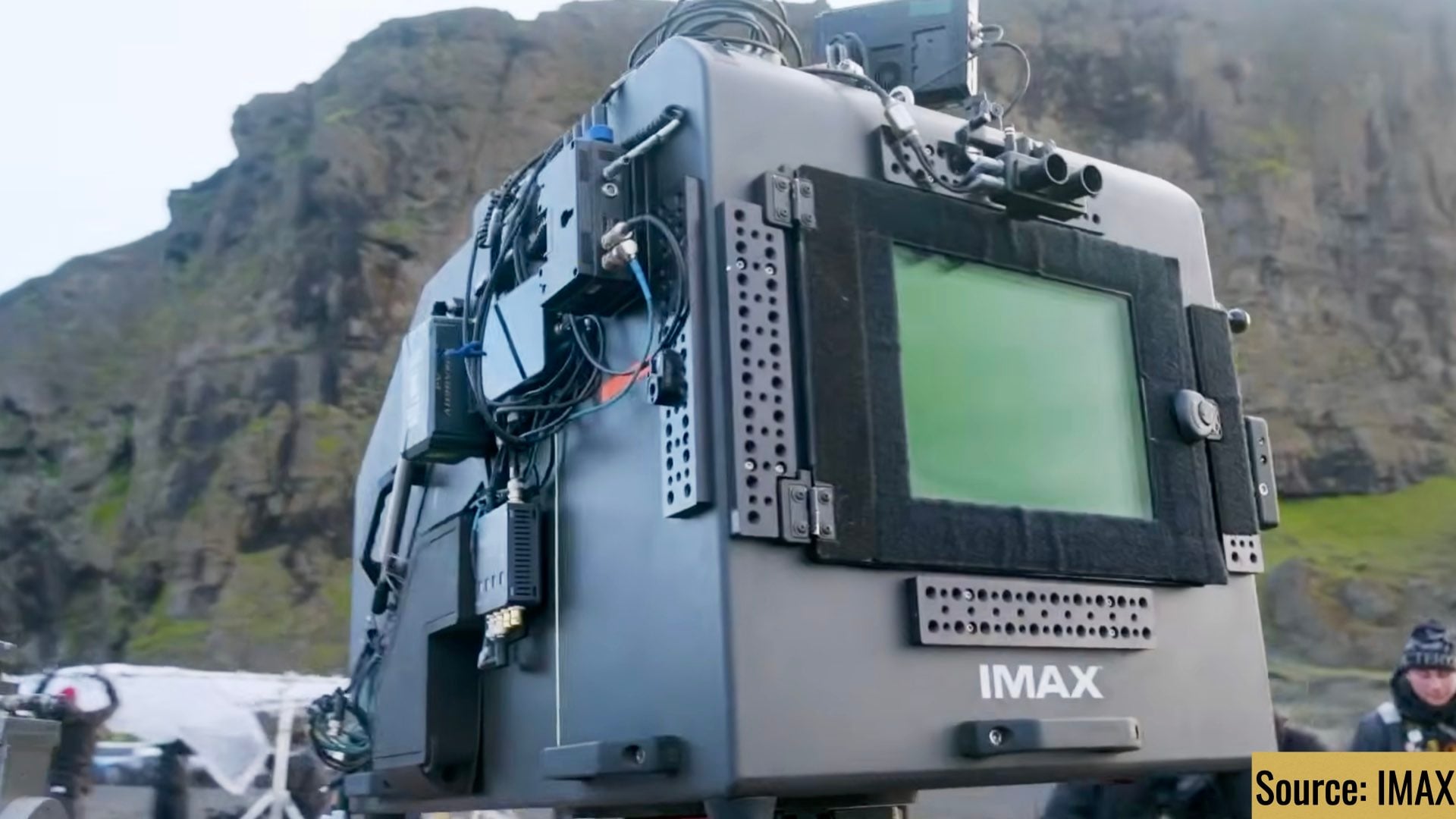
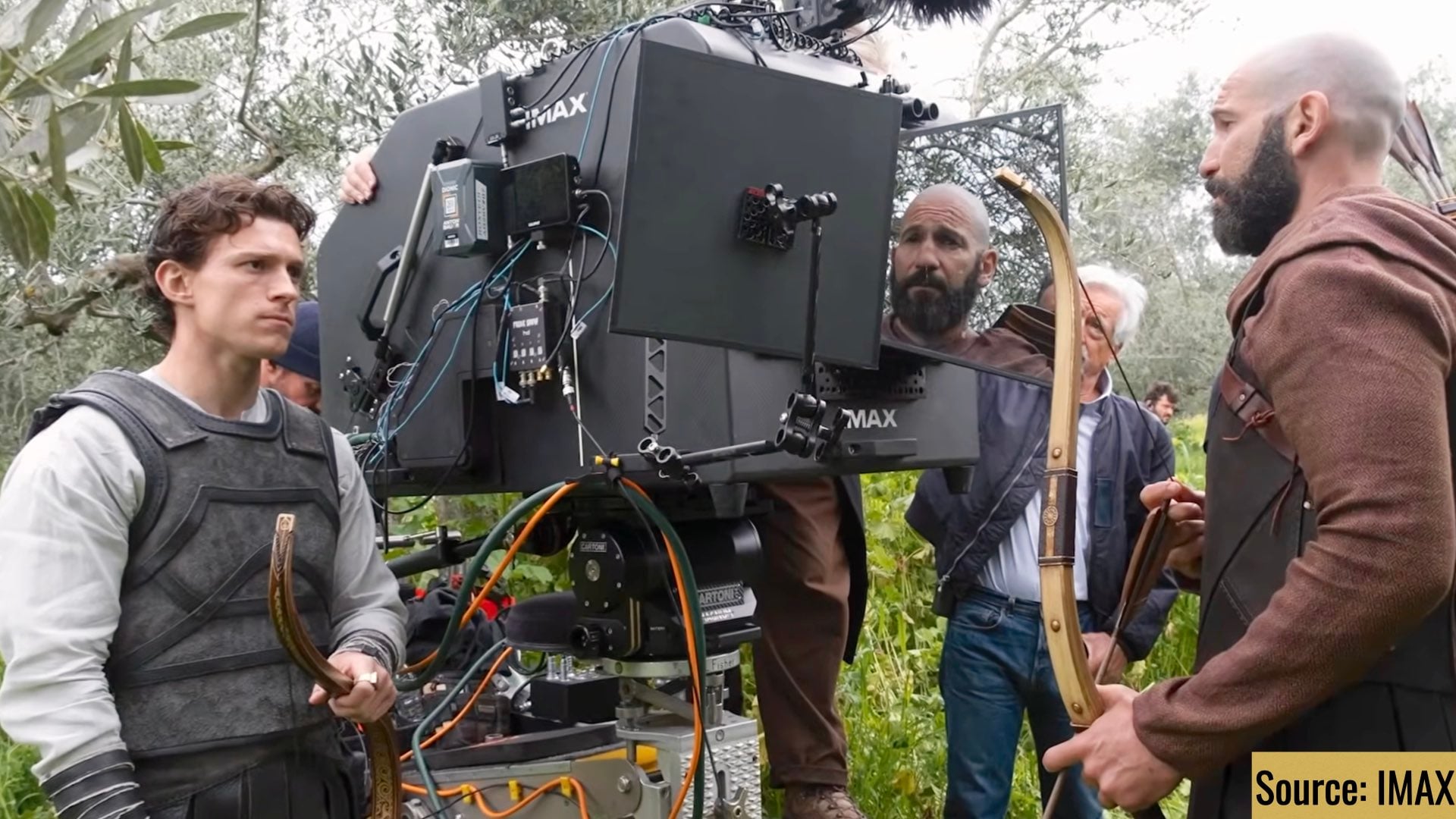
The featurette also shows the massive blimped IMAX configuration. We have already discussed the sound implications, but visually, the blimp tells another story: this production required new layers of camera infrastructure. The blimp makes the camera look even more like an armored production vehicle. In some shots, it resembles a large technical crate mounted onto a dolly or support system. That image alone explains why shooting an entire feature this way is so unusual.
The LCD screen: a rare look at a live IMAX film camera
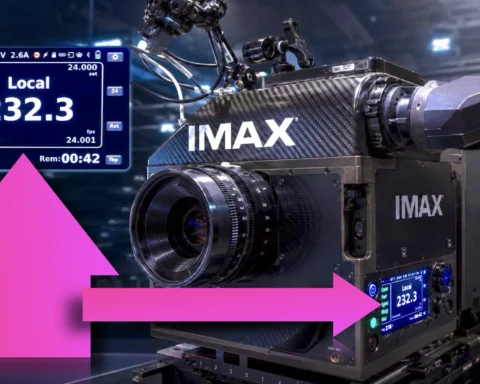
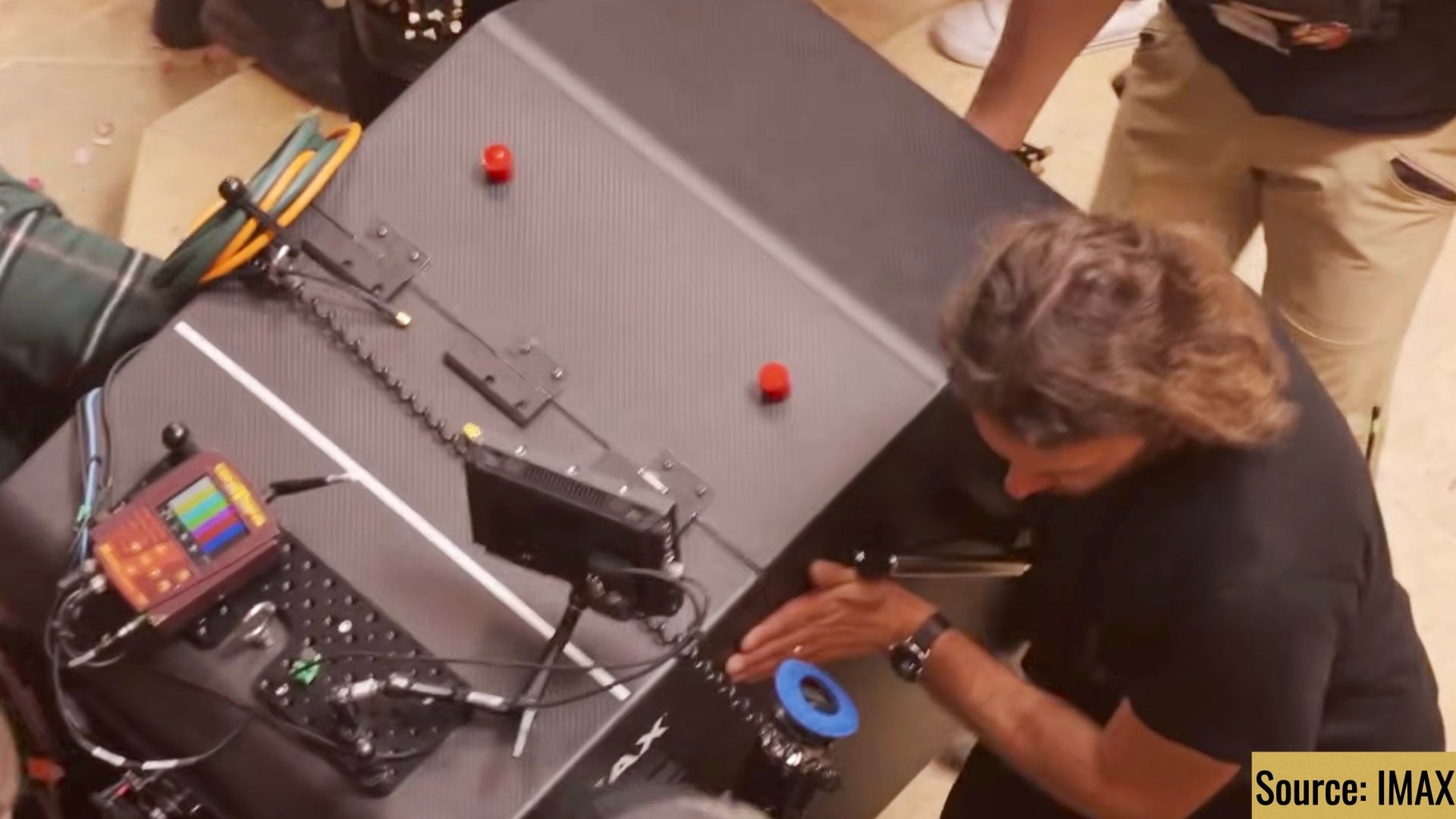
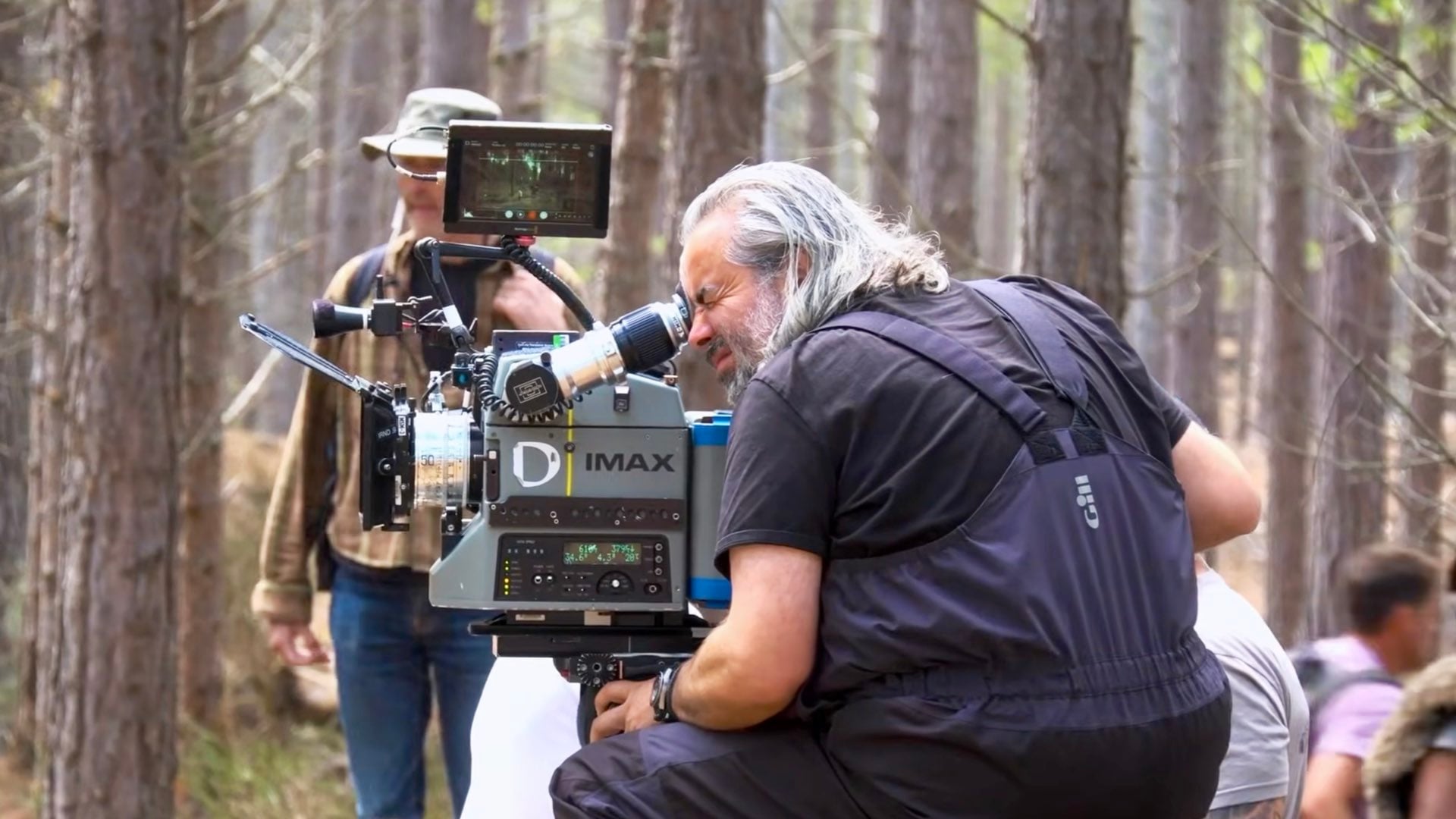
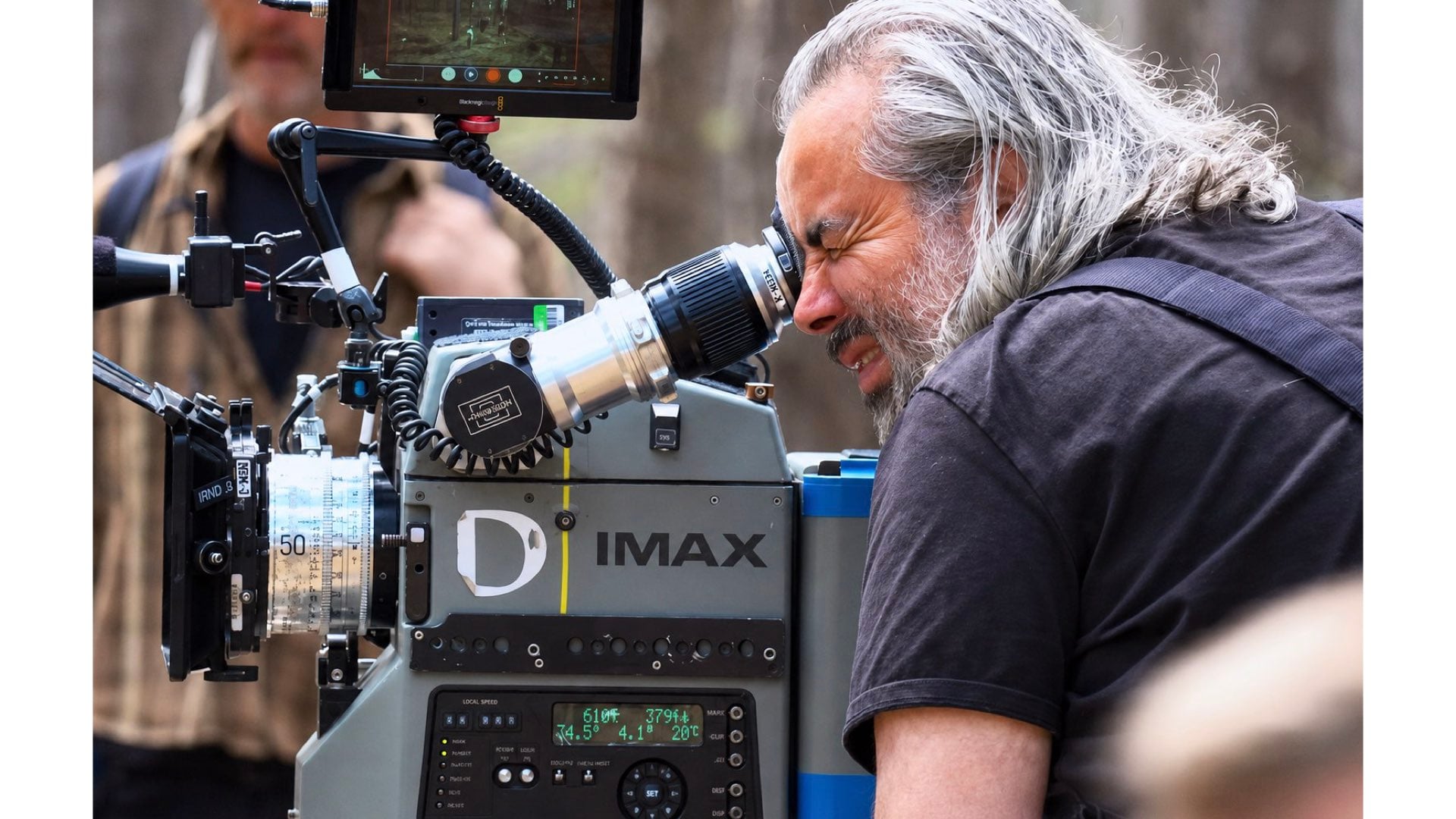
One of the best close-up frames shows the active side LCD/status panel on the IMAX camera body. The display appears to show operating data, including footage-related readings that look like approximately 510 ft and 379 ft. Other visible values appear to include something around 74.5°, 4.1, and 20°C, although those should be treated cautiously because the frame is still not sharp enough to identify every field with certainty.
The Blackmagic Monitor: IMAX film with modern Video Assist
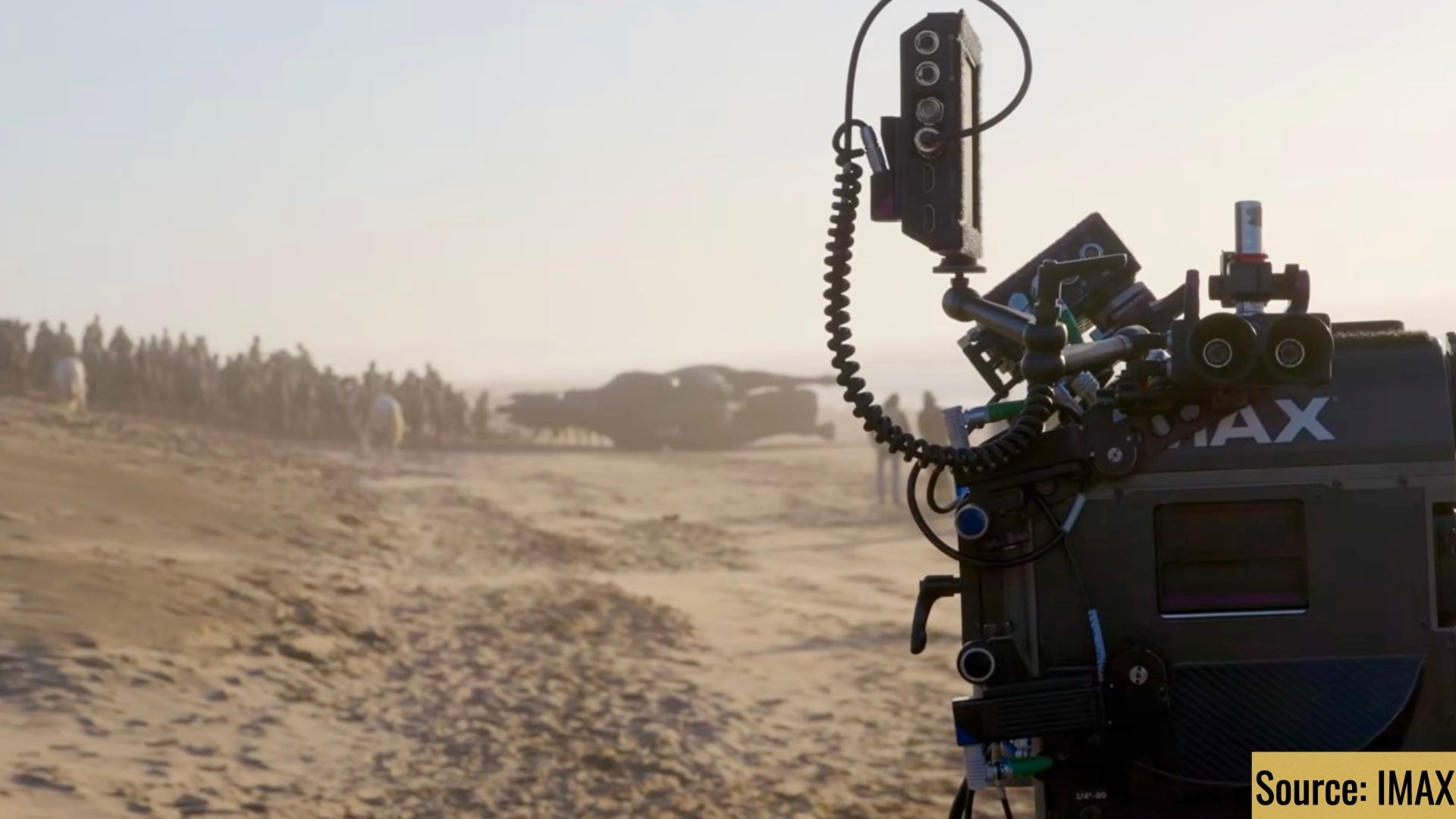
Another small but important detail in the BTS footage is the onboard monitor mounted above the IMAX camera. The unit appears to be a Blackmagic Design monitor ($745 on Amazon) , likely part of the video-assist chain used to give the crew a live view from the film camera. That detail is worth noting because it shows the hybrid reality of modern large-format film production. The Odyssey may be captured on 15/65 IMAX film, but the workflow around the camera is not purely analog. The camera body, film magazine, lens, and negative remain deeply mechanical. But above the camera sits a modern digital monitor, giving Nolan, Hoytema, operators, assistants, and other crew members a practical way to evaluate framing, movement, blocking, and performance in real time. In other words: 15/65 negative in the gate, digital video assist on top.
Mirrors around the camera: Solving the human problem of IMAX
One of the most fascinating comments in the featurette is not about the camera body, the film format, or the blimp. It is about the actors. The BTS transcript mentions that the crew had to create a mirror system so the actors could see each other around the camera. That reveals a huge practical challenge of shooting dialogue and performance-driven scenes on IMAX film. A normal cinema camera can usually be tucked between actors without completely destroying their eyelines. But an IMAX 15/65 film camera is a massive object. It is not just the lens in the middle of the scene. It is the body, the magazine, the viewfinder, the support system, the cabling, the monitor, and sometimes the blimp. When that machine is placed between performers, it can physically block the human connection between them. That is where the mirror system becomes important. The mirrors allowed actors to maintain a sense of visual contact even when the IMAX camera was occupying the space where another actor’s face, body, or eyeline would normally be visible. In other words, the production had to engineer a way for actors to perform through or around the camera, instead of simply being separated by it.
Wrapping up
In many modern blockbusters, IMAX is a highlight format. It appears in selected sequences. The audience feels the frame open up, the scale increase, the movie become “bigger.” But The Odyssey appears to be aiming for something different. If the film is truly built entirely around IMAX film capture, then the IMAX image is not a special moment inside the movie. It is the movie. Hence, the BTS footage shows the hidden cost of that decision. The physical cost. The logistical cost. The crew cost. The weight, movement, blocking, terrain, and discipline behind the image. Shooting an entire movie on IMAX film is not just a format claim. It is a production philosophy. And in The Odyssey, that philosophy looks massive.
Gear mentioned in this article
Available on Amazon
Prices checked: Oct 7, 2026, 1:30 PM GMT+0000
As an Amazon Associate, Y.M.Cinema earns from qualifying purchases. If you buy through our links, we may earn a small commission at no extra cost to you.
Product prices and availability are accurate as of the date/time indicated and are subject to change. Any price and availability information displayed on Amazon.com at the time of purchase will apply to the purchase of this product.
CERTAIN CONTENT THAT APPEARS ON THIS SITE COMES FROM AMAZON. THIS CONTENT IS PROVIDED “AS IS” AND IS SUBJECT TO CHANGE OR REMOVAL AT ANY TIME.